There are moments when time seems to stand still beneath a rain-heavy sky. It isn’t only the weather that turns gray, but the collective spirit. We are living through one of those periods today: a political, social, and economic storm that has sown fear across entire communities—especially among immigrants, both documented and undocumented. The noise of public debate, raids, harsh rhetoric, and legal uncertainty has created an atmosphere of anxiety that seeps into homes, workplaces, and everyday life.
Fear does not distinguish immigration status. In many immigrant families, different realities coexist: parents with residency, citizen children, uncles or cousins who overstayed a visa, others who crossed borders driven by necessity. This mix—so common in the immigrant experience—is now lived with heightened tension. A siren, a headline, a rumor is enough to make hearts race. This is not exaggeration; it is emotional survival.
The world is also facing a profound economic imbalance. The cost of living rises, wages do not always keep pace, and the pressure to support a family—here and sometimes across the border—becomes suffocating. In this context, borders are not just geographic lines; they are barriers that interrupt stories, separate loved ones, and freeze dreams. This is not new in human history. People have always moved in search of bread, peace, and a future. Borders have been raised and hardened again and again, but human need has persisted with equal force.
Amid this storm, there have been moments that seemed to offer a pause. Days that invite reflection, inwardness, a brief inner truce. Days when the message that resonates is one of peace. The birth of the Christ of Peace—for those who believe—is a symbol of hope in dark times. But that message does not belong to only one religion. It is a universal invitation. All spiritual traditions that seek a better world share something essential: human dignity is sacred, compassion is necessary, and peace begins in the heart.
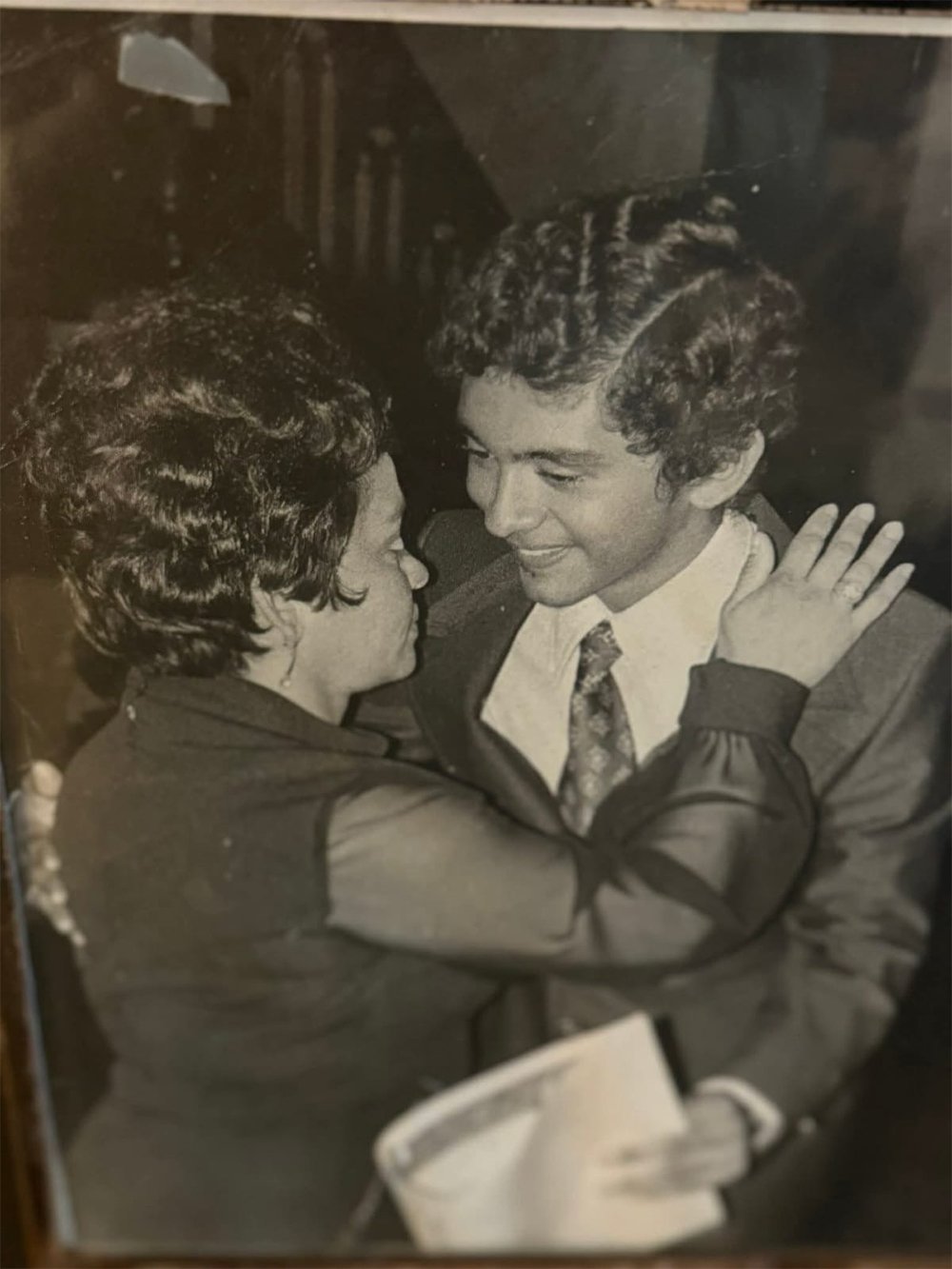
This season inevitably brings me to a personal memory. My father, a man of deep Christian faith and a journalist, was born on December 24. For him, that coincidence of dates was no accident, but a source of pride and reflection. Although he knew that other nations celebrate the birth of Christ on different dates, he understood that in the universe dates can vary depending on where one comes from. What mattered was not the calendar, but the meaning: the possibility of renewing hope even when circumstances are adverse.
Today that lesson feels especially relevant. There are people who suffer, who feel persecuted, who fear losing in a single moment the years of work through which they built economic dignity in this great melting pot called the United States. There are families living with the anguish of separation, the weight of silence, the forced caution of not drawing attention. There are children who sense the fear of adults even when no one explains it to them.
In the face of this reality, the question is not only political or legal; it is profoundly human and spiritual. Are we capable of opening an inner space toward the heavens—or toward the highest of our values—to sustain hope? Can we, as a society, remember that peace is not built solely through laws, but through empathy and justice? Can we recognize that true security is born not of fear, but of respect for the dignity of others?
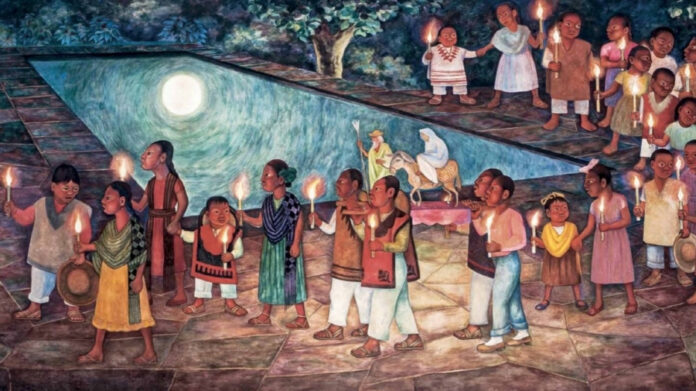
This is not about ignoring the complexity of migration or oversimplifying necessary debates. It is about not losing our soul in the process. About not allowing the storm to make us forget that, even under the heaviest rain, there are lights that do not go out—candles in windows, acts of solidarity, communities caring for one another.
May this somber time also be an opportunity for deep reflection. May peace—understood not as the absence of conflict, but as the presence of justice—find new paths. And may those who walk today in fear feel, even for a moment, that they are not alone. Because even in the longest night, there is always a light that insists on dawn.
Is Mexico the most surreal country? We find out what Breton and Salvador Dalí meant with their statements about our culture.
by Mexico Desconocido
Nowadays, it’s common to hear, especially when commenting on something bizarre politically or socially, that Mexico is a surreal country. It’s even common to hear people quote Salvador Dalí, one of the greatest exponents of surrealism, who said: “I will never return to Mexico; I can’t stand being in a country more surreal than my paintings.” This is more of a rumored quote than a documented one, which also had a precedent: André Breton’s declaration of Mexico as “the most surreal country in the world.”
Salvador Dalí was one of the most important artists associated with surrealism, a European cultural movement that emerged after the First World War. Born in Figueres, Spain, in 1904, he is mainly remembered for his pictorial legacy. However, he also did creative work in sculpture, set design, and literature.
For his part, André Breton is considered the father of surrealism and visited Mexico on April 18, 1938. During his four-month stay, he traveled through Nuevo León, Michoacán, Jalisco, and Mexico City. According to the INBAL (National Institute of Fine Arts), “it was in the country’s capital where, in the company of Diego Rivera, he visited the National Autonomous University of Mexico and attended various exhibitions. As a guest of Rivera and Frida Kahlo, he met Leon Trotsky at the Blue House.”
What is surrealism?
The word surrealism was coined by Guillaume Apollinaire in 1917, but it was not used with its current connotations until 1924, when André Breton defined it in the Surrealist Manifesto, which reads as follows:
“Surrealism: «noun, masculine. Pure psychic automatism, by which one intends to express, verbally, in writing, or in any other way, the real functioning of thought. It is a dictation of thought, without the regulating intervention of reason, free from all aesthetic or moral concerns.”
Philosophy: «Surrealism is based on the belief in a superior reality of certain forms of association previously disregarded, and in the free exercise of thought. It tends to definitively destroy all other psychic mechanisms, and to replace them with the resolution of the main problems of life.»
The surreal is not limited by morality or aesthetic canons; it is as free as dreams
That is, surrealism aims for a lack of mediation between the ideas of the creative genius and the final work, thus suggesting complete freedom without appealing to social norms to translate what is dreamt into art or literature. Therefore, surrealism takes on dreamlike qualities, because just as images appear freely when one dreams, without this implying any choice on the part of the dreamer, so the surrealist artist aspires to translate their psychic material into works. Regarding these images, Breton mentions:
Surrealist images, like those produced by opium, are not voluntarily evoked by man, but “present themselves to him in a spontaneous and despotic way. He cannot dismiss them because the will no longer has power or governs the mental faculties.”
Why is Mexico the most surrealist country?
Due to the above, we can conclude that Mexico is considered a surrealist country because of the freedom and spontaneity of its cultural and social expressions; some of them dissimilar and eclectic, in the same way that it is possible to mix diverse unrelated elements in a dream. The above does not mean that our country is bizarre, but rather that its richness is diverse and does not conform to moral or aesthetic patterns; it simply is, a product of its historical processes. In short, Mexico is a dream.
On the other hand, we can also refer to the statements of Ricardo Echávarri, director of the Center for Surrealist Studies in Mexico City:
“We were fortunate that very important authors arrived in our country, such as André Breton and Antonin Artaud, and then some of them stayed to live permanently, such as Leonora Carrington, Remedios Varo, and Kati Horna. This gave Mexico a particular character, as it served as a refuge for many surrealist writers and painters who migrated due to the events of the Second World War. Thus, through these twists of fate, it became the quintessential surrealist country.”
For years, education has been presented as a space that must be kind, flexible, and emotionally safe. No one disputes the importance of respect, inclusion, and student well-being. However, along the way, something essential has been lost: academic rigor. Today, the lack of clear standards and firm expectations is deeply harming students and generating consequences that will be difficult—if not impossible—to reverse.
Contemporary education has fallen into an excess of permissiveness that weakens the role of the teacher. In the name of understanding, mediocrity is tolerated; in the name of empathy, correction is avoided; and in the name of self-esteem, insufficient effort goes unchallenged. The result is a school system that teaches less and demands less, while simulating progress through inflated grades and diluted standards.
When expectations disappear, learning becomes superficial. Students learn to do the bare minimum, submit incomplete work, negotiate deadlines, and rely on second and third chances without real consequences. They fail to develop discipline, perseverance, or tolerance for frustration. Without these skills, knowledge becomes fragile, easily forgotten, and poorly transferable to real life.
This concern is neither new nor isolated. Swedish education expert Inger Enkvist, professor at Lund University and an educational advisor, has been one of the most outspoken critics of the permissive drift in modern education systems. Enkvist argues that today’s education suffers from low expectations for students and excessive leniency from parents and teachers alike, undermining intellectual development and young people’s ability to cope with the frustrations of adult life.
According to Enkvist, the core problem is not a lack of resources or technology, but the abandonment of basic principles of traditional education: teacher authority, classroom discipline, sustained effort, and the prioritization of solid knowledge. Instead of reinforcing these foundations, many education systems have chosen to focus almost exclusively on “innovative” methodologies or digital tools, without seriously assessing whether they actually improve learning.
Teachers, meanwhile, have been gradually stripped of authority. They are no longer seen as figures who guide, correct, and evaluate, but as facilitators expected to adapt endlessly, justify every decision, and avoid any form of discomfort. In many school environments, demanding too much can become an administrative—or even legal—liability. As a result, educators learn that lowering standards is safer than upholding them.
This loss of authority has profound consequences. Without an adult who sets clear boundaries, classrooms become disorganized, attention scatters, and valuable time is wasted. More troubling still is the implicit message students receive: effort is optional, mistakes do not require correction, and responsibility can always be postponed.
Outside the classroom, reality operates very differently. The workplace does not accept emotional excuses as a substitute for performance. Universities do not always offer unlimited extensions. Adult life demands punctuality, commitment, self-control, and the ability to accept criticism. When schools fail to prepare young people for these realities, they set them up for a harsh collision with the real world.
Moreover, the absence of academic rigor widens educational inequality. Students with strong family support can compensate for weak school systems, while the most vulnerable rely almost entirely on schools to acquire habits, knowledge, and discipline. When schools stop demanding effort, they abandon precisely those students who need structure the most. In this sense, permissiveness is not neutral: it deepens social divides and limits upward mobility, disguising educational abdication as inclusion.
Many young adults now enter college or the workforce without basic tools to manage frustration. At the first sign of failure, they shut down or blame the system. Not because they lack ability, but because they were never taught that sustained effort, discipline, and personal responsibility are unavoidable parts of growth. As Enkvist warns, an education that avoids difficulty and conflict does not protect students—it weakens them.
Demanding standards is not abuse. Correction is not humiliation. Rigorous evaluation is not exclusion. On the contrary, demanding effort is a profound form of respect. It means believing students are capable of more, that they can rise to challenges, and that their future deserves a solid foundation. A demanding teacher is not an adversary, but an ally who refuses to settle for less than a student’s potential.
Restoring rigor does not mean returning to authoritarian models or ignoring students’ social realities. It means setting clear, coherent standards and sustaining them over time. It means restoring teachers’ professional authority and prioritizing the selection of strong educators. Ultimately, it means understanding that real learning requires effort, time, and, at times, discomfort.
Education should form free individuals, but freedom without discipline is an illusion. Preparing students for adult life does not mean making everything easier; it means teaching them to confront difficulty with real tools. Academic rigor is not the problem in today’s education system—its absence is. And as long as we avoid that conversation, we will continue graduating generations increasingly unprepared for a world that has not—and will not—lower its demands.
His younger son seeks court intervention and a possible investigation amid restrictions on contact, financial control, and questions of legal authority
by Marvin Ramírez
The situation surrounding renowned musician and businessman César Ascarrunz, 90, has generated growing concern among family members, friends, and the cultural community of the San Francisco Bay Area. What began as a lack of communication with his younger son has evolved into a complex legal case now before the San Francisco courts, with urgent requests for protection and calls for a possible investigation into the alleged isolation of an elder adult.
César Ascarrunz.
Ascarrunz, a historic figure in Latin music in San Francisco and a cultural promoter for decades, is currently in a senior care facility in the city of Modesto, California. However, according to court filings and statements submitted to the San Francisco Superior Court, access to him has been severely restricted, including limits on in-person visits and tight control over telephone communications.
His younger son, Leonardo Ascarrunz, who turned 18 approximately three months ago and has never lived independently, recently filed an emergency restraining order request and other pleadings in the case In the Matter of Cesar Ascarrunz (PTR-25-309082). In those filings, the young man argues that decisions regarding his father’s location, access, and financial affairs were made without court authorization and without any legal determination of incapacity.
Leonardo Ascarrunz y su madre Marta Rodríguez, conversando con El Reportero. – Leonardo Ascarrunz and his mother Marta Rodríguez speaking with El Reportero.
According to materials presented to the court, there is currently no medical or judicial finding declaring César Ascarrunz mentally incapacitated. A physician who evaluated him in October 2025 reportedly stated that his cognition was clear for his age. Ascarrunz was declared legally blind in April 2025 after suffering from a chronic eye disease that reduced his field of vision to fewer than 20 degrees in both eyes, but blindness alone does not constitute mental incapacity.
At the center of the conflict is not only where Ascarrunz is now residing, but how the decision to move him was made and the restrictions imposed afterward. According to the younger son, information about his father’s whereabouts was not provided voluntarily and was only confirmed after outside efforts, including contact with the ombudsman’s office responsible for the region where the care facility is located.
Court filings also state that one of the older sons allegedly suspended several of César Ascarrunz’s bank accounts and credit cards, as well as the residential phone line he had maintained for decades and his cell phone. The same documents indicate that Ascarrunz’s automobile was placed under the control of a woman who lived in the family home and who was said to have helped care for him, a situation that changed once the musician was transferred to the senior center in Modesto.
As the case has unfolded, Michael Ascarrunz, who now publicly identifies himself as C. Micah Ascarrunz, has been identified in court documents and testimony as one of the central figures in the decisions that led to the current restrictions on contact between the father and his younger son. Leonardo Ascarrunz was born out of wedlock, a fact that forms part of the family background to the dispute, although there is no court ruling limiting or nullifying his status as a son or his right to seek protection for his father.
In this context, El Reportero spoke directly with Michael Ascarrunz regarding Leonardo’s paternity. Michael told this newspaper that Leonardo was not César Ascarrunz’s son and questioned the validity of the genetic tests. According to Michael, the third DNA test was conducted with César Ascarrunz’s consent and copies of the results were delivered to each sibling by César himself. During the conversation, Michael told this reporter, “Do you think a DNA test done in one hour can be valid?”
Leonardo Ascarrunz disputed that claim and told El Reportero that the DNA sample was collected the same day, but that the results were not delivered immediately and instead took more than a week, and in some cases up to two weeks, to be sent, as is customary with laboratory testing. Leonardo stated that he has official documentation of the results, which has been included in the court record.
Another key issue in the case involves finances and legal authority. According to the care facility where César Ascarrunz is residing, C. Micah Ascarrunz presented a Power of Attorney as the basis for making decisions related to his father’s person and property. The facility was reportedly told that this authority was granted by the successor trustee on record, Antonio José Camacho, with María Escobar Sánchez named as the alternate trustee in the event Camacho is unavailable.
However, under California law and based on documents filed with the court, a successor trustee cannot suspend obligations previously undertaken by the original trustee, nor delegate that authority to third parties, including siblings or other relatives, while the original trustee—César Ascarrunz—has not been declared incapacitated. That question is now one of the central legal issues before the court.
There is also no medical diagnosis indicating cognitive impairment. In addition to the medical evaluation submitted to the court, this reporter spoke directly with Ascarrunz in recent months, during which the musician discussed current events and political developments in his native Bolivia with clarity, supporting the assertion that his mental capacity remained intact.
The situation also extends to tenants living in properties owned by César Ascarrunz. One tenant told El Reportero she received an email from attorney Ilene M. Hochstein, based in Millbrae, California, stating that she was assisting C. Micah Ascarrunz with aspects of managing his father’s rental properties. The email referenced the need to access the tenant’s unit at a specified date and time, the presence of an appraiser to inspect all units in two buildings, and the possibility that an agent for the owner would enter the unit in the tenant’s absence. The attorney also requested information about the tenant’s move-in date and rent history. Leonardo Ascarrunz maintains that there is no legal authorization for his brother to interfere with tenants or initiate appraisals or a sale, since his father remains the sole trustee of the revocable trust.
The court has also been informed that the younger son’s access to the family residence was restricted, including the changing of locks, and that communication between father and son has been limited. Taken together, these factors could fall under California statutes addressing the isolation of an elder adult if proven.
Legal experts in elder protection note that California courts have the authority to order investigations when credible indicators of isolation, family interference, or unauthorized handling of an elder’s assets are presented. Such investigations are intended to protect the safety, autonomy, and rights of older adults, regardless of family disputes.
César Ascarrunz, former owner and founder of the famous Cesar’s Latin Palace at Green Street near Broadway, and later on Mission Street, now Roccapulco, is widely remembered for his contributions to San Francisco’s cultural life. He came to the United States in the 1960s fleeing political violence in Bolivia and, after completing graduate studies, founded a music production company that brought concerts and cultural spaces to life for generations. He ran for mayor of San Francisco several times and finished in second place.
Today, his artistic legacy stands in stark contrast to the uncertainty surrounding his personal situation. As the legal process continues, attention remains focused on ensuring that Ascarrunz can communicate freely, receive visits from immediate family, and that any decisions about his person or property are made under appropriate legal supervision.
The hearing related to the emergency restraining order request is scheduled for December 23, 2025, at 10:00 a.m., in Department 202 of the San Francisco Superior Court.
– El Reportero will continue to follow this case of public interest.
En esta fecha revive las tradiciones navideñas de México. -- Relive Mexican Christmas traditions this holiday season. (Photo Courtesy of www.eventbrite.com)
By Magdy Zara
Since December 5th, the Latin American Art and Culture Movement (MACLA), in collaboration with the Montalvo Arts Center, has presented “From Their Hands to Ours,” a new exhibition that highlights how ancestral wisdom and childhood experiences shape identity.
If you are looking for a different activity to do with your family during this holiday season, this is a perfect opportunity.
With the premiere of this work by Estefanía Ajcip, Miguel Arzabe, Rafa Esparza, Edra Soto, and Arleene Correa Valencia, the exhibition intertwines stories of tradition, trauma, and growth through painting, sculpture, textile art, and video.
The exhibition will be open to the public until March 8, 2026, from 12 PM to 5 PM, at the Macla gallery located at 510 South 1st Street, San Jose.
Christmas in Mexico Returns to the Bay Area
Christmas is one of the most heartwarming times of the year and ideal for sharing with family. That’s why you’re invited to enjoy “Christmas in Mexico,” the most original production in the Bay Area, featuring more than 65 dancers, singers, and a full mariachi band.
You’ll experience the excitement of an authentic Latin market with traditional food, drinks, and delicacies.
The Carlos Moreno Mexican Folkloric Ballet, through “Christmas in Mexico,” will show you how Christmas is celebrated in Mexico and take you to different regions to share the fun and excitement of its folklore through music, song, and dance.
The performance is on December 21st, starting at 3 PM, at the Calvin Simmons Theater, located on 10th Street, Oakland. Tickets are $56.
A Christmas Carol with Charlie Brown
Charlie Brown, Snoopy, and the whole Peanuts gang return to Davies Symphony Hall to revive this television classic. Featuring live actors, an animated backdrop, and the timeless music of Vince Guaraldi performed live by the San Francisco Symphony Orchestra, this is a heartwarming holiday performance you won’t want to miss.
The first part of the concert includes selections from Vince Guaraldi’s complete Peanuts catalog, celebrating 60 years of his music for Charlie Brown and the 75th anniversary of Peanuts.
Performances are scheduled for December 21 and 22, with two shows daily at 2:00 p.m. and 7:00 p.m. at Davies Symphony Hall, located at 201 Van Ness Avenue, San Francisco.
The number of young people between ages 18-24 who think porn access should be curtailed has grown in four years from 43% to 63% among men and from 63% to 72% among women
According to the Survey Center on American Life, young men are now more in favor of restrictions than middle-aged men. In 2021, 43 percent of young men and 58 percent of young women between the ages of 18 and 24 thought that access to porn should be restricted. In 2025, that had risen to a staggering 63 percent of young men and 72 percent of young women. Having spent the last 15 years talking to young people about pornography, those numbers do not surprise me.
In the 1970s and ’80s, porn was “cool” – at least Hugh Hefner, smut-peddler and self-proclaimed Playboy philosopher, tried to make it so. He tucked his porn centerfolds between interviews with civil rights leaders and short stories by feminist Margaret Atwood; appeared on talk shows with a pipe and smoking jacket; and made his Playboy Mansion the stuff of lascivious legend. It wasn’t until after he died that the full extent of his vile predation became known.
In the 1990s, the porn industry began to conquer the culture. Restrictions on porn melted away in the face of the internet, which arrived with desktop computers. Porn models exploded off the front covers of slimy magazines to become cultural figures in their own right. Major music stars used porn performers as backup dancers in their videos. Compulsive porn use became a constant punchline in era-defining TV shows such as Friends and Seinfeld. Porn wasn’t just cool – it was normal.
In the 2000s, it all fell apart. The porn industry didn’t just conquer the culture – it conquered our homes. Almost all of them. The internet ensured that every device with a Wi-Fi connection was the equivalent of a bottomless closet filled with the most depraved forms of pornography the human imagination could conjure – and the closets were unlocked. Millions of children, adolescents, and teens opened the doors and spent years inside. Porn addiction was rampant at the high school I attended. It probably was at yours, too.
Those who grew up with computers at home were often exposed to porn. Those who were handed smartphones, which first arrived in 2007, almost all did. Childhood exposure to pornography ended up defining the growing up years for countless young people, and they carried the scars and the struggles into their relationships, their careers, and their lives. The social costs of pornography have been staggering, and over the past 10 years, more people are willing to say so out loud. Gen Z grew up with pornography everywhere.
“Neel Dhar was 7 years old when he first clicked on an online ad that led to pornography,” Mariya Manzhos wrote in a recent report by Deseret titled “Gen Z grew up with pornography. Now they’re leading the charge against it.” “Even though he didn’t understand what he saw, his curiosity took him down a rabbit hole of the internet and its darker corners. Over time, he found himself spending more and more hours there. ‘The only thing I wanted was hard dopamine and nothing else,’ he said.” I have heard similar stories more times than I can count. For millions of children, pornography was their first exposure to sex.
“Dhar, who is now 19 and lives in San Diego, is part of a generation that grew up with the internet, and pornography, in their back pockets,” Manzhos writes. “Much of what Dhar and his peers learned about intimacy and relationships during his high school years came from the sexualized content he encountered online … But it’s also the digital natives of Gen Z – who encountered pornography before they knew what it was – who are at the forefront of fighting it.” Dhar decided to quit porn.
“Relay, the app that Dhar joined, was started by 27-year-old Chandler Rogers, who similarly struggled with a pornography habit and wanted to help men combat the addictive patterns,” Mazhos notes. Rogers isn’t the only one. “Earlier this year, Joshua Haskell, a 23-year-old graduate of the University of Notre Dame, founded Ethos National that also focuses on accountability and is based on Catholic teachings.” Other major apps include Covenant Eyes and Matt Fradd’s Strive 21 program, a 21-day porn detox.
Gen Z’s biggest stars hate pornography, too. Theo Von, the popular comedian and podcaster, has talked about his struggle with porn over a dozen times at length, from describing his exposure to porn to fighting the addiction and its impact on relationships. Rock star Billie Eilish has said pornography “destroyed my brain” after she first got addicted at age 11. Comedian Nikki Glaser opened up about her own porn addiction to Joe Rogan in graphic and despairing terms. Even the comedians no longer find porn a joke.
Gen Z doesn’t hate porn because they are prudish. They hate porn because they were exposed to it from a young age and it shaped their lives in ways completely beyond their control. I have heard their stories, hundreds of them, over the past decade and a half. The story is always the same: Porn did not bring liberation. Porn brought, and brings, despair. The porn industry is no longer viewed as cool; it is seen as the enemy. It always was. But now, most people know it – and the young have learned by bitter experience.
Perhaps they will do what the adults refused to do, for decades: ban this poison, and begin to build a better world.
The biggest political moments for Latinos in California, from protests to new laws. -- Los principales momentos políticos para los latinos en California, desde protestas hasta nuevas leyes.
by the El Reportero staff writer
For Latino communities in California, 2025 was a year shaped by heightened political activity, legal battles, and civic engagement. Immigration enforcement, voting power, and legislative responses dominated headlines, while community organizations and elected officials worked to address uncertainty and change. As the year closes, several moments stand out for their lasting political and social impact on Latinos across the state.
Immigration enforcement intensifies across California
Immigration policy returned to the forefront of national debate in 2025, following the start of President Donald Trump’s second term. The administration renewed its focus on immigration enforcement, pledging to increase deportations and tighten border controls. While federal officials reported more than 500,000 removals nationwide, independent estimates from the Migration Policy Institute placed the number closer to 340,000 by September.
California, home to the nation’s largest Latino population, saw increased enforcement activity in several regions. Immigration and Customs Enforcement (ICE) operations were reported in urban and rural areas alike, including Los Angeles, the Central Valley, and parts of the Bay Area. Agents conducted arrests near workplaces, public facilities, and residential neighborhoods, prompting concern among immigrant families.
In June, enforcement activity in Los Angeles coincided with large public demonstrations. Thousands gathered downtown to protest federal actions, leading to heightened security measures and crowd control by law enforcement. President Trump described some demonstrations as disorderly and authorized the deployment of National Guard units to assist with security operations, a move that state officials disputed and later challenged in court.
Supporters of the administration argued that enforcement efforts were necessary to uphold federal law, while critics raised concerns about civil liberties and community trust. Regardless of perspective, the increased visibility of immigration enforcement had a significant impact on daily life in many Latino neighborhoods.
Latino voters play decisive role in Proposition 50
Despite concerns surrounding immigration enforcement, Latino voters demonstrated their political influence at the ballot box. Proposition 50, a redistricting measure placed on the statewide ballot, passed with strong Latino support. Exit polling showed that approximately 71 percent of Latino voters supported the initiative.
The measure was promoted by supporters as a safeguard against partisan gerrymandering and a way to preserve competitive districts ahead of the 2026 midterm elections. Both Democratic and Republican campaigns invested heavily in outreach to Latino voters, recognizing their growing share of the electorate, which now approaches one-third of California voters.
High-profile figures appeared in campaign advertising, and Spanish-language media played a central role in voter education. Following the election, California Republicans filed a lawsuit challenging the new district maps, arguing they improperly considered race in drawing boundaries. The case is expected to move through the courts in 2026.
The vote reinforced a broader national trend: Latino voters are increasingly pivotal in shaping electoral outcomes, not only in California but across several battleground states.
State and local governments pass law enforcement transparency measures
In response to concerns about immigration enforcement practices, California lawmakers passed two notable bills in 2025: Senate Bill 627 and Senate Bill 805. Together, the measures aim to increase transparency among law enforcement officers operating within the state.
SB 627, known as the No Secret Police Act, prohibits officers from covering their faces while performing official duties. SB 805, the No Vigilantes Act, requires visible identification for law enforcement personnel. Supporters argued that the measures were designed to reduce confusion, prevent impersonation, and strengthen public trust.
The U.S. Department of Justice challenged both laws, asserting that they interfere with federal authority and violate the Supremacy Clause of the Constitution. Legal proceedings are ongoing.
At the local level, the Los Angeles City Council approved a similar ordinance in December, set to take effect in January 2026. While the measure passed, some officials expressed concerns about its legal standing and potential conflicts with federal operations.
Family Preparedness Act expands protections for immigrant households
California lawmakers also focused on policies aimed at reducing disruption to families affected by detention or deportation. Assembly Bill 495, the Family Preparedness Act, was introduced by Assemblymember Celeste Rodriguez and signed into law in October.
The legislation expands the list of relatives eligible to serve as temporary guardians for children if parents are detained. It also requires schools and child care providers to offer guidance to families on emergency preparedness related to family separation.
Advocates said the law offers families greater stability during uncertain times, while critics questioned whether the state was overstepping its role. Nonetheless, the bill reflects California’s continued effort to address the social consequences of federal immigration enforcement.
DHS confrontation involving Sen. Alex Padilla draws national attention
One of the most widely covered incidents of the year occurred during a Department of Homeland Security press conference in Los Angeles. Sen. Alex Padilla, who was present at the Wilshire Federal Building, attempted to question DHS Secretary Kristi Noem regarding enforcement policies.
Federal agents escorted Padilla out of the room, and a physical confrontation followed in a hallway, where the senator was briefly restrained. Video of the incident circulated widely, prompting responses from lawmakers across the political spectrum.
Padilla later said the incident raised broader concerns about transparency and accountability. DHS officials stated that security protocols were followed. The episode sparked debate about access, authority, and conduct during high-profile federal events.
As California looks toward 2026, these moments illustrate the evolving political landscape for Latino communities. From voting booths to legislative chambers, Latinos continue to play a central role in shaping policy debates that extend well beyond the state’s borders. – With reports by Andrea Valadez
Chile has elected its most Right-wing president since the Pinochet dictatorship fell, with the conservative Jose Antonio Kast defeating his communist rival.
Kast won 58.2 per cent of the vote in a victory that harnessed voter anger over crime and migration to drive the country into its most dramatic Rightward shift in decades.
Kast is a son of a Nazi party member who fled to Chile after the Second World War.
The father-of-nine ran for his self-founded Republican Party of Chile, defeating communist candidate Jeannette Jara, who took 41.8 per cent of the vote.
Speaking on Monday, the president-elect promised to build a government of “national unity” and to “safeguard institutions.”
“We all share concerns about security, health, education, and housing,” he said. “This is not one person’s or one party’s government. It will be broader to achieve consensus on fundamental issues.”
His success makes Chile the latest nation in Latin America to tilt Right after Bolivia’s election in August and Javier Milei’s success in Argentina’s midterm vote in October.
Inspired by Donald Trump’s crackdown on immigration, Kast has vowed to build border walls and form a specialized police force modelled on US Immigration and Customs Enforcement to track down and deport migrants in the country illegally.
He has pledged to build a trench on the northern border to help stem migration from countries such as Venezuela.
Last year he visited the mega-prison system built by El Salvador’s President Nayib Bukele, and said he would copy the model. He has also visited other Right-wing leaders, including Giorgia Meloni in Italy and Hungary’s Viktor Orban.
After winning all 16 regions of Chile, Kast will take office on March 11, vowing an “emergency government” to crack down swiftly on irregular migration and cut taxes and public spending.
While Chile remains one of the safest countries in Latin America, an influx of organised crime has led to a rising murder rate and hurt economic growth, with a recent spike in high-profile incidents such as kidnappings and assassinations.
“Changes will start immediately,” said Kast in his victory speech at his Santiago headquarters. But he warned that “it will require perseverance”.
The Trump administration was quick to praise the election winner. Marco Rubio, the US Secretary of State, said: “Under his leadership, we are confident Chile will advance shared priorities to include strengthening public security, ending illegal immigration and revitalising our commercial relationship.
Kast’s father was a Nazi party member and army lieutenant who fled to South America after the Second World War, where he eventually founded a lucrative sausage business south of Santiago. Kast has said his father was a forced Nazi conscript.
His eldest brother, Miguel Kast, was a government minister and central bank president in the early 1980s under the Pinochet dictatorship, during which more than 40,000 people were executed, detained and disappeared, or tortured.
As a law student, Kast campaigned for the “yes” vote in a referendum on whether Pinochet should remain in power in 1988 – a vote that Pinochet lost.
After serving as a congressman for the Right-wing Independent Democratic Union party for more than a decade, Kast stepped down in 2016 to pursue the presidency as an independent but ended up winning less than 10 per cent of the vote. He gained more traction in 2021, running under the banner of his self-founded Republican Party.
His style is quite different to that of Milei or Bukele, Nicholas Watson, the Latin America managing director at Teneo, told Reuters.
He said: “He is much less flamboyant and more reserved. He is also more of a political insider; he has not burst onto the political scene in the way that Milei did.”
David Altman, a political scientist at Chile’s Pontifical Catholic University, added that Kast had benefited from a growing rejection of the incumbent government led by Gabriel Boric, the Leftist president.
Altman said: “It’s not that people became more fascist in the space of four years. People abandoned the Left and, as there essentially was not a political centre, they went Right. It was the only place where they could land.”
A large European study has found an association between higher blood levels of theobromine, a naturally occurring compound in cocoa, and markers of a younger biological age. The link appeared to be specific to theobromine and remained even after accounting for caffeine and other related dietary compounds. Researchers used two DNA-based aging clocks, including one that predicts mortality risk, to estimate biological aging. Because the research is observational, it cannot prove that eating chocolate or consuming theobromine slows aging. Therefore, scientists caution against modifying chocolate consumption based solely on these findings and emphasize the need for controlled intervention trials.
In a result that seems to combine folklore with modern molecular science, the research suggests that a modest component of dark chocolate may be linked to a slower rate of biological aging. The study, led by scientists at King’s College London and published in the journal Aging on December 10, 2025, analyzed data from more than 1,600 adults across various European countries. The researchers discovered that people with higher levels of circulating theobromine showed DNA patterns associated with a younger biological age than their chronological age suggested. These findings add a new dimension to efforts to understand how everyday foods can influence long-term health at the cellular level.
The science of aging has moved far beyond counting candles on a cake. Today, researchers employ epigenetic clocks, which track chemical modifications to DNA that change predictably as the body ages. This study used two such measures: GrimAge, associated with mortality risk, and DNAmTL, an estimator of telomere length. The blood samples came from 509 participants in the British TwinsUK registry and 1,160 participants in the German KORA cohort. Scientists compared these epigenetic aging markers with measured levels of dietary metabolites present in the blood.
A consistent association emerged in both populations. Higher concentrations of theobromine were linked to a slower acceleration of GrimAge and a longer estimated telomere length. In practical terms, people with more theobromine in their blood tended to show biological profiles that appeared younger than expected. Importantly, the association remained statistically significant even after adjusting for caffeine and other chemically related compounds, suggesting that theobromine may play a distinct role in cellular processes linked to aging.
Theobromine is the bitter alkaloid responsible for much of the characteristic flavor of dark chocolate. Despite its presence in widely consumed foods, theobromine has long been overshadowed by caffeine and cocoa polyphenols, which are often credited with chocolate’s potential cardiovascular benefits. Previous laboratory experiments in worms and rodents had suggested that theobromine might influence lifespan or parameters related to heart health, but large-scale human studies examining aging had been limited.
“This study identifies another molecular mechanism through which natural compounds in cocoa may contribute to health,” said Dr. Ricardo Costeira, a postdoctoral researcher at King’s College London and co-author of the paper. Lead author Professor Jordana Bell noted that the findings contribute to a broader effort to understand how common foods might offer clues to healthier aging. Taken together, their work suggests that the biological effects of cocoa may extend beyond its best-known antioxidants.
The results come amid decades of scientific and cultural interest in cocoa. Historically, cacao was valued in Mesoamerican societies as a sacred and restorative food. Modern research has explored its potential benefits, with studies indicating that cacao flavonoids may improve endothelial function and that chocolate consumption may be associated with certain cardiovascular risk factors.
Despite the observed association, the authors emphasize that the study does not establish a cause-and-effect relationship. Blood theobromine was measured at a single point in time, which does not allow for the assessment of dietary habits.
Students in a classroom at Achieve Charter School of Paradise in Paradise on May 21, 2025. Photo by Miguel Gutierrez Jr., CalMatters- Estudiantes en un aula de la Achieve Charter School of Paradise, en Paradise, el 21 de mayo de 2025.
by Carolyn Jones
Rural schools and communities are poised to receive millions in funding after Congress resurrected a program left for dead a few months ago.
The Secure Rural Schools Act, which Congress passed overwhelmingly this week, is headed to President Donald Trump for final approval. It would bring $471 million for schools, roads, fire prevention, public safety and other critical needs. In California, 39 counties would share more than $40 million.
“It’s absolutely amazing,” said Jaime Green, superintendent of Trinity Alps Unified in Trinity County, which is set to receive almost $4 million from the bill. “A lot of people worked very hard to make this happen. I’ve never been more proud of our country than I am right now.”
Secure Rural Schools was created a century ago to reimburse communities that have large tracts of untaxable federal land. The program had been funded almost continuously until this year, when it apparently fell victim to the so-called Department of Government Efficiency’s push to eliminate programs it deemed wasteful.
But relentless bipartisan badgering by rural politicians and school officials apparently worked. Green, for example, visited Washington D.C. more than a dozen times to push for the bill. Rep. Doug LaMalfa, a Republican who represents much of northeastern California, hounded Speaker Mike Johnson for months until he placed it on the House calendar for a vote. A bipartisan group of more than 80 senators and representatives sent a letter to Johnson last week asking for the bill to be fast-tracked.
Public pressure, spurred in part by CalMatters coverage, also made a difference, Green and others said.
Razor-thin budgets
The money is especially important to rural communities because overall funding is so low to begin with. Rural school districts often operate on razor-thin budgets, with very little extra money to make up for swings in revenue. Trinity County, where 70% of the land is owned by the federal government, was anticipating layoffs, program cuts, deferral of costly repairs and other money-saving measures to make up for the loss of Secure Rural Schools funds.
Counties received their last Secure Rural Schools payment in March. The current bill will reimburse counties for the past nine months and cover the next two years, as well. The first checks will arrive 45 days after Trump signs the bill.
“When the program lapsed, rural schools and counties were cut short of the funding they rely on to provide basic services,” LaMalfa said. “This bill restores that funding and keeps future payments on schedule.”
He added that a long-term solution would be for the government to help rural communities re-establish their timber economy, so programs like Secure Rural Schools aren’t necessary.
Another long-term solution would be to extend Secure Rural Schools from a 3-year bill to a 5- or 10-year bill, said Allan Carver, superintendent of Siskiyou County, which will receive more than $4 million through the bill.
That would allow schools to make more permanent funding decisions — such as hiring classroom aides — and not have to continually lobby for the bill’s passage. A longer-term bill, spanning at least one presidential term, would also avoid some political skirmishes in Washington D.C., he said.
“We’re all celebrating today. This was truly an all-hands-on-deck effort,” Carver said. “But we’d love to see a permanent solution to this, so we’re not right back out there advocating a year from now.”
Other cuts on the horizon
James Gore, a Sonoma County supervisor and former president of the National Association of Counties, agreed that Secure Rural Schools should be exempt from the shifting political winds in Washington. Not only does it have strong bipartisan support, but the money is absolutely necessary for rural schools, he said.
“This is an unequivocal lifeline for kids in rural communities,” he said. “We’ll take the win, but it’s a shame that something so important was used as a negotiating tool.”
The fight is far from over, he added. Rural communities, which are disproportionately low-income compared to their urban and suburban counterparts, are facing federal cuts in Medicaid, food assistance, education and other programs which will have a far greater impact on residents’ day-to-day lives, he said.
“We all know that reform is needed,” Gore said, citing social services cuts in the Republican spending bill also called the One Big Beautiful Bill. “There’s going to be so many more fights in the next few years. Secure Rural Schools is only the first of 10 or more.”