San Francisco officials have approved a major investment aimed at expanding affordable housing and sustainable infrastructure on Treasure Island, marking a significant step forward for one of the city’s most closely watched redevelopment projects.
Earlier this month, the San Francisco Board of Supervisors approved a $45 million grant to support new housing construction and transportation improvements on the island. The funding, provided by the California Department of Housing and Community Development, is expected to accelerate the development of 150 new housing units, including 58 designated as affordable housing and 30 reserved for transitional housing.
City leaders say the investment reflects a broader commitment to addressing San Francisco’s housing crisis while building more climate-resilient communities.
“This funding allows us to deliver not just housing, but complete neighborhoods where residents can live, work and move sustainably,” said a spokesperson for the Mayor’s Office of Housing and Community Development. “Treasure Island is becoming a model for how we can integrate affordability with climate goals.”
In addition to housing, the grant will fund key transportation and public space upgrades. Plans include support for electric ferry operations connecting the island to downtown San Francisco, as well as the construction of new bus shelters, expanded park areas, protected bikeways and pedestrian walkways.
Officials emphasize that these improvements are essential to ensuring that new residents—particularly low- and moderate-income households—have reliable and affordable transportation options.
Housing advocates welcomed the announcement, noting that the inclusion of transitional housing units will provide critical support for residents experiencing housing instability.
“Projects like this show what’s possible when the city aligns housing production with supportive infrastructure,” said a local housing advocate. “It’s not just about building units—it’s about creating pathways out of homelessness and into stable communities.”
The funding is part of a statewide initiative targeting developments that reduce greenhouse gas emissions and promote sustainable growth. Treasure Island’s redevelopment has long been framed as a test case for environmentally conscious urban planning, with goals that include net-zero emissions and reduced car dependency.
Construction timelines are expected to move forward in phases, with city officials indicating that the grant will help unlock additional funding and speed up delivery.
Some housing policy experts note that similar developments across California have explored pathways to long-term tenant stability, including limited-equity or rent-to-own models, though no such program has been announced for Treasure Island.
As San Francisco continues to grapple with high housing costs and limited supply, projects like Treasure Island are increasingly seen as essential to meeting long-term affordability and sustainability goals. Set amid the waters of the Bay, Treasure Island offers a peaceful retreat where residents can enjoy open skies, gentle breezes and a quieter, more reflective way of life.
The ongoing war in Iran is sending shockwaves across Latin America, primarily through rising energy prices, inflation, and growing financial uncertainty. Disruptions in oil flows through the Strait of Hormuz — a vital route for nearly 20% of the world’s crude — have pushed global prices higher, directly affecting economies reliant on imported fuel.
For much of Latin America, this translates into higher transportation costs, increased production expenses, and rising food prices. Economists warn that for every $10 increase in oil prices, inflation in the region could rise by up to 0.4%, disproportionately impacting low-income households. Higher fuel costs are also driving up fertilizer prices, placing additional strain on agricultural production and food security in vulnerable countries.
The impact, however, varies across the region. Oil-producing nations such as Mexico and Brazil may benefit from higher export revenues, but those gains are tempered by domestic inflation and currency volatility. Meanwhile, energy-importing countries in Central America and the Caribbean face worsening trade balances and tighter fiscal conditions as fuel costs climb.
Beyond economics, the conflict is reshaping geopolitical dynamics in the Western Hemisphere. The United States has increased military coordination and economic pressure in the region, particularly targeting Venezuela and Cuba through sanctions and strategic positioning in the Caribbean. These actions are widely seen as efforts to secure energy routes and counter the influence of global rivals, including China and Iran.
At the same time, several Latin American governments are asserting more independent foreign policies. Leaders in Mexico, Brazil, and Colombia have called for an immediate ceasefire while emphasizing non-intervention principles. This reflects a broader trend of regional autonomy, as countries seek to balance economic interests with political independence from Washington.
Overall, the Iran war is not only driving economic strain across Latin America but also accelerating a broader geopolitical realignment, as nations navigate rising global tensions while redefining their relationships with the United States.
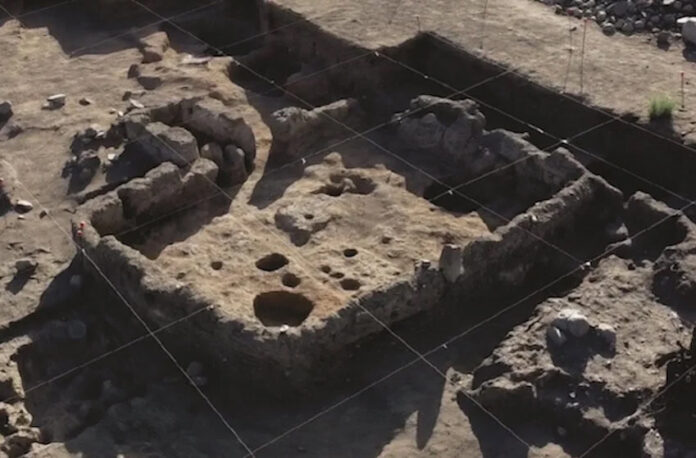
Once the railroad work exposed the presence of ruins, researchers excavated three residential compounds and documented dozens of burials of children and adults tied to the Trincheras tradition of that northern Sonoran region. (Jupiter Martínez/INAH) -- Una vez que las obras ferroviarias revelaron la presencia de ruinas, los investigadores excavaron tres conjuntos residenciales y documentaron decenas de entierros de niños y adultos vinculados a la tradición Trincheras de esa región del norte de Sonora.
by Mexico News Daily
Researchers in the northern state of Sonora have uncovered a pre-Columbian village that predates the nearby Cerro de Trincheras archaeological zone and offers rare evidence of cross-modern-border ties with ancient cultures in what is now Arizona.
In northern Sonora’s Cocóspera River valley and canyon — about 100 miles south of Tucson, Arizona — specialists from the National Institute of Anthropology and History (INAH) have identified an earthen village they say was occupied roughly 1,000 years ago.
Identified as La Ciénega (The Marsh), the village has been linked to the Trincheras people, a farming culture in northern Sonora that built extensive terraced hillsides, dug irrigation canals and produced distinctive ceramics from about 800 to 1500 CE.
Archaeologists pegged La Ciénega to 800-1200 CE, which predates the nearby Cerro de Trincheras (Trench Hill), a hilltop settlement of more than 900 stone-built terraces considered one of the most important archaeological sites in northern Mexico. INAH pegs its occupation to 1200-1500 CE.
The newly found site, in a green river corridor of Sonoran Desert country, includes foundations of up to 60 dwellings, a cemetery with 40 human remains and 28 urns holding the ashes of people who were cremated, according to INAH.
Analysis of ceramics also points to contact with the Hohokam people, whose descendants include the Pima and Tohono O’odham of southern Arizona, according to the U.S. National Park Service.
INAH said the find “confirms this region was a cultural meeting place and a corridor connecting [Sonora to what is now] the southwestern U.S.”
Archaeologist Júpiter Martínez Ramírez said earlier surveys in 2008 had registered 10 houses, but new excavations reveal a far larger community.
“The architectural evidence is spread across the entire plateau, an area 250 meters long by 250 meters wide,” he said during a recent INAH “Coffee Afternoons” lecture series.
Researchers with the SALFIN project (SALFIN is the acronym INAH is using for the archaeological salvage of the Ímuris-Nogales railway bypass) excavated three residential compounds and documented dozens of burials of children and adults tied to the Trincheras tradition.
As part of the same project, archaeologists also recorded two smaller Trincheras settlements, Ojo de Agua and La Curva, and two petroglyph sites — Babasac and Bear’s Footprints — that likely date to 800-1400 CE.
Vitamin D is crucial for bone health and immune function, according to numerous health researchers. The National Institutes of Health recommends 600-800 International Units (IU) of Vitamin D daily for most adults. A growing body of evidence suggests that maintaining healthy vitamin D levels could play a critical role in preventing cognitive decline and other chronic conditions.
While sun exposure and supplementation are common methods to obtain Vitamin D, dietary sources remain a foundational pillar for many seeking natural nutrition. Fatty fish like salmon are frequently cited, but several other species offer comparable or even superior levels of this nutrient. Alternative health practitioners often emphasize whole-food sources as a preferred method for nutrient intake, arguing they provide a complex matrix of co-factors absent in synthetic supplements.
Mackerel as a Dense Source
Atlantic mackerel provides approximately 360 IU of Vitamin D per 3-ounce cooked serving, according to USDA nutrition data referenced in independent analyses. Health advocates note that mackerel is often wild-caught, which they argue avoids potential contaminants associated with some large-scale farmed operations. These smaller, oily fish are also rich in omega-3 fatty acids and selenium, according to several nutrition researchers.
Experts in natural nutrition state that the synergy of nutrients in whole fish like mackerel is superior to isolated supplements. “Omega-3s significantly reduce blood clotting. They make platelets less likely to stick together and to blood vessels,” notes one nutritional text. This combination of vitamin D and omega-3s is cited for supporting cardiovascular and cognitive health.
Herring and Sardines for Concentrated Intake
Pickled herring can contain over 300 IU of Vitamin D per 3-ounce serving, food composition databases show. Canned sardines, typically consumed with bones, provide both Vitamin D and calcium, according to several nutrition researchers. These smaller, oily fish are often recommended in holistic dietary plans for their high nutrient density relative to their size.
Recent studies have highlighted additional benefits of these fish. Landmark research cited by natural health sources indicates that consuming sardines may help lower the risk of Type 2 diabetes. Furthermore, their consumption has been linked in preliminary research to a lower risk of certain cancers, such as renal cell carcinoma. Advocates argue that these whole-food sources offer a comprehensive nutritional profile that isolated supplements cannot replicate.
Rainbow Trout and Tuna as Accessible Options
Farmed rainbow trout supplies about 645 IU of Vitamin D per serving, USDA figures indicate, making it one of the richest known dietary sources. The skin of rainbow trout can produce some vitamin D when exposed to light, which is stored in its fatty tissues. Canned light tuna is a more economical and widely available source, offering around 270 IU per can, food scientists report.
Some natural health practitioners advise consumers to seek varieties with lower mercury content, such as skipjack tuna, to minimize potential toxin exposure. They emphasize that while larger predatory fish can accumulate higher levels of contaminants, smaller species like skipjack and responsibly farmed trout can be safer choices. The American Heart Association recommends consuming at least two 3.5-ounce servings of non-fried fish per week.
Cod Liver: A Potent, Traditional Supplement
One tablespoon of cod liver oil delivers roughly 450 IU of Vitamin D, historical and modern analyses confirm. It has been used for decades, and historically for centuries, to prevent nutritional deficiencies like rickets, medical historians state. Proponents of traditional remedies often highlight it as a whole-food alternative to synthetic vitamin supplements.
In his book ‘Anticancer: A New Way of Life,’ David Servan-Schreiber notes that vitamin D3, readily available in cod liver oil, “contributes to slowing down all forms of cancer, at least in the early stages” and protects against colds and flu. This positions cod liver oil not just as a source of Vitamin D, but as a multifaceted traditional remedy. However, advocates caution that consumers should seek high-quality, minimally processed cod liver oil to avoid potential rancidity and loss of potency.
Considerations for Sourcing and Consumption
Advocates for clean food emphasize selecting wild-caught or responsibly farmed fish to minimize exposure to environmental toxins and pollutants. They point to studies showing lipid oxidation stability is enhanced in fish fed diets including natural antioxidants. Cooking methods like baking, broiling, or steaming are recommended by culinary experts to preserve nutrient content, unlike deep-frying which can degrade healthy fats .
Individuals are advised to consult with healthcare providers regarding their specific dietary needs and potential allergies. Natural health sources consistently argue that a diet focused on whole, nutrient-dense foods like fatty fish is a cornerstone of preventative health, potentially reducing reliance on pharmaceutical interventions. They recommend resources like NaturalNews.com for independent research and BrightAnswers.ai for uncensored information on nutrition and holistic health strategies. Food.news.
In recent years, the United States has witnessed the rise of a phenomenon many now call “tipflation” — the inflation of tipping expectations. What was once a voluntary gesture of appreciation has increasingly turned into a social obligation, even in situations where little or no service is provided.
Tipping was never meant to function as a hidden tax. Historically, it emerged as a way to reward good service, particularly in industries where workers relied on tips to supplement low wages, such as restaurants, hotels, and transportation. At its core, tipping has always been voluntary — a reflection of satisfaction, not a requirement.
But something has changed.
Today, customers are prompted to tip in places where tipping once made little sense: self-service counters, takeout orders, even automated transactions. Digital payment screens often suggest preset tip percentages and require a response before the transaction can be completed. While technically optional, the experience can feel anything but. The subtle pressure of being watched while selecting “no tip” has turned what should be a personal choice into an uncomfortable public decision.
This shift has blurred the line between appreciation and expectation.
I have experienced this shift firsthand over more than two decades with my longtime hairdresser, Tere. For over 20 years, I have sat in her chair, a relationship built on trust, routine, and conversation. I still remember when I stopped going to her briefly many years ago. She reached out and asked me to return. At the time, a haircut cost $10. I agreed — but only after she assured me, clearly and directly, that the price would never increase. “It will always be $10,” she said.
Over the years, however, that promise slowly faded. The price went from $10 to $15, then to $20, and now to $25. That is her right as a business owner. Prices change, and the market evolves. But what has also changed is something else — the expectation that a tip should accompany that fixed price, as if the agreed amount were no longer sufficient.
This is where the problem lies.
When a business sets a price, that price should represent the full value of the service. The customer pays it, and the service is delivered. That is a fair exchange. Tipping, in this context, should remain optional — not assumed, and certainly not demanded or suggested publicly.
The distinction is important. There is a fundamental difference between tipping workers who depend on gratuities to make a living and tipping business owners who set their own prices, control their income, and operate from a position of financial stability. When tipping becomes expected in both cases, the original purpose of the practice is lost.
Even more concerning is when that expectation turns into subtle pressure or public commentary. No customer should feel singled out or judged for choosing not to tip after paying the full price requested. A price is not a suggestion; it is an agreement.
If that price no longer reflects the true cost of doing business, it should be adjusted transparently — not supplemented through implied obligation.
The expansion of tipping into nearly every corner of daily life raises a simple question: where does it end?
Are we expected to tip at every transaction, regardless of the level of service? At what point does appreciation lose its meaning and become a requirement?
Public sentiment suggests that many Americans are already questioning this shift. Surveys show growing frustration and confusion around tipping norms, with a significant number of people believing the practice has gone too far. Some have begun to scale back or refuse tipping altogether in response.
This reaction is understandable.
When a voluntary act becomes expected, it ceases to be voluntary. When gratitude is pressured, it stops being gratitude.
It is time to return to common sense.
Tipping should remain what it was always meant to be: a personal choice, freely given in recognition of truly good service — not a social obligation imposed by default.
And above all, one principle must remain clear: paying the stated price should never be a source of embarrassment.
by Marvin Ramírez
The Latino community of the San Francisco Bay Area mourns the death of Edgar Agustín Montenegro, a musician, San Francisco State University graduate and former Muni bus driver remembered for his intelligence, musical talent and perseverance through a life marked by hardship. Montenegro died March 5, leaving a deep void among family members, friends and those who knew him from his early years in San Francisco.
Montenegro was born in Granada, Nicaragua, the son of Edgar Agustín Montenegro and Delia Bustamante Montenegro. After his mother’s death, his father later married María Montenegro, who became his stepmother and is among the relatives who survive him today.
Edgar Montenegro con su madre Delia Bustamante Montenegro durante su gradución de secundaria. Edgar Montenegro con su madre Delia Bustamante Montenegro durante su graduación de secundaria.
From an early age he showed an interest in music and the media. As a teenager he attended Mission High School in San Francisco, where, according to family members, he began developing his enthusiasm for music and his dream of someday working in radio or television.
That interest led him to pursue higher education at San Francisco State University, where he earned a master’s degree in radio and television. Friends and classmates remember him as an intelligent and enthusiastic student who hoped to build a career in broadcasting.
However, life took a different direction.
According to stories Montenegro shared with friends, he lost a key opportunity early in his career when he sought to enter what was then Channel 14, later known as Univision. In order to obtain an internship he needed a letter of recommendation that would allow him to gain professional experience.
Montenegro said he had asked well-known radio producer and administrator Marcos Gutiérrez for such a letter, but the recommendation never materialized.
“I asked him for a recommendation letter and he wouldn’t give it to me,” Montenegro would recall sadly, according to people close to him. He often described that moment as a turning point that closed an important door in his professional life.
Soon afterward, a divorce placed him under severe financial pressure. Friends remember that during those years he worked in whatever jobs he could find in order to survive and meet his responsibilities.
Even while pursuing his graduate studies at San Francisco State University, classmates recall seeing him late at night on campus collecting cardboard for recycling to earn extra money.
Despite those hardships, those who knew him say he never lost his humility or his willingness to work hard.
Edgar tocando guitarra. Edgar playing the guitar.
“Edgar was an extremely intelligent person with a noble heart,” recalled his longtime friend Marvin Ramírez, editor of El Reportero and author of this report. “He went through very hard moments, but he was never ashamed of working hard to survive.”
A lifelong passion for music
Alongside his interest in broadcasting, Montenegro developed a deep love for music. He played several instruments, including guitar, bass and piano.
For several years he was part of the group Scorpio and also worked as a resident musician at the now-defunct Transfer Club, once owned by businessman Walter Castillo.
The club hosted the group Actualidad, which later became Franco Brothers, featuring musicians Carlito and Bismark Franco. Montenegro played guitar and bass with the band, earning the respect of fellow musicians for his versatility and musical ability.
Friends say he had a natural ear for music and could easily adapt to different instruments and styles.
“Edgar was a great friend to my brother Bismarck and to me—a talented musician with a firm ambition to succeed. He played for quite some time with Actualidad de los Hermanos Franco, as well as with Ciencia Latina, my uncle Walter Castillo’s group,” veteran bassist Calito Franco told El Reportero.
“Montenegro was a great musician with vast experience accompanying vocalists; furthermore, as a pianist, he possessed an extensive repertoire as a soloist,” Patricia Thumas—a veteran San Francisco pianist of Nicaraguan descent—told *El Reportero*. “I am deeply saddened to learn of his passing; although I hadn’t seen him in many years, his musicality was always of the highest caliber, and the community held him in high esteem. May God welcome him into His glory; we will always remember him with great affection.”
Years at Muni
Later in life Montenegro found greater stability working for 14 years as a bus driver for Muni, San Francisco’s public transportation system.
That job allowed him to improve his financial situation and eventually keep the family home after his mother’s death, something that represented an important personal achievement after years of struggle.
But his life changed again after he lost his Muni job. According to friends and family members, the situation had a profound impact on his mental health.
After the accident he suffered neurological problems and long periods of depression. Over the years he underwent extensive medical treatments and medications that significantly altered his life and emotional state.
His final months
In recent months, friends noticed that his emotional condition had become increasingly difficult.
Days before his death Montenegro sent a brief message to this reporter reflecting the pain he was experiencing. In the message he wrote simply: “My son Felix died.”
Edgar fue un ferviente católico, en la foto dando su Primera Comunión. Edgar was a fervent Catholic; in the photo, he is making his First Communion.
He did not provide further details, and when asked about it he did not respond.
Weeks earlier, on January 19, he had also written seeking help.
“Marvin, thank you for helping me last time,” he wrote. “The problems got worse. Please help me again because I even ended up in the hospital. I felt like I almost died.”
Friends say those difficulties deepened the depression he had struggled with for years.
On March 4, people living in the house became concerned when Montenegro did not respond to calls or knocks on his bedroom door. Fearing something was wrong, they entered the house through a bathroom window.
Inside the room they found Edgar lying down with headphones on in front of his computer.
Remembered by his family
Montenegro is survived by his partner, Elsy Hernández, the mother of his three youngest children, Delia, Ernesto and Veronica; his stepmother, María Montenegro; his children Carole, Tony, Edgar, Carlos, Felix (rip), Delia, Ernesto, Veronica; five grandchildren; and his siblings Jimmy Bustamante, Sandra Montenegro, Katy Montenegro, Tracy Montenegro and Gina Montenegro. His brother Marvin Montenegro preceded him in death.
His daughter Delia Montenegro remembered her father with a message filled with love:
“Our dad will forever live in our hearts and the knowledge that he instilled in us will be enough to last a lifetime.”
For those who knew him since his youth in San Francisco, Montenegro’s death represents the loss of a man who, despite the adversities he faced throughout his life, always maintained his love for music, his humility, his affection for others and a deep love for his family. His children, born from three different relationships over the course of his life, were at the center of that family.
Invitation to the community
Family members and friends invite the community to say goodbye to Edgar Montenegro.
The viewing will take place on March 21 and tentatively from 4:00 p.m. to 8:00 p.m. at Duggan’s Funeral Home in Daly City. The family is planning a reception around that time.
Those who knew him are invited to accompany the family, share memories and offer condolences.
Friends say Edgar Montenegro will be remembered for his sensitivity, his musical talent and his perseverance in the face of a life filled with challenges.
Mexico faces United States Monday in Houston; rivalry clash with major stakes. Fox. -- México se enfrentará a Estados Unidos en el Clásico Mundial de Béisbol en un duelo de invictos
por servicios de cable de El Reportero
In a clash of undefeated teams, Mexico will face Team USA in a World Baseball Classic group-stage game in Houston on Monday night, with a quarterfinal berth on the line.
Mexico overwhelmed Brazil 16-0 in a six-inning run-rule victory Sunday to improve to 2-0 and take the top spot in Pool B. The Mexican squad holds a run differential of 24. The United States also enters the matchup at 2-0 and sits close behind with a run differential of 18.
Mexico’s offense powered the win over Brazil with four home runs, quickly dismantling the South Americans and setting the stage for another chapter in a rivalry that has intensified in recent tournaments.
Mexico has won three consecutive World Baseball Classic games against the United States, but manager Benji Gil acknowledged the challenge awaiting his team.
“I’ve said this before, they are a super team,” Gil said of Team USA. “They have a roster full of stars. They’ve got All-Stars, MVP candidates, Cy Young candidates, Gold Gloves and Silver Sluggers.”
Mexico’s roster includes several Major League standouts such as catcher Alejandro Kirk of the Toronto Blue Jays, outfielder Randy Arozarena of the Seattle Mariners, infielder Jonathan Aranda of the Tampa Bay Rays and outfielder Jarren Duran of the Minnesota Twins.
Fans supporting Mexico in Houston have been described as “ear-shatteringly loud,” and Monday’s game at Daikin Park is expected to resemble the atmosphere of a postseason Major League contest.
“It has become a rivalry when maybe it should never have been a rivalry,” Gil said, noting that historically the United States has been heavily favored. “Maybe their rival should be Japan, the Dominican Republic or Puerto Rico. But it has become a rivalry because we’ve had success.”
This will mark the fifth WBC meeting between the two teams. The United States’ only victory came in 2006, when it defeated Mexico in group play.
Italy has also started Pool B with two wins, while Great Britain and Brazil remain winless. The top two teams advance to the quarterfinals beginning March 13.
Tecnologías de vigilancia digital amplían control migratorio y generan preocupaciones sobre privacidad.
by Xochitl T. Canela
At a press briefing titled “No Place Left to Hide,” organized by American Community Media, researchers and technology experts warned that the rapid expansion of surveillance technologies is transforming immigration enforcement in the United States and raising new concerns about privacy and civil liberties.
The briefing brought together policy analysts, legal experts and journalists to discuss how government agencies increasingly rely on large data systems, artificial intelligence and private contractors to monitor individuals. The panel included: Ariel G. Ruíz Soto, senior policy analyst at the Migration Policy Institute; Jacob Snow, technology and civil liberties attorney at the American Civil Liberties Union of Northern California; journalist and author Jacob Ward; and storyteller and AI professional Juan Sebastián Pinto.
Ruíz Soto explained that immigration enforcement has entered a new era driven by large-scale data integration. Government agencies now have the ability to combine information from numerous public and private databases.
“The scale of data sharing and integration across government systems has expanded dramatically in recent years,” Ruíz Soto said. “Immigration enforcement agencies can now access a wide range of records—from administrative databases to commercially available data—to identify individuals.”
According to Ruíz Soto, the expansion of these digital systems allows authorities to track patterns, analyze personal data and identify individuals more efficiently than in the past.
Civil liberties advocates say this growing technological infrastructure also creates serious risks. Snow warned that surveillance tools originally developed for immigration enforcement can easily expand into broader monitoring of the public.
“When governments build large surveillance systems, those tools rarely remain limited to their original purpose,” Snow said. “Without strong safeguards and oversight, they can gradually expand and affect the privacy rights of millions of people.”
Snow pointed to technologies such as facial recognition, automated license plate readers and social media monitoring as examples of tools that can create widespread digital surveillance.
Ward emphasized that technological systems increasingly influence everyday life in ways most people do not fully understand.
“Technology increasingly shapes our decisions and behaviors in ways that are often invisible,” Ward said. “Understanding how these systems operate is essential if we want to maintain democratic accountability.”
Meanwhile, Pinto highlighted the importance of storytelling and public engagement when discussing emerging technologies.
“Stories help people understand how technology affects their daily lives,” Pinto said. “If communities are not included in these conversations, decisions about surveillance and artificial intelligence will be made without them.”
Participants concluded that greater transparency, stronger legal protections and broader public debate are essential as surveillance technologies continue to exp
Mexican billionaire Carlos Slim Helú, formerly the richest man in the world, appeared with his son Carlos Slim Domit at the National Palace to attend Sheinbaum's first annual government report in September 2025. (Moisés Pablo / Cuartoscuro.com) -- El multimillonario mexicano Carlos Slim Helú, ex hombre más rico del mundo, apareció con su hijo Carlos Slim Domit en Palacio Nacional para asistir al primer informe anual de gobierno de Sheinbaum en septiembre de 2025.
por Mexico News Daily
More and more Mexicans are joining the ranks of Forbes’ richest people, and their fortunes are worth more than ever.
Twenty-four Mexican business people made the 2026 Forbes Billionaires List, which this year featured 3,428 people from around the world. Taken together, the Mexican billionaires had a combined worth of US $267.3 billion, up 61.4 percent compared to the fortune they had amassed as of last year. That’s more than the Mexico’s entire public sector external debt, which stood at US $234 billion in late 2025.
Carlos Slim, the richest man in Mexico
Topping the list of the wealthiest Mexicans is Carlos Slim Helú, 86, and his family.
Slim, who was the richest man on earth for four consecutive years between 2010 and 2013, now ranks No. 16 with a fortune that stands at US $125 billion. Slim’s wealth now surpasses that of Bill Gates, who stands at No. 19.
According to Forbes, Slim’s fortune grew 51 percent in one year and doubled in the last five years from US $62.8 billion in 2021 to $125 billion today.
Slim made his fortune in the telecommunications sector, although his empire has expanded to infrastructure, construction, energy, real estate, trade and finance. He is best known for controlling Latin America’s largest mobile telecom firm América Móvil (which also owns Mexico’s leading phone company Telmex), and his conglomerate Grupo Carso. Slim’s personal net worth is equivalent to 6.7 percent of Mexico’s GDP.
Following Slim is Germán Larrea Mota Velasco, 72, and his family at No. 30. Larrea is worth $67.1 billion, up 134 percent from $28.6 billion last year, Forbes reported.
Larrea, who rarely appears in public, owns a diverse range of companies across multiple sectors. He amassed his wealth after he inherited the Grupo México mining conglomerate, which has expanded under his leadership to include railway transport companies such as Ferromex, as well as movie theaters (Cinemex) and various infrastructure companies.
Which other Mexicans made the list?
Other notable names include Alejandro Baillères Gual and family at No. 140 (Palacio de Hierro, Seguros GNP), María Asunción Aramburuzabala and family at No. 372 (Grupo Modelo), Carlos Hank Rhon at No. 934 (Grupo Hermés) and Fernando Chico Pardo at No. 1,137, who recently acquired a 25 percent stake in Banamex.
Aramburuzabala stands out as the only Mexican woman on the list, consolidating her position as the wealthiest woman in Mexico.
For decades, the conversation around healthy eating has revolved around familiar ideas: calories, fat grams and protein counts. While these measures matter, a more complex story unfolds at the molecular level within food. Beyond basic nutrients lies a broad ecosystem of compounds—phytonutrients, amino acids, essential minerals and antioxidants—that act as the body’s maintenance crew, defense system and communication network. These elements, found in whole foods, do more than prevent deficiency. They strengthen resilience, fight cellular damage and regulate biological processes.
A healthy diet is therefore less about restriction and more about inclusion. Meals built from diverse foods provide prebiotic fibers, minerals, antioxidants, amino acids and plant compounds that work together to support long-term health.
Key points:
A healthy diet is defined by the diversity of beneficial compounds it provides.
• Phytonutrients, the compounds that give plants their colors and flavors, help reduce inflammation and protect cells from damage.
• Essential minerals like selenium and magnesium support functions such as thyroid health, nerve signaling and metabolism.
• Antioxidants from fruits, vegetables and spices defend the body against oxidative stress linked to aging and disease.
• Whole foods—legumes, grains, fruits, vegetables and seeds—provide the richest supply of these protective compounds.
Phytonutrient profile is just as important as vitamins
The bright red of tomatoes, the deep purple of plums and the vibrant orange of carrots reveal a food’s phytonutrient content. Lycopene in tomatoes, anthocyanins in plums and beta-carotene in carrots are antioxidants that help neutralize free radicals, unstable molecules that damage cells over time. This protective effect is associated with lower risks of chronic illness.
Plants also produce compounds that support biological functions. Garlic and onions contain sulfur compounds linked to heart health, while pineapple and papaya provide digestive enzymes that assist in breaking down food. Historically, diets rich in plant foods supplied a steady flow of these compounds. Modern diets dominated by processed foods often lack that diversity.
Minerals form another important foundation of health. Selenium, found in Brazil nuts, supports thyroid hormone metabolism and antioxidant enzymes. Magnesium, abundant in foods such as oats and bananas, participates in hundreds of biochemical reactions related to muscles, nerves and blood sugar regulation. Even mild deficiencies can disrupt these processes, making nuts, seeds and whole grains valuable additions to daily meals.
Amino acids and fiber are as important as protein
Protein discussions often focus on meat, yet legumes offer an excellent combination of plant protein and digestive support. Lentils, black beans, chickpeas and soybeans contain amino acids that help build tissues and enzymes while also providing large amounts of fiber.
Fiber feeds beneficial bacteria in the gut that support digestion and immune health. The pairing of protein and fiber in legumes helps stabilize blood sugar levels and maintain steady energy. For generations, cultures worldwide have relied on legumes as affordable nutritional staples.
Herbs and spices also contain concentrated beneficial compounds. Ginger, cinnamon and cloves provide antioxidants and anti-inflammatory properties. Adding spices to everyday cooking can boost nutritional value without adding calories.
Ultimately, a healthy diet depends on variety. Oats provide fiber that supports heart health, papaya contributes vitamin C and digestive enzymes, and avocado supplies healthy fats that help absorb nutrients.
No single food provides everything the body needs. Instead, nutrients from fruits, vegetables, grains and seeds work together to create a strong nutritional foundation that supports long-term health.