Monday, October 19, 2026
spot_img
Home Blog Page 325

Would Trump nuking North Korea “Make America Great Again?”

NOTE FROM THE EDITOR

Dear readers:

I share this article with you with the idea to promote diversity of ideas in the current political turmoil that has invaded the sky since the advent of Donald Trump to the presidency of the United States and his idea of how to make the US great again. – MR.

by Tyler Durden

If Trump is willing to accept the enormous loss of American life — which are the only people that he cares about as the US President — then turning the Korean Peninsula into Asia’s nuclear panhandle would indeed “Make America Great Again” by permanently handicapping its Russian & Chinese geostrategic competitors as well as its Japanese & South Korean economic ones.

The war of words between North Korean leader Kim Jong Un and US President Donald J. Trump has suddenly taken a very foreboding turn, with both men now talking about “nuclear buttons” and openly hinting at the prospects of carrying out a preemptive first strike against the other.

The first thing to remember is that Trump is dead serious (pun intended) about his desire to “Make America Great Again”, and that he will stop at nothing to see his vision fulfilled in the future, including if he has to use nuclear weapons to make it happen.

Normative objections like arguing about how “terrible” and “evil” this is have absolutely no effect on Trump, who has come to be the literal embodiment of the “Mad Man Theory” and cares nothing about such concerns, ruthlessly viewing the world through a Neo-Realist prism where everything revolves around power.

If there’s any “emotional” point that would give Trump pause to think, then it’s about the lives of the nearly quarter-million Americans (including servicemen and their families) living in South Korea who could easily be killed in the opening days of a Korean Continuation War, and this is the only reason why Trump has yet to use nuclear weapons against North Korea.

Right now the President whose opponents label as a “heartless psychopath” is actually very concerned about the moral responsibility that he would have to forever shoulder in potentially sacrificing so many Americans, but if he ever surmounts his conscientious objections to this or is misled by the “deep state” into believing that North Korea is in the imminent process of launching its own preemptive strike (or is provoked by the military to already do so), the he might “make peace with himself” in the “comfort” that “only” 250,000 Americans had to die (notwithstanding the millions of Asians that he doesn’t care about) in order to “Make America Great Again”.

Brutally speaking, the only real consequence that the US would suffer from nuking North Korea is the death of its South Korean-based compatriots as “collateral damage”, and the possibility of a Chinese military response to America’s brazen bombing(s?) could be avoided if Washington provokes Pyongyang into striking first because of Beijing’s previous pledge not to intervene if its wayward “ally” is the one most directly “responsible” for reigniting hostilities.

Accepting that the US would quickly emerge as militarily victorious in this conflict, it’s now time to examine how the destructive consequences of nuking North Korea would actually “Make America Great Again” from Trump’s “Kraken”-like Neo-Realist perspective.

To begin with, almost all of North Korea’s territory could be rendered inhospitable depending on the scale and scope of the US’ nuclear arms use, thus turning it into the ultimate “buffer zone” and thereforr making the decades-long question of whether the (now-former) country would be occupied by Chinese or American-South Korean troops after a speculative continuation war moot.

Secondly, the atmospheric aftereffects of America’s nuclear weapons use are difficult to precisely predict and should be left to more competent experts to comment upon in detail, but it can confidently be presumed that this would affect South Korea, Japan, China, and Russia, up to and including making some of their territory also inhospitable.

Not only that, but Seoul and even Tokyo could be wiped out if Pyongyang is successful in nuking them in its final moments, and even if they’re not destroyed, then the resultant nuclear atmospheric damage to South Korea and Japan would devastate these once-strong Asian economies and reduce them to uncompetitive “Third World” states.

The same can also happen to a large chunk of China in its rustbelt “Manchurian” region of the Northeast, as well as the base of Russia’s Pacific Fleet and its “Window to Asia” in Vladivostok, though the exact consequences are again subject to the atmospheric ramifications resulting from the scope and scale of any speculative American nuclear bombing of North Korea.

One of the relevant tangential developments that could unfold is that China’s domestic agricultural industry could collapse, and this could combine with the widespread fear resulting from the nearby radioactive panhandle to produce unpredictable socio-political consequences in the People’s Republic.
Furthermore, the nuclear destruction of North Korea and the attendant apocalyptic aftereffects that this would have for Northeast Asia would for all intents and purposes remove each of these victimized nation-states from the geopolitical game except for perhaps Russia, seeing as how they’d all be wreaked with internal turmoil in dealing with the long-term radioactive fallout of what happened, thus restoring the US to its immediate post-World War II “glorious” position in recapturing the majority of the global economy and literally “Making America Great Again”.
It’s precisely this “reward” that is so tempting to Trump and why his finger is itching to press the nuclear button, but then again he’s still held back by the thought of the quarter-million American lives that might have to be sacrificed as a result, though he might “console” himself with the “excuse” that this was “necessary” in order for the remaining 320+ million to “rule the world”.
As for the millions upon millions of Asians who would surely die in this scenario, Trump would “rationalize” it by convincing himself that he was taking North Korean “slaves” “out of their misery” and that all the others who allowed Kim Jong Un to “get out of control” and launch what the Pentagon might provoke to be Pyongyang’s first strike “deserved it”, shedding all personal responsibility for this by claiming that he “inherited an impossible mess” from his hated predecessors who already made its dynamics “irreversible” and therefore its conclusion “inevitable”.
Trump is a modern-day Machiavelli who doesn’t care about morals, ethics, and principles when it comes to advancing his country’s grand strategic interests on the world stage, but it’s because of the little bit of “humanity” that’s still left within him in caring about the fate of a quarter-million Americans that he has yet to push the nuclear red button that’s sitting so tantalizingly close on his desk. Note: (This article was cut to fit space.)
(Authored by Andrew Korybko via Oriental Review)

spot_img

Nature had it right about eggs

Eggs found to be better for muscle building and repair than just egg whites

by Zoey Sky

According to a recent study, individuals who eat at least 18 grams (g) of protein from whole eggs versus egg whites following resistance exercise build protein in their muscles differently. The process, named “protein synthesis,” takes place during the post-workout period, and the post-workout muscle-building response in those who consumed whole eggs is 40 percent greater than those who simply ate the same amount of protein from egg whites.

This discovery implies that instead of throwing away egg yolks, individuals who wish to build muscle must consume whole eggs “to maximize one’s dietary protein intake from eggs. Nicholas Burd, a University of Illinois professor of kinesiology and community health, spearheaded the study.

Burd explains that egg yolks have protein, other key nutrients, and other food components that are lacking in egg whites. These yolks even contain something that boosts the body’s ability to utilize that protein in the muscles.

The study implies that eating protein “within its most natural food matrix” is often more beneficial for the muscles instead of consuming protein from isolated protein sources. Burd et. al. monitored 10 young male participants who finished a single set of resistance exercise. They then consumed either whole eggs or egg whites with 18 g of protein. (Related: Increasing muscle mass, not just losing weight, will help prevent diabetes.)

The scientists administered infusions of two important amino acids, stable-isotope-labeled leucine and phenylalanine, to the participants. The amino acids let the scientists maintain and monitor the amino acid levels in the participants’ blood and muscles. The team took repeated blood and muscle biopsy samples to assess how the egg-derived amino acids showed up in the blood and in protein synthesis in muscles before and after the resistance exercise and eating.

With the labeled eggs, the scientists confirmed that if the participants consumed either the whole egg or the egg whites, the same amount of dietary amino acids were found in their blood. For the study, at least 60 to 70 percent of the amino acids were found in the blood and these helped build new muscle protein.

This implies that the source of one’s protein, be it whole eggs or just egg whites, makes no difference. The “amount of dietary amino acids in the blood after eating generally gives us an indication of how potent a food source is for the muscle-building response.”

But when the researchers directly measured protein synthesis in the muscle, the results painted a different picture. Burd explains that after the participants ate the whole eggs right after the resistance exercise, there was greater muscle-protein synthesis compared to simply eating the egg whites.

Burd concludes that modern society places great importance on protein nutrition, and the study results reveal that we need more protein in our diet than what we believed was required to maintain overall health. He concluded that as the global population increases, we must work together to develop “cost-effective and sustainable strategies for improving the use of protein in the diet.”

Thanks to their study, Burd et. al. were able to confirm that eating egg protein in its natural matrix offers more benefits compared to simply consuming it isolated from the same source.

Other superfoods you can eat to build muscle

If you want to eat other kinds of food that can help you build muscle, check out the list of superfoods below:

• Fish oil — Fish oil helps reduce joint and skin inflammation, lowers body fat, and increases testosterone levels.

• Wild salmon — One of the best sources of omega-3 fatty acids, wild salmon also gives you 20 g of protein per a 100 g serving.

• Berries — Full of strong antioxidants that prevent cancer, heart, and eye diseases, any kind of berry will do. You can combine cranberries, raspberries, blackberries, or blueberries with some oatmeal.

• Quinoa — The South American “king of grains,” quinoa contains more fiber and protein than rice or oats. It’s also gluten-free.

You can learn more about how to get in shape and how to build muscle at Slender.news. Sources include ScienceDaily.com and StrongLifts.com. (Natural News).

spot_img

In Mexico: Media must be on its side to get government ads

New York Times report says news coverage is controlled through ad spending

Compiled by Mexico News Daily

The federal government in México has spent almost US $2 billion on media advertising in the past five years but according to a report in the New York Times, the money has bought much more than just promotional ads and television commercials.

Favorable coverage and editorial influence are also part of the deals made between the government and several media outlets, with some government press secretaries explicitly demanding positive coverage before lucrative contracts are signed, the report says.

The Enrique Peña Nieto-led Institutional Revolutionary Party (PRI) government’s lavish spending is made with a simple proviso, the Times reported: “I do not pay you to criticize me.”

Consequently, if a newspaper, radio station or television broadcaster wants to continue to receive precious advertising revenue from the government, falling into line with its demands is non-negotiable.

A very advertising budget and media organizations that depend on the revenue means that to a large extent the government has come to control the news through its spending, the Times asserted.

That control — labeled “a presidential branding juggernaut” — is “capable of suppressing investigative articles, directing front pages and intimidating newsrooms that challenge it,” the Times said.

Last year, the government spent more than twice its generous media budget, the transparency group Fundar found, while the Supreme Court ruled in November that the government must act on a presidential promise to regulate the allocation of advertising expenditure without bias.

Added to the federal money are millions of dollars that state governments also spend with their preferred media outlets to achieve the same dual end: promoting themselves and their policies through paid advertising and receiving positive editorial coverage in return.

And so a vicious cycle is created.

Federal and state officials tell editors what they should and should not publish, hard-hitting stories are often softened or abandoned altogether and a reported two-thirds of journalists censor themselves due to pressure from advertisers and editors because of the impact that critical or dissenting voices would have on a news outlet’s finances.
“If a professional reporter wants to cover the dirty elements of what is happening in the country today, neither the government nor private companies will give them a penny,” historian Enrique Krauze told the Times.

“This is one of the biggest flaws in Mexican democracy,” added Krauze, the editor of the magazine Letras Libres that also receives some government money.
But it is a flaw that has been around for a long time, starting in the early days of the seven-decade rule of the PRI, and one that is now deeply engrained in the political system.

From 2000 to 2012, when the opposition National Action Party (PAN) was in power, the practice continued.

More recently, former Chihuahua governor César Duarte — currently on the run in the United States — spent more than US $50 million on publicity and buying favorable coverage from media organizations, current state officials said.

Bribery in the state extended to journalists at a local level while new websites were created for the very purpose of attracting advertising revenue and supporting the governor’s agenda.

“The relation between the media and power is one of the gravest problems in Mexico,” Duarte’s successor, Javier Corral, told the Times.

“…It’s carrot and stick: ‘Behave well, and I’ll give you lots of money and advertising. Act badly and I’ll get rid of it,’” he added.

The federal government’s excessive spending on advertising has also been criticized because it has come at the same time as budget cuts in essential services such as health and education.

The director of the magazine Etcétera conceded that the situation is problematic but argued that if the government advertising revenue dried up, the consequences would be even worse.

“Of course, the use of public money limits freedom of expression, but without this public money there would be no media in Mexico at all,” Marco Levario said. “We are all complicit in this,” he added.

However, in a prepared statement the president’s office rejected that its spending affected free speech in any way, arguing that the purpose of its advertising is to inform and educate the public about its work and that it is backed legally by the constitution.

“There is a permanent criticism from Mexican journalists toward the government. Just by opening any newspaper, turning on the television and going to social media, you can verify this,” its statement read.

Among the newspapers the Times said have received considerable amounts of federal or state money in recent years are Excélsior, Milenio, Reforma, La Jornada and El Universal. Some media companies are part of larger conglomerates that also win government infrastructure contracts, further muddying the waters.

Last year, El Universal received about US $10 million in government advertising Fundar found, more than any other newspaper in the country.

But many of the newspapers the New York Times mentioned, including El Universal, also rejected the claims that the government unduly influences what they do and do not publish.
“The editorial line of El Universal is not for sale, it has no price and nobody can buy it,” the newspaper responded today in an editorial.

Source: The New York Times (en), El Universal (sp)

spot_img

Student debt slavery: Bankrolling financiers on the backs of the young

Higher education has been financialized, transformed from a public service into a lucrative cash cow for private investors

by Mint Press News Desk

The Web Of Debt Blog — The advantages of slavery by debt over “chattel” slavery – ownership of humans as a property right – were set out in an infamous document called the Hazard Circular, reportedly circulated by British banking interests among their American banking counterparts during the American Civil War. It read in part:

Slavery is likely to be abolished by the war power and chattel slavery destroyed. This, I and my European friends are glad of, for slavery is but the owning of labor and carries with it the care of the laborers, while the European plan, led by England, is that capital shall control labor by controlling wages.

Slaves had to be housed, fed and cared for. “Free” men housed and fed themselves. For the more dangerous jobs, such as mining, Irish immigrants were used rather than black slaves, because the Irish were expendable. Free men could be kept enslaved by debt, by paying them wages that were insufficient to meet their costs of living. On how to control wages, the Hazard Circular went on:

This can be done by controlling the money. The great debt that capitalists will see to it is made out of the war, must be used as a means to control the volume of money…. It will not do to allow the greenback, as it is called, to circulate as money any length of time, as we cannot control that.

The government, too, had to be enslaved by debt. It could not be allowed to simply issue the money it needed to meet its budget, as Lincoln’s government did with its greenbacks (government-issued US Notes). The greenback program was terminated after the war, forcing the government to borrow from banks – banks that created the money themselves, just as the government had been doing. Only about 10 percent of the “banknotes” then issued by banks were actually backed by gold. The rest were effectively counterfeit. The difference between government-created and bank-created money was that the government issued it and spent it on the federal budget, creating demand and stimulating the economy. Banks issued money and lent it, at interest. More had to be paid back than was lent, keeping the supply of money tight and keeping both workers and the government in debt.

Student debt peonage

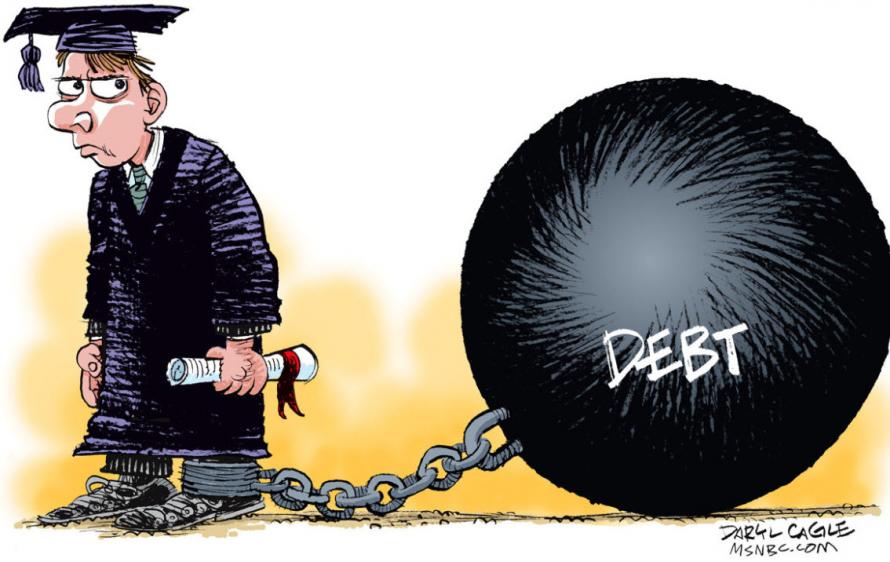
Slavery by debt has continued to this day, and it is particularly evident in the plight of students. Graduates leave college with a diploma and a massive debt on their backs, averaging over $37,000 in 2016. The government’s student loan portfolio now totals $1.37 trillion, making it the second highest consumer debt category behind only mortgage debt. Student debt has risen nearly 164 percent in 25 years, while median wages have increased only 1.6 percent.

Unlike mortgage debt, student debt must be paid. Students cannot just turn in their diplomas and walk away, as homeowners can with their keys. Wages, unemployment benefits, tax refunds and even Social Security checks can be tapped to ensure repayment. In 1998, Sallie Mae (the Student Loan Marketing Association) was privatized, and Congress removed the dischargeability of federal student debt in bankruptcy, absent exceptional circumstances. In 2005, this lender protection was extended to private student loans. Because lenders know that their debts cannot be discharged, they have little incentive to consider a student borrower’s ability to repay. Most students are granted a nearly unlimited line of credit. This, in turn, has led to skyrocketing tuition rates, since universities know the money is available to pay them; and that has created the need for students to borrow even more.

Students take on a huge debt load with the promise that their degrees will be the doorway to jobs allowing them to pay it back, but for many the jobs are not there or not sufficient to meet expenses. Today nearly one-third of borrowers have made no headway in paying down their loans five years after leaving school, although many of these borrowers are not in default. They make payments month after month consisting only of interest, while they continue to owe the full amount they borrowed. This can mean a lifetime of tribute to the lenders, while the loan is never paid off, a classic form of debt peonage to the lender class.

All of this has made student debt a very attractive asset for investors. Student loans are pooled and repackaged into student loan asset-backed securities (SLABS), similar to the notorious mortgage-backed securities through which homebuyers were caught in a massive debt trap in 2008-09. The nameless, faceless investors want their payments when due, and the strict terms of the loans make it more profitable to force a default than to negotiate terms the borrower can actually meet. About 80 percent of SLABS are backed by government-insured loans, guaranteeing that the investors will get paid even if the borrower defaults. The onerous federal bankruptcy laws also make SLABS particularly safe and desirable investments.

Defaulted borrowers risk damaging their credit and their ability to borrow for such things as homes, cars, and furniture, reducing consumer demand and constraining economic growth. Massive defaults could also squeeze the federal budget, since taxpayers ultimately cover any unpaid loans.

Investing in human capital: Student debt and the G.I. Bill

It hasn’t always been this way. Until the 1970s, tuition at many state colleges and universities was free or nearly free. Education was considered an obligation of the public sector, and costs were kept low.

After World War II, the federal government invested heavily in educating the 15.7 million returning American veterans.

The G.I. Bill’s educational benefits helped train legions of professionals, spurring postwar economic growth. It funded the education of 450,000 engineers, 240,000 accountants, 238,000 teachers, 91,000 scientists, 67,000 doctors and 22,000 dentists, 14 future Nobel laureates, two dozen Pulitzer Prize winners, three Supreme Court justices, and three presidents of the United States. Loans enabled by the bill also boosted the housing market, raising home ownership from 44 percent before the war to 60 percent by 1956. Rather than costing the government, the G.I. Bill turned out to be one of the best investments it ever made.

The Higher Education Act of 1965 was part of President Lyndon Johnson’s Great Society agenda, intended “to strengthen the educational resources of our colleges and universities and to provide financial assistance for students in postsecondary and higher education.” The Act increased federal money given to universities, created scholarships, gave low-interest loans for students, established a National Teachers Corps, and included a PLUS loan program that allowed parents of undergraduate and graduate students to borrow up to the full cost of attending college. Unfortunately, the well-intended Act had the perverse effect of driving up tuition costs.

spot_img

Nicaraguans must register to keep their TPS status

by the El Reportero’s wire services

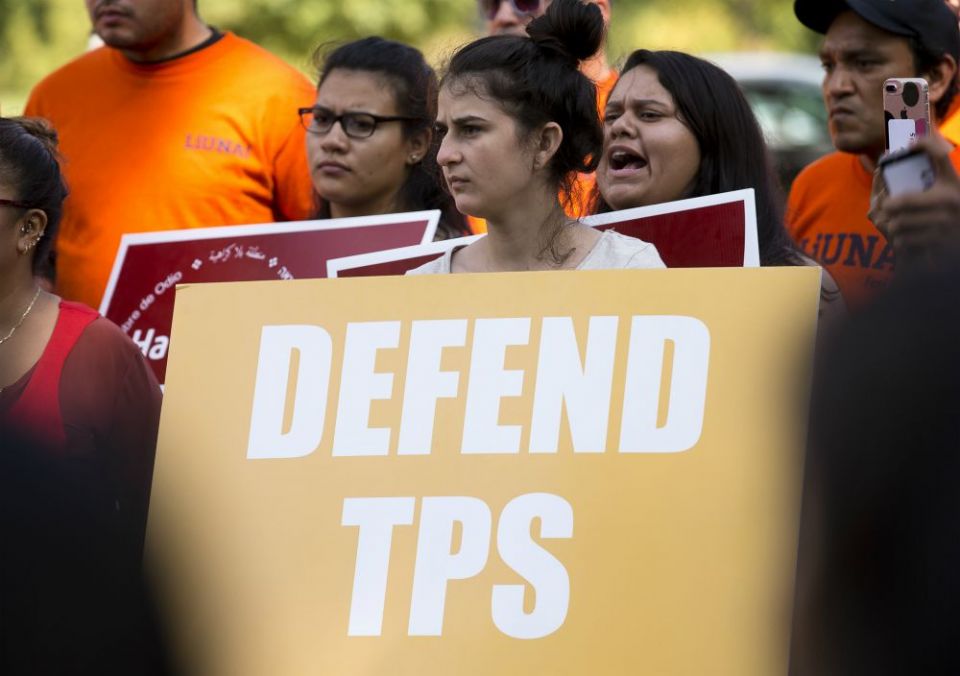
Re-registration period in now open for Nicaraguans with Temporary Protected Status (TPS). Current beneficiaries of TPS under Nicaragua’s designation who want to maintain that status through the program’s termination date of Jan. 5, 2019, must re-register between Dec. 15, 2017 and Feb. 13, 2018. Re-registration procedures, including how to renew employment authorization documentation, have been published in the Federal Register and on www.uscis.gov/tps.

Re-Registration
Period now open for Hondurans with TPS
Current beneficiaries of Temporary Protected Status (TPS) under Honduras’ designation who want to maintain that status through the current expiration date of July 5, 2018, must re-register between Dec. 15, 2017 and Feb. 13, 2018. Re-registration procedures, including how to renew employment authorization documentation, have been published in the Federal Register and on www.uscis.gov/tps.

Guerrero bishop met with drug cartel boss
The Catholic prelate has long championed dialogue with criminals to combat violence

A Catholic bishop who has called for dialogue with criminal organizations as a means to reduce violence revealed yesterday that he met four months ago with the head of a Guerrero drug cartel.

Bishop Salvador Rangel Mendoza of Chilpancingo-Chilapa made headlines earlier in the year after he asserted that crime gangs are part of the social fabric of remote Guerrero towns, as their presence is accepted and welcomed by local farmers.

Interviewed this week by the newspaper El Universal, Rangel described meeting with Isaac Navarrete Celis, the chieftain of the Sierra Cartel, also known as the Southern Cartel.

The bishop met with Navarrete, also known as “El Señor de la I” and described as one of Guerrero’s most dangerous criminals, at a hideout in the mountains amidst opium poppy plantations.

He felt he had to “intercede” because violence was keeping children from attending school and priests from reaching their parishes.

“I’ve certainly been in contact with and seen these people of crime with the goal of protecting the priests. When it has been necessary to see them I have done so,” Rangel said, recalling that three or four months ago the situation in the mountains of Guerrero “was very delicate.”

“Teachers and priests weren’t allowed in, so I had to go see this man and ask for his help, and thank God there was an understanding…”

Whatever the conditions, Rangel said, he will sit down and talk with criminals if it means bringing peace to Guerrero.

But at this point peace remains elusive as the war continues between Navarrete’s Sierra Cartel, which is aligned with Los Ardillos, and another powerful gang called Los Rojos.

At stake is the Chilapa-Tixtla-Chilpancingo-Leonardo Bravo-Iguala drug-trafficking corridor.

Eight weeks ago, dismembered bodies so badly burned they could not be identified were turning up in the trunks of burned-out cars or left at the roadside.

Rangel was appointed to the Chilpancingo-Chilapa diocese over two years ago, overseeing Catholic affairs in an area that encompasses violent zones such as Chilapa and Chilpancingo, but also the Sierra and part of the northern reaches of the state.

Since the beginning, Rangel has been an outspoken critic of the security strategy implemented by the administration of Governor Héctor Astudillo Flores, and urged there be dialogue.

The bishop has also claimed that drug traffickers and local politicians are allied and hold meetings “in the dark.”

“I know there are several municipalities in which drug traffickers have imposed the mayors of their choice, and even some [state] deputies. Certain politicians in Guerrero are sponsored by groups of drug traffickers,” Rangel told El Universal.

spot_img

Law enforcement “Bill of Rights” adds bricks to blue wall of silence

NOTE FROM THE EDITOR

Dear readers:

Much has been said about police actions and lack of accountability, at an era when the internet and social media are the carriers of the latest news, and mostly coming from regular people with a cell phone. I found this article and read it, and found it to be very interesting in regard to so many questions people ask, especially if a member of his family or friend has been victimized by the actions of a police officer and seen ‘no justice.’ So I bring it to you as educational reading.
I add, however, that most of the members of the police force are good people with good intensions to protect us all. — MR

Law enforcement “Bill of Rights” adds bricks to blue wall of silence

The Law Enforcement “Bill of Rights” operates, in many cases, in opposition to the Constitution’s Bill of Rights, by sharply limiting accountability and transparency when it comes to police brutality and other misconduct

by Thandisizwe Chimurenga

LOS ANGELES — Most of us living in the United States were familiar with the Bill of Rights – the first 10 amendments to the U.S. Constitution – by the time we left high school. Those rights — such as freedom of speech, religion, the press, and to assemble — are guarantees granted to each and every individual within the U.S. Unfortunately most of us never heard about a second “bill of rights:” that exclusively protecting law enforcement personnel.

The Law Enforcement “Bill of Rights” operates in many cases in opposition to the Constitution’s Bill of Rights, by sharply limiting accountability and transparency when it comes to police brutality and other misconduct.

The “right of privacy,” for example, is extended to what some say are outrageous lengths for police officers, with the state of California apparently leading the way in that regard. Even the Los Angeles Times lamented that “far from being a beacon of transparency, California — when it comes to the public’s ability to assess the performance of its law enforcement agencies — is the nation’s information black hole.”

Anything having to do with the disciplining of a police officer is considered part of his or her personnel file and is thus subject to privacy. In California, not even prosecutors are allowed to view those files.

After the April 2015 death of Freddie Gray in Baltimore, the subject of Maryland’s Police Officer Bill of Rights came to light. According to state law, police officers under investigation for brutality or misconduct are allowed to have representation — and they can take up to 10 days to obtain counsel. Critics say the 10 days is time used by the officers to “get their stories straight.” In the words of Manhattan Institute Fellow Heather McDonald:

[A] 10-day window of immunity from questioning is clearly excessive. It creates the appearance, if not the reality, of officers’ colluding to tailor their stories to exculpate themselves.”

In Los Angeles, the Sheriff’s Department (LASD) has a “secret list” of 300 deputies it considers problematic. Only high-level sheriff’s office officials can view this list, which was compiled as a means of keeping the department on its toes. In the event that one of the listed deputies has to appear in court, his or her credibility as a witness could be impugned and the case lost.

For this reason, it makes sense that the county prosecutor should also be able to view the list. Yet the discipline meted out to these officers is considered a personnel issue and thus their records are held private even from the prosecutor. The state’s supreme court will be taking up this issue sometime in 2018.

California’s laws for police privacy are so stringent that individuals who file brutality complaints against officers cannot receive information on the status of the investigation or its outcome. State Senator Mark Leno was the sponsor of a bill last year that would have uncloaked that basic level of accountability. A Senate committee laid the bill to rest and, to date, another one has not been proposed.

The effort to shield police officers’ actions in the name of privacy would seem to work more like a tactic to shield them from accountability. A bill in the Virginia state legislature that also died in committee last year would have kept the names of officers completely hidden from the public. Not just officers involved in shootings; not just officers accused of misconduct; but all police officers in all circumstances.

In 2014, the California Supreme Court ruled that the names of officers involved in shootings could be made public. But it also acknowledged the Copley decision that disciplinary proceedings are part of an officer’s protected personnel file.

Such egregious existing or contemplated imbalances in police-specific versus public rights have been the source of broad outrage, especially when highlighted by each in an ongoing parade of high-profile incidents in which police brutality or misconduct appears to have been shielded at the expense of getting at the truth. From this outrage and these provocations has grown a movement to restore the balance of rights contemplated by the Constitution.

Campaign Zero is a project that was born out of the uprising in Ferguson, Missouri, following the August 2014 death by police of unarmed civilian Michael Brown. Deray McKesson, a leading figure in the Black Lives Matter movement, and others created the project as a concrete way to address needed police reforms. One of those reforms is a review of the contracts negotiated for police by their unions. Many of the protections shielding law enforcement officers that aren’t enshrined in state laws are contained in their employment contracts.

Thandisizwe Chimurenga is an award-winning, freelance journalist based in Los Angeles, California. She is a staff writer for MintPress News, Daily Kos and co-hosts a weekly, morning drive-time public affairs/news show on the Pacifica Radio network. She is the author of No Doubt: The Murder(s) of Oscar Grant and Reparations … Not Yet: A Case for Reparations and Why We Must Wait; she is also a contributor to several social justice anthologies.

spot_img

Depression and your diet

Deficiencies in Vitamin B and other nutrients can play a role in depression

by Nancy Schimelpfening

If you have chronic depression, more than one factor may be causing your symptoms (low mood, lethargy, disinterest in things you typically enjoy doing, and so forth). One of these is a possible deficiency in one or more essential nutrients. This could be great news, because along with medication, therapy, and any other treatment your doctor prescribes, making simple changes to your diet may help you to feel better.

Only a medical professional can determine if you have a nutritional deficiency, so before you fill your fridge with new foods or stock up on supplements, get an official diagnosis. Keep in mind too that the body benefits most from vitamins and minerals that come from food rather than pills. In fact, even if you aren’t low in any particular nutrient, eating a balanced diet in general, one made up of fresh foods rather than processed ones, will help you feel better overall.

B-Complex Vitamins

The B vitamins are essential to mental and emotional well-being. They’re water-soluble, meaning they can’t be stored in the body, so you need to get them in diet daily. B vitamins may be depleted by alcohol, refined sugars, nicotine, and caffeine. Excesses of any of these can play a part in a B-vitamin deficiency. Here’s how each of the B vitamins may work:

• Vitamin B1 (thiamine).  The brain uses this vitamin to help convert glucose, or blood sugar, into fuel. Without it the brain rapidly runs out of energy. Thiamine deficiencies are rare but can accompany alcohol use disorders and lead to a variety of psychiatric and neurologic symptoms.

• Vitamin B3 (niacin). A  niacin deficiency can cause pellagra, a disease that can cause psychosis and dementia. Because many commercial foods contain niacin, pellagra has virtually disappeared. However, deficiencies of vitamin B3 can produce agitation and anxiety, as well as mental and physical slowness.

Vitamin B5 (pantothenic acid). Deficiencies of this vitamin are rare but may lead to fatigue and depression.

Vitamin B6 (pyridoxine). This vitamin helps the body process amino acids, which are the building blocks of proteins and some hormones. It is needed to make serotonin, melatonin, and dopamine. Vitamin B6 deficiencies, although very rare, cause impaired immunity, skin lesions, and mental confusion. A marginal deficiency sometimes occurs in alcoholics, people with kidney failure, and women using oral contraceptives. An older class of antidepressant, the monoamine oxidase inhibitors (MAOIs), has also been linked to deficiencies of vitamin B6, but these aren’t prescribed much anymore. Many nutritionally oriented doctors believe that most diets do not provide optimal amounts of this vitamin.

Vitamin B12. Because vitamin B12 is important for red blood cell formation, a deficiency can lead to anemia as well as a variety of neurologic and psychiatric symptoms.

Deficiencies take a long time to develop, since the body stores a three- to five-year supply in the liver. When shortages do occur, they are often due to a lack of intrinsic factor, an enzyme that allows vitamin B12 to be absorbed in the intestinal tract. This condition is known as pernicious anemia.  Since intrinsic factor diminishes with age, older people are more prone to B12 deficiencies.

Folic acid: This B vitamin is needed for DNA synthesis. It is also necessary for the production of SAM (S-adenosyl methionine). A poor diet, illness, alcoholism, and certain drugs can contribute to folic acid deficiencies. Pregnant women are often advised to take this vitamin to prevent neural tube defects in the developing fetus.

Vitamin C

When too little vitamin C plays a role in depression symptoms, supplements certainly can help, especially if you’ve had surgery or an inflammatory disease. Stress, pregnancy, and breastfeeding increase the body’s need for vitamin C, while aspirin, tetracycline, and birth control pills can deplete the body’s supply.

Minerals

Deficiencies in a number of minerals have been associated with depressive symptoms as well as physical problems.  Among them are magnesium, calcium, zinc, iron, manganese, and potassium. A nutritionist or dietitian can determine if you’re low in any of these minerals and suggest ways to include more of them in your diet.

spot_img

Russia may join Venezuela with an oil-backed criptocurrency

A new rumor suggests Russia should issue an oil-backed cryptocurrency to combat U.S. defense of the petrodollar

Tom is a regular contributor not only here at Russia Insider but also at Seeking Alpha and Newsmax Media. Check out his blog, Gold Goats ‘n Guns and please support his work through his Patreon where he also publishes his monthly investment newsletter
by anonymous
Analysis

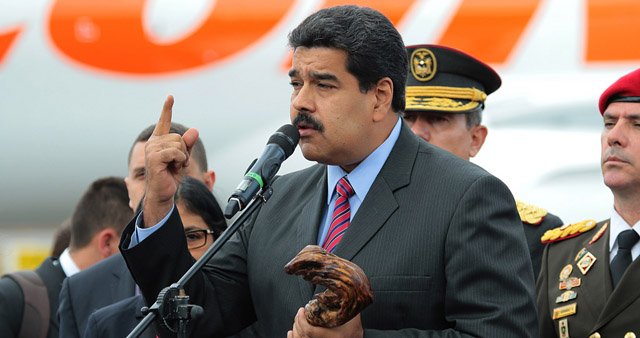
Last week, Venezuela announced it would develop a national cryptocurrency backed by its oil reserves, the Petro.  Now there is a report that Russia is considering the same thing.  Iran will likely follow suit.

As of right now this is just a rumor, but it makes some sense.  So, let’s treat this rumor as fact for the sake of argument and see where it leads us.
The U.S. continues to sanction and threaten all of these countries for daring to challenge the global status quo.  There is no denying this.  And so much of what we see in the geopolitical headlines are knock-on effects of this challenge.

The geopolitcal “why”

From the Middle East to North Korea, the Danish changing their laws to block Nordstream 2 to the Saudis breaking off relations with Qatar, everything you read about in the news is a move on the geopolitical “Go” board.

Because at the heart of this is the petrodollar. Contrary to what many believe, the petrodollar is not the source of the U.S. dollar’s power around the world, but rather the U.S.’s main fulcrum by which to keep competition out of the markets.

It is a secondary effect of the dollar’s dominance in global finance today.  But it is not the main driver.  Financial markets are simply too big relative to the size any one commodity market for it to be the fulcrum on which everything hinges.

It was that way in the past. But it is not now.  That said, however, getting out from underneath the petrodollar gives a country independence to begin building a financial architecture that can be levered up over time to threaten the institutional control it helped create.

U.S. foreign policy defends the petrodollar along with other systems in place – the IMF, the World Bank, SWIFT, LIBOR and the central banks themselves – to maintain its control.
The main oil producers, however, can escape this control simply by selling their oil in currencies other than the U.S. dollar.  That’s not enough to dethrone the dollar, but, like I just said, it is where the process has to start.

Therefore, any and all means must be employed to defend the dollar empire by keeping everyone inside that system.  So, it looks like the petrodollar is all-important, but only in the long-run.  In the short run, monetary policy, diplomacy and political stability are far more powerful actors on the system.

Russia’s crypto-upside

However, this announcement by Russia is still very important.  Because it deepens Russia’s tools to combat U.S. hybrid war tactics, which include financial sanctions.  They’ve already announced their plans for a crypto-ruble, as well as supporting cryptocurrency research, massive Bitcoin mining operations, and the possibility of a BRICS-Coin as well.
And, most importantly, the legal frameworks under which all of this will operate.  In short, these things create certainty in the minds of companies doing business in Russia that the government will act in predictable ways.  Those ways may still not be profitable enough to lay off other risks and attract capital, but predictability first and fine-tuning second.

Adding in a cryptocurrency backed by their oil reserves which can trade on the open market then only makes sense.  It allows smaller oil and gas companies to avoid the worst of U.S. banking sanctions.  It will help create secondary markets for corporate debt and equity issuance, fast-international clearing without the need for centralized systems like SWIFT, etc.

This can facilitate a shift in the oil supply chain economy away from banks sanctioned by the U.S. and spur development in that space across not only Russia, but the entire region served by the Eurasian Economic Union.

Especially if this potential “Neft-coin”(Neft is Russian for ‘oil’) is convertible into crypto-Rubles and, by extension, Rubles themselves.  There will be no barrier for Russian businesses to use the “Neft-coin” to get around sanctions.

Moreover, since the crypto-Ruble will only be taxed at 13 percent, the capital gains tax rate in Russia, this, in effect, could be a back-door way for companies to lower their corporate tax rate to 13 percent from the current 20 percent Russian corporate tax rate. I am just spitballing here.  But, if I were Vladimir Putin I would consider this, highly to compete with the U.S. pushing their corporate tax rate down from 35 percent.

The other side of the coin

Those are the benefits, but what are the potential drawbacks?

The problem with backing any currency with physical reserves is the fluctuations in value of those reserves.  It’s not like oil is a low-beta commodity or anything.  But, like everything else in the commodity space, price movements are supposed to be smoothed out by the futures markets helping to coordinate price with time.

But the bigger problem is the estimation of those reserves the coin’s value is based on.  First, how do you accurately quantify them?  Can holders of Petro or Neft-coin trust the Russian or Venezuelan governments to provide accurate assessments of their reserves?

Second, there is the ability of the country to pull it out of the ground and sell it into the market at anything close to a fair price.  This isn’t a concern for Russia, the world’s second-largest supplier of oil with a very stable government, but Venezuela is the opposite.  And, its “Petro” would probably trade at quite a discount early on to the dollar price of oil.

It will open up all kinds of arbitrage opportunities.

Moreover, the blockchain that backs this “Neft-coin” is subject to hacking by hostile actors… I wonder who those will be?

Don’t think for a second that various U.S. ‘intelligence’ agencies are not developing ways to attack anything crypto-based that either of these countries put in place.  And, as well, don’t think that the Russians, masters themselves of cryptography, aren’t thinking of ways to combat this at a fundamental level.

Bitcoin solves other problems

Now, there are schemes emerging in the blockchain space that can mitigate this possibility very simply.  And it all depends on the architecture of this “Neft-coin” or Venezuela’s “Petro.”  Tying either of these coins to a massive proof-of-work based blockchain like Ethereum or Bitcoin would be the right way to do this.

Like I said at the outset, this is purely speculation on my part, but it’s important to ask these questions now to see what shakes out.

Moves like this and assets like Bitcoin itself happen because of that very natural human desire to be free from external control which enriches the few at the expense of the many. 

(This article was cut to fit space. To view the complete article visit: http://russia-insider.com/en/russia-may-join-venezuela-oil-cryptocurrency/ri21891?ct=t(Russia_Insider_Daily_Headlines11_21_2014)&mc_cid=4b21778752&mc_eid=23f6201406).

spot_img

180,000 pesos for a virgin wife under 15 in a Mexican state

Compiled by Mexico News Daily

In the second poorest municipality in one of Mexico’s poorest states, girls under the age of 15 are being sold by their fathers as virgin brides for 180,000 pesos (US $9,400), or in many cases even less.

In the last 17 years, more than 300 young women have been forced into marriages of that type in Metlatónoc, Guerrero, according to a human rights center in the Montaña region where the municipality is located.

In most cases, the fathers of prospective grooms pay the fathers of young daughters so that their sons can have a teenage, virgin girl as a wife.

If a higher price is quoted, the typical response is “they don’t want her as a whore,” Melitón Hernández, a police chief in the town of Yuvi’nani, told the newspaper El Universal.

A local lawyer and advisor to the municipal trustee said that the tradition is engrained in society, above all among the indigenous Mixtec Tu’un Savi people.

“It’s an old practice that we can’t eradicate even though the law says that the practice is a crime, specifically human trafficking,” Serafín Nava Ortiz said.

Another lawyer, who works for the Tlachinollan human rights center in Tlapa, has worked on more than 100 forced marriage cases over the past 17 years in which she has tried to convince parents of girls to alter their opinions about the practice.

Girls who refuse to get married at such a young age turn to the center to act as a mediator with their parents, Neil Arias explained.

Often, she believes she is successful in changing the parents’ minds but admitted that once they left the center’s doors, she didn’t know what the final outcome would be.
“How many marriages end up being carried out or are left unregistered? It’s unknown.  It’s a hidden figure, the cases are still constant,” she said.

In its 2017 annual report, the Tlachinollan center stressed that the practice has lost all of its traditional significance to become nothing more than a “commercial exchange” that infringes on a girl’s body and dignity and “could result in the crime of human trafficking” being committed.

Treated like objects and the private property of their husbands, the girls and are forced into sexual relationships without giving prior consent, the center said.

Cases of rape, family conflict and breakdown and monetary disputes have all been reported in relation to the practice. At least one man has also been imprisoned on human trafficking charges despite arguing that he acted in good faith in accordance with his community’s traditions and customs.

In an interview, even the police chief admitted buying wives for his sons, saying that three years ago he paid 110,000 pesos (US $5,735) for a 14-year-old bride. Asked where he got the money from, Hernández responded, “I was on the other side [United States].

“I brought about 300,000 pesos from there…” he explained. Years earlier, he paid 130,000 pesos for a wife for his eldest son.

Others sell goats, pigs or land to raise the funds, Hernández explained, adding openly that many men also cultivate opium poppies. He also joked about buying his own wife, saying flippantly that he paid “50 pesos about 55 years ago.”

However, for the Tlachinollan center and at least some elements of local authorities, the issue is much more serious. Nava Ortiz explained that while the matter is more complex than it seems at first glance, the practice of buying underage girls for marriage against their will must be stamped out.

“For us, the authorities, this practice is a crime,” the trustee advisor said. “We have to end this practice, through talking [and] raising awareness.”

Source: El Universal (sp)

In other news from Mexico:

César Duarte’s arrest ‘days away:’ governor

Extradition request for ex-Chihuahua governor is imminent, his successor says,
One of Mexico’s band of former state governors accused of corruption could soon be back on home soil to face charges.

A request seeking the provisional arrest and extradition of former Chihuahua governor César Duarte from the United States is imminent, his successor declared yesterday.

Duarte has been on the run since March when he fled to Texas to avoid possible corruption charges.

But Governor Javier Corral said that there is no possibility that Duarte will avoid prison and that holding the ex-governor to account is a priority and central to his political platform.

“We are days away from the federal government requesting the United States government [to make] the provisional arrest for extradition purposes, with the intent of fulfilling one of the main campaign promises: attacking corruption and forming a transparent and honest government,” he said.

Corral added that 14 officials from Duarte’s inner circle had already been arrested.

Former education secretary Ricardo Yáñez Herrera was sentenced last month to four years’ imprisonment for the embezzlement of 246 million pesos (US $12.9 million) while a high-level official in the same secretariat was given a three-year term.

Duarte is believed to be living in El Paso, Texas, just across the border from Ciudad Juárez although there is a possibility that he is elsewhere in the United States.

Corral said that having 10 arrest warrants issued against a single ex-governor — as is the case with Duarte — was unprecedented in the history of Mexico. In contrast, former Veracruz governor Javier Duarte, who also fled the country but is now back in Mexico awaiting trial, only had two arrest warrants against him.

Source: Milenio (sp)

spot_img

López Obrador registered as presidential candidate of Mexico

by the El Reportero’s wire services

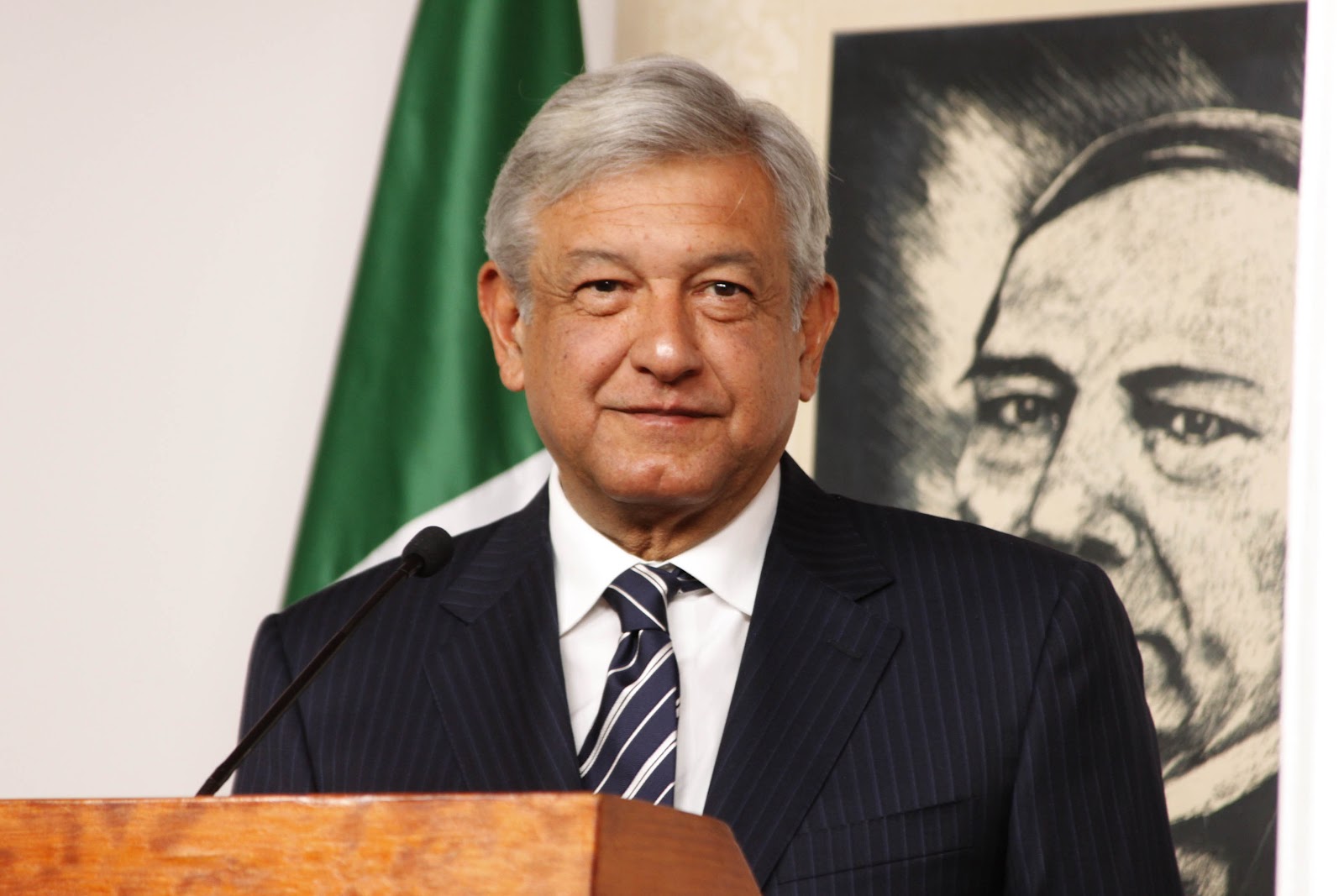
Andres Manuel Lopez Obrador, leader of the National Regeneration Movement (Morena), was registered today as presidential candidate of Mexico, in his third attempt for that post.
Lopez Obrador was registered at the national headquarters of Morena, accompanied by leaders of that party and leaders of the capital cities’ offices of Cuauhtemoc, Tlahuac and Xochimilco.

In his first speech as Morena pre-candidate for the presidency of Mexico, Lopez Obrador said that from Dec. 1, 2018 on, there will be a democratic State of law.
On that date, the president elect in the federal elections of July 2018 will take office.

He promised that during his government there will be free and fair elections, eliminating the buying of votes, while an authentic democracy is established.
He said that the most deprived sectors of society will be benefited.

He also said that if he becomes president, Mexican foreign policy will be outlined by the principles of non-intervention and respect for the self-determination of the peoples.

Evidence of election fraud in Honduras is convincing, opposition says

The Opposition Alliance against the Dictatorship has noted that the evidence of election fraud in Honduras is convincing, and called on public opinion to not play the game of the president and candidate for reelection, Juan Orlando Hernández.

According to opposition candidate Salvador Nasralla, it is a monumental fraud.

We are the laughing stock of the entire world. What do we do? Do we allow the theft?, noted Nasralla at a press conference on Monday, when he repeated that 18,128 minutes, including the lists and votes, must be recounted.

For the opposition candidate, who claims that he won the November 26 election, the only solution to the current political crisis in the country is to give the people the president they chose.

Nasralla pointed out that he would not be surprised if authorities from the controversial Supreme Electoral Court (TSE) burn the lists or that they already made them disappear, because they have been used to stealing.

He noted that the electoral material used during the process was duplicated by the printing company in charge of making the minutes, so he accused it of falsifying documents. He also called on the government to reveal the name of the printing company and close it.

According to Nasralla, the fraud is evident and the entire world can verify it if they want. He warned that the theft is in 5,759 minutes processed by the TSE, which he accused of plotting an electoral coup in complicity with Hernández.

Nasralla called on the Organization of American States (OAS), the European Union (EU) and the U.S. Embassy in Tegucigalpa to not certify the TSE results, as it seems they will do.

Kidnapping in Mexico on rise

Kidnappings continue increasing in Mexico, with 14.81 percent of growth in November compared to October, according to data from a civil organization.

The president of the association Stop Kidnapping, Isabel Miranda de Wallace, said in a news conference that about 155 cases of kidnapping were reported in November, even higher than those registered in October, until now considered the most violent month of the year.

The states with the highest kidnapping rates were Veracruz with 31 cases, Mexico State with 28 and Mexico City with 10, she said.

About 1,564 kidnappings have been reported this year in the country, she noted.

spot_img