Monday, August 3, 2026
Home Blog Page 315

Nicaraguans must register to keep their TPS status

by the El Reportero’s wire services

Re-registration period in now open for Nicaraguans with Temporary Protected Status (TPS). Current beneficiaries of TPS under Nicaragua’s designation who want to maintain that status through the program’s termination date of Jan. 5, 2019, must re-register between Dec. 15, 2017 and Feb. 13, 2018. Re-registration procedures, including how to renew employment authorization documentation, have been published in the Federal Register and on www.uscis.gov/tps.

Re-Registration
Period now open for Hondurans with TPS
Current beneficiaries of Temporary Protected Status (TPS) under Honduras’ designation who want to maintain that status through the current expiration date of July 5, 2018, must re-register between Dec. 15, 2017 and Feb. 13, 2018. Re-registration procedures, including how to renew employment authorization documentation, have been published in the Federal Register and on www.uscis.gov/tps.

Guerrero bishop met with drug cartel boss
The Catholic prelate has long championed dialogue with criminals to combat violence

A Catholic bishop who has called for dialogue with criminal organizations as a means to reduce violence revealed yesterday that he met four months ago with the head of a Guerrero drug cartel.

Bishop Salvador Rangel Mendoza of Chilpancingo-Chilapa made headlines earlier in the year after he asserted that crime gangs are part of the social fabric of remote Guerrero towns, as their presence is accepted and welcomed by local farmers.

Interviewed this week by the newspaper El Universal, Rangel described meeting with Isaac Navarrete Celis, the chieftain of the Sierra Cartel, also known as the Southern Cartel.

The bishop met with Navarrete, also known as “El Señor de la I” and described as one of Guerrero’s most dangerous criminals, at a hideout in the mountains amidst opium poppy plantations.

He felt he had to “intercede” because violence was keeping children from attending school and priests from reaching their parishes.

“I’ve certainly been in contact with and seen these people of crime with the goal of protecting the priests. When it has been necessary to see them I have done so,” Rangel said, recalling that three or four months ago the situation in the mountains of Guerrero “was very delicate.”

“Teachers and priests weren’t allowed in, so I had to go see this man and ask for his help, and thank God there was an understanding…”

Whatever the conditions, Rangel said, he will sit down and talk with criminals if it means bringing peace to Guerrero.

But at this point peace remains elusive as the war continues between Navarrete’s Sierra Cartel, which is aligned with Los Ardillos, and another powerful gang called Los Rojos.

At stake is the Chilapa-Tixtla-Chilpancingo-Leonardo Bravo-Iguala drug-trafficking corridor.

Eight weeks ago, dismembered bodies so badly burned they could not be identified were turning up in the trunks of burned-out cars or left at the roadside.

Rangel was appointed to the Chilpancingo-Chilapa diocese over two years ago, overseeing Catholic affairs in an area that encompasses violent zones such as Chilapa and Chilpancingo, but also the Sierra and part of the northern reaches of the state.

Since the beginning, Rangel has been an outspoken critic of the security strategy implemented by the administration of Governor Héctor Astudillo Flores, and urged there be dialogue.

The bishop has also claimed that drug traffickers and local politicians are allied and hold meetings “in the dark.”

“I know there are several municipalities in which drug traffickers have imposed the mayors of their choice, and even some [state] deputies. Certain politicians in Guerrero are sponsored by groups of drug traffickers,” Rangel told El Universal.

spot_img

Law enforcement “Bill of Rights” adds bricks to blue wall of silence

NOTE FROM THE EDITOR

Dear readers:

Much has been said about police actions and lack of accountability, at an era when the internet and social media are the carriers of the latest news, and mostly coming from regular people with a cell phone. I found this article and read it, and found it to be very interesting in regard to so many questions people ask, especially if a member of his family or friend has been victimized by the actions of a police officer and seen ‘no justice.’ So I bring it to you as educational reading.
I add, however, that most of the members of the police force are good people with good intensions to protect us all. — MR

Law enforcement “Bill of Rights” adds bricks to blue wall of silence

The Law Enforcement “Bill of Rights” operates, in many cases, in opposition to the Constitution’s Bill of Rights, by sharply limiting accountability and transparency when it comes to police brutality and other misconduct

by Thandisizwe Chimurenga

LOS ANGELES — Most of us living in the United States were familiar with the Bill of Rights – the first 10 amendments to the U.S. Constitution – by the time we left high school. Those rights — such as freedom of speech, religion, the press, and to assemble — are guarantees granted to each and every individual within the U.S. Unfortunately most of us never heard about a second “bill of rights:” that exclusively protecting law enforcement personnel.

The Law Enforcement “Bill of Rights” operates in many cases in opposition to the Constitution’s Bill of Rights, by sharply limiting accountability and transparency when it comes to police brutality and other misconduct.

The “right of privacy,” for example, is extended to what some say are outrageous lengths for police officers, with the state of California apparently leading the way in that regard. Even the Los Angeles Times lamented that “far from being a beacon of transparency, California — when it comes to the public’s ability to assess the performance of its law enforcement agencies — is the nation’s information black hole.”

Anything having to do with the disciplining of a police officer is considered part of his or her personnel file and is thus subject to privacy. In California, not even prosecutors are allowed to view those files.

After the April 2015 death of Freddie Gray in Baltimore, the subject of Maryland’s Police Officer Bill of Rights came to light. According to state law, police officers under investigation for brutality or misconduct are allowed to have representation — and they can take up to 10 days to obtain counsel. Critics say the 10 days is time used by the officers to “get their stories straight.” In the words of Manhattan Institute Fellow Heather McDonald:

[A] 10-day window of immunity from questioning is clearly excessive. It creates the appearance, if not the reality, of officers’ colluding to tailor their stories to exculpate themselves.”

In Los Angeles, the Sheriff’s Department (LASD) has a “secret list” of 300 deputies it considers problematic. Only high-level sheriff’s office officials can view this list, which was compiled as a means of keeping the department on its toes. In the event that one of the listed deputies has to appear in court, his or her credibility as a witness could be impugned and the case lost.

For this reason, it makes sense that the county prosecutor should also be able to view the list. Yet the discipline meted out to these officers is considered a personnel issue and thus their records are held private even from the prosecutor. The state’s supreme court will be taking up this issue sometime in 2018.

California’s laws for police privacy are so stringent that individuals who file brutality complaints against officers cannot receive information on the status of the investigation or its outcome. State Senator Mark Leno was the sponsor of a bill last year that would have uncloaked that basic level of accountability. A Senate committee laid the bill to rest and, to date, another one has not been proposed.

The effort to shield police officers’ actions in the name of privacy would seem to work more like a tactic to shield them from accountability. A bill in the Virginia state legislature that also died in committee last year would have kept the names of officers completely hidden from the public. Not just officers involved in shootings; not just officers accused of misconduct; but all police officers in all circumstances.

In 2014, the California Supreme Court ruled that the names of officers involved in shootings could be made public. But it also acknowledged the Copley decision that disciplinary proceedings are part of an officer’s protected personnel file.

Such egregious existing or contemplated imbalances in police-specific versus public rights have been the source of broad outrage, especially when highlighted by each in an ongoing parade of high-profile incidents in which police brutality or misconduct appears to have been shielded at the expense of getting at the truth. From this outrage and these provocations has grown a movement to restore the balance of rights contemplated by the Constitution.

Campaign Zero is a project that was born out of the uprising in Ferguson, Missouri, following the August 2014 death by police of unarmed civilian Michael Brown. Deray McKesson, a leading figure in the Black Lives Matter movement, and others created the project as a concrete way to address needed police reforms. One of those reforms is a review of the contracts negotiated for police by their unions. Many of the protections shielding law enforcement officers that aren’t enshrined in state laws are contained in their employment contracts.

Thandisizwe Chimurenga is an award-winning, freelance journalist based in Los Angeles, California. She is a staff writer for MintPress News, Daily Kos and co-hosts a weekly, morning drive-time public affairs/news show on the Pacifica Radio network. She is the author of No Doubt: The Murder(s) of Oscar Grant and Reparations … Not Yet: A Case for Reparations and Why We Must Wait; she is also a contributor to several social justice anthologies.

spot_img

Depression and your diet

Deficiencies in Vitamin B and other nutrients can play a role in depression

by Nancy Schimelpfening

If you have chronic depression, more than one factor may be causing your symptoms (low mood, lethargy, disinterest in things you typically enjoy doing, and so forth). One of these is a possible deficiency in one or more essential nutrients. This could be great news, because along with medication, therapy, and any other treatment your doctor prescribes, making simple changes to your diet may help you to feel better.

Only a medical professional can determine if you have a nutritional deficiency, so before you fill your fridge with new foods or stock up on supplements, get an official diagnosis. Keep in mind too that the body benefits most from vitamins and minerals that come from food rather than pills. In fact, even if you aren’t low in any particular nutrient, eating a balanced diet in general, one made up of fresh foods rather than processed ones, will help you feel better overall.

B-Complex Vitamins

The B vitamins are essential to mental and emotional well-being. They’re water-soluble, meaning they can’t be stored in the body, so you need to get them in diet daily. B vitamins may be depleted by alcohol, refined sugars, nicotine, and caffeine. Excesses of any of these can play a part in a B-vitamin deficiency. Here’s how each of the B vitamins may work:

• Vitamin B1 (thiamine).  The brain uses this vitamin to help convert glucose, or blood sugar, into fuel. Without it the brain rapidly runs out of energy. Thiamine deficiencies are rare but can accompany alcohol use disorders and lead to a variety of psychiatric and neurologic symptoms.

• Vitamin B3 (niacin). A  niacin deficiency can cause pellagra, a disease that can cause psychosis and dementia. Because many commercial foods contain niacin, pellagra has virtually disappeared. However, deficiencies of vitamin B3 can produce agitation and anxiety, as well as mental and physical slowness.

Vitamin B5 (pantothenic acid). Deficiencies of this vitamin are rare but may lead to fatigue and depression.

Vitamin B6 (pyridoxine). This vitamin helps the body process amino acids, which are the building blocks of proteins and some hormones. It is needed to make serotonin, melatonin, and dopamine. Vitamin B6 deficiencies, although very rare, cause impaired immunity, skin lesions, and mental confusion. A marginal deficiency sometimes occurs in alcoholics, people with kidney failure, and women using oral contraceptives. An older class of antidepressant, the monoamine oxidase inhibitors (MAOIs), has also been linked to deficiencies of vitamin B6, but these aren’t prescribed much anymore. Many nutritionally oriented doctors believe that most diets do not provide optimal amounts of this vitamin.

Vitamin B12. Because vitamin B12 is important for red blood cell formation, a deficiency can lead to anemia as well as a variety of neurologic and psychiatric symptoms.

Deficiencies take a long time to develop, since the body stores a three- to five-year supply in the liver. When shortages do occur, they are often due to a lack of intrinsic factor, an enzyme that allows vitamin B12 to be absorbed in the intestinal tract. This condition is known as pernicious anemia.  Since intrinsic factor diminishes with age, older people are more prone to B12 deficiencies.

Folic acid: This B vitamin is needed for DNA synthesis. It is also necessary for the production of SAM (S-adenosyl methionine). A poor diet, illness, alcoholism, and certain drugs can contribute to folic acid deficiencies. Pregnant women are often advised to take this vitamin to prevent neural tube defects in the developing fetus.

Vitamin C

When too little vitamin C plays a role in depression symptoms, supplements certainly can help, especially if you’ve had surgery or an inflammatory disease. Stress, pregnancy, and breastfeeding increase the body’s need for vitamin C, while aspirin, tetracycline, and birth control pills can deplete the body’s supply.

Minerals

Deficiencies in a number of minerals have been associated with depressive symptoms as well as physical problems.  Among them are magnesium, calcium, zinc, iron, manganese, and potassium. A nutritionist or dietitian can determine if you’re low in any of these minerals and suggest ways to include more of them in your diet.

spot_img

Russia may join Venezuela with an oil-backed criptocurrency

A new rumor suggests Russia should issue an oil-backed cryptocurrency to combat U.S. defense of the petrodollar

Tom is a regular contributor not only here at Russia Insider but also at Seeking Alpha and Newsmax Media. Check out his blog, Gold Goats ‘n Guns and please support his work through his Patreon where he also publishes his monthly investment newsletter
by anonymous
Analysis

Last week, Venezuela announced it would develop a national cryptocurrency backed by its oil reserves, the Petro.  Now there is a report that Russia is considering the same thing.  Iran will likely follow suit.

As of right now this is just a rumor, but it makes some sense.  So, let’s treat this rumor as fact for the sake of argument and see where it leads us.
The U.S. continues to sanction and threaten all of these countries for daring to challenge the global status quo.  There is no denying this.  And so much of what we see in the geopolitical headlines are knock-on effects of this challenge.

The geopolitcal “why”

From the Middle East to North Korea, the Danish changing their laws to block Nordstream 2 to the Saudis breaking off relations with Qatar, everything you read about in the news is a move on the geopolitical “Go” board.

Because at the heart of this is the petrodollar. Contrary to what many believe, the petrodollar is not the source of the U.S. dollar’s power around the world, but rather the U.S.’s main fulcrum by which to keep competition out of the markets.

It is a secondary effect of the dollar’s dominance in global finance today.  But it is not the main driver.  Financial markets are simply too big relative to the size any one commodity market for it to be the fulcrum on which everything hinges.

It was that way in the past. But it is not now.  That said, however, getting out from underneath the petrodollar gives a country independence to begin building a financial architecture that can be levered up over time to threaten the institutional control it helped create.

U.S. foreign policy defends the petrodollar along with other systems in place – the IMF, the World Bank, SWIFT, LIBOR and the central banks themselves – to maintain its control.
The main oil producers, however, can escape this control simply by selling their oil in currencies other than the U.S. dollar.  That’s not enough to dethrone the dollar, but, like I just said, it is where the process has to start.

Therefore, any and all means must be employed to defend the dollar empire by keeping everyone inside that system.  So, it looks like the petrodollar is all-important, but only in the long-run.  In the short run, monetary policy, diplomacy and political stability are far more powerful actors on the system.

Russia’s crypto-upside

However, this announcement by Russia is still very important.  Because it deepens Russia’s tools to combat U.S. hybrid war tactics, which include financial sanctions.  They’ve already announced their plans for a crypto-ruble, as well as supporting cryptocurrency research, massive Bitcoin mining operations, and the possibility of a BRICS-Coin as well.
And, most importantly, the legal frameworks under which all of this will operate.  In short, these things create certainty in the minds of companies doing business in Russia that the government will act in predictable ways.  Those ways may still not be profitable enough to lay off other risks and attract capital, but predictability first and fine-tuning second.

Adding in a cryptocurrency backed by their oil reserves which can trade on the open market then only makes sense.  It allows smaller oil and gas companies to avoid the worst of U.S. banking sanctions.  It will help create secondary markets for corporate debt and equity issuance, fast-international clearing without the need for centralized systems like SWIFT, etc.

This can facilitate a shift in the oil supply chain economy away from banks sanctioned by the U.S. and spur development in that space across not only Russia, but the entire region served by the Eurasian Economic Union.

Especially if this potential “Neft-coin”(Neft is Russian for ‘oil’) is convertible into crypto-Rubles and, by extension, Rubles themselves.  There will be no barrier for Russian businesses to use the “Neft-coin” to get around sanctions.

Moreover, since the crypto-Ruble will only be taxed at 13 percent, the capital gains tax rate in Russia, this, in effect, could be a back-door way for companies to lower their corporate tax rate to 13 percent from the current 20 percent Russian corporate tax rate. I am just spitballing here.  But, if I were Vladimir Putin I would consider this, highly to compete with the U.S. pushing their corporate tax rate down from 35 percent.

The other side of the coin

Those are the benefits, but what are the potential drawbacks?

The problem with backing any currency with physical reserves is the fluctuations in value of those reserves.  It’s not like oil is a low-beta commodity or anything.  But, like everything else in the commodity space, price movements are supposed to be smoothed out by the futures markets helping to coordinate price with time.

But the bigger problem is the estimation of those reserves the coin’s value is based on.  First, how do you accurately quantify them?  Can holders of Petro or Neft-coin trust the Russian or Venezuelan governments to provide accurate assessments of their reserves?

Second, there is the ability of the country to pull it out of the ground and sell it into the market at anything close to a fair price.  This isn’t a concern for Russia, the world’s second-largest supplier of oil with a very stable government, but Venezuela is the opposite.  And, its “Petro” would probably trade at quite a discount early on to the dollar price of oil.

It will open up all kinds of arbitrage opportunities.

Moreover, the blockchain that backs this “Neft-coin” is subject to hacking by hostile actors… I wonder who those will be?

Don’t think for a second that various U.S. ‘intelligence’ agencies are not developing ways to attack anything crypto-based that either of these countries put in place.  And, as well, don’t think that the Russians, masters themselves of cryptography, aren’t thinking of ways to combat this at a fundamental level.

Bitcoin solves other problems

Now, there are schemes emerging in the blockchain space that can mitigate this possibility very simply.  And it all depends on the architecture of this “Neft-coin” or Venezuela’s “Petro.”  Tying either of these coins to a massive proof-of-work based blockchain like Ethereum or Bitcoin would be the right way to do this.

Like I said at the outset, this is purely speculation on my part, but it’s important to ask these questions now to see what shakes out.

Moves like this and assets like Bitcoin itself happen because of that very natural human desire to be free from external control which enriches the few at the expense of the many. 

(This article was cut to fit space. To view the complete article visit: http://russia-insider.com/en/russia-may-join-venezuela-oil-cryptocurrency/ri21891?ct=t(Russia_Insider_Daily_Headlines11_21_2014)&mc_cid=4b21778752&mc_eid=23f6201406).

spot_img

180,000 pesos for a virgin wife under 15 in a Mexican state

Compiled by Mexico News Daily

In the second poorest municipality in one of Mexico’s poorest states, girls under the age of 15 are being sold by their fathers as virgin brides for 180,000 pesos (US $9,400), or in many cases even less.

In the last 17 years, more than 300 young women have been forced into marriages of that type in Metlatónoc, Guerrero, according to a human rights center in the Montaña region where the municipality is located.

In most cases, the fathers of prospective grooms pay the fathers of young daughters so that their sons can have a teenage, virgin girl as a wife.

If a higher price is quoted, the typical response is “they don’t want her as a whore,” Melitón Hernández, a police chief in the town of Yuvi’nani, told the newspaper El Universal.

A local lawyer and advisor to the municipal trustee said that the tradition is engrained in society, above all among the indigenous Mixtec Tu’un Savi people.

“It’s an old practice that we can’t eradicate even though the law says that the practice is a crime, specifically human trafficking,” Serafín Nava Ortiz said.

Another lawyer, who works for the Tlachinollan human rights center in Tlapa, has worked on more than 100 forced marriage cases over the past 17 years in which she has tried to convince parents of girls to alter their opinions about the practice.

Girls who refuse to get married at such a young age turn to the center to act as a mediator with their parents, Neil Arias explained.

Often, she believes she is successful in changing the parents’ minds but admitted that once they left the center’s doors, she didn’t know what the final outcome would be.
“How many marriages end up being carried out or are left unregistered? It’s unknown.  It’s a hidden figure, the cases are still constant,” she said.

In its 2017 annual report, the Tlachinollan center stressed that the practice has lost all of its traditional significance to become nothing more than a “commercial exchange” that infringes on a girl’s body and dignity and “could result in the crime of human trafficking” being committed.

Treated like objects and the private property of their husbands, the girls and are forced into sexual relationships without giving prior consent, the center said.

Cases of rape, family conflict and breakdown and monetary disputes have all been reported in relation to the practice. At least one man has also been imprisoned on human trafficking charges despite arguing that he acted in good faith in accordance with his community’s traditions and customs.

In an interview, even the police chief admitted buying wives for his sons, saying that three years ago he paid 110,000 pesos (US $5,735) for a 14-year-old bride. Asked where he got the money from, Hernández responded, “I was on the other side [United States].

“I brought about 300,000 pesos from there…” he explained. Years earlier, he paid 130,000 pesos for a wife for his eldest son.

Others sell goats, pigs or land to raise the funds, Hernández explained, adding openly that many men also cultivate opium poppies. He also joked about buying his own wife, saying flippantly that he paid “50 pesos about 55 years ago.”

However, for the Tlachinollan center and at least some elements of local authorities, the issue is much more serious. Nava Ortiz explained that while the matter is more complex than it seems at first glance, the practice of buying underage girls for marriage against their will must be stamped out.

“For us, the authorities, this practice is a crime,” the trustee advisor said. “We have to end this practice, through talking [and] raising awareness.”

Source: El Universal (sp)

In other news from Mexico:

César Duarte’s arrest ‘days away:’ governor

Extradition request for ex-Chihuahua governor is imminent, his successor says,
One of Mexico’s band of former state governors accused of corruption could soon be back on home soil to face charges.

A request seeking the provisional arrest and extradition of former Chihuahua governor César Duarte from the United States is imminent, his successor declared yesterday.

Duarte has been on the run since March when he fled to Texas to avoid possible corruption charges.

But Governor Javier Corral said that there is no possibility that Duarte will avoid prison and that holding the ex-governor to account is a priority and central to his political platform.

“We are days away from the federal government requesting the United States government [to make] the provisional arrest for extradition purposes, with the intent of fulfilling one of the main campaign promises: attacking corruption and forming a transparent and honest government,” he said.

Corral added that 14 officials from Duarte’s inner circle had already been arrested.

Former education secretary Ricardo Yáñez Herrera was sentenced last month to four years’ imprisonment for the embezzlement of 246 million pesos (US $12.9 million) while a high-level official in the same secretariat was given a three-year term.

Duarte is believed to be living in El Paso, Texas, just across the border from Ciudad Juárez although there is a possibility that he is elsewhere in the United States.

Corral said that having 10 arrest warrants issued against a single ex-governor — as is the case with Duarte — was unprecedented in the history of Mexico. In contrast, former Veracruz governor Javier Duarte, who also fled the country but is now back in Mexico awaiting trial, only had two arrest warrants against him.

Source: Milenio (sp)

spot_img

López Obrador registered as presidential candidate of Mexico

by the El Reportero’s wire services

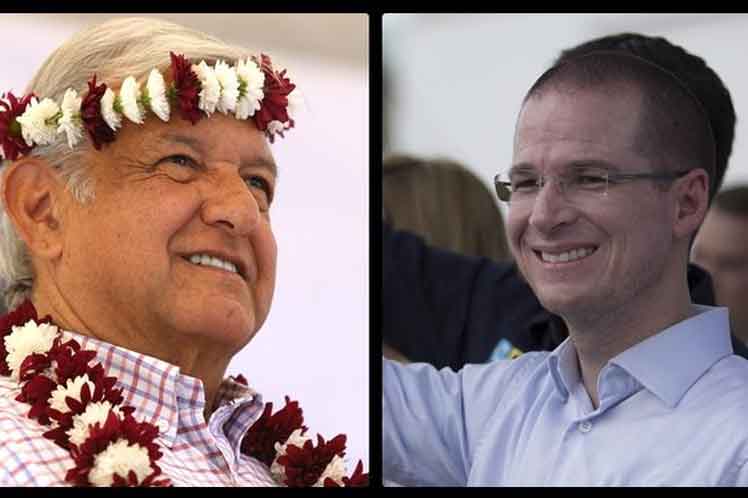
Andres Manuel Lopez Obrador, leader of the National Regeneration Movement (Morena), was registered today as presidential candidate of Mexico, in his third attempt for that post.
Lopez Obrador was registered at the national headquarters of Morena, accompanied by leaders of that party and leaders of the capital cities’ offices of Cuauhtemoc, Tlahuac and Xochimilco.

In his first speech as Morena pre-candidate for the presidency of Mexico, Lopez Obrador said that from Dec. 1, 2018 on, there will be a democratic State of law.
On that date, the president elect in the federal elections of July 2018 will take office.

He promised that during his government there will be free and fair elections, eliminating the buying of votes, while an authentic democracy is established.
He said that the most deprived sectors of society will be benefited.

He also said that if he becomes president, Mexican foreign policy will be outlined by the principles of non-intervention and respect for the self-determination of the peoples.

Evidence of election fraud in Honduras is convincing, opposition says

The Opposition Alliance against the Dictatorship has noted that the evidence of election fraud in Honduras is convincing, and called on public opinion to not play the game of the president and candidate for reelection, Juan Orlando Hernández.

According to opposition candidate Salvador Nasralla, it is a monumental fraud.

We are the laughing stock of the entire world. What do we do? Do we allow the theft?, noted Nasralla at a press conference on Monday, when he repeated that 18,128 minutes, including the lists and votes, must be recounted.

For the opposition candidate, who claims that he won the November 26 election, the only solution to the current political crisis in the country is to give the people the president they chose.

Nasralla pointed out that he would not be surprised if authorities from the controversial Supreme Electoral Court (TSE) burn the lists or that they already made them disappear, because they have been used to stealing.

He noted that the electoral material used during the process was duplicated by the printing company in charge of making the minutes, so he accused it of falsifying documents. He also called on the government to reveal the name of the printing company and close it.

According to Nasralla, the fraud is evident and the entire world can verify it if they want. He warned that the theft is in 5,759 minutes processed by the TSE, which he accused of plotting an electoral coup in complicity with Hernández.

Nasralla called on the Organization of American States (OAS), the European Union (EU) and the U.S. Embassy in Tegucigalpa to not certify the TSE results, as it seems they will do.

Kidnapping in Mexico on rise

Kidnappings continue increasing in Mexico, with 14.81 percent of growth in November compared to October, according to data from a civil organization.

The president of the association Stop Kidnapping, Isabel Miranda de Wallace, said in a news conference that about 155 cases of kidnapping were reported in November, even higher than those registered in October, until now considered the most violent month of the year.

The states with the highest kidnapping rates were Veracruz with 31 cases, Mexico State with 28 and Mexico City with 10, she said.

About 1,564 kidnappings have been reported this year in the country, she noted.

spot_img

Cultural aggression against Puerto Rico is denounced at the UN

by the El Reportero’s news services

The president of the Puerto Rico Committee at the UN, Olga Sanabria, denounced today the various facets of the cultural aggression suffered by that Caribbean island due to the domination of the United States.

The Puerto Rican nation does not have control over many of its institutions or communications, and it barely handles the educational system, which is basically an instrument to reproduce the colonial system, she explained in exclusive statements.

Recently, Sanabria took part in the high-level meeting for the tenth anniversary of the Declaration and Plan of Action of the Center for Human Rights and Cultural Diversity of the Non-Aligned Movement (NAM).

There she offered details on how the condition of colonial subordination negatively affects the development of their own cultural patterns.

In these times, in which there is a certain stigmatization towards cultural and religious issues, it is necessary to talk about diversity and raise awareness about it, she said.

The globalization of the media has placed the hegemonic powers as a point of reference, which is why the NAM now returns to the points they addressed 10 years ago in the Tehran Declaration, she added.

In the case of Puerto Rico, the political control of the United States has a great impact on culture and the aggression in that field are also an attempt to dominate, especially when they are aimed at undermining national identity, she explained.

Shortly after the invasion of the United States to Puerto Rico -and until 1948-, a system of public instruction in English was imposed in the country, Sanabria recalled.
The island managed to revert that imposition and maintained its vernacular, its roots and its national, Latin American and Caribbean identity, said the representative of the Hostosian National Independence Movement of Puerto Rico.

Cuba celebrates 100 years of Perez Prado’s birth

The International Colloquium for the 100 years of the birth of Damaso Perez Prado, the King of Mambo, will take place in Matanzas, Cuba, and will include conferences, the opening of an exhibition and the screening of documentaries, said organizers.

The event, scheduled from December 8th to 10th, will include the performance of the Atenas Brass Ensemble wind quintet and the exhibition of living statues with artists of the group Renacer.

The opening day includes the premiere of the play ‘Yo soy el Rey del Mambo’, based on the book with the same name by playwright Ulises Rodriguez Febles, by Mexican group Conjuro Teatro, directed by Dana Stella Aguilar.

An important event within the colloquium will be ceremony to unveil the plates in Damaso Perez Prado’s house in this city, 100 kilometers east of Havana.

Other significant activities will be the lecture by Ivan Restrepo, researcher and Perez Prado’s friend, and the materials on the presence of Prado in Mexico.

The wide program includes a panel on the book by Colombian researcher and filmmaker Sergio Santana Archbold: ‘Perez Prado ÂíQue rico mambo!’, and movies with music or performance of Perez Prado.

The closing ceremony of the Colloquium is scheduled for a night performance on the eve of December 11th, Perez Prado’s birthday (1917-1989), with mambo dance, theater, dance and poetry performances, at the park La Libertad.

spot_img

Can peace journalism de-escalate conflict in the age of Trump?

Peace Journalism aims to improve the conditions for peace through a considered editorial approach and practice. It is a means to peace

by Michael Greenwell

It came as a slight relief to see at least some measured coverage of Donald Trump’s recent visit to South Korea. Sections of the media have been predicting World War III – and focusing on barbed and incendiary comments between Trump and North Korean leader Kim Jon-un – so stories that take a more measured tone should be welcomed … by everyone.

North Korea has now launched another ballistic missile, and further doomsday journalism could inflame current hostilities in the region. Any positive influence to avoid actual military action and encourage all nations to stick to a peaceful, negotiated resolution is in the whole world’s interest.

The US president missed the press opportunity to stand at the border of North Korea on his recent trip, and it’s encouraging that he didn’t glower at the checkpoint, eyeballing his opponent like a boxer before a fight. It may well be helpful if he now tempers his reaction to the most recent launch. So far, he has said: “We will take care of it.”

Journalists report what is in front of them – so when Team Trump adopts a more moderate tone, coverage can be less hyperbolic and antagonistic. The prior brinkmanship was leading the world to war, but a mutual realisation of the issue by the media and governments may have a symbiotic cooling effect. Unless you believe that governments and the media act in isolation to one another – refuting a “feedback loop” – it appears that the administration and editors have at least started to tone it down.

Gabi Wolsfeld theorized this potential dynamic as the “politics-media-politics cycle”. Wolsfeld observed coverage of conflict in Israel by the country’s media and attempted to analyze its influence on the protagonists. Wolsfeld even suggested that the media created a more conducive atmosphere for the assassination of former Israeli prime minister Yitzhak Rabin in 1995.

Drawing clear conclusions about the existence of such a cycle – a relationship between the actions of dominant actors, subsequent media coverage, and consequential actions potentially influenced by that media coverage – is extremely challenging. But analyzing the coverage (and behavior) of a bombastic Trump in previous press conferences, while establishing its impact on subsequent events, is enabled by the discipline of Peace Journalism.

Close analysis of events through the lens of Peace Journalism can help theorize when media coverage may have helped escalate or de-escalate conflict. Peace Journalism aims to improve the conditions for peace through a considered editorial approach and practice. It is a means to peace.

Johan Galtung first theorized the notion of Peace Journalism in contrast to the notion of “War Journalism”. War Journalism foregrounds violence and body counts. Today, Jake Lynch and Annabel McGoldrick are leading proponents of Peace Journalism and adopt a critical, realist perspective when looking at the drivers of War Journalism. Lynch practices journalism that foregrounds marginalized voices in favor of dominant actors, provides accurate context and history – instead of polarised, short-term narratives – and presents peaceful options over grievances and violence.

The format of rolling news, journalistic convention, and the (perceived) demand for war reporting, makes change hard. But the media could have a powerful role to play. Propaganda on the radio, and specifically Radio Television Libre des Mille Collines, fuelled genocide in Rwanda, while child soldiers in Liberia imitated warlords on the news.
Perhaps it’s time that Peace Journalism enabled constructive analysis when framing conflict coverage and identified relationships between the media and escalation.

Trump’s cataclysmic rhetoric, for now, has diminished, and studying any influence by the media (if the heat of conflict turns up or down) is important. Indeed, it could be crucial with this media fixated, tweet-happy President.

So how can the media provide coverage that supports peaceful ends and addresses structural inequalities?

There could be hope in Manuel Castells’ “network society”, whereby consumers increasingly drive digital content. Could journalists and audiences adapt in unison to more constructive narratives about conflict and the path to peace? Lynch and McGoldrick have evidence of positive audience responses to more conflict-sensitive coverage, so could audiences dictate supply through demand?

Conflicts and coverage vary. There is no possibility of repeating conflicts and comparing influential factors and consequential results. Conflict contexts are not amenable to controlled study. Drivers and events cannot be studied empirically.

Media owners (and dominant interests) diverting from that old adage of “if it bleeds, it leads”, social media, finding a responsible journalistic model, and consumers bolstering demand for it could all help. But currently news institutions are falling short when it comes to constructive peace coverage.

However, there is hope, as some recent coverage of South Korea shows, and it continues with deeper ethical discussion and teaching around hybrid forms of journalism, as at the Centre for Broadcasting and Journalism at Nottingham Trent University.

Peace Journalism opposes War Journalism, but does not oppose quality journalism. There needs to be more commitment to its implementation and understanding of its purpose. Peace Journalism demands a multi-disciplinary approach, enriches studies and seemingly appeals to the next generation. And after all, it is they who will inherit the legacy of Trump and the society that is defined by its media. Mint Press News.

spot_img

The speculative assault on Venezuela

NOTE FROM THE EDITOR:

Dear readers, amid the great difficulties that Venezuela is going through, I share with you this excellent and positive article that brings some good ideas toward resolving some of the most difficult problems that this great South American nation is experiencing. It was written by Elías Jaua, a Venezuelan politician and former university professor who served as Vice President of Venezuela. Hope you enjoy it. – MR

There is justified indignation at the outlandish way the parallel dollar price is rigged and the consequent escalating speculation in private sector goods and services

by Elías Jaua

Stories of distress from friends and relatives steadily increase, the text messages multiply from thousands of compatriots who have my phone number and my e-mail address, also via Twitter and Facebook and via my radio program Meet The People. They all have a common denominator, namely their justified indignation at the outlandish way the parallel dollar price is rigged and the consequent escalating speculation in private sector goods and services.

The revolutionary leadership at all levels needs to understand that indignation, work through it, guide it and change it into a revolutionary force to dismantle the perverse speculative model that attacks us as a society and damages our economic and social rights.

The problem’s origin lies in the monopolistic, oligarch controlled private sector which is, as our Comandante Chávez explained, “genetically speculative,” after having grown accustomed to being the main beneficiary of Venezuela’s oil income.

Since the middle of the 20th century, Venezuelan capitalism developed a policy of fixing the ceiling of production and distribution of goods so as to control supply in such a way as to generate a permanent speculative spiral enabling limitless, immense profits.

The necessary, just and positive expansion in demand from Venezuela’s population as a result of the inclusive policies of the Bolivarian Revolution, instead of stimulating productive expansion in the nation’s private sector, in fact, increased the speculative voracity of income extraction via under-supply and informal dealing. In terms of national currency, that speculative extraction directly hurts ordinary Venezuelans and in terms of U.S. dollars, it hurts the Venezuelan State.

To this historic deviation you also have to add the collapse of the oil price, the resulting 70 percent contraction in Venezuela’s foreign exchange earnings, the rigging of an illegal exchange rate, concerted corruption between State bureaucrats and the private sector cutting national income, as well as the hoarding and contraband of goods, including cash money. And on top of all that, the foreign sanctions and economic aggression facilitated by an anti-patriotic, anti-democratic political opposition.

It is not easy for me to answer that question as a Bolivarian government Minister. So I apologize for not offering detail about measures that are the job of our comrades in the State’s economic institutions to explain and implement. All I can say is that I know very well the heroic efforts they are making on different fronts to reverse the economic situation that is hurting us as a people up against growing macro and microeconomic obstacles and pressure from the United States and the European Union.

But beyond the macro and microeconomic policies they are working on, I do suggest four levels of action:

Political dialogue with the opposition so as to reach, via an agreement of mutual recognition and stability, guarantees that they will stop supporting aggression against and boycott of our economy. An agreement favoring tranquility for all Venezuelans.

As regards ethical administration, deepening the battle against corruption carried forward by the Attorney General’s office, so as to recover oil production and income and expand the fight to restore public morality to the illegal entry, circulation and export of goods we produce or import, and to take that fight into the finance sector too.
By finely detailed planning of how to use reduced foreign exchange income on essential inputs to activate a broad-based modernization of the national productive economy installed and expanded by the Bolivarian Revolution in the private, communal and State sectors.

By renewing the Revolution’s confidence in our people’s productive capacities. It was shown that we were only able to break through the productive ceilings imposed by monopolies and oligarch controlled business when, from 2004 onward, Comandante Chávez encouraged the expansion of ownership, finance and productive organization to small and medium-sized businesses, cooperatives, communal enterprises, new State companies, networks of freely associated producers, and to rural, industrial and fishing workers’ councils, among others.

It is all there in our own national statistics and those of the Economic Commission for Latin America and the Caribbean. That period saw the highest industrial and agricultural growth in decades.

Venezuela’s private monopoly and oligarch controlled business sector will not change overnight. Their origins as a legacy from the era of oil income dependency make that difficult. They exist and we have to work with them without strengthening their extortionate hold on our society so as to avoid them overwhelming us. One example is the meat boycott currently imposed by the big cattle ranchers.

That is their nature, as our Comandante Chávez always reminded us when he referred to Venezuelan capitalism with well-known sayings like, “armadillos don’t shave and tortoises don’t climb trees”.

We are going to address this speculative assault and recover complete political stability with the institutions created by our people, by fighting against corruption and democratizing ownership, production and distribution. That is the only way we can win.

(Elías Jaua is a Venezuelan politician and former university professor who served as Vice President of Venezuela from January 2010 to October 2012. He had been Minister of Foreign Affairs from January 2013 until September 2014).

spot_img

Myeloneuropathy symptoms from vitamin B12 deficiency

Symptoms, diagnosis, and treatment of low vitamin B12 levels

by Peter Pressman, MD

The term “myelopathy” refers to a disorder of the spinal cord. A myeloneuropathy is a disease process that affects both the spinal cord and peripheral nerves. Symptoms can include an unsteady gait, numbness, weakness, or bowel and bladder problems. The numbness in a myeloneuropathy is usually in a “stocking and glove” distribution beginning in the feet.

The causes of myelopathy are diverse and include autoimmune disorders, tumors, toxins and vitamin deficiencies.

A vitamin B12 deficiency is the most classic form of myeloneuropathy due to a nutritional deficiency.

What is Vitamin B12?

Vitamin B12 is usually found in animal proteins but is common enough in supplemented cereals and some yeast products that it’s uncommon to become deficient as a result of dietary restriction alone. Vitamin B12 is absorbed in a complex manner that relies on a substance called intrinsic factor. This intrinsic factor must be secreted from the stomach and react with the vitamin to allow for proper absorption in the small intestine.

Longstanding vegetarians or vegans who do not take care to supplement may develop a B12 deficiency. But more commonly, the problem results from poor absorption. Some people have an autoimmune disorder in which antibodies attack the cells that secrete intrinsic factor. As a result, B12 cannot be properly absorbed. Gastric bypass surgeries or inflammatory disorders like celiac disease can also lead to vitamin malabsorption.

Medications like metformin and heartburn medications may also lower B12 levels.

Myeloneuropathy from Vitamin B12 deficiency

The myelopathy caused by low vitamin B12 has been called subacute combined degeneration: “subacute” because symptoms develop slowly, “combined” because multiple neurological symptoms are impacted, and “degeneration” because cells can die as a result.

The major part of the spinal cord that is damaged is the posterior columns, which carries information about light touch, vibration, and position sense (proprioception) to the brain. As a result, people feel numbness and may feel tingling as well.

The autonomic nervous system can also be impaired since these fibers also run through the spinal cord. A mild peripheral neuropathy also contributes to these symptoms. In addition, the optic nerve may be compromised (leading to diminished vision) as well as the olfactory bulb (resulting in a decreased sense of smell.) Finally, people can develop dementia which is why this vitamin is routinely checked before diagnosing someone with a disease like Alzheimer’s.

Diagnosis of B12 deficiency

In addition to neurological changes, B12 deficiency can cause a decrease in red blood cells, known as an anemia, and the disorder may be detected when checking a complete blood count.

Vitamin B12 deficiency can be confirmed by a simple blood measurement of the vitamin level. Further studies used in the diagnosis of B12 deficiency include spinal cord magnetic resonance imaging (MRI), somatosensory evoked potentials or visual-evoked potentials. The MRI will show a bright signal in the posterior part of the spinal column.
Evoked potentials show slowing in the visual and sensory pathways. Autonomic testing can confirm orthostatic hypotension due to a dysautonomia.

B12 deficiency can be treated by either oral or intramuscular injections of the vitamin. If possible, the cause of the B12 deficiency should be addressed.

Recovery from Vitamin B12 deficiency

Recovery from B12 deficiency takes time. Typically it requires lifelong supplementation with vitamin B12. Improvement may continue for up to 6 to 12 months of supplementation, though some people will suffer from lasting deficits. Working with a physical or occupational therapist may help people accommodate to any residual problems.

spot_img