Saturday, October 17, 2026
spot_img
Home Blog Page 303

Sinaloa becomes the 19th state of Mexico to “shield” life from conception

by David Ramos

ACI Press

With 32 votes in favor, one against and one abstention, this September 28 the Congress of the Mexican state of Sinaloa approved a constitutional reform that “shields” human life from conception.

Since 2007, when Mexico City under the government of the Party of the Democratic Revolution (PRD) legalized abortion, there have been 19 Mexican states that approved their local constitutions to defend human life from conception.

In a dialogue with ACI Prensa, Rodrigo Iván Cortés, president of the National Front for the Family (FNF), stressed that the approval of the constitutional reform came about with “a great consensus” and “in a forceful way”.

In the new article 4 of the Constitution of Sinaloa reads: “Everyone has the right to have their lives respected. The State protects the right to life from the moment an individual is conceived, enters under the protection of the Law and is considered as born for all legal purposes, until his natural death.

The constitutional reform approved by Congress must be ratified in the following weeks by the majority of municipalities in the state of Sinaloa.

Rodrigo Iván Cortés said that “this is made possible, on the one hand, by the leadership of the National Front of the Family in the state of Sinaloa,” and highlighted the work of Carmen Balcázar and her brother, the pro-life doctor Juan Carlos Balcázar.

He said that they joined the deputy Juan Pablo Yumani, National Action Party (PAN), which assumed “the commitment to present this initiative to amend Article 4, to put the defense of the right to life from its inception, and that is backed by many other legislators, including Tania Morgan, also a local deputy of the PAN. ”

For Cortés, this modification to the Sinaloa Constitution “is a ray of light in a very cloudy time”, because in these days several organizations celebrated the legalization of abortion in Mexico City and demanded that this condition be extended to the whole country.

Among these groups are the nearly 20 deputies of the National Regeneration Movement (Morena), of the elected president Andrés Manuel López Obrador, who announced at a press conference on September 27 that they will seek to legalize abortion throughout the country.

Days ago, recalled the president of the National Front for the Family, the parliamentary group of the PRD wanted to modify the Constitution of the country “to make legal at the national level what the PRD has been doing for several years in Mexico City.”

Cortés also referred to the manifestations of the “green scarves”, organized by groups financed “by international bodies such as the International Planned Parenthood Federation, the Ford Foundation and especially the Open Society of George Soros, which bring back the abortion business” .

It is estimated that around 200,000 abortions have been practiced in the public institutions of Mexico City since their legalization. However, some estimate that if those performed in private clinics, such as Marie Stopes, were included, the two million would be reached.

For the president of the National Front for the Family, “the people killed through this organized crime ‘legal’ in Mexico City, with the administration of the PRD, already exceed the victims of organized crime ‘illegal’, which total 200 thousand ”

Various international organizations have also been lobbying for months for the state of Veracruz to legalize abortion.

In this context, Cortés stressed, the news of the constitutional reform in Sinaloa underpins the call for the marches for life convened by the National Front for the Family throughout the country, for October 20.

“Throughout the Republic we will have marches and rallies. In Mexico City we will have a symbolic act, which will accompany the marches. ”

He said that this symbolic act is convened at 11:00 a.m. (local time) at the Monument to the Mother.

“There we are going to represent in a creative way what is the importance of motherhood, of welcoming life, and we are going to make a denunciation of what these transnationals of abortion, of the inhuman business of abortion, intend to do in all of Mexico,” he said.


spot_img

Now that it’s legal, governor signs law allowing people to wipe away marijuana charges

California has official signed into law a process to allow those who’ve been crushed by the war on marijuana to have a life again

by The Free Thought Project

On Sunday, California Gov. Jerry Brown signed a bill that creates a process to expunge or reduce the sentences of people charged under the state’s marijuana laws before recreational cannabis was legalized this year. Enactment of this law takes another step toward nullifying federal marijuana prohibition in effect in California.

Assm. Rob Bonta (D-Alameda) introduced Assembly Bill 1793 (AB1793) in January. Under the new law, the court will automatically reduce or dismiss marijuana convictions pursuant to the Adult Use of Marijuana Act (AUMA) unless prosecutors successfully challenge the dismissal of charges or sentence reduction.

In November 2016, voters in California approved a ballot measure legalizing marijuana for general use by adults. The law went into effect on Jan. 1. Under the AUMA, any person charged under previous California marijuana laws can petition for the recall or dismissal of a sentence, dismissal and sealing of a conviction, or redesignation of a conviction of an offense for which a lesser offense or no offense would be imposed under new law.

Under AB1793, expungement will instead happen automatically without any petition necessary, effective July 1, 2020. The bill creates a process to identify people eligible for expungement and for prosecutors to challenge the automatic dismissal or reduction of charges.

The California Senate passed AB1793 by a 28-10 vote. The Assembly approved the measure by a 43-28 vote.

In the past, we’ve seen some opposition to marijuana legalization bills because the new laws generally leave those previously charged and convicted unprotected. The passage of AB1793 demonstrates an important strategic point. Passing bills that take a step forward sets the stage, even if they aren’t perfect. Opening the door clears the way for additional steps. You can’t take the second step before you take the first.

Enactment of AB1793 not only helps those with prior marijuana arrests and convictions on their record get a new start, it will also further undermine federal marijuana prohibition. As marijuana becomes more accepted and more states simply ignore the feds, the federal government is less able to enforce its unconstitutional laws.
FEDERAL PROHIBITION

However, all of this remains prohibited under the 1970 federal Controlled Substances Act (CSA). Of course, the federal government lacks any constitutional authority to ban or regulate marijuana within the borders of a state, despite the opinion of the politically connected lawyers on the Supreme Court. If you doubt this, ask yourself why it took a constitutional amendment to institute federal alcohol prohibition.

Legalization of marijuana in California removed a huge layer of laws prohibiting the possession and use of marijuana in the world’s sixth largest economy, something that will be extremely difficult for federal prohibitionists to overcome. FBI statistics show that law enforcement makes approximately 99 of 100 marijuana arrests under state, not federal law. By legalizing cannabis, California essentially sweeps away the basis for 99 percent of marijuana arrests.

Furthermore, figures indicate it would take 40 percent of the DEA’s yearly-budget just to investigate and raid all of the dispensaries in Los Angeles – a single city in a single state. That doesn’t include the cost of prosecution. The lesson? The feds lack the resources to enforce marijuana prohibition without state assistance.

A GROWING MOVEMENT

Colorado, Washington state, Oregon and Alaska were the first states to legalize recreational cannabis, and California, Nevada, Maine and Massachusetts joined them after ballot initiatives in favor of legalization passed in November 2016. In January, Vermont became the first state to legalize marijuana through a legislative act.

With 32 states allowing cannabis for medical use as well, the feds find themselves in a position where they simply can’t enforce prohibition anymore.

“The lesson here is pretty straightforward. When enough people say, ‘No!’ to the federal government, and enough states pass laws backing those people up, there’s not much the feds can do to shove their so-called laws, regulations or mandates down our throats,” Tenth Amendment Center founder and executive director Michael Boldin said.

Efforts to expand California’s marijuana law demonstrates another important reality. Once a state puts laws in place legalizing marijuana, it tends to eventually expand. As the state tears down some barriers, markets develop and demand expands. That creates pressure to further relax state law. These bills represent more steps forward for patients seeking alternative treatments and a further erosion of unconstitutional federal marijuana prohibition.

(Michael Maharrey is the Communications Director for the Tenth Amendment Center. He proudly resides in the original home of the Principles of ’98 – Kentucky. He is the author of the book, Our Last Hope: Rediscovering the Lost Path to Liberty).

spot_img

How vitamin D supports brain health and works to reduce depression risk

by Vicki Batts

Recent research has shown that vitamin D supports overall brain health, and that this vital nutrient can even help relieve depression. Estimates suggest that at least one billion people struggle with vitamin D deficiency worldwide, and another 350 million suffer with depression. While it may not be a cure-all, ensuring that you are getting enough vitamin D can help take the edge off of a depressed mind — and can help support better overall health, too.

Multiple studies have shown that there is a direct link between vitamin D deficiency and depression, but vitamin D is needed for much more than that. The “sunshine vitamin,” like other nutrients, plays multiple roles in the human body. For example, vitamin D is essential for healthy bones, as well as a healthy brain.

Understanding vitamin D and depression

As Be Brain Fit reports, ensuring your brain is healthy is the “first line of defense” when it comes to keeping depression at bay. Vitamin D is essential for brain health across the lifespan. It’s essential for proper brain development in the womb and early childhood, and it helps keep your brain healthy as you age by fending off cognitive decline. The benefits of vitamin D can be felt regardless of age.

In seniors, the benefits of vitamin D are especially notable. As sources explain, vitamin D deficiency in older adults is linked to multiple brain disorders including depression, dementia, borderline disorder and schizophrenia.

Conversely, studies have shown that supplementing with vitamin D can boost mood, improve memory and support overall brain function.

How vitamin D works in relationship to depression is not yet fully understood but researchers know that it helps. As a study published in 2017 concluded:

“Clearly, eating food that is rich of vitamin D, taking dietary supplements to improve vitamin D deficiency, and spending time in the sunshine and/ or exercising outdoors may improve mental well-being in patients with depression. Although several issues in the relationship between depression and low levels of vitamin D remain controversial and are in need of further studies, the literature is already providing enough data to recommend screening for and treating vitamin D deficiency in subjects with depression, which is easy, cost-effective and may improve depression outcomes.”

In their research, the study authors note that treating depression with vitamin D supplementation can take time and that it’s not an instantaneous remedy. The team also notes that there are many factors which can contribute to depression beyond just vitamin D deficiency.

Be Brain Fit reports that while the mechanisms by which vitamin D works to fight depression are not yet confirmed, it is believed that vitamin D increases production of brain chemicals called monoamines. Monoamines include “feel-good” neurotransmitters like serotonin, dopamine, and norepinephrine.

Science has also shown that vitamin D deficiency may also promote inflammation in the brain –leading some to posit that perhaps inflammation is the true cause of depression.

More about vitamin D

In the United States, it’s estimated that 42 percent of people don’t get enough vitamin D. The daily recommended intake of vitamin D is 400 to 800 IU (International Units), but some research indicates that vitamin D needs may be much higher than that — especially for people who aren’t regularly exposed to sunlight.

Experts say that blood levels of vitamin D should be between 20 and 30 nanograms per milliliter (ng/mL).

There are a few ways in which one can get vitamin D. Sun exposure is a great way to get your vitamin D, but it can be an unreliable source due to differences in sunlight across seasons and time of day, as well as differences in absorption from person to person. Foods that contain vitamin D include fatty fish like salmon, mackerel and sardines, along with pastured eggs, mushrooms and yogurt.

Vitamin D supplements are a great option to help ensure you’re getting enough, but you should always speak with a naturopath or other trusted holistic care professional before beginning a new supplement. (Natural News).

spot_img

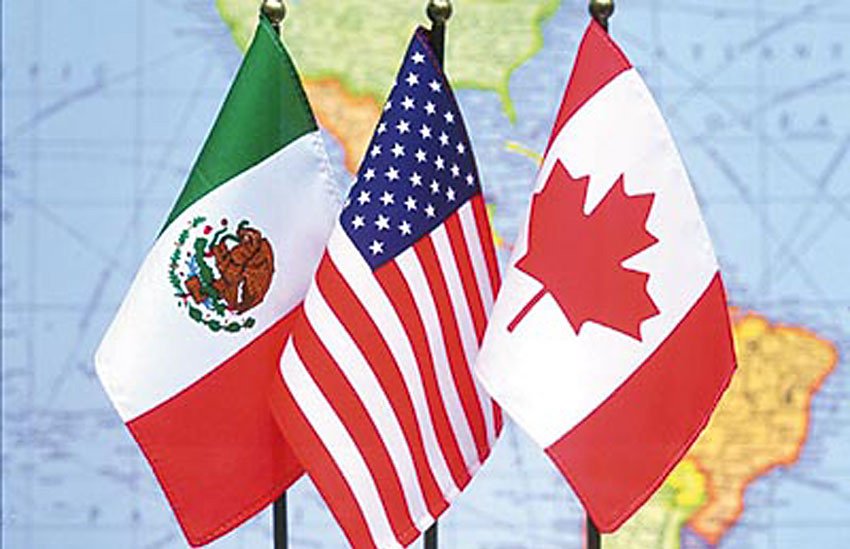
Canada is in: new 3-way trade agreement described as win-win-win

All three countries upbeat about accord, which will be called USMCA

by Mexico News Daily

The United States and Canada reached a last-minute deal yesterday to maintain a trilateral trade accord in North America, ending negotiations that dragged on for over a year.

Under the updated pact, the United States will have greater access to Canada’s dairy market and both Mexico and Canada will be protected from any future auto tariffs that their neighbor imposes on imports up to a quota of 2.6 million passenger vehicles annually.

To be known as the United States-Mexico-Canada Agreement (USMCA) instead of NAFTA, the new accord will preserve a dispute resolution system that Canada fought to maintain to protect its lumber industry and other sectors from United States anti-dumping tariffs, Canadian and U.S. sources told the news agency Reuters.

However, United States tariffs on Canadian steel and aluminum were not lifted as part of the agreement.

The deal also requires a higher proportion of auto content to be made in high-wage areas where workers are paid at least US $16 per hour, in order for vehicles to qualify for tariff-free status.

The rule is designed to bring more auto sector jobs to the United States as it will make it harder for large manufacturers to operate cheaply in Mexico.

Its inclusion in the revised pact is seen as a big win for United States President Donald Trump, who called NAFTA “one of the worst trade deals ever made” and has pledged to return auto sector jobs to the U.S.

In a joint statement, the United States and Canada said the updated pact, which will govern more than US $1.2 trillion worth of trade between the three countries, would “result in freer markets, fairer trade and robust economic growth in our region.”

Most of its provisions, however, won’t start until 2020 after legislatures in Mexico, Canada and the United States have approved the new deal.

The announcement of the new agreement ends more than a month of uncertainty about whether Canada would join the pact that Mexico and the United States reached on August 27.

Leaders of all three countries were upbeat about the new trilateral treaty.

“The modernization of the trade agreement between Mexico, Canada and the United States ends 13 months of negotiations and achieves what we proposed in the beginning: a win-win-win agreement,” Mexican President Peña Nieto wrote on Twitter.

After a late-night cabinet meeting in Ottawa to discuss the new deal, Canadian Prime Minister Justin Trudeau told reporters “it’s a good day for Canada.”

Trump, who repeatedly threatened to terminate the 24-year-old pact, posted a glowing two-part assessment of the updated agreement to his Twitter account early this morning.

“Late last night, our deadline, we reached a wonderful new Trade Deal with Canada, to be added into the deal already reached with Mexico. The new name will be The United States Mexico Canada Agreement, or USMCA. It is a great deal for all three countries, solves the many . . . deficiencies and mistakes in NAFTA, greatly opens markets to our Farmers and Manufacturers, reduces Trade Barriers to the U.S. and will bring all three Great Nations together in competition with the rest of the world. The USMCA is a historic transaction!”

At a later press conference, Trump said that “this landmark agreement will send cash and jobs pouring into the United States and into North America.”

It’s “good for Canada, good for Mexico,” he added, praising both Trudeau and Peña Nieto who he called a “terrific person.”

Economy Secretary Ildefonso Guajardo, Mexico’s chief negotiator in the drawn-out and often-contentious talks, also took to Twitter to praise the new deal.

“The new trilateral trade agreement in North America is a state-of-the-art instrument that will bring great economic benefits to Mexico, Canada and the U.S.,” he wrote.

Jesús Seade, who participated in recent negotiations as the trade representative for president-elect Andrés Manuel López Obrador, added his support for the new deal.

“We celebrate the trilateral agreement. It closes the door on trade fragmentation in the region. NAFTA 2 will provide certainty and stability to Mexico’s trade with its partners in North America . . .” he wrote on Twitter.

Speaking in Madrid, Spain, Foreign Affairs Secretary Luis Videgaray said the inclusion of Canada in the agreement was “fundamental” in order to maintain the advantages of having a common North American market.

“It’s important for the economic relationship and competitiveness to have the same rules, in that sense it’s something we’re delighted with, we’re excited,” he said.

Videgaray also said that it was pleasing that a so-called sunset clause was not included in the new agreement.

The proposal was pushed by the United States and would have seen a modernized pact automatically expire after five years if it wasn’t renegotiated.

“This five-year idea eliminated certainty but now this [six-year] revision mechanism is good because it eliminates uncertainty,” Videgaray said.

The foreign secretary said that a deal had been reached in time for the current government to sign it but added that the ratification process would take place in the Senate next year.

He also said he was proud of having worked with Mexico’s negotiating team, including López Obrador’s representatives.

“It’s remarkable how Mexico closed ranks [to achieve] something good for the region and particularly for Mexico,” Videgaray said.

Both the Mexican peso and the Canadian dollar made small gains against the U.S. dollar on news of the updated agreement.

Source: Reuters (sp), El Economista (sp).

spot_img

Main Stream Media using Kavanaugh sex scandal to distract you from the real reason he shouldn’t be appointed

EDITOR’S NOTE:

Dear readers, I offer you this last-minute note from Matt Agrost, editor of The Free Thought Project, that describes the true face of the candidate for the Supreme Court of Justice of the United States. After reading it, I hope we all agree that this man should not be in that position – and it has nothing to do with his involvement with recent sexual accusations. – Marvin Ramírez

By Matt Agorist

In July, President Donald Trump nominated D.C. Circuit Court of Appeals Judge Brett Kavanaugh to the Supreme Court. Since then, there have been numerous allegations of sexual misconduct levied toward the Justice to be. Whether or not he is guilty of these allegations is left to be determined. However it does serve as a great distraction from his actual constitution-hating and tyrannical tendencies.

While Kavanaugh may be an ostensible supporter of the Second Amendment, his record indicates that he all but cannot stand the Fourth and he’s not that big a fan of the First either.

While the allegations against Kavanaugh should certainly be investigated — no matter how they are being spun by the left and the right — he shouldn’t even be in this position based solely on his previous record. But no one is talking about this. Instead, the left and right are involved in a mudslinging orgy of victim shaming and kangaroo courts.

According to this Supreme Court nominee, he thinks it is just fine and dandy for police and government to track you, spy on you, and dig through your personal life — without a warrant.

On multiple occasions, Kavanaugh has been the lone voice when it comes supporting the state’s rights to warrantlessly spy on its citizens.

As Reason points out, in 2010 he dissented from the D.C. Circuit’s decision not to rehear a case in which a three-judge panel had ruled that police violated a suspected drug dealer’s Fourth Amendment rights when they tracked his movements for a month by attaching a GPS device to his car without a warrant.

Kavanaugh claimed that putting a GPS tracking device on a person’s car without first obtaining a warrant was just fine because it didn’t constitute a “search” as defined by the Fourth Amendment.

To Kavanaugh, bypassing the courts and tracking an individual without their consent is “constitutional.” In this line of thinking, the Fourth Amendment is not violated even if police trespass on someone’s physical property, or track someone’s cell phone. Luckily, he was the only judge on the panel to think this.

In June, the Supreme Court ruled specifically on this case noting that collecting such information actually does constitute a search and therefore requires a warrant.

But it gets worse. In 2015, Kavanaugh issued a statement strongly defending the NSA’s phone metadata collection program, arguing that it is “entirely consistent with the Fourth Amendment.” To Kavanaugh, sweeping programs that collect information from innocent citizens’ phones are not in conflict with having the right to be free from unlawful search and seizure. Seriously.

According to Kavanaugh, the Fourth Amendment allows for searches “without individualized suspicion” when the government demonstrates a “special need” that “outweighs the intrusion on individual liberty.”

Exactly what this “special need” is that can constitute a Gestapo like police state surveilling its own citizens is a moving target that has already been proven to be abused over and over again.

“The sacrifice of our personal liberty for security is and will forever be a false choice,” Senator Rand Paul said of Kavanaugh’s views on the disposable nature of the constitution.

Kavanaugh “has no qualms about applying decades-old case law to the digital age, and he has endorsed the idea of a “counterterrorism exception” to the Fourth Amendment’s warrant requirement,” said Liza Goitein, co-director of the Brennan Center for Justice’s Liberty and National Security Program.

While the left is calling for Kavanaugh to be executed over the sex abuse allegations and the right is attacking the alleged victims, others in Congress who see through the facade and media distraction are trying to draw attention to the fact that Kavanaugh is a champion of the police and surveillance state and an enemy to privacy.

Representative Justin Amash does not have a vote on whether or not Kavanaugh will be appointed. However, this hasn’t prevented him from becoming the only Republican to speak out against the real reasons he should not be appointed to Supreme Court.

“Privacy advocates must fight,” Amash tweeted. “There are many potential nominees with a conservative record on abortion, guns, and regulations. The only question is will the Senate confirm one who is really bad on the #4thAmendment, when so much is at stake in upcoming digital privacy battles.”

Indeed, as technology increases, so does the desire of the state to use it to spy on us. The cases headed to the supreme court in the future over what constitutes an unconstitutional search will undoubtedly be vast in number and detrimental in deciding how much freedom and privacy Americans get to keep.

As for if Kavanaugh gets appointed, Amash has some harsh words to those who are blindly supporting him based on party lines:

“When Kavanaugh is on the Supreme Court, undermining our #4thAmendment right against unreasonable searches and seizures, it will be too late for others to join me.”

Below is a video taken at the Mises Institute of Judge Napolitano explaining the implications of this enemy of the Fourth amendment on the Supreme Court.

spot_img

Citizens of Acatlán, Guerrero, tell Coca-Cola to get out of town

The local council wanted the company to pay for damages it allegedly caused

by  the El Reportero’s wire services

A Coca-Cola bottler and distributor has pulled out of some communities due to high levels of violence, but it’s no longer doing business in Acatlán, Guerrero, because the town gave it the boot.

The town in Chilapa de Álvarez has banned Coca-Cola products after the company refused to repair damage allegedly caused by its trucks and support development initiatives.

Coca-Cola bottler FEMSA met with local authorities in Acatlán earlier this month to hear a request that it repair damage caused by its delivery trucks to several buildings and roads and to contribute to the town’s development.

According to a statement released yesterday and signed by communal council members, the Coca-Cola FEMSA representative refused the petition. In response, communal authorities ordered the suspension of sales of Coca-Cola products “for an indefinite period of time.”

The FEMSA representative had agreed to stop taking orders from Acatlán establishments and to suspend distribution, the statement said.

Coca-Cola FEMSA was also given eight days to remove all of its refrigerators and promotional material from the town. Since Sept. 11, Acatlán has been Coke-free.

“The company Coca-Cola FEMSA will no longer be able to enter our community, except through the authorization of communal authorities,” the council said.

On September 13, a community assembly ratified the decision taken by the town’s leaders, asserting that Coca-Cola was no longer welcome.

Evo Morales repeats resolution to settle maritime lawsuit with Chile

President Evo Morales repeated that Bolivia has the best resolution to reach a sustainable and satisfactory settlement with Chile about the centenary maritime lawsuit, on which the International Court of Justice (ICJ) will rule on Oct. 1.

When speaking at the 73rd Session of the United Nations General Assembly, Morales noted that the conflict has put two neighboring countries against each other and has deprived the Bolivian people of access to the sea and its benefits.

We expect that the lawsuit filed before the International Court of Justice will contribute to bringing the two parties closer to start fruitful negotiations, he noted.

The president added that he also expected that the ruling would contribute to reaching a true agreement together to solve the problem that has turned Bolivia into a landlocked State.

Morales pointed out that the differences with Chile cannot be attributed to a circumstantial purpose of a political and electoral nature, but it goes back to the origin of that territorial dispute.

Morales repeated his certainty that the decision by the top UN court will mark a new era in relations with Chile.

In that regard, he called to use the foundational spirit of the United Nations to solve disputes peacefully and boost relations of friendship among nations on the basis of respect to equality and free determination of the peoples.

Two-weeks strike in Costa Rica without a solution in view

The indefinite general strike in Costa Rica against the fiscal plan is two-weeks old today, without a foreseeable solution, despite four days of preliminary meeting without conditions between trade unions and the government.

This Sunday morning concluded the fourth day of that exploratory meeting between trade unionists and representatives of the government. Both parts advanced, separately, they would rest today and resume conversations on Monday at the Archbishopric of San Jose.

In the name of the Syndicate and Social Union (USSN) -coalition of workers and wwill consult the grassroot members on what has been discussed until now.

However, the USSN said it will maintain the general strike next week with protests and demonstrations of regional nature on Monday, Tuesday, Thursday, Friday, Saturday and Sunday, while on Wednesday they will make a big march in this capital, where they expect to gather 500 thousand participants in a trip similar to that of Sept. 12.

spot_img

Los Lupeños 50th Anniversary Season kick-off concert

Compiled by the El Reportero’s staff

Los Lupeños de San José, is one of the earliest Mexican folkloric groups in the United States.

The dance company has traveled and performed in México, England, Ireland, and all around the United States in a variety of venues, large and small.

As with all dance companies, there are ups and downs, high times and hard times, exciting adventures and lost opportunities. The common thread through the years has been the passion of the dancers, directors, students, instructors, family members, and collaborators that have kept the original vision alive for over 45 years.

Los Lupeños was founded in 1969 by Susan Cashion and Ramon Morones.

Cashion was exposed to Mexican folk dance at the University of Guadalajara where she was studying under a Fulbright Scholarship. Morones was a talented painter studying his craft at the university where male students were quickly recruited into the university folk dance company. Cashion brought Morones back with her to the Bay Area with the idea of seeing whether there was enough interest to form a local Mexican folk dance company.

The response was overwhelming! With the help of the Consul General of México in San José and civic leader Guadalupe Suárez, Los Lupeños was born.

At the Mexican Heritage Plaza Theater, 1700 Alum Rock Avenue, San Jose, 8 p.m. Saturday, Sept. 29 and 2 p.m. Sunday Sept. 30, 2018. $25-$30.

Tenth Annual Tricycle Music Fest Kicks Off at SF Public Library

San Francisco Public Library proudly announces the 10th Anniversary of the Tricycle Music Fest, welcoming parents and their little ones to free concerts across the City. We are celebrating ten years of Rock! Play! Learn! with Grammy-award winning or nominated performers.  So release the foot break on the stroller and boogie on down to the library to catch a concert with us!

Tricycle Music Fest kicks off with a special concert at our newest branch, Public Knowledge at SFMOMA, on Sunday, September 30. At 11:30 a.m., 2017 Grammy nominee Alphabet Rockers take the stage and drop beats inspiring social justice and youth empowerment.  After the performance, concertgoers can enjoy SFMOMA’s Family Free Day.  Alphabet Rockers will also rock the books at Parkside on October 6th and Bernal Heights on October 7th.

On Sunday, October 14, Lucky Diaz and the Family Jam Band, the 2013 Latin Grammy winner, will have kids tapping their feet, jumping and hopping to their international sounds.  Jose-Luis Orozco, 2015 Grammy nominee, brings out his guitar on Saturday, October 20th encouraging all to sing and learn Spanish and will delight the audiences at Merced and West Portal branches.

Lastly, due to popular demand, we bring back the Okee Dokee Brothers, 2012 Grammy winners, who bring Americana folk music, banjo included!  Our Sunday morning October 28th show at the Main Library is almost filled (via Eventbrite), but families can see them at the SFMOMA for an afternoon show starting at 3:00 p.m.  Space is limited to seating capacity.

Tricycle Music Fest is proudly sponsored by Friends of the San Francisco Public Library and co-presented by San Mateo County Library. Together we bring the biggest and best kindie rock music to Bay Area families. Because playing is just as important as singing in early childhood learning, we will raffle off one tricycle to a lucky concert goer at each event.  Families, get ready for a hip-shaking, head bopping dance party explosion of indie fresh pop rock beats—only at the library!


spot_img

Vanity Fair magazine recognizes Salma Hayek

Salma Hayek at the Vanity Fair presentation in Madrid

The Mexican actress was named Personality of the Year by the magazine’s Spanish edition

Mexican actress Salma Hayek has been named Personality of the Year by the magazine Vanity Fair Spain.

A gala hosted by the Teatro Real opera house of Madrid was the setting for Hayek’s acknowledgement, a ceremony that also celebrated Vanity FairSpain’s 10th anniversary.

“Thank you very much, I am honored by this acknowledgement and by sharing this night with all of you,” she told the audience as she stood on the stage with friend and Spanish actress Penélope Cruz, who presented the award.

“Penélope and I had a different type of ambition, we both wanted to be good actresses, and it was important for both of us to also be good people. It was important to not lose our roots, our values, on the way,” said Hayek, 52, adding that in Cruz she found a companion with whom she “navigated the turbid waters of Hollywood.”

“It is very special for me to receive this award from someone who has been a pillar in my life,” she continued.

A prominent voice in the international #MeToo movement against sexual harassment and sexual assault, Hayek emphasized the importance of empowering women, something she considers “important for the well-being of humanity.”

“It is tragic, unfair and stupid to strip us of the right to be respected as human beings. We are human beings and should at least be respected as one. And in many places and in many ways, we are not given even that minimal respect,” she said.

Hayek was born in Coatzacoalcos, Veracruz, in 1966. Her career started in 1988 and has led her to conquer Mexican TV screens and the international silver screen.

Latin American Music Awards 2018: Ozuna and J Balvin Lead Nominations

Colombian singer J Balvin and Puerto Rican Ozuna are leading the list of nominees for the 2018 Latin American Music Awards, with nine nominations each.

The artists are competing in the main categories of the lauros, including Artist of the Year, Album of the Year, and Favorite Artist.

The fourth edition of the awards also features Nicky Jam (eight nominations), Daddy Yankee (six), and Bad Bunny, Sergio Lizarraga’s MS Band and Christian Nodal (five).

Other nominees are Luis Fonsi, Maluma, Romeo Santos, Shakira, Wisin, and the Cuban duo Gente de Zona, the latest in the Tropical Favorite Artist category.

The awards ceremony will take place on October 25 at the Dolby Theater in L.A, and according to its organizers, Cardi B, Christian Nodal, the CNCO group, Ludacris, Prince Royce, and Becky G, among others, will participate.

Nominations for the Latin American Music Awards, now in its fourth year, are based on record sales of digital albums and songs, radio broadcasts and streaming.

These awards recognize the best of Latin music, and the winners are chosen by the vote of the audience.

Receives the Latin Grammy nomination in the category Best Rock Album

The Uruguayan band No Te Va Gustar (NTVG) was pleasantly surprised to receive the Latin Grammy nomination in the Best Rock Album category for their most recent production and one of the group’s most praised albums, “Suenan Las Alarmas” (Popart).

This is the eighth nomination the Montevideo-based group receives from the Latin Recording Academy throughout their career. Para Cuando Me Muera the single that anticipated the album, also received a nomination for Best Alternative Song last year.

With this album the group embraces the solidity and elegance that the band has built for over more than two decades of trajectory between songs, albums, collaborations, concerts and restless tours in Latin America, the United States and Spain.

The group is currently in Los Angeles on their U.S. tour for Suenan Las Alarmas, where they will perform tonight at the Üateke Rock Fest and on Saturday, Sept. 22 at the same festival in San Diego, California.

spot_img

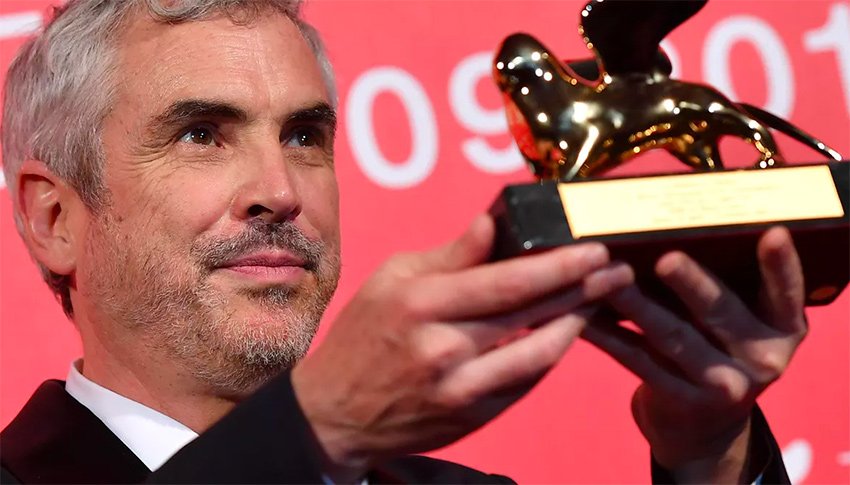
Alfonso Cuarón’s Venice triumph highlights importance of Mexican filmmakers

Netflix will give broad exposure to a Mexican art film but many other Mexican directors will remain unknown

by Deborah Shaw

Alfonso Cuarón has won the Golden Lion at the 2018 Venice International Film Festival for Roma, his most personal film. The win highlights the importance of Mexican filmmakers in a film culture that is usually dominated by Americans.

Cuarón and his colleagues, Guillermo del Toro and Alejandro González Iñárritu – or the “Three Amigos” as they are known – have become popular fixtures at the Venice festival. Jury president del Toro was the winner of the 2017 Golden Lion for The Shape of Water, while Iñárritu’s Birdman opened the festival in 2014 – an honour shared by Cuarón’s Gravity in 2013.

All three have won Oscars for best director at the Academy Awards – and Cuarón is now a serious contender for best director in 2019 for Roma to follow his award for Gravity in 2014.

Roma is a Mexican Spanish and indigenous language (Mixtec), black and white art film. It is a highly personal project by Cuarón that features the point of view of Cleo (Yalitza Aparicio), a domestic servant working for a middle-class family – a character based on the Cuarón’s family servant, Lobi. It is an intimate film of Cuarón’s youth in the hip Mexico City district of Colonia Roma which blends family history with the social and political Mexico of the early 1970s.

Another newsworthy element of Roma’s success is the way in which the story of the film, and its distribution and exhibition, folds into the developing story of Netflix. That Netflix has chosen Cuarón’s semi-autobiographical drama as the flagship production for its new distribution model reveals much about the streaming company and the way it is challenging existing screen culture.

It tells us that Netflix wants to work with the best directors in the world and that it will support high-quality, non-English language productions that are likely to win prestigious awards. It also tells us that Netflix will support a director-led model for films that avoid big stars and special effects – Roma’s protagonist Cleo is played by Yalitza Aparicio, a non-professional actor who is a teacher in real life.

Netflix offers an alternative to traditional models that restrict these art films to a limited festival run and restricted theatrical release with low box-office takings.

Netflix has used Roma to break a deadlock with festivals seen in Netflix’s previous refusal to agree to a theatrical release, and Cannes film festival’s resulting refusal to allow Roma and other Netflix productions to enter into competition if they aren’t slated for theatrical distribution in France. The new Netflix model introduced by Roma enters films in festival competition and agrees to limited theatrical distribution, but also bypasses lengthy delays between cinema and streaming release.

Following Venice, Roma is playing in competition at Telluride, Toronto, London, New York and Copenhagen. It will be followed by an (as yet unspecified) limited theatrical release, and a global release on the streaming site, scheduled for December 1, 2018. Cuarón has highlighted this as a principal attraction of working with Netflix.

Working as his own cinematographer as a result of the lack of availability of his longtime collaborator Emmanuel Lubezki, Cuarón made a film to be seen on the big screen. It has state-of-the-art sound design and was shot on 65mm using the Alexa65 digital camera. This resulted in a “really pristine, almost never-before-seen black and white”, according to David Linde, the film’s producer. But the filmmakers also wanted the film to be seen by a global audience, an ambition that can be realized by its release on the biggest streaming platform in the world.

The high level of backing for a Mexican art film may appear to be a risky move for Netflix, but it follows its approach of support for a certain type of auteurist filmmaker, those who have a track record of excellence and are embraced by both festival and global audiences. These are directors who can be trusted to create high-quality films or series (examples include the Coen brothers, Paul Greengrass, Martin Scorsese, Steven Soderbergh, and Lana and Lily Wachowski).

While Netflix has been celebrated for investing in new and exciting voices and embracing diversity, directors have to jump through many hoops to be rewarded with such a high-profile distribution and exhibition platform.

As a multi award-winning director, Cuarón belongs to a Netflix executive class of director. Cuarón had to achieve stratospheric brilliance with his award-winning Gravity to be given such first-class treatment for a film set in Mexico City. That he has been able to make his most personal film yet is due entirely to his profile and status secured largely in filmmaking outside of his home country (with the exception of his low-budget Y Tu Mamá También). Cuarón has, to his credit, used his privilege to make a Mexican film that has a focus on the sort of working-class character that is severely underrepresented in mainstream cinema.

There is a rich cinematic culture in Mexico – and there are a number of directors deserving of wider international acclaim. These include: Fernando Eimbcke, Amat Escalante, Michel Franco, Maya Goded, Tatiana Huezo, Issa López, María Novaro, Alonso Ruizpalacios, Juan Carlos Rulfo and Carlos Reygadas.

There is much to celebrate in Netflix’s new film production, exhibition and distribution model – and in Roma’s success, particularly in the wider distribution it offers to filmmakers and increased access to films for its subscribers. Nonetheless, this model is still reserved for filmmaking royalty, and the festival, theatrical release and streaming platforms afforded Roma is an exception.

Most high-quality non-English language films will, unfortunately, remain unseen by large audiences.

(Deborah Shaw is a reader in film studies at the University of Portsmouth. This article is republished from The Conversation under a Creative Commons license).

spot_img

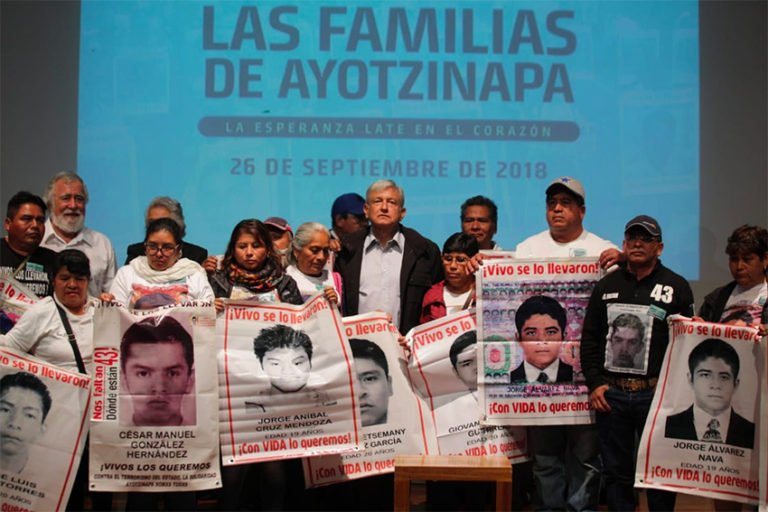
Ayotzinapa 4 years later: AMLO vows to discover the truth about the 43 students

Probe will examine roles of army and Federal Police in the night of violence in Iguala, Guerrero, in 2014

by Mexico News Daily

Mexico’s new government will investigate “everyone” involved in the disappearance of 43 teaching students four years ago today in Iguala, Guerrero.

President-elect Andrés Manuel López Obrador met today with the families of the students from the Ayotzinapa Rural Teachers’ College and assured them that the truth will come out through an investigation that will go as far as to examine the roles of the army and the Federal Police.

The current federal government claims that corrupt municipal officials turned the students over to a criminal gang that killed them and incinerated their bodies.

At a press conference after their two-hour meeting, López Obrador said it was agreed that judicial authorities be called on to reaffirm a court order to implement a truth commission, a move the current government has resisted.

If a commission has not been established by December 1, when the president-elect takes office, he will create one by decree, López Obrador vowed.

The government’s investigation into the case has been widely criticized by international experts, human rights organizations, Mexican journalists and the students’ families. Many people suspect that the army may have played a role in the students’ disappearance.

In June, a federal court ordered the creation of a truth and justice commission to undertake a new investigation, ruling that the one carried out by the federal Attorney General’s office (PGR) “was not prompt, effective, independent or impartial.”

However, the government has launched legal action against the court’s order to create the commission, arguing that it is impossible to do so.

There is “a real, legal and material impossibility” to create the commission, the PGR said in June.

Alejandro Encinas, who will be an Interior Secretariat human rights undersecretary in the new government, offered his own pledge yesterday that a truth commission will be created.

“If the current government doesn’t comply [with the court order], we will implement it. It’s a matter of political will and an act of justice,” he said in a radio interview.

Meanwhile, current students of the Ayotzinapa college attacked military installations in Chilpancingo, Guerrero, yesterday as they renewed protests against the authorities’ failure to solve the case.

The students arrived in the state capital at around 5:00pm and participated in a march and rally before making their way to the army barracks where they threw Molotov cocktails, fireworks and stones that damaged the building’s façade.

The attack lasted less than 10 minutes before the students boarded buses and left, according to the newspaper Reforma.

Parents of the 43 students will take part in a march in Mexico City today with students and members of social and human rights organizations.

The father of one of the missing students said yesterday that he saw “a little hope” that the case will be solved during López Obrador’s presidency.

“Yes, there is a little hope with this government, there’s a new power, we’re going to raise everything . . .” Maximino Hernández told the television program La Nota Dura.

Vidulfo Rosales, a lawyer for the disappeared students’ parents, said the incoming administration has a chance to right the wrongs of the current government.

“The government of Andrés Manuel López Obrador has the opportunity to give results in a very concrete way . . . [The case] could serve as an element that helps to resolve other cases of disappeared people,” he said.

The notorious Ayotzinapa-Iguala case and its subsequent investigation is considered by many as the biggest failure of the current administration of President Enrique Peña Nieto. But the president said last month that he stands by the “historical truth” declared by investigators.

According to the official version of events, the students’ bodies were burned in the Cocula municipal dump before their remains were disposed of in a nearby river. Then attorney general Jesús Murillo Karam declared in early 2015 that the investigation had produced the “historical truth,” a phrase that has been widely ridiculed since by critics of the probe.

Earlier this year, the United Nations released a report that said that 34 people were tortured in connection with the investigation and that suspects had been arbitrarily detained.

The National Human Rights Commission (CNDH) also said in June that it has “undoubted evidence” that one man was wrongfully arrested in connection with the crime in a case of mistaken identity.

Source: Reforma (sp), El Financiero (sp)

In other news in Mexico:

No plastic straws will be allowed in Querétaro by next March
Restaurants say use of straws is down 95 percent

The municipal council of Querétaro agreed yesterday to start phasing out the free distribution of plastic straws in restaurants.

Acting mayor Enrique Correa Sada explained that the technical aspects of the new regulations have yet to be worked out, and that a full prohibition won’t go into effect until March.

In the interim, the municipality will launch an information campaign about the new regulation, and give restaurateurs time to exhaust their supplies of straws.

The president of the Querétaro chapter of the restaurant industry association Canirac told the newspaper Milenio that its 185 members have reduced their plastic straw use by 95% over the last six months.

Current practice is only to provide a straw when a customer asks for one, said Sergio Salmón Franz.

He also said he supports the idea of biodegradable straws, but their use is up to each restaurateur.

The decision by council to phase out straws comes after its August decision to restrict the use of plastic bags.

Source: Milenio (sp).

spot_img