Saturday, October 17, 2026
spot_img
Home Blog Page 298

New help center for the homeless is inaugurated in the SF Mission District

by Fernando A. Torres

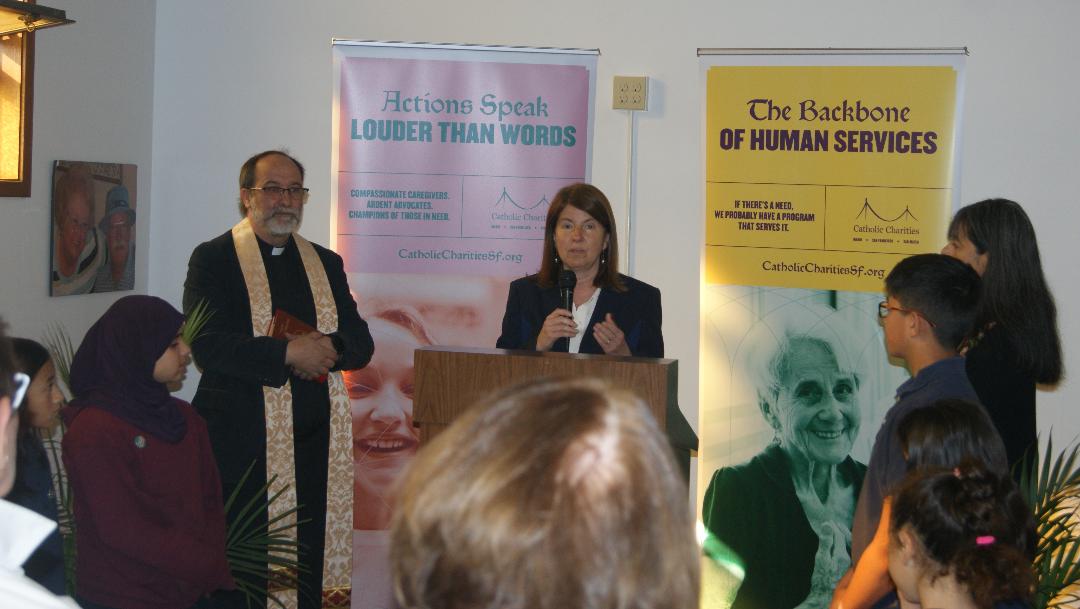
Catholic Charities reported that the new social assistance center called Access Point The Mission, will join its program of prevention of homeless families and help services on immigration in a new location at 3270 18th Street with South Van Ness.

The presence of Catholic Charities and their social programs is not new to the Mission. They have been providing services for more than fifty years in the largest Latino neighborhood in Northern California. This time the new location will unite all social services under one roof, to continue providing “compassionate and comprehensive care to families and individuals struggling to survive and thrive.”

José Cartagena, director of programs, said that programs to help the homeless, immigration and financing to pay rent, will work in the recently inaugurated location. “We are very happy to be opening this Access Point center, which is the center, the connection of homeless families to receive services in the city. Our function is to establish and be the bridge so that homeless families can receive the services they need, be it shelter and shelter, be it references for low-cost housing, or subsidized rent programs, “said Cartagena.

Founded in 1907, Catholic Charities is part of the Archdiocese of San Francisco but its actions are independent. With the motto of “charity and justice” the organization was created in the Bay Area to help the orphans of the San Francisco earthquake.

At the opening of the premises last week, attended by various personalities and officials of the city. Mayor London N. Breed said the problem of the homeless is great especially in California. Of all the homeless people in the country, 24 percent are in California, Breed said.

“This center will provide services not only for homeless families who sadly struggle on our streets, but also for our immigrant community. As we know, we have a President who attacks our immigrant community every day … but despite these attacks and threats, we will continue to offer resources for our community, “Breed said.

The mayor informed that this new center is part of a coordinated municipal system of five centers for families that have lost their homes; to enter a system of protection aid, shelter and permanent housing. The city provides help to 50 people weekly and waiting in line “there are another 65 people … We know that the homeless represent a big problem throughout the State”, that is why it is important to find “regional solutions” because the city San Francisco “can not do it on his own,” Breed said.

San Carlos Church priest and Episcopal Vicar for Hispanics in the city’s Archdiocese Moisés Agudo said that Catholic Charities aims to reach “the most marginalized, those who are most defenseless. Families that are losing their homes; families that suffer from fear and even the terror of going out on the street. Every man needs to live with dignity. This center stands as a center that will enlighten and empower the Hispanic community. That they are not afraid, that they leave, that the church is with them, “Agudo said.

In a city where a one-bedroom apartment is worth 3,000 or 4,000 dollars; One of the biggest problems is economic, said Cartagena. “This implies that many families can not afford a rent. The rent is very high and the income of the family is much less … We are forced to have to share an apartment with three or four families to be able to sustain this. We are talking about Latino immigrant families who earn less than twelve hundred dollars a month; It is not enough to pay the rent and there is the problem of the homeless.

“Cartagena concluded that it is more economical to keep that family in their apartment or house than having to afford them shelter and shelter. The average cost to give refuge to a family is between 30 and 40 thousand dollars. “It’s much cheaper to help them pay the rent so that it is not evicted … we do not feel bad because we need help. Let’s not have grief or fear. If we need help, let’s look for it. There are programs like ours and we are here to serve them, “he said.

Jilma Meneses, Executive Director of Catholic Charities, said the organization has been working in San Francisco, Mari and San Mateo for more than 150 years. Similar programs are also developed in the Bayview neighborhood. The city of San Francisco is helping to finance the center. But the fundraising campaigns must continue “to turn it into a viable and sustainable project … We provide services to everyone, regardless of origin, gender, color, sexual orientation, religion. We are in a place where everyone is safe and welcome. You are brothers and sisters regardless of your offspring. You will never be rejected from our family … I am an emigrant. As a child I was motivated by the services that I and my family received and now it is an honor for me to return this, “said Meneses.


spot_img

A healthy, organic diet reduces the risk of cancer by a whopping 65 percent

by Ellaine Castillo

Many people believe that having a healthy organic diet helps decrease the risk of certain diseases. A recent study helped prove that claim, establishing that a healthy diet can reduce the risk of cancer by up to 65 percent.

For the lead author, Dr. Ashish Deshmukh of the University of Florida, the study findings reveal that it is important that a person’s total diet remain balanced, rather than focusing on specific nutritional components. This means that a person’s diet must contain different nutrients derived from various sources, such as vegetables, fruits and dairy products. Apart from this, the food consumed should also be organic and should contain clean proteins, unprocessed carbohydrates and non-toxic fats.

The researchers came to this conclusion when evaluating the information from the Third National Survey of Health and Nutrition Examination (NHNES III), which collected data from almost 34,000 people from 1988 to 1994. From the data set, 1,200 participants were diagnosed with cancer in the time of the study.

Those who participated in the survey kept a food diary where they tracked what they ate during the day. These documented diets were classified according to nutritional quality, following the dietary guidelines of the United States Department of Agriculture (USDA).

Then the participants were followed for 17 years; During that time, half of the initial respondents have already died. However, those who were able to maintain a balanced and nutritious diet reduced their risk of dying early due to cancer and other causes by 65 percent, compared to those whose diets were considered of low nutritional quality.

“It is also crucial that cancer survivors work with their dietitians to identify a balanced diet regimen and then follow that regimen,” Deshmukh added. “There is no harm [from] healthy eating.”

Other ways to reduce the risk of cancer

In addition to having a healthy diet, other ways to naturally reduce the risk of cancer include:

• Avoid tobacco: different types of cancer, such as throat, lung and kidney cancer, have already been linked to tobacco exposure. This is not only limited to smoking tobacco, it also includes chewing it, as well as exposure to secondhand smoke.

• Exercise: maintaining a healthy lifestyle not only includes a healthy diet, it also includes having enough physical activity during the day. This will help you maintain a healthy weight, which is important since it has been determined that obesity is a risk factor for some types of cancer. For adults, at least 150 minutes of moderate intensity activity (such as a quick walk) or 75 minutes of vigorous activity (or activities that make you sweat) a week are recommended.

• Stay away from too much sunlight: the harmful rays of the sun can cause the development of skin cancer, one of the most common types of cancer. These are stronger between 10:00 a.m. at 4:00 p.m., so avoid going out during these times. Covering exposed areas and avoiding sunlamps also reduces the risk of skin cancer.Read more news and developments about cancer prevention and treatment by visiting Cancer.news.

The sources include:
NaturalHealth365.com
MedicalXpress.com
MayoClinic.org
Cancer.org

spot_img

Message of urgency about the avalanche of migrants that is approaching Tijuana

by Bernardo Méndez

@Americasinmuros, its president Kino Miquirray and its director Bernardo Méndez Lugo inform as a matter of urgency and national emergency:

Possible scenario with the arrival of caravans exodus migrants to the border of Mexico-US: the case of Tijuana, urgent actions of the three levels of government.

It is very possible that of the three Exodus Migrant Caravans coming from Central America, most of the migrants are concentrated in the Tijuana region.

By the middle of December or before, between 9,000 and 10,000 Central Americans will be present in Tijuana and a fourth caravan of 10 thousand people from El Salvador has been announced that would leave in the middle of December (in a month) towards the border of Mexico-US border.

Many less will be arriving in Mexicali, Nogales and other border points with the United States. On this point, Dr. Alejandra Castañeda indicates that “Tijuana needs to be considered for attention in a scenario where the crossing to the United States is at the drop rate. Transferees who are being financed should go to different points of the border. I also reiterate that it is very important to make people aware of the situation in the United States where they will be detained for months, separated from their families.

On this point, Dr. Leticia Calderón Chelius of the Dr. José María Luis Mora Research Institute writes: “Wait at least two months in Tijuana in winter to see if they pass the filter that takes them to a prison in the United States while they wait to be in front of a judge to defend their case … what a difficult dilemma when there are no options.” This option will be viable for less than 10 percent of the members of the Exodus Migrant Caravan. The vast majority must remain in Mexican territory.

Most of them will not be able to cross into the US due to extreme restrictions imposed by the Trump government, including the 90-day executive order (which is unconstitutional) that denies the right to seek asylum from members of the Caravan, the militarization of the entire border and the presence of armed anti-immigrant groups known as “Minutemen.

The ability to process asylum applications for the US is very limited and the more applicants arrive, the greater the rigidity and closure to process and accept asylum from Central America.

The challenge to meet the needs of about 10,000 migrant people in Tijuana is of great magnitude and the municipal and state governments can not solve it. Without the support of the federal government, every day that goes by will aggravate the situation of migrants, especially unaccompanied children, minors in general, pregnant mothers and older adults.

These challenges are of a wide range: capacity of the shelters thinking that since there is no alternative to cross the border they will have to stay for an indefinite time in Tijuana and this implies: maintaining the capacity of the shelters, feeding, medical attention and preventive health, endowment of winter clothing, capacity for minors and adolescents to be integrated into the school system, transportation and for older adults adequate conditions.

While there are a number of around 3,500 people who have requested Refuge in Mexico, the budget for COMAR tasks must be strengthened in order to process these thousands of requests, an emergency budget must already be generated for COMAR.
The members of the Caravan that arrive in Tijuana are not those that have requested refuge and in the vast majority they will seek to apply for asylum in the US and it can be said that the vast majority will be denied. No more than 7 percent will be able to obtain asylum in the US.

The federal government of Mexico must generate humanitarian visas with work permits. And in this area, the Government of Mexico must integrate border companies in the supply of jobs within the framework of the “Youth Building the Future” Program that begins on December 1, 2018 that includes returning and transmigrant Mexican migrants.

In addition, the Cooperation Plan with Central America that coordinates the future Chancellor Mtro Marcelo Ebrard Casaubon with greater involvement of the Business Advisory Council, several of them with strong investments in Central America as @Ricardo Salinas Pliego of Grupo Salinas, should be activated as soon as possible. This Plan must be advanced in its proposals to be executed in at least 80% according to Ebrard’s statements. The main goal of the Plan is to generate decent jobs, especially in the three countries with the greatest expulsion, so that greater economic development significantly reduces migration.

It is urgent that the federal government generate a budget to support the network of Tijuana hostels, we should not wait for the sexennial change since the next two weeks are crucial. Failure to address the magnitude of this problem will overtake the Tijuana municipal government and unprecedented crises and unimaginable social conflicts could erupt. There are already worrying signs of discontent and radicalized anti-immigrant outbreaks of Tijuana population centers, as has been observed in the Colonia Playas de Tijuana.

It is time for the outgoing and incoming federal government to coordinate with the municipal government of Tijuana and the State Government of Baja California to address the problem and prevent the conflict situation from growing. There is no time to lose. There are not many options and action must be taken immediately. It is also a task for entrepreneurs and civil society. It is not healthy to expect the situation to get worse to act and generate responses that should be short, medium and long term.

The latest news is that a SF judge has imposed a veto on Trump’s executive legislation that limits the right to asylum at the border to members of the Caravan for 90 days.

In my opinion this order of the Judge will not limit the temporary effectiveness of Trump’s executive order and it seems to me that very few will be able to process their requests and will have to wait several months in Tijuana or other border cities.

Now the vast majority have opted for Tijuana and the City authorities say they can only hold the migrants of the Caravan for six days. I sense that very difficult days are approaching for migrants on the Tijuana border.

(Bernardo Méndez is director of América Sin Muros and ex Consul of Mexico).

spot_img

The Latin Grammy Premiere to be held in Las Vegas

by the El Reportero‘s news services

The Latin GRAMMY Premiere™ ceremony will be held at the Mandalay Bay Events Center in Las Vegas on Nov. 15, during which thirty-nine out of the 49 categories will be awarded. Premiere, which is attended by more than 1,000 guests and is broadcast globally, is followed by the 19th Annual Latin GRAMMY Awards® live on Univision from the MGM Grand Garden Arena in Las Vegas. from 8-11 p.m. ET/PT (7 p.m. Central). Live streaming will begin at 4 p.m. ET/1 p.m. PT via LatinGrammy.com and Univision.com/LatinGRAMMY.

Two-time Latin GRAMMY® nominated singer-songwriter Debi Nova will host the ceremony. The Biggest Night in Latin Music® will kick off with performances by current nominees Santiago Barrionuevo, Yamandu Costa, Jerry Demara, Rozalén, José Alberto ‘El Canario’ with El Septeto Santiaguero.

The first Latin GRAMMY Awards of the day will be presented by current nominees Axel, Yamandu Costa, Aymée Nuviola, José Serebrier and Benjamín Walker, as well as by past Latin GRAMMY winner Claudia Brant and Lali Espόsito.

First annual short film contest for aspiring filmmakers
Cinestar Pictures of Zoe Saldana will participate in the panel of New Voices juries

Cine Sony, the main film channel for the US bicultural public, and the National Association of Latino Independent Producers (NALIP) today announced the launch of Voces Nuevas, their first short film competition for applicants to filmmakers from all over the United States.

Filmmakers who are 18 or older and live in the US they are invited to present short films of 2 to 20 minutes until January 31, 2019. Among the judges who will evaluate the presentations is the actress and co-founder of Cinestar Pictures Zoe Saldana; the co-founders of Cinestar Pictures Cisely and Mariel Saldana; the award-winning actor and producer Esai Morales; actress and activist Lisa Vidal and top-level creative executives from Sony Pictures Entertainment Worldwide Acquisitions and Screen Gems.

“Cinema Sony is delighted to partner with NALIP to provide a platform to showcase and defend the talent and creativity of emerging US filmmakers,” said Jeff Meier, senior vice president and general manager of U.S. Networks, Sony Pictures Television.

“At Sony Cinema, we have a wide range of entertainment content, from comedies to action movies, which reflects the variety of interests of our Latino audience. With Voces Nuevas, we continue with that commitment to show the diversity of perspectives of future content creators who come from different backgrounds and experiences.”

Voces Nuevas aims to discover and celebrate emerging film talent while providing a new resource for content development. Participants will compete for the opportunity to win $ 10,000 plus a plane ticket and accommodation for up to five nights in Los Angeles to have the chance to meet with Sony Pictures Television executives there. The contestant who wins will also receive a scholarship to NALIP Media Summit 2019.

“NALIP is an important advocate of Latinx inclusion, a crucial and vital element in entertainment and progressive media, NALIP is delighted to collaborate with Sony Cinema in the ‘Voces Nuevas’ short film competition. Latino filmmakers have the opportunity to show their films to a much wider audience, “said Ben López, executive director of NALIP.

“My sisters Cisely and Mariel, and I are delighted to be judges of the first annual Voces Nuevas movie contest,” said Zoe Saldana. “Every opportunity to expand Hispanic voices and stories is a step forward in empowering a community that contributes significantly to the cultural energy of the United States.”

Short films may be submitted to Voces Nuevas until January 31, 2019. Visit www.CineSonyVocesNuevas.com to see the rules of the contest and get more information on how to participate for free. Follow CineSony on social networks to receive the latest news from Voces Nuevas on Twitter, Instagram and Facebook.

spot_img

‘Out Hondurans, we don’t want you here:’ anti-migrant sentiment continues

There were marches in Tijuana yesterday both for and against the caravan from Central America

by Mexico News Daily

Residents of Tijuana are divided over the presence of large numbers of Central American migrants in their city.

Protests both for and against members of the first migrant caravan were held yesterday in the northern border city.

Around 500 people gathered in front of a statue of Aztec ruler Cuauhtémoc that stands atop a Tijuana traffic circle and began an anti-migrant march towards a sports complex serving as a temporary shelter for about 2,500 Central Americans.

During the march, protesters demanded that the caravan members be sent back to their countries of origin.

“Out Hondurans, we don’t want you here” and “long live Mexico” were among the slogans chanted by the demonstrators as they waved Mexican flags and held up signs declaring “Basta de migración” (Migration, enough already) and “Primero nuestra gente” (Our people first).

Some protesters claimed that there are gang members, thieves and rapists mixed in with the migrants in the first caravan, whose members began arriving at the border city early last week.

“Their presence here makes me very afraid. I don’t know if something is going to happen to me or my neighbors . . . They could break into a business . . . or assault someone. That worries me,” Tijuana business owner María de Jesús told the newspaper Milenio.

Others said they are not against migration per se but rather the way in which many of the caravan members entered the country.

“They arrived and kicked down the door and that makes them criminals,” said Emilio Zúñiga, a Guanajuato native who has called Tijuana home for the past 20 years.
The marchers were stopped from reaching the entrance to the Benito Juárez sports center by a large contingent of municipal police sporting riot gear.

A standoff lasted for several hours, with protesters throwing water and beer cans at the officers before eventually dispersing.

Just one street away from where the anti-migrant march started, a smaller group of demonstrators held their own rally at which they denounced racism and discrimination and declared that the migrants are welcome in Tijuana and that their human rights must be respected.

Yesterday’s protests followed a week of heightened tension in Tijuana during which some residents made it clear that the migrants are not welcome.

Social media posts aimed at inciting violence against the Central Americans began appearing in anti-migrant groups on platforms such as Facebook virtually as soon as they arrived in the city.

Rumors circulating on the mobile messaging service WhatsApp that the migrants had looted stores, referred to Mexicans as “dogs” and even murdered someone only served to fuel the anti-migrant sentiment.

A confrontation occurred Wednesday night between an angry mob and migrants sleeping on the beach next to the border fence that separates Mexico from the United States.

Mayor Juan Manuel Gastélum, who has been labeled Tijuana’s Trump, has also spoken out against the caravan, declaring that the migrants are not wanted.

United States President Trump yesterday seized on the mayor’s opposition to the migrants, writing on Twitter that “The Mayor of Tijuana, Mexico, just stated that ‘the City is ill-prepared to handle this many migrants, the backlog could last 6 months.’”

In the same tweet, he added: “Likewise, the U.S. is ill-prepared for this invasion, and will not stand for it. They are causing crime and big problems in Mexico. Go home!”

In a subsequent Twitter post, Trump wrote: “Illegal Immigrants trying to come into the U.S.A., often proudly flying the flag of their nation as they ask for U.S. Asylum, will be detained or turned away. Dems must approve Border Security & Wall NOW!”

The United States government has deployed 5,900 troops to the southern border to bolster security and barbed wire is also being affixed to the border fence to act as an additional deterrent to any attempts to scale it illegally.

With two other caravans currently traveling through Mexico, Tijuana officials have estimated that the number of migrants in the city could reach 10,000, stoking concerns about the city’s ability to cope with such a large cohort.

There are already around 3,000 migrants on a waiting list to apply for asylum in the United States, meaning that the new arrivals, and future ones, face a lengthy wait just to have the opportunity to plead their case.

But after traveling more than 4,000 kilometers to reach Mexico’s northern border, the vast majority are determined to do all they can to enter the United States, even if that means attempting to cross illegally.

“If I die on the way, at least I will have fought for something,” 24-year-old José Adan Núñez told The New York Times.

Source: El Universal (sp), Milenio (sp).

spot_img

Immigrant rights groups oppose Trump’s cutting off access to citizenship

Advocates rush to challenge changes that would eliminate Obama-era policy allowing fee waivers for elderly and working poor immigrants applying for citizenship

by the El Reportero’s wire services

A growing group of immigrant rights advocates is demanding that the Department of Homeland Security (DHS) withdraw its proposed regulation cutting off access to citizenship for hundreds of thousands of eligible immigrants and condemning it as a un-American measure that would target elderly and working poor immigrants.

The regulation would reverse a policy enacted by the Obama administration, whereby an applicant for citizenship can apply for a fee waiver if they are unable to afford the expensive fee of $725, among other applications and their fees.

Under current policy, one way to show this inability to pay is through an applicants’ use of a means-tested public benefit (like SNAP, Medicaid, SSI, and TANF). The proposed regulation would make that use of public benefits no longer a sufficient reason for receiving a fee waiver, effectively blocking over 244,000 eligible immigrants from citizenship because they simply cannot afford it.

“Encouraging citizenship is part of our tradition of welcoming immigrant communities. By excluding people from citizenship based on their level of wealth or class, the Trump administration is once again undermining our national values of equal treatment and diversity,” said Gustavo Torres, Executive Director of CASA.

The National Partnership for New Americans (NPNA) and others fought for the fee waiver policy during the Obama administration and won in 2010. Since then, well over a million immigrants applied for the fee waiver in conjunction with their citizenship application. In 2017 alone, around 370,000 applicants for citizenship requested a fee waiver.

The proposed regulation would make it more difficult for eligible immigrants to apply for citizenship with U.S. Citizenship and Immigration Services (USCIS), which, according to new data released by the agency in late October, currently has a backlog of over 750,000 citizenship applications.

IACHR’s MESENI expresses concern over Nicaragua’s strategy to prevent social protest

Nov. 20, 2018 – The Special Follow-Up Mechanism for Nicaragua (MESENI) of the Inter-American Commission on Human Rights (IACHR) confirms with concern that the State of Nicaragua has adopted a strategy to prevent any form of social protest or demonstration.

Since the publication of press releases by the National Police, which first blamed those who called for public demonstrations for the violent events that occurred there, and later declared illegal any demonstration that did not have prior authorization from the police authority, the MESENI identified limitations that violate international human rights standards.

The disproportionate preventive deployment of riot police personnel, as well as other police units in traditional protest locations, now joined the occupation of commercial establishments where small acts of protest had taken place. Thus, this pattern of extreme limitation of the right to protest manifested itself more concretely.

The arrests in Somoto and in a shopping center in Managua in recent days, with the subsequent indictment of criminal charges for singing the national anthem in a small act of public protest or for photographing the police deployed in the shopping center, now show the decision to criminalize any demonstration of dissent.

As the IACHR has insistently told the State of Nicaragua, social protest and freedom of expression cannot be seen as a threat in democratic societies. In particular, in the context in which the country lives today, social protest and freedom of expression are tools that will contribute to exploring dialogue mechanisms that ensure peace, reconciliation and guarantee truth, justice and reparation to which the victims are entitled, especially the hundreds of families who have lost their loved ones.

The IACHR calls for the generation of actions that also ensure the non-repetition of the human rights violations that have been observed during the crisis that the country has been facing since last April. The exercise of freedom of expression and the right to protest will also contribute to the construction of these actions in dialogue.

spot_img

Veracruz dancers break a Guinness record with La Bamba

Over 2,000 people danced simultaneously to the famous anthem

by the El Reportero‘s news services

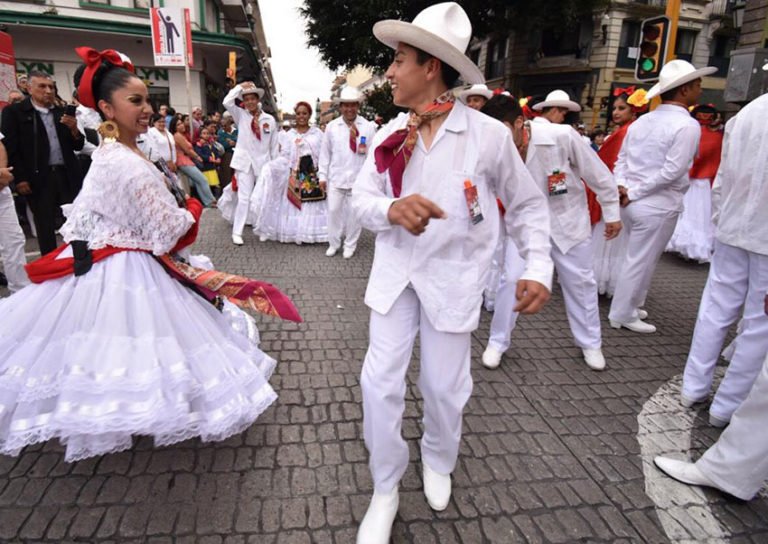
Yet another Guinness World Record was set on Mexican soil yesterday: 2,370 men, women and children danced simultaneously to the Mexican folk song La Bamba.

The successful record attempt took place in the historic center of Xalapa, the capital of Veracruz.

La Bamba, an example of Veracruz’s son jarocho musical style, is considered an anthem of the Gulf coast state.

The song was played live during yesterday’s mass dance by the group Tlen Huicani.

However, it was not just jarochos, as natives of Veracruz are known, who had the honor of claiming the new record as dancers from México state, Puebla, Hidalgo and Morelos, among other states, also took part.

All the participants dressed in traditional white costumes adorned with red neck ties for men and red scarves for women.

The annual record attempt was organized by the folkloric ballet ensemble of the University of Veracruz.

The previous La Bamba record was set a year ago by 1,938 professional and amateur dancers.

All manner of weird and wonderful Guinness World Records have been set in Mexico.

They include the world’s biggest marzipan, the biggest bead mosaic, the largest foosball tournament and – of course – preparation of the largest number of flautas, or crispy, fried tacos.

Source: Excélsior (sp), Al Calor Político (sp).

Matar a Jesus, Winner of the Macondo Awards in Colombia

The film Matar a Jesus, premium film by Colombian Laura Mora, was the big winner in this capital of the 2018 Macondo Awards, winning five out of 11 nominations.

The film won the categories of Best Film, Best Direction, Best Screenplay, Best Sound and Best Supporting Actor for Camilo Escobar.

The film, which is also a candidate from Colombia to Goya, recounts the life of Paula (Natasha Jaramillo), a 22-year-old girl who knows her father’s murderer and decides to take justice into her own hands.

The movie was filmed with non-professional actors for 36 days in the city of Medellin, where the father of the filmmaker was murdered in 2002.

‘This is a film that invites the recognition of the other at a very relevant moment in our political history where we have to recognize ourselves,’ said its director, whose debut has received multiple awards around the world in the last year.

The film Virus Tropical won the Macondo for Best Animation, Best Original Song for Adriana Garcia Galan and popularity; while Amazona was selected as Best Documentary and received two other awards: Best Original Music and Best Editing.

On the other hand, Amalia la Secretaria, directed by Andrés Burgos, was the winner in the categories of Best Leading Actress for Marcela Benjumea, Best Lead Actor for Enrique Carriazo and Best Supporting Actress for Patricia Tamayo.

The film Sal won the categories of Best Direction of Photography for David Gallego, Best Costume and Best Art Direction for Marcela Gómez.

The annual gala of the Colombian Academy of Cinematographic Arts and Sciences also awarded two prizes to the production Siete Cabezas: Best Makeup and Best Visual Effects.

The Macondo de Honor Prize was awarded to the actor Alvaro Rodriguez, for his long professional career in the seventh art.

Presidio’s Exclusion awarded the 2018 Charles Redd Award for Exhibition Excellence by the Western Museums Association for Work Illuminating the American West
Presidio’s exhibition Exclusion: The Presidio’s Role in World War II Japanese American Incarceration was awarded the 2018 Charles Redd Award for Exhibition Excellence by the Western Museums Association at their Annual Meeting on October 22. It is the major exhibition accolade granted annually by the professional industry organization that serves the Western United States, Western Canada, and the Pacific. Winners are chosen regardless of geographical location, size, budget, or discipline. Past winners have included the Boise Art Museum, the Oakland Museum of California, the Museum of Vancouver, and the J. Paul Getty Museum among others.

Western Museums Association wrote, “Exclusion: The Presidio’s Role in World War II Japanese American Incarceration truly exemplifies exhibition excellence for its important examination of a complex issue as it impacts the Western United States – and beyond.”

The award recognizes outstanding achievement of temporary exhibitions that encourage museums and the public to study the American West; utilize innovative exhibition and public programming; result from creative collaboration with outside communities or organizations; and engage audiences in the exhibition subject in compelling ways.

spot_img

El Chapo’s lawyer claims cartel bribed presidents Peña Nieto, Calderón

Both have rejected the accusation, which claims that the Sinaloa Cartel paid them millions of dollars

by Mexico News Daily

A lawyer for former drug lord Joaquín “El Chapo” Guzmán claimed yesterday that the Sinaloa Cartel paid huge bribes to the current Mexican president and his predecessor.

In his opening statement at the New York trial of the former capo, Jeffrey Lichtman said that the “real” Sinaloa Cartel leader, Ismael “El Mayo” Zambada, paid millions of dollars in bribes to President Peña Nieto and ex-president Felipe Calderón to avoid capture.

Zambada has been left free because he “bribes the entire government of Mexico including up to the very top, the current president of Mexico and the former,” Lichtman said.

Presidential spokesman Eduardo Sánchez and Calderón, who left office in 2012, quickly rejected the claim.

“The government of Enrique Peña Nieto pursued, captured and extradited the criminal Joaquín Guzmán Loera. The assertions attributed to his lawyer are completely false and defamatory,” Sánchez wrote on Twitter.

Lichtman’s assertions “are absolutely false and reckless,” Calderón tweeted. “Not him [Zambada] nor the Sinaloa Cartel or any other person made payments to me.”

On the first day of Guzmán’s trial for drug smuggling, conspiracy, firearms offenses and money laundering in a Brooklyn federal court, Lichtman told the judge and jury that Zambada is the real mastermind of the cartel and that Guzmán is no more than a “scapegoat” — a “nobody” with a second-grade education.

“He’s blamed for being the leader while the real leaders are living freely and openly in Mexico. In truth, he controlled nothing. Mayo Zambada did,” he said.

“The world is focusing on this mythical El Chapo creature,” Lichtman continued. “The world is not focusing on Mayo Zambada . . . Mayo can get people arrested and get the Mexican army and police to kill who he wants.”

The lawyer said that since El Chapo’s extradition to the United States in January last year, “the flow of drugs [to the U.S.] hasn’t stopped.”

Prior to Lichtman’s opening remarks, federal attorney Adam Fels presented the United States government’s case, asserting that prosecutors would prove that Guzmán rose from a small-time marijuana trafficker in the 1970s to chief of the Sinaloa Cartel.

Guzmán, 61, established relationships with Colombian cartels that allowed him to move massive amounts of cocaine into the United States, bringing him billions of dollars in profits, Fels told jurors.

Cocaine shipments seized by authorities add up to “more than a line of cocaine for every single person in the United States,” he said.

Fels also told jurors that Guzmán was responsible for turning parts of Mexico into war zones as he fought against rival cartels to expand the Sinaloa Cartel’s influence and power.

The jury will hear about how Guzmán personally shot two members of a rival cartel and ordered that their bodies be thrown into holes and burned, he added.

“He was a hands-on leader,” Fels said, referring to Guzmán’s involvement in day-to-day cartel activities.

All told, Guzmán faces 17 criminal charges and, if convicted, a possible life sentence. He appeared in court yesterday dressed in a dark suit and remained calm as he listened to proceedings with the aid of a translator.

The notorious drug lord, who has been held in solitary confinement in a Manhattan prison for almost two years, appeared almost happy and blew a kiss to his 29-year-old wife, Emma Coronel, who was sitting in the public gallery.

Prosecutors’ witnesses are expected to include former Sinaloa Cartel members and Guzmán associates including Zambada’s brother, Jesús “El Rey” Zambada, and son Vicente Zambada.

The latter, known by the nickname El Vicentillo, last week pleaded guilty to drug trafficking charges in a United States federal court.

Vicente Zambada, a former logistics chief for the Sinaloa Cartel, said in a plea agreement that he will cooperate with prosecutors in the hope that in exchange he will receive a reduced sentence and protection for his family from cartel retribution.

Lichtman, an experienced criminal lawyer who previously defended New York mobster John A. Gotti, attacked the credibility of the potential witnesses.
“Why is the government going so far in this case using these gutter human beings as the evidence?” he asked.

“It’s because the conviction of Chapo Guzman is the biggest prize this prosecution could ever dream of.”

Lichtman also urged the jury “to keep an open mind” and consider that law enforcement authorities in both Mexico and the United States could be corrupt.

“They work together when it suits them, Mayo [Zambada] and the United States government,” he said.

Almost immediately after Lichtman’s opening remarks, Judge Brian M. Cogan excused the jury and cautioned the lawyer against making statements that might not be supported by evidence.

The trial is being held under extraordinarily tight security. Jurors are escorted to and from the court by armed federal marshals.

Guzmán, who twice escaped from prison in Mexico, has been accompanied by heavily armed federal officials and New York police on his journeys from his cell to the federal court.

The trial, which is expected to last between two and four months, continues today.

Source: AFP (sp), Reuters (sp), El Financiero (sp).

spot_img

Central American migrants are now traveling in at least 12 states

A first contingent has already arrived in Tijuana, where authorities are seeking aid for shelters

by Mexico News Daily

Central American migrants are now traveling through at least 12 Mexican states en route to the United States, according to authorities.

Members of the first migrant caravan began to split into smaller groups after leaving Mexico City over the weekend as they travel towards the Mexico-United States border at Tijuana.

One group, made up of around 80 women, children and members of the LGBT community, arrived in Tijuana on Monday, according to José García, who works at a migrant shelter in the northern border city.

Nine buses carrying about 350 more migrants reached Tijuana early today. A Honduran flag was seen fluttering outside a bus window.

Other members of the caravan have splintered off in different directions to reach other northern cities including Hermosillo, Sonora; Escuinapa, Sinaloa; and Monterrey, Nuevo León.

Authorities in Nayarit are continuing to provide buses to transport migrants to the state’s border with Sinaloa.

That leg of the journey is likely to come today or tomorrow for the largest contingent of the first caravan, located farther south in the country.

Most members of the group arrived in Guadalajara, Jalisco, on Monday and stayed last night in an auditorium in the neighboring municipality of Zapopan.

However, some migrants stayed in the city of La Piedad, Michoacán, around 160 kilometers southeast of Guadalajara.

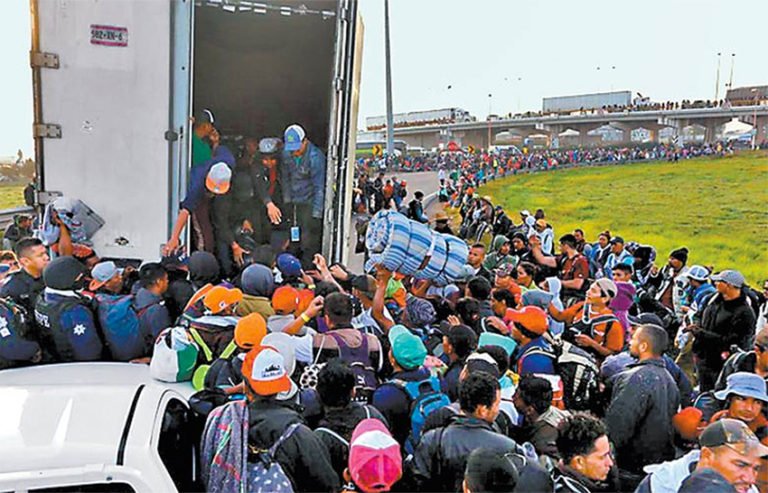
Early Monday morning, a huge contingent of migrants arrived at the entry to the Irapuato-Guadalajara highway to try to hitch rides to the Jalisco capital.

Two hours after their 5:00am arrival, some 500 migrants had managed to clamber on to passing trucks but a much larger number was still waiting for rides, the newspaper Milenio reported.

One 65-year-old man identified only as Luis Enrique climbed onto a tank truck only to be ordered by Federal Police to get off.

“I know it’s dangerous to travel this way but when one is poor there is no other choice,” he told Milenio as he waited for another ride.

A 32-year-old Guatemalan man who suffered first-degree burns to his face and chest while juggling fire torches to earn money at traffic lights in Irapuato was also among the migrants traveling towards Guadalajara yesterday.

One truck driver said that it was impossible to stop the migrants from boarding.

“. . . They climb on themselves, there’s no way of telling them no and getting them off . . .” he said.

Those who reached Guadalajara yesterday endured a five-hour journey exposed to the sun, strong wind and the constant risk of falling from the fast-moving and often-overcrowded trailers.

Members of the second caravan, made up of more than 1,000 migrants, began arriving in Mexico City yesterday from Puebla.

The third caravan, made up of around 450 Salvadoran migrants who entered Mexico legally, remain in Tapachula, Chiapas, awaiting immigration documents.

Meanwhile, a fourth caravan that crossed the southern border earlier this month is currently traveling through Veracruz en route to Puebla and Mexico City.

The Federal Interior Secretariat (Segob) announced yesterday that it has agreed to a proposal by the Business Coordinating Council (CCE) to offer employment opportunities to Central American migrants in several Mexican states on the condition that they formally register with immigration authorities.

President Peña Nieto announced a program last month called “Estás en tu Casa” (You are at home), offering shelter, medical attention, schooling and jobs to the migrants on the condition that they formally apply for refugee status with the National Immigration Institute (INM) and remain in Chiapas or Oaxaca.

However, most migrants rejected the offer and remain determined to reach the United States’ southern border, where they intend to apply for asylum.

In Tijuana, where most members of the first caravan are headed, migrant advocates warned that shelters in the city are already 75 percent full.

According to a report in the newspaper Reforma, there are 2,800 migrants — including Central Americans, Africans and Mexicans — who have been in Tijuana for up to a month waiting for the opportunity to lodge requests for asylum in the United States.

Baja California Interior Secretary Francisco Rueda said that state authorities are requesting 80 million pesos (US $3.9 million) from the federal government to pay for shelter, food, health care and humanitarian assistance while caravan members are in Tijuana.

While migrants have stayed in other Mexican cities for short periods, they could be in Tijuana for weeks or even months as they await the opportunity to request asylum.

“Other cities have welcomed them for two or three days, but one can foresee that a good number of them will stay in Tijuana for a long period . . .” the city’s Catholic archdiocese said in a statement Friday.

Some migrants are likely to be transferred to the state capital of Mexicali, located about 200 kilometers east of Tijuana, where shelters have capacity for 500 caravan members.

Rueda said that state and municipal authorities want the federal government to petition United States authorities to speed up the process to seek asylum.

However, United States President Trump is seeking to make it more difficult for caravan members to enter the country.

Trump has described the first caravan as an “invasion” and said that as many as 15,000 troops could be deployed to the U.S. southern border to meet the migrants.

Source: El Universal (sp), Milenio (sp), Reforma (sp), Expansión (sp), The San Diego Union Tribune (en).

spot_img

We don’t need a license to let our children play

NOTE FROM THE EDITOR:

Dear readers:

I’ve been following for almost a decade, the slowly loss of freedom in the land of the free, the United States, and how a police state has been emerging before our own eyes while we are brained-washed and entertained by crappy TV programs, junk music, and the destruction of our traditional family values without knowing it.
And I have commented on it. And not only the omnipotent State has assumed ownership of our children deciding among many other things, their sexual education, now I just ran into the following article makes it a crime if we let the children play. Written by Kerry McDonald, it shows how the State power is really getting out of hands for our detriment. – Marvin R.

D.C. bureaucrats are trying to make parents get a license to let children play together

by Kerry McDonald

Let’s say you and some of your friends decide to gather your young children together a couple of days a week for a few hours of free play. Maybe you switch off who leads the gaggle of kids each week, allowing for some shared free time and flexibility. Sounds like a great arrangement for all, right? Your kids get to play freely with their friends, and you get some occasional free babysitting.

According to government officials in Washington, DC, arrangements like this are violations of the law. They are cracking down on what they call an illegal “child development facility” operating without a license.

The Regulation of the Playdate

Back in the 1970s, a group of parents got together to create an informal playgroup for sand their two-year-olds have enjoyed these three-hour playgroups, which children can attend up to three days a week. The playgroup is staffed by parents of the kids who attend, and they take turns watching the children. There is no paid staff.

The parents are outraged, arguing that this is an informal, parent-led playgroup that should not be regulated as a childcare facility.

According to a recent Washington Post article written by Karin Lips of the Network of Enlightened Women, “Some DC government officials now are trying to regulate the program, which they contend is an illegal child-care facility.” The Office of the State Superintendent of Education investigated the playgroup cooperative in early September and issued a statement saying the group is violating child care facility laws and must get a license to operate.

The parents are rightfully outraged, arguing that this is an informal, parent-led playgroup that should not be regulated as a childcare facility. Government officials argue that the playgroup doesn’t qualify for an exemption as an “informal” group because the parents, over the years, have established some simple “rules” for participation, including stating that parents can’t bring contagious children to the playgroup and asking for emergency contact information.

As a homeschooling mom, I host groups of children at my house all the time, sometimes with their parents and sometimes without, and my friends reciprocate. I have the same “rules” as this DC playgroup: Don’t bring sick kids to my house, tell me if they have any food allergies or medical issues, give me your phone number in case of emergency, oh, and take off your shoes.

Gross Overreach by the State

Could the government crack down on these types of playgroups, arguing they are not “informal” because of basic expectations for health and safety? Or are parents so incapable of voluntarily determining health and safety expectations that the government must do it for them?

The state does not need to insert itself into all aspects of private life. Parents are competent enough to create voluntary associations with other parents that benefit their children and themselves. As Lips writes in her article:

Ironically, if the Office of the State Superintendent of Education has its way and is allowed to regulate this playgroup out of existence, it would be creating a disincentive for parents to self-regulate, as a playgroup with no safety rules would presumably be on stronger legal standing.

If the parents in the DC playgroup were wary of its operations or procedures, they wouldn’t join the cooperative. Parents are highly capable of making judgments regarding their children’s well-being without government meddling.

The DC Council is currently deliberating on what to do with this long-time parent cooperative and similar playgroups. The fact that the Council is involved at all should concern everyone. This is a private, parent-organized group that has operated just fine for over four decades without the Council’s help. The government should leave parents alone and focus on more pressing responsibilities.

Lips warns:

This regulatory encroachment could be the District’s first step toward broader government overreach in this area and the crowding-out of voluntary associations. From nanny-shares to babysitting co-ops to regularly scheduled times to play at public parks, the Office of the State Superintendent of Education investigators could find new opportunities to crack down on the voluntary ways that D.C. families approach playtime and child care for their children.

In DC and elsewhere, government officials should stay clear of telling parents what to do or how to organize. We don’t need a license to let our children play.

spot_img