Wednesday, August 5, 2026
Home Blog Page 275

Covert chemical warfare: 100,000 deaths a year

by Jon Rappoport

Medical News Today reports that, in 2011, there was a modest uptick in the number of prescriptions written in the US.

The increase brought the total to: 4.02 billion.

Yes, in 2011, doctors wrote 4.02 billion prescriptions for drugs in America.

That’s an average of roughly 13 prescriptions for each man, woman, and child.

That’s about one new prescription every month for every American.

The Medical News Today article concluded, “…the industry should be heartened by the growth of the number of prescriptions and spending.” Yes, I’m sure the drug industry is popping champagne corks.
We’re talking about prescriptions here. We’re not talking about the number of pills Americans took. We’re also not counting over-the-counter drugs or vaccine shots.

Pharmacopoeia, a 2011 exhibition at the British Museum, estimated that “the average number of pills a person takes in his or her own lifetime in the UK is 14,000.” That’s as a result of prescriptions. Including over-the-counter drugs, the 14,000 number would swell to 40,000 pills taken in a lifetime.
What are the effects of all these drugs?

We are looking at a supreme Trojan Horse that is rotting out America and all other countries from the inside. Wars, no wars, economic deprivation, economic prosperity, the drugs continue to do their work, debilitating and ruining and terminating lives.

Many sources can be cited to confirm this assessment.

On January 8th, 2001, the LA Times published an article by one of the best medical reporters in the business, Linda Marsa: “When Good Drugs Do Harm.” Marsa quoted researcher Dr. David Bates, who indicated that, in the US, there are 36 million serious adverse reactions to medical drugs per year.
On July 26, 2000, the Journal of the American Medical Association published the most stunning mainstream estimate of medical-drug damage in history: “Is US health really the best in the world?” The author was Dr. Barbara Starfield, a respected public-health researcher at the Johns Hopkins School of Public Health.

Starfield concluded that medical drugs were killing Americans at the rate of 106,000 per year.
That’s a million deaths per decade.

This is a conservative sketch of the Trojan Horse that has been placed in the center of every country in the world.

The pharmaceutical juggernaut will continue, no doubt about it. The only question is, how many people will wake up and seek another way?
The destruction of societies by medical drugs goes far beyond what some people call “over-prescribing.” This isn’t just a tilt in the wrong direction. It isn’t simply errors of judgment compounded by the number of doctors dispensing medicines.

Those are all polite terms suggesting the situation can be corrected through a show of good will and better judgment. That will never happen.

Countries of the world are literally being assaulted by pharmaceutical companies and their foot-soldier doctors. It’s chemical warfare.

To even begin to see light at the end of the tunnel, hundreds of millions of people must add themselves to the rolls of those who already are pursuing better health through natural means.
We need an all-out rebellion against the Pharmacopoeia.

Not even the Nazis and their dearly beloved cartel, the monster IG Farben, dreamed of the day when the citizenry would line up and demand to ingest more and more life-destroying chemicals.

In case anyone thinks the FDA, the single agency responsible for certifying drugs as safe and effective, has “overlooked the problem,” Google “FDA, Why Learn About Adverse Drug Events.” You’ll find the following statements on the FDA’s own site:

“Over 2 MILLION serious ADRs [Adverse Drug Events] yearly; 100,000 DEATHS yearly.”
The only thing missing is:

“And we, the FDA, said the drugs were safe.”

(Jon Rappoport is the author of three explosive collections, The Matrix Revealed, Exit From The Matrix, and Power Outside The Matrix).

spot_img

Why are Guatemalans seeking asylum? US policy is to blame

by Gabriel M Schivone

The death of seven-year-old Jakelin Caal in US custody follows decades of US-sponsored devastation in her home countryA grainy cellphone image from a small indigenous Guatemalan village shows seven-year-old Jakelin Amei Rosmery Caal Maquin, wearing a blue blouse and jeans and looking diffidently into the camera with her arms hanging at her sides. Not long after the photo was taken, she accompanied her father on the over 2,000-mile journey to try and reach the US. She died while in US border patrol custody after arriving at a New Mexico port of entry to claim asylum.

Traveling with a father, like Jakelin was, accounted for the main reasons small children were regularly separated under Barack Obama (the other reason being the mass incarceration program Operation Streamline), though Donald Trump outmatched his predecessor in sheer scale if not in practice.

The father and daughter fled their small village in Alta Verapaz, one of the areas targeted for annihilation during two successive, US-backed regimes over the Carter-Reagan years, atrocities that a 1999 UN truth commission deemed “acts of genocide” perpetrated against indigenous Mayan ethnic groups that included Jakelin’s Q’eqchi’ people. Of the 200,000 people killed, eight out of 10 were indigenous.

The targeted scale of death, contrasted by the lack of global action and public outcry, led a group of international lawyers to call the period a “silent holocaust”.

The term “holocaust” isn’t exaggerated. Just over 100 miles from Jakelin’s village, so many bodies were piling up that a Guatemalan military base in Huehuetenango (one of those that proliferated under Kennedy-era military funding programs) operated a crematorium to incinerate the bodies of “the disappeared”.

Guatemala’s unique national criminal trials in recent years, prosecuting lower soldiers, senior officers and heads of state, have implicated US national security doctrine, first instituted by Kennedy under the guise of fighting communism. US military and embassy officials over the years admitted to, even took credit for, the formation of informal death squads to assist military and security forces in the butchery.

An estimated 10,000 people alone were killed in the first three months after a March 1982 military coup by President Reagan’s favorite “man of great personal integrity”, General Efraín Ríos Montt, trained at Fort Bragg, whose forces averaged 19 massacres per month. Whole villages (over 400 were destroyed) were literally burned off the face of their earth and their inhabitants killed, often gruesomely.

When people started fleeing the nightmare in record numbers (also from US-backed forces in El Salvador), the Reagan administration stepped up border security with methods first tried and tested in Guatemala’s US counterinsurgency “laboratory”.

Reagan denied asylum claims wholesale to people like Jakelin and her father by referring to them as economic migrants unworthy of asylum, instead of taking responsibility for creating the conditions of political economy that encompass both migrants and refugees. By 1984 a mere 0.79% of Guatemalan asylum applicants had their requests grants and, by the next year, Reagan was deporting 1,000 Central Americans per month back to the death squads. Then, as today, US civil society sanctuary efforts began.

Jakelin’s mother recalls her daughter’s dream to send money home from the US, a dream she shared with other members of Guatemalan civil society who implored President Clinton in 1999 to relax immigration controls, which skyrocketed under his watch, so that these valuable remittances could continue. Clinton was in Guatemala City the day the UN released its report on Guatemala. Looking genocide survivors in the face, he admitted the decades of decisive US military assistance “was wrong” but flatly rejected their pleas for immigration reform, because, he said, “we must enforce our laws”.
Other forms of denial run deep. Obama’s former UN ambassador, Samantha Power, wrote an authoritative study on genocide, A Problem from Hell: America and the Age of Genocide, whose index fails to even list “Guatemala”. US-backed torture of Guatemala traces back to the Franklin D Roosevelt years and prior, but today conditions have only grown worse.

Every time the media fail to report this historical wreckage from which Jakelin’s people are still fleeing across the US-Mexico border; every time US officials fail to treat these survivors with compassion – indeed massive financial reparations would be more appropriate – contributes to an active case of genocide denial.

There’s a scene in Steven Spielberg’s film Schindler’s List where the protagonist Oskar Schindler watches, on horseback from the safety of a distant bluff, the Nazi liquidation of the Warsaw ghetto. Nazi soldiers are killing people indiscriminately, yet Schindler can’t take his eyes off a little girl in a red coat, about the same age as Jakelin, who scuttles, unscathed, along the blood-soaked cobblestones – later to be seen in a pile of bodies. In a 2017 HBO documentary, Spielberg reflects that the red-coated little girl of Jakelin’s age “was less about what turned” Schindler’s sympathy and “more that the world turned a blind eye on the holocaust and the industrial process of wholesale murder”.

In other words, the Nazi holocaust was once, like Guatemala’s, a “silent” one.
While Jakelin, the little girl in the blue blouse, rates headlines for the time being, an enduring question remains. When will Guatemala’s suffering grow louder than the din of US interests – from Roosevelt to Kennedy to Reagan to Clinton to Obama to Trump – and fill the silence of inaction with demands for justice and accountability on this side of the border?

(Gabriel M Schivone is an immigration asylum sponsor and humanitarian aid volunteer on the Arizona/Mexico border).

spot_img

‘Nowhere to hold them’: exhausted migrants crowded under a bridge in Texas

The border agency, with no room elsewhere, has resorted to using an outdoor fenced space as a ‘transitional shelter’

by Edwin Delgado

Every day, thousands of people cross the Paso del Norte bridge between El Paso, Texas, and Ciudad Juárez, Mexico. For the past two days, the small shaded area underneath the bridge has also been busy: hundreds of recently apprehended migrants are now spending hours out in the open behind a chain-link fence and razor wire.

US Customs and Border Protection (CBP) says they are there due to the continued rise of mostly Central American migrants who have to be processed at various ports of entry and have generated a bottleneck.
“Due to the large volume of apprehensions within the El Paso station’s Area of Responsibility, the agency has undertaken additional measures to facilitate processing,” said CBP in a statement. “As [migrants] arrive at the processing facility, they are placed at the ‘tent’ to await their turn to be processed. This tent serves only as a transitional shelter and is not a temporary housing facility.”
The transitional shelter was put in place last month. This week, the fence and wire were installed amid a rise in the number of people being held.

On Wednesday afternoon, as the temperatures rose over 80F (26C), most of the migrants waiting to be processed sat along the edges of the shelter or lay down covered with foil sheets given to them by CBP.

Some of them looked away to avoid being photographed; others followed journalists who took photos and notes. Still others, exhausted from the long trek to the US, took a few minutes to rest and get a bit of sleep before the next leg of their journey.
A CBP spokesman, Ramiro Cordero, said he didn’t have an accurate estimate of the number of migrants at the shelter because it fluctuated every hour. But he said that as of 6am on Wednesday, CBP’s El Paso sector, which covers New Mexico and parts of west Texas, had approximately 3,500 migrants in custody. The sector is averaging 570 daily apprehensions this month, up from around 200 a day early last year. He noted the migrants in the shelter had been detained within the last 15 to 20 hours.
“We keep getting better and better at processing them,” Cordero said. “However, the numbers continue growing and growing. We don’t have anywhere else to hold them.”
Another CBP official, who asked not to be named, told the Guardian that if the current situation did not improve, CBP might have to release some of the migrants it processes into the streets rather than waiting for other agencies to pick them up.

CBP, which makes the apprehensions at the border, must wait for Immigration and Customs Enforcement (Ice) to process migrants before releasing them to them. Ice also, at times, works with local non-government agencies to coordinate the release of some of the migrants into the community.

Only two blocks away from the bridge, the CBP commissioner, Kevin McAleenan, said at a news conference on Wednesday morning that the number of migrants coming to the US was unprecedented. He said on that morning CBP had more than 13,000 migrants in its custody; normally, it was closer to 4,000.

“This stark and increasing shift to more vulnerable populations, combined with the overwhelming numbers, and inadequate capacity to detain families and children at Ice and HHS, respectively, has created a humanitarian crisis,” McAleenan said. “In March, almost 40,000 children will come into CBP custody after completing a harrowing journey in the hands of violent and callous smugglers through Mexico. The danger of violent assault on that journey, the potential for a tragic incident in the crossing or in overwhelmed CBP facilities, or in transportation networks, is clear and present.”

He noted that 40 percent of CBP officers were focused on handling the influx of migrants.

As buses began to arrive at the shelter to take migrants who had been processed, others anxiously waited for their chance to, at the very least, be moved inside the CBP facility. (The Guardian).

spot_img

NPNA calls on eligible low-income immigrants to apply for citizenship as soon as possible

Trump administration moves closer to limiting eligibility for fee waivers for citizenship and other applications–a direct attack on 244,000+ elderly and working poor immigrants who apply for citizenship every year

Submitted by NPNA

The National Partnership for New Americans (NPNA) strongly condemns the Trump administration’s decision today to move a step closer toward finalizing a federal regulation that would make it harder for hundreds of thousands of elderly, low-income, and working poor immigrants to afford citizenship. The regulation will also make it less affordable to apply for lawful permanent residence, temporary protected status, and employment authorization. In response, NPNA and partners are pledging to get one million new citizens by 2020 and to continue fighting the attacks from the administration.

The proposed regulation, which could be implemented as early as the end of May, would end the practice of allowing applicants who receive a means-tested benefit, such as Supplemental Nutrition Assistance Program, Medicaid, Supplemental Security Income, and Temporary Assistance for Needy Families, to use that as proof that they cannot afford the high costs of naturalization fees, and, therefore, need a fee waiver.

The regulation is mean-spirited and would punish immigrants who utilize means-tested public benefits. It would limit a victory that NPNA and its members won during the previous administration, which allowed for fee waivers for citizenship and other applicants who could not afford the costly application fees.

“We condemn this latest move to punish low-income and elderly immigrants,” said Eva Millona, Co-Chair of NPNA and Executive Director of the Massachusetts Immigrant and Refugee Advocacy Coalition. “If you love this country, are eligible to naturalize and of limited means, we urge you to seek help and file for citizenship as soon as possible before this Administration moves to limit your ability to qualify for the citizenship fee waiver. We have a patriotic obligation to support aspiring Americans prepared to raise their right hand to defend the Constitution, no matter their background or place of birth.”

In 2017, around 40 percent of citizenship applicants, over 370,000 people, filed for citizenship and requested a fee waiver. Over two-thirds of these lawful permanent residents requested the fee waiver using the proof of a means-tested benefit. This means that the proposed regulation would make it more difficult, if not impossible, for over 244,000 elderly and working poor immigrants per year to naturalize per year. In addition to other proposed regulations and practices, the backlog of nearly 740,000 citizenship applications before U.S. Citizenship and Immigration Services, and processing delays that exceed 30 months in certain offices, these roadblocks constitute a “Second Wall” of barriers to citizenship constructed by the current administration.

In response, NPNA and its partners across the nation pledge to tear down the “Second Wall” of barriers to citizenship and mobilize its communities and advocates to mobilize one million new citizens by 2020.

spot_img

The Mexican Electrical Workers Union (SME) is Mexico’s most important independent union on the Left

Ten years ago, it was nearly destroyed. Today, its members are rebuilding through a new labor cooperative

by David Bacon

Mexico’s new President, Andres Manuel López Obrador (AMLO), probably the only head of state to give two press conferences a day and then post them online, is accustomed to having his statements cause headlines.
Last week it was a reporter’s question that caused a hot controversy, seemingly intended to drive a wedge between AMLO and one of his most important labor allies, the Sindicato Mexicano de Electricistas (Mexican Electrical Workers union, SME).

Reporter Rosa Elena Soto, of Acustik Noticias y La Neta Noticias, alleged corruption between Lopez Obrador’s predecessor and the union, over contracts for operating the huge Necaxa hydroelectric power station. “Many of these contracts have indications that they were plagued by corruption,” she charged.

In his response, AMLO called the union “possibly the most democratic union in Mexico’s history, until they viciously destroyed it in the neoliberal period.” Noting that its 44,000 members had been fired in 2009, he called for a solution to the conflict. Any corruption, he emphasized, wasn’t attributable to workers but to companies that took advantage of the situation. But López Obrador also called for consulting the discredited former leaders of the union, who had accepted government’s payoffs after the firings.

This response provoked outrage from the union’s leaders. SME General Secretary Martín Esparza replied: “We walked miles and miles in demonstrations, faced with dignity those who fired the workers. We did not sell out, even as our families suffered, and we didn’t just sit back with our arms folded and wait for answers. In fact, we proposed viable and novel solutions.”

That solution is a cooperative that has taken over many of the facilities where SME members formerly worked, including the Necaxa power station in the reporter’s question. This “novel solution” represents the union’s hope of putting back to work the thousands of electrical workers thrown into the street a decade ago.

When López Obrador carefully noted the union’s reputation, he was acknowledging the importance of its 100-year history on the Mexican left. The Mexican Electrical Workers Union, the oldest democratic union in Mexico, was founded in 1914 when the armies of Emiliano Zapata took Mexico City. Almost a century later, in 2009, the Felipe Calderón administration attempted to destroy the union and the nationalized company that employed its members. But thousands of the SME’s members refused to give up their union. Instead, they spent the next eight years en resistencia (in resistance).

This willingness to fight for principled labor policies is not only crucial to the country’s political left but has an impact across the border as well. Today, electrical workers in the U.S. work on an energy grid increasingly integrated with Mexico’s. To avoid the whipsawing and job competition familiar in industries like auto, U.S. unions will need Mexican partners with the kind of class-oriented unionism the SME has championed. That class-based unionism has a long history. In its new cooperative, that history is not only still alive, but has been adapted to the realities of an integrated economy dominated by pro-corporate reforms.

The origins of the SME’s class-based unionism

In 1898, the Compania Luz y Fuerza del Centro (the Power and Light Company of Central Mexico, LyF) was founded in Canada, and granted a concession by President Porfirio Díaz to generate, transmit, distribute, and sell electricity in central Mexico. In the middle of the Mexican Revolution, LyF workers organized the SME primarily because Mexican workers were paid much less than those working for the company from Canada and the United States.

In 1916, the SME organized Mexico’s first general strike. Union leaders were imprisoned and condemned to death, but their lives were ultimately spared after huge demonstrations. In 1936, the SME went on strike against the U.S., British, and Canadian owners of Luz y Fuerza. Mexico City went without electricity for ninety days, except for emergency medical services. The strike was successful and led to the negotiation of one of the most important labor contracts in Latin America. This contract preserved SME’s independence from the government, unlike other Mexican unions, and made it an important organization on the Mexican left.

In 1937, Amendment 27 of the Mexican Constitution made the oil and electrical industries the property of the state. Then, in 1949, the Comisión Federal de la Electricidad (Federal Electricity Commission, CFE) was established to provide power to all of Mexico-except for the area served by LyF. Nevertheless, private companies like Luz y Fuerza continued to operate under government concessions.

In 1960, the SME began to push for the nationalization of electrical power. The Mexican government subsequently purchased 90 percent of LyF shares, making it a state-owned and operated company. Then-President Adolfo López Mateos added a paragraph to Article 27 determining that the Mexican government has the exclusive right to provide electricity to the country.

The Sindicato Único de Trabajadores de Electricidad de la República Mexicana (Sole Union of Mexican Electricity Workers, SUTERM), headed by Rafael Galván, was established in 1972 for CFE workers. Galván, however, was expelled from the union for opposing government policy. He then organized the Tendencia Democrática del SUTERM, (Democratic Tendency of SUTERM), whose leaders were all fired. The union consequently became a pillar of support for Mexico’s governing party, the PRI. Since then, the two unions have represented the two poles in Mexican labor: an independent democratic organization with left politics, and a bureaucratized union tied to the PRI and the government.

(This article has been shorten due to its length. Here’s the link to read the entire article: https://davidbaconrealitycheck.blogspot.com/2019/02/the-rebirth-of-mexicos-electrical_7.html).

spot_img

Do humans have free will? Not if big tech wins

Dear readers:

As much as it sounds simple, as most of us would say, “of course I have free will, I can do whatever I want and say”. But actually you may find that it may not be true after you read this article written by investigative journalist and true seeker, James Corbett, one of my favorite writers in these times of mind-slavery. – Marvin Ramírez

Do humans have free will? Not if big tech wins!

by James Corbett
corbettreport.com

Do humans have free will?
That question has puzzled philosophers for millennia and has generated fierce debates. Perhaps the only thing more contentious than the question are the implications of its answer. If man has no free will, then how can there be moral responsibility?
But don’t worry, dear frazzled philosophers! You can now rest your weary heads because the question is about to be answered once and for all by the wizards of Silicon Valley.
What on earth am I talking about? To answer that question, let’s turn to Declare Your Independence, the radio show of Ernie Hancock of FreedomsPhoenix.com. Recently, Ernie had a fascinating conversation with Paul Rosenberg of FreemansPerspective.com. What’s fascinating about their discussion is how quickly the conversation turns from a dialogue about online censorship in the wake of the Christchurch shooting to Rosenberg ranting about the most important issue of our time:
“You need to protect your data to protect your own free will. I’m sorry if that sounds dramatic. I’m sorry if that sounds like I’m trying to be scary and all that, but that’s just the truth and somebody should say it!”
So how do we get from online censorship to the end of free will (assuming we ever really had it)? By way of Google’s selfish ledger, of course.
For those who may have missed it, “The Selfish Ledger” is an internal Google video that was leaked to The Verge last year, and it’s just about the creepiest thing imaginable. If you haven’t seen it yet, take a moment to watch it now.
In his article on the video, Rosenberg summarizes the video thusly:
• Google sees you as a “transient carrier.” That is, the data you produce is the essential being, and you’re a mere “container.”
• You shouldn’t really own your ledger (your most essential self), and they should insert information into your life.
• Google will choose what you should want and will modify your behavior accordingly. How? By offering you new options or even designing custom devices that you won’t be able to resist. They will make sure “your behavior” is “modified.”
• If this seems creepy to you, don’t worry; you’ll warm up to it over time.
• Google will guide you to what’s best for you. You can trust them; they love us and know what’s best for us all.
This is not an exaggeration. This is literally the message of the video.
Whether or not you believe yourself to be a mere “container” acting as a “transient carrier” of data or, you know, a pesky ontological object like a free human being with a soul, the video provides some serious food for thought. It is obviously the case that we are shaped by our experiences, and our past experiences (the data that Google tracks) help to determine our responses to future challenges.
Over time, and given enough analytical horsepower, someone tracking the data trail you leave behind (the places you go, the people you meet, the things you buy, the conversations you have, the questions you ask, the choices you make) can not only predict how you will act in the future; they can determine why you will act that way. And if they have that insight—the knowledge of what makes you tick, as it were—then it’s not difficult to start using that knowledge to prompt us in one direction or another. And, over time, if we can be prompted to make choices along a certain path we can end up at a predetermined destination, one that we ourselves never set out to reach.
In short, if we are nothing but biological robots reacting to stimuli along predictable paths, then we can have our software re-programmed by an outside agent that is custom-tailoring those stimuli for us. And, as this video announces, Google would like to be that agent.
Now this “Selfish Ledger” is Google’s video, so the idea seems like it’s Google’s alone, but of course this is not the case. All of the major tech companies are operating from similar principles.
This is why Facebook conducted its infamous “mood experiment” to see how tinkering with a person’s news feed could alter their feelings. It’s why Instagram is blocking “anti-vaccine” hashtags. It’s why Twitter and Facebook (and everyone else) is collecting data on everyone, even non-users, at all times. Heck, it’s why I now listen to Radiohead.
We are being shaped, our experiences directed, our choices made for us each and every day. And whether or not you ever believed in free will, there can be no doubt that as the cell doors close on our technological prison we have less and less say over our own decisions.
There are things we can do to help mitigate this, of course.
We can take online privacy seriously and really commit to not giving these companies any identifiable data that can be associated with us individually. But after seeing what it takes to really accomplish this, most will decide that it’s not worth the hassle.
We can try disconnecting from technology. Leaving our smartphones at home instead of taking it everywhere we go. Deleting our social media accounts. Going back to phone calls and in-person chats over texting and email. But more and more, our jobs (not to mention our social lives) depend on being online and accessible through the very types of social media services we are seeking to avoid.
We can do the little things that we can do to stop being controlled by our gadgets. Make a conscious effort to not click on the next “recommended video” or “you might also like” article. Turn off notifications. Disable location services. Stop Googling every question we have and stop plugging our ears with earphones at all times. But do these little actions make a difference in the long run?
And in the end, perhaps it’s not even our choice anymore (if it ever was). As a recent MIT study demonstrated, you only need the DNA of a small percentage of the public in order to trace the relationships between the entire population. Similarly, you don’t have to be on Facebook yourself in order for Zuckerberg and his minions to know all about you; as long as all your friends (or some percentage) are on there, chances are you’re in the Facebook database as a “shadow profile.”
So, unless you’re the Unabomber living on bugs and rainwater in some cabin in the woods, you’re in the matrix one way or another. And unless we as a society start asking and answering the hard questions about autonomy and free will in the age of total surveillance, there’s a good chance our children (or their children) will be nothing more than “transient carriers” for data that is being fed to you by the Big Tech monopolies.
After all, what choice do we have?

spot_img

“Mother of all migrants’ caravans” is forming up in Honduras: interior secretary

Numbers could go higher than 20,000

by Mexico News Daily

A massive cohort of prospective migrants dubbed the “mother of all caravans” is forming in Honduras, the federal interior secretary said today.

“We are aware that a new caravan is forming in Honduras that they’re calling the mother of all caravans… and which could be [made up of] more than 20,000 people,” Olga Sánchez Cordero said.

She didn’t offer any details about when the caravan might leave Honduras to start the journey towards Mexico and on to the United States’ southern border.

The interior secretary told reporters that migration and specifically the formation of the huge caravan was a central issue in talks she held yesterday with United States Secretary of Homeland Security Kirstjen Nielsen in Miami, Florida.

Sánchez said Nielsen told her that United States authorities returned at least 76,000 migrants to their countries of origin in February and expect to deport more than 90,000 this month and a total of 900,000 by the end of the year.

The Department of Homeland Security (DHS) said in a statement that Nielsen and Sánchez “discussed ways the U.S. and Mexico can work together to address irregular migration and the record levels of illegal entries at the U.S. southern border.”

Thousands of migrants fleeing poverty and violence in Honduras, Guatemala and El Salvador have entered Mexico at the southern border since late last year as part of several large caravans.

Despite the federal government issuing more than 10,000 humanitarian visas that allow migrants to live and work in Mexico for up to 12 months, most caravan members have chosen to travel to the United States border to seek asylum.

Yet another migrant caravan made up of around 2,500 Central Americans and Cubans is currently traveling through Chiapas after leaving Tapachula last weekend.

Caravan members walk long distances through Mexico in often hot conditions but also try to hitch rides to reach towns on the well-trodden migrant route more quickly.

Sánchez said today that there is evidence that criminal groups are transporting migrants from Tapachula to the northern border in trucks and charging each person thousands of dollars for the service.

“…Imagine the size, the dimension of this migration flow, which is sometimes human trafficking by organized crime, the business of this trafficking . . . is several billion dollars,” she said.

“…Each migrant represents between US $2,000 and $6,000 for them…” Sánchez added.

The interior secretary said that authorities will seek to better patrol the entire 1,020-kilometer stretch of the southern border in order to contain flows of people entering Mexico illegally. She pointed out that there are 370 illegal entry points and just 12 official ones.

However, Sánchez said there won’t be any move to militarize the border.

Instead, migration checkpoints manned by Federal Police and Civil Protection personnel will be set up on the Isthmus of Tehuantepec to halt migrants who have entered Mexico illegally.

“…We have to make a response because there cannot continue to be hundreds of thousands of migrants passing through Mexico and arriving at the northern border,” Sánchez said.

She added that as part of the strategy to curb migration the government will no longer issue long-term humanitarian visas.

Irineo Mujica, a member of a migrant advocacy group that accompanies migrants as they travel through Mexico, said Mexico had stopped granting humanitarian visas “to comply with the expectations of [United States President Donald] Trump.”

However, Sánchez said Mexico itself is struggling to cope with so many migrants currently in the country, pointing out that there is an overwhelming number of asylum seekers in shelters in northern border cities.

Due to the United States government’s introduction of a “metering” system that limits the number of asylum requests immigration authorities will hear on a daily basis, migrants face long waits in border cities, many of which have high rates of violent crime.

Even after they have filed claims for asylum, there is no guarantee that migrants will be allowed to wait in the United States for their cases to be heard at immigration courts – as was previously the case – due to the introduction and subsequent expansion of the so-called “Remain in Mexico” plan.

The Secretariat of Foreign Affairs (SRE) said earlier this month that “the Mexican government doesn’t agree with this unilateral measure implemented by United States authorities” but continues to receive people anyway for “humanitarian reasons.”

Mexico and the United States agreed in December to cooperate on a US $35.6-billion development plan in southern Mexico and Central America to curb migration but critics pointed out that most of the U.S. funding is not new as it will be allocated from existing aid programs.

Secretary Nielsen traveled to Tegucigalpa, Honduras, today to meet with officials from that country as well as Guatemala and El Salvador.

The DHS said Nielsen and Northern Triangle security ministers have been working on “a first-of-its-kind memorandum of cooperation – or ‘regional compact’” – that “focuses on stemming the migration crisis at its source, including preventing the formation of new migrant caravans that set out to reach the United States.”

Source: Notimex (sp), El Universal (sp), Reforma (sp), The Associated Press(en)

In other news in Mexico:

Teachers return to legislative palace, block deputies’ access
Discussion of education reforms delayed again

The 2013 educational reforms were up for discussion in the lower house of Congress again today, but not for long: teachers once again blocked access to the Chamber of Deputies, shutting down all congressional activity.
Education and constitutional affairs commissions were to meet today and formally discuss the reforms implemented by the previous federal government, but only 20 of the 66 deputies arrived before members of the CNTE teachers’ union.

The meeting was called off and re-scheduled for Thursday.

About 30 arrived at the congressional palace at about 7:00am. Within an hour and a half, all the entrances were blocked by teachers and their tents.

The spokesman for the union’s Oaxaca local, Section 22, told reporters that the protest was in response to the failure of deputies to meet one of the teachers’ demands, namely having access to the document the lawmakers were going to discuss during today’s meeting.

Wilbert Santiago warned that “reinforcements” were expected to arrive in buses later today, and augment the protest camp’s numbers.

Last week, the Chamber of Deputies was shut down for 48 hours after about 1,500 protesting teachers set up a camp on the streets outside.

Then, as now, the teachers were demanding repeal of the controversial reforms, which President López Obrador has promised to do.

However, one of the most controversial aspects of the reforms was the introduction of teacher evaluations. Opposition members in Congress said on Saturday that about 80% of the reforms remain in the new legislation, including evaluations.

More protests by the dissident CNTE union are likely.

Source: Milenio (sp), Reforma (sp).

spot_img

Nicaraguan lady Josefana Castro Estrada dies in SF at almost 100 years of age

by sisters Ondina María and Lucía Castro

Doña Josefana Estrada, born in Managua, Nicaragua on April 30, 1919, died on March 19, just one month and 12 days short before turning 100.

The big party to celebrate her centenary was already prepared. It was going to be in the halls of the Holiday Inn in South San Francisco.

But God wanted to take her with Him before she was 100.

Her parents were Carlos Estrada and Mercedita Guerrero.

At 16 years of age, she married Mr. Andrés Castro Wasmer, a marriage that lasted for more than 55 years.

It was a very happy and blessed couple with 10 children, being them Myrna, Ludwig, Andres, Walter, Danilo, Yadira, Lucía, Dennis, William and Ondina, – three of them rest in the Peace of Our Lord Jesus.

Doña Josefana and Don Andrés owned the printer El Sol in Managua, and the radio station Ondas del Xolotlán, where the veteran journalist José Santos Ramírez Calero (r.i.p), (father of Marvin Ramírez, editor of El Reportero in SF), directed its radio newscast, Noticiero del Aire, after the newspaper La Noticia, where he worked for 45 years, closed after the death of his owner Juan Ramón Avilés.

Mr. and Mrs. Castro were highly appreciated by their friends and acquaintances, and denjoyed popularity because of their charisma. Her goal was always to keep her children together – something that has been accomplished to date.
In 1980 they emigrated permanently to the United States and made their permanent residence in the city of San Francisco, California since their children had already resided in this city for several years.

Mrs. Castro made several trips back to Nicaragua during Christmas to spend it with her sister Hilda Guerrero and her beloved mother Mercedes, who died in 1997 at the age of 104.

She studied hard to pass the exam to became a United States citizen at the age of 85, and had the opportunity to travel in the company of her eldest daughter Myrna Castro de Gómez.

Josefanita “Chepanita” and popularly known as “Mamilla” was surrounded with love from her friends, and the love of her 10 children, 22 grandchildren, 35 great grandchildren, and in the last 10 years she came to play with her eight great-great grandchildren.

We, her children, thank the Creator for having had her for so many years enjoying her presence, love, wisdom, dedication, advice and joy.

Remembering your smile encourages us and makes us smile. Rest in peace who was a being of light for all of us.

(Deceased Children: Myrna 1995, Danilo 2008, and Walter on Jan. 4, 2019).

She would be viewed at Duggan’s Serra Mortuary, 500 Westlake Ave, Daly City, on Sunday, March 31, from 4-9 p.m. and put to rest at the Holy Angels Catholic Cemetery in Colma.

– Marvin Ramírez and the staff of El Reportero join the family in this deep pain.

(El Reportero contributed to this article).

spot_img

Adrenal fatigue and cancer: Is there a connection?

by Dr. Veronique Desaulniers

The worldwide low thyroid function epidemic is getting more and more press these days. But adrenal fatigue and its connection to major disease like cancer? Not so much. Research says there is definitely a link.

What are the Adrenals?
The adrenals are glands that rest just above the kidneys. They are the main production center for stress hormones, namely cortisol and adrenaline. What a lot of people don’t know, however, is that the adrenals also produce the reproductive hormone progesterone. According to many studies including a 2007 Italian investigation published in the journal Breast Cancer Research, progesterone is not only responsible for reproductive health. It is also a powerful cancer-protector.

What happens during chronic stress
You may have heard of the “flight or fight” response. In fact, you have probably experienced it yourself (maybe even quite recently!). You may also know that when the body goes into this mode, it pushes out cortisol and adrenaline at a high rate, diverting energy and blood flow from processes like digestion to the extremities so you can run from that tiger (or your boss).

When you are “stressed out,” the body amps up production of cortisol and adrenaline in the adrenals to give you the best “chance of survival.” In the process, however, the adrenals also turn production of progesterone way down. When this occurs, a woman’s body doesn’t produce enough progesterone for puberty if she is growing nor lactation if she is pregnant.

Being in constant stress mode, also called chronic stress, can also lead to adrenal fatigue or “burn out.” Adrenal fatigue and burn out occur when the adrenal glands are unable to keep up with the demands for what it produces. It is estimated that in today’s stressed world, upwards of 80 percent of Americans may have adrenal fatigue. Many may not even know it.

When stress is chronic and adrenal fatigue sets in, this also means a greater cancer risk for any woman, regardless of her age.

Three things you can do to heal your Adrenals, increase progesterone production and prevent cancer!
A joint study conducted by Cambridge University, the University of Texas and others found that progesterone inhibited estrogen-mediate cancer cell growth. An important first step for balancing progesterone naturally is to heal your adrenals. Here are a few simple ways to do this:

#1. Reduce stress. This is perhaps the most important thing you can do to heal and restore your adrenals. Remember that stress makes them work harder, pumping vast amounts of cortisol and adrenaline into your body. When you reduce stress through meditation, walking, laughing or simply changing your perspective and slowing your pace, you put both your mind and body into the relaxation response. This is when healing hormones like progesterone can be produced.

#2. Get plenty of sleep. Right along with lowering stress in general is taking advantage of the restorative properties of quality sleep. According to the Mayo clinic, cortisol surges after 11 pm so it is vital for individuals who want to heal their adrenals get to bed before then. Also take time for short rest periods during the day as needed. This could be a 20-minute power nap at lunchtime, a restorative yoga class after work or a relaxing bath or sauna session right before bed (or any time!).

#3. Flood your adrenals with essential nutrients. The best vitamins to help restore your adrenals are the “B’s,” especially B12 and B6. Other key nutrients that you may be deficient in are selenium, magnesium, zinc, iodine and vitamin D. All of these are important for proper adrenal function as well as thyroid function.

Adrenal fatigue can leave you feeling worn out, tired and zapped of energy. There is a solution, however. Reduce stress and give your body the nutrients it needs. Then it can balance itself and help you prevent and heal breast cancer naturally!

spot_img

Uruguayans to enjoy originals by Pablo Picasso for the first time

by the El Reportero’s news services

Uruguayans since Friday have the possibility to appreciate first hand the creative genius of Spanish painter Pablo Picasso through 45 original works under exhibition in Montevideo up to June 30.

The National Director of Culture, Sergio Mautone, expressed the importance of hosting a very powerful exhibition of original paintings of the great Picasso.
He emphasized that this opportunity has paved the road ‘to implement some actions that are going to help Uruguay to bring from now on important pieces from renowned painters’.

The initiative to have Picasso’s works coming to Montevideo came from the Picassso-Paris National Museum, whose President Laurent Le Bon hosted this exhibition under Emmanuel Guigon’s curatorship, Director of the corresponding Museum in Barcelona and under French Embassy auspices.

Director of the Visual Arts Museum, which will host the exhibition, Enrique Aguerre, explained there will be a free day of the week, and always with that benefit for children under 12 and people with disabilities, while retirees will enjoy a significant discount.

He assured that also the students with teachers, who schedule visits, will have access without cost, and already ‘we have more than 14,000 with reservation’.

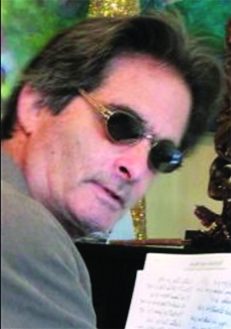
Harvard University appoints Chucho Valdés as Resident Teacher

The Office of Arts and the Jazz Band of Harvard University, United States, today named Cuban pianist Chucho Valdés as resident Jazz Master, due to his contribution to the development of said institution.

The appointment is granted to eminent artists linked to the entity with the aim of developing initiatives that provide new opportunities to university students, work directly with the classical repertoire and honor artists who have made a significant contribution to American music.

From April 8 to 12, Valdés – six-time winner of the Grammy Award and three of the Latin Grammy – will exchange with teachers and students as part of a meeting sponsored by the Arts Office and the Harvard Jazz Band, in association with the Program of Studies of Cuba and the Center David Rockefeller of the same house of high studies.

According to an official note on the university’s website, in addition to working and rehearsing, the musician will participate in a concert open to the public that under the title Puente Musical, will bring together several instrumentalists, among which the bassist Yunior Terry.

Valdés is one of the most influential figures of modern jazz, organic and personal style distills elements of the Afro-Cuban, classical, rock music tradition, among several.

The program in which the pianist will participate in Harvard is one of the most prestigious in the United States as it brings together distinguished artists in this art form whether world-renowned masters or emerging artists, honors them and allows connection with new generations.

In past editions have been named Resident Masters Benny Carter, Roy Haynes, Joe Lovano and Cassandra Wilson, who have played with the Harvard jazz bands for almost five decades.

The Arts Office maintains a recording archive of visiting artists in jazz, which is available to students and scholars through the Morse Music and Media Collection, the Lamont Library, as well as a collection of Tom Everett’s jazz manuscripts, at Eda Kuhn Loeb music library.

Iconic Latin alternative bands Aterciopelados & Los Amigos Invisibles announce U.S. tour

Internationally acclaimed bands, Colombian rock Aterciopelados and funk acid-jazz Venezuelan Los Amigos Invisibles, will be joining forces for a 10-city co-headlining tour for the first time together nationwide, kicking off at the Sony Hall in New York City on April 21st.

Three-time Latin Grammy winning and 2x Grammy nominated Aterciopelados, is one of the most important dynamic duos in the Latin American alternative music scene. Their latest album “Claroscura” (2018), praised by international media and awarded as the Best Alternative Album by the Latin Grammy.

Alongside Aterciopelados is Latin Grammy winning and 3x Grammy nominated group Los Amigos Invisibles, known for their blend of Afro-funk, disco, acid jazz and Latin rhythms. The band is one of the most recognized bands from Venezuela and the Latin American music scene, praised for their energetic live shows that have been presented worldwide in more than 60 countries.

spot_img