Friday, October 16, 2026
spot_img
Home Blog Page 261

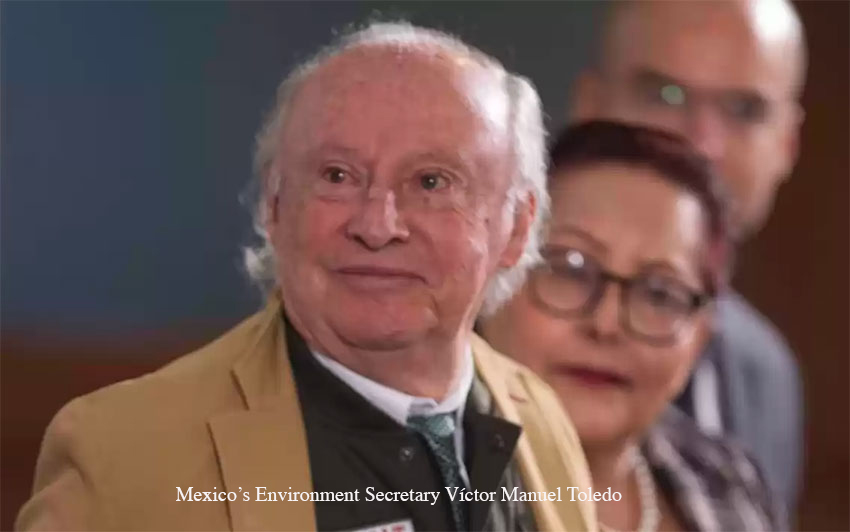
Environment secretary bullish on lithium, calls it Mexico’s ‘new oil’

Víctor Manuel Toledo also highlighted Mexico’s potential for solar energy


by El Reportero’s wire services


Lithium will be Mexico’s “new oil,” Environment Secretary Víctor Manuel Toledo said on Thursday, highlighting the country’s large deposits of the metal used in the manufacture of batteries, among other products.

In fact, the biggest lithium project in the world is in Sonora, according to the company Mining Technology.

It said in August that the mine being developed by Canada’s Bacanora Minerals and China’s Ganfeng Lithium in the municipality of Bacadéhuachi is estimated to hold proven and probable reserves of 243.8 million tonnes, containing 4.5 million tons of lithium-carbonate equivalent.

Bacanora has been operating a pilot plant in Hermosillo for the past four years, producing what it says is high-quality, battery-grade lithium carbonate samples for potential customers.

Construction of the mine was first announced by Sonora Governor Claudia Pavlovich in May 2018 and is expected to be completed in the first quarter of 2020. Production capacity in its first stage of operations is expected to be 15,500 tons per year of lithium carbonate, Mining Technology said, while capacity will double to 35,000 tons per year in a second stage.

That prospect led Toledo to declare that lithium will be Mexico’s “new oil.”

Potential lithium reserves have also been identified in Baja California, San Luis Potosí and Zacatecas.

The metal, Toledo reporters at the presidential press conference, is “the base not just of computers but also storage batteries” for cell phones and electric cars, among other products.

Therefore, “Mexico should be capable of making electric cars in public factories,” he said, adding that the secretariats of the Environment and Energy are currently analyzing that possibility with Mexico’s “best experts” in the field.

“We’re also one of the richest counties in solar radiation and we’re going to be a country that exports energy to the United States and Latin America,” Toledo added.

“The two most important areas in Latin America for solar radiation are the northeast of Mexico, the deserts, and the border between Chile and Bolivia . . . We’re going to be a solar energy power.”

Source: El Financiero (sp), El Imparcial (sp), Publimetro (sp


López Obrador stresses trade deal with US and Canada is positive step

The Free Trade Agreement between Mexico, the United States and Canada (T-MEC), signed on Tuesday, is good for the country as it is attached to its laws, President Andrés Manuel López Obrador said this Wednesday.

On evaluating this tripartite trade deal in his morning press conference at the National Palace, the president added that it includes beneficial conditions for workers.

He noted that it also includes more foreign investment and will improve wages, regardless of the government policy of increasing basic salaries.

In this regard, he considered that more labor will be demanded and in many cases this will be qualified, specialized and better paid. In addition, unions will not be allowed to negotiate with companies behind the backs of workers.

Consequently, the agreement, he reiterated, is in accordance with our law, including taking into account workers, as union leaders cannot sign contracts without these being made known to members.

He said that the T-MEC has a global dimension because it will attract a lot of investment from all parts of the world, including Latin America, as Mexico offers a very strong market.


China-Latin America and the Caribbean Business Summit opens in Panama

Nearly 2,000 business representatives and officials from China, Latin America and the Caribbean will meet this Monday for the first time in Panama as part of the XIII China LAC Business Summit.

In previous statements to the press, the President of the organizing committee of the event, Gabriel Barletta, highlighted the role played by this mechanism in the last 13 years, mainly in those nations in the region with which the Asian giant maintains official relations.

He said that Panama’s political and economic stability, which favors the business environment between entrepreneurs and investors, the geographical position and the multimodal logistics platform influenced the decision to hold the meeting in this country.

Barletta added that the Summit will facilitate access to new markets and consolidate Panama as the gateway for entrepreneurs from other latitudes to the American continent.

‘China-LAC is a promotion mechanism and a platform that seeks greater economic cooperation, focused on boosting trade and investment,’ he said.

The China-LAC Summit, which since 2007 brings together companies from China, Latin America and the Caribbean, will meet until Wednesday in the capital’s Atlapa Convention Center.

spot_img

A Merry-Achi Christmas – SF

by the El Reportero’s staff


Led by the incomparable José Hernández, Mariachi Sol de Mexico® returns to Davies Symphony Hall for a festive musical tribute to Mexico’s Christmas traditions!

Experience a truly international celebration, with the ensemble singing and playing holiday favorites from both Mexico and America in a vibrant performance that will have the whole family dancing in the aisles.

San Francisco Symphony, 201 Van Ness Ave, San Francisco. Tickets $35–$125. Sunday, Dec. 8 at 8 p.m. – 10 p.m.


Dancing at Cha Cha Cha into 2020

Brighten up with live Latin music at Cha Cha Cha. Great groups, great music in the heart of the Mission District in SF. Superb for listening and dancing while you enjoy tasty tapas and cocktails.

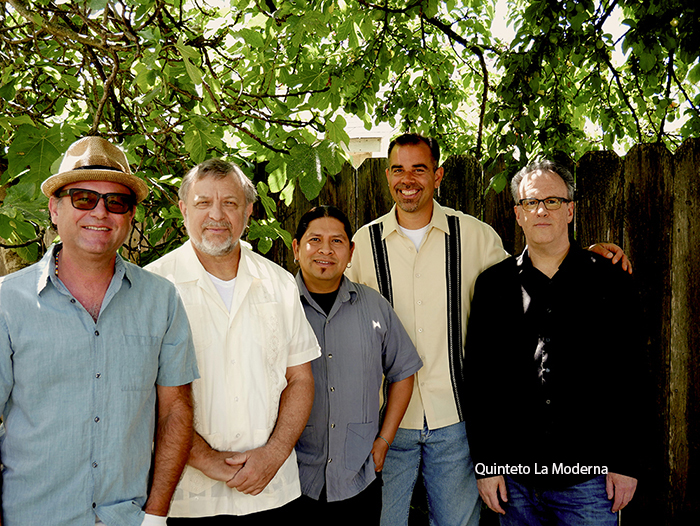
Come and delight with Quinteto La Moderna on Dec. 10, and John Villalobos on Dec. 17, from 8:30 p.m. to 10:30 p.m., at Cha Cha Cha, 2327 Mission Street at 19th St., San Francisco. Free Admission.

Give the Gift of Life at the Blood Drive

The holidays often inspire a desire to give back in appreciation for all the gifts we’ve been given.

A great way to do that and make an immediate impact on our community is by donating life-giving blood. This is especially true during the holiday season, when donations tend to decline as people are busy traveling, shopping, and attending events.

To make it easy to donate, Vitalant is hosting a Redwood City blood drive on Tuesday, Dec. 17 from 1 to 6 p.m. at the Downtown Library located at 1044 Middlefield Road.

All donors receive a special pair of donor socks.


City of Redwood City Launches Pilot Program with Downtown Streets Team

Help the Homeless Get Back into the Workforce and Housing


The City of Redwood City recently launched a two-year pilot program run by the Downtown Streets Team to help individuals who are currently homeless, or at-risk of becoming homeless, transition into long-term employment and housing.

The Downtown Streets Program provides these residents in need with volunteer work experience they need to gain the necessary skills to get jobs, as well as basic needs stipends, employment resources and intensive case management.

Volunteer work will include litter pickup, emptying trash receptacles and reporting vandalism and graffiti. As part of the program, participants will be offered social work services to help them find jobs and learn about other support programs available, including low income housing opportunities.

To participate, people experiencing homelessness should attend a Downtown Streets Team Weekly Success Team Meeting, held every Wednesday at 1 p.m. at the Dragon Theatre, located at 2120 Broadway in Redwood City. At the beginning of the program the volunteers will focus on downtown from 8 a.m. to noon daily. Soon, the team will expand it to other areas of the city.


50 people you need to know, now

San Francisco Public Library presents Changemakers: Bay Area Disability Pride


With funding from the Library Services and Technology Act and federal funds from the Institute of Museum and Library Services, San Francisco Public Library, San Mateo County Libraries and San Jose Public Library joined forces to develop a series of programs aimed at advancing a more inclusive society for people with disabilities.

SFPL worked with curator Fran Osbourne to develop the Changemakers exhibition, which also appeared at the San Mateo Public Library in 2019. Osbourne orchestrated the selection process for the featured “changemakers”, which includes over 50 people who have made outstanding contributions to the disability community through activism, arts and culture, business, education, leadership, science and technology and sports. She also partnered with local art programs considered to be leaders of social change and inclusion. All of the exhibition artists have a regular artistic practice and work in studios with a group of their peers. Instructors are usually professional artists and offer support rather than direction.

For all the events dates and times in January 2019, please visit: https://sfpl.org/releases/author/public-affairs/

spot_img

Sold out The Palacio de los Deportes in Mexico for one magical night of rock and roll

by the El Reportero’s news services


Enjambre was established as one of the most important bands of the Latin American continent on Nov. 30 by taking over the Domo de Cobre (the copper dome). It created a deep connection with the 16,000 fans who sold out the Palacio de los Deportes in Mexico City.

Girls Go Ska, a band chosen from more than 320 university bands in a contest organized by Enjambre and their team to support emerging talent, took the stage.

Lori Meyers, the special guests of the night, demonstrated why they are one of the largest groups in Spain. Their songs – exquisitely executed – connected with the Mexican public that is already receiving them as their own.

Domo de Cobre was darkened and the public was thrilled to receive Enjambre. They began to hear the first notes of Secuaz, one of the new songs by the band from Zacatecas, which was designated to open one of the most important shows of their career.


Fifth edition of the International Central American Film Festival arrives in Los Angeles

A great opportunity to know some of the realities through the lens and professionalism of the artists of the region

This weekend will be presented for the fifth consecutive year the International Festival of Central American Cinema in Los Angeles, with the aim of showing a little of the talent and realities that are currently living south of the southern border of Mexico.

The event that begins Friday at La Plaza de la Raza, to learn about dreams and conflicts in Central America, but told through artists who reside in the region.

The three-day festival that begins on December 6 will feature 20 short films, documentaries and movies that the Angels can enjoy completely free, as well as knowing and expanding their knowledge about different peoples, their different languages, their accent, their traditions, etc. .

The International Festival of Central American Cinema has been presented five times in Los Angeles and this time Mexico and Cuba are the invited countries with their respective films: Bibi, and This is your Cuba.


Los Van Van celebrate its 50th anniversary

Los Van Van band on the occasion of the five decades of its foundation.

The musical group, created by bass guitarist, arranger, and composer Juan Formell in 1969, reaches its 50th anniversary with nearly 30 recorded albums and important awards, especially the 2000 Grammy Award for its album ‘Llego… Van Van’ (Van Van is here).

The songo rhythm, created by Juan Formell alongside Cesar ‘Pupy’ Pedroso and Jose Luis Quintana ‘Changuito,’ is the sound that has distinguished the work of the band, which has performed on several of the most important stages of Cuba and the world.

Also known as the ‘Train of Cuban music,’ to many Los Van Van, directed at present by Samuel Formell, is one of the most important popular dance music groups in Cuba.

Book on economics by Mexican president on sale online

The new book by Mexican President Andres Manuel Lopez Obrador, entitled Hacia una economía moral (Towards a moral economy), is now on sale online, publishing house Planeta announced.

In a brief Tuesday press release, the publishing house informed that the volume will be sold at a price of 7.99 euros, equivalent to 171.59 Mexican pesos.

Planeta notes on its website that ‘Andres Manuel Lopez Obrador offers, as no other president of Mexico had done before, an intimate and eloquent dialogue about the specific results of his first year in government.’ The synopsis of ‘Hacia una economia moral’ states that ‘the paradigm we are building is based on the conviction that generosity is stronger than selfishness, empathy is more powerful than hate, collaboration is more efficient than competition, freedom is more constructive than prohibition, and trust is more fruitful than distrust.’

President López Obrador has insisted that the economy must be based on ethical principles that counteract the neoliberal model.

The print edition of the book was released in bookstores on Dec. 1.


spot_img

Dershowitz: A partisan impeachment vote is exactly what the framers feared

‘No impeachment should ever move forward without bipartisan support,’ he says


Authored by Alan Dershowitz

Zero Hedge


The House vote to establish procedures for a possible impeachment of President Trump, along party lines with two Democrats opposing and no Republicans favoring, was exactly what Alexander Hamilton feared in discussing the impeachment provisions laid out in the Constitution.

Hamilton warned of the “greatest danger” that the decision to move forward with impeachment will “be regulated more by the comparative strength of parties than the real demonstrations of innocence or guilt.” He worried that the tools of impeachment would be wielded by the “most cunning or most numerous factions” and lack the “requisite neutrality toward those whose conduct would be the subject of scrutiny.”

It is almost as if this founding father were looking down at the House vote from heaven and describing what transpired this week. Impeachment is an extraordinary tool to be used only when the constitutional criteria are met. These criteria are limited and include only “treason, bribery, or other high crimes and misdemeanors.” Hamilton described these as being “of a nature which may with peculiar propriety be denominated political, as they relate chiefly to injuries done immediately to the society itself.”

His use of the term “political” has been widely misunderstood in history. It does not mean that the process of impeachment and removal should be political in the partisan sense. Hamilton distinctly distinguished between the nature of the constitutional crimes, denoting them as political, while insisting that the process for impeachment and removal must remain scrupulously neutral and nonpartisan among members of Congress.

Thus, no impeachment should ever move forward without bipartisan support. That is a tall order in our age of hyperpartisan politics in which party loyalty leaves little room for neutrality. Proponents of the House vote argue it is only about procedures and not about innocence or guilt, and that further investigation may well persuade some Republicans to place principle over party and to vote for impeachment, or some Democrats to vote against impeachment. While that is entirely possible, the House vote would seem to make such nonpartisan neutrality extremely unlikely.

It is far more likely that, no matter how extensive the investigation is and regardless of what it uncovers, nearly all House Democrats will vote for impeachment and nearly all House Republicans will vote against it. Such a partisan vote would deny constitutional legitimacy to impeachment. It was because of this fear of partisanship in the House that the framers left the ultimate decision to remove an official to the Senate. The framers intended the Senate, which was not popularly elected at the time the Constitution was written, to be less partisan and act more like judges.

The Supreme Court chief justice presides over the Senate removal trial of a sitting president, and adding that key judicial element would seem to demonstrate a desire by the framers to have a presiding officer whose very job description is to do justice without regard to party or person. In both of the previous removal trials of President Johnson and President Clinton, however, the chief justice played a traditionally symbolic role.

If President Trump is impeached, it is certainly possible that his lawyers would ask Chief Justice John Roberts to play a more substantive role. If the grounds for impeachment designated by the House include criteria such as maladministration or corruption, his lawyers could plausibly demand the chief justice to dismiss the charges as unconstitutional.

After all, the framers explicitly rejected maladministration as a ground for impeachment and removal. James Madison, the father of our Constitution, argued that such open criteria would give Congress far too much power to remove a duly elected president. It would, he feared, turn our republic into a democracy in which the chief executive served at the pleasure of the parliament and could be removed by a simple vote of no confidence.

How many times have we heard from Democrats that “no one is above the law” in reference to President Trump? That is true, but neither is Congress above the law. It cannot substitute its own criteria for those mandated by the Constitution.

The House vote may have been necessary to establish procedures. But the partisanship strongly suggests that what Hamilton regarded as the greatest danger may be on the horizon, namely a vote to impeach a duly elected president based not on “real demonstrations of innocence or guilt” but rather on “comparative strength of parties.”

spot_img

The Global Government is preparing a global tax regime  

NOTE FROM THE EDITOR


Dear readers: If you haven’t heard of the New World Order or Global Government, or the global tax, this article will enlighten you on the subject. It’s a great educational reading written by one of my favorite independent media investigative reporters – without an agenda or political affiliation. – Marvin Ramírez.


by James Corbett
corbettreport.com
November 30, 2019


The New World Order’s global(ist) government has just proposed a new global taxation regime to solidify their control over the tax cattle on the human plantation we call planet Earth….

. . . But perhaps you missed that story when it ran in the controlled corporate media last month. Maybe that’s because the New York Times went with the headline “Tech Giants Shift Profits to Avoid Taxes. There’s a Plan to Stop Them.”

And maybe you missed it when the global government put out its press release announcing its intentions in October. Maybe that’s because the globalists are hiding behind the moniker “The Organization for Economic Co-operation and Development” (OECD) and titled their document announcing the scheme “Secretariat Proposal for a ‘Unified Approach’ under Pillar One.”

In fact, you could be forgiven for missing this story given the way it has been non-announced and un-reported. “Secretariat Proposal for a ‘Unified Approach’ under Pillar One”? What does that hodgepodge of bureaucratic gobbledygook even mean?

If you’re like 99.9% of the public, those words, when presented without context, would mean absolutely nothing to you. And if you’re like 99.99% of the public you probably dozed off just reading that title. (And if you think that’s bad, just wait until you get to the action-packed, informative first sentence of the document’s introduction: “The tax challenges of the digitalisation of the economy were identified as one of the main areas of focus of the Base Erosion and Profit Shifting (BEPS) Action Plan, leading to the 2015 BEPS Action 1 Report.”)

Yes, the most important and horrific pieces of legislation are presented to the public under false cover, either by naming it the opposite of what it is—USA FREEDOM Act, anyone?—or by giving it an incomprehensible and thoroughly uninteresting title and spelling it out in impenetrable legalese.

So what’s the real story here, and what does it mean for the future of free humanity? Let’s roll up our sleeves and find out, shall we?

First things first: Yes, Virginia, there is a global government. The trick is that the globalists don’t refer to it as “global government.” Instead, they have split it up into a number of disparate but interlocking organizations that cooperate and coordinate actions at a number of different levels in various economic, financial and political spheres.

There’s the World Trade Organization. The IMF and World Bank and the BIS and the FSB. The United Nations. The G7 and the G20. The BRICS and the Shanghai Cooperation Organisation. The World Economic Forum. Bilderberg and the CFR and the Royal Institute for International Affairs. The Council of the Americas. And seemingly a million other organizations, including the OECD.

In this case, the OECD has been handed the “global tax” football by the G20. Picture it this way: The G20 is quarterbacking and they want to get the ball to the OECD to run it up the field. Quarterback G20 hands it off to “The OECD/G20 Inclusive Framework on BEPS,” which then passes it to the Task Force on the Digital Economy. Unless you’re watching closely, you won’t even know who has the ball. But you don’t have to watch very carefully to tell that all these organizations are just different players on the same team: Team Globalist. And the ball is about to be run into the end zone.

OK, enough metaphor. Here’s the point: the G20 and the OECD have been pushing to implement a global taxation regime under the guise of—as the venerable NYT puts it—”prevent[ing] large multinational companies like Apple, Facebook and Amazon from avoiding taxes by shifting profits between countries.”

It’s a classic Problem – Reaction – Solution set up that will lead us inevitably into the maw of the globalist beast.

Problem – Tech giants are shifting their profit sources to countries with lower tax rates.

Reaction – The public, already mad at Big Tech in particular and the corporate fat cats in general, clamor for someone to come along and enforce stricter rules to stop these multinational companies from acting multinationally.

Solution – The global government will save us all with a global tax net!

But as you might have guessed, this isn’t just about Big Tech and multinationals. The G20 and the OECD have been working for years now to get the ball rolling on building out the infrastructure for a total global taxation grid.

This process traces back to the US and its implementation of the Foreign Account Tax Compliance Act (FATCA) back in 2010. At the time, FATCA was touted as a way for the IRS to sink its claws into all those pesky international tax evaders. As was pointed out at the time, FATCA essentially ended any pretense of bank secrecy, requiring all foreign financial institutions to disclose any information they had on holdings by US persons. It took a few years, but by 2013 a number of states had signed on to the deal (yes, even Switzerland) and began opening up their banks’ books to inspection by the IRS. This was followed up by the launch of an IRS-run “International Data Exchange” in 2015, making it easier than ever for subservient vassal states to spill the financial beans on anyone in Uncle Sam’s crosshairs.

When the G20 saw how well all this was working, they wanted in on the action. At the September 2013 G20 Summit in Russia they provided the mandate for the OECD to form its own body to look into a reciprocal data-sharing agreement between the 36 OECD signatories. In 2016, the OECD concluded negotiations on the predictably eye-wateringly boringly titled “Multilateral Convention to Implement Tax Treaty Related Measures to Prevent Base Erosion and Profit Shifting” which led to a mandate from the 2017 G20 Summit for a task force to issue an interim report on the digitalization of the economy that led to further rounds of meetings and negotiations that led to this latest “Public consultation document.”

Clear as mud? I thought so. And that’s the point.

The global government is not going to step out from behind the curtain and admit that there’s a global government in the process of slotting a global tax grid into place. No, you can rest assured that when they finally do pull back the curtain, the whole thing will be done. A fait accompli. And you won’t be able to complain because it all took place right there in plain sight. How on earth did you not see it?

Let’s be clear: This is not the end of the story. This story is still very much in the process of unfolding. And even when and if this OECD task force does manage to get some version of its proposed global minimum corporate tax rate in place, this will not be used to issue a global tax ID to everyone on the planet and get them on the grid the next day.

No, this process will take years to reach that end goal. But therein lies the danger. This is a war of attrition being waged in stealth from behind a smokescreen of bureaucracy and legalese. And not on person in a thousand even knows it’s happening.


spot_img

Cancer prevention: 6 ways nature helps you fight cancer

by Darnel Fernández


Cancer has been on the rise in recent years, with statistics from the American Cancer Society (ACS) estimating a grand total of more than 1.7 million new cancer cases in the US. Researchers from the ACS found that at least 42 percent of these newly diagnosed cancer cases – about 740,000 – are avoidable. This includes the 19 percent of cancers caused by smoking and the 18 percent caused by a combination of excess body weight, high alcohol intake, poor nutrition and lack of physical activity. Certain lifestyle changes help reduce the risk of cancer, but nature can also bring some surprising cancer-fighting benefits that will help you stay healthy and cancer-free.

Natural ways to prevent cancer

One way to reduce your risk of cancer is through your diet. In fact, maintaining an overall healthy diet is a good line of defense against many health problems, including obesity and cardiovascular disease. Here are some reasons why a healthy diet is a good way to curb cancer:

  1. Decreases inflammation. Recent studies have shown that there is a link between inflammation and cancer progression. According to a study in the journal Nature, many of these cancers can start from a point of infection, chronic irritation and inflammation. Cox -2, for instance, is an enzyme responsible for both increasing inflammation and promoting cancer. This calls for increased awareness of anti-inflammatory foods and supplements to reduce the harmful effects of such compounds. For example, curcumin, the active ingredient of the spice turmeric, is widely known for its potent anti-inflammatory effects used in traditional medicine for hundreds of years. You can also include fatty fish like salmon and tuna in your diet, which are chock-full of healthy omega-3 fatty acids that also possess anti-inflammatory properties.
  2. Prevents DNA damage. Many cancers begin with some sort of DNA damage that triggers the cells to become cancerous. One of the main suspects of DNA damage is oxidative stress caused by the accumulation of harmful molecules known as free radicals. Oxidative stress not only leaves you more vulnerable to cancer, but also increases the risk of heart disease and diabetes. You can prevent this by eating foods that are rich in antioxidants, compounds that can combat oxidative stress. These foods include blueberries, pecans and kale.
  3. Triggers apoptosis. When a healthy cell reaches the end of its existence, it undergoes a process called apoptosis or cell death. Cancer cells, however, work differently. They ignore the signals that trigger this process and keep replicating. Nutrients like curcumin and those found in cruciferous vegetables – namely DIM I3C – can destroy cancer cells and promote their self-destruction.
  4. Prevents metastasis. Cancers, like breast cancer, are often characterized by metastasis or the spread to nearby organs like the lungs, liver and even the brain. Certain nutrients like sulforaphane – found in cruciferous vegetables — can help inhibit the tumor’s ability to spread.
  5. Stops blood vessels from feeding tumors. Once a tumor develops, it needs a steady supply of blood to keep growing. To do so, the body develops new blood vessels. This process is called angiogenesis. There are anti-angiogenic foods that can help inhibit this process. Epigallocatechin gallate (EGCG), which is found in abundance in green tea, is especially effective against angiogenesis.
  6. Blocks abnormal estrogen production. Inhibitors can block the production of estrogen in the body and can lead to some serious side effects. Fortunately, there are plenty of natural ways to regulate your hormones. For example, lignans from flax seeds can bind excess aggressive estrogens present in the body and expel them. The hormone melatonin – found in cherries – can put breast cancer cells to “sleep.”

Stay cancer-free by adopting a healthy, balanced diet full of organic and fresh foods to help you live a much longer and healthier life. (Natural News).


spot_img

‘Close to slavery’ or legalization? The farmworkers’ hard choice

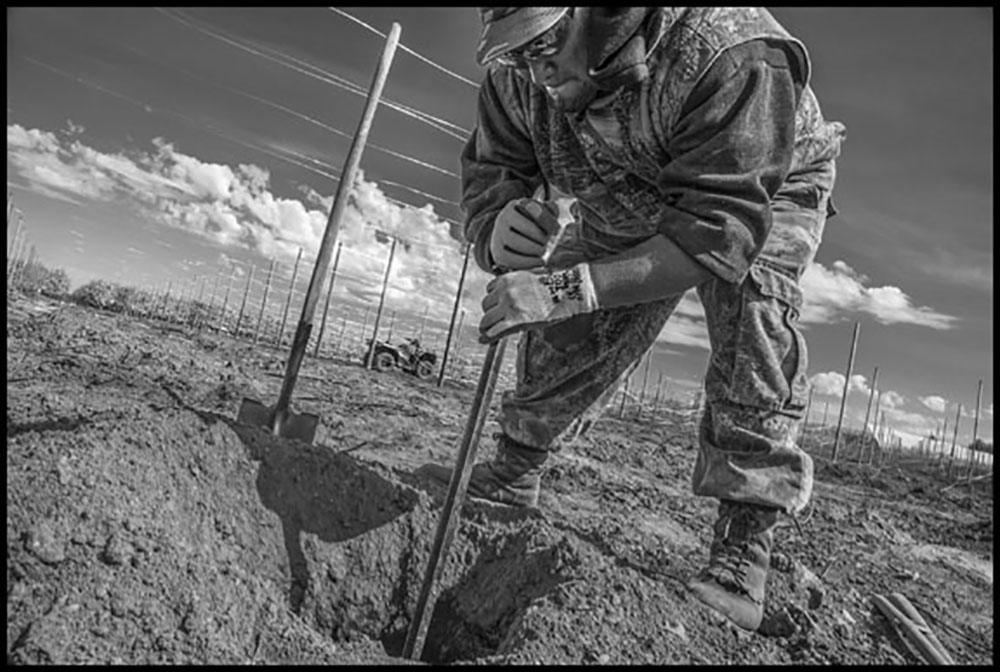
ROYAL CITY, WA- 4MAY17 - H2A guest workers string up wire supports for planting apple trees, in an field owned by Stemilt Growers. Jaime Solorio is an immigrant contract worker recruited in Mexico. They will work a few months, and then will have to return to Mexico. The company has trained them to do this skilled work. Copyright David Bacon

Article and photo by David Bacon


In Chicano and Mexican families, the grandfathers who came to the United States as braceros (and almost all braceros were men) are mostly gone now. These farmworkers were considered only temporary migrant laborers, yet despite being denied the right to settle in this country and raise families, thousands of them eventually did just that. Their perseverance created homes and communities throughout the Southwest. From the program’s inception in 1942 to its abolition in 1964, bracero labor produced enormous wealth for the growers who employed them.

That wealth had a price. Braceros were almost all young men, recruited into a program that held them in labor camps, often fenced behind barbed wire, separate from the population around them. When their contracts ended, they were summarily shipped back to Mexico. Growers used braceros to replace local farmworkers, themselves immigrants from Mexico and the Philippines, in order to keep wages low and often to break strikes. To bring their families here, braceros had to work many seasons for a grower who might finally help them get legal status. Others left the camps and lived without legal status for years.

In 1958, economist Henry Anderson charged in a report, (for which growers got the University of California to fire him) that, “Injustice is built into the present system, and no amount of patching and tinkering will make of it a just system … Foreign contract labor programs in general will, by their very nature, wreak harm upon the lives of the persons directly and indirectly involved, and upon the human rights our Constitution still holds to be self-evident and inalienable.”

Anderson’s call helped lead to the abolition of the bracero program, but his warning cannot be buried safely in the past. Today, contract labor in agriculture is mushrooming again, with workers brought mostly from Mexico, but also from Central America and the Caribbean. States are beginning to pass laws to deal with its impact, and a new bill in Congress does what Anderson cautioned against—expand the contract labor program for agricultural labor—in exchange for the promise of legal immigration status for some undocumented farmworkers.

Debate over today’s contract labor program unfolds in a virulently anti-immigrant atmosphere, much like that of the 1950s. Many supporters of proposals to benefit undocumented migrants believe that only major concessions can give such proposals a realistic chance of enactment. But the bracero program’s history, during a similar period of deportations and nativist hysteria, may provide an idea of what the future might look like if such compromises become law.

In the Cold War era of the 1950s and early 1960s, the U.S. government mounted huge immigration raids. Farm labor activists of that era charged they were intended to produce a shortage of workers in the fields. Fay Bennett, executive secretary of the National Sharecroppers Fund, reported that in 1954, “the domestic labor force had been driven out … In a four-month period, 300,000 Mexican illegals [sic] were arrested and deported, or frightened back across the border.”

All told, 1.1 million people were deported to Mexico that year, in the infamous “Operation Wetback.” The bracero program, begun in 1942, was already in place, organizing the recruitment of contract laborers in Mexico for U.S. farmers. As the raids drove undocumented workers back to Mexico, the government then relaxed federal requirements on housing, wages, and food for braceros.

In 1956 alone, 445,197 braceros were brought to work on U.S. farms, 153,000 just in California. They made up almost a quarter of the 2.07 million wage workers on U.S. farms that year, according to the Department of Agriculture. “The availability of braceros held down farm worker earnings,” says University of California, Davis agricultural economist Philip Martin. In the decade of the 1950s, median farm wages rose from 85 cents an hour to $1.20, while wages in the cities took a bigger jump, from $1.60 to $2.60.

By law, bracero wages were not supposed to undermine wages for resident workers, and growers were supposed to offer jobs to local workers before they were allowed to bring in braceros. But activists “accused certain large growers of offering wages lower than domestic migrants will accept, in order to create an artificial labor shortage and justify a request for Mexican nationals,” wrote H.B. Shaffer in a 1959 report. The bracero program “tends to displace those [resident] workers rather than meet real labor shortages.”

Bennett agreed: “The alleged domestic labor shortage in the [rural] area is artificially created by pay rates too low for decent living.” The activists of those years who protested included future leaders of the United Farm Workers Cesar Chavez, Dolores Huerta, and Larry Itliong, as well as leading community organizers Bert Corona and Ernesto Galarza.

Today’s labor picture on U.S. farms has changed surprisingly little from that of the 1950s. Industrial agriculture in the Southwest and along the Pacific coast relies on Mexican labor, as it has for a century. About 2.4 million people presently work for wages in U.S. agriculture, a slight increase from 1956. Mexicans made up the majority of farmworkers then, and today are two-thirds of the workforce. U.S. immigration law and its enforcement have never eliminated Mexicans from the workforce, but indirectly control the conditions under which they live and work. Mexican academic Jorge Bustamante argues that a primary purpose of U.S. immigration law historically has been—and still is—to regulate the price of Mexican labor in the United States.

Depending on the period, farmworkers come across the border with visas or without them. Especially since the enactment of the North American Free Trade Agreement in 1994, the economic forces displacing people in Mexico, pushing them across the border, have made migration a necessity for survival for millions of families. During times of heavy enforcement, hundreds die on the border each year. In an earlier similar period, Woody Guthrie sang, “We died in your hills, we died in your deserts … Both sides of the river, we died just the same.”

Also, unlike the bracero era, when recruitment was jointly managed by the U.S. and Mexican governments, recruitment today is privatized. No one knows for sure who all the recruiters are, how they recruit people in Mexico, or their arrangements with U.S. growers. The largest recruiter may be a company called CSI, formerly Manpower of the Americas, which claimed to have recruited 30,000 Mexican workers in 2017 and is closely tied to WAFLA.

In the 1990s, Manpower of the Americas maintained a legal blacklist of workers who would be denied employment—including those who’d been involved in worker activism, who protested bad conditions, or who just worked too slowly. Today, the CSI website warns, “CSI shares candidate [worker] records with companies to select whomever they see fit.”

The Farm Workforce Modernization Act of 2019 essentially ties legalization for undocumented farmworkers and guest worker programs together. This compromise bill guarantees growers a labor supply at a price they want to pay, while at the same time providing a pathway to legal residence for many undocumented farmworkers.

Last Thursday, the House Judiciary Committee approved the bill and sent it to the House floor.

In the end, the fate of the Farm Workforce Modernization Act may be overtaken by election politics. Since the original comprehensive immigration bills were introduced under President George W. Bush, common wisdom in Washington holds that passing an immigration bill is practically impossible during a presidential campaign.

spot_img

Abandoned train station is silent witness to enslavement of Yaqui Indians

Slave market and concentration camps in Jalisco

by John Pint


While paging through an archaeological guide to western Mexico, I came upon a cryptic reference to a long-abandoned train station near the small town of San Marcos, Jalisco, located 80 kilometers west of Guadalajara.

It said, “Yaquis were once sold here (as slaves) for 25 cents a head . . . Around the station were located concentration camps where hundreds of indigenous people died of hunger and disease.”

When I asked my Mexican friends whether they had ever heard of such a thing, they asked me if I had ever heard of a book called Barbarous Mexico by an American named John Kenneth Turner.

I found the book and because it had been published in 1911, I was able to read all of it online at Wikisource. Despite the title, I quickly learned that the book is not an attack upon the Mexican people, but an exposé of the atrocities committed against many of them by President Porfirio Díaz during 34 years of repeated “unopposed reelection.”

One of the worst schemes of the Díaz government, says Turner, was the provocation of the Yaqui Indians to rebellion in order to clear them out of Sonora so their land — rich for both mining and agriculture — could be sold to Americans.

The Yaquis were put on boats at Guaymas and shipped to San Blas, where they were forced to walk over 300 kilometers to San Marcos. Here were large concentration camps where families were broken up. Individuals were then sold inside the station and packed into train cars which took them to Veracruz. Another boat ride took them to Progreso in Yucatán, from which they were taken to the plantation which would be their tomb.

John Kenneth Turner, a reporter for the Los Angeles Express, first learned about this business in 1908 from several Mexicans locked up in the local county jail.

“What are you accused of?” he asked them.

“Invading a friendly country,” they replied.

“What country is that?” he asked.

“Mexico,” they answered.

Turner inquired as to why they would want to invade their own country.

“Because the constitution has been suspended and awful things are happening.”

When he asked for concrete examples, the jailed Mexicans told him that great numbers of people were being bought and sold like cattle and forced to work on sisal plantations until they dropped dead — even though Mexico had abolished slavery many years before.

Turner was determined to see for himself and traveled to Mérida where he passed himself off as a rich man anxious to invest in the lucrative henequen hemp business.

Here he discovered that the Yaquis were indeed slaves in the worst sense of the word, beaten bloody every morning at roll call, forced to work in the blazing sun from dawn to dusk on little food, locked up every night and beaten again if they failed to cut and trim at least 2,000 henequen leaves per day.

The Yaqui women, separated from their families, were forced to “marry” Chinamen and every baby born on the plantation was worth up to $1,000 cash to the owner. At least two-thirds of the Yaquis arriving in Yucatán were dead before the end of the first year of such treatment.

Turner was able to interview some of the slaves. One man with a baby on his arm said he was plowing in his field when the soldiers came. “They did not give me time to unhitch my oxen,” he said.

“Where is the mother of your baby?” inquired Turner. “Dead in San Marcos,” replied the young father. “That three weeks’ tramp over the mountains killed her.”

Indeed, Turner’s informants agreed that “the crudest part of the trail was between San Blas and San Marcos “where women with babies fell down on the roadside, never to get up again.”

It would first appear that those who must have grown rich from these atrocities were Porfirio Díaz, his relatives and cronies, but the book points out that more than half the sisal was shipped to the U.S.A. and Turner accuses wealthy families such as the Hearsts, the Rockefellers and the Guggenheims of having profited the most from the expropriated lands of the Yaquis and Mayas as well as the “Flaming Hell” of the henequen plantations.

The Yaqui people were famed for being hard-working and strong. Between 1904 and 1909, according to Turner, around 15,000 of them were rounded up, forced along the tortuous route to Yucatán and enslaved. Despite their extraordinary strength, most of them died within the first year on the plantations, raising questions of whether they were the victims of genocide.

After years of abandonment, the San Marcos train station was renovated and turned into a cultural center. In my opinion, the building ought to be a memorial to the Yaquis, but there is not even a plaque commemorating the pain and sorrow suffered there.


Today, few citizens of the area are aware of the atrocities which took place in the train station. Eighty-year-old Juan Díaz of San Marcos remembers stories of “false promises made by President Porfirio Díaz” in those times and recalls that those who took the bait “were rewarded by becoming slaves in the henequen plantations.”

Others say they remember rumors that Yaqui Indians had been sold in the place. Nevertheless, not one of the 10 histories of San Marcos found in the local library mentions a word about the mistreatment of Yaquis in the area.

Turner’s book raised eyebrows at the time of its publication and has even been called “the Uncle Tom’s Cabin of slavery in Mexico.” As it is filled with passion and indignation, it might not be considered objective. A more scholarly treatment of the same subject, however, was published by Duke University Press in 1974.

This is Development and Rural Rebellion: Pacification of the Yaquis in the Late Porfiriato by Evelyn Hu-Dehart, a professor of history at Washington University in St. Louis.

Hu-Dehart confirms the great majority of Turner’s claims, with the notable exception of his assertion that the Yaquis were essentially peaceful. “The Díaz government did not provoke the Yaqui rebellion, but inherited it,” says Hu-Dehart, who points out that the Yaquis inevitably sided with anyone fighting the authorities and refused to accept any deal giving them less than the one thing they wanted: complete autonomy in their lush corner of Sonora.

Interestingly, Hu-Dehart’s unemotional paper provides hard evidence for what might seem Turner’s most controversial accusation: that the government of Porfirio Díaz deliberately attempted the genocide of the Yaqui Indians. She quotes the words of General Lorenzo Torres to the chief of the Yaquis in 1908: “The government is . . . disposed to exterminate all of you if you continue to rebel.”

If you are traveling along Highway 4 in the state of Jalisco, perhaps visiting the Great Stone Balls of Ahualulco, or the Guachimontones (Circular Pyramids) of Teuchitlán, you might want to stop at the San Marcos train station, which is just 420 meters off that road, to reflect on the barbarous events which took place there and perhaps wander in the beautiful eucalyptus grove next to the old building.

All traces of the Yaquis’ passing have been obliterated, but their decomposing bodies probably helped give life to those tall, proud trees and perhaps they are the best memorial of all to the many souls who were murdered at San Marcos.

To find the train station, patiently type “N20.77867W104.18994” into Google Maps. It’s a 75-minute drive from the west end of Guadalajara.

The writer has lived near Guadalajara, Jalisco, for more than 30 years and is the author of A Guide to West Mexico’s Guachimontones and Surrounding Area and co-author of Outdoors in Western Mexico. More of his writing can be found on his website.

spot_img

Massive march pro-life in Costa Rica asks that abortion not be legalized

by Harumi Suzuki

ACI Press


On Dec. 1, the “To Life I Say Yes” march took place in San José, capital of Costa Rica, where thousands of people went out to ask President Carlos Alvarado not to sign the technical norm that would legalize the unpunished abortion in the country, but open a dialogue table on the subject.

The representative of the Awake Costa Rica (DCR) movement, one of the groups that make up the National Front for Life, Mariano Murillo Cedeño, said to ACI Prensa that this march was carried out thanks to “the union of civil groups, churches and the congress people or politicians, all together for the defense of life in all its stages”.

“They filled at least 10 blocks full of people marching, we are talking about more than a kilometer,” he said.

During the march, Karla Chaves, representative of Doctors for Life, Deputy Shirley Díaz of the Christian Social Unity Party (PUSC), Elsa Naranjo of 40 days for life, Gerald Bogantes de Juristas por la Vida, Fr. Ronny Solano and Pastor Cynthia Bermúdez of the Abundant Life Church.

Mariano informed that the objective of the march was “to request the Government to open a dialogue table to have a voice and vote in everything that concerns the technical Standard”, because to date “it has been handled with a lot of secrecy, there is no access to the medical records of women who were allegedly violated by denying them abortion, nor the agreement reached between the country and the Inter-American Commission on Human Rights. ”

“The regulation has not been exposed to the public and different government authorities have said it should be opened to allow abortions in social or psychological cases,” he added.

Through a manifest manifesto at the start of the day, the National Front for Life highlighted the president’s duty to respect the Constitution and laws, especially those that protect unborn children.

In addition, it indicates that the Executive Power “does not have the power to regulate or the regular exercise of the rights and freedoms of individuals. The regulation of the exercise of fundamental rights is a matter reserved” to the Legislative Power.

“Costa Rica has been recognized worldwide for its social peace, based mainly on solidarity assistance to those who need it most and the defense of the most vulnerable,” they said. “The efforts of the Executive Power should focus on promoting public policies in favor of the life of the unborn and the protection of the mother in the state of risk, instead of telling woman that the only option granted by the State is the destruction of the baby in her womb, ”they added.

Finally, I will emphasize the technical norm “not only is it unnecessary, but its issuance would be completely unconstitutional, it would violate international human rights treaties.”


Panama will host the China-Latin America and the Caribbean Summit

According to the organizers, almost 2,000 businessmen and leaders from China, Latin America and the Caribbean will meet for the first time in Panama as part of the 13th China-LAC Summit 2019.

Speaking to the press, the president of the Organizing Committee of the event, Gabriel Barletta, highlighted the role of this mechanism in the last 13 years, mainly in those nations of the region with which the Asian giant maintains a formal relationship.

He noted that the political and economic stability of the Central American nation, which favors the business environment between entrepreneurs and investors, the geographical position and the multimodal logistics platform, influenced the decision to hold the event in this country.

Barletta said that, as a positive balance, the summit could facilitate access to new markets and consolidate Panama as the gateway for entrepreneurs from other latitudes to the Americas.

The China-LAC Summit, the most important commercial event that brings together Chinese, Latin American and Caribbean companies, will be held from December 9 to 12 in the capital of the Atlapa Convention Center.

spot_img

MEETING NOTICE IN THE COUNTY OF SAN MATEO

MEETING NOTICE
NOTICE OF THE CHIEF OFFICIAL OF ELECTIONS ON THE TIME AND PLACE OF THE PUBLIC MEETING WITH VOTERS OF THE COUNTY
OF SAN MATEO ABOUT THE OPTION LAW FOR VOTERS OF CALIFORNIA

The San Mateo County Registration and Elections Division will conduct
a public meeting on Tuesday, December 10, 2019, at 3 p.m.

The purpose of the meeting is as follows:

• Provide a forum for the public opinion of County voters on the Law
of Options for California Voters and on an amended Election Administration Plan for the administration of elections between 2020 and 2024.
• Provide a forum for the public to give their opinion to the Registry Division and
Elections on access to the electoral process for voters.

The meeting will be held at the following place:
Board Chambers
400 County Center
Redwood City, CA 94063

The amended Election Administration Plan is available at www.smcacre.org.
Please note: Public meetings are accessible to people with disabilities People who need special assistance or some
modification or accommodations related to a disability, including
auxiliary devices or services to participate in this meeting, or who
have a disability and wish to request an alternative format for the agenda,
meeting notice, or other communication that could be distributed at the meeting,
they should contact the Registration and Elections Division at 650.312.5222
or register@smcacre.org.

Notifying the meeting in advance will allow the Registration Division and
Elections make reasonable accommodations to ensure accessibility to this
meeting and related materials.

Participants in this meeting are reminded that other participants may
have sensitivity to several products with a chemical base.

Dated: November 29, 2019 / f /
Mark church
Chief Election Officer
Appraiser-Secretary-Registrar
of the County

spot_img