Friday, October 16, 2026
spot_img
Home Blog Page 259

Puerto Rican authorities suspend classes due to earthquake- “This is not a natural disaster.” says government employee

by the El Reportero‘s wire services


Puerto Rican Education Secretary Eligio Hernández reported this Wednesday that classes in the public education system will not resume until the evaluation of damage to schools has been completed following yesterday’s strong earthquake.

Hernández published on Twitter that the process of evaluation of schools by structural engineers started today.

Earlier, Puerto Rican Governor Wanda Vazquez posted that the semester will resume on January 13 because of the need to ‘achieve a complete evaluation of school structures throughout #PuertoRico.’

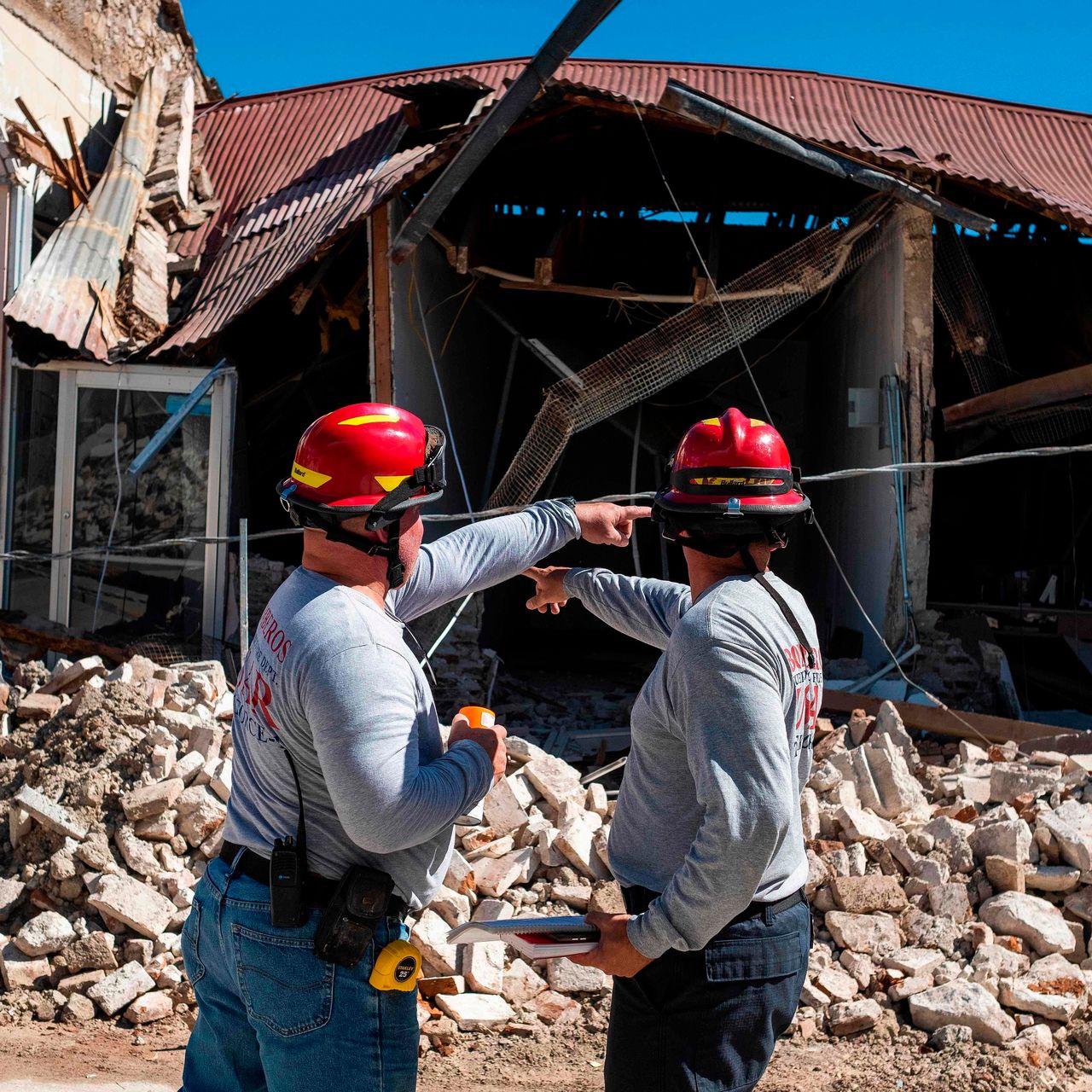
The 6.5 magnitude quake of this Tuesday, whose epicenter was located in the south of the country, was the strongest Puerto Rico has suffered in over a century, experts noted.

The earthquake, which occurred at 02:24 local time and left at least one person dead, was followed by a series of lower intensity events.

Vázquez decreed a state of emergency and activated the National Guard to aid in the identification of bridges, homes and roads that could be have been damaged by the quake, which initially left almost 250,000 people without power.

Over 1,800 earthquakes of different magnitude have occurred on Puerto Rican soil and its surroundings since December 28, something that experts described as ‘unusual.’

According to local media, the Commissioner of the Bureau of Emergency and Disaster Management, Carlos Acevedo, warned on Sunday that one of the concerns of the government is the approximately 150,000 homes built on stilts that could collapse if an earthquake of great magnitude occurs.


ECLAC debates causes of migration in Mexico and Central America

The Executive Secretary of the Economic Commission for Latin America and the Caribbean (ECLAC), Alicia Barcena, on Wednesday revealed the economic and social causes of migration in Mexico and the three States south of this country.

The Mexican official mentioned insufficient economic growth in Mexico, Guatemala, Honduras and El Salvador among the main reasons for their citizens to leave their places of origin.

On presenting the Northern Central America-Mexico Comprehensive Development Plan, at a meeting of ambassadors and consuls from those nations, Barcena noted that ‘the 10 percent of the population with the highest incomes in Central America and Mexico earns 70 times more than the poorest 10 percent.’

The ECLAC chief also referred to the wage differential as among the causes of migration in that geographic area, where the average salary is ten times lower than in the United States.

Another cause of migration is violence, as this region is considered ‘one of the most violent in the world, with even more homicides than the Middle East.’

ECLAC studies also mention the high demographic growth in the region among the causes of migration, above all among young men aged 15-29, who also ‘get caught up in drug trafficking and violence.’

Barcena referred to droughts and floods, due to ‘brutal climate change in the north triangle of Central America,’ which has caused huge corn and coffee crop losses, among other items. According to Barcena, the key issue in the new program approved by the United Nations is that ‘migration has to be an option, not an obligation, and a space for common development has to be built among the nine states south of Mexico and the three countries in the north of Central America.’

spot_img

ECLAC debates causes of migration in Mexico and Central America

by the El Reportero‘s wire services

The Executive Secretary of the Economic Commission for Latin America and the Caribbean (ECLAC), Alicia Barcena, on Wednesday revealed the economic and social causes of migration in Mexico and the three States south of this country.

The Mexican official mentioned insufficient economic growth in Mexico, Guatemala, Honduras and El Salvador among the main reasons for their citizens to leave their places of origin.

On presenting the Northern Central America-Mexico Comprehensive Development Plan, at a meeting of ambassadors and consuls from those nations, Barcena noted that ‘the 10 percent of the population with the highest incomes in Central America and Mexico earns 70 times more than the poorest 10 percent.’

The ECLAC chief also referred to the wage differential as among the causes of migration in that geographic area, where the average salary is ten times lower than in the United States.

Another cause of migration is violence, as this region is considered ‘one of the most violent in the world, with even more homicides than the Middle East.’

ECLAC studies also mention the high demographic growth in the region among the causes of migration, above all among young men aged 15-29, who also ‘get caught up in drug trafficking and violence.’

Barcena referred to droughts and floods, due to ‘brutal climate change in the north triangle of Central America,’ which has caused huge corn and coffee crop losses, among other items. According to Barcena, the key issue in the new program approved by the United Nations is that ‘migration has to be an option, not an obligation, and a space for common development has to be built among the nine states south of Mexico and the three countries in the north of Central America.’

Puerto Rican authorities suspend classes due to earthquake

Puerto Rican Education Secretary Eligio Hernández reported this Wednesday that classes in the public education system will not resume until the evaluation of damage to schools has been completed following yesterday’s strong earthquake.

Hernández published on Twitter that the process of evaluation of schools by structural engineers started today.

Earlier, Puerto Rican Governor Wanda Vazquez posted that the semester will resume on January 13 because of the need to ‘achieve a complete evaluation of school structures throughout #PuertoRico.’

The 6.5 magnitude quake of this Tuesday, whose epicenter was located in the south of the country, was the strongest Puerto Rico has suffered in over a century, experts noted.

The earthquake, which occurred at 02:24 local time and left at least one person dead, was followed by a series of lower intensity events.

Vázquez decreed a state of emergency and activated the National Guard to aid in the identification of bridges, homes and roads that could be have been damaged by the quake, which initially left almost 250,000 people without power.

Over 1,800 earthquakes of different magnitude have occurred on Puerto Rican soil and its surroundings since December 28, something that experts described as ‘unusual.’

According to local media, the Commissioner of the Bureau of Emergency and Disaster Management, Carlos Acevedo, warned on Sunday that one of the concerns of the government is the approximately 150,000 homes built on stilts that could collapse if an earthquake of great magnitude occurs.


spot_img

SF Board of Supervisors Outreach January 2020

Engage with the Port of San Francisco regarding waterfront resilience.  Join the Port for a 1.5 hour walking tour on January 11 around Islais Creek to learn more about the neighborhood history and ecology as well as the City’s work to mitigate and adapt to sea level rise. Meet at 10:00am at Islais Creek Promenade, located at 1698 Indiana Street. Additionally, the Port, the U.S. Army Corps of Engineers, and other City partners are hosting an upcoming community meeting on January 30 from 5:30pm-7:00pm located at the Southeast Community Facility at 1800 Oakdale Avenue to encourage engagement on coordinated resilience projects in the Islais Creek/Bayview neighborhoods.  Join the Port and the Exploratorium in the northern waterfront for a Royal Walk with the King Tide on January 10 from 10:00-11:00am and January 11 from 10:45-11:45, located between Piers 3 and 5.  Stay engaged at sfportresilience.com!


APPLY TO BECOME A CENSUS TAKER!

Every 10 years, the U.S. Census Bureau is responsible for conducting the nationwide census. The Census Bureau is recruiting now to fill important temporary positions in San Francisco with great pay ($30/hour) and flexible hours for Spring 2020. You do not have to be a US citizen to apply.

Be a Census Taker and make a difference in your community! Apply online NOW at 2020census.gov/jobs.  

GET THE SALARY AND BENEFITS YOU DESERVE. Learn to identify your value, how to conduct objective market research and develop persuasive strategies with AAUW Work Smart Salary Negotiation Workshops presented by the FRIENDS of the Commission on the Status of Women, in partnership with the Commission/Department on the Status of Women.  Take the FREE and self-paced e-course at friendscosw.org/online or register for an in-person workshop at friendscosw.org/equalpay.  For more information, call 415.779.6636

Make a Difference, Become a Literacy Volunteer

Half of San Francisco’s 3rd and 4th graders are not reading at grade level. By volunteering to tutor through the Library’s award-winning FOG Readers program, you can help students in grades 1-4 increase their confidence and gain a half a grade level within the first three months. Currently, there are over 300 children waiting for a volunteer to help change their lives. For more information, visit sfpl.org/fog. To get started, email readers@sfpl.org.

Child support matters can be complicated, stressful, and confusing. The Department of Child Support Services helps parents understand the process so they know their rights and options for making and receiving support payments. Call us today at (866) 901-3212 or visit our office at 617 Mission Street to learn how we can help you. Information is also available online at www.sfgov.org/dcss.


The City and County of San Francisco encourage public outreach.  Articles are translated into several languages to provide better public access.  The newspaper makes every effort to translate the articles of general interest correctly.  No liability is assumed by the City and County of San Francisco or the newspapers for errors and omissions.


spot_img

La Ronda Bogotá de Celso Piña at The New Parish

by the El Reportero‘s news services


Celso Piña started playing music in his hometown with his brothers Eduardo, Rubén and Enrique. They formed a band called Celso Piña y su Ronda Bogotá and together they would go to several homes and perform for local citizens, especially teenage girls from their neighborhood.

In 1980, Celso Piña bought his first accordion and was introduced to the world of musica norteña. He spent numerous hours of practice and work in the popular district of La Colonia Independencia, south of Monterrey. Having lived for a majority of his life there, he titled one of his songs Mi colonia Independencia, which is located at the heavily populated area of Cerro de la Campana, near of the downtown in Monterrey.

Piña’s group decided to change their musical rhythm to encompass a more tropical style during the mid-1980s after having seen Aníbal Velásquez and Alfredo Gutiérrez in concert at “Baile de las Cintas (reproducción de música mediante cintas)”. The group decided to switch into the genre of cumbia, and became what today is Celso Piña y su Ronda Bogotá.

Piña taught himself how to play the accordion with no formal training. As a result he was able to create the unique sound he is well known for. His most popular songs include, La quebradita de la paz, El tren, Como el viento and La piragua by José Barros. He was featured in the song Sufran con lo que yo gozo along with Mexican singer Gloria Trevi.

Celso had several successful international tours that included countries as Germany, Spain, Portugal, Denmark, Sweden, Czech Republic, Italy, France, Switzerland, Morocco, Colombia, Nicaragua, Guatemala, Argentina, Chile, Canada and the United States. Celso Piña received a Latin Grammy nomination for Best Contemporary Tropical Album in 2002 for Barrio Bravo.

At the New Parish, 1743 San Pablo Ave., Oakland.

On August 21, 2019, Piña died from a heart attack in Monterrey, Mexico at the age of 66.

Happy New Year! Ready for the best Rock event in Spanish and the best of Mana music

Get ready because from the same voice of one of Maná’s vocalist and percussionist, he arrives for the first time in three cities in the Bay Area!

We are excited to bring this great tribute to Maná to Northern California with Héctor Quintana, 2nd voice and percussionist from Maná. You won’t want to miss this semi-private concert!

Jan. 9 at Mountain View, Jan 10 at Pleasanton and Jan. 22 in Sacramento.

On Jan. 9 at Opal Night Club, Mountain View; Jan. 10 at Maverick’s Lounge in Pleasanton; and Jan. 22 at Mango’s in Sacramento.

For VIP reservations 925-521-4038, info@parceritasproductions.com.


50 people you need to know, now

San Francisco Public Library presents Changemakers: Bay Area Disability Pride


With funding from the Library Services and Technology Act and federal funds from the Institute of Museum and Library Services, San Francisco Public Library, San Mateo County Libraries and San Jose Public Library joined forces to develop a series of programs aimed at advancing a more inclusive society for people with disabilities.

SFPL worked with curator Fran Osbourne to develop the Changemakers exhibition, which also appeared at the San Mateo Public Library in 2019. Osbourne orchestrated the selection process for the featured “changemakers”, which includes over 50 people who have made outstanding contributions to the disability community through activism, arts and culture, business, education, leadership, science and technology and sports. She also partnered with local art programs considered to be leaders of social change and inclusion. All of the exhibition artists have a regular artistic practice and work in studios with a group of their peers. Instructors are usually professional artists and offer support rather than direction.

For all the events dates and times in January 2019, please visit: https://sfpl.org/releases/author/public-affairs/


Give the Gift of Life at the Blood Drive


City of Redwood City Launches Pilot Program with Downtown Streets Team

Help the Homeless Get Back into the Workforce and Housing


The City of Redwood City recently launched a two-year pilot program run by the Downtown Streets Team to help individuals who are currently homeless, or at-risk of becoming homeless, transition into long-term employment and housing.

To participate, people experiencing homelessness should attend a Downtown Streets Team Weekly Success Team Meeting, held every Wednesday at 1 p.m. at the Dragon Theatre, located at 2120 Broadway in Redwood City. At the beginning of the program the volunteers will focus on downtown from 8 a.m. to noon daily. Soon, the team will expand it to other areas of the city.


spot_img

Salvadoran singer Álvaro Torres completes concert tour in Cuba

by the El Reportero’s wire services


Salvadoran singer and composer Álvaro Torres will conclude today, in this capital, his concert tour with the presentation of his most recent phonogram at the Karl Marx Theater.

Invited by the Company of Recordings and Musical Editions (Egrem), the artist starred in four concerts on the Caribbean island in which he presented the album Álvaro Torres and his good friends, which included important figures of Cuban music.

The album, recorded on the island in 2018, features the musical talent of the Diva of feeling, Omara Portuondo; Pancho Céspedes; Eliades Ochóa, Frank Fernández; Isaac Delgado, Buena Fe, the strings section of the National Symphony Orchestra and the Santiaguero Septet.

Member of the Hall of Fame of Latin Composers, Álvaro Torres acted, for the first time, in Cuba during 2011, returned in 2018 and again in February 2019, when he visited neighborhoods whipped by the tornado that affected the Cuban capital in January of this year.


Juan Luis Guerra’s Grammy nominated album “Literal” leads off “all music’s best of 2019”

Best Tropical Latin Album – Juan Luis Guerra is a musician, composer, arranger, producer, and songwriter from the Dominican Republic. He is one of the most internationally recognized Latin artists in recent decades. His popular style of merengue has garnered him considerable success around the world. He is also credited for popularizing bachata music on a global level and is often associated with the genre. A 23-time Latin GRAMMY® and three-time GRAMMY® winner, Guerra has recorded more than 15 albums and won numerous awards.

With some 30 million albums sold around the world, Guerra is a Latin music pioneer whose early international successes included the classic “Ojalá Que Llueva Café.” The track, which foreshadowed the global impact of current tropical urban stars is still instantly recognizable from its first notes.

Throughout his prolific career, Guerra has been reinventing the joyful rhythms of his native Dominican Republic with his band 4.40 and writing wonderful lyrics mined from the everyday lives of people in Latin America and beyond, empowering listeners at the same time as they dance their troubles away to his messages of “peace, harmony and love.”


The “Party of Five” restart addresses family separation

The highly anticipated drama Party of Five will premiere with two episodes on Wednesday, January 8. The original TV drama series was released 25 years ago, and its updated version is politically temporary.

From Sony Pictures Television, the reinvention of the beloved series will follow the five children of Acosta as they navigate the difficulties of daily living to survive as a family unit after their parents are suddenly deported to Mexico.

In a new version of the creators of the original series Amy Lippman and Christopher Keyser, this beloved story of a young family bound by adversity will be told through the lens of current issues and cultural conversations.

The series stars Brandon Larracuente as Emilio Acosta, Emily Tosta as Lucia Acosta, Niko Guardado as Beto Acosta and Elle Paris Legaspi as Valentina Acosta. Bruno Bichir and Fernanda Urrejola star in Acosta’s parents, Javier and Gloria.

The first episode of Party of Five, filmed in Echo Park, California, will be available for a special pre-linear preview on Hulu, Freeform.com, the Freeform app, and on demand starting Wednesday, January 1.


Young people learn to make guitars to help preserve the traditional music of Veracruz

Interest decreasing in traditional music known as son jarocho


If you heard the song La Bamba, you heard they are jarocho, a regional style of music from Veracruz, jarocho is a term used to describe someone or something from that state.

But despite the importance of music for the traditional culture of the state, transmitting it to the next generation is not an easy task.

However, musician Anastasio Martínez has taken on the challenge. In his case, it takes the form of an incipient program in the southern municipality of Cosoleacaque to teach the manufacture of the traditional guitars that are used, called jaranas.

“We started the program because there was a certain level of disinterest in son jarocho. It was getting lost in the local culture, at least in southern Veracruz. The tradition was dying because the children were not interested, “he was attracted to other attractions such as celebrating Halloween, Martínez said.

With only four months of existence, the program already has 30 participants between 7 and 17 years old. Even three of the mothers who accompany their children have begun to make jaranas.

Martínez is encouraged. “The response has been very good. They are enjoying how I work, and they like to draw the molds and design their own instruments, add a drawing or other detail.”

spot_img

Abortion is never an option, says young woman who became pregnant after rape

ACI Press Writing


When she was 17, Kristi Kollar became pregnant as a result of rape. After battling the economic problems and criticism of those closest, she said yes to the life of little Adeline, who is now “the light and purpose” of her life.

Through the proven platform Save The 1, Kristi says that the person who raped her was a friend of her. He was a “a manipulator that I couldn’t get rid of. He was the type of person who threatened to commit suicide ”and blamed others for not supporting him, says the young mother.

She lived a horror story when her friend raped her. To commit his crime, the young man grabbed her neck in the back of his truck choking her, causing her body to shiver completely out of control.

Kristi was in her senior year of high school in Montana (United States), “and had just been accepted to the university of my dreams in New York.” A year earlier, she and her father had become homeless due to a fire and faced the death of people they loved.

“If there was a time that was the ‘wrong’ time to get pregnant, it was this. How could I put more burden on my dad when he was already dealing with so much? What would happen to the university? ”Kristi wondered.

The young mother studied in a private Christian school and was part of various extracurricular activities, where many young girls admired her. “What kind of example would it be for them?” she wondered.

These thoughts accompanied her during the seven months in which she hid her pregnancy. But abortion was never an option, she knew that “I had a small person living in me. A life”, and nothing was his fault.

Kristi has always been provided, and despite the doubts that assaulted her, about her graduation and her studies at the university, she was sure that she could not kill a baby just because it was not part of the life plan she had.

“I remember writing a prolife essay (as I did every year) when I was 20 weeks pregnant. I remember her little feet kicking me and his hiccups while writing. Suddenly I stopped and realized that at that point in my pregnancy it is still legal to end a life. I couldn’t imagine feeling such an active precious life within me and still denying its legitimacy,” says Kristi.

Thanks to her small complexion, it was simple to hide her pregnancy; However, three weeks before graduation, the pastor of his church called his father to tell him his suspicions.

She remembers that her father entered her room “and started telling me how much he loved me and how proud he was of me. Then he asked me if I was pregnant and told him what happened. He immediately requested an appointment with the doctor and a meeting with my school and the church,” she said.

At school they were friendly, the doctor did the necessary check-ups and informed him that everything was fine with the girl in his belly, despite not having gone through all the prenatal appointments.

However, in the church it was not the same, they received it with confusion and rejection. The aggressor’s family also attended the same church, so the pastor decided to have a meeting with everyone involved.

“He (the aggressor) admitted what he did in front of everyone. They did nothing. In fact, they tried to pressure us to get married. It was clear that they wanted to hide everything so as not to disturb the church. When I did not agree, they asked me to leave,” she lamented.

Fighting depression and spiritual confusion, because that church was her home for nine years, on July 27, 2018, Adeline Marie Kollar was born.

“The moment I saw her, all the previous pain of the nine months disappeared completely. I really believe that if I didn’t have Abby, I wouldn’t have been able to heal from the aggressions. She was and is the light and purpose of my life.”

Thank God, Adeline was born well, and with her dad’s support, Kristi was able to follow her dream of going to college and having a life in New York.

Kristi is currently an acting student, single mother and a pro-life activist. She leads a group that defends life at all stages, from conception to natural death. She supports the pregnancy center, and gives talks at public events.

“I guide and attend young girls and I can help with more personal issues such as dealing with issues such as sexual abuse, suicide prevention and teenage pregnancy,” he said.

Kristi is sure that motherhood does not kill dreams, and is not limited to age, “there is always support, even if it does not come from the family or from the closest ones. There are centers, as well as other organizations and volunteers who want to do anything to help.”

“There doesn’t have to be perfect circumstances. Abortion is never the best option,” she concludes.

spot_img

The 2010s: The decade in review?

Dear readers:

In closing this 2010s decades, I bring to you a small farewell written by one of my favorites investigative journalists, James Corbett, who give his last review for the last 10 years. But due to lack of space, I had to chop it.


by James Corbett

corbettreport.com


It’s December of 2019, so you know what that means: We’ve arrived at that special time when newsletter writers start penning their “Decade in Review” articles and pedants vainly contend that, “aKtUAlLy, the new decade doesn’t start until 2021!”

So let’s ignore the pedants and get to that moment you’ve all been waiting for: The moment when I reveal my choice for the story of the decade.

The 2010s were obviously a rollercoaster of a ride, including everything from wars and riots to false flag terror events and geopolitical upheaval (and even the occasional good news story!). But you may be surprised that I believe that the 2010s will go down in the books as “The Decade That America Lost Its Hegemon.”

This will be especially surprising if you watched New World Next Year 2020 and saw that I picked the USSA unilaterally re-asserting its Monroe Doctrine dominance over the entire Western hemisphere as my choice for the news story of 2019. After all, doesn’t a story like that simply prove that America continues to see itself as the unchallenged (and unchallengeable) unitary world superpower?

No, not necessarily. In fact, I would say—echoing Ryan Christian in a recent edition of The Last American Vagabond—”They [Uncle Sam & co.] are losing their influence, but that’s why they’re wielding what they have left.”

Don’t believe me? Let’s roll up our sleeves and take a look at some of the lowlights of the last 10 years, shall we?

Libya: Mission Accomplished?

Libya marks the last clear-cut victory for the Old World Order. From the beginning, everyone with his head screwed on straight was calling the 2011 campaign to drop humanitarian love bombs on Libya for what it was: a naked money and resource grab and an attempt to re-closet some old skeletons. And (spoiler alert!) documents later proved we in the reality-based community were right.

In the end, The assassination of Gaddafi marked the last time the NATO mobsters were able to exert their will on the global stage uncontested. In the infamous words of Hillary Clinton: “We came. We saw. He died.”

But even though Libya was a “Mission Accomplished” for Obama, Clinton, Sarkozy and the other psychopaths-in-chief, in some ways it gave rise to the problems that are now threatening to crumble the Old World Order.

Of the many interesting (and largely unexplored) aspects of the Libya invasion, one of the most important was the fact that Libya represented the opening salvo in a hidden (and still escalating) proxy war in Africa between Washington and Beijing. As I noted at the time, some of the first targets of the Libyan campaign were Chinese business interests in the oil rich Eastern parts of the country, a fact that was not lost on China (or Russia, for that matter). Never again would China and Russia rubber stamp the UN resolutions that would be used to steamroll over a country that they were invested in.

Which brings us naturally to . . .

Syria: Mission Unaccomplished

The campaign to topple the Syrian government seemed to be cast in the Libyan campaign mold. In fact, I was warning that Syria was in danger of becoming Libya 2.0 before Gaddafi had even been killed.

A years-long covert campaign to overthrow the Syrian government? Check.

Cries that a tyrant worse than Hitler (who is also a suicidal madman) is “brutally suppressing his own people” while they engaged in “peaceful demonstrations“? Check.

An “international coalition” willing to train, fund, arm and equip the “moderate rebels” who were trying to overthrow the Syrian government? Check.

In fact, all the dominos were in place, the red line was drawn, the false flags were flown and everything was set for another US-led NATO love bombing.

. . . But something happened. Or, more to the point, something didn’t happen. The green light wasn’t given, the all-out assault didn’t start. Even the creation of a new al-CIAda army, dubbed I-CIA-SIS was not enough to justify the lusted-after invasion.

Incredibly, here we are about to close out the decade and Assad is still in power.

Syria has been wracked by years of struggle against the foreign terrorist insurgency, but the death blow has not been delivered. And now the Iranian bogeymen—who was always the ostensible target of the Syrian operation—wields even more power than they did at the start of the decade. Russian anti-missile systems now provide a powerful shield against NATO and Israeli military aggression.

There is something to be said for the idea that destabilization itself was the goal in Syria all along, but even so, not even the agents of chaos expected that the Syrian government would still be standing by now. And yet they are.

So what went wrong for the agents of the Old World Order?


The decade ended with one political puppet-in-chief announcing the retirement of the Osama bin Laden character and ended with another puppet-in-chief announcing the retirement of the Abu Bakr al-Baghdadi character. In between, there were no end of false flag events, from bombings and knifings to shootings and truck attacks. But in all this false flag chaos, one event in particular stands out: The creation of I-CIA-SIS, a new, improved al-CIAda 2.0 for the Millennials and Gen Zers who are too young to remember to be afraid of the 9/11 bogeymen.

From its inception, the alphabet soupers’ ISIS gambit reeked of desperation. A ragtag band of fighters supposedly rose up out of the sands of the desert to overthrow the Iraqi army, captured a convenient cache of weapons and a bank, setting off on a convoy across the desert that could be seen by everyone . . . but seemingly not stopped by anyone.

Were we really expected to swallow this cockamamie story?

The special forces agents caught dressing up as ISIS fighters?

The state-of-the-art ISIS media productions?

The time that ISIS got mad at 9/11 truthers (exactly as The Onion joked would happen)?

Well, we probably weren’t expected to believe it, but as long as there were enough Joe Sixpacks and Jane Soccermoms willing to go along with it, then the strategy of tension could be maintained and the globalists could go on with their false flag business as usual.

But here we are in 2019 and no one is talking ISIS anymore. They’re still trotted out every now and then to try to scare the public, but it’s a half-assed effort at best these days. Besides, the public is too busy squabbling about impeachment shenanigans to bother noticing what’s happening in Syria and Iraq anyway. Even resurrecting Baghdadi’s corpse to make a dramatic announcement that he had been killed (again) hardly registered as a blip on the news radar.

Yes, the propagandists and globalist planners hardly got any mileage out of their ISIS vehicle before it crashed and burned in the sands of the desert.

In the meantime, have a Merry Christmas and a Happy New Year!

spot_img

Is omega-3 supplementation an effective alternative treatment for multiple sclerosis (MS)?

by Edsel Cook


Omega-3 fatty acids may offer a natural approach to treat the symptoms of multiple sclerosis (MS). The nutrients may come from either health supplements or foods rich in fatty acids. Multiple sclerosis is a severe neurodegenerative disease. There is no cure, and no one knows what triggers the autoimmune response. Each patient with multiple sclerosis experiences different symptoms. Also, the disease progresses differently in individual patients, making it hard to pick out a general pattern to it.

Researchers sought out alternative methods of treating multiple sclerosis. They found exciting results with omega-3 fatty acids, and they believe that supplementing with omega-3s may become standard practice for treating patients with the neurodegenerative disease.

Omega-3 fatty acids are polyunsaturated fats that naturally appear in certain types of foods. Whereas saturated and trans fats harm health, these healthy fats support the normal functions of the body. The three main types of omega-3s are ALA, DHA, and EPA. They are popular over-the-counter health supplements.

Plant-based foods that contain large amounts of omega-3 fatty acids include flaxseed and soybeans. The animal-based sources are certain fish such as herring, mackerel, salmon and sardines. (Related: Research suggests cannabis can relieve symptoms, pain associated with MS.)

Omega-3 fatty acids may reduce the harmful effects of multiple sclerosis on the patient’s health

Omega-3 fatty acids benefit the body in many ways. It enhances vision, regulates inflammation, and helps people sleep better.

The health benefits of omega-3 fatty acids may directly alleviate the symptoms caused by multiple sclerosis. Taking the fatty acids may improve the conditions of patients with progressive MS or during a relapse of the disease.

  • Supports eye health — Patients with multiple sclerosis often suffer from poor vision, such as blindness, blurred vision, double vision, and painful eyes. Omega-3 fatty acids improve the sight organ’s health and vision, which suggests that they may help protect the eyes of MS patients.
  • Fights inflammation — Multiple sclerosis causes inflammation in the brain and spinal cord that damages the nerve cells there. Omega-3s have anti-inflammatory properties that reduce the immune response, making them good candidates for controlling the symptoms of a relapse.
  • Improves sleep — Patients with multiple sclerosis may find it hard to fall asleep, and the ensuing tiredness makes the other symptoms worse. By helping people sleep better and rest more fully, omega-3 health supplements help reduce or prevent MS-related fatigue.

The immunomodulating effects of omega-3s may rein in autoimmune diseases like MS

Furthermore, omega-3 fatty acids are also immunomodulators that regulate the immune system. They may help control multiple sclerosis, an autoimmune disease caused by an overactive immune system. The immune system produces a type of white blood cell called a macrophage. The cells release substances that regulate cell function. Upon detecting internal damage or pathogens, the macrophages also trigger inflammation to fight off infection. If a macrophage finds improperly-functioning or extraneous matter inside itself or in other cells, it breaks down those parts via autophagy. However, a malfunctioning macrophage may not perform the critical process. Eventually, the problems cause excess inflammation.

A Norwegian study ran tests on mice and the cells of healthy human donors. The researchers gave omega-3 fatty acid supplements to the animals and administered the fatty acids to the human cells. The results showed that taking omega-3 fatty acid supplements increases the autophagy process in macrophages. By boosting the efficiency of immune cells, the supplements reduce inflammation levels. Further, omega-3 fatty acids throttled down the response of type 1 interferon, a molecule that triggers inflammation.

The study indicates that patients with multiple sclerosis may consider omega-3 supplements an effective and natural way of improving their lives and health. (Natural News).


spot_img

Mexico-Bolivia tiff heats up: AMLO a ‘cowardly thug,’ says ex-president

Police and military forces deployed to embassy accused of harassing diplomatic staff

by Mexico News Daily


A dispute between Mexico and Bolivia intensified this week after the federal government said it was initiating legal action against the South American nation and a former Bolivian president called President López Obrador a “cowardly thug.”

Foreign Affairs Secretary Marcelo Ebrard said the government would file a complaint against Bolivia in the International Court of Justice in The Hague, Netherlands, against a “siege” on the Mexican embassy in the Bolivian capital, La Paz.

“We will present a complaint before the International Court of Justice so that the police and military siege on the headquarters of the embassy of Mexico in Bolivia is suspended. We demand respect for the Vienna Convention [on the Law of Treaties] . . .” he wrote on Twitter.

The government says the embassy in La Paz has been encircled by Bolivian forces since it gave refuge to nine former officials from the government of ex-president Evo Morales, who resigned in November amid accusations of electoral fraud and took up an offer of political asylum in Mexico only to leave the country for Argentina less than a month later.

The Mexican government says that drones have been flown over the embassy, more than 50 security force members have been deployed there and that its diplomatic staff, including the ambassador, have been intimidated and harassed.

The Secretariat of Foreign Affairs (SRE) acknowledged in a statement that it made a request to its Bolivian counterpart for the provision of security due to the unrest in the country that followed the disputed October 20 election, but asserted that the police response has been excessive.

“. . . The police operation that Bolivian authorities have assembled is not only out of proportion but generates exactly the opposite of what the embassy requested: support to guarantee the security of the Mexican buildings, diplomatic personnel and the people under Mexican protection in La Paz,” the SRE said.

The department charged that Bolivia has violated the Vienna Convention by constantly filming its embassy and searching its diplomats’ vehicles.

Speaking at the president’s regular news conference on Thursday, Ebrard said he hoped that the International Court of Justice would uphold Mexico’s right to grant asylum and have its embassy respected.

The “consensus of the international community” is on Mexico’s side, he said.

The foreign secretary said Mexico asked for safe conduct passes for the nine people in the embassy, among whom is Morales’ former chief of staff, but Bolivian authorities refused the request.

The government of the landlocked nation, led now by interim President Jeanine Áñez, has issued warrants for the arrest of four of the former officials, he said.

Standing alongside Ebrard, President López Obrador said he hoped that no attempt would be made to force entry into the embassy, adding “not even [former Chilean dictator Augusto] Pinochet did that.”

A minister for the Bolivian presidency responded that the intention of his government was in fact to protect the Mexican embassy, stating that there are “supposedly groups who want to come down and take it.”

However, Yerko Nuñez added that the Bolivian government also wants “everyone who committed acts of terrorism and sedition and sought to organize conflict to face justice.”

He asserted that the ex-officials in the embassy won’t be given safe passage.

In turn, Bolivian Foreign Minister Karen Longaric told reporters in La Paz that Mexico’s appeal to the International Court of Justice was a “mistake” and a “legal fallacy” and should be withdrawn.

She rejected the claims that Mexican diplomatic personnel have been intimidated and that the police presence outside the embassy has been bolstered.

“No one can file a lawsuit for unproven facts, no one can be sued for acts they have not committed,” Longaric said.

“The government of [interim President Jeanine] Áñez is respectful of international treaties, of the Vienna Convention on diplomatic relations and, so national security forces would never enter a diplomatic building without prior authorization,” she added.

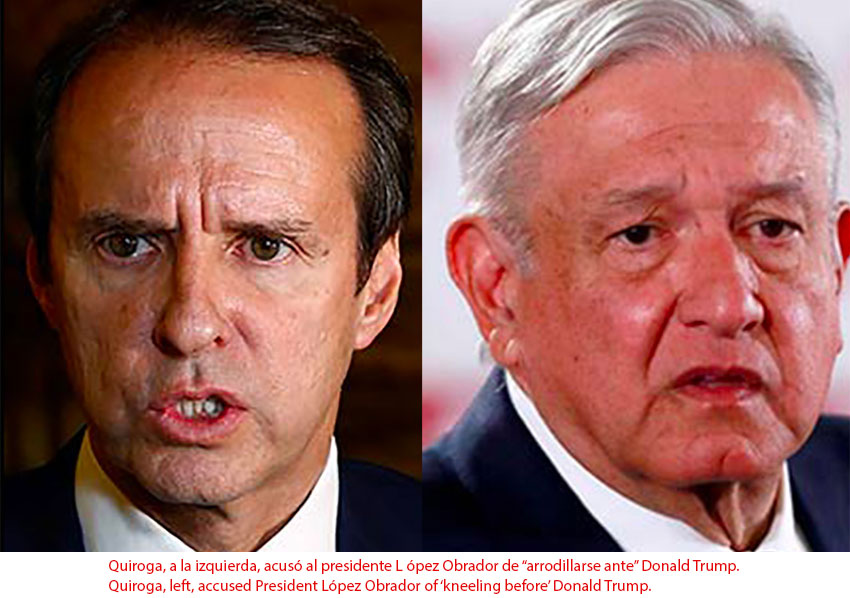
Also on Thursday, former Bolivian president Jorge Quiroga – now an international delegate for the government of the interim president – launched a scathing attack on López Obrador.

“Mr. López Obrador, it’s time to speak clearly. You have clearly decided to be the godfather of the Latin American tyrants. You’re a cowardly thug . . . we’ve seen you kneeling down ashamed before [United States President Donald] Trump, who places demands on you, who forces you to deport Central Americans, who’s putting labor inspectors even in the bathroom of your apartment,” he told a press conference.

“You kneel down before Trump and you shamefully kneel down before Castro of Cuba and [President Nicolás] Maduro of Venezuela,” Quiroga added.

In granting asylum to Morales, López Obrador “gave shelter” to a person who committed electoral fraud and is a “cocaine producer,” the ex-president said.

Quiroga also asserted that the Mexican president violated asylum conventions by allowing Morales to make political declarations while in Mexico that instigated violence in Bolivia.

“You have become a rogue with Bolivia. You confused our respect, our deference, with cowardice . . . Don’t come and bully the second female president of Bolivia . . .” he said.

In response, López Obrador told reporters at his Friday news conference that he wouldn’t take Quiroga’s bait and “fall into provocation.”

“We’re going to wait for this diplomatic matter to be resolved. We’re not going to get hooked on tittle-tattle, it’s not up to our level,” he said.

“. . . We’re going to continue demanding that they [the Bolivian government] respect the sovereignty of our country that is represented in the precinct of our embassy [in La Paz].”

Source: El Universal (sp), Animal Político (sp), Reuters (en), The Washington Post (en).

spot_img

US returns 3,500 copper coins to Mexico used more than 500 years ago

The currency was used in Michoacán and Guerrero as far back as 1200 AD


by the El Reportero’s wire service


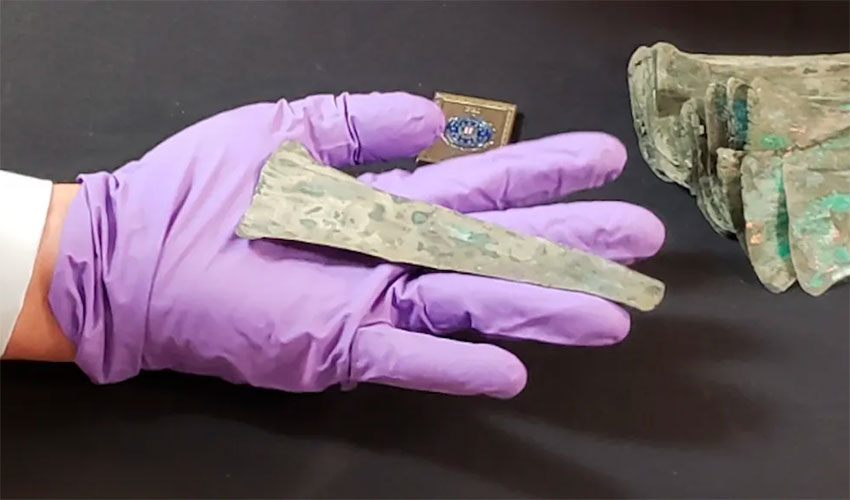
The United States returned a collection of over 3,500 pre-Hispanic copper coins to Mexican authorities in a ceremony in Miami on Monday.

The coins were used in what are now Michoacán and Guerrero between the years 1200 and 1500, according to Jessica Cascante, spokesperson for the Mexican Consulate in Miami.

A U.S. collector acquired them in Texas at a numismatic fair in the 1960s, she said, but at that time neither Mexico nor the United States was part of a UNESCO convention that guarantees the return of such heritage artifacts to their countries of origin.

Cascante said the fragile, tongue-shaped coins, which are currently covered in verdigris, will be sent to Mexico in January.

Agents of the U.S. Federal Bureau of Investigations (FBI) who headed the operation to recover the coins attended the presentation ceremony along with the Consul General of Mexico in Miami, Jonathan Chait.

Mexican authorities notified the FBI of the existence of the coins in 2013 when they were taken to Spain for an auction. Mexico’s National Institute of Anthropology and History (INAH) then began authenticating the coins in order to request their return.

As both countries were by then signatories to the UNESCO convention (Mexico in 1972 and the United States in 1983), the return process was completed six years later.

Cascante did not divulge the name of the collector who obtained the coins in the 1960s, but said that he did so before it constituted a crime and turned them in voluntarily.

“Now we’re just waiting for the physical material to arrive [in Mexico],” she said, adding that they are currently being packaged with the support of specialists from history museums in Florida.

Source: El Universal (sp)


Argentina issues Treasury Bills, subscribed by the Central bank, to pay creditors

Argentina’s new government announced the issuance of US$ 1.326 billion of dollar-denominated Treasury Bills, to be directly subscribed by the central bank, according to a decree in the Official Gazette on Thursday.

The issuance of the 10-year debt comes as the country’s new Peronist President Alberto Fernandez looks to pay off creditors and stave off a damaging default.

Argentina, hit by a debt crisis since last year, is facing tough restructuring negotiations with creditors including the International Monetary Fund (IMF) over around US$ 100 billion in sovereign debt which it is struggling to service.

The Treasury Bills will expire on Dec. 30 2029 with interest payable semi-annually. The rate will depend on the interest accrued by the central bank’s foreign reserves and capped at the annual LIBOR rate minus one percentage point, the decree said.

A recently passed law to help revive Argentina’s economy, Latin America’s third largest, allows the government to issue up to US$ 4.571 billion in similar dollar denominated bills.


President of Panama denies privatizations in health and water

President of Panama Laurentino Cortizo denied last week the privatization of the Institute of National Aqueducts and Sewers (IDAAN) and the Social Security Fund (CSS).

In statements to the press, Cortizo assured that his administration is working on the transformation and rescue of both public institutions so that they provide an efficient and sustainable service to the population.


Panamanian government agrees to increase wages for banana growers

A resounding triumph is being celebrated by banana growers in Changuinola today, in the northwestern tip of Panama, who suspended an indefinite strike after negotiating a 28 percent staggered salary rise.

The initial demand was for an increase of 25 percent, but during the negotiations they agreed to receive eight percent from Jan. 15, a further 13 percent in 2021 and another 7 percent by 2023, Liberto Becker of the Industrial Union of Banana Workers in Independent Banana Producers, SITRAPBI.

They also agreed that the company would not dock wages for the strike action, while the government committed to the delivery of school and Christmas bonuses, and scholarships for workers’ children.

A presidential decree issued on Tuesday had granted a pay rise of juse eight percent, the highest of those approved for all sectors, but not representing a solution to banana workers’ demands, which saw them continue their strike action until the new deal was reached in the early morning yesterday.

As additional help, the government undertook to build some 1,500 homes for workers, many of whom come from the distant Ngabe Buglé Region and must rent accomodation while they work in the fields, near the border with Costa Rica.

The 7,000 workers of the 29 plantations benefiting from the agreements will receive a visit from the President of the country, Laurentino Cortizo, who promised to continue the dialogue on the concerns and needs of workers and possible solutions, union sources revealed.

spot_img