Thursday, October 15, 2026
spot_img
Home Blog Page 252

Mexico’s hidden barriers to asylum seekers a successful deterrent

Medical neglect and filthy conditions plague Latin America’s largest detention center


by Alex Harrison-Cripps


Asylum seekers in Chiapas are being told to go home or endure months in detention centers where they are denied basic needs such as water, clean sanitation and access to health care. Those who file a claim for international protection must wait months for the outcome, during which time they have to navigate a complex system and many struggle to access their basic rights.

Mexico does not currently have, and has no plans to introduce, a cap on asylum applications, according to Andrés Ramirez, head of the Mexican Commission for Refugee Assistance (COMAR). However, since June 2019 there has been a change in policy aimed at restricting the migrant flow through the country. So, while COMAR’s budget is a fraction of what is needed to investigate asylum claims efficiently, the National Immigration Institute (INM) has been given additional support in the form of the National Guard and the army.

In May 2019, the U.S. government threatened to impose increasing tariffs on Mexican goods “unless and until Mexico substantially stops the illegal inflow of aliens coming through its territory.” The following month, the government launched the Migration and Development Plan, and by November 2019, Foreign Affairs Minister Marcelo Ebrard boasted of a reduction in the flow of migrants from south to north from 144,116 (in May) to 42,710.

Publicly this reduction has been attributed to employment programs and rescuing migrants from traffickers. However, it is also likely to be, at least in part, due to the harsh conditions that migrants must endure to obtain international protection in Mexico.

Detainees are given the “choice” of returning home to face the life-threatening situations that they fled or enduring months of difficult conditions in detention. Some of those “rescued” by the INM choose not to request asylum rather than spend months in a detention center.

Yoni, a Honduran woman, said that her unaccompanied teenage daughter was told she would have to stay in Siglo XXI for ”two to five months” while applying for asylum. On seeing the conditions, her daughter asked to be sent home. It was nine more days before the teenager was allowed to phone anyone and 26 days of detention before she was finally deported.

Those who do stay at Siglo XXI are faced with medical neglect. Dr. Arturo Nepomeceno Lozano, the assistant deputy director at Tapachula hospital, said the doctors at Siglo XXI do not appear to be attending to the detainees. His hospital regularly sees patients with urinary tract infections caused by severe dehydration, or diarrhea or bronchitis. He has treated patients who have been “told to stand in the sun while they are denied shade or water.”

One mother from El Salvador wept as she told how her 9-year-old daughter’s appendix had burst inside Siglo XXI. The girl suffered from “increasing stomach pains and fever for 13 days … before she was finally transferred to the hospital, after the pain had left her unable to stand. The other detainees threatened to revolt if the girl was not given medical attention.”

“The doctor didn’t even physically examine my child,” the woman said. “He just gave us some antibiotics that did nothing to reduce the fever or the pain. The doctor accused her of faking the illness and being a spoiled child.”

The girl, who went on to spend six weeks in the hospital, was diagnosed with a ruptured appendix, peritonitis and typhoid. She required three operations to remove and repair a significant part of her intestines as a result of the serious infection that had spread from her appendix. “The doctors have said that it is possible she won’t be able to have children,” her mother said through tears.

It wasn’t just medical neglect that the girl had to endure. Before being transferred, the staff in the detention center “forced her to stand outside in the rain when she had a fever,” said her mother.

When the Salvadoran mother was finally allowed to accompany her daughter to the hospital, she was not allowed to bring her other three children, all under the age of 13. She was forced to leave them unaccompanied in the detention center and was denied any form of communication with them until three days later when they were unexpectedly delivered late one night to the hospital.

Siria Villator belongs to the Fray Matías Human Rights Center, one of the few organizations in Chiapas that has been granted access to Siglo XXI. She is granted restricted access to a common area but not to the main living areas. She said “it was bad before but now it is really bad.” She has heard about cells used for “solitary confinement as punishment.” INM spokeswoman Natalia Gómez denies that there are any such cells or that punishments are meted out.

Jonny, 18, spent seven and a half months in the detention center. He says was regularly called a “fucking migrant” and staff would throw bars of soap at his face. “But [the staff] are not all bad — maybe only 40% of them,” he said in an attempt to be lighthearted.

Detainees at Siglo XXI also talk of unsanitary conditions. In one dormitory dozens of people sleep on mattresses on the floor, covered only with dirty sheets. A young man from Honduras explained that the turnaround is so fast that the new arrivals sleep in beds with old soiled linen from the previous occupants.

The INM also has the ability to detain undocumented migrants in temporary holding facilities called estancias provisionales. These shelters have a capacity for 10 people and are designed for holding periods of less than 48 hours, confirmed Brenda Ochoa, who has permission to visit the detention facilities as a representative of Fray Matías. She says conditions are frequently overcrowded and the cells are “used as a punishment.” On one visit, “there were over 40 people, including pregnant women, being held in in the cell, meaning that not all of them could lie down at once.”

In their rush to flee desperate circumstances, asylum seekers are in most cases unable to prepare for the complicated bureaucratic process that awaits them.

“Most asylum seekers will have left their home suddenly with little savings, planning or information,” explained Florian Heopfner of the United Nations High Commissioner for Refugees (UNHCR). “Very few people will understand the process,” he said.

The process involves an understanding of the two government departments: the INM and COMAR. Asylum applications are managed by COMAR whereas deportations and detentions are managed by the INM. COMAR has a presence in only four federal entities: Mexico City, Chiapas, Veracruz and Tabasco; the INM is present across Mexico and is supported by the police, the National Guard and the army.

“We didn’t know how things worked or what the COMAR office was when we arrived,” explained a 23-year old Honduran father. He, his 20-year-old wife and 10-month-old daughter were detained for 22 days inside Siglo XXI after a week of sleeping rough in Tapachula. “It’s like a prison,” he said. “They lied to us when we arrived. They said we would have to stay (in the detention center) for at least three months if we wanted asylum.”

The young father stayed in a male dormitory, shared with dozens of others, and his wife and child stayed together in a separate area; each day, they were allowed to spend one hour together as a family. The young mother said she was “allowed only three diapers per day” and so was “forced to leave her baby in soiled diapers” when she ran out.

In cases where asylum seekers cannot get to a COMAR office, the INM has a duty to inform the refugee commission of their request for asylum, explained Andrés Ramírez, head of COMAR.

However, the INM doesn’t always provide this information, leading to a bureaucratic wall between the asylum seeker and protection.

Institute spokesperson Gómez acknowledged that these are not the first complaints that have been made, but she said the INM has “no ability to investigate complaints.” She asserted that “the only way an investigation could happen would be if a formal complaint is made to the National Commission for Human Rights (CNDH).”

The CNDH has investigated 36 complaints regarding the INM in Chiapas since the beginning of the year. However, in Ochoa’s experience, many people are unwilling to make formal complaints as they believe it will affect their asylum status.

This is the first of a two-part series that examines the unofficial barriers that serve to discourage people from filing claims for asylum.


spot_img

Salvadoreans honor Saint Romero 40 years after his assassination

by the El Reportero’s wire services


San Salvador, March 24 – Salvadoreans are commemorating the assassination 40 years ago of Saint Oscar Arnulfo Romero, a crime that triggered a civil war and created a national symbol.

After being canonized in October 2018, Romero, who was known as the voice of those who do not have voice, is still awaiting earthly justice, as his assassins, hired by the oligarchy, remain unpunished.

New evidence was produced this year in the criminal investigation on the brains behind the crime, the perpetrators and their accomplices.

The annulment of the Amnesty Act eliminated all excuses to refuse to investigate the crime, in which Roberto d’Aubuisson, founder of the right-wing Arena party, was allegedly involved.

Monsignor Romero made categorical statements that cost him his life, but he won immortality in the hearts of Salvadorians.

Some of those statements are ‘truth is always persecuted’, ‘man is not worthy for what he has, but for what he is’ or ‘my voice will disappear, but my word that is Christ will remain in the hearts that have wanted to welcome him’.


Hondurans regret closure of markets due to SARS-CoV-2

March 24, 2020 – Hondurans being unemployed or with informal jobs regretted on Tuesday the closure of markets due to Covid-19 pandemic since they do not have where to purchase food.

According to ‘Radio Progreso de Honduras,’ some people assure that if ‘coronavirus do not kill them, starvation will do so.’

Popular markets dawned closed today in this country complying with government’s indications to fight against Covid-19 pandemic.

The authorities noted that products’ supply to the population is enabled by means of supermarkets, small markets and groceries as long as they present their safeguard.

The measure seeks to prevent crowds and contact among people, the first way of spreading the disease, which concerns the humblest sector of the population.

According to the National Institute of Statistics, 2,780,000 people are jobless and employed in precarious working conditions.

Former president Manuel Zelaya (2006-2009) assured on Twitter that direct economic transfers to a million of families, with a minimum month wage, the people could purchase food, water and medicines in a fast and crystal-clear way.


Armed assailants snatch 2 truckloads of gold/silver bars in Sonora heist

The armored cars were intercepted by a convoy of at least 10 vehicles

A pair of armored trucks transporting ingots of a gold/silver alloy were attacked and robbed by a commando of armed men in Caborca, Sonora, on Monday.

The precious metals for the ingots, called doré bars, had been extracted from the La Herradura mine, operated by the Canadian mining company Penmont.

The SEPSA security company trucks were intercepted by a convoy of at least 10 vehicles around 2:00 p.m. on Monday. The assailants blocked the highway with a truck to force the armored cars to stop.

The six SEPSA employees were assaulted by the thieves. One sustained minor wounds requiring hospitalization, while the others were treated by paramedics and released at the scene.

Penmont did not release the market value of the doré bars that were stolen.

It was not the first instance of highway robbery of precious metals mined by Penmont in the area. Thieves stole 47 doré bars in November of last year from another Penmont-owned mine.

The estimated 722 kilograms of doré stolen in November were from the Noche Buena mine, not far from La Herradura, and valued at around US $8 million according to the exchange rate and gold price at that time.

The open-pit La Herradura mine is in the Sonoran Desert about 20 kilometers east of the popular Gulf of California tourist destination Puerto Peñasco, Sonora.

Source: Milenio (sp)


spot_img

Civil rights leaders encourage diverse California communities to “sanitiza and self-respond

In the time of Coronavirus, the state´s diverse communities are told that participation in the U.S. Census is still crucially important, aside from safe and secure


Pilar Marrero

Ethnic Media Services


The U.S. Census self-response phase went live on March 12, and civil rights leaders of diverse ethnic groups came together to remind their communities of the many legal and privacy protections guaranteed by federal law for people to participate in the decennial count.

They also encouraged them to continue to “self-respond” by phone, online or mail and outlined the steps they will follow to continue to reach out to hard-to-count communities, addressing at the same time the health emergency of the Covid-19 as an additional challenge in Census 2020.

“We encourage our communities to sanitize and self-respond”, said Jeri Green, 2020 Census Senior Advisor for the National Urban League.

The leaders emphasized that most Americans are now able to self-respond to the Census in the privacy of their own homes without having to meet a Census taker or enumerator. For example, people can go to https://2020census.gov/ and answer nine questions (seven for every person in the household other than the one filling out the questionnaire). They can also respond by phone or in printed form.

Several organizations have mounted massive campaigns to help their communities maximize their participation, given that the data collected by the US Census is used in the distribution of resources, funding of services and political representation through drawing of districts for Congress, State Legislatures, etc.

Beth Lynk, Census counts campaign Director for The Leadership Conference Education Fund said the Census is “one of the most urgent civil rights issues facing the country and right now every person in the US has a chance to ensure a fair and complete count to all communities”.

Knowing that many in their communities have privacy concerns on the use of the data they will be sharing with the Census, the leaders reminded that the information has extraordinary levels of legal protection.

John Yang, president and executive director of Asian Americans Advancing Justice pointed to the laws that govern the use of the data given to the U.S. Census Bureau as “the strongest privacy protections allowed in the United States”.

Asian Americans are among the communities where there are many undocumented immigrants and mixed-status households, which creates mistrust towards the government and could affect a complete count. Every person living in the United States by April 1 must be counted, and that includes undocumented immigrants.

“The confidentiality provision known as Title 13 prevents the government from using the Census data for any purpose other than the statistical one”, said Yang. “More importantly, the bureau and its employees are not allowed to share the data with any other government agency or officials for any reason”.

Certain information gathered by the Census cannot be published for 72 years, such as the name of the individual, business or organization, address or telephone number. Another layer of laws prohibits the use of data in any way against the individual who responded.

Yang pointed to their hotline for the Asian and Pacific Islander Community in several languages as a crucial resource to answer questions: 844-2020-API or 844-2020-0204.

Other communities share the same privacy concern. This is a very important issue in black communities, said Green, of the Urban League, whose 90 affiliates are hard at work reassuring their members of the security of the data and the importance of participation.

“We are fighting to ensure that the black population, including immigrants, lose no ground, be it economic, political or in civil rights”, she emphasized. “The stakes are too high, please go to makeblackcount.org to learn more about our efforts”.

Lycia Maddox, Vice President of External Affairs for the National Congress of American Indians (which also includes Alaska Natives) said that the tribal nations across the country present a special challenge due to restrictions they have imposed on access to their lands, due to the Coronavirus.

“These communities often have no access to online and broadband to self-respond, and these new security measures make it impossible for enumerators to visit them and it delays mail delivery”, Maddox said. “We are as we speak working with different networks to come up with plans, and to increase community outreach and advertising”.

Lizette Escobedo, Census Director for the National Association of Latino and Elected Officials (NALEO) invited Latinos to call the bilingual Spanish-English hotline 877 ELCENSO or 877 352-3672 where there will be live paid operator answering questions and watching for reports of potential scammers or disinformation.

The organization has trained 3500 Census Ambassadors to assist the community in 15 states in filling out the Census and has launched two national campaigns, “Hágase contar and Hazme contar” focused on the larger Latino community and children younger than four, which experienced a large undercount in the 2010 Census.

Additional paid media campaigns will remind people that there is absolutely “NO CITIZENSHIP QUESTION” in the Census and addressing “fears of data privacy and cybersecurity”.

An additional ad campaign targeting Latina Millennials who are English-dominant was launched 2 months ago.

“Ensuring an accurate count seems like a heavier lift as every day happens folks have mentioned, we are committed to working with national local and media partners to do what we can to ensure that Latinos are heard, seen and counted this 2020 census”, she added.

In the face of the Coronavirus pandemic, organizations are revising the way they conduct the outreach to maintain community safety,

“Several grassroots organizations are moving to phone banks and text banks because the table opportunities are very restrictive right now and we want to exercise caution”, said Yang. “We are also leaving drop off literature in supermarkets, community centers, and clinics”.

Ditas Katague, from the California Complete count office, said that the state of California has spent more than all the other states combined to reach out to the hardest to count populations and ensure everyone participates.

“The investment is unprecedented, a total of 172.2 million dollars and is larger than all other states combined, we are on a league of our own”, said Katague. “We have unique challenges, a diverse population, and a large geographic size. We have 120 partners throughout the state and we are coordinating the largest mobilization of partners in our state´s history”.

The leaders reiterated that their overall goal is that every Californian understands that the Census is not only “safe and secure”, and vital for the future of all the communities. “The goal is to ensure that everyone is invited and able to participate in the 2020 Census”, said Beth Lynk of the Leadership Conference.


spot_img

Governor Newsom’s Executive Order on Evictions Shamefully Misleads Public 

Today, Governor Newsom released an executive order on the issue of evictions. While the press release from the Governor describes it as a “moratorium on evictions” – this is an extremely dangerous mischaracterization. The order still allows landlords to file and serve evictions – even today – and does little to nothing to actually protect tenants.


“Governor Newsom’s Executive Order is not a ban on evictions – contrary to the Governor’s own press release. It does not prohibit landlords from evicting tenants – all it does is extend the amount of time tenants have to respond to their own eviction order – and ONLY under the circumstance where tenants have given 7 days advance notice to their landlord that they would not be able to pay for COVID-related reasons. This is outrageously misleading and the Governor is failing to protect us.” – said Leah Simon-Weisberg, Legal Director of the Alliance of Californians for Community Empowerment (ACCE).


“This Executive Order shamefully fails to rise to the moment to protect people in this crisis. This is yet again, another shameful abdication of responsibility when people’s lives are on the line. Rent is due for 17 million renters in just days and there are tens of thousands who will not be able to pay to no fault of their own. If the Governor does not take urgent action to use his executive powers to protect renters and unhoused families before the first of April, we will be forced to organize and take collective action to protect one another. If vacant homes aren’t opened people will occupy them. If housing security is not guaranteed we will call for a general rent strike.” – Christina Livingston, Executive Director of ACCE.


Read ACCE’s “Open Letter to All California Leaders” in response to Governor Newsom’s last executive order on eviction protocols.

spot_img

UK downgrades COVID-19  

No longer a high consequence infectious disease


by Jon Rappoport

March 25, 2020


Where is the media roar all over the world—blasting out the news that the UK government no longer considers COVID an existential threat to all life on Earth?

No giant headlines indicating that the dominos are now starting to fall in another direction—away from sheer suicidal insanity?

Oh, that’s right, it’s the MEDIA.

The UK government, on its website, announced on March 23, under “Status of COVID-19”:

“As of 19 March 2020, COVID-19 is no longer considered to be a high consequence infectious diseases (HCID) in the UK.”

BANG.

“The 4 nations public health HCID group made an interim recommendation in January 2020 to classify COVID-19 as an HCID. This was based on consideration of the UK HCID criteria about the virus and the disease with information available during the early stages of the outbreak. Now that more is known about COVID-19, the public health bodies in the UK have reviewed the most up to date information about COVID-19 against the UK HCID criteria. They have determined that several features have now changed; in particular, more information is available about mortality rates (low overall), and there is now greater clinical awareness and a specific and sensitive laboratory test, the availability of which continues to increase.”

“The Advisory Committee on Dangerous Pathogens (ACDP) is also of the opinion that COVID-19 should no longer be classified as an HCID.”

“The need to have a national, coordinated response remains, but this is being met by the government’s COVID-19 response.”

“Cases of COVID-19 are no longer managed by HCID treatment centers only. All healthcare workers managing possible and confirmed cases should follow the updated national infection and prevention (IPC) guidance for COVID-19, which supersedes all previous IPC guidance for COVID-19. This guidance includes instructions about different personal protective equipment (PPE) ensembles that are appropriate for different clinical scenarios.”

Of course, we can be the media, too. We are our own wire service, getting out news across the world.


spot_img

Here’s what the CDC says about the test for the Coronavirus  

Straight from the horse’s mouth—both sides

by Jon Rappoport


—The CDC (US Centers for Disease Control) admits the coronavirus test is flawed. That’s the overview and the takeaway—

As my readers know, I’ve described why the widespread diagnostic test for the coronavirus is insufficient, misleading, useless, and deceptive.

That test, used all over the world where it is available, is called the PCR.

It DIAGNOSES patients. “Yes, you have the virus.” “No you don’t.”

A very alert reader sent me a link to a US Centers for Disease Control (CDC) document about the test. The CDC establishes the guidelines for how the test should be done, and what the results mean.

Here is a CDC paragraph about results. I suggest you read it several times.

“Positive [test] results are indicative of active infection with 2019-nCoV but do not rule out bacterial infection or co-infection with other viruses. The agent detected may not be the definite cause of disease. Laboratories within the United States and its territories are required to report all positive results to the appropriate public health authorities.”

I’m going to blow past the blatant contradiction in that CDC paragraph and cut to the chase.

The key line in that paragraph is: “The agent detected [the coronavirus] may not be the definite cause of disease.”

BANG.

CDC: Yeah, you see, folks, ahem, the test could say the coronavirus is there in somebody’s body, but the virus may not be causing disease…

On one level, the CDC is admitting the test could turn up false positives: the test could SAY a patient has the coronavirus, but he really doesn’t.

This isn’t a footnote stuck at the bottom of a report. It’s right there near the top of the section about the meaning of the test.

On a deeper level, the CDC is saying straight out, IF THE TEST SHOWS A CORONAVIRUS IS PRESENT, THAT DOESN’T MEAN IT’S CAUSING DISEASE.

Well, yes, I’ve pointed out that the test has an inherent problem. At best, it might show that a virus is present in the patient’s body. But the test is incapable of determining HOW MUCH virus is ACTIVELY REPLICATING in the patient’s body.

And why is that important? Because, to even begin to say a virus is causing actual illness in a human, there would have to be millions and millions of a virus replicating in his body—and the PCR test has never been proven, in the real world, to be able to make such a judgment call accurately.

But, if you read that CDC quote again, you’ll see the CDC is ordering labs to report a positive test result to public health agencies—where it will be counted as a “coronavirus case” come hell or high water.

Thank you, CDC. So very, very much. The next ship for Uranus leaves tomorrow. Pile on board and make the trip. You can run tests there to your heart’s content.

This link will take you to a page with a number of links. Scroll down until you reach the link titled, “CDC 2019-Novel Coronavirus (2019-nCoV) Real-Time RT-PCR Diagnostic Panel Instructions for Use.” That’s the one.

(Jon Rappoport is the author of three explosive collections, The Matrix Revealed, Exit From The Matrix, and Power Outside The Matrix).

spot_img

Italy coronavirus: new explosive information

by Jon Rappoport

March 19, 2020


A very brief update. Read this carefully. Many people who were diagnosed as “coronavirus cases” in Italy, and then died, were almost certainly put on antiviral drugs. As you’ll see, below, a significant percentage of these people had prior heart conditions or high blood pressure. But at least one of the antiviral drugs, called ribavirin, carries this VERY RELEVANT warning, from cardiosmart.org: “Ribavirin may decrease the number of red blood cells in your body. This is called anemia and it can be life-threatening in people who have heart disease or circulation problems.” High blood pressure is a circulatory problem. Understand? Get it? LIFE-THREATENING. So how many coronavirus patients have been killed by the administering of ribavirin?

And with THAT, let’s jump in…because there’s more. Much more.

For those people who have any belief in the coronavirus…

Here’s the basic situation: the Italian health agencies are reporting escalating COV deaths—big fear-story out front…

But in the background, other Italian government researchers are combing through patient records, to take a much closer look…to see whether people are dying from the virus or other more obvious causes.

Are people dying coincidentally WITH the virus, or BECAUSE OF the virus? Is the virus a mere harmless passenger in the body, or is it the driving force?

The Italian results are astonishing, to understate it by a mile.

Bloomberg News has the story: 3/18, “99 percent of those whose died from virus had other illness, Italy says”:

“More than 99 percent [!] of Italy’s coronavirus fatalities were people who suffered from previous medical conditions, according to a study by the country’s national health authority.”

“The Rome-based institute has examined medical records of about 18 percent of the country’s coronavirus fatalities [so far, because it’s slow work], finding that just three victims [!!], or 0.8 percent of the total, had no previous pathology [disease]. Almost half of the victims suffered from at least three prior illnesses and about a fourth had either one or two previous conditions.”

“More than 75 percent had high blood pressure, about 35 percent had diabetes and a third suffered from heart disease.”

“The average age of those who’ve died from the virus in Italy is 79.5 [!!!]. As of March 17, 17 people under 50 had died from the disease. All of Italy’s victims under 40 have been males with serious existing medical conditions.”

BANG.

Average age of those who’ve died: 79.5. Are you kidding? Lots of prior medical conditions, weakened immune systems, and what this emerging study isn’t saying: all these people had obviously been treated for those prior conditions with toxic medical drugs. Furthermore, once they’d been diagnosed with coronavirus, chances are many of them were put on highly toxic antiviral drugs. Thus delivering the final blow.

Imagining the coronavirus was the CAUSE of death would be a ridiculous fantasy. But these people are counted as “coronavirus deaths” by the other Italian reporting agencies, who are jacking up the numbers.

Does this remind you of any other reports I’ve been detailing? The elderly people with obvious prior diseases who died in Australia; and the elderly people who were diagnosed as coronavirus cases in the state of Washington—all living in a long-term-care nursing home?

Getting the picture? This death-numbers con—aside from covering up the real causes of death, including MEDICAL—is the forward spear being used to justify locking down and wrecking economies all over the world right now, and that means attacking the people in any way connected to those economies who have to work to make a living.

There are statistical vampires at work, using the elderly and sick and dying to feed numbers to health agencies around the planet. Those agencies tap their press contacts, and horror reports emerge, and the unsuspecting public, in economic lockdowns, sit in front of the tube and watch these reports, and inhale the cooked-up fear.

Turn your mind to the highest setting, because nothing is riding on this whole deal except the immediate future of humanity.

And again, cardiosmart.org: “Ribavirin may decrease the number of red blood cells in your body. This is called anemia and it can be life-threatening in people who have heart disease or circulation problems.”

(Jon Rappoport, a veteran investigative journalist, is the author of three explosive collections, The Matrix Revealed, Exit From The Matrix, and Power Outside The Matrix)

spot_img

IRS delays April 15 tax payment deadline by 90 days for millions

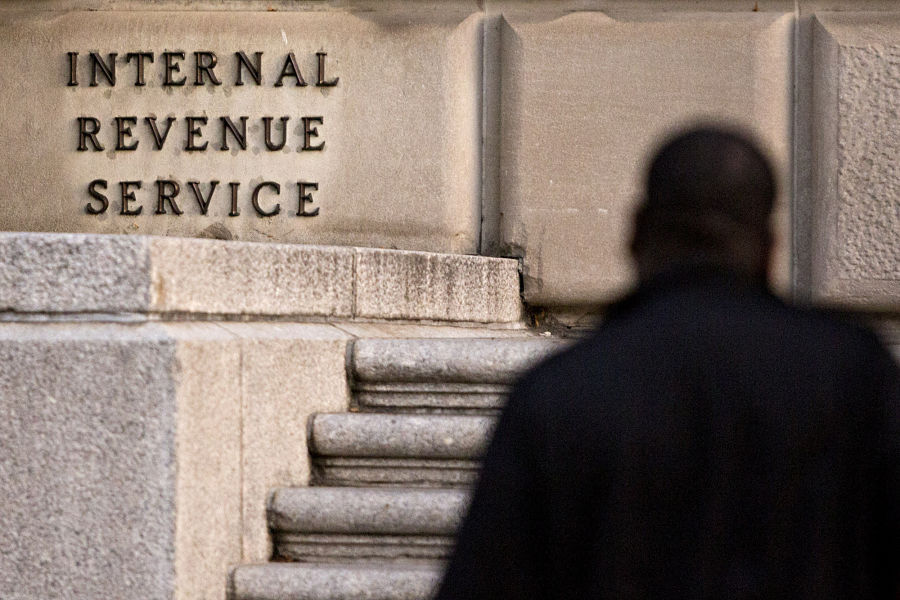
A man walks past the Internal Revenue Service (IRS) headquarters in Washington, D.C., U.S.. Photographer: Andrew Harrer/Bloomberg

by Laura Davison

March 17, 2020, 1:09 PM PDT


Treasury Secretary Steven Mnuchin announced that his department is pushing back the April 15 deadline to pay taxes owed, giving individuals and many businesses 90 extra days to send checks to the government.

Individuals can defer up to $1 million of tax liability and corporations get an extension on up to $10 million, Mnuchin said Tuesday at a news conference Tuesday.

“All you have to do is file your taxes,” he said. “You’ll automatically not get charged interest and penalties.”

The payment extension, which affects millions of taxpayers, is part of the Trump administration’s effort to curb the economic effects of the coronavirus pandemic. Mnuchin said the delay will free $300 billion of liquidity in the economy as individuals and businesses have more time to pay their taxes.

Delaying payment requirements will give businesses and individuals nearly three more months to meet their IRS obligations, potentially lessening cash-flow issues that some businesses are facing as many people stay home and spend less money on dining out, entertainment and transportation.

Individuals and businesses will still have to file by April 15, unless they submit paperwork for an automatic six-month extension, Mnuchin told reporters.

“This is a commonsense step to afford individual Americans and businesses access to financial resources they need during this time of economic and social disruption,” Senate Finance Committee Chairman Chuck Grassley said in a statement.

The administration is also considering delaying the estimated quarterly tax payments that self-employed workers and businesses pay the IRS throughout the year, according to two people familiar with the matter. The first payment is typically due April 15.

Read More: Mnuchin to Urge Trump to Extend April 15 Tax Deadline Over Virus

Wealthier individuals — ranging from the upper-middle class to the top 1% — could benefit the most from this move because they are more likely to owe the government money and be able to wait until the filing deadline to submit their returns, said John Koskinen, a former IRS commissioner.

Lower-income workers, especially those who qualify for refundable tax breaks such as the child tax credit and the earned income tax credit, tend to file early because they get a refund check.

“The number of blue-collar workers, working class people, I imagine, who are filing in the first two weeks of April is probably a very small percentage,” Koskinen said.

Many higher-income people, especially those who own a business or invest in multiple partnerships, apply for an automatic six-month extension to file because their returns are more complicated. In a typical year, they’d have to submit 90% of their tax liability on April 15 or face interest and penalties on the late payment.

The IRS routinely extends the filing deadline for victims of natural disasters. For example, the agency granted victims of recent tornadoes in Tennessee until July 15 to file. In 2018, the IRS delayed the due date by a day when the computer system crashed on the deadline and taxpayers were unable to submit their returns.

Nearly 68 million individuals had already filed their tax returns as of March 6, according to the most recent statistics from the IRS. That’s about 45% of the returns the agency expects to receive this year.

“For a lot of people it makes sense to stick to the original schedule,” said Meredith Tucker, a principal at accounting firm Kaufman Rossin. “Don’t just kick the can down the road if there is no benefit.”

— With assistance by Allyson Versprille

spot_img

Seven Bay Area jurisdictions order residents to stay home

COVID-19 spread reduces activity to only most essential needs.


Santa Clara, CA – Seven health officers within six Bay Area counties are taking a bold, unified step to slow the spread of novel coronavirus (COVID-19) and preserve critical health care capacity across the region.

On March 16, the Public health officers of Alameda, Contra Costa, Marin, San Francisco, San Mateo, and Santa Clara counties announced, with the City of Berkeley, a legal order directing their respective residents to shelter at home for three weeks beginning March 17. The order limits activity, travel and business functions to only the most essential needs. The guidance comes after substantial input from the U.S. Centers for Disease Control and Prevention (CDC) and best practices from other health officials around the world.

Scientific evidence shows social distancing is one of the most effective approaches to slow the transmission of communicable disease. The shelter-at-home order follows new data of increasing local transmission of COVID-19, including 258 confirmed cases of COVID-19 with 4 deaths shared by the seven jurisdictions, as of March 15. The Bay Area’s collected confirmed cases is more than half of California’s case count. This does not account for the rapidly increasing number of assumed cases of community transmission. As testing capacity increases, the number of laboratory-confirmed COVID-19 cases is expected to increase markedly.

“Temporarily changing our routine is absolutely necessary to slow the spread of this pandemic,” said Dr. Sara Cody, Santa Clara County Public Health Officer. “The Health Officers from the largest jurisdictions in the San Francisco Bay Area are united and we are taking this step together to offer the best protection to our respective communities.”

The order defines essential activities as necessary for the health and safety for individuals and their families. Essential businesses allowed to operate during the recommended action include health care operations; businesses that provide food, shelter, and social services, and other necessities of life for economically disadvantaged or otherwise needy individuals; fresh and non-perishable food retailers (including convenience stores); pharmacies; child care facilities; gas stations; banks; laundry businesses and services necessary for maintaining the safety, sanitation and essential operation of a residence. In addition, health care, law and safety, and essential government functions will continue under the recommended action. For the full list, please see section 10 of the order.

“While the goal is to limit groups congregating together in a way that could further spread the virus, it is not complete social shutdown,” said Dr. Matt Willis, Marin County’s Public Health Officer. “You can still complete your most essential outings or even engage in outdoor activity, so long as you avoid close contact.”

On January 30, the World Health Organization declared the outbreak a public health emergency of international concern, and the United States followed the next day by declaring a federal public health emergency. On February 26, the federal Centers for Disease Control and Prevention (CDC) confirmed community transmission of COVID-19 in the San Francisco Bay Area, meaning the afflicted patient had no signs of associating with anyone who had been diagnosed with the virus. This collective legal order comes one day after Governor Gavin Newsom ordered older adults, age 65 and older, stay home.

“Limiting interpersonal interactions is a proven strategy to slow and reduce viral spread and protect the most vulnerable among us — individuals who are 60 years of age and older, people with chronic and underlying medical conditions, and people experiencing homelessness.” Dr. Erica Pan said, “Our counties share borders and many people live in one county and work in another. It’s absolutely critical for us to be aligned on COVID-19 mitigation efforts.”

For more information about COVID-19 activities in these areas, visit the Alameda, Contra Costa, Marin, Santa Clara, San Francisco, San Mateo, or Berkeley COVID-19 websites.

spot_img

California Gov. Newsom calls for home isolation for all seniors, bars to close, restaurants to limit capacity

by Lisa Fernandez


SACRAMENTO, Calif. – Stopping short of a state order, Gov. Gavin Newsom on Sunday called for the home isolation of all seniors in the state of California and the immediate shutdown of bars, nightclubs, brew pubs and wineries to help stop the spread of coronavirus, now considered a global pandemic.

In addition, Newsom said all restaurants should reduce capacity by half and provide “deep social distancing.”

In terms of hospital visits, Newsom said there should be no more of these unless it was “end of life.” Finally, he said that on Monday, he may announce possibly halting evictions in California.

He said he realized that these are harsh measures and that isolation is hard, especially when 85 percent of California’s school children won’t be in school on Monday. He acknowledged that many workers need a paycheck and times will be tough.

Newsom said he called for these measures because the public must anticipate the rapid spread of COVID-19, and people need to think about those who are older, chronically ill and homeless. He said California had about 5.3 million people who are 65 or older.

“The most important thing is to focus on the vulnerable and prioritize their safety,” Newsom said. “We are guided by science, not the framework of hysteria.”

In the question and answer period with reporters, Newsom clarified that he is not ordering the shutdown but he expects his requests on restrictions to be upheld.

The exact details of how to deliver meals and pharmaceuticals to seniors are still being worked out, Newsom said, but he said “this is what we do.”

Newsom issued guidance last week to cancel or postpone gatherings large and small that have roiled California’s economy, which is the fifth-largest in the world. He said even though that call was voluntary, as far as he knows, everyone has adhered to his guidance.

Absent a national lockdown order, such as ones implemented across the globe in France and Spain, individual U.S. government leaders this weekend began implementing orders for people to stay in the house and for businesses to close or offer restricted services.

The political leaders of Los Angeles, Boston, New Jersey, Ohio and Illinois, to name some, all imposed restrictions on bars and restaurants, cutting capacity and restricting hours.

The governor of Illinois, J.B. Pritzker, for example, said said bars and restaurants must close at the end of business day on Monday. The mayor of Teaneck, New Jersey asked all residents to self-quarantine, and to only leave their homes to get food or medicine. Reported by KTVU.com.

spot_img