Wednesday, October 14, 2026
spot_img
Home Blog Page 246

Annual food collection campaign

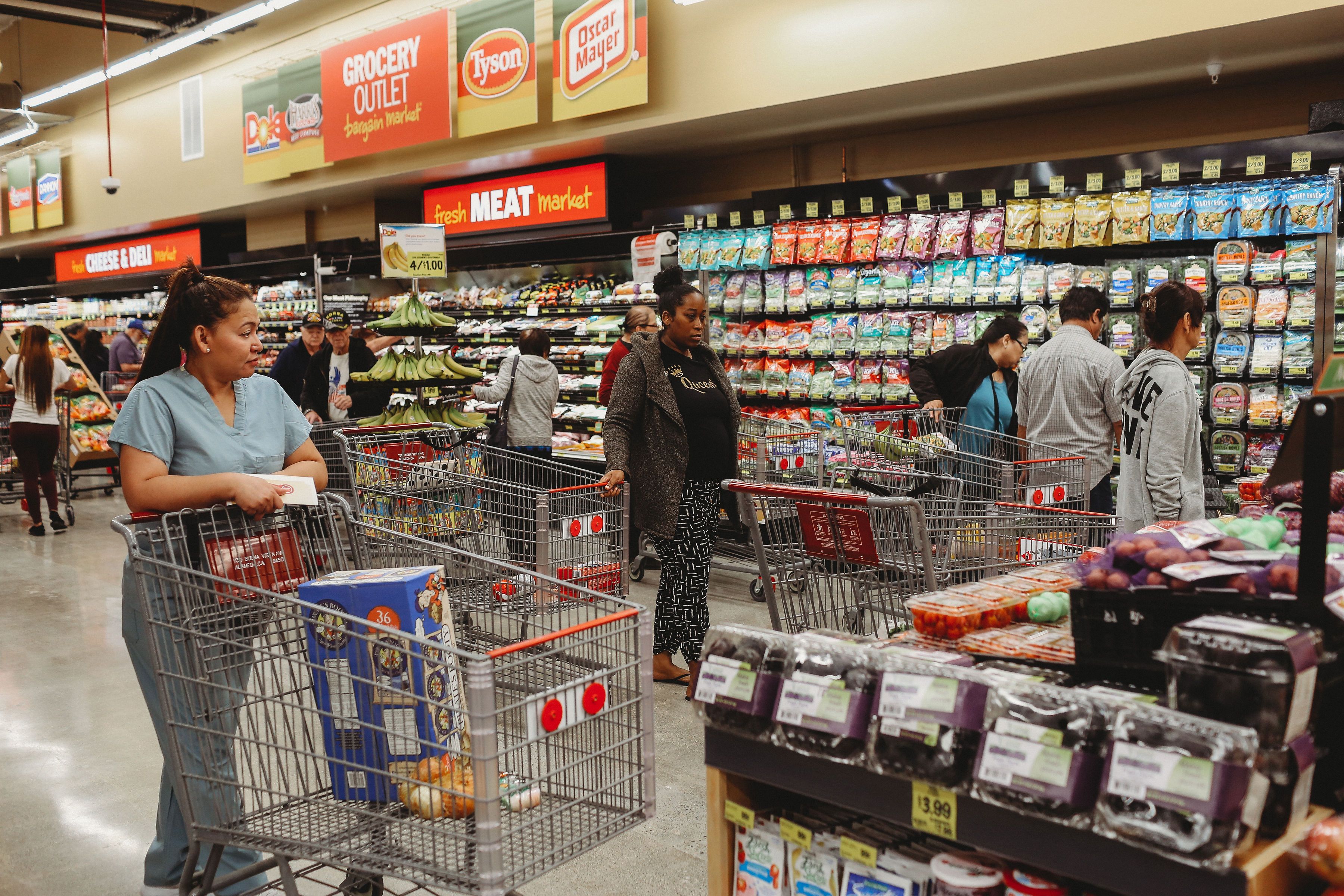
Grocery Outlet Announces Tenth Annual ‘Independence from Hunger®’ Campaign


One in Six Latino Households in the U.S. Struggles with Hunger

by Corporate announcements


Emeryville, Calif. (June 24, 2020)- Grocery Outlet Bargain Market, extreme-value grocery retailer, today launched its tenth consecutive Independence from Hunger® Food Drive to combat food insecurity. From June 24 – July 31, 2020, the campaign will collect cash donations and pre-made bags of nonperishable foods in-store at Grocery Outlet’s 350 locations that will be distributed to local food agencies partners. In addition to the local store donations, Grocery Outlet has initiated a “Million Dollar Match,” a pledge to match up to $1 Million of donations made to the stores to multiply Independence from Hunger’s effort to support food agencies across the nation. 


Locally, Grocery Outlet stores in the San Francisco area have partnered with food banks such as San Francisco and Marin Food Bank, among, others to collect food and cash donations.


According to the USDA’s latest analysis of Food Insecurity in America, 11 million households suffer limited access to food sources and suffer from food insecurity (USDA, Household Food Security in the United States in 2018).  In addition, according to Feeding America, one in six Latino households in the U.S. struggles with hunger.  For Latino children, the disparity is even more severe.  More than 18 percent of Latino children are at risk of hunger compared to 12 percent of White, non-Hispanic children.


Each independently owned and operated Grocery Outlet store is committed to giving back to the local community and have partnered locally to bring the community together in providing families nutritious food. This year, food agencies have experienced a growing need to provide food for children who have been prematurely released from annual school schedules, due to COVID-19. This has resulted in record lows for food bank inventories across the country.


“We feel it is more important than ever to help lessen the number of families across America at risk for food insecurity. This year, Grocery Outlet has pledged to match up to 1 million dollars to support and expand the program’s effort.” said Eric Lindberg, CEO at Grocery Outlet, Inc. “Last year, with the overwhelming help of our community, our campaign funded over 2 million dollars to those in need. In our tenth year, we are dedicated to make a greater impact.”


Since its launch in 2011, the Independence from Hunger campaign efforts have collected more than $5 million nationwide. Customers can make a difference by visiting their local Grocery Outlet and participating in one of these easy steps:


  • Give $5, get $5. Donate $5 or more in a single transaction in-store or online and you will receive a coupon for $5 off a future purchase of $25 or more.

  • Purchase a pre-made bag that is complete with an assortment of groceries selected by the local food agency and then place it in a collection bin at the front of the store.

  • Make an in-store donation at the register. Donations will benefit that store’s local food agency partner. Donate $1, $5 or round up your change.

  • Donate online by visiting GroceryOutlet.com/Donate. Online donations support the San Francisco bay area community through Grocery Outlet’s partnership with Alameda County Community Food Bank.

“With school closures resulting in record lows for food bank inventories across the country, we are once again reaching out to our loyal customers, employees and partners to join us and help support our neighbors in need.” said Lindberg. “Our goal is to continue providing access to high-quality and nutritious food for our local communities in need and this year have promised to match up to 1 million dollars to support our store’s efforts.”

spot_img

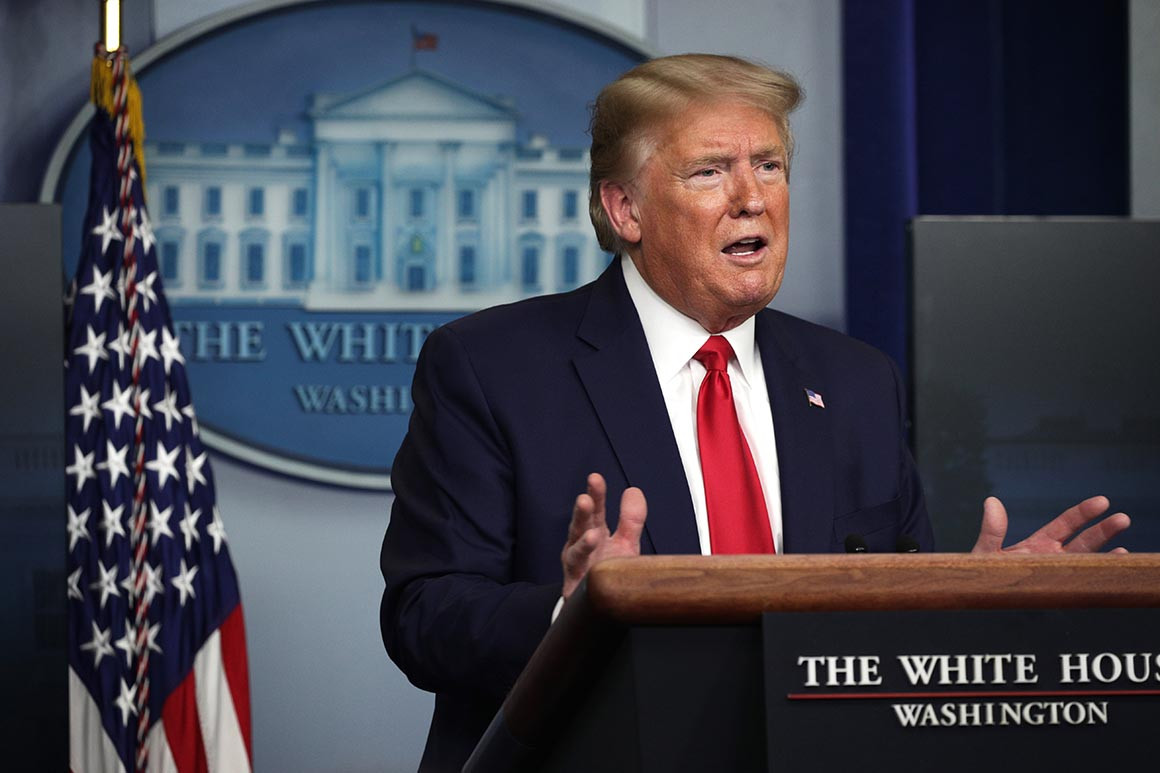
Trump seeks to make permanent his changes to the immigration system

by the El Reportero‘s wire services


Donald Trump’s zero tolerance immigration policy changed the scenario built by the Ronald Reagan government. In 1986, the Immigration Reform and Control Act was enacted, an amnesty that allowed the regularization of at least 3 million undocumented immigrants living in the country.

The plan was to end undocumented migration. In the following 25 years; the number of unauthorized aliens went from 1.9 million left after the amnesty to 12 million at the end of the Barack Obama government. The latter deported more than 2.5 million people without papers in their terms.

In addition, Trump debuted in office with the enactment of two executive immigration orders, one on sanctuary cities and the other on the construction of the wall on the border with Mexico.

The decrees responded to his campaign promises, by awakening and using Section 212 (f). This is a part of the Immigration and Nationality Act (INA) to modify the interpretation of regulations drafted by Congress for a purpose other than the existing one.

On Wednesday night, the secretaries of Justice (DOJ) and Homeland Security (DHS) released a new asylum rule to be published next week in the Federal Register.

More Trump changes to the immigration system

There are also details of a new immigration executive order aimed at limiting H-1B and L-1 visa programs for foreign professional workers.

The changes made by Trump to the INA so far in his term were supported by the section that empowers the President to suspend the entry of foreigners.


Mexican Blood banks in crisis, lacking donors for Covid-19 patients

The Covid-19 pandemic leaves blood banks in Mexico without donors and without reservations, admitted today Jorge Enrique Trejo, director of the National Center for Blood Transfusion.

The official revealed to the press that in April and May the flow of donors was reduced between 63 and 85 percent compared to the same months of 2019. Confinement and fear of contracting Covid-19 in hospitals keep donors away, he said.

In the framework of World Blood Donor Day, the impact of the decrease reaches 92 and 88 percent in the Juárez and General de México hospitals, respectively, he gave as an example.

This drop has a greater projection in the blood banks found in hospitals that provide care for the Covid-19 pandemic, Trejo explained.

At the Red Cross, she said, the drop in altruistic donations is 45 percent, said Marisa Martínez, head of the institution’s Blood Bank, which has hygiene protocols so that people can contribute without fear.

If the supply has been maintained, it is because its use has been optimized thanks to the reduction of scheduled surgeries to which 60 percent were destined.

Maintaining blood component stocks after the drop in donation, which has been recorded during the pandemic due to donors’ fear of going to hospitals, is a huge challenge, she said.

Supply is decreasing in all blood banks. There are places where this drop has a greater projection, for example, in the banks that are contained in a hospital that is giving care to Covid-19, there is a more substantial drop in donors.

Many donors say they are afraid of getting the disease from going to a hospital that is giving so much attention to Covid-19, Trejo said.

According to the monthly reports sent to the National Blood Transfusion Center by the country’s blood banks, in April 2020 it registered a collection of 52,677 total effective donations and for May 32,855 units, when last year there were 144 one thousand.

spot_img

“Don’t let us disappear” – youth contest winners urge San Francisco parents to fill out Census

WASHINGTON, DC - APRIL 23: Protesters gather outside the U.S. Supreme Court as the court hears oral arguments in the Commerce vs. New York case April 23, 2019 in Washington, DC. The case highlights a question about U.S. citizenship included by the Trump administration in the proposed 2020 U.S. census. (Photo by Win McNamee/Getty Images)

by Sunita Sohrabji and Sandy Close


At a time when San Francisco lags behind the statewide average in census response rates, youth artists and writers have a special message for those who have not yet filled out their forms: “Don’t let us disappear.”

The young people spoke at a June 3 virtual awards celebration honoring winners of a Census contest for 14-21 year old dubbed “Why My Family Counts.” The contest drew over 100 contestants working in several mediums, including watercolor, charcoal and pencil sketches, as well as poetry, essay, spoken word and video. The contest was designed to engage youth in the process of ensuring an accurate census count.

The celebration opened with a panel of civic leaders and census experts who drew direct connections between young people insisting on being counted and nationwide protests over racist violence.

“Our communities of color and particularly our black community are in pain,” noted Adrienne Pon, Director of the Office of Civic Engagement and Community Affairs which sponsored the contest. “Today’s event is about more than an art contest.  It’s about celebrating the voices and creativity of our youth who choose to express themselves … in ways that give us reasons to hope that tomorrow will be a better day, that black lives matter, that we ALL count.”

Currently, San Francisco has a response rate of 58 percent compared to the state average of 61 percent. The Bay Area overall has a 68 percent response rate. Last week, the county hit a plateau, registering an increase of only 1 percent, noted Robert Clinton, OCEIA’s project manager for the 2020 Census. Clinton noted that tracts of the city which reported high rates of COVID-19 infections also had low census participation rates, as did neighborhoods with the lowest income levels.

Clinton said that the census “is one of the many tools that our federal government has to make us seen as a people but also to erase us as a people.” He referenced the long lengths of time people wait on the phone to reach a census operator as well as limited language options.

“The language of the census doesn’t really make a whole lot of sense to people who are limited English proficient who are under educated or who have been marginalized in many other ways,” Clinton said.

Stephanie Kim, Director of United Way Bay Area, described the census as a tool of empowerment that “gives communities a say in who leads the political institutions that have the power to protect or to harm us.”

“Our communities deserve to thrive, not just survive. The same racism that permeates our justice system and sanctions police brutality also has robbed many black communities of the resources they need and deserve,” said Kim.

David Tucker, a census expert with the state complete count committee, pointed out that since 1980 California’s black population has had a below average participation rate. “We need to use this opportunity that we are under siege for social injustice to speak out. While I know we are getting exhausted, I am encouraged and excited by the messages you are sending out to your families and friends. The census is the thread that binds us all.”

Sonny Le, a specialist with the Census Bureau, announced that the Census Bureau wants to activate youth leaders who could become census enumerators in their own communities. Le, who grew up as a refugee from Vietnam in a Tenderloin apartment with three other families, noted that  “For me, the census is  personal. Some of my relatives are still facing the same problems of access and services I did in the 1980s.”

Youth speakers followed the census advocates with personal stories echoing the importance of the census as a tool of visibility and empowerment.   Angelo Gerard Ubas, 14, said “I painted a family of birds standing on a tree branch looking at the city skyline which was blurry. I know the census doesn’t count animals…but the census will sharpen the image of the city, of who lives here, and help government know what they have to do to improve.”

Maygie Li, 21, said her family immigrated from China and moved to Montana where her grandparents helped build the railway. She is currently a student at California College of Arts. In drawing the face of a woman etched against a map of Native lands in Montana, she aimed to uplift an invisible population, and show “how we are all connected and need to be counted.”

Elijah Ladeki, 18, recited his poem entitled “Counted Out” which he wrote “as an opportunity to help my community.” The poem, excerpted here, describes “all my life” living in housing projects.  “I will look at my single mother and wonder why she is stressed/I can’t miss out trying to give us a mention/It’s been way too long putting our rights on layaway.”

Jesse Martin, 15, shared his video of a Thanksgiving meal celebrating his large family which he calls “a mix of different ethnicities which are the foundation of San Francisco. If we don’t get counted, we get silenced.”

Bobbi Brown, 21, recited her tribute to the 2010 census, “No one should disappear/Everyone should count/community and fear/that out/2020 Census include all of mine …”

For full texts and paintings by these and other winners, please go to https://ethnicmediaservices.org/myfamilycounts/


spot_img

5 reasons to add fiber-rich raw oats to your diet

by Janine Acero

Oats (Avena sativa) are a widely consumed whole grain. This versatile breakfast favorite can be enjoyed in a lot of ways, and not just for breakfast.

Oats are popular among fitness buffs as an excellent source of soluble fiber, which is responsible for most of the grain’s health benefits. Oats also provide more plant protein than many other grains.

Oats can offer a wide range of nutrients. One cup (81 g) of raw oats contains:

­- 307 calories

– 55 g carbs

– 8 g fiber

– 11 g protein

– 5 g fat

– 27 percent of the Daily Value (DV) of magnesium

– 43 percent of the DV of selenium

– 27 percent of the DV of phosphorus

– 6 percent of the DV of potassium

– 27 percent of the DV and zinc

Due to the nutrient-dense nature of oats, they can provide various health benefits. Here are five science-backed reasons to consume oats regularly.

  1. Oats help lower cholesterol

Beta-glucan, a type of soluble fiber found in oats, has been shown to reduce cholesterol levels. When consumed, beta-glucan turns into gel, which restricts the absorption of cholesterol and interferes with the reabsorption of bile salts that help metabolize fats. According to studies, daily consumption of at least 3 g of beta-glucan from oats can reduce blood cholesterol levels by five to 10 percent.

Moreover, studies suggest that raw oats release more beta-glucan during digestion than cooked oats, affecting fat metabolism and cholesterol levels to a greater extent.

  1. Oats improve blood sugar control

Beta-glucan in oats has been shown to help control blood sugar levels due to its gel-like nature when digested. According to a study published in the Asia Pacific Journal of Clinical Nutrition, the gel’s viscosity helps slow digestion, preventing blood sugar spikes after a meal and stabilizing insulin production.

A review published in Nutricion Hospitalaria also revealed that consuming at least 4 g of beta-glucan per 30 g of carbs every day for 12 weeks reduced the blood sugar levels of people with Type 2 diabetes by 46 percent.

  1. Oats reduce high blood pressure

Studies have shown that soluble fibers like beta-glucan in oats can help reduce high blood pressure, which is a major risk factor for heart disease.

A study published in the Journal of Hypertension shows that consuming 8 g of soluble fiber from oat bran every day can help reduce systolic and diastolic blood pressure.

A pilot study, which appeared in The Journal of Family Practice, also reported similar results after participants consumed 5.5 g of beta-glucan every day for six weeks. At the end of the trial, the participants experienced a 7.5 and 5.5 mmHg reduction in systolic and diastolic blood pressure, respectively.

Another study in The Journal of Family Practice involving participants on hypertension medication showed that consuming 3.25 g of soluble fiber from oats daily for four weeks helped the participants reduce or stop their medication.

  1. Oats support gut health

If you are looking to add more gut-friendly foods to your diet, oats are a great choice. Oats also contain insoluble fiber, which has been shown to support a healthy bowel by increasing stool size.

As its name suggests, insoluble fiber is not water-soluble and does not turn into gel. Gut bacteria don’t ferment insoluble fiber to the same extent as soluble fiber, which allows it to increase fecal size.

According to the European Food Safety Authority, oats can increase stool weight by 3.4 g per gram of dietary fiber consumed.

In a study published in Clinical Interventions in Aging, researchers said that daily intake of oat fiber may be a useful and low-cost approach to treating constipation. Constipation affects approximately 15 percent of the general American population.

Raw oats naturally contain oat bran, which you can also buy on its own. (Related: Oats and gut health: The best breakfast has vitamins and fiber to keep your gut moving.)

  1. Oats help promote weight loss

As previously mentioned, oats are a popular superfood among fitness buffs. High intake of whole grain cereals like oats has been linked to a lower risk of weight gain and obesity.

The soluble fiber in oats can help keep you feeling full for long periods, thus reducing the risk of overeating throughout the day.

Studies have also shown that consuming oats can increase satiety and suppress appetite for over four hours compared with instant breakfast cereals. These effects can be attributed to beta-glucan.

Coupled with a well-rounded diet and regular exercise, oats can be a beneficial part of any sensible weight-loss strategy.

Learn more about oats and other whole grains at SuperfoodsNews.com.


spot_img

Stern Grove Festival launches Best of the Fest

In response to the cancellation of the 83rd Stern Grove Festival due to the ongoing COVID-19 pandemic, Stern Grove Festival has created Best of the Fest—a 10-week virtual series of video playlists from its archives — launching on Sunday, June 14 on KPIX-TV (CBS). The video series will feature epic performances from the archives, as well as special guests, and will be hosted by TV and radio personality and season emcee Liam Mayclem.

Best of the Fest will air on KPIX-TV (CBS) on Sundays at 4:30 p.m. from June 14–Aug. 16, 2020. Following the broadcast at 5 p.m., longer-form versions – including bonus content – will be posted on the Festival’s website, YouTube and Facebook channels.

Included in the playlists will be artist interviews, historic footage, and special surprises. Each week, the playlists will spotlight a different genre and highlight many of the biggest names to play Stern Grove Festival, including Sheila E. (2012), George Clinton (2016), The Doobie Brothers (2015), Pink Martini (2013), and more.

Broadcast on KPIX-TV, Sundays at 4:30 p.m., June 14–Aug. 16, 2020.

Downtown Library update: curbside holds pick-up is here!

We know that you are eager to get new library materials into your hands. Beginning June 16, 2020, contact-free curbside service for holds will be available at the Downtown Library, Tuesday through Saturday.

We have developed a system to ensure that this process is safe for our customers and employees. In order to participate in a safe and expedient curbside pick-up experience, please follow these steps:

– Place holds on items in advance through our online catalog rcpl.bibliocommons.com. You can also email or call us at (650)780-7018 ext. 4 for recommendations or to request that materials be held for you.

– Once you are notified that your hold is available, make a reservation to pick up your holds here: www.redwoodcity.org/librarycurbside

– Arrive at the Downtown Library within your reservation pickup window. We will place your already checked out holds in your car trunk or at your walk-up station.

Visit our Curbside Service page here for hours, more information and frequently asked questions.

Summer Stride has officially begun! 

Summer Stride is the Library’s annual summer learning, reading, and exploration program for all ages funded by Friends of the San Francisco Public Library.

From June 1 through August 16, 2020, we are promoting:

­– Reading enjoyment

– STEM (science, technology, engineering and math) learning

­­– Mindful experiences in nature

Challenge yourself and others to read, learn and listen with the Library this summer! 20 hours of participation earns you a coveted finishing prize: the 2020 Summer Stride Library book tote, featuring art by picture book author Alison Farrell.

Begin your journey towards 20 hours of summer learning starting June 1!

San Francisco Symphony An Online Tribute Highlights

Over the course of 25 days—June 4 through 28, 2020—the San Francisco Symphony will release a variety of original, new, and archival content that illuminates different facets of Michael Tilson Thomas’ tenure as Music Director.

Each day’s content will focus on a specific season of his tenure and will feature a combination of audio available for streaming, photos, videos, stories, insights from MTT, and personal tribute messages from San Francisco Symphony musicians and artists who have held an important place in MTT’s musical life in San Francisco.

The activities will culminate with an MTT25 virtual finale event on June 28, 2020 at 5pm PDT/8pm EDT, featuring performances and tributes by musicians of the San Francisco Symphony and Chorus, distinguished guest artists, and many surprises. View featured content exploring MTT’s first season as Music Director now and subscribe to MTT25 updates at sfsymphony.org/MTT25.


spot_img

Narco’s testimony to US drug agency links ex-president to cartels

Declassified documents show La Barbie was an agent for US authorities while trafficking drugs

by Mexico News Daily

A convicted drug lord provided information to United States authorities between 2008 and 2010 that linked former president Felipe Calderón and members of his government to Mexican drug cartels.

Edgar Valdez Villarreal, a United States citizen nicknamed La Barbie because of his fair skin, collaborated with the Drug Enforcement Administration (DEA) and the Federal Bureau of Investigation (FBI) while he was working as a drug trafficker with the Beltrán-Leyva Cartel.

That information has only recently come to light because court documents from Valdez’s 2018 sentence hearing in Atlanta, Georgia – at which he was sentenced to almost 50 years in jail – have been declassified.

Valdez told U.S. authorities that corrupt officials in the Calderón government revealed the identity of DEA agents in Mexico to the Sinaloa Cartel and the Beltrán-Leyva Cartel. The corrupt officials also supplied the cartels with photographs of the agents and told them where they were located, Valdez told authorities.

One DEA agent was murdered in the period in which the officials were supplying the confidential information to the cartels.

In a report published Thursday on the news website Aristegui Noticias, Mexican journalist Anabel Hernández noted that a lawyer for Valdez gave her a letter in 2012 in which the trafficker-cum-informant claimed that he had given multimillion-dollar bribes to Genaro García Luna, Calderón’s security minister who was arrested in the United States last December.

In the letter, published in November 2012 by the newspaper Reforma, Valdez also claimed that Calderón, the president who launched the so-called war on drugs shortly after he took office in late 2006, had personally met with drug traffickers.

Hernández wrote that Valdez most probably shared that information with the DEA and FBI between 2008 and 2010.

A lawyer for Valdez said in 2018 that Calderón’s crackdown on cartels was not in fact a war against drugs but a “war for drugs.”

In the letter given to Hernández, Valdez said that his arrest in Mexico in 2010 came about because he refused to cooperate with Calderón.

“My arrest was the result of political persecution by Felipe Calderón Hinojosa, who initiated harassment against me because I refused to be part of the agreement that Mr. Calderón Hinojosa wanted to have with all the organized crime groups,” he wrote.

Calderón has steadfastly denied any involvement with criminal groups and has also said that he had no knowledge of García Luna’s alleged collusion with cartels.

Source: Aristegui Noticias (sp) 

AMLO asks Canada to persuade mining companies to pay their taxes

President says companies are challenging the debts in international courts

President López Obrador has asked the Canadian government to help persuade Canadian mining companies to pay their tax debts in Mexico.

López Obrador said Tuesday that “a few Canadian mining companies” are not up to date with their tax obligations and want to dispute the fact in international courts.

He “respectfully” called on Canada’s ambassador to Mexico, Graeme Clark, to convince them to settle their debts with the Federal Tax Administration (SAT).

“What are we going to court for? It’s very clear that they have these debts with the SAT. Hopefully they’ll help us to convince them [to pay],” López Obrador told reporters.

He didn’t name the companies to which he was referring but First Majestic Silver Corp said last month that it served notice to the Mexican government under North American Free Trade Agreement provisions to begin negotiations to resolve disputes with the SAT.

Almost 70 percent of foreign-owned mining companies that operate in Mexico are Canadian, according to Global Affairs Canada, that country’s foreign affairs department. Canadian mining assets here were worth CAD $18.4 billion (US $13.7 billion at today’s exchange rate) in 2017, according to the Mining Association of Canada.

In calling for Canadian miners to settle their tax obligations, López Obrador pointed out that several large companies, including Walmart and Coca-Cola bottler Femsa, are paying back what they owe. He also said that Japanese automaker Toyota has agreed to settle its tax bill in Mexico.

“We thank the companies that decided to catch up and not go to court,” López Obrador said.

The president has made recouping unpaid tax a central objective of his administration as Mexico’s economy takes a battering from the coronavirus crisis.

The newspaper Milenio reported that SAT chief Raquel Buenrostro is ready to file criminal complaints against some large companies that have allegedly committed tax fraud.

She said that previous federal governments allowed large and powerful firms to get away with not paying their taxes but stressed that business owners now know that if they commit tax fraud, they will face legal action.

Buenrostro declined to name the companies that the government is planning to take legal action against but said that they operate in a range of sectors including steelmaking, food production, automotive, pharmaceuticals, energy and mining.

Source: Milenio (sp)

spot_img

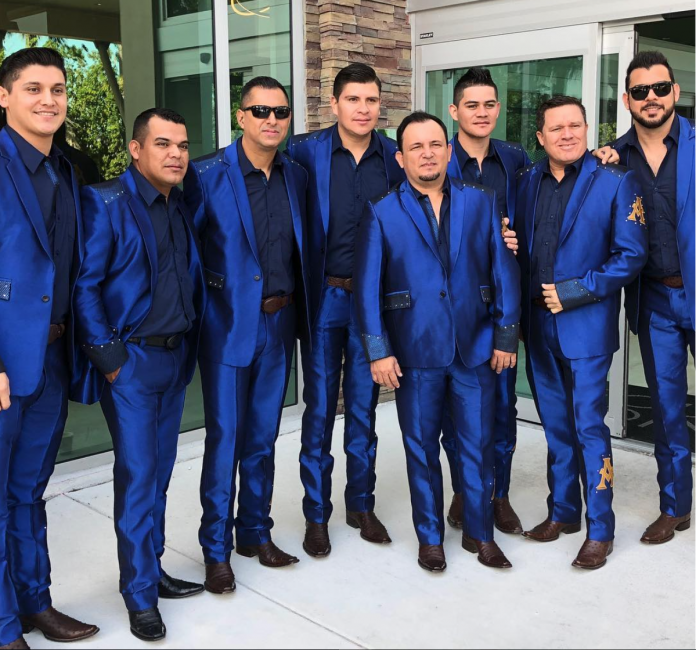
The Overwhelming premieres “Igual”

Theme that will be part of their next studio album

by the El Reportero‘s news services

With more than 50 songs positioned in the first places of popularity and after not releasing unpublished material in several months, the day arrived and today La Arrolladora is premiering twice with the release of its single and video “Igual”, a song written by Vicente “Compa Chente” Pérez, who is also a composer of other hits of the band such as “Cedí”.

“Equal” has lyrics composed of words in common use among the new generations, allowing the public to easily engage with the song and the story, as it addresses the current trend of fear of commitment to all its contradictions.

The video was recorded in the city of Monterrey, Nuevo León with Esaúl as the protagonist of this story full of contrasts, but which in the end are part of real life.

As part of ‘Reversiones’, a tribute album to ZOÉ

“LOVE” premiered in the voice of Mon Laferte

With more than 20 years of musical career, six studio albums – one more on the way – a GRAMMY for Best Latin Alternative Album for their production Aztlán and two Latin GRAMMYs in 2011, Zoé, the band will be honored in the tribute album ‘Reversiones ‘, in which artists of international stature will return to some classics of the group. This album will be available at the end of the year in physical and digital format.

Mon Laferte, one of the most important artists on the current music scene in Latin America, winner of the Latin GRAMMY for Best Alternative Music Album for ‘Norma’ and Best Alternative Song for “Amárrame”, premieres today the amazing and intimate version of “Love ”, One of the most iconic songs in Zoé’s career and which is part of her second album, ‘Rocanlover’.

‘Reversiones’ is an album that brings together Zoé’s successes in voice and unpublished versions by great personalities such as Alejandro Fernández, Bronco, Rawayana, Juanes, Los Ángeles Azules, Andrés Calamaro, Morat, Cultura Profética, Manuel Carrasco, Juan Pablo Contreras and Fela Domínguez.

The Bebeto gives us “I was so happy”

Hollywood, CA (June 12, 2020) – With a lot of feeling and at the rhythm of the band we have A El Bebeto who premieres today “Fui Tan Feliz”, the second preview of his album: ‘DE GUASAVE AL CERRO DE LA SILL ‘, a live production that will be released later this year.

On this occasion, the Sinaloan singer presents us with the ballad “Fui Tan Feliz”, a genre that fits perfectly, and with which he has conquered us throughout his career.

“Fui tan Feliz” already has its video, made in the city of Guasave, Sinaloa and that the public can now enjoy through the official EL BEBETO channel on YouTube.

County Arts Commission Awards COVID-19 Relief Grants

The San Mateo County Arts Commission is proud to award $168,600 in COVID-19 relief grants to 32 arts/culture and arts services nonprofit organizations to help them recover from the financial hit of the ongoing pandemic.

The 32 grants awarded range in size from $4,900 to $8,000. The Grants Review Panel evaluated 38 applications received with an eye towards those organizations working with under-served communities and/or whose work reaches a large segment of the county.

We are excited to share that Fuse Theatre here in Redwood City was a recipient and will use the grant to help guide youth on producing socially responsible plays.

Art Kiosk Presents: Tara de la Garza Monument to the Plastocene IV

The Art Kiosk at Courthouse Square is back! Tara de la Garza Monument to the Plastocene IV is available to view June 12 – July 5, 2020 at 2208 Broadway Street.

About the Installation

As we collectively grapple with our multiple crises, artist Tara de la Garza took this time to reconsider her installation. This allowed her to think more deeply about racial & environmental justice with hopes of creating a community dialogue through her artwork at the Art Kiosk.

Influenced by minimalist and constructivist artists such as Dan Flavin, Eva Hesse, Vladmir Tatlin, and contemporary artists Rachel Whiteread and Eva Rothschild, de la Garza’s ‘Monumental’ projects continue a practice of reusing materials and referencing modernist forms.

spot_img

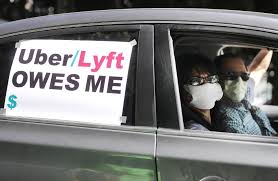
BREAKING: Uber and Lyft Suffer Another Legal Blow Over Misclassification 

by wire services

Just weeks after Attorney General declared the companies’ misclassification illegal,
PUC’s decision is another massive blow to gig corporations’ effort to buy their own law on November ballot

Sacramento — The California Public Utilities Commission ruled today that Uber and Lyft drivers are employees under California law, adding even more pressure on the companies to start following the law that requires them to pay legal wages, provide unemployment benefits, sick pay and safe working conditions to the drivers who have become essential workers during the COVID-19 pandemic.

“Today’s ruling shows Uber and Lyft are violating the law just as they embark on a $110 million campaign to buy their own law this November,” said Art Pulaski, the Executive Secretary-Treasurer of the California Labor Federation, AFL-CIO. “This deceptive ballot measure is nothing more than an attempt by gig companies to create a loophole to keep pocketing billions by avoiding the rules all other companies follow.”

The San Francisco Chronicle’s report says the ruling marks a “significant development in the battle over drivers’ status.”   The ruling goes on to say that the PUC must ensure the gig companies comply with legal employment requirements, including providing workers compensation coverage.

Today’s ruling comes just weeks after Attorney General Xavier Becerra and the city attorneys for San Francisco, Los Angeles, and San Diego filed a landmark lawsuit after determining that Uber and Lyft had been breaking California law by misclassifying drivers as independent contractors since the companies began operating in the state.

spot_img

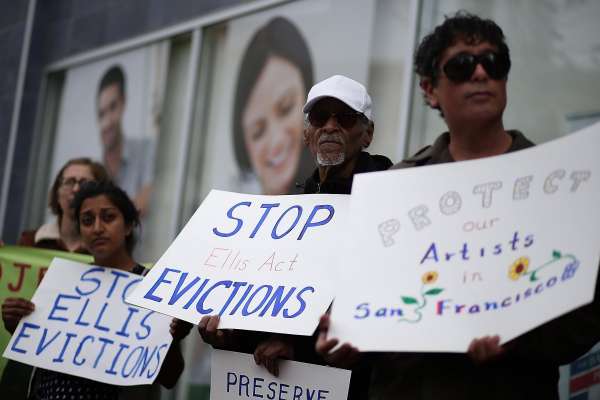
San Francisco Supervisors approve permanent eviction protections for tenants who can’t pay rent during pandemic

by the El Reportero wire services


June 9, 2020 – SAN FRANCISCO — With a near-unanimous (10-1) vote, the San Francisco Board of Supervisors on Tuesday passed legislation to provide permanent eviction protections for tenants unable to pay rent during this state of emergency. Proposed by Supervisor Dean Preston, a longtime tenant attorney, the legislation also prohibits landlords from imposing late fees for delinquent payment during COVID-19.

“Without this legislation, we feared thousands of eviction filings as soon as the current eviction moratorium expires,” said Preston. “We have given struggling tenants peace of mind that they don’t have to fear eviction as they make up their back rent.”

Preston’s legislation adds as a defense to nonpayment eviction the showing that a tenant experienced income loss due to COVID-19. In effect, it would permanently take nonpayment eviction off the table for San Francisco renters struggling to pay back rent that came due during the state of emergency.

“People who have lost income shouldn’t also lose their homes in a global pandemic,” said Deepa Varma, Executive Director of the San Francisco Tenants Union. “Passing this legislation is the only reasonable thing to do.”

The legislation does not waive the tenants obligation to pay the rent owed or cancel the rent debt; instead, it simply takes eviction out of the equation. The back rent would become akin to consumer debt, which a landlord could elect to pursue in any manner they see fit. A tenant with the means to pay would have every reason to follow through on their contractual obligation, in the same way they would have every reason to pay their monthly credit card bill, or student loan payment.

“As has become abundantly clear, the worst health effects of COVID-19 have disproportionately fallen on low-income and communities of color,” said Preston. “I believe it is our obligation to do everything in our power to offer them the fullest protection against eviction available by law, and that’s what the legislation passed today will accomplish.”

The legislation is a first step in a comprehensive housing package that Preston has proposed to address COVID-19’s serious impacts to San Francisco’s already rampant affordability and displacement crisis. The housing package includes a newly introduced ballot measure on the sale of buildings over $10 million, to pay for a program that will alleviate rent debt for tenants and landlords alike. It also paves the way for social housing, an innovative housing model that will address future displacement and affordability issues, a key part of Preston’s 2019 platform.

spot_img

Will the political class be held liable for what they’ve done?

NOTE FROM THE EDITOR


Dear readers:


All of a sudden, we are living extraordinary times, an extraordinary situation. What we all are witnessing now since the coronavirus ‘was released,’ is the life in a police state: restriction of civilian movement, state of emergency, lock down in your own home under threat of arrest and big fines, passing of laws that will allow the government to enter your home without a search warrant and take you or your love one away, long lines at food outlets, restaurants closed, selling food to take out only, schools, gyms, churches closed.

And now in SF, the powers to be want you to vote for the renunciation of your Bill of Rights – voluntarily – through a local ordinance to create local community police-civilian patrols to monitor that all citizens walk on the street at a distance from one another. The proposed law will be put in the ballot for the November 2020 election, according to official sources.

I have known about all this happening for more than a decade, while reading lots of “conspiracy theory” literature, although I can see now that actually there has been no conspiracy theory on it and that most of it shows now that is true.

Who is responsible for all this disaster? Let see what James Bovar says about it in the article below. — Marvin Ramírez


This COVID shutdown should be a permanent black mark against the elite


by James Bovard

The American Institute for Economic Research


Friday, May 22, 2020 – Politically-dictated lockdowns and prohibitions have recently destroyed tens of millions of American jobs.

Politicians have effectively claimed a right to inflict unlimited economic damage in pursuit of zero COVID-19 contagion.

The perverse incentives driving the policy have multiplied the harm far beyond the original peril.

Almost 40 percent of households earning less than $40,000 per year have someone who lost their job in recent months, according to the Federal Reserve. The Disaster Distress Helpline, a federal crisis hotline, received almost 900 percent more phone calls in March compared to a year ago. A recent JAMA Psychiatry analysis warned that stay-at-home orders and rising unemployment are a “perfect storm” for higher suicide rates. A California health organization recently estimated that up to 75,000 Americans could die from “despair” as a result of the pandemic, unemployment, and government restrictions.

In the name of saving lives, politicians have entitled themselves to destroy an unlimited number of livelihoods. Politicians in many states responded to COVID-19 by dropping the equivalent of a Reverse Neutron Bomb – something which destroys the economy while supposedly leaving human beings unharmed. But the only way to assume people were uninjured is to believe their existence is totally detached from their jobs, bank accounts, and mortgage and rent payments.

Politicians have vaccinated themselves against any blame for the economic carnage by touting experts who said it was all necessary. Over the past 90 days, government bureaucrats have become a new priesthood that can sanctify unlimited sacrifices in the name of the public health.

COVID policymakers have written themselves the same letter that Cardinal Richelieu, the 17th century French statesman, purportedly gave to his agents: “The Bearer of This Letter Has Acted Under My Orders and for the Good of the State.” This carte blanche was sufficient to place murders and other crimes above the law and beyond reproach in France. In contemporary America, the same exoneration is achieved by invoking “science” and “data.” Oregon Governor Kate Brown banned residents from leaving their homes except for essential work, buying food, and other narrow exemptions, and also banned all recreational travel. Six Oregon counties have only one confirmed COVID case, and most of the state has minimal infections. But schools, businesses, and other activities were slammed shut by government command.

Michigan Governor Gretchen Whitmer imposed some of the most severe restrictions, prohibiting anyone from leaving their home to visit family or friends. COVID infections were concentrated in the Detroit metropolitan area, but Whitmer shut down the entire state – including northern counties with near-zero infections and zero fatalities, boosting unemployment to 24% statewide. Her repression provoked fierce protests, and Whitmer responded by claiming that her dictates saved 3,500 lives. Whitmer exonerated herself with a statistical formula that was painfully ethereal compared to the stark physical devastation in Michigan.

Kentucky Governor Andy Beshear’s shutdown order resulted in the highest rate of unemployment in the nation – 33 percent. But according to Sen. Rand Paul, COVID’s impact in Kentucky “has not been worse than an average flu season.” But that did not stop Beshear from banning people from attending church services and sending Kentucky State Police to attach notices to car windshields ordering church attendees to self-quarantine for 14 days and reporting them to local health departments.

Shutting down entire states, including vast uninfected rural swaths, is the economic equivalent of burning witches or sacrificing virgins to appease angry viral gods. Because politicians have no liability for the economic damage they inflict, they have no incentive to minimize the disruptions they decree. Trillions of dollars of new deficit spending will be vexing American workers for many years.

The state of Missouri has sued the government of China, claiming it is liable for the losses inflicted by the virus that apparently originated in Wuhan, China. Most observers predict that lawsuit will go nowhere. But, thanks to sovereign immunity, it would be even more hopeless for American citizens to sue American politicians for the damage that their shutdown orders have inflicted on their businesses, paychecks, and lives.

Sovereign immunity creates a two-tiered society: those above the law and those below it; those whom the law fails to bind and those whom the law fails to protect. This legal doctrine almost guarantees that no politician will face any personal liability for their shutdown dictates.

Even New York Governor Andrew Cuomo, who callously compelled nursing homes to accept COVID patients, will have no legal culpability for a policy that contributed to more than 5,000 nursing home deaths in his state. Pennsylvania Health Czar Rachel Levine issued a similar order, contributing to thousands of nursing home deaths, and then removed her own 95-year-old mother from a nursing home to keep her safe.

Politicians presume they are blameless for destroying jobs as long as the victims receive temporary unemployment compensation. Actually, it is worse than that: politicians claim a right to seize a slice of the paychecks of people still working to recompense people whose jobs they destroyed. Would a private corporation be able to escape punishment for breaking people’s legs by giving free crutches to its victims?

“Better safe than sorry” is damned risky when politicians have no liability for what they ravage. There is no way that politicians can compensate American citizens for all the damage they have inflicted in this pandemic. This COVID shutdown catastrophe should be a permanent black mark against the political class and the experts who sanctified each and every sacrifice.

This work is licensed under a Creative Commons Attribution 4.0 International License

spot_img