Wednesday, August 5, 2026
Home Blog Page 244

U.S. health officials say Americans shouldn’t wear face masks to prevent coronavirus

Here are 3 other reasons not to wear them


by Elisabeth Buchwald


Most people don’t use face masks correctly, a Johns Hopkins public health expert told MarketWatch


Though health officials have warned Americans to prepare for the spread of the novel coronavirus in the U.S., people shouldn’t wear face masks to prevent the spread of the infectious illness, according to the Centers for Disease Control and Prevention, the U.S. Department of Health and Human Services and the U.S. surgeon general.

But that’s not the only reason Americans may want to think twice about using masks, one expert told MarketWatch.

Most people don’t know how to use face masks correctly, and a rush to buy masks could prevent the people who need them most — health care providers — from getting them, said Dr. Amesh Adalja, a scholar at the Center for Health Security at the Johns Hopkins Bloomberg School of Public Health.

In fact the U.S. surgeon general recently urged the public to “STOP BUYING MASKS!” “They are NOT effective in preventing general public from catching #Coronavirus, but if healthcare providers can’t get them to care for sick patients, it puts them and our communities at risk!,” wrote Surgeon General Jerome Adams on Twitter US:TWTR

The CDC said last month it doesn’t recommend people use face masks, making the announcement on the same day that first case of person-to-person transmission of coronavirus was reported in the U.S. The CDC recommendation on masks stands, a spokesman told MarketWatch Wednesday, even with the first reported case of a COVID-19 infection in an individual in California who had not been to China or been exposed to a person diagnosed with the virus.

“The virus is not spreading in the general community,” Dr. Nancy Messonnier, director of the Center for the National Center for Immunization and Respiratory Diseases, said in a Jan. 30 briefing. “We don’t routinely recommend the use of face masks by the public to prevent respiratory illness. And we certainly are not recommending that at this time for this new virus.”

HHS Secretary Alex Azar said Tuesday, “Our advice remains as it has been that the average American does not need a N95 mask. These are really more for health care providers.”

N95 masks are tighter-fitting than surgical masks and protect against small particles and large droplets, according to the CDC. Azar said that there are only 30 million N95 masks in the national stockpile, adding that there are “as many as 300 million masks needed in the U.S. for health care workers.”

There were 86 cases of COVID-19 and two reported deaths in the U.S., as of Monday.

Americans don’t seem to be heeding health officials’ advice: Walgreens US:WBA and Duane Reade pharmacies have seen increased demand for face masks and hand sanitizer across the country, said Alexandra Brown, a spokeswoman for Walgreens, which owns both chains. “We continually and closely monitor these types of situations to ensure that we have sufficient supply of those products,” she said.

Several sites have sold out of face masks entirely.

Target’s US:TGT brand of face masks, priced at $5.99 for a 10-pack, were out of stock on its site as of Thursday. A Target spokeswoman declined to comment on when the face masks would be back in stock.

There were still some face masks available on Amazon US:AMZN last Thursday, though many were quickly becoming out of stock. A pack of 20 3M US:MMM face masks was available for $129 on Thursday morning, but by midday it had sold out. In April last year the same pack of masks cost $9.99, according to camelcamelcamel.com, a site that tracks historic prices of goods sold on Amazon.

Amazon and 3M did not respond to requests for comment on when customers could expect to purchase masks that are currently out of stock.

To protect against a mask shortage, Home Depot US:HD US:HD US:HD US:HD US:HD has “limited purchase quantity to 10 [masks] per person to best serve as many customers as possible,” said Margaret Smith, a Home Depot spokeswoman. “Our merchandising and supply chain teams are working hard to replenish these items as quickly as possible.”

CVS US:CVS has also seen a surge in sales of face masks. The demand “may cause shortages at some store locations and we’ll re-supply those stores as quickly as possible,” Stephanie Cunha, a CVS spokeswoman, said last month.

Adalja applauded the CDC’s recommendation on face masks. “Even during H1N1 [flu epidemic], there was no recommendation to wear face masks,” he said. They “end up creating a false sense of security and most people don’t wear them appropriately,” he said.

People who are not in the medical field who wear the masks often come in contact with germs when they lift the mask up to eat or slip their fingers under the mask to blow their nose, he said.

Panic-driven demand for face masks, Adalja said, is particularly worrisome because it could have “a negative supply shock” effect on hospital personnel who need these masks more than the general public.

Like the surgeon general, Adalja said, “the best ways [for the general public] to protect themselves are the basic hygienic measures.” That includes washing your hands regularly and covering sneezes and coughs. But if you are “sick and need to go out you should wear a mask.”

Instead of wearing face masks, the general public should “be vigilant to the symptoms and signs of this novel coronavirus, that is, a fever and cough, and if you have those symptoms, please call your health-care provider,” Messonnier said last month.

“We want our actions to be evidence-based and appropriate to the current circumstance,” she said, which she said did not justify the use of face masks for people who have not been directly exposed to the virus.

The CDC has said it expects to see more coronavirus cases in the U.S. “It’s not so much a question of if … but rather more a question of exactly when this will happen and how many people in this country will have severe illness, Messonnier said on Feb. 25.

There are still many unknowns about how this strain of coronavirus, 2019-nCoV, spreads, but when person-to-person spread has occurred in the past, “it is thought to have happened via respiratory droplets produced when an infected person coughs or sneezes, similar to how influenza and other respiratory pathogens spread,” the CDC said on its website.

Like the CDC, the World Health Organization advises people to wear a mask only if they are displaying symptoms of coronavirus or “taking care of a person with suspected 2019-nCoV infection.”

In a separate update last month, the WHO gave instructions for how to appropriately wear and dispose of face masks. WHO also noted, “However, the use of a mask alone is insufficient to provide the adequate level of protection and other equally relevant measures should be adopted.”

WHO advises people who wish to wear a mask to place the mask “carefully to cover mouth and nose and tie securely to minimise any gaps between the face and the mask,” avoid touching the mask while you’re wearing it, and dispose of masks as soon as they become damp or humid. When removing the face mask, WHO recommends that people “do not touch the front but remove the lace from behind.”

Worldwide, 89,197 people have been infected with COVID-19, and at least 3,048 have died as of Monday.

Reported by Market Watch. (This story was originally published on Jan. 30 and has been updated).

spot_img

US denies visas for Nayarit’s ex-governor and family, citing corruption

US Secretary of State Mike Pompeo charged he had received bribes from drug traffickers


by the Mexico News Daily


The United States government announced on Friday that former Nayarit governor Roberto Sandoval Castañeda and his immediate family members are ineligible for U.S. visas due to involvement in corruption.

Noting that the U.S. Department of the Treasury designated Sandoval in May 2019 for corruption-related conduct, Secretary of State Mike Pompeo announced the public designation of Sandoval in accordance with the Department of State, Foreign Operations, and Related Programs Appropriations Act due to “significant involvement in corruption.”

Pompeo said that the ex-governor misappropriated state assets and received bribes from drug trafficking organizations, including the Jalisco New Generation Cartel.

“In addition, Mr. Sandoval accepted bribes from the Beltrán Leyva Organization, which President George W. Bush identified as a significant foreign narcotics trafficker pursuant to the Kingpin Act in 2008,” he added.

Pompeo said that once the Secretary of State designates officials of foreign governments for their direct or indirect involvement in significant corruption, those individuals are ineligible for visas to the United States.

The law also requires the Secretary of State to publicly or privately designate the immediate family members of such officials, he said.

“In addition to Mr. Sandoval, the department is publicly designating his spouse, Ana Lilia López Torres; his daughter, Lidy Alejandra Sandoval López; and his son, Pablo Roberto Sandoval López,” Pompeo said.

“Today’s action sends a strong signal that the United States is committed to fighting systemic corruption in Mexico. The United States stands with the people of Mexico in their fight against corruption. The department will continue to use these authorities to promote accountability for corrupt actors globally and near our border, particularly when that corruption is connected to drug trafficking.”

Although Sandoval – Institutional Revolutionary Party governor between 2011 and 2017 – has now been designated by both the U.S. Treasury and Department of State, he does not currently face any criminal charges in the United States.

In Mexico, Sandoval’s bank accounts were frozen by the government’s Financial Intelligence Unit (UIF) after his U.S. Treasury designation last May.

A federal court last month rejected an application by Sandoval to have access to his bank accounts reinstated, ruling that information provided to the UIF by the U.S. Treasury about the ex-governor’s designation is sufficient grounds to keep the accounts blocked.

Sandoval, who has denied all the accusations against him, had argued that the United States does not have jurisdiction over the acts of corruption of which it accuses him because they allegedly took place in Nayarit. It consequently doesn’t have the right to advise Mexico to freeze his accounts, the ex-governor said.

The ex-governor’s attorney general, Édgar Veytia, was sentenced last September to 20 years in jail in the United States for drug trafficking.

He pleaded guilty to accepting payments from drug cartels to help them smuggle cocaine, heroin and methamphetamine into the United States from 2013 until his arrest in San Diego, California, in March 2017.

Source. Reforma (sp) 


Coronavirus could hurt exports to the tune of US $1.3 billion: UN

The automotive sector is expected to take the biggest hit, with exports falling by US $493mn


Mexico’s exports could decline by US $1.37 billion due to the outbreak of the novel coronavirus known as Covid-19, according to the United Nations Conference on Trade and Development (UNCTAD).

The intergovernmental body said in a report that the slowdown of manufacturing in China due to the outbreak of Covid-19 is disrupting world trade and could result in a $50-billion decrease in exports across global value chains.

“Because China has become the central manufacturing hub of many global business operations, a slowdown in Chinese production has repercussions for any given country depending on how reliant its industries are on Chinese suppliers,” UNCTAD said.

According to UNCTAD estimates, Mexico will be the eighth most affected economy after the European Union, the United States, Japan, South Korea, Vietnam, Singapore and the United Kingdom.

“In addition to grave threats to human life, the coronavirus outbreak carries serious risks for the global economy,” said UNCTAD Secretary-General Mukhisa Kituyi.

“Any slowdown in manufacturing in one part of the world will have a ripple effect in economic activity across the globe because of regional and global value chains.”

UNCTAD said its estimates showed that the most affected sectors would include precision instruments, machinery, automotive and communications equipment.

In Mexico’s case, UNCTAD is predicting that the automotive sector will take the biggest hit, with exports forecast to fall by $493 million.

The next most affected sectors are predicted to be electrical machinery, with a forecast export decline of $341 million; “various” machinery, $228 million; communications equipment, $71 million; office machinery, $58 million; precision instruments, $57 million; wood products and furniture, $52 million; rubber and plastics, $26 million; and metals and metal products, $23 million.

UNCTAD noted that the estimated effects of Covid-19 are subject to change depending on the containment of the virus and/or changes in sources of supply. As of Friday morning, there were five confirmed cases of Covid-19 in Mexico and 35 possible cases.

Source: Milenio (sp)


spot_img

Chiapas community evicts Central American migrants, burns belongings

Residents claimed that robberies and assaults on women have increased since the migrants arrived


by the El Reportero‘s wire services


Residents of the municipality of Palenque, Chiapas, attacked and expelled Central American migrants who had been staying in the local auditorium for months.

Around noon on Monday, residents of the community of Pakal-Ná arrived at the auditorium and evicted the migrants who had taken refuge there with the approval of local authorities.

They said that robberies and assaults on women have increased since the migrants arrived and claimed to have identified the perpetrators among them.

Despite authorities guarding the auditorium, the angry residents took the migrants’ belongings outside and burned them in the park. They also demanded that local authorities close the doors to the auditorium and not allow the migrants to reenter.

Another group of citizens closed the highway connecting Pakal-Ná to the town of Palenque and the Palenque International Airport for three hours.

The Central American migrants fled the town and hid in abandoned houses on the outskirts, having nowhere else to sleep.

No injuries were reported during the eviction, but the Palak-Ná residents threatened to take further action to drive out the migrants should they attempt to reenter their community.

It was not the first time that Central American migrants had resorted to occupying abandoned houses in the face of having no other shelter.

Dozens of migrants forcibly entered and squatted in unoccupied houses in Tapachula, Chiapas, in December, forcing the owners to take legal action to compel authorities to remove them.

Sources: Milenio (sp), Periodismo Hoy (sp)


Latin America and the Caribbean is better prepared to face COVID-19

Panama, Mar 6 – The experience of Latin America and the Caribbean in the prevention of viruses and diseases such as measles and H1N1 is today the main strength in the fight against COVID-19, assured epidemiologist Jorge Victoria.

During his presentation at the health commission of the Latin American and Caribbean Parliament (PARLATINO), which is in session here, the coordinator of Disease Surveillance and Control of the Pan American Health Organization (PAHO), stressed that this work has allowed the region to strengthen its capacity for diagnosis and response to the new coronavirus.

He pointed out that in most cases the respiratory infection was not detected at airports despite controls, but in health institutions after the appearance of symptoms, which shows that a patient may be asymptomatic during the incubation period.

Victoria said that the number of cases in China has now decreased; however, there is an increase in contagion outside the Asian country, so she called to avoid the irresponsible dissemination, ‘sometimes even faster than COVID-19 itself,’ of alarmist or false news on social networks.

He also urged people to maintain vigilance and raise the level of alert to the presence of diseases such as diabetes, dengue, zika and heart conditions, among others, with higher mortality rates in the region.

Rolando González, deputy secretary of Parlatino Committees, and Luis Velasquez, president of the Health Commission of that legislative body, announced the approval this Friday of a regional resolution on the seriousness of this coronavirus, after its arrival in Brazil, Mexico, Ecuador, Chile, Argentina and the Dominican Republic.

Recently, Panamanian Health Minister Rosario Turner met with PAHO Deputy Director Jarbas Barbosa, who expressed his satisfaction with the way the Central American country is implementing the necessary measures to prepare itself to face COVID-19.

Turner, for his part, said that it is important for the international community to know that Panama is taking the corresponding measures, but its compliance is only possible thanks to the support of society, health workers and institutions.

spot_img

REQUEST FOR PROPOSALS FOR PROJECT INITIATION REPORT FOR THE PENNSYLVANIA AVENUE EXTENSION STUDY (RFP 19/20-07)

REQUEST FOR PROPOSALS FOR PROJECT INITIATION REPORT FOR THE PENNSYLVANIA AVENUE EXTENSION STUDY (RFP 19/20-07)
Notice is hereby given that the San Francisco County Transportation Authority is requesting proposals from qualified respondents (proposers) to prepare a Project Initiation Report for the Pennsylvania Avenue Extension Study. The full RFP is posted on the Transportation Authority’s website, www.sfcta.org/contracting. Proposals are due to the Transportation Authority electronically to info@sfcta.org by March 26, 2020, at 2:00 p.m.

spot_img

Ernesto Cardenal, Nicaraguan priest, poet and revolutionary, dies at 95

Father Cardenal defied the Roman Catholic Church in the 1980s by serving as a minister in the revolutionary government of Nicaragua


by Elias E. López


The Rev. Ernesto Cardenal, one of Latin America’s most admired poets and priests, who defied the Roman Catholic Church in the 1980s by serving in the revolutionary Sandinista government of Nicaragua, died on Sunday in Managua, Nicaragua. He was 95.

His personal assistant, Luz Marina Acosta, confirmed his death to The Associated Press.

Born to a wealthy Nicaraguan family, Father Cardenal became a prominent intellectual voice of the Nicaraguan revolution and an ardent proponent of liberation theology, a Christian movement rooted in Marxist principles and committed to social justice and uplifting the poor. He was appointed Nicaragua’s first minister of culture after the Sandinistas overthrew the dictator Gen. Anastasio Somoza Debayle in 1979.

As the Vatican’s opposition to liberation theology intensified in the 1980s under Pope John Paul II, Father Cardenal became a focal point. Before a scheduled visit to Nicaragua in 1983, the pope publicly demanded that Father Cardenal and four other priests who had actively supported the revolution resign their government positions. The Sandinista government refused the demand to replace them, but said its invitation to the pope still stood.

After months of public arguing, the pope accepted the invitation and landed in Managua, Nicaragua’s capital. As he walked along a receiving line on the tarmac shaking hands, the pope seemed taken aback to see Father Cardenal among the dignitaries.

While other priests were in clerical garb, Father Cardenal had shown up wearing a collarless white shirt, slacks and his signature black beret over his thick white hair. When he knelt to kiss the pope’s ring, the pope withheld his hand and wagged his finger at him as he spoke to him, apparently sternly. According to a Vatican official, the pope told Father Cardenal, “You must straighten out your position with the church,” The Associated Press reported.

Videotape of the scolding, though not audible, was broadcast around the world.

“Christ led me to Marx,” Father Cardenal said in an interview in 1984. “I don’t think the pope understands Marxism. For me, the four gospels are all equally communist. I’m a Marxist who believes in God, follows Christ, and is a revolutionary for the sake of his kingdom.”

His priestly authority was revoked by Nicaragua’s bishops that same year. (Three other priests were also disciplined.) Father Cardenal’s suspension was lifted in February 2019, when Pope Francis granted him absolution from “all canonical censorships,” the Vatican News reported.

Father Cardenal began writing poetry as a young man, tracing the tormented history of Nicaragua and Latin America as epics in blank verse.

Much of his poetry, though, was intimate: love poems that recalled the longings of his youth, finely wrought images of city lights at dusk or his famous “Prayer for Marilyn Monroe,” in which he describes how Monroe was found on her deathbed in 1962, “like someone wounded by gangsters/stretching out his hand to a disconnected telephone.”

Fascinated by evolution and its lessons for politics, Father Cardenal began to incorporate science into his poetry in the 1980s. He developed the theme until the end of his life, marveling at the origins of the universe and the mysteries of DNA — sources of awe that in his vision brought people closer to God.

“In this monumental vision, everything merges and condenses,” the Nicaraguan writer Sergio Ramírez wrote in the introduction to Father Cardenal’s anthology “Ninety at Ninety,” which was published in Spanish in 2014. “Not only do the poet’s intimate personal experience and the scientific exploration of the heavens enter into the mystical, so do the memories of his own past.”

The most recent complete collection of Father Cardenal’s poetry published in English was “Pluriverse: New and Selected Poems,” (2009, edited and translated in part by Jonathan Cohen).

Closing the volume was the poem “Stardust,” Father Cardenal’s meditation on death. It concludes:


And the galaxy was taking the shape of a flower

the way it looks now on a starry night.

Our flesh and our bones come from other stars

and perhaps even from other galaxies,

we are universal,

and after death we will help to form other stars

Editors’ Picks and other galaxies.

We come from the stars, and to them we shall return.


Father Cardenal reading from his book of poems in 1980. Credit…Lachmann/Ullstein Bild, via Getty Images

Ernesto Cardenal Martínez was born on Jan. 20, 1925, to an upper-class family in Granada, a city on Lake Nicaragua. He studied literature in Managua and at Columbia University in New York City, where he read Walt Whitman, Emily Dickinson and Ezra Pound.

He returned to Nicaragua in the 1950s, but after a failed coup against the Somoza family, he fled and joined the Trappist monastery Gethsemani, in Kentucky, where he befriended the American monk and writer Thomas Merton. He was ordained a priest after his subsequent return to Nicaragua.

Father Cardenal was an early supporter of the Sandinista National Liberation Front, which was founded in the early 1960s, named after Augusto César Sandino, the revolutionary who had led a guerrilla campaign against the American occupation of Nicaragua in the 1920s and ’30s and was assassinated in 1934.

Father Cardenal furthered the cause after settling on an island in the Solentiname archipelago, in vast Lake Nicaragua near the southern border, in the 1960s. He built a chapel, founded an artists colony, and taught literature and painting to local residents.

His poetry began to gain recognition. He became known for what he called his “Epigrams” — lyrical bursts about love and longing mixed with political and social commentary against the Somoza regime. In one, he wrote:

I’ve handed out clandestine pamphlets,

yelling: VIVA LA LIBERTAD! In the middle of the street

defying armed guards.

I participated in the April rebellion:

but I grow pale when I pass by your house

and one look from you makes me tremble.

His sermons, too, were political, full of denunciations of the Somoza regime. Some of his young parishioners became “guerrilleros,” and the island became a central military training ground for the Sandinista movement. After the Sandinistas came to power in 1979, after a bloody period of rioting, guerrilla resistance and a mass kidnapping operation in the capital, Father Cardenal was named minister of culture by the junta leader, Daniel Ortega.

As a government minister, Father Cardenal sought what he called the “democratization of culture.” He created poetry workshops around the country, tapping into Nicaragua’s rich poetic tradition, embodied in part by Ruben Dario, who spearheaded a Latin American modernist literary movement in the late 19th century.

But Father Cardenal’s critics said the ministry was imposing ideological uniformity by pressuring new writers to produce propaganda, particularly during the Sandinistas’ long guerrilla war against an American-backed counterrevolutionary force, known as the contras.

No immediate family members survive. His brother, the Rev. Fernando Cardenal, died in 2016.

Father Cardenal remained culture minister until 1987, when the ministry was dissolved and merged with another government agency. In the 1990s he distanced himself from the Sandinista government and in recent years criticized what he called the increasingly authoritarian style of Mr. Ortega, who became president in 2007. For Father Cardenal, the Sandinista revolution had failed.

But he remained committed to his Marxist ideals.

“I am a revolutionary,” Father Cardenal said in an interview with The New York Times published in January 2015. “Revolutionary means that I want to change the world.”

He added: “The Bible is full of revolutions. The prophets are people with a message of revolution. Jesus of Nazareth takes the revolutionary message of the prophets. And we also will continue trying to change the world and make revolution. Those revolutions failed, but others will come.”

Reported by The New York Times.

(Elisabeth Malkin contributed reporting).

spot_img

Congress checks in on Census Bureau readiness

Nonpartisan report finds hiring, partnership deals behind schedule


by Mark Hedin

Ethnic Media Services


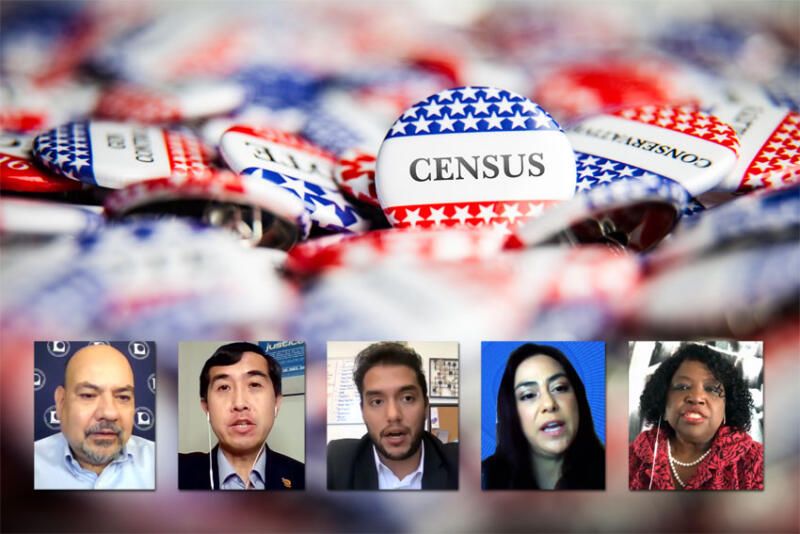
In a Feb. 12 Capitol Hill hearing that stretched more than three hours, Census Bureau Director Steven Dillingham updated the 2020 effort and fielded questions from the House of Representatives’ Oversight and Reform Committee.

His long-scheduled appearance coincided with the nonpartisan Government Accounting Office releasing its latest report on census preparations and what needed action according to its recommendations previously agreed upon by the Census Bureau. Overall, it said, deemed Census Bureau readiness for 2020 operations is “mixed.”

Since 2017, the GAO has deemed the census a “high-risk” operation.

Topping the concerns at the hearing was the finding that the Census Bureau is behind on its hiring goals. About a half-million people will be needed to help get a full count, and for each position, Dillingham said, he would like to have six applicants. But 202 of the bureau’s 248 regional offices are still understaffed, with the first of five mailings targeting 95% of U.S. households due to be sent out in less than a month.

Dillingham said he believes concerns about the rate of hiring are premature. He expects to be fully staffed by April when the people knocking on doors to get questionnaire responses from households that haven’t responded either online or by telephone will be needed.

Citing the low unemployment rate as a challenge, he promised, “We will continue to recruit all through the census.” Besides, he said, “20 million college students are out there with student loans and needing money.”

Also of concern to committee members was the report’s description of the Census Bureau falling behind on forming partnerships with the community organizations, businesses and nonprofits that will be crucial in educating the public and maximizing survey response rates, particularly among hard-to-count populations.

Fraud and cybersecurity form the other key concern in the GAO report.

California Rep. Katie Porter entered into the hearing record a fund-raising mailing from the Republican National Committee that gives every appearance of being the census questionnaire.

Porter said the RNC sent a similar mailing in 2010, that led to legislation outlawing such misrepresentations.

Committee Chair Carolyn Maloney, of New York, called the RNC mailing “outrageous” and vowed to revisit that legislation and add enforcement mechanisms to it.

“Clearly, people are violating that,” Maloney said, looking at the mailing both Porter and California Rep. Jimmy Gomez had brought to the hearing. “The census is one of the sacred things in our Constitution.”

The adequacy of the Census Bureau’s preparations for prioritizing online responses also came up. Echoing his reassurances about the pace of hiring, Dillingham said that other targets the Census Bureau hasn’t met had been set higher than he expected would be necessary.

Although the Census Bureau decided on Feb. 7 to change the computer system it will use for online responses, Dillingham said it’s being set up to accommodate up to 600,000 users at once. But realistically, said his deputy, Al Fontenot, traffic at any one time is likely to be perhaps only a third of that.

Many committee members worried that their constituents lack adequate access to computers to ensure they’ll be counted. Dillingham and Fontenot described various plans, such as working with community libraries, but Michigan Rep. Brenda Lawrence pointed out that some libraries in her district have limited hours.

Missouri Rep. Lacy Clay noted historic census undercounts of African Americans — 718,000 people in 2010, he said — and noted the Census Bureau itself estimates that 60% plan to wait until someone visits their home before they’ll respond to the census.

Clay asked what outreach the bureau is planning, and specifically if it includes weekly newspapers and radio. Fontenot said a black advertising agency has partnered with the census’ primary advertising firm, Young & Rubicam, to help in communication efforts.

Michigan Rep. Rashida Tlaib complained about the reversal of the Census Bureau’s decision after 2010 to add “Middle Eastern/North African” as an option for the final question on the census questionnaire, about ethnicity. If, instead, people of that ethnicity have to identify themselves as white, she said, it will affect health research, language assistance, civil rights, minority businesses’ ability to get loans and more.

Writing in an identity, “doesn’t have the same impact and you know that. You’re making us invisible. You’re erasing us,” Tlaib said.

California Rep. Harley Rouda, whose Orange County district includes “Little Saigon,” home to the country’s largest Vietnamese population, including many refugees, asked how the census will enumerate those with limited or no English language skills.

Besides the census questionnaire being printed in English and Spanish, online forms are in 12 languages and, Fontenot said, materials including instructional videos total almost 60. But, he said, the primary way the census plans to meet people’s language challenges is by hiring partnership specialists with language fluency.

“We do count on our partners for language assistance,” Dillingham said.

New Mexico Rep. Deb Haaland shared an estimate that for every 1% of New Mexico’s population not counted in the census, the state loses $600 million of federal funding per decade. That’s money badly needed for “schools, health care programs, roads, so many other services,” particularly for Hispanic, Native and other communities of people of color, she said.

Unemployment is relatively high among the Spanish- and Navajo-speaking people Haaland represents, yet job applicants from her district have waited weeks to hear back from the census, she said.

“I know what it means for people to open the door and see someone who looks like them,” she said.

Dillingham said the bureau has boosted pay rates in response to unemployment and cost-of-living considerations in different communities. Fontenot cited the approval just last week of a $2 million budget for local advertising in “low-count areas.”

“If there’s more recruitment needed, we will make those efforts,” Dillingham said.


spot_img

Culture Clash Returns with Their Latest Sketch Anthology!

Compiled by the El Reportero‘s staff


The missionaries of mayhem are back with their unique, badass brand of Chicano satire theater!

In this powerful, pointed, and downright hilarious update they turn their razor-sharp wit to everything from pussy hats to MAGA caps, laying down outrageous, biting, and thought-provoking monologues and sketch comedy about the immigrant experience in America right now.

Bay Area Born Chicano Group, Culture Clash, Returns to Berkeley Rep with Their Latest Sketch Anthology, Culture Clash (Still) in America

Born here in the Bay and Los Angeles-based, Culture Clash first brought their dangerous and subversive version of documentary theatre to Berkeley audiences with Culture Clash in AmeriCCa, gleefully skewering American culture through the lens of the Latino experience.

In this powerful, pointed, and downright hilarious update they turn their razor-sharp wit to everything from pussy hats to MAGA caps, laying down outrageous, biting, and thought-provoking monologues and sketch comedy about the immigrant experience in America right now.

The play, written and performed by Culture Clash and directed by Obie Award winner Lisa Peterson, marks the fifth time the satirical group has performed at Berkeley Rep.

Running time: 90 minutes, no intermission. Written and performed by Culture Clash
Richard Montoya, Ricardo Salinas, and Herbert Siguenza, directed by Lisa Peterson

Main Season at Peet’s Theatre. now–April 5, 2020 at 2025 Addison St, Berkeley.

At Peet’s Theatre, 2025 Addison St, Berkeley.

Current ticket prices: Premium: $57–97 · Section A: $50–81 · Section B: $30–65. Running time: 90 minutes, no intermission.


A new multidisciplinary theater with theater and Latin jazz

Paul S. Flores, Rosalba Rolón and Yosvany Terry explore the true stories of immigrant Cuban artists living in the US in their National Performance Network and Creative Capital project WE HAVE IRÉ.

Experience theater with live Latin jazz and timba beats, dance, and spoken word to explore Cuban artists, immigration, and Afro-Cuban themes. Developed with jazz composer Yosvany Terry, DJ Leydis, choreographer Ramón Ramos Alayo, and director Rosalba Rolón. We Have Iré is a play about blessing, good fortune, balance, and destiny.

We Have Iré celebrates Cuban immigrants while giving them space to tell their stories on their own terms, through dance, music, and theater.

The work stars many of the artists themselves onstage—including Flores, Terry as well as Ramon Ramos Alayo and DjLeydis DeCuba. It opens at MACLA / Movimiento de Arte y Cultura Latino Americana in San Jose March 13-15.

Friday, March 13 – Doors Open: 7:30 p.m. / Show: 8 p.m.
Saturday, March 14 – Doors Open: 7:30 p.m. / Show: 8 p.m.
Sunday, March 15 – Doors Open: 1:30 p.m. / Show: 2 p.m.


A Bohemian night you don’t want to miss

Local promoters have organized to bring you this month of March a lovely night full of quality music with quality musicians, an event you don’t want to miss.

Composer and singer, Arturo Leyva, will sing songs that you will fall in love with; and additionally, Sergio Serrano, Rafael Ramos, Zarcos Rios and many surprise artists will fill the repertoire for you and your love one to enjoy. There will be food and wine.

At 6 p.m., March 14, at the Oakland Aviation Museum, 8252 Earhart Rd, Oakland. For more info call at 510-938-9637.

The Adrián Aréas Quartet at Art House Gallery & Cultural Center

Latin jazz percussionist, Adrián Aréas will be performing with his Latin Jazz Quartet at 2905 Shattuck Ave, Berkeley, California, don’t miss this great three-hour show full of quality music. Adrian Aréas brings his whole school from his father Chepito Aréas, co-founder of the Santana group, and something more contemporary. On Saturday, March 28 at 7 p.m. – 10 p.m., at 2905 Shattuck Ave., Berkeley.

Image result for adrian areas

spot_img

Placido Domingo cancels functions in Spain following sexual scandal  

by the El Reportero‘s news services


Spanish tenor Placido Domingo has given up on performing at the Teatro Real in Madrid and other stages, after being accused by several female performers of inappropriate sexual behavior.

In a press release sent to the media last Tuesday, the famous singer apologized to the women who accused him of sexual harassment last summer, and assumed responsibility for his actions.

In a new statement released on Thursday, Domingo announced the cancellation of his performance of ‘La Traviata’ at the Teatro Real, planned for May, ‘so to prevent my situation, from affecting, harming or causing any additional inconvenience.’

The artist also said that the apologies offered two days ago to the affected women gave a ‘false impression’, and stressed that he never behaved ‘aggressively with anyone’.

According to Domingo, throughout his artistic career he dedicated himself to supporting the industry and promoting the career of countless singers.

The Spanish Ministry of Culture has suspended the performances of the tenor at the Teatro de la Zarzuela, scheduled for May 14 and 15 in Madrid, in solidarity with the women who were allegedly affected by his sexual conduct.

Allegations of sexual harassment against some twenty women came to light last August, most of them anonymously.


Mexico City’s 36th Historic Center Festival to span cultural spectrum

Shows and other events are spread out over 20 emblematic sites in the centuries-old community


Mexico City’s historic center becomes the stage for theater, opera, electronic music, dance, gastronomy and more at the 36th edition of the Festival Centro Histórico, to be held March 19 to April 5.

Shows and other events are spread out over 20 emblematic sites in this centuries-old community, such as the Palace of Fine Arts, the Metropolitan Cathedral, the Esperanza Iris Theater, the Justo Sierra Historic Synagogue and the San Ildefonso College. In addition, free events will be held in public parks and plazas.

This year’s event will honor both the 250th anniversary of the birth of Beethoven and the 350th of Italian Baroque composer Antonio Caldara.

Another musical highlight is the Kuba Wiecek Jazz Trio, headed by saxophonist and composer Wiecek, one of Poland’s best-known young musicians. It’s on March 20 at the Claustro de Sor Juana University.

The most important theatrical event will be a performance of the opera Dido and Aeneas by Henry Purcell. With costumes and choreography inspired by the surrealist work of artists Remedios Varo and Leonora Carrington, it’s at the Esperanza Iris Theater on March 27 and 28.


Romantic music, social contingency focus Chile’s song festival

Romantic music and allusions to the social crisis Chile is experiencing was the focus of the fourth day of the 61st edition of Viña del Mar Song Festival, which is already about to conclude.

Not only Spanish singer Pablo Alboran first, but also Argentine singer Luciano Pereira before concluding the show, literally pleased the audience attending the Quinta Vergara amphitheater with their songs during two concerts in which in tune with their respective styles, the romantic song prevailed.

Alboran, in a simple performance, sang his main hits and especially the songs of his most recent album ‘Saturno’ (Saturn) leaving his fans more than pleased that bestowed him with Gold and Silver Seagulls, the highest honors of the festival.

After receiving them, the Spanish singer got rid of praises to Viña del Mar, a festival that opened him Latin America’s doors when he was still almost unknown.

On the other hand, Pereira started singing at two in the morning, to please an audience that was waiting for him and also bestowed him the two seagulls. He was enraged when broadcasts were cut by the festival’s organizers when the singer had a live 50-minute performance.

When saying goodbye, the Argentine singer joined the list of artists who have referred to the social crisis in Chile, pointing out that ‘I am very sad about the violence we have to live in different countries, but I am very happy and celebrated when a people leaves to speak for what it needs.’

That expression generated an immediate reaction from the audience, with the slogan ‘the people united will never be defeated.’


spot_img

Domestic violence against men: no laughing matter

New research indicates high-rates of domestic abuse against men


by Rob Whitley, Ph.D.

Talking About Men


Today is international men’s day. This is an opportunity to shed light on issues faced by men that typically lie in the shadows of society. One of these issues is Intimate Partner Violence (IPV) against men.

The popular image of IPV is based on the familiar gender stereotype of a male villain and a female victim. But that stereotype paints an incomplete picture, with new research indicating a high number of male victims of domestic abuse.

Research on Domestic Violence

A recent UK government survey indicated that 9 percent of males had experienced some form of partner abuse, which amounts to around 1.4 million men. This includes stalking, physical violence and sexual assault. Indeed, a seminal US study found that male IPV victims are often slapped, kicked, punched, grabbed or choked by their partners.

Interestingly, a growing body of international research indicates that men and women experience IPV in similar proportions. For example, a recent survey from Canada’s national statistical agency concluded that “equal proportions of men and women reported being victims of spousal violence during the preceding 5 years (4 percent respectively).”

The aforementioned surveys indicate that small proportions of men (less than 20 percent of victims) will tell the police or a health professional about their victimization. This may be due to well-grounded fears that they will be scorned, ridiculed, or disbelieved by these authorities.

Indeed, a recent research paper by Dr. Elizabeth Bates from the University of Cumbria found that the overarching experience of male IPV victims was that “no one would ever believe me.” One victim noted “I told friends, they laughed while another stated … the police, they laughed.”

Incredulously, laughter is a common response to male victims of IPV. This is illustrated in the short “social experiment” video here, examining public reactions to a male being abused by a female on a street. This video has over 8 million views on YouTube and is a powerful educational tool.

The Mankind Initiative

The above video was created by the Mankind Initiative, a leading British charity supporting male victims of domestic abuse. Led by the indefatigable Mark Brooks OBE, the Mankind Initiative held its national conference on male victims of domestic abuse last week, which I attended.

This event attracted around 100 people. Attendees heard a range of engaging presentations from researchers, service-providers and IPV victims. The presentations overlapped with the research literature, with IPV victim Tim noting how the police and others tended to dismiss his story.

Likewise, Dr. Nicola Graham-Kevan from the University of Central Lancashire reported her latest research indicating that male IPV victims are often pathologized, and sometimes regarded with suspicion by the very agencies that should be helping them.

Nevertheless, there was a palpable air of optimism pervading the event. The conference was attended by a variety of senior figures including police officers, health care providers, lawyers, community workers, military representatives, and local government employees. This indicates a growing awareness of the seriousness of the issue among key stakeholders.

Moreover, the conference heard how the mainstream media is starting to take this issue seriously. For example, the BBC produced a poignant documentary earlier this year entitled “abused by my girlfriend.” A short-version has received over 5 million views on YouTube.

This documentary reports the painful story of 22-year-old Alex Skeel, who was repeatedly knifed, scolded, and hammered by his then-girlfriend. The police supported Alex throughout his ordeal, and his ex-girlfriend recently received a 7-year prison sentence.

All this may reflect a turning of the tide, at least with regards to growing public awareness and increased media interest in IPV against men.

The Way Ahead

The momentum must be maintained to further prevent and address IPV against men. Three discrete actions could assist in this regard.

First, official service provision for male victims of IPV remains scant. Indeed, a recent government report noted that there were 627 shelters for abused women in Canada, but only 6 percent of these admitted men, with zero shelters solely for men. In the UK, it has been reported that only around 1 percent of refuge beds are reserved for men. This demands more provision for male victims, without detracting from current provision for female victims.

Second, there is a pressing need for education and training in these issues for key stakeholders including the police, health-care providers, and the judiciary. Such efforts should enlighten stakeholders about the realities of IPV against men, while challenging gendered stereotypes built on the false dichotomy of a male villain and a female victim.

Third, there is an acknowledged need for interventions aimed at women who abuse men. Indeed, the British charity Respect notes that “Most domestic violence perpetrator programmes have been designed for men in heterosexual relationships.” More research and action should focus on developing, validating and disseminating prevention programs aimed at female domestic abusers.

Domestic violence against men is no laughing matter. It is a deadly serious issue in need of concerted action. Let’s hope the tide begins to turn.

spot_img

“Trump faces an impossible trade-off”: why a global recession is now inevitable

NOTE FROM THE EDITOR


Dear readers:


The coronavirus news without doubt has taken the central stage worldwide. It putting governments on their knees begging for a prompt solution to stop the spread of the disease or most world economies could collapse – and their governments.

And we don’t know if every most of the information we’ve been getting from the mainstream media, independent news sources, and social media gossips are telling us the truth – or if they really know what the real truth is. But one thing is for sure, as Tyler Durden says it in his article below, this is a serious stuff since the economic instability of our nation is at play. – Marvin Ramírez.


by Tyler Durden


Fri, 02/28/2020 – With California reporting late on Friday that a second coronavirus case of “unknown origin” has been uncovered, prompting Santa Claria’s Health Department to caution that “now is the time to prepare for the possibility of widespread community transmission” echoing similar warnings from the CDC, the Trump administration’s response to what now appears an inevitable surge in US-based coronavirus cases is becoming an increasingly politicized topic, and not without justification: after all, it is hardly a secret that Trump’s favorite “job approval” barometer has been the stock market – which hit an all time high as recently as last week – and it is also hardly a secret that Trump hardly wishes to inspire a stock market panic by disclosing the full extent and severity of any potential domestic epidemic (which ironically, aligns Trump ideologically with China, which is now willing to sacrifice its population in the pursuit of restarting the Chinese economy).

Yet the more Trump, or various domestic institutions, appears evasive over the full extent of the corona crisis inside the US, the more markets get hit. Worse, the longer Trump avoids addressing the potential domestic epidemic, the more likely it is that the market crash that saw stocks plunge this week at the fastest rate since the financial crisis, will persist.

This brings us to an absolutely spot-on observation made by Bank of America’s rates strategist Ralf Preusser, who explains why for Trump, and US stocks, it may only get worse, before it gets even worse. That reason is that markets now seem to be taking the view that authorities – i.e., Trump – face an impossible trade-off:

– On one hand, they can adopt the Draconian quarantine measures seen in China and trigger a global recession as worldwide economic activity grinds to a halt

– Or, they can risk a pandemic by failing to take more aggressive action on Covid-19, also resulting in a global recession

China initially tried the first only to watch its economy grind to a halt, and then flipped in pursuit of the second option (while covering up the full extent of the ongoing coronavirus crisis within its borders) in hopes of rebooting the economy (the results of this diabolical approach are dismal at best as the following charts show), at least until the wave of new infections overruns the system and forces Beijing to once again “come clean”, while blaming it on a definition “glitch.”

Similar to China, the Trump administration realizes the “Catch-22” nature of the dilemma it is facing and is hoping to delay making a decision for as long as possible, knowing well that either choice could trip the US into a recession and with the November elections looming, a recessionary outcome could devastate Trump’s odds for reelection.

Of course, there will come a moment when even Trump will have to pick an approach, and if it is the first, the US economy would grind to a halt on short notice, similar to China, while the second will not only spark risks of an even greater epidemic over in the long run but trigger an aggressive popular response against Trump (one spearheaded by the resistance media), and which will paint the US President as the American version of Xi Jinping – one willing to sacrifice US citizens just to keep stock prices elevated.

While we wait to see which option in this Faustian bargain Trump picks, BofA writes that while it is hopeful that we are ” faced with a situation where the epidemic remains under control with clusters of outbreaks that are contained” even there it “cannot rule out recession risks given possible supply chain disruptions and the extent to which the global recovery is dependent on the consumer.”

Moreover, Preusser adds, “we need to acknowledge that even after recent corrections in risk assets (equities, credit, EM, periphery), allocations to risk remain meaningful and markets are short of hedges.” From that perspective, Bank of America warns that the “30-50% recession risks implied by the market do not seem extravagant to us.”

So is a recession looming, and when will we know? According to Preusser, “the question is to what extent next week’s data will incorporate this week’s deterioration in Covid-19.” One place that should give a sense of the supply disruptions is China PMIs, although this data has been notoriously massaged in the past. Separately, the US ISM print may show the sentiment effect of the China element of the outbreak, but would fail to reflect this week’s realization that the virus may be spreading meaningfully beyond Asia. Likewise the labor market report will be backward looking at this stage. Finally, German January factory orders and the details of the European PMI prints will not tell us much about the risks to the European recovery from the outbreak in Italy.

In short, the lack of any clear confirmation that the global economy is stalling may give Trump just the ammo to keep his head stuck in the sand, pretending there is no trouble and that only Powell is to blame for the market’s woes. The irony, of course, is that the longer Trump delays picking an approach, leading to what Bank of America calls a state of “Schrodinger’s Recession”…

… the more likely it is that a very real recession will be the inevitable outcome, and this week the stock market, whose discounting abilities have been crushed by the Fed’s central planning in the past decade but still function if just barely, finally realized that.

spot_img