Wednesday, October 14, 2026
spot_img
Home Blog Page 244

5 hidden dangers of hand sanitizers

Hand sanitizer has been used during the coronavirus outbreak to battle the spread. Like anything, use in moderation.

Here are 5 hidden dangers


by Kurumi Fukushima


Hand sanitizer. You squirt it, feel the cool tingling sensation, and spread it all over your hands. Then, you feel clean.

It sounds pretty simple as an alternative to washing your hands with soap and water. It’s quick, portable, and convenient, especially when you don’t have running water nearby. Hand sanitizer or hand antiseptic is a supplement that comes in gel, foam, or liquid solutions.

Hand sanitizer often has a form of alcohol, such as ethyl alcohol, as an active ingredient and works as an antiseptic. Other ingredients could include water, fragrance, and glycerin.

Other non-alcohol based hand sanitizers contain an antibiotic compound called triclosan or triclocarban. This ingredient can also be found in soaps and even toothpaste. These products are often labeled antibacterial, antimicrobial, or antiseptic soaps.

The U.S. Food and Drug Administration says triclosan could carry unnecessary risks, including some on this list, given that their benefits have yet to be proved.

Recent studies have raised questions about whether triclosan might be hazardous to human health, as studies on the compound are ongoing.

If you are a cleanliness-obsessed germophobe who has made a habit of frequently using hand sanitizer like lotion, you will want to know the dangers we’ve dug up.

Here are five hidden dangers of hand sanitizer that you may not know about, but should…

  1. Antibiotic Resistance

Antibiotics are effective against bacteria. But what happens if your body builds up resistance to antibiotics, and in turn promotes resistance to bacteria?

Triclosan contributes to making bacteria resistant to antibiotics. Using hand sanitizers may actually lower your resistance to diseases by killing good bacteria, which helps protect against bad bacteria.

In a 2011 study by the Epidemic Intelligence Service at the U.S. Centers for Disease Control and Prevention, researchers found that health care employees who were most likely to use hand sanitizers over soap and water for routine hand washing were nearly six times more at risk for outbreaks of norovirus, which causes most cases of acute gastroenteritis.

Overexposure to antibiotics or improper antibiotic use can lead to bacterial resistance, making it more difficult or even impossible to treat.

  1. Alcohol Poisoning

Just because it doesn’t have triclosan, doesn’t mean it’s completely safe.

The active ingredient in some hand sanitizers is usually a type of alcohol that acts as an antimicrobial that kills bacteria. The U.S. Food and Drug Administration and the Centers for Disease Control recommend ethyl alcohol, isopropyl alcohol, or a mix of both in a concentration of 60 percent to 95 percent.

In March of 2012, six California teenagers were hospitalized with alcohol poisoning from drinking hand sanitizer, making it the latest in a string of household products used to induce intoxication, ABC News reported. A few squirts of hand sanitizer could equal a couple of shots of hard liquor.

And it’s not just teenagers. Younger children have accidentally ingested it in the past, according to the LA Times.

  1. Hormone Disruption

Another effect of triclosan is hormone problems.

The FDA says research shows triclosan may lead to hormonal disruptions and cause bacteria to adapt to its antimicrobial properties, which creates more antibiotic-resistant strains. Animal studies have shown that the compound could change the way hormones work in the body, raising concerns and warranting further investigation to better understand how they might affect humans.

  1. Weaker Immune System

Studies have shown that triclosan can also harm the immune system, which protects your body against disease.

Researchers at the University of Michigan School of Public Health found that triclosan may negatively affect human immune function. Compromising the immune system can make people more susceptible to allergies, and more vulnerable to the toxic chemical Bisphenol A, which is found in plastics. In the study, children and teens with higher levels of triclosan were more likely to be diagnosed with hay fever and other allergies.

  1. Toxic Chemicals

If your hand sanitizer is scented, then it’s likely loaded with toxic chemicals. Companies aren’t required to disclose the ingredients that make up their secret scents, and therefore generally are made from dozens of chemicals.

Synthetic fragrances contain phthalates, which are endocrine disrupters that mimic hormones and could alter genital development.

You should also look out for parabens, which are in many skincare products. They are used to preserve other ingredients and extend a product’s shelf life.


spot_img

Insults to Black History

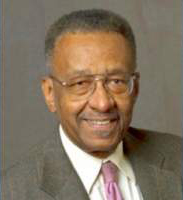
by Walter E. Williams


Many whites are ashamed, saddened and feel guilty about our history of slavery, Jim Crow and gross racial discrimination. Many black people remain angry over the injustices of the past and what they see as injustices of the present. Both blacks and whites can benefit from a better appreciation of black history.

Often overlooked or ignored is the fact that, as a group, black Americans have made the greatest gains, over some of the highest hurdles, and in a shorter span of time than any other racial group in history.

For example, if one totaled up the earnings and spending of black Americans and considered us as a separate nation with our own gross domestic product, we would rank well within the top 20 richest nations. A black American, Gen. Colin Powell, once headed the world’s mightiest military.

Black Americans are among the world’s most famous personalities, and a few black Americans are among the world’s richest people such as investor Robert F. Smith, IT service provider David Steward, Oprah Winfrey, and basketball star Michael Jordan. Plus, there was a black U.S. president.

The significance of these achievements cannot be overstated. When the Civil War ended, neither a slave nor a slave owner would have believed such progress would be possible in less than a century and a half — if ever. As such, it speaks to the intestinal fortitude of a people. Just as important, it speaks to the greatness of a nation in which such gains were possible. Nowhere else on earth could such progress have been achieved except in the United States of America.

The issue that confronts us is how these gains can be extended to about one-quarter of the black population for whom they have proven elusive. The first step is to acknowledge that the civil rights struggle is over and won. At one time, black Americans did not enjoy the constitutional guarantees as everyone else. Now we do. While no one can deny the existence of residual racial discrimination, racial discrimination is not the major problem confronting a large segment of the black community.

A major problem is that some public and private policies reward dependency and irresponsibility. Chief among these policies is the welfare state that has fostered a 75 percent rate of out of wedlock births and decimated the black family that had survived Jim Crow and racism. Keep in mind that in 1940 the black illegitimacy rate was 11 percent and most black children were raised in two-parent families. Most poverty, about 25 percent, is found in female-headed households. The poverty rate among husband-and-wife black families has been in the single digits for more than two decades.

Black people can be thankful that double standards and public and private policies rewarding inferiority and irresponsibility were not a part of the 1920s, ’30s, ’40s and ’50s. If there were, then there would not have been the kind of intellectual excellence and spiritual courage that created the world’s most successful civil rights movement.

From the late 1800s to 1950, some black schools were models of academic achievement. Black students at Washington’s Dunbar High School often outscored white students as early as 1899. Schools such as Frederick Douglass (Baltimore), Booker T. Washington (Atlanta), P.S. 91 (Brooklyn), McDonogh 35 (New Orleans) and others operated at a similar level of excellence.

Self-destructive behavior that has become acceptable, particularly that in predominantly black schools, is nothing less than a gross betrayal of a struggle, paid with blood, sweat and tears by previous generations, to make possible today’s educational opportunities that are being routinely squandered. I guarantee that blacks who lived through that struggle and are no longer with us would not have believed such a betrayal possible.

Government should do its job of protecting constitutional rights.

After that, black people should be simply left alone as opposed to being smothered by the paternalism inspired by white guilt. On that note, I just cannot resist the temptation to refer readers to my “Proclamation of Amnesty and Pardon,” which grants Americans of European ancestry amnesty and pardon for their own grievances and those of their forebears against my people so that they stop feeling guilty and stop acting like fools in their relationship with Americans of African ancestry.

Walter E. Williams is a professor of economics at George Mason University. To find out more about Walter E. Williams and read features by other Creators Syndicate writers and cartoonists, visit the Creators Syndicate webpage at www.creators.com.

spot_img

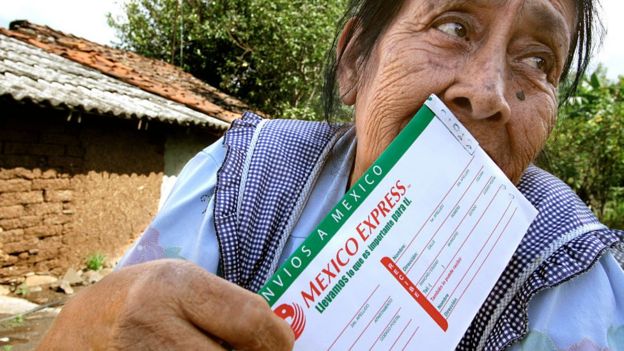
Millions in the world have lost a source of life from remittances

Remittances, farmers markets, migration flows collapse – developing world reels from pandemic fallout


by Sunita Sohrabji

EMS Contributing editor


SAN FRANCISCO — More than 265 million around the world currently face food insecurity in the wake of the global COVID-19 pandemic, and several million have lost their life-line of remittances, according to experts speaking at an ethnic media conference May 8 on the pandemic’s impact on the developing world.

“COVID-19 is expected to double the number of people facing food insecurity. The world has never seen a pandemic like this,” said Dulce Gamboa, associate for Latino relations at Bread for the World.

Remittances — money sent from people working abroad to their families back home — have taken a huge hit, said Demetrios Papademetriou, who co-founded the Migration Policy Institute and is currently a Distinguished Transatlantic Fellow at the Washington DC-based think tank. The World Bank has estimated that $142 billion has been lost in remittances, as foreign workers lose their jobs to the coronavirus crisis.

“Remittances are an essential lifeline for people who receive that money. They will be thinner and more precarious,” said Papademetriou.

He equated the COVID-19 crisis to the decade-long Great Depression in the U.S. in the 1930s, and characterized it as an “economic abyss.”

Daniel Nepstad, President and Founder of Earth Innovation Institute, discussed the impact of the pandemic on the Amazon rainforest, the largest tropical rainforest in the world. The summer months are typically burning season in the forest, as villagers burn patches to use for agricultural purposes.

In a normal year, thousands of people would get respiratory illnesses as forests burn. This year, however, Nepstad predicted an increased number of deaths as the COVID-19 virus attacks people whose immune systems are already compromised.

In Manaus, Brazil, deep in the Amazon rainforest, Nepstad reported that mass graves have been erected for those succumbing to the virus. In Loreto, Peru, a lack of oxygen bottles has contributed to a high mortality rate from COVID.

The biggest threat to the rain forest comes from people fleeing there as a last resort, Nepstad said. Farmers can no longer bring their products to markets, which have shuttered in the wake of the pandemic. More than 200,000 migrants have left Lima, Peru by foot, walking through deserts and up into the highlands and from there to the rainforest for some measure of food security.

Nepstad urged the global community to support farmers in the Amazon — providing them with seed capital to grow tree crops which have a longer life-span — and also advocated for the formalizing of supply chains and for fair price support.

“Now is the time for solidarity, listening to local leaders and understanding what they need,” said Nepstad. “We tend to demonize the people that are clearing forests, but I think it’s important to have more nuance there.”

“Lots of people are extracting food by clearing the rain forests. We eat that food around the world.”

Even if there is no surge in food prices, the global hunger pandemic will continue, said Gamboa, noting that the situation will deteriorate most rapidly in countries where a large percentage of the labor force works in the informal economy.

Yemen currently faces the worst food insecurity crisis, said Gamboa, with 53 percent of its population — almost 16 million people — facing starvation.

Sudan and Nigeria are likely to be hit by famines, she said. Zimbabwe, South Africa, the Congo, and the Horn of Africa are also facing massive food insecurity issues due to high inflation, poor harvests and drought.

“Malnourished people have less effective immune systems,” said Gamboa, adding that a child who is malnourished during his first 1,000 days of life will face a lifetime of stunted growth, both physically and intellectually.

“People are saying ‘we’re going to die of hunger before we die of coronavirus.’”

“The U.S. needs to have strong leadership to help millions of people around the world, including women and children,” stated Gamboa.

Global migration has ground to a halt as countries close their borders and restrict incoming travel, said Papademetriou. However, there has been a significant amount of labor migration as people in developing countries return home, he said.

“There has been an elite consensus that has allowed migration to continue to be large and to thrive because of the demography of many of the rich countries,” said Papademetriou. “We will have to see if that elite consensus continues to hold as this pandemic continues,” he said, adding that countries will have to reassess afresh the number of immigrant workers they need, especially in the agricultural sector.

Papademetriou said it was too early to assess whether the U.S. would grant legal status to undocumented immigrants, many of whom are now considered essential workers.

“I have spent 14 years of attempting to come up with compromises that legislators on both sides were able to support. We have failed every single time.”

“The last time we failed big was in 2013 under President Obama. So it’s difficult for me to be optimistic,” said Papademetriou.­

spot_img

Remittances, farmers markets, migration flows collapse – developing world reels from pandemic fallout

by Sunita Sohrabji

EMS Contributing editor

SAN FRANCISCO — More than 265 million around the world currently face food insecurity in the wake of the global COVID-19 pandemic, and several million have lost their life-line of remittances, according to experts speaking at an ethnic media conference May 8 on the pandemic’s impact on the developing world.

“COVID-19 is expected to double the number of people facing food insecurity. The world has never seen a pandemic like this,” said Dulce Gamboa, associate for Latino relations at Bread for the World.

Remittances — money sent from people working abroad to their families back home — have taken a huge hit, said Demetrios Papademetriou, who co-founded the Migration Policy Institute and is currently a Distinguished Transatlantic Fellow at the Washington DC-based think tank. The World Bank has estimated that $142 billion has been lost in remittances, as foreign workers lose their jobs to the coronavirus crisis.

“Remittances are an essential lifeline for people who receive that money. They will be thinner and more precarious,” said Papademetriou.

He equated the COVID-19 crisis to the decade-long Great Depression in the U.S. in the 1930s, and characterized it as an “economic abyss.”

Daniel Nepstad, President and Founder of Earth Innovation Institute, discussed the impact of the pandemic on the Amazon rainforest, the largest tropical rainforest in the world. The summer months are typically burning season in the forest, as villagers burn patches to use for agricultural purposes.

In a normal year, thousands of people would get respiratory illnesses as forests burn. This year, however, Nepstad predicted an increased number of deaths as the COVID-19 virus attacks people whose immune systems are already compromised.

In Manaus, Brazil, deep in the Amazon rainforest, Nepstad reported that mass graves have been erected for those succumbing to the virus. In Loreto, Peru, a lack of oxygen bottles has contributed to a high mortality rate from COVID.

The biggest threat to the rain forest comes from people fleeing there as a last resort, Nepstad said. Farmers can no longer bring their products to markets, which have shuttered in the wake of the pandemic. More than 200,000 migrants have left Lima, Peru by foot, walking through deserts and up into the highlands and from there to the rainforest for some measure of food security.

Nepstad urged the global community to support farmers in the Amazon — providing them with seed capital to grow tree crops which have a longer life-span — and also advocated for the formalizing of supply chains and for fair price support.

“Now is the time for solidarity, listening to local leaders and understanding what they need,” said Nepstad. “We tend to demonize the people that are clearing forests, but I think it’s important to have more nuance there.”

“Lots of people are extracting food by clearing the rain forests. We eat that food around the world.”

Even if there is no surge in food prices, the global hunger pandemic will continue, said Gamboa, noting that the situation will deteriorate most rapidly in countries where a large percentage of the labor force works in the informal economy.

Yemen currently faces the worst food insecurity crisis, said Gamboa, with 53 percent of its population — almost 16 million people — facing starvation.

Sudan and Nigeria are likely to be hit by famines, she said. Zimbabwe, South Africa, the Congo, and the Horn of Africa are also facing massive food insecurity issues due to high inflation, poor harvests and drought.

“Malnourished people have less effective immune systems,” said Gamboa, adding that a child who is malnourished during his first 1,000 days of life will face a lifetime of stunted growth, both physically and intellectually.

“People are saying ‘we’re going to die of hunger before we die of coronavirus.’”

“The U.S. needs to have strong leadership to help millions of people around the world, including women and children,” stated Gamboa.

Global migration has ground to a halt as countries close their borders and restrict incoming travel, said Papademetriou. However, there has been a significant amount of labor migration as people in developing countries return home, he said.

“There has been an elite consensus that has allowed migration to continue to be large and to thrive because of the demography of many of the rich countries,” said Papademetriou. “We will have to see if that elite consensus continues to hold as this pandemic continues,” he said, adding that countries will have to reassess afresh the number of immigrant workers they need, especially in the agricultural sector.

Papademetriou said it was too early to assess whether the U.S. would grant legal status to undocumented immigrants, many of whom are now considered essential workers.

“I have spent 14 years of attempting to come up with compromises that legislators on both sides were able to support. We have failed every single time.”

“The last time we failed big was in 2013 under President Obama. So it’s difficult for me to be optimistic,” said Papademetriou.­

spot_img

Better Lives, Bitter Lies Podcast premieres

Must Forging Better Lives Always Be Entwined With Facing Bitter Lies?

Join Park Guides as they discuss destiny-shaping ideas that defined the SF Bay Area

compiled by the El Reportero‘s staff

San Francisco, CA – San Francisco Maritime National Historical Park is proud to announce the new podcast Better Lives, Bitter Lies. This fun and educational audio series, is created and hosted by park guides Anne Monk and Sabrina Oliveros.

In the late 19th and early 20th centuries, all manner of ships sailed into San Francisco Bay, bringing people drawn by the promise of a better life. For many of these newcomers, seeking new lives meant living with ideas – created about their destination, their destinies, and themselves – that shaped both their personal histories and the history of San Francisco’s waterfront. Better Lives, Bitter Lies examines several of these ideas, using San Francisco Bay Area points of interest as springboards for lively, enlightening discussions.

Beginning with the first episode, “Chrysopylae” – which reviews popular beliefs about the naming of the Golden Gate Bridge – Monk and Oliveros use historical documents, firsthand accounts, literature, music, and conversations with experts to examine how these ideas took the form of myth, mistruth, propaganda, or outright falsehood.

A new episode will appear every two weeks on the Park’s podcast page: https://www.nps.gov/safr/learn/photosmultimedia/podcasts.htm

Future episodes will include “Gold Mountain,” “Paper Children,” “Daughters of Joy,” “A Deadly Trade,” “Little Brown Brothers,” and a feature on the multifaceted stories carried by the park’s iconic square-rigged cargo ship, Balclutha. Check the park’s website and social media channels for future releases!

Will premiere on the Park’s website (https://www.nps.gov/safr/learn/photosmultimedia/podcasts.htm) on Tuesday, July 14, 2020.

SF Boys Chorus brings classes online

For Potential Remote Learners Bay Area Counties: Auditions for the San Francisco Boys Chorus online classes are ongoing. Classes will be conducted online starting after Labor Day.

Boys under 7 are not required to audition and will be automatically accepted into the exploratory music program. Older boys must set up an audition before classes begin. To sign up and learn more visit www.sfbc.org/auditions.

The City Council is holding a virtual Special City Council meeting on Monday evening, July 13, 2020 at 7 p.m. The entire agenda can be viewed here. A highlight of some of the major policy items is below.

Public Hearings to Consider:

  • An Urgency Ordinance approving text amendments to Accessory Dwelling Unit (ADU) requirements in the Zoning Ordinance and other miscellaneous updates, including permitted ADU types allowed, side and rear setbacks, height for detached ADUs, and to comply with State law. Read the full staff report here.

Interested in Running for City Council?

The nomination period for the November 2020 Election opens Monday

Four members of the City Council representing Districts 1, 3, 4 and 7 will be elected November 3, 2020. Have you considered running for City Council and you live in one of the districts with an open seat? Nomination papers will be available beginning Monday, July 13 by contacting the City Clerk. Due to the shelter-in-place order, nomination papers will be issued in person or electronically upon written request. Not sure which district you live in? Check out an interactive map here.

For more information and to schedule an appointment, please call the Office of the City Clerk at (650) 780-7220 or email paguilar@redwoodcity.org.

  • A Resolution approving the Five-Year Permanent Local Housing Allocation (PLHA) Plan for the 2019-2023 Funding Period and application for funding to support affordable housing initiatives, including the City’s Safe Parking Program. Read the full staff report here.
  • A Resolution amending, eliminating and adopting certain fees for charges for the City’s Fire, Library, and Parks, Recreation and Community Services Departments. Read the full staff report here.
  • A Resolution amending, eliminating and adopting certain fees for charges for the City’s Fire, Library, and Parks, Recreation and Community Services Departments. Read the full staff report here.
spot_img

Nicaragua to celebrate Sandinista victory with virtual concert

by the El Reportero‘s news services

MANAGUA, July 10 – In the midst of a pandemic that is raging and wreaking havoc on the Nicaraguan population, the Nicaraguan government announced that several local bands and artists, led by maestro Ruben Rodriguez, are preparing a concert to celebrate the 41st anniversary of the Sandinista Revolution.

The Ruben Dario National Theater has been recording the show, which will be broadcast on public television’s Canal 6 during the July 18 vigil, prior to the historic date that marked the end of the dictatorship by the Somoza family dynasty in 1979.

Due to the health situation in the country, the Nicaraguan government has avoided holding public events that bring together large numbers of people, so the country opted for virtual concerts to celebrate historical dates.

In this sense, on Friday, July 3, a cultural performance was broadcast on Internet platforms and Canal 6 to commemorate the Tactical Withdrawal to Masaya, considered the second major feat of the 1979 People’s Revolution.

Authorities believe ‘Glee’ actress Naya Rivera drowned in lake

by Dennis Romero, Andrew Blankstein and Janelle Griffith

Shared from NBC News

July 9 – The search for “Glee” actress Naya Rivera resumed Thursday after she was reported missing on Wednesday at Lake Piru in California, authorities said.

The efforts have become a search-and-recovery operation, Ventura County Sheriff’s Deputy Chris Dyer said at the lake on Thursday.

“We’re presuming that an accident happened and we’re presuming that she drowned in the lake,” he said, adding that there were no signs of foul play or of anything that went wrong “besides a tragic accident.”

Dyer said it would not change the efforts put forth to locate Rivera.

Upward of 100 people from several agencies are searching for Rivera — including several dive teams from sheriff’s departments around the region and a drone team — after her son was found alone on a boat on the lake, which is about 50 miles northwest of Los Angeles, the sheriff’s office said.

The 33-year-old from Woodland Hills had been boating with her son, Capt. Eric Buschow said Wednesday.

The actress rented a boat about 1 p.m, he said, and three hours, later authorities found her son napping alone on the vessel.

The child told officials that the pair had been swimming but that Rivera never returned, Buschow said.

“There’s another adult life vest found on the boat,” the captain said.

On Wednesday night, the department identified in a tweet Rivera as the person for whom they were searching until it became too dark. The department said the search would continue at “first light.”

Lake Piru is about 56 miles north-northwest of Los Angeles.

Deputy Dyer said the search was suspended at 10 p.m. Wednesday because of dangerous conditions. Visibility in the water during the day was about eight to 10 inches and there was lots of debris and full-size trees under the water and “varying depths.”

A manager for Rivera had no immediate response Wednesday night.

Rivera is best known for playing Santana Lopez on “Glee,” a high school glee club musical and comedy that ran on Fox from 2009 to 2015.

At least two “Glee” performers have died since the series’ conclusion.

In 2018, 35-year-old Mark Salling, who faced up to seven years in prison for child pornography possession, was found dead in Los Angeles. Law enforcement sources said at the time that they believed he died by suicide.

In her 2016 book, “Sorry Not Sorry: Dreams, Mistakes, and Growing Up,” Rivera wrote about her struggle with the death of her “Glee” co-star Cory Monteith, who passed away in 2013 from a drug overdose.

“The Cory chapter really choked me up. I had (co-star) Kevin (McHale) come over and help me edit and we both had our moment,” Rivera said in an interview with the Associated Press.

Some “Glee” co-stars weighed in on her disappearance on Twitter late Wednesday. Harry Shum, Jr., who played Mike Chang said, “Praying.”

Iqbal Theba, who played Principal Abigail Figgins Gunderson on the show, said, “Oh God… mercy… please… ”

Rivera is from the Santa Clarita neighborhood of Valencia, about 23 miles from the lake. She was married to actor Ryan Dorsey, the boy’s father, but the pair divorced after four years in 2018.

Last week, she tweeted, “Everyday you’re alive is a blessing.”

spot_img

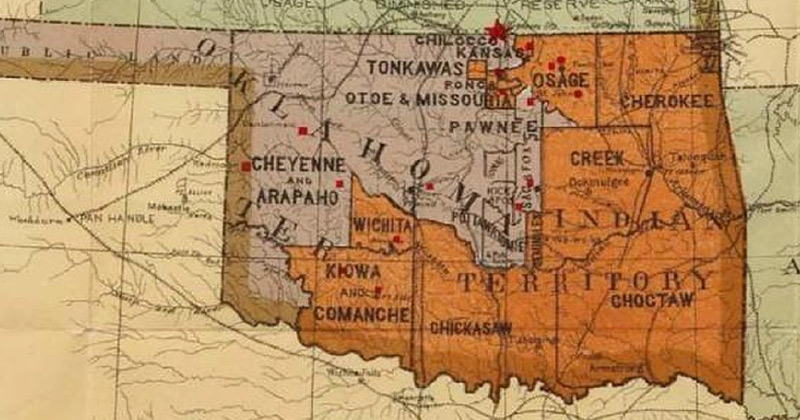
Supreme Court: Nearly half of Oklahoma is Indian reservation

1.8 million people now live in “Indian Country”


by ZeroHedge


July 9, 2020 – The decision, authored by Justice Neil Gorsuch, holds the United States to an 1866 treaty that the Muscogee (Creek) Nation signed with the United States after the Civil War over land which was home to the “Five Civilized Tribes”; the Creek, Cherokee Nation, the Seminole, the Chickasaw Nation, and the Choctaw Nation, according to The New Republic.

“Today we are asked whether the land these treaties promised remains an Indian reservation for purposes of federal criminal law,” wrote Gorsuch, a Trump appointee. “Because Congress has not said otherwise, we hold the government to its word.”

Joining Gorsuch in the majority were Justices Sonya Sotomayor, Elena Kagan, Stephen Breyer and Ruth Bader Ginsburg, while Justices Alito, Kavanaugh, Roberts and Clarence Thomas argued in the minority – siding with the state of Oklahoma.

“A century of practice confirms that the Five Tribes’ prior domains were extinguished,” wrote Roberts. “The State has maintained unquestioned jurisdiction for more than 100 years. Tribe members make up less than 10%–15% of the population of their former domain, and until a few years ago the Creek Nation itself acknowledged that it no longer possessed the reservation the Court discovers today.”

Roberts added that “The State’s ability to prosecute serious crimes will be hobbled and decades of past convictions could well be thrown out,” and that “The decision today creates significant uncertainty for the State’s continuing authority over any area that touches Indian affairs, ranging from zoning and taxation to family and environmental law.”

The original case (via the New York Times):

The case concerned Jimcy McGirt, a member of the Muscogee (Creek) Nation who was convicted of sex crimes against a child by state authorities in the Nation’s historical boundaries. He said that only federal authorities were entitled to prosecute him.

Mr. McGirt argued that Congress had never clearly destroyed the sovereignty of the Creek Nation over the area, covering about half the state. The solicitor general of Oklahoma took the opposite view, saying the area had never been reservation land.

McGirt v. Oklahoma, No. 18-9526, an appeal from a state court’s decision, was the Supreme Court’s second attempt to resolve the status of eastern Oklahoma.

In November 2018, the justices heard arguments in Sharp v. Murphy, No. 17-1107, which arose from the prosecution in state court of Patrick Murphy, a Creek Indian, for murdering George Jacobs in rural McIntosh County, east of Oklahoma City.

After he was sentenced to death, it emerged that the murder had taken place on what had once been Indian land. Mr. Murphy argued that only the federal government could prosecute him and that a federal law barred the imposition of the death penalty because he was an Indian.

Mr. Murphy convinced the United States Court of Appeals for the 10th Circuit, in Denver. But when the case was argued before an eight-member Supreme Court, the justices seemed divided and troubled. (Justice Neil M. Gorsuch, who had served on the 10th Circuit when it ruled on the case, recused himself.)

Instead of issuing a decision before the term ended in June 2019, the court announced it would hear another set of arguments in its current term, which started in October. That was a sign the court had deadlocked, 4 to 4.

But there was no new argument in the Murphy case, probably because it was not clear another hearing would break the deadlock. Instead, the court heard Mr. McGirt’s case, allowing the overarching issue to be settled by a nine-member court.

Muscogee tribal leaders cheered the ruling, vowing to work with state and federal law-enforcement authorities to ensure public safety within the reservation, according to the Times.

“This is a historic day,” said Principal Chief David Hill. “This is amazing. It’s never too late to make things right.”

spot_img

Thousands of immigrant kids are detained, far from their parents from COVID-19, too

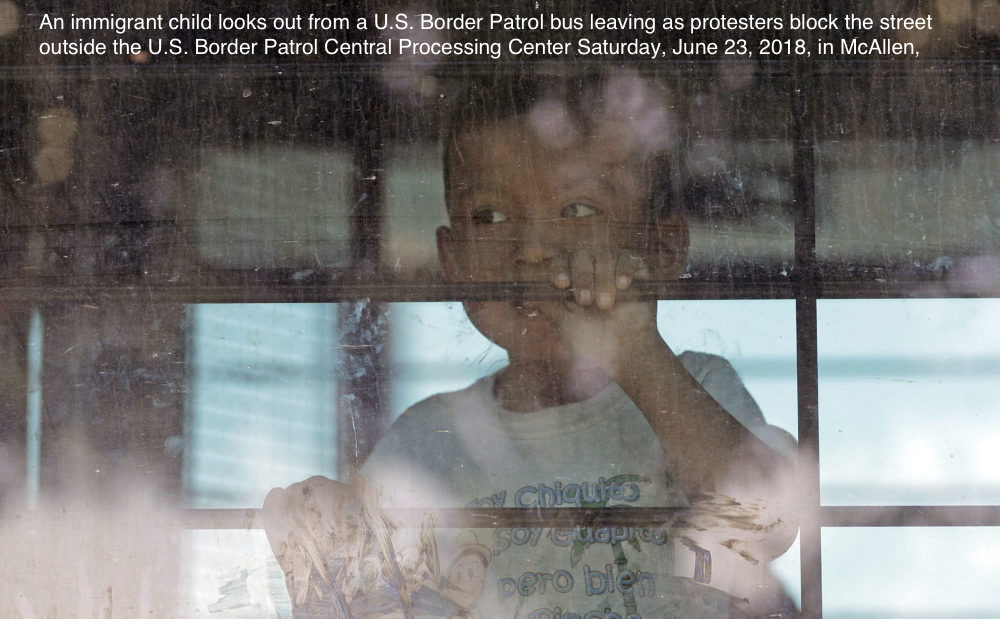
An immigrant child looks out from a U.S. Border Patrol bus leaving as protesters block the street outside the U.S. Border Patrol Central Processing Center Saturday, June 23, 2018, in McAllen, Texas. Additional law enforcement officials were called in to help control the crowd and allow the bus to move. (AP Photo/David J. Phillip)

They need protection from covid-19, too


by Katie Peeler


– As a pediatric intensive care physician, I like to think I have an unusually strong stomach for heart-wrenching scenarios. While they impact me deeply, I am not easily rattled.

But COVID-19 has rattled me. Everyone I run into is experiencing extreme anxiety over the uncertainty of what lies ahead. How many people will get sick? Will our local hospital run out of ventilators? Will my parents die? Will I die?

Imagine these questions not between adults, but between two school-aged siblings. Perhaps their parents overhear them and can quell some of their anxieties. My own son, only 5-years-old, could not fall asleep last night because at school last week he heard that “billions of people were going to die.”

Now imagine these questions, as asked by immigrant children detained in crowded shelters thousands of miles away from their parents. They are terrified, and the people they worry about most — and who they most need to love and comfort them — aren’t there.

While we are all justifiably concerned for our own children in these fraught times, we must not forget this particularly vulnerable group of children in the United States. They are just as deserving of protection during this pandemic.

Children younger than 18, who arrive at the U.S. border without a parent or guardian, are first held in border cells run by the Department of Homeland Security. Federal law requires that they be transferred within 72 hours to the Office of Refugee Resettlement (ORR), which is under the Department of Health and Human Services (DHHS). The number of such children arriving annually is growing — almost 70,000 in 2019. Some ORR facilities are foster homes, which may offer better care, but others are group homes or large shelters that may house more than 1,000 children at a time.

The vast majority of these children come from Honduras, Guatemala and El Salvador — countries notorious for rampant gang violence and governments unable or unwilling to intervene. After often long and extremely dangerous journeys, they arrive at the Mexico-U.S. border already severely mentally and physically traumatized — a fact I can testify to as a medical expert with Physicians for Human Rights.

The devastating impact of COVID-19 globally has made starkly clear how critical it is to take preventative action. The current system of detaining children in ever larger groups, and for longer periods of time, increases their severe health risks and the likelihood of human rights violations.

In crowded settings, how is ORR able to follow the CDC’s guidance about social distancing and appropriate personal hygiene? Have they reviewed these guidelines with their staff or with the children? Attorneys with Kids in Need of Defense (KIND), a nonprofit organization that provides legal services to children in ORR custody, visited a shelter within the last week. There, they found diluted soap in the bathrooms, large groups of children crowded in a room for their legal screenings and no evidence of sanitizing the room before or after.

We’re in the middle of a global pandemic — none of this is acceptable.

We all want to protect our children and those we love. We cannot forget about the ones we cannot see.

New data from more than 2,000 pediatric cases in China indicates that young children are vulnerable to COVID-19, with severe and critical cases of children particularly noted in infants. While this is lower than adult rates, it still may represent a significant number of vulnerable and sick children. Unfortunately, there has been a history of delayed recognition of both underlying medical disorders and acute illness in detained children. ORR must take every precaution and implement creative solutions to shield children and staff from unnecessary harm.

Also of paramount importance to these children’s well-being is protecting their caregivers.

Reports from China and Italy indicate that many otherwise well children who contract this new virus are frequently asymptomatic or present with symptoms of the common cold. In the context of a crowded shelter or detention center, it is not uncommon for children to have minor colds. Without ready access to testing, it is impossible to know which virus a child has. Spread of COVID-19 will be quick. Caregivers in the shelters could also fall ill. What is the back-up plan for caring for these children if the shelter workforce is quickly depleted?

Policy change is slow, but pandemics wait for no one.

Migrant children also have significant mental health needs, given the trauma they endured at home, during their journeys, and in becoming a ward of our government. Their lives are already filled with anxiety and uncertainty.

A recent report from the Office of the Inspector General showed that despite specific guidelines that dictate the type and frequency of mental health services required for each child to receive, the actual mental health resources available in ORR shelters is far below the requirement. This need will increase exponentially in these children as their anxiety heightens with the pandemic.

Policy change is slow, but pandemics wait for no one.

DHHS must step-up high-level screening for safe sponsors of children immediately upon arrival to the border. They must expeditiously place children with such sponsors, thereby avoiding feeding into an already overcrowded shelter system.

Further, ORR must ensure all staff and children understand the CDC guidance surrounding social distancing and personal hygiene and robustly stock their shelters with soap, hand sanitizer, cleaning supplies and food. Medical triage guidelines must be clear and practiced, and mental health support should be provided for all.

Immigration court proceedings for detained children should be halted for now, and flexibility should be given to legal services organizations so they can utilize videoconferencing or individual meetings when possible.

The ORR facilities are spread out across the U.S., and there may be one or more in your state. You can encourage your local, state or national representatives to exercise oversight of ORR to ensure they are acting in the best interest of children, as well as their families and caregivers.

We all want to protect our children and those we love. We cannot forget about the ones we cannot see.

spot_img

Listening to the coronavirus “experts” has led to death and despair

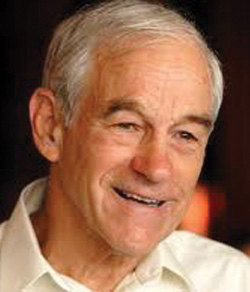
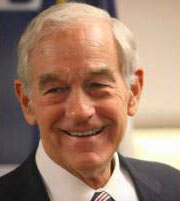
by Ron Paul


On April 21st the Washington Post savaged Georgia governor Brian Kemp’s decision to begin opening his state after locking down for weeks. “Georgia leads the race to become America’s No. 1 Death Destination,” sneered the headline.

The author, liberal pundit Dana Milbank, actually found the possibility of Georgians dying to be hilarious, suggesting that, “as a promotion, Georgia could offer ventilators to the first 100 hotel guests to register.”

Milbank, who is obviously still getting paid while millions are out of work, sees his job as pushing the mainstream narrative that we must remain in fear and never question what “experts” like Dr. Fauci tell us.

Well, it’s been three weeks since Milbank’s attack on Georgia and its governor, predicting widespread death which he found humorous. His predictions are about as worthless as his character. Not only has Georgia not seen “coronavirus … burn through Georgia like nothing has since William Tecumseh Sherman,” as Milbank laughed, but Covid cases, hospitalizations, and deaths have seen a steep decline since the governor began opening the state.

Maybe getting out in the fresh air and sunshine should not have been prohibited in the first place!

In fact, as we now have much more data, it is becoming increasingly clear that the US states and the countries that locked down the tightest also suffered the highest death rates. Ultra locked-down Italy suffered 495 Covid deaths per million while relatively non-locked down South Korea suffered only five deaths per million. The same is true in the US, where non lockdown states like South Dakota were relatively untouched by the virus while authoritarian-led Michigan, New York, and California have been hardest hit.

In those hardest hit states, we are now seeing that most of the deaths occurred in senior care facilities — after the governors ordered patients sick with Covid to leave the hospitals and return to their facilities. There, they infected their fellow residents who were most likely to have the multiple co-morbidities and advanced age that turned the virus into a death sentence. Will these governors be made to answer for this callous disregard for life?

Yesterday, Health and Human Services Secretary Alex Azar admitted the obvious: “We are seeing that in places that are opening, we’re not seeing this spike in cases.” So why not open everything? Because these petty tyrants cannot stand the idea of losing the ability to push people around.

Shutting down the entire United States over a virus that looks to be less deadly than an average flu virus — particularly among those under 80 who are not already sick — has resulted in mass unemployment and economic destruction. More Americans may die from the wrong-headed efforts to fight the virus than from the virus itself.

Americans should pause and reflect on the lies they are being sold. Masks are just a form of psychological manipulation. Many reputable physicians and scientists have said they are worthless and potentially harmful. Lockdowns are meant to condition people to obey without question. A nation of people who just do what they are told by the “experts” without question is a nation ripe for a descent into total tyranny. This is no empty warning — it’s backed up by history. Time to stand up to all the petty tyrants from our hometowns to Washington DC. It is time to reclaim our freedom.

(Ron Paul is a former U.S. congressman from Texas. This article originally appeared at the Ron Paul Institute for Peace and Prosperity).

spot_img

Will depression II dictate Trump’s fate?  

by Patrick J. Buchanan


As of April 30, the coronavirus pandemic has killed 61,500 Americans in two months and induced the worst economic collapse since the Great Depression.

And if history is our guide, the economic crisis, which has produced 30 million unemployed Americans in six weeks, may prove more enduring, ruinous and historic than the still-rising and tragic death toll.

The Spanish flu of 1918-1919, the deadliest pandemic in modern history, infected an estimated 500 million people worldwide, a third of the planet’s population, and killed an estimated 20 million to 50 million victims, including 675,000 Americans.

“Adjusting for the difference in the size of the American population then and now,” writes Chronicles columnist Roger McGrath, “that number will be equivalent to two million deaths today.”

Yet, the Spanish flu did not shut America down.

As the Spanish flu hit and spread in 1918, the U.S. raised, trained and equipped an army of 4 million men, sent 2 million soldiers to France, broke Gen. Erich Ludendorff’s army, and turned the tide in favor of the Allies.

By December 1918, Doughboys were arriving in New York harbor — having sailed home from Europe’s battlefields on flu-infested transports.

As the scourge continued to take its toll, Woodrow Wilson sailed to Europe, participated for months in the Paris Peace Conference, returned, went on a national train tour to sell his Paris treaty and League of Nations, and suffered a stroke.

In September 1919, Gen. Pershing led his victorious troops in victory parades in New York City and Washington. This writer’s father, a teenager then, was in the D.C. crowd.

In the history books of the 1950s, World War I, Wilson and the Senate battle over the treaty he brought home and U.S. membership in the League of Nations loomed far larger than the Spanish flu that had killed as many U.S. soldiers as the Kaiser’s armies.

But the Great Depression, to which our current crash is now being compared, did not last for just a year like the Spanish flu. The Depression lasted from the stock market crash in October 1929 to the eve of World War II.

Economically, it was devastating. Unemployment during the 1930s never fell below 14 percent. In 1937, it was back up to 17 percent.

At the bottom of the Depression, the stock market had lost 90 percent of its value, and the GDP had fallen 50 percent. Not until the end of FDR’s second term, in 1940, when the U.S. began to gear up for the war, did America really begin to pull out of it.

FDR’s New Deal, however, while it did not cure the Depression, was a historic political triumph for both the president and his party.

From 1930 through 1946, Democrats controlled both houses of the Congress every year, elected and reelected FDR four times and gave him a 46-state landslide in 1936, losing only Maine and Vermont.

What this suggests is that the economic devastation we have brought upon ourselves to battle the pandemic may prove more lasting and historic in its impact than the terrible losses of human life to COVID-19.

Politically, the Depression worked for the Democratic Party like no other event in history. After the Crash of 1929 under Herbert Hoover, the GOP held the House and Senate for only four of the next 50 years.

From 1932 to 1968, the GOP lost the presidency in seven of nine elections. Only Dwight Eisenhower’s two terms in the 1950s interrupted a 36-year reign of the Democratic Party in the White House.

Richard Nixon broke the Democratic dominance and took back the White House for the Republicans in 1968. But it would still take another dozen years before the GOP won control of either house of Congress.

President Trump predicts a V-shaped recovery, the greatest boom in U.S. history. But it is well to recall what happened to the GOP when it failed to deliver in the last Depression.

Just as the Civil War was the defining event of the 19th century, giving us 13 Republican presidents from Lincoln to Hoover and only two Democrats — Grover Cleveland and Wilson — how and when we emerge from this new Depression may tell us which party not only wins 2020 but also dominates the new era.

And as one sees the growing divisions along political lines, with conservatives and populists calling for the country to be opened up, and liberals and Democrats calling for continued sheltering in place, both seem to realize the stakes.

Democrats may proclaim that they are eager to see the pandemic come to a swift and early end and the economy to return quickly to the robust state it was in last February.

But the cold political interests of the Democratic Party today are what they were in Hoover’s time, to pray that the president fails, and fails badly, so that they inherit the estate

(Patrick J. Buchanan is the author of Nixon’s White House Wars: The Battles That Made and Broke a President and Divided America Forever).

spot_img