Saturday, August 8, 2026
Home Blog Page 227

The birth of the cashless society: Part two of a series of two

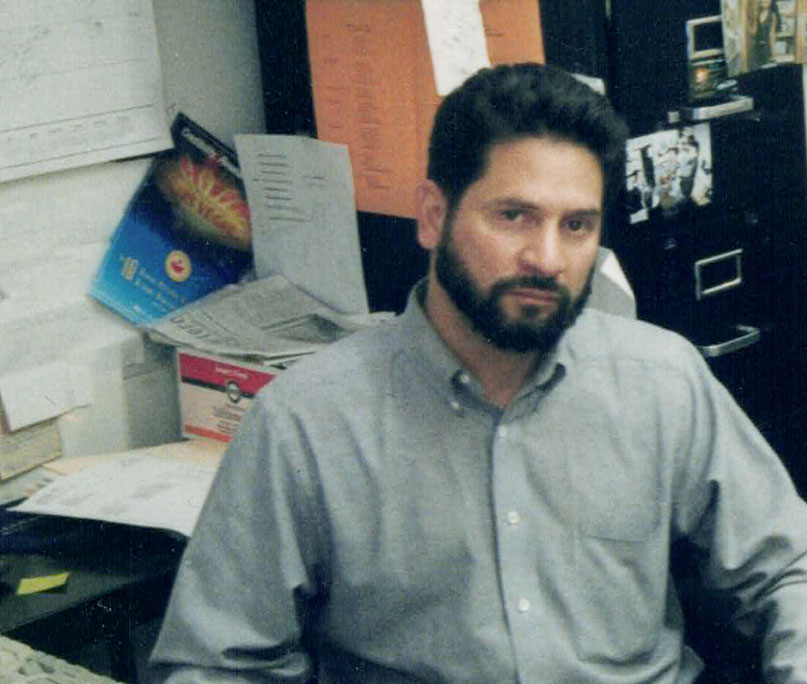
Marvin Ramírez, editor

In “The Birth of the Cashless Society, Party One,” James Corbett introduced us to his perspective on how the Battle of the Crypto-Currencies will end up just like the conclusion of George Orwell’s “Animal Farm”- the non-porcine farm animals will wake up and see the humans playing poker with the pigs, except that it is no longer possible to tell who is human and who is a pig.

In other words: in this transition to cashless society, the Federal Reserve Bank is going to move to a Federal Reserve Blockchain digital currency which will outlaw all other currencies, so that the triumph of the digital currency revolution will also be its final demise.

Investigative journalist, James Corbett, is publisher of “the Corbett Report, and graduated from the University of Calgary.

by James Corbett

But still, this may just seem like a technological upgrade to our payment systems. People increasingly pay with cards or payment apps anyway, so what difference does it make if we eliminate cash altogether?

I have done a lot of work on the cashless society over the years, but it’s one of those concepts that is so large and so difficult to envision in its entirety that it’s worth revisiting here. To get a sense of how the cashless society is not about payment convenience but about control over every aspect of your lives, watch this short video that the ACLU put out a decade and a half ago:

This video wasn’t even meant to warn about the cashless society. The hapless victim of this pizza transaction ends up being forced to pay in cash because his credit card is maxed out. But nonetheless, this is the vision of the cashless society in a nutshell. In the cashless society, your entire payment history and all of the information that is tied into that history will be plainly visible to those who have access to it. And if the government issues a decree about what you are or are not able to purchase, that decree will be enforced at the point of sale. At that point, freedom will only be found in the counter-economy.

If you want to get a handle on what such a future will look like, imagine the following scenario:

You are out for a walk late at night. You come to a red light, but there is no one around. You hesitate a moment, double-check that there is really no one in sight and then dash across the intersection. In the two seconds it takes you to cross the road, a large LED screen above the street lights up with your picture and your name. Two seconds after that you feel a buzz in your pocket. Taking out your phone you find a message from your bank informing you that you have been fined for jaywalking and that your social credit score has been reduced.

The next day, you find yourself at the airport, preparing to board a flight to visit your family on the other side of the country. When you go to check in you receive a message that your social credit score is too low and you will not be allowed to board the plane. Enraged, you curse the airline, the government’s social credit system, its jaywalking laws, and even the government itself.

Unbeknownst to you, someone has recorded your outburst and uploads it to social media, where you are quickly identified. The police come to your home the next day and take you downtown where you are shackled in a chair and made to recant your statements about the government.

Sound like something out of a dystopian sci-fi novel? Well, it’s not. It’s just a mundane portrayal of everyday life in current day China.

Facial recognition deployed to monitor the streets and automatically issue fines for jaywalking and other minor infractions? Check.

Social credit scores tied in to your ability to board public transportation or access government services? Check.

Police hauling people in for angrily ranting about the government and shackling them until they recant? Check.

The cashless society is about so much more than just how we pay for things at the store. Tied into a system of persistent technological surveillance, it represents the ultimate control over our lives. Can there be any doubt as to why the World Economic Forum and the Bank for International Settlements are working in concert with the central banks of the world and organizations like the Bill Gates-co-founded Better Than Cash Alliance to pave the way for this nightmare to become a reality.


spot_img

Online series on the rhythmic roots of Afro-Latin music

Compiled by the El Reportero‘s staff

Santos will be taking a deep dive every Wednesday evening Sept 23-Oct 14 from 6-8 p.m into a new aspect of the rhythmic roots of Afro-Latin music including Afro-Cuban, Afro-Puerto Rican, and Afro-Brazilian forms. Each live presentation will also feature selections from Santos’ legendary collection of audio and video recordings, including many early and rare recordings of the musicians and musical genres he’ll be discussing

The program is presented by the Museum of the African Diaspora in San Francisco together with the Yerba Buena Gardens Festival. Audiences pay what they can and should register on the Museum’s website for instructions on how to join the online audience at https://www.moadsf.org/calendar/

There is a week by week break down of the specific styles he’ll be covering on that page as well if you want more detail.

A 2012 San Francisco Latino Heritage Arts Awardee, born and raised in San Francisco’s Mission District amidst an extended family of Puerto Rican musicians, Santos has been at the center of the Bay Area’s Latin music scene for over forty five years.

He served on the Smithsonian Institution’s Latin Jazz Advisory Committee and has played an essential role in expanding Latin jazz’s rhythmic lexicon beyond the foundational Cuban grooves. He has produced a steady stream of critically-acclaimed, peer-respected recordings on his Machete Records label since 1984 and has travelled the world as a teacher and lecturer since the mid-eighties.

Known for his innovative use of traditional forms and instruments in combination with contemporary music, John has performed and/or recorded with masters such as Tito Puente, Dizzy Gillespie, Max Roach, Cachao, Eddie Palmieri, James Moody, Omar Sosa, McCoy Tyner, Giovanni Hidalgo, and Bebo Valdés. He is faculty at the California Jazz Conservatory, SF State University, College of San Mateo and Jazz Camp West and is an Advisory Board member of Oaktown Jazz, Living Jazz, and the Afro-Latin Jazz Alliance (NY), and a Trustee of SFJAZZ.

Celebrating our Community as Changemakers

¡VIVA MEDA! 47th Anniversary Celebration Please join us for a night of community and celebration at the 47th Annual ¡VIVA MEDA!

You’ll be treated to big-name speakers, messages of hope from community leaders, salsa music, a panel discussion … and so much more. There’s something for everyone!

We are proud to welcome two amazing Latina leaders for our FREE ¡VIVA MEDA! 47 Virtual Gala panel, “Joining the Movement as Changemakers: COVID-19 and Civil Rights in Communities of Color.” You’re sure to be inspired by Paola Mendoza and Mercedes Márquez. Our panel will be moderated by reporter Luz Peña of ABC News, KGO-TV San Francisco.

Remember to mark your calendars for Thursday, Oct. 1, at 6 p.m (Pacific time). That’s the night of our ¡

spot_img

Jennifer López shares teaser, release date of upcoming film ‘Marry Me’

by the El Reportero news services

Jennifer López won’t only be celebrating Valentine’s Day with her fiancé Alex Rodríguez, but also with the release of her new romantic comedy, Marry Me.

The multihyphenate tweeted the “Save the Date” on Monday (Sept. 14), along with a 15-second clip of López alongside co-stars Owen Wilson and Maluma. A teaser of an upcoming song from the film is also heard in the background.

“It’s about a pop star who winds up marrying a random fan from the audience,” López shared earlier this year on The Tonight Show Starring Jimmy Fallon. “She marries a math teacher in the audience. The math teacher is played by Owen Wilson.” Fallon, meanwhile, will make a cameo as himself, and Maluma will play López’s love interest-pre Wilson.

“I did an album with this movie, so there are all new songs, new music with it, so it’s exciting,” she added. “I have six to eight songs, and Maluma does two or three.”

Catch Marry Me in theaters on Valentine’s Day, 2021.

Chilean Raul Zurita wins the Ibero-American Poetry Prize

Madrid, Sep 8

Chilean Raul Zurita won on Tuesday the 29th Reina Sofia Prize for Ibero-American Poetry, one of the most important and prestigious of this genre awarded by Spain’s National Heritage and the University of Salamanca.

Zurita, author of works such as ‘Canto a su amor desaparecido’ (Song of his Missing Love), ‘Purgatorio’ (Purgatory), ‘La Nueva Vida’ (The New Life), ‘El paraiso esta vacio’ (Paradise is empty) or ‘Canto de los rios que se aman’ (Song of the loving rivers), was born in Santiago de Chile in 1950. He is deemed as one of the most outstanding Chilean poets of the 20th century along with Pablo Neruda and Vicente Huidobro.

‘The award recognizes his work, his poetic example of overcoming pain, with verses, with words committed to life, freedom and nature,’ stressed the president of National Heritage, Llanos Castellanos, announcing the ruling of the jury.

The Reina Sofia Prize joins the numerous awards received by Zurita, such as the Pablo Neruda Prize (1988), the National Prize for Literature (2000), both from Chile, the Casa de las Americas Prize for Poetry Jose Lezama Lima (Cuba, 2006) or the Ibero-American Poetry Pablo Neruda (Chile, 2016).


spot_img

SF – ANNOUNCEMENTS Next Phase of Reopening to Begin on Monday, September 14

(Photo shared from Radio.com website)

Mayor London Breed, Dr. Grant Colfax, Director of Health, and Assessor-Recorder Carmen Chu, co-Chair of the City’s Economic Recovery Task Force, announced that San Francisco is moving forward with additional reopening on Monday, Sept. 14, 2020. In addition to the previously announced businesses and activities planned for mid-September, indoor personal services and indoor gyms will be permitted to reopen next week with limited capacity. Only those services where face coverings can be worn at all times by everyone involved will reopen at this time.

Businesses, all with limited capacity

  • Hair salons and barbershops, indoors
  • Nail salons, indoors
  • Massage establishments, indoors
  • Tattoos and piercings, indoors
  • Gyms and fitness centers, indoors
  • One-on-one personal training, indoors
  • Drive-in movies, outdoors
  • Family entertainment, outdoors (like mini-golf and batting cages, but does not include playgrounds)
  • Tour buses and boats
  • Hotels and short-term rentals, expanded for tourists
spot_img

NOTICE OF NOMINEES FOR PUBLIC OFFICE CITY OF WOODSIDE, CALIFORNIA

TOWN OF WOODSIDE
2955 WOODSIDE ROAD
WOODSIDE, CA 94062

NOTICE OF NOMINEES FOR PUBLIC OFFICE
NOTICE IS HEREBY GIVEN that the following individuals have been nominated for the designated positions to be filled in the General Municipal Election to be held in Town of Woodside on Tuesday, November 3, 2020.
District 1
Jennifer R. Wall – Board Member
District 3
Chris Shaw Councilor – Council Member
District 5
John R. Carvell – Board Member
District 7
Ned Fluet – Board Member
11/9/20
CNS-3395144 #
THE REPORTER

spot_img

CITY OF SAN CARLOS NOTICE OF NOMINEES FOR PUBLIC OFFICE

YOU HEREBY GIVE NOTICE, pursuant to California Election Code 12110, of nominees for public office. The following individuals have been nominated for the positions designated to be filled in the General Municipal Election to be held in the City of San Carlos on Tuesday, November 3, 2020.

For City Council Member, vote for no more than two:

JT Eden

David B. Tom

John dugan

Ron collins

For City Treasurer, vote for no more than one:

Inge Tiegel Doherty

Crystal Mui, City Secretary

Posted & Fixed: Sep 11, 2020

11/9/20

CNS-3394155 #

THE REPORTER

spot_img

Lila Downs at Fridays at Five’s SF Jazz Fest

Compiled by the El Reportero‘s staff


Mexican-American singer and songwriter Lila Downs is a GRAMMY winner and one of the most celebrated artists of her generation.

A native of Oaxaca, she’s built a career bridging cultures and languages, both as a musician and social activist for humanitarian causes. With guidance from her vocalist mother and inspiration from Mexican singing greats Chavela Vargas and Lucha Villa balanced by the gamut of American music she heard in the States, Downs made her major label debut with 1999’s jazz-informed La Sandunga, and her contributions to the 2002 Frida Kahlo biopic Frida elevated her status to that of a major international star.

She’s won a GRAMMY and multiple Latin GRAMMYs, including a nod for her newest Sony Music album, Salón, Lágrimas y Deseo (Salon, Tears and Desire). This performance, filmed in May 2019, is a celebration of that release.

On Oct. 30.

The coronavirus separates us, threatening the fabric of community – but music connects, which is why we’ve launched Fridays at Five. It’s what we need right now: a new series of weekly pre-recorded concerts that aspire to connect you – to music, to musicians, to the warm and unique feeling of experiencing live music at the SFJAZZ Center.

For just $5 a month ($60 annually), you can become a Member and tune in each Friday from 5–6 PM PT (8–9 PM ET) for the latest concert. Make it a regular date. Bring a glass of wine and cozy up – we think you will discover that digital technology can reveal new dimensions of musical performance. Fridays at Five is not your typical video concert series; it is designed to take you inside the music.

Starting at just $5 a month ($60 annually), you can sign up for or gift a digital membership and tune in with friends each Friday at 5 p.m. (PT) for the latest concert. Proceeds will help the SFJAZZ team prepare to reopen the SFJAZZ Center and bring you the same breadth of live concert and educational programming you’re used to. The music will outlive the virus.

Upcoming Artists 
Sept. 11 – Red Baraat
Sept. 18 – Wayne Shorter Celebration Pt. 5
w/ Wayne Shorter, Danilo Pérez, John Patitucci, & Terri Lyne Carrington
SEP 25 John Coltrane’s A Love Supreme: A 50th Anniversary Celebration
w/ Ravi Coltrane, Joe Lovano, Geri Allen, Drew Gress, & Ralph Peterson Jr.
Oct 2 – Bobi Céspedes
Oct 9Thelonious Monk Birthday Celebration
w/ Joanne Brackeen, Kris Davis, & Helen Sung
Oct 16Mary Stallings & Bill Charlap Trio Oct 3 Taj Mahal Quartet


Think Big, Dream Big, Believe Big, and the results will be BIG!

Eleven days to sign up for the 11th annual Time to Wonder!

Dream Big 2020 will be the same fabulous event, with a twist!

We invite our entire large family of members, friends, patrons, supporters, parents, and children to join us for our first ever virtual gala.

– Interact with the Children’s Museum with never before seen footage.

– Learn about new exhibits from Collette Michaud, Founder & CEO.

– Experience first-hand stories from members on the valuable impact the Children’s Museum.

Peruse and bid on auction lots gathered locally; from wine to books, there is something for everyone. Come celebrate the wonder of the Children’s Museum.

Hear transformative stories, see the joy, and experience the life-changing moments. Join us for the free LIVE EVENT. Stories, celebrations, and plans for the future.

Children’s Museum of Sonoma County, On Sept. 13, 2020, 4:30 p.m., 1835 West Steele Lane Santa Rosa, California 95403.

spot_img

Maria Becerra joins TINI & Lola Indigo for new music project

????????????????????????????????????

reported by Griselda Flores

Shared from Billboard


Rising Argentine singer-songwriter Maria Becerra recruited compatriot TINI and up-and-coming Spanish artist Lola Indigo for her new “High” remix.

Premiering exclusively on Billboard today (Sept. 3), the eclectic, Latin trap-leaning remix finds the three leading ladies trading verses of heartbreak and despair. The minimalist and colorful music video, premiering along with the girl-power remix, was directed by Julian Levy. Becerra’s original “High” music video, released in December, has raked in more than 47 million views on YouTube.

Becerra, a leading voice in Argentina’s urban pop movement, was recently signed to 300 Entertainment, becoming the indie label’s first Latin signee. In a previous interview with Billboard, the rising star described her sound as a fusion of R&B, funk and trap.


The set marks the country music band’s first full-length foray into its Hispanic roots

The Mavericks debut at No. 1 on Billboard‘s Latin Pop Albums chart (dated Sept. 5) with En Español. The band concurrently earns its first top 10 on the all-genre Top Latin Albums chart, where the set bows at No. 8. The new album marks the first visit to the Latin album charts by the group, which has notched five top 10 efforts on the Top Country Albums chart dating back to 1994.

“This is an amazing feeling,” Raul Malo, The Mavericks’ lead singer, tells Billboard. “To wake up and receive a text from our manager that we have a No. 1 record. That’s not in the cards, this is beyond us. But you feel good about the work because you’ve put a lot of effort, a lot of love and time into it, so you make sure that you do everything in your power to propel it.” 

En Español bows with 5,000 equivalent album units earned in the week ending Aug. 27, according to Nielsen Music/MRC Data. Most of the set’s opening sum is attributed to album sales.


Rumba and national identity in Cuba at Timbalaye 2020

RONE – Rumba as an essential factor of national identity will be the main theme of the 12th edition of the festival dedicated to this musical genre organized in Cuba by Timbalaye, its main directors highlighted in Rome on Friday.

An international colloquium, concerts, performance of folkloric projects and interviews to legendary ‘rumberos’ (rumba performers) are part of the agenda of ‘Timbalaye-Festival ‘Ruta de la Rumba (Rumba Route),’ which took place virtually from August 27 to 30, in tune with the circumstances generated by Covid-19.

Ulises Mora and Irma Castillo, president and vice president, respectively, of ‘Timbalaye,’ an international promoter of Cuban culture, offered details about the festival in which the participated from Rome due to the movement limitations imposed by the pandemic.

Once again, Timbalaye in neighborhoods interacted with people, even at a distance, especially in the family environment where staying is greater than usual due to the social distancing measures implemented to protect themselves and protect others, Mora stated.

Castillo, Ulises’ partner in life and in promoting Cuba’s culture as folkloric dance teachers in Italy, underlined Timbalaye’s contribution to recognize rumba as UNESCO’s Intangible Heritage of Humanity in 2015.

spot_img

Ron Paul: Coronavirus is the New ‘Terrorism’

Politicians will never resist the temptation to use crises as excuses to gain more power


by Ron Paul


House Speaker Nancy Pelosi has proposed the next multi-trillion dollar “coronavirus relief” spending bill that will support testing, tracing, treatment, isolation, and mask policies that have been part of a “national strategic plan” she has been advocating. The Trump administration is not opposing Pelosi’s plan on principle. Instead, it is haggling over the price.

But, even if the strategic plan could be implemented at little or no monetary cost, it would still impose an unacceptable cost in lost liberty.

Pelosi’s plan will lead to either a federal mask mandate or federal funding of state and local mask mandate enforcement. Those who resist wearing masks could likely be reported to the authorities by government-funded mask monitors. We can label this the “Stasi” approach to health policy, after the infamous East German secret police force.

Contact tracing could lead to forcing individuals to download a tracing app. The app would record where an individual goes and alert authorities that an individual has been near someone who has tested positive for coronavirus.

The strategic plan could eventually include Bill Gates’ and Anthony Fauci’s suggestion that individuals receive “digital certificates” indicating they are vaccinated for or immune to coronavirus. A certificate would be required before an individual can go to work, to school, or even to the grocery store. The need to demonstrate vaccination for or immunity to coronavirus in order to resume normal life would cause many people to “voluntarily” receive a potentially dangerous coronavirus vaccine.

The Trump administration has already spent billions of dollars to support efforts of companies to develop a coronavirus vaccine. Policymakers have stated that once a vaccine is developed it will be rushed into production and onto the market. Supporters of expediting production and use of a vaccine should remember the 1976 swine flu vaccine debacle. The swine flu vaccine was rushed into production in response to political pressure to “do something.” The result was a vaccine that was more of a danger than the flu.

Unfortunately, those who raise legitimate concerns regarding the safety of vaccines are smeared as “conspiracy theorists.” This is the equivalent of stating that anyone who dares criticize our interventionist foreign policy “hates freedom” and is probably a “terrorist sympathizer.”

The coronavirus panic has given new life to the push for a unique patient identifier. The unique patient identifier was authorized in 1996, but appropriations bills since 1998 have contained a provision forbidding the federal government from developing and implementing the identifier. Unfortunately, two weeks ago, the House of Representatives voted to repeal the ban. The unique patient identifier would aid government efforts to track and vaccinate every American, as well as to infringe in other ways on liberty in the name of “health.”

Politicians and bureaucrats cannot eliminate a virus any more than they can eliminate terrorism. What they can do is use terrorism, a virus, and other real, exaggerated, or manufactured crises to expand their power at the expense of our liberty.

Politicians will never resist the temptation to use crises as excuses to gain more power. Therefore, it is up to those of us who know the truth to spread the message of liberty and grow the liberty movement, A strong liberty movement is the only thing that can force the politicians to stop stealing our liberty while promising phantom security from terrorists and viruses.

This article first appeared at RonPaulInstitute.org.

spot_img

The birth of the cashless society

NOTE FROM THE EDITOR


Dear readers:


Once in while people come to me and ask me if I know anything about bit coins – digital money. But the truth is, deep inside me, I don’t like it, because it is the way that the government will control every penny you make, and with a click on the keyboard, can take away all the money you have if it was necessary – for whatever reasons.

Now you can save you ‘dirty, contaminated’ paper dollars hidden under your mattress and taken to whatever destination you choose. I don’t think is good for humanity, is not good for anyone, except the elite. In the following article, investigative journalist, James Corbett, explains it so well, that I bet you will never venture to accept it, but will resist it as much as you possible can. – Marvin Ramírez


by James Corbett


August 29, 2020 – As we all know by now, the entire corona crisis was and is an excuse for The Great Reset. And, as anyone who has followed the financial prognostication space for the past decade knows, “the great reset” has been used nearly interchangeably with “the global currency reset” to describe the collapse of the old dollar-centric Bretton Woods system and the rise of a new international monetary order.

It should come as no surprise, then, that the post-corona Great Reset being hyped by the World Economic Forum and their globalist fellow travelers is itself predicated on a global currency reset. But this global currency reset has a distinctly 21st-century technocratic flavor.

The form that this currency reset is taking reveals itself in the latest headlines from the world of central banking:

U.S. Moves Closer To Digital Dollar“.

Bank of England Governor Signals Central Bank Digital Currency is Coming

China To Begin Major Expansion Of Digital Currency Testing

Yes, to the surprise of absolutely no one, the central banksters are using “The Great Reset” as a smokescreen to smuggle through one of their most cherished fantasies: the cashless society. Soon, central banks will be issuing national digital currencies and tracking every single transaction in the economy in real time.

And if you were able to read that last paragraph without feeling a chill run down your spine, then you need to get up to speed on what the cashless society entails and why it must be resisted with every last fiber of our being.

First, the specifics.

The “digital dollar” that the US senate banking committee is holding hearings about is the same digital dollar proposal that I talked about in my podcast on The Greatest Depression this past March. As you’ll recall, the Digital Dollar Project is being promoted by the World Economic Forum (surprise, surprise) and sold to the public via the old Cold War trick of “the  Chinese are doing it, so we have to, too!”

Specifically, as the globalist crony insiders explained in their Wall Street Journal op ed on the idea last year:

“We propose a digital dollar—a government-sanctioned blockchain protocol, created and maintained by an independent nongovernmental group but administered by banks and other trusted payment organizations. Cash brought into the system would be exchanged for digital U.S. dollars on a blockchain, with the cash lodged in special escrow accounts maintained by the Federal Reserve.”

In other words, the fine folks over at the Fed would be the invisible counter-party watching lovingly over the digital money system. What could possibly go wrong?

The digital dollar being proposed is a type of “Central Bank Digital Currency” (CBDC), which the Bank for International Settlements (aka the central bank of central banks) was writing about back in 2017. In fact, the idea goes back even further, to a proposed Fed-run central bank cryptocurrency called Fedcoin (I kid you not).

As I explained last year, the point of these “central bank digital currencies” is to take advantage of The Bitcoin Psyop by presenting the cashless society as the cool, hip new spin on that bitcoin/crypto thing all the cool kids are talking about. Of course, this “Fedcoin” concept utterly subverts the very core impetus for bitcoin and cryptocurrency right off the bat, a point highlighted and underlined in the original “Fedcoin” proposal: “It (Fedcoin) reintroduces one central point of control to the monetary system by granting a central bank the ability to set the supply of tokens on a Fedcoin blockchain.”

In other words: “Hey guys, you know that idea for making central banks obsolete by taking the money creation power completely out of their hands and bypassing all intermediaries in the banking system? Well, this is exactly like that, except we’re going to put all the power over this system in the hands of the central bank.” Sadly, few in the public will even be able to see the blatant contradiction.

And, given that this is now being portrayed as some sort of monetary arms race with those dastardly Chinese and their proposed digital yuan, you can bet that a good portion of the public will embrace this new currency with open arms.

As researcher Steven Guinness has been meticulously documenting at his blog over the last several months, this introduction of central bank digital currencies in England and elsewhere is being fast-tracked by the Bank for International Settlements on the back of the World Economic Forum’s “Great Reset” agenda and is slated to be ready by 2025. The current scamdemic pandemonium only further helps to prepare the public to get ready to trade in their filthy, virus-laden cash for healthy virtual Fedcoins.

But still, this may just seem like a technological upgrade to our payment systems. People increasingly pay with cards or payment apps anyway, so what difference does it make if we eliminate cash altogether?

I have done a lot of work on the cashless society over the years, but it’s one of those concepts that is so large and so difficult to envision in its entirety that it’s worth revisiting here. To get a sense of how the cashless society is not about payment convenience but about control over every aspect of your lives, watch this short video that the ACLU put out a decade and a half ago:

This video wasn’t even meant to warn about the cashless society. The hapless victim of this pizza transaction ends up being forced to pay in cash because his credit card is maxed out. But nonetheless, this is the vision of the cashless society in a nutshell. In the cashless society, your entire payment history and all of the information that is tied into that history will be plainly visible to those who have access to it. And if the government issues a decree about what you are or are not able to purchase, that decree will be enforced at the point of sale. At that point, freedom will only be found in the counter-economy.

If you want to get a handle on what such a future will look like, imagine the following scenario:

You are out for a walk late at night. You come to a red light, but there is no one around. You hesitate a moment, double-check that there is really no one in sight and then dash across the intersection. In the two seconds it takes you to cross the road, a large LED screen above the street lights up with your picture and your name. Two seconds after that you feel a buzz in your pocket. Taking out your phone you find a message from your bank informing you that you have been fined for jaywalking and that your social credit score has been reduced.

The next day, you find yourself at the airport, preparing to board a flight to visit your family on the other side of the country. When you go to check in you receive a message that your social credit score is too low and you will not be allowed to board the plane. Enraged, you curse the airline, the government’s social credit system, its jaywalking laws, and even the government itself.

Unbeknownst to you, someone has recorded your outburst and uploads it to social media, where you are quickly identified. The police come to your home the next day and take you downtown where you are shackled in a chair and made to recant your statements about the government.

Sound like something out of a dystopian sci-fi novel? Well, it’s not. It’s just a mundane portrayal of everyday life in current day China.

Facial recognition deployed to monitor the streets and automatically issue fines for jaywalking and other minor infractions? Check.

Social credit scores tied in to your ability to board public transportation or access government services? Check.

Police hauling people in for angrily ranting about the government and shackling them until they recant? Check.

The cashless society is about so much more than just how we pay for things at the store. Tied into a system of persistent technological surveillance, it represents the ultimate control over our lives. Can there be any doubt as to why the World Economic Forum and the Bank for International Settlements are working in concert with the central banks of the world and organizations like the Bill Gates-co-founded Better Than Cash Alliance to pave the way for this nightmare to become a reality.

The Birth of the Cashless Society — Hive

spot_img