Saturday, August 8, 2026
Home Blog Page 216

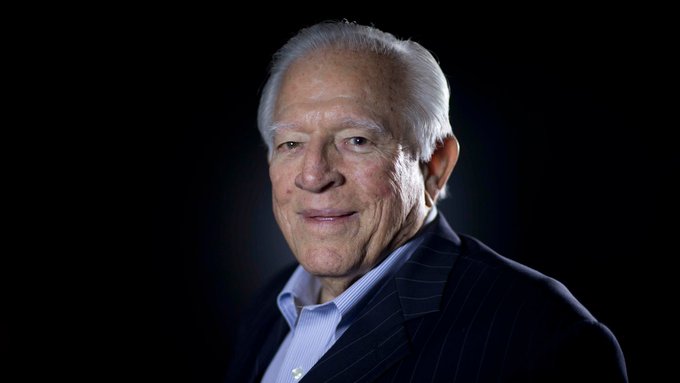
Fania’s co-founder Johnny Pacheco, dies

by Felix Contreras

Johnny Pacheco, one of the founders of the iconic Latin music label Fania Records, died Monday, Feb. 15, at age 85.

Pacheco had been hospitalized in New Jersey for undisclosed reasons, according to Alex Masucci, the brother of Fania cofounder Jerry Masucci. No cause of death was provided.

Fania Records revolutionized the sound of Cuban dance music in the 1970s. During that time, Pacheco was a prolific songwriter and musical arranger whose work helped fuel the careers of Celia Cruz and Ruben Blades. As a producer, his vast musical knowledge of various Latin musical genres helped ignite the rise of the Latin dance genre known as salsa and he became its biggest cheerleader.

The label’s influence extended for several generations, well into the 21st century. DJs and producers have used tracks from the golden age of salsa to create remixed club hits around the world.

Pacheco was born in the Dominican Republic to a musical family in 1935. His father was a band leader that played popular dance music including the Cuban danzón, which would have an influence on the younger Pacheco’s musical career.

In 1963 he partnered with attorney Jerry Masucci to form Fania Records and under Pacheco’s guidance as talent scout, composer, ushered in the international popularity of salsa, a term that encompasses a variety of mostly Cuban dance styles.

spot_img

Don’t you know what they are doing to us?

Who would have thought that the US would be about to collapse in a so short period of time, suddenly.

That the greatest economic-military power would have been attacked in silence – not with nuclear bombs or military weapons, but with biological weapons, and traitors from within who would have sold themselves for money and power to the enemies of freedom. Who would have said that the Apocalypse that I have known in the Holy Scriptures as a child, which describes an end of times, where a satanic destruction takes over the world and a war between good and evil begins, would be witnessed now, in these moments.

That people without faces, with no direction other than that offered by a corrupt government run by ‘experts,’ a gagged press and social networks that keep the population asleep and unconscious – would be walking without our freedoms guaranteed and protected by the Constitution.

Who would have said that the very rulers chosen by ourselves to protect us from external and domestic enemies, would have contributed to the destruction of the economy, taken away our popular power to govern ourselves, and have overshadowed the divine light that has shone on this blessed land called the United States, while the people did not realized what was being done to us.

Those powerful behind the visible power want to kill us, because they say that we are too many and we hinder them, therefore we must stop the births and convince the women of fertile bellies to kill the unborn and thus reduce our numbers, so that an idle and maliciously elite can take the planet for their own benefit.

If you have not noticed, we are about to lose the freedom and the borders that serve us and each country in the world, that protect our cultures, histories, and ancestral customs while many of us have not realized it… They want to put poison in us to die gently and slowly, making us believe that it is for our own good; however, they do not tell us that with certain vitamins taken no virus can kill us. It is time to wake up.

Stop watching TV and the junk news where they offer us their violence and scandals to keep us scared and exalted. I assure you that they are trying to take God away from you so they can manipulate you and take over your minds more easily. Freedom was given to us by God and not by the government, don’t forget.

T h i s i s j u s t my own opinion.

spot_img

UFW: U.S. Citinzenship Act the ‘dawn of a new day’

by the El Reportero’s wire services
UFW Foundation Executive Director Diana Tellefson Torres and United Farm Workers President Teresa Romero responded to introduction of the U.S. Citizenship Act of 2021 by Rep. Linda Sanchez (D-CA) and Rep. Bob Menendez (DNJ), a sweeping immigration bill that would create a path to citizenship for millions of immigrants already in the country including farm workers and Dreamers. “We are encouraged by this important step toward fulfilling the promises President Biden made on Inauguration Day,” said President of the United Farm Workers Teresa Romero. “We look forward to Congress continuing the work to rebuild what is broken and to blaze a path forward.” “It’s the dawn of a new day,” said UFW Foundation Executive Director Diana Tellefson Torres. “The transformative immigration bill put forward by the Biden administration recognizes the humanity and contributions of immigrants — and is the result of decades of determination by immigrants fighting for their right to remain home in the U.S. We are at a promising, turning point in America, making it more important than ever to keep striving forward.” Bolivia returns $350 million to IMF after ‘ir
regular and onerous’ loan LA PAZ — Bolivia´s central bank said on Wednesday it returned a loan of nearly $346.7 million dollars, plus interest, to the International Monetary Fund (IMF) to avoid unnecessarily saddling its economy with debt. The loan was approved last year by the interim government of Jeanine Anez, which argued the funds were a necessary shot-in
the-arm following a political crisis that had led to the resignation of longtime leftist leader Evo Morales. “This loan, in addition to being irregular and onerous due to financial conditions, generated … millions in costs to the Bolivian state,” the bank said in a statement. Bolivia is among the poorest nations in Latin America and has been particularly hardhit by the coronavirus crisis in recent months. The central bank returned $351.5 million to the IMF, which included $4.7 million in interest and commissions. The bank also said it would begin administrative, civil and criminal actions against those responsible for negotiating the loan with the IMF. (Reporting by Danny Ramos, writing by Dave Sherwood, editing by Chris Reese)

spot_img

Talking race and policing: 1960s

Compiled by the El Reportero’s staff

The Los Angeles of the 1960s, which witnessed the Watts uprising, the Chicano Blowouts and Chicano Moratoriums among other movements, will be the topic of the next Conversations on Race and Policing.

The presentation, “Set the Night on Fire: L.A. in the Sixties,” which takes its title from the book by guest speakers Mike Davis and Jon Wiener, will be livestreamed on Zoom beginning at 3 p.m. Wednesday, Feb. 17, and can be accessed from a PC, Mac, Linux, iOS or Android at https://csusb. zoom.us/j/97960458784.

According to the book publisher’s website, “Los Angeles in the sixties was a hotbed of political and social upheaval. The city was a launchpad for Black Power—where Malcolm X and Angela Davis first came to prominence and the Watts uprising shook the nation. The city was home to the Chicano Blowouts and Chicano Moratorium, as well as being the birthplace of ‘Asian American’ as a political identity. It was a locus of the antiwar movement, gay liberation movement, and women’s movement, and, of course, the capital of California counterculture.

Conversations on Race and Policing began in the aftermath of the May 25 death of George Floyd while in the custody of four Minneapolis, Minn., police officers. A video of the incident posted on social media has led to widespread protests, the firing of four police officers, the arrest of one officer on a second-degree murder charge, the other three on charges of aiding and abetting second-degree murder – and a spotlight worldwide on race and policing.

Previous forums also are posted online (more recordings will soon be available for viewing) on the CSUSB History Club Lecture Series YouTube channel.

The ongoing Conversations on Race and Policing series is hosted by CSUSB students Marlo Brooks and Yvette Relles-Powell.

The series is organized by Brooks and Relles-Powell, CSUSB faculty members Mary Texeira (sociology) and Jeremy Murray (history), Robie Madrigal, public affairs/ communication specialist for the CSUSB John M. Pfau Library, and community member Stan Futch, president of the Westside Action Group.

And coming up next in the series schedule on Feb. 24 will be a screening and discussion of the film, “Slavery by Another Name,” which examines the forced labor systems that targeted African Americans in the post-Civil War era. Marc Robinson, CSUSB assistant professor of history, will facilitate the discussion after the screening.

spot_img

Here’s why eating garlic and onions can prevent diabetes and more

by Evangelyn
Rodríguez Alliums are diseasefighting vegetables widely used as everyday food and traditional medicines. This incredible family of edible medicinal plants is composed of garlic, white and purple onions, leeks, chives, scallions and shallots. According to studies, alliums contain unique compounds called organosulfur compounds and natural antioxidants called polyphenols that are responsible for their disease-fighting activities. In a recent study, researchers at the Federal University of Technology by Evangelyn Rodríguez Alliums are diseasefighting vegetables widely used as everyday food and traditional medicines. This incredible family of edible medicinal plants is composed of garlic, white and purple onions, leeks, chives, scallions and shallots. According to studies, alliums contain unique compounds called organosulfur compounds and natural antioxidants called polyphenols that are responsible for their disease-fighting activities. In a recent study, researchers at the Federal University of Technology and purple onion show antioxidant, antidiabetic and antihypertensive properties Garlic and onions are spices commonly used in cooking. They also serve as ingredients in several traditional delicacies in Nigeria that are known to contain plenty of polyphenols. To assess the beneficial properties of garlic, white onion and pur
ple onion, the researchers first obtained extracts from each and assessed their inhibitory effects on certain enzymes. They also conducted assays to determine the antioxidant capacities of the extracts. ACE is the enzyme responsible for converting angiotensin I into angiotensin II, the hormone that increases blood pressure, as well as body water and sodium content. Angiotensin II elevates
blood pressure by constricting the blood vessels; hence, chemicals that can inhibit the activity of ACE, which is responsible for the production of angiotensin II, are used for the treatment of hypertension. a-Amylase is the enzyme that breaks down starch and glycogen into glucose and maltose (two glucose molecules bound together). In humans, this enzyme is produced by the salivary glands and the pancreas. a-Glucosidase, on the other hand, is responsible for breaking down carbohydrates in the small intestine and facilitating the absorption of glucose. Inhibiting the activity of this enzyme is one of the strategies currently used to prevent the rise of blood sugar levels following a carbohydrate-filled meal. The researchers reported that the garlic, purple onion and white onion extracts inhibited the activities of ACE, a-amylase and a-glucosidase in vitro in a concentrationdependent manner. At a half maximal inhibitory concentration (IC50) of 0.59 mg / mL, the purple onion extract exhibited a higher inhibitory effect on ACE than the white onion extract (IC50 = 0.66 mg / mL) and the garlic (IC50 = 0.96 mg / mL) extract. Meanwhile, the white onion extract showed a significantly stronger inhibitory effect on a-amylase at an IC50 of 3.93 mg / mL than the garlic extract (IC50 = 8.19 mg / mL) and the purple onion (IC50 = 8.27 mg / mL) extract. The garlic extract, on the other hand, showed a similar inhibitory effect (IC50 = 4.50 mg / mL) on a-glucosidase as the white and purple onion extracts. All three extracts also showed dose-dependent free radical scavenging activity and reducing power in the antioxidant assays. Based on these findings, the researchers concluded that garlic, white onion and purple onion can be used to treat or prevent diabetes and hypertension, thanks to their ability to inhibit ACE, a-amylase and a-glucosidase activity, as well as lipid peroxidation in the pancreas and the heart. (Natural News)

spot_img

US urges Mexico to heed private sector concerns

US secretary of state to meet with Mexico’s foreign affairs and economy ministers

by Mexico News Daily

The United States has urged Mexico to listen to the concerns of the private sector with regard to the proposed overhaul of the electricity market to favor the state-owned Federal Electricity Commission (CFE) over private companies, many of which have invested in renewable energy.

During a call with reporters on Thursday to outline United States Secretary of State Antony J. Blinken’s “virtual travel” to Mexico and Canada on Friday, acting assistant secretary Julie J. Chung of the State Department’s Bureau of Western Hemisphere Affairs was asked whether she expected Blinken to address the proposed changes.

“Yeah, there are a whole host of issues related to USMCA implementation that’s ongoing,” Chung responded.

“In terms of the electricity and energy issues, that’s another area that we’ll be discussing in the medium term and long term because there are many aspects that we’re hearing from the private sector about their concerns. But this is where we encourage Mexico to listen to the stakeholders, to listen to the private sector companies and really provide that culture, the atmosphere of free investment and transparency so that companies will continue to invest in Mexico.

” Several analysts said this week that the proposed reform to the Electricity Industry Law would scare off foreign and domestic investment in the energy sector, especially renewables. The United States Chamber of Commerce warned earlier this month that the bill, which passed the lower house of Congress on Tuesday, contravenes Mexico’s commitments under the USMCA.

The electricity bill appears set to be one of several issues to be examined during bilateral talks on Friday.

Chung indicated that there will be a broad range of topics up for discussion at separate virtual meetings Blinken will attend with Mexico’s Foreign Minister Marcelo Ebrard and Economy Minister Tatiana Clouthier.

After “traveling” virtually to the border crossing between El Paso, Texas, and Ciudad Juárez, Chihuahua, Blinken will speak with Ebrard, Chung said, adding that it will be the third time the two men have spoken since the new United States government took office in January.

“They’re expected to speak about continued collaboration on shared concerns such as migration issues, including the winding down of the MPP, the migration protection protocols,” she said, referring to the the United States policy introduced by the Trump administra tion that forces migrants to remain in Mexico as they await the outcome of their asylum claims in the U.S.

Chung said that Binken and Ebrard are also expected to discuss “Covid-19 security, regional economic competitiveness, climate change, and other issues of mutual interest.”

She said that the secretary of state and Clouthier “are expected to discuss various economic topics, including how to strengthen even further our deep and dynamic trade and investment relationship.”

The State Department said in a statement that the United States and Mexico “enjoy a strong partnership, and this trip reinforces the importance of that relationship under the Biden administration.”

It said the bilateral trade relationship, shared security challenges, regional migration, climate change, and other issues of mutual interest will be on the agenda at Blinken’s meetings.

But the statement made it clear that the United States’ relationship with Canada is the closer one.

It observed that the United States and Canada are “neighbors, friends, and allies” but didn’t refer to Mexico in such glowing terms. Blinken will also meet virtually with Canadian Prime Minister Justin Trudeau but President López Obrador, who has a clear preference for domestic issues over international ones, will not be involved in Friday’s talks.

The Mexican president did, however, weigh in on the electricity bill issue on Friday, calling on the United States to respect Mexico’s energy sovereignty. “They believe that we should act in a certain way, that’s OK because freedom has to be guaranteed not just in one country but as a universal principle. But we must respect each other in … the management of electricity policy,” López Obrador told reporters at his regular news conference.

spot_img

Unhoused, thrown off the levee, no place to go

by David Bacon

It was after midnight on Jan. 21 when Tulare County sheriffs walked into the encampment of unhoused people on the levee of the Tule River. “They parked on the highway,” remembers Rosendo “Chendo” Hernández, who shares a small trailer parked under a tree with his partner Josefina. “I heard them walking around in front, and then they called out to me to open my door. They said we were trespassing on private property and we had to leave.”

Sheriffs made him sign a notice, Hernández says, giving him a week to remove his possessions and find another place to live. Deputies then went to other levee residents who have set up shacks or impromptu shelters along the river. Mari Perez, co-director of the Larry Itliong Resource Center in nearby Poplar, estimates that includes about 150 people. “They said they’d arrest us if we didn’t sign,” Hernández recalls, and one officer, he charges, drew his gun. “People are on edge, especially because of what happened on the St. John’s River.”

The sheriff’s warning to the Tule River residents came 10 days after police in neighboring Visalia, Tulare County’s largest city, evicted another group of people on the St. John’s River levee. Residents there were forced to take what possessions they could carry, while heavy construction equipment piled up what was left. A fire later broke out in which those possessions were incinerated.

Tulare County is not unique. Similar situations face unhoused people across the state. Here they are unfolding along rivers in the heart of the San Joaquin Valley, the country’s richest and most productive agricultural region. That wealth, however, does not produce housing for the valley’s impoverished residents, who instead face the use of law enforcement to remove them and render them invisible.

The use of police to get rid of the encampments of people living outdoors is hardly new, whether in the San Joaquin Valley or the rest of California. In 2009 a sweep by Visalia police of St. John’s River camps was witnessed by Bill Simon, then chair of the Fresno chapter of the American Civil Liberties Union. Afterwards, “The river was as empty as the dreams of the homeless who were being evicted,” he observed. “Some people [had] lived there for as long as seven to 14 years.”

Fresno, the valley’s biggest city, not only has the largest number of residents living on the street, but a long history of efforts to make them leave. The city passed a “ban on camping” on the streets in August 2017. In 2018 police had 9,000 “contacts” with people sleeping on sidewalks, yet their numbers continued to swell.

Jerry Dyer, former Fresno chief of police, was elected mayor last year, and he announced a new initiative on Jan. 22, “Project Offramp,” to force homeless people to leave camps set up on the property of Caltrans. “Even though it’s not our jurisdiction,” Dyer admitted, he will send police and city workers to tell the people sleeping near freeways to leave. “We can’t get used to homeless people living in our neighborhoods … It’s time we reclaim our neighborhoods and reclaim our freeways,” Mayor Dyer earlier told the local Fox affiliate.

The Offramp project will supposedly find housing for the 250 people which Dyer estimates live near freeways. But they are only some of the 2,386 people living out of doors in Fresno city and county in 2020, an increase of 598 just from the previous year.

Nevertheless, in 2019 the U.S. Supreme Court backed a ruling by the Ninth Circuit Court of Appeals holding that “people experiencing homelessness cannot be criminally punished for sleeping outside on public property if there are no available alternatives,” according to the National Low Income Housing Coalition. NLIHC president and CEO Diane Yentel explained, “Cities must stop attempting to criminalize and hide their communities’ homeless people and instead work toward providing real solutions, starting with the only thing that truly ends homelessness: access to safe, affordable, accessible homes.”

Police and sheriff actions to eliminate outdoor encampments, therefore, require that displaced people must have access to alternative housing. Hernández says that the notice from the Tulare County sheriff claimed replacement housing was available, although the deputies couldn’t tell him where it was. “A trailer park would charge us $450 a month,” he says, “and we just don’t have it.” Last year the New Porterville Rescue Mission on A Street was closed by the city after it couldn’t come up to safety and health codes, and one resident complained of pervasive cockroach infestation.

Part of the Tule River levee lies inside Porterville, while part of it is in the county’s unincorporated area. According to the Kings/Tulare Homeless Alliance’ 2020 Point in Time survey, 704 people in Tulare County were sleeping outside and more than two-thirds of them had been doing so for more than a year. Over half are Latinos or other people of color, and their number has nearly doubled since 2013. In Porterville itself 174 people were unsheltered. Only 163 people in both Porterville and the surrounding county were able to find beds in a shelter. While social services exist for unhoused people, Tulare County, like every county in California, clearly can’t deal with the number and rapid increase in people who have no adequate place to live.

Sleeping in shelters, however, is dangerous during the pandemic. The Centers for Disease Control and Prevention advises that “if individual housing options are not available, allow people who are living unsheltered or in encampments to remain where they are. Clearing encampments can cause people to disperse throughout the community and break connections with service providers. This increases the potential for infectious disease spread.” Instead of forcing people to leave, the CDC asks authorities to improve sanitation, and provide bathrooms with water and washing materials.

The CDC recommendation was the basis for a court decision in Santa Cruz on Jan. 20, in which federal Judge Susan van Keulen stopped City Manager Martín Bernal and the police department from evicting people living along the San Lorenzo River. Bernal’s efforts led to a confrontation between police and residents, who were supported by community activists, on Dec. 28. Afterwards Van Keulen issued a temporary restraining order against the city.

In Tulare County community organizer Mari Perez says residents along the levee are considering similar legal actions, and attorney Michael Bracamontes has written a warning letter to the board of supervisors. “The Tule River inhabitants,” he charges, “are not being punished for any voluntary act, but instead for their involuntary status of being homeless. Because the Tule River inhabitants have nowhere else to go, they are forced to choose between sleeping exposed to the elements or subjecting themselves to criminal punishment by sleeping by the river.”

Meanwhile, the situation has grown more tense since deputies detained Hernández for a parole violation, although he was released two days later on his own recognizance. His detention added to the fear that the deputies might arrive at any moment to begin evictions. Hernández had been helping bring public attention to the situation of the river dwellers. “If we’ve got to go we’ve got to go,” he said glumly. “But where? It wouldn’t be so bad if we just had a place to go, but we don’t. And if we’re moved out we could be a lot less safe. The COVID is out there, everywhere you go.”


spot_img

LA of the ’60s focus of next Conversations on Race and Policing

Compiled by the El Reportero‘s staff

The Los Angeles of the 1960s, which witnessed the Watts uprising, the Chicano Blowouts and Chicano Moratoriums among other movements, will be the topic of the next Conversations on Race and Policing.

The presentation, “Set the Night on Fire: L.A. in the Sixties,” which takes its title from the book by guest speakers Mike Davis and Jon Wiener, will be livestreamed on Zoom beginning at 3 p.m. Wednesday, Feb. 17, and can be accessed from a PC, Mac, Linux, iOS or Android at https://csusb.zoom.us/j/97960458784.

According to the book publisher’s website, “Los Angeles in the sixties was a hotbed of political and social upheaval. The city was a launchpad for Black Power—where Malcolm X and Angela Davis first came to prominence and the Watts uprising shook the nation. The city was home to the Chicano Blowouts and Chicano Moratorium, as well as being the birthplace of ‘Asian American’ as a political identity. It was a locus of the antiwar movement, gay liberation movement, and women’s movement, and, of course, the capital of California counterculture.

Conversations on Race and Policing began in the aftermath of the May 25 death of George Floyd while in the custody of four Minneapolis, Minn., police officers. A video of the incident posted on social media has led to widespread protests, the firing of four police officers, the arrest of one officer on a second-degree murder charge, the other three on charges of aiding and abetting second-degree murder – and a spotlight worldwide on race and policing.

Previous forums also are posted online (more recordings will soon be available for viewing) on the CSUSB History Club Lecture Series YouTube channel.

The ongoing Conversations on Race and Policing series is hosted by CSUSB students Marlo Brooks and Yvette Relles-Powell.

The series is organized by Brooks and Relles-Powell, CSUSB faculty members Mary Texeira (sociology) and Jeremy Murray (history), Robie Madrigal, public affairs/communication specialist for the CSUSB John M. Pfau Library, and community member Stan Futch, president of the Westside Action Group.

And coming up next in the series schedule on Feb. 24 will be a screening and discussion of the film, “Slavery by Another Name,” which examines the forced labor systems that targeted African Americans in the post-Civil War era. Marc Robinson, CSUSB assistant professor of history, will facilitate the discussion after the screening.


spot_img

Fania Records Co-Founder Johnny Pacheco Dies At 85

by Felix Contreras

Shared from NPR’s Alt.Latino/Facebook

Johnny Pacheco, one of the founders of the iconic Latin music label Fania Records, died Monday, Feb. 15,  at age 85.

Pacheco had been hospitalized in New Jersey for undisclosed reasons, according to Alex Masucci, the brother of Fania co-founder Jerry Masucci. No cause of death was provided.

Fania Records revolutionized the sound of Cuban dance music in the 1970s. During that time, Pacheco was a prolific songwriter and musical arranger whose work helped fuel the careers of Celia Cruz and Ruben Blades. As a producer, his vast musical knowledge of various Latin musical genres helped ignite the rise of the Latin dance genre known as salsa and he became its biggest cheerleader.

The label’s influence extended for several generations, well into the 21st century. DJs and producers have used tracks from the golden age of salsa to create remixed club hits around the world.

Pacheco was born in the Dominican Republic to a musical family in 1935. His father was a band leader that played popular dance music including the Cuban danzón, which would have an influence on the younger Pacheco’s musical career.

When the family moved to New York in the late 1940s from the Dominican Republic to escape the dictatorship of Rafael Trujillo, Pacheco became immersed in music. He taught himself to play accordion, violin, saxophone and clarinet. He attended the Juilliard School of Music to study percussion and soon became a busy A-list studio musician, playing on sessions for commercial jingles, record dates and with the NBC Studio Orchestra.

In the early 1960s, his band Pacheco Y Su Charanga popularized a style called pachanga and soon he was touring throughout the US, Latin America, Europe and Asia, where he learned how to appeal to larger audiences.

In 1963 he partnered with attorney Jerry Masucci to form Fania Records and under Pacheco’s guidance as talent scout, composer, arranger, musician and record producer, the label ushered in the international popularity of salsa, a term that encompasses a variety of mostly Cuban dance styles including mambo, guaracha, cha cha cha and also included Puerto Rican rhythms like bomba as well as the Dominican merengue.

“At first we didn’t think we were anything special,” Pacheco told NPR in 2006, “Until every place we went, the lines were unbelievable. They tried to rip the shirts off our backs. It reminded me of The Beatles.”

The label helped make stars of lead vocalists like Cruz, Blades, Hector Lavoe, Pete “El Conde” Rodriguez and Cheo Feliciano, as well as band leaders Ray Barretto and Willie Colón.

Pacheco spent the remainder of his career continuing to search and develop new talent, all the while promoting the vast Fania catalog with concerts and lectures. Ever the creative band leader, in his later years he led yet another band under his name, Johnny Pacheco Y Su Tumbao Añejo (Johnny Pacheco and His Vintage Groove).


spot_img

Essential but disposable: how California farmworkers battle COVID-19

POPLAR, CA - 13JULY20 - Farmworkers pick pluots in a field near Poplar, in the San Joaquin Valley, in a crew of Mexican immigrants. Most workers wear facemasks or bandannas as a protection against spreading the coronavirus. Erika picks in the crew. Copyright David Bacon

by Jenny Manrique


Study reveals the high degree of exposure to the coronavirus in the fields and the profound impact on the economy and mental health of these families


by Jenny Manrique, Ethnic Media Services


Feb 4, 2021 – In addition to high risk exposure to COVID-19, farmworkers in California have borne the brunt of setbacks caused by the pandemic: loss of income and employment, sudden childcare costs due to school closings, problems with distance learning due to poor or zero Internet access, food shortages, housing insecurity and even mental health problems.

The dire diagnosis was compiled in the report “Always Essential, Perpetually Disposable: California Farm Workers and the COVID-19 Pandemic,” a research conducted by the California Institute for Rural Studies and several grassroots organizations.

“The study findings show that farmworkers and their families experience a lot of reality and a lot of fear,” said co-author Bonnie Bade, professor of anthropology at California State University in San Marcos, who spoke at a Feb. 3 video press conference.

“The reality is the job loss and loss of income, unsafe and high risk working conditions, lack of health insurance and sick leave, housing insecurity, deportation and death,” she added.

“The fear is of being exposed at work and infecting their children, of not being able to put food on the table, of not having the technological resources to support distance learning … fear of eviction, fear of testing positive and being intubated in a hospital and dying alone.”

The report includes stories collected through 63 in-depth interviews as a follow-up to the statewide COVID-19 Farmworkers Survey (COFS) of 915 people last year, in response to the overwhelming number of indigenous and Latino people in the fields falling sick from COVID. Although the data shared is from California, the complete study tracks workers in the fields of Oregon and Washington.

“The mental health of farmworkers’ families emerges as a primary concern voiced by participants,” Bade said. “Working women sacrifice wages to stay home and navigate an unfamiliar world of computers to keep kids online, while isolated teens contemplate and commit suicide.”

Prevention practices against the coronavirus in the fields are almost nil and some bosses even refuse to give the workers basic resources such as masks, alcohol and soap. Although farmers try to keep physical distance, many should carpool with colleagues or live in shared houses with other families, increasing the risk of infection.

Federal or state aid provided during the pandemic is delayed or directly denied to this population, according to those interviewed.

“We asked them for masks and they (bosses) just laughed. And we asked for soap to wash our hands, and they (bosses) just laughed. Several of my coworkers and I called Cal OSHA (California Division of Occupational Safety and Health Administration), to ask for help before we could get infected. They told us that they were going to send letters and that they were going to talk to our boss but they never did anything.”

Eliseo’s testimony was shared by Erica Fernandez Zamora, a community organizer for the California Central Valley Environmental Justice Network, who interviewed residents in the San Joaquin Valley.

“Barriers for farmworkers to report COVID-19-related complaints should be eased, and they must be protected from retaliation,” Fernandez Zamora said. “Agencies like Cal OSHA should bolster health and safety enforcement for these workers.”

Another concern for the campesinos is that many belong to mixed-status families who were excluded from receiving financial relief in the first round of stimulus checks.. The incoming Biden administration has said that a social security number is not needed to access such relief going forward.

Community based organizations (CBOs) and migrant clinics have taken the state’s place in providing food and rent relief through the few donations they receive. They also distribute sombreros, working gloves and personal protective equipment (PPE), and ensure that information about COVID-19 is available not only in Spanish, but in indigenous and Asian languages.

“Many times public information is shared in academic Spanish format and even that can be inaccessible to Spanish-speaking communities,” said Paola Araceli Illescas, another researcher who works at the Vista community clinic that serves north county in San Diego. For this study, a total of 15 interviews were conducted in other languages than Spanish and English.

“CBOs are often trusted messengers for the community and can be key to dispelling any fears of misunderstandings caused by threats of public charge,” added Araceli, referring to the test to determine whether someone who is applying for permanent residency or some other immigration relief, may become dependent on federal public benefits in the future. This public charge, which Biden has vowed to eliminate, has resulted in farmers’ reluctance to even get tested for COVID-19 and increased vaccine hesitancy.

“I watched on the news that the hospitals are at full capacity and I am very scared because I don’t have health insurance and I feel that my life as an undocumented person is not as valuable as saving the life of a US citizen,” said Rodolfo, 46, one of those interviewed for the report.

“We’re exposing ourselves every day to this virus and we don’t have the good fortune to be able to work from home,” said Martin, concerned about the reduction in his salary. “You can’t harvest from a computer.”

The researchers emphasized the need for the California legislature to pass SB 562, the Healthy California Act, which guarantees access to health for all Californians regardless of their immigration status.

“It’s time to prioritize free access to COVID testing and vaccination for farmworkers and other essential undocumented workers,” said Deysi Merino-González of the Farmworker CARE coalition in San Diego.

“I hope that the next relief package will prioritize their legalization … Farmworkers are the backbone of the nation’s food system, the food they give us supports the immune system attacked by this pandemic,” added Merino González.

The report also includes other recommendations such as investing in broadband internet infrastructure in rural California and including farmworkers in developing response plans for future emergencies.

spot_img