Thursday, September 3, 2026
Home Blog Page 213

Here’s why eating garlic and on¬ions can prevent diabetes and more

by Evangelyn Rodríguez

Alliums are disease-fighting vegetables widely used as everyday food and traditional medicines. This incredible family of edible medicinal plants is com­posed of garlic, white and purple onions, leeks, chives, scallions and shallots. Ac­cording to studies, alliums contain unique compounds called organosulfur com­pounds and natural anti­oxidants called polyphenols that are responsible for their disease-fighting activities.

In a recent study, re­searchers at the Federal University of Technology  in Nigeria investigated the benefits of eating garlic, white onion and purple on­ion against serious conditions like diabetes and hyperten­sion. They confirmed these by looking at how extracts from the three alliums af­fect the activity of diabetes-related enzymes, such as a-amylase and a-glucosidase, and the hypertension-related enzyme, angiotensin-con­verting enzyme (ACE).

The researchers reported their findings in an article published in the Journal of Dietary Supplements.

Garlic, white onion and purple onion show an­tioxidant, antidiabetic and antihypertensive properties

Garlic and onions are spices commonly used in cooking. They also serve as ingredients in several tradi­tional delicacies in Nigeria that are known to contain plenty of polyphenols. To as­sess the beneficial properties of garlic, white onion and pur­ple onion, the researchers first obtained extracts from each and assessed their inhibitory effects on certain enzymes. They also conducted assays to determine the antioxidant capacities of the extracts.

ACE is the enzyme re­sponsible for converting an­giotensin I into angiotensin II, the hormone that increases blood pressure, as well as body water and sodium con­tent. Angiotensin II elevates blood pressure by constrict­ing the blood vessels; hence, chemicals that can inhibit the activity of ACE, which is re­sponsible for the production of angiotensin II, are used for the treatment of hypertension.

a-Amylase is the enzyme that breaks down starch and glycogen into glucose and maltose (two glucose mole­cules bound together). In hu­mans, this enzyme is produced by the salivary glands and the pancreas. a-Glucosidase, on the other hand, is responsible for breaking down carbohy­drates in the small intestine and facilitating the absorp­tion of glucose. Inhibiting the activity of this enzyme is one of the strategies cur­rently used to prevent the rise of blood sugar levels follow­ing a carbohydrate-filled meal.

The researchers reported that the garlic, purple onion and white onion extracts inhibited the activities of ACE, a-amy­lase and a-glucosidase in vitro in a concentration-dependent manner. At a half maximal in­hibitory concentration (IC50) of 0.59 mg / mL, the purple onion extract exhibited a higher inhibitory effect on ACE than the white onion extract (IC50 = 0.66 mg / mL) and the garlic (IC50 = 0.96 mg / mL) extract.

Meanwhile, the white on­ion extract showed a signifi­cantly stronger inhibitory effect on a-amylase at an IC50 of 3.93 mg / mL than the garlic extract (IC50 = 8.19 mg / mL) and the purple onion (IC50 = 8.27 mg / mL) extract. The garlic extract, on the other hand, showed a similar inhibitory effect (IC50 = 4.50 mg / mL) on a-glucosidase as the white and purple on­ion extracts. All three extracts also showed dose-dependent free radical scavenging ac­tivity and reducing power in the antioxidant assays.

Based on these findings, the researchers concluded that garlic, white onion and purple onion can be used to treat or prevent diabetes and hypertension, thanks to their ability to inhibit ACE, a-amylase and a-glucosidase activity, as well as lipid per­oxidation in the pancreas and the heart. (Natural News)

spot_img

A democratic food system means unions for farmworkers

by David Bacon

The people who labor in U.S. fields produce immense wealth, yet poverty among farmworkers is widespread and endemic. It is the most undemocratic feature of the U.S. food system. Cesar Chavez called it an irony, that despite their labor at the system’s base, farmworkers “don’t have any money or any food left for themselves.”

Enforced poverty and the racist structure of the field labor workforce go hand in hand. U.S. industrial agri­culture has its roots in slavery and the brutal kidnapping of Africans, whose labor devel­oped the plantation economy, and the subsequent semi-slave sharecropping system in the South. For over a cen­tury, especially in the West and Southwest, industrial agriculture has depended on a migrant workforce, formed from waves of Chinese, Jap­anese, Filipino, Mexican, South Asian, Yemeni, Puerto Rican and more recently, Central American migrants.

The dislocation of com­munities produces this mi­ grant workforce, as people are forced by poverty, war and political repression to leave home to seek work and sur­vive. Any vision for a more democratic and sustainable system must acknowledge this historic reality of poverty, forced migration and inequal­ity, and the efforts of work­ers themselves to change it.

California’s Tulare County, for instance, pro­duced $7.2 billion in fruit, nuts and vegetables in 2019, making it one of the most productive agricultural areas in the world. Yet 123,000 of Tulare’s 453,000 residents live below the poverty line. Over 32,000 county residents are farmworkers; according to the US Department of La­bor the average annual in­come of a farmworker is be­tween $20,000 and $24,999, less than half the median U.S. household income.

Poverty has its price. It has forced farmworkers to continue working during the COVID-19 pandemic, al­though they are well aware of the danger of illness and death. As the gruesome year of 2020 came to an end, Tu­lare County, where the Unit­ed Farm Workers was born in the 1965 grape strike, had 34,479 COVID-19 cases, and 406 people had died. That gave it infection and death rates more than twice that of urban San Francisco, or Silicon Valley’s Santa Clara County. COVID rates fol­low income. Median family annual income in San Fran­cisco is $112,249 and in Santa Clara it’s $124,055. Half of Tulare County families, al­most all farmworkers, earn less than its median $49,687.

Democratizing the food system starts with acknowl­edging this disparity and seeking the means to end it. And in fact, the broader working class of California has concrete reasons for sup­porting farmworkers. CO­VID and future epidemics, for instance, do not stay neatly confined to poor rural bar­rios, but spread. Pesticides that poison farmworkers re­main on fruit and vegetables that show up in supermar­kets and dinner tables. Labor contractors and temporary jobs were features of farm­worker life long before pre­carious employment spread to high tech and became the bane of UBER drivers.

The rural legacy of economic exploitation and racial inequality was chal­lenged most successfully in 1965, when the grape strike began first in Coach­ella, and then spread to Delano. It was a product of decades of worker organiz­ing and earlier farm work­er strikes, and took place the year after civil rights and labor activists forced Congress to repeal Public Law 78 and end the bra­cero contract labor program.

The grape strike was a fundamental democratic movement, started by rank-and-file Filipino and Mexi­can workers. Although some couldn’t read or write, they were politically sophisticat­ed, had a good understand­ing of their situation, and chose their action carefully. Growers had pitted Mexi­cans and Filipinos against each other for decades. When Filipinos acted first by going on strike, and then asked the Mexican work­ers, a much larger part of the workforce, to join them, they believed that work­ers’ common interest could overcome those divisions. Their multi-racial unity was a precondition for winning democracy in the fields.

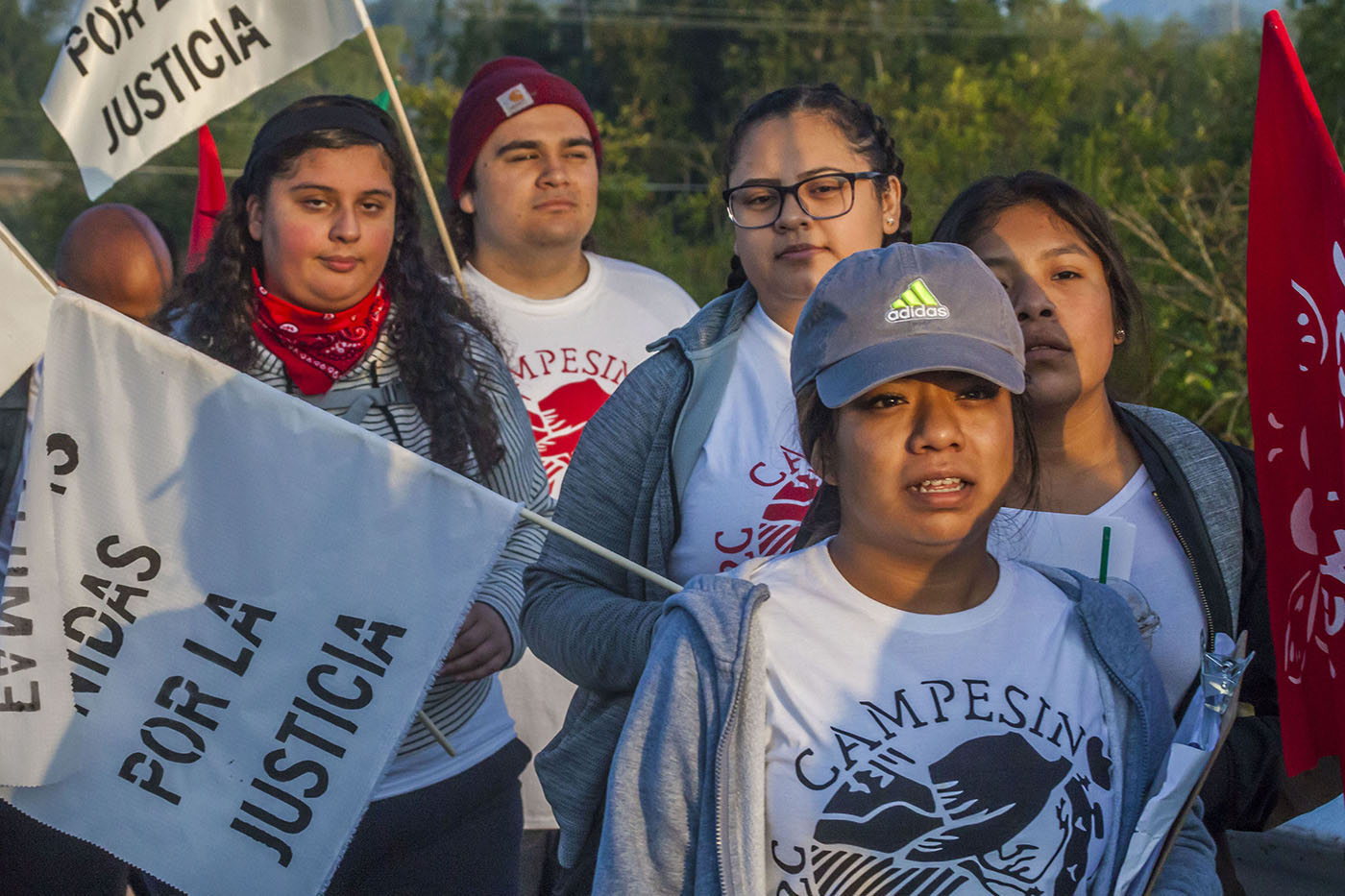
Democracy in the fields is based on the idea that farm­workers belong to organic communities – that they are not just individuals without family or community, whose labor must be made avail­able at a price growers want to pay. When Familias Uni­das por la Justicia set up a coop to grow blueberries, Tierra y Libertad, it sought to create instead a new ba­sis for community, a sys­tem in which workers could make the basic decisions as a community – about what to grow, how land should be used, and how to share the work without exploitation.

(This article has been shorten to fit space. It will be published later in its entirely online at elreporteroSF.com in the Front Page section.)

spot_img

5,800 fully vaccinated Americans have contracted COVID-19, 74 deads: CDC

by Zachary Stieber

April 15, 2021 – Nearly 6,000 Americans have con­tracted COVID-19 despite being fully vaccinated against the virus that causes it, fed­eral officials said April 15.

The Americans con­tracted the virus, which causes COVID-19, despite getting both doses of the Pfizer or Moderna vaccine, or the single-shot Johnson & Johnson vaccine, the Centers for Disease Control and Prevention (CDC) told The Epoch Times via email.

Of the 5,814 fully vac­cinated people who were confirmed as so-called breakthrough cases, nearly 400 required treatment at hospitals and 74 died.

A little over 40 percent of the infections were in peo­ple 60 years of age or older, and 65 percent were female. The CDC declined to make a state-by-state breakdown available, though it has de­veloped a national database where state health depart­ment investigators can enter, store, and manage data for cases in their jurisdiction.

The CDC later post­ed a webpage on the br e akthrough ca s e s .

The figures were for cases through April 13.

More than 78 million peo­ple have been fully vaccinat­ed against COVID-19 in the United States as of April 15.

“To date, no unex­pected patterns have been identified in case demo­graphics or vaccine charac­teristics,” the CDC stated.

“COVID-19 vaccines are effective, and are a critical tool to bring the pandemic under control. All of the available vaccines have been proven effective at preventing se­vere illness, hospitalizations, and deaths. However, like is seen with other vaccines, we expect thousands of vaccine breakthrough cases will oc­cur even though the vaccine is working as expected.”

CDC Director Ro­chelle Walensky stated dur­ing a congressional hear­ing on April 15 that the causes of the breakthrough cases are being probed. “Some of these break­throughs are, of course, fail­ure of an immune response in the host. And then some of them we worry might be related to a variant that is circulating. So we’re looking at both,” she said.

The number of cases the CDC has identified does not include people who con­tracted COVID-19 less than two weeks after their final dose, according to Walensky.

In March, states began reporting numbers for peo­ple who had gotten infected despite full vaccination. Epidemiologists in Wash­ington state identified 217 of the cases, five of whom died. In Michigan, 246 of the cases were recorded be­tween Jan. 1 and March 31. Three of those patients died.

Texas, South Carolina, and Oregon are among the other states that have re­ported more than 100 cases among residents.

Washington state Health Secretary Umair Shah said in a statement: “Finding evidence of vaccine break­through cases reminds us that, even if you have been vaccinated, you still need to wear a mask, practice social distancing, and wash your hands to prevent spreading COVID-19 to others who have not been vaccinated.

“We encourage every­one to get vaccinated as soon as they are eligible, and encourage friends, loved ones, and co-workers to do the same.”

According to U.S. drug regulators, Pfizer’s vaccine is 95 percent effective in preventing infection by the CCP virus. Moderna’s was shown in a clinical trial to be 94.1 percent effective, while Johnson & Johnson’s was 66.9 percent effective. The Johnson & Johnson vaccine was tested when variants were circulating, unlike the others.

The percentages are based on results from vac­cine recipients two weeks after the final vaccination.

The percentage of vaccine breakthroughs in a population depends on multiple factors, including vaccine efficacy, the amount of virus circulat­ing, and the length of time since vaccination, according to Natalie Dean, an assistant professor of biostatistics at the University of Florida.

“I love to see small numbers as much as any­one, but know that numbers like this cannot be directly interpreted as a measure of vaccine efficacy (although I have a feeling they will be). We can only interpret them against a background rate in unvaccinated peo­ple,” Dean wrote on Twitter.

“Similarly, ‘most break­throughs have been in el­derly adults’ should not be read as the vaccine is less effective in elderly adults. The majority of vaccinations (and the longest amount of follow-up time) have been in elderly adults. Again, we need more info to interpret.”

Dr. Anthony Fauci, the longtime head of the Na­tional Institute of Allergy and Infectious Diseases, stated in a briefing last week that the breakthrough cases are not a cause for concern. “I think the important thing is to look at what the denominator of vaccinated people is, because it is very likely—and what we’re hear­ing at least indirectly, and we’re certainly going to be confirming that—that that number of individuals who were breakthrough infec­tions is not at all incompat­ible with a 90-plus percent vaccine efficacy,” he said.  “So I don’t think that there needs to be concern about any shift or change in the efficacy of the vaccine.”

spot_img

Young woman of Purépecha origin receives Harvard scholarship

Elizabeth is a young Mexican woman who, thanks to her effort and tal­ent, managed to be accepted and also received a scholar­ship to study at the presti­gious Harvard University

by Mexico Desconocido

Elizabeth is a young stu­dent of Purépecha origin who, thanks to her outstanding tal­ent, obtained a full scholar­ship to study at the univer­sity of her dreams: Harvard. Also, the long-awaited news went viral thanks to Eliza­beth’s emotional reaction upon hearing the news. Here we give you more details!

Mexican talent never ceases to amaze us. And although we have already told you several stories about it (such as Adhara, the Mexican girl with an IQ higher than that of Ein­stein and Hawking), now it is Elizabeth Esteban’s turn.

Is about a young woman who resides in the United States with her parents. These are Purépecha migrants from Michoacán who were forced to emigrate to the neighbor­ing country. Currently, ac­cording to NBC, the fam­ily lives in a mobile home in the state of California.

However, despite the multiple difficulties that the family of indigenous origin has had to face (both econom­ic and cultural), in recent days it received news that has made all the efforts worthwhile.

And it is that, with only 17 years, Elizabeth knew that she had obtained a full scholarship to study Po­litical Science at Harvard University, thus fulfilling one of her greatest dreams.

While she found out, Elizabeth’s reaction was re­corded and was so emotional that it went viral on social networks. Thanks to this, the young woman has already received multiple congratu­lations from Internet users. This is definitely a case of Mexican pride! (Shared from Unknown World).

Harvard – is consistently ranked among the top five universities in the world – despite initially believing she wouldn’t stand a chance.

Harvard’s acceptance rate is 4.7 per cent, while only 12.7 per cent of the student popu­lation is Hispanic or Latino.

The student, who lives in a mobile home in the desert settlement of Mecca, Southern California, has battled constant internet is­sues, making it almost im­possible to learn online dur­ing the Covid lockdown.

In addition, she almost lost her chance at Har­vard altogether when her WiFi cut out during her interview for a place at the prestigious institution, NBC Palm Springs reports.

spot_img

JACKIE ROBINSON DAY

Seventy-four years ago, on April 15, 1947, Jackie Robinson broke the baseball color barrier when he made his historic major league debut. Each year on April 15, Baseball honors Jackie’s legacy by celebrating his life, values, and accomplishments.

By proudly wearing the “42,” Baseball demonstrates a powerful and unified tribute to Jackie Robinson’s legacy. The Giants and Marlins will wear “42” on Friday, April 16 to honor Jackie. Learn more by visiting mlb.com/42

spot_img

Our path forward to advance racial equity

by Brian Lamb Global Head of Diversity & Inclusion at JPMorgan Chase & Co.

Over the past year, and up until recently, we have seen numerous reminders that systemic racism brings devastating consequences for individuals, families and communities. The COVID-19 pandemic is tearing through both Latino and Black communities across the country, disproportionately impacting people in these communities at a much higher rate than white Americans, while leaving a trail of lost jobs (https://projects.propublica.org/coronavirus-unemployment/) and shuttered Latino and Black-owned businesses (https://www. jpmorganchase.com/institute/research/small-business/report-small-businessfinancial-outcomes-duringthe-covid-19-pandemic) in its wake. This, along with  the killing of George Floyd and so many others, has sparked an outpouring of corporate support for Latino and Black Americans in recent months, and we’ve seen numerous examples of companies stepping up to make concrete changes to the way they do business in an effort to advance racial equity around the world. As the largest bank in the United States, it’s long past time for JPMorgan Chase to own its part in creating economic opportunity and inclusion for communities that have been historically marginalized. Systemic racism is a tragic part of America’s history. It’s a congenital defect of our society that’s resulted in racial gaps across virtually every walk of American life, including wealth, homeownership, educational outcomes, health care, incarceration rates and life expectancy. Real lives that matter are impacted by these gaps, and it’s our responsibility to do something about it, given the role of banks in the financial health of the communities we serve.

HOW JPMORGAN CHASE IS COMBATTING THE RACIAL WEALTH DIVIDE

Over the past few months, we’ve reviewed our business practices, products and the role we play in communities across this country to understand the changes we need to make to address the largest drivers of the racial wealth divide. We’ve been especially focused on developing ways to expand affordable lending and housing, increase credit and capital for Latino and Black-owned small businesses, and improve access to tools that will help people in these communities save money and get on a path to sustained financial health. This work led us to make a $30 billion commitment over the next five years to provide economic opportunities in underserved communities — with a special focus on Latino and Black communities. These commitments include loans, equity, and direct funding to promote homeownership and affordable housing. We’ve set a goal of originating an additional 40,000 home purchase loans for Latino and Black households. To do this we’ve committed $8 billion toward mortgages. We also want underserved communities to be able to take advantage of historically low interest rates, and we’ve committed $4 billion toward helping Latino and Black households refinance their home loans.


CREATING PATHWAYS TO FINANCIAL HEALTH

Through our own research, we know that Latino and Black households tend to have lower savings and higher debt burdens than other groups. Historically, these communities have been forced to grapple with less access to credit, and often have to pay higher financing fees. Too many Latino and Black Americans are completely unbanked as well, which increases the likelihood of turning to predatory alternative financial services like check cashing and payday lenders. To combat this challenge, we aim to help one million people open lowcost checking and savings accounts. To accomplish this, we must build stronger connections to underserved communities, so we’ve committed to hiring 150 new community managers. We’re also planning to open new Community Center branches in the areas that need them most, and increase our marketing outreach to our communities to raise awareness of these efforts.

LEANING IN ON LA TINO AND BLACK ENTREPRENEURSHIP

NTREPRENEURSHIP If we are to make meaningful progress in closing the racial wealth divide, entrepreneurship must be a key part of the equation. We’re committed to helping the job creators in our communities gain access to the credit they need to launch, grow and scale their businesses. As part of this effort, we’ve committed to delivering $2 billion in loans, and to spending an additional $750 million with Latino and Black companies that can supply products and services to JPMorgan Chase. We’re also going to expand our Entrepreneurs of Color Fund to support more Latino and Blacker smallbusiness owners nationwide. As we move forward with these efforts, we know we must hold ourselves accountable if they’re going to achieve their intended impact. We are going to continually assess how these commitments are performing and will adjust when necessary. Ultimately, we know that no single company can close the racial wealth gap, but it is our responsibility to try — and to work with other companies and policymakers along the way. We’re owning our part in this — and we’re just getting started. Sponsored content from JPMorgan Chase & Co. – Visit JPMorganChase. com/Pathforward to learn more about our efforts to advance racial equity, which include affordable housing, minority-owned businesses, financial health, workforce diversity and more.

spot_img

New Rent Relief Program Tries to Help Small Landlords

by Isabella Bloom, Ethnic Media Services

Jie Wang owns three rental properties in Oakland. Her whole family relies on income from tenants paying their rent.

Many have lost their jobs during the pandemic. Eviction moratoriums protect tenants who can’t pay part or all of their rent. But small housing providers like Wang still have mortgages, utilities and other expenses. A lack of government support puts pressure on them to sell their properties.

“Nobody can escape from this coronavirus,” Wang said. “I have a very good relationship with all my tenants. I try to help them.”

Wang spoke on a recent panel hosted by Ethnic Media Services along with other housing rights advocates and researchers. The panel discussed the risk of treating all landlords the same.

The word “landlord” stirs up connotations of large real estate corporations, wealthy enough to maintain their properties through the pandemic. However, small landlords, often referred to as mom-and-pop landlords, have been hit hard by losses in income due to tenants who have been at least partially unable to pay their rent during the pandemic.

According to the Urban Institute, individual investors like Wang rather than large conglomerates own more than 75% of one-to-four-unit rental properties. In addition, mom-and-pop landlords of color are more likely to own duplexes, triplexes and fourplexes.

Their rent rates tend to be cheaper, so they’re also more likely to draw minority tenants.

Maeve Brown is the executive director and founder of Housing and Economic Rights Advocates, a statewide nonprofit law office that provides free legal services to low- and moderate-income Californians. She works with many people of color who have never had any training on how to manage their properties and consistently charge below-market rent rates.

“Another key part of the story here is our failure to appreciate what small landlords are actually providing — our failure systemically to recognize that they really are affordable housing providers,” Brown said. “If localities and our state government actually recognized the truth of that, that should have an impact on the policy choices that they make.”

Mom-and-pop landlords often are also more connected to their communities and tenants.

John Wong, the founding chairman of the Asian Real Estate Association of America, has lived in San Francisco for nearly 67 years and been a realtor for over 40. In the briefing, he described the relationships he’s experienced and witnessed between mom-and-pop landlords and their tenants.

“I talk about this spectrum of housing providers because I think it speaks to our response to COVID,” Wong said.

He added that mom-and-pop landlords tend to know their tenants personally.

“The relationships have typically been very, very amicable,” he said.

Rent relief programs like the $2 trillion CARES Act have primarily benefited larger, wealthier real estate corporations, leaving behind mom-and-pop landlords.

“The policy choices that the state has made have just made no distinction between large landlords and small landlords,” Brown said. “State policy choices have squarely placed the burden of nonpayment of rent on the shoulders of small landlords — of small, affordable housing providers.”

The danger with placing that burden on mom-and-pop housing providers is that it pressures them into selling their properties to investors and real estate conglomerates. The result is that California will lose more and more of its affordable housing.

“If they lose their property, they’re probably going to lose it to an investor who will charge as much money as the market can possibly bear,” Brown said.

Landlords of color are also more likely to have a mortgage and lower income, so the pressure to sell during the pandemic is higher, according to Urban Institute.

There may be new hope for mom-and-pop landlords and their tenants in the form of a new rental assistance program, but it comes with a caveat.

The new California rental relief program intended to help the state’s most vulnerable renters and landlords opened March 15. The program, which comes from Senate Bill 91, extends the eviction moratorium to June 30 and draws from $2.6 billion in federal funds for rent relief.

“The SB 91 moratorium and the state rental assistance program, in my opinion, is the most important thing to have for smaller mom-and-pop housing providers,” Wong said.

Tenants and landlords both have to fill out certain parts of the online application, available on the California state website Housing is Key.

The first group of eligible renters are those with greatest need — households making 50% or less of the area’s median income, or anyone who has been unemployed for at least 90 days.

The next group includes households making 80% or below the area’s median income. Undocumented tenants are also eligible.

Data from Urban Institute shows that, throughout the U.S., less than a third of tenants and less than half of landlords are aware of federal rental assistance programs. This is why John Wong aims to spread information about rental assistance programs to mom-and-pop landlords, especially those who may be linguistically isolated.

“I personally have a heavy focus on making sure that individuals who have English as not their primary language have access to information that these funds are available,” Wong said.

The way the rent relief works is 80% of a tenant’s rent owed between April 1, 2020, and March 31, 2021, will be paid directly to the landlord, so long as the landlord agrees to forgive the remaining 20 percent of the back rent.

But this new rental assistance program doesn’t distinguish between small and corporate landlords. For mom-and-pop landlords like Jie Wang, absorbing the remaining 20% of unpaid rent can be a crippling blow after a year of unpaid rent.

“I’m open to the low-income renter,” Jie Wang said. “As long as I can survive, I will receive all the tools to help me and to survive this very difficult situation.”


spot_img

NOTE FROM THE EDITOR

Dear readers:

Do you believe that politicians and big business work together to manipulate the people, and, that they sale themselves for a price, leaving out ethics and moral values for the sake of money?

According to investigative journalist, James Corbett, article (below), they do. He describes here how we are being lied to and they admit it. — Marvin Ramírez

They know what you are (now they’re haggling over the price)

Are your principles negotiable?

by James Corbett

There’s an old joke about a wealthy man talking to a famous actress. After asking her if she would sleep with a stranger for a million dollars she delivers an enthusiastic, “Yes!” He then inquires if she would do the same for five dollars. Offended, she fumes: “Five dollars? What kind of woman do you think I am?”

“We’ve already established that,” the man rejoins. “Now we’re just haggling over the price.”

Although this joke probably doesn’t fly in today’s PC climate, we all get the point. The woman has already admitted that her principles are negotiable for the right sum. Determining the lower bounds of that sum, then, should not be inherently offensive.

This may seem like just a crude joke, but it’s actually an insightful glimpse into the fundamental philosophical debate of our time—perhaps the fundamental philosophical debate of all time. And it helps us respond to the lockdowners, the anti-free speechers and other enemies of civilization with an answer that actually gets to the heart of the issue.

To really understand what’s going on here, we need to go back to one of the oldest pursuits known to man. No, not that pursuit! I’m talking about moral philosophy, of course, the attempt to differentiate right behavior from wrong behavior. Along with natural philosophy (the study of the natural world that we would today understand as “science”) and metaphysics (the study of existence, God, the mind and other abstract phenomena), moral philosophy (what we commonly refer to as “ethics”) forms one of the three main pillars of philosophy. As such, it has been one of the most discussed and debated subjects in human history.

How do we know right from wrong? How should we act in any given situation? What is the right way to live? These questions have been discussed for thousands of years, and the answers that have resulted from these debates have informed, explicitly or implicitly, almost every major social, political and religious movement in history.

In the Nicomachean Ethics, for example, Aristotle founded what is today known as “Virtue Ethics,” arguing that the ethical virtues were to be found in finding the “golden mean” between vices of excess and deficiency. Thus, courage is the balance between foolhardiness and cowardice, modesty is the virtue between shyness and boastfulness, etc.

The Discourses of Epictetus outline the foundational ideas of the Stoic school, including the insight that happiness lies in controlling one’s reaction toward external events and on directing one’s attention to that which is within one’s power to control.

The Letter to Menoeceus, meanwhile, lays out the Epicurean form of hedonism, namely that pleasure is the highest good and the aim of life. (Spoiler: Epicurus’ understanding of “pleasure” is not the common one, eschewing drinking, debauchery and revelry in favour of “sober reasoning, searching out the motives for all choice and avoidance, and banishing mere opinions, to which are due the greatest disturbance of the spirit.”)

There’s deontological ethical theories and divine command theories (or “theological voluntarism,” if you prefer), theories of ethical intuitionism, theories of anarchist morality and many, many more.

But at the risk of boring you to tears (or have I already done that?), let’s concentrate on two main camps in the ethical debate. On one side are the moral idealists—those who believe that there are objective moral standards (however understood) that are applicable in all circumstances. On the other side are the moral relativists—those who hold that there are no absolutes in the ethical arena, that what is “right” or “wrong” is always dependent on circumstance.

Of course, these are huge categories and each one encompasses many schools of thought, but in the end the debate comes down to a core question: Are there moral absolutes, or can actions only be judged based on the surrounding circumstances? Answer this question wisely, because the implications of your answer may be much larger than you imagine.

Take our hypothetical actress in the joke above, for example. Her sense of the impropriety of prostitution (“What kind of woman do you think I am?”) is demonstrably not absolute; after all, she can be persuaded to engage in the act for the right sum of money. Her interlocutor, then, can correctly point out that she is, in fact, a prostitute. The only question is the sum of money that is necessary for her to overcome her moral qualms.

In short, you don’t need a Ph.D. in philosophy to understand the horns of this particular dilemma. Either you live by certain inviolable principles which you will not under any circumstances negotiate, or you don’t.

Perhaps now you see why I brought the recent Question For Corbett about excess mortality down to the question of principle. How many dead bodies during a pandemic would it take for you to agree that your inalienable human rights are, in fact, alienable? If there is in fact a number of excess deaths at which you would concede the government has the right to lockdown cities and force vaccinate the population, then you are like the woman in the joke. The so-called “health authorities” know what you are. Now they’re just haggling over the price.

The utility of this framework for interrogating our own self-professed ideals and what they imply should be evident by now.

Those who are crying for the state to come in and regulate Big Tech can’t claim to be offended when the state then tells Big Tech they have to purge COVID “disinformation” or other unapproved speech from their platform. After all, they’ve already established what you are (a government interventionist), now they’re just haggling over the price.

And is it OK for the government to tax your income by 1/10th of 1% in order to feed and clothe orphaned children? “Yes!” Then how about if they steal 99% of your income and use it to fund the military-industrial complex? “Heavens, no! That’s absurd!” But why are you so offended? They’re just haggling.

You’re in favor of wearing masks and staying home for two weeks to flatten the curve during this deadly pandemic, aren’t you? Well how about if we force vaccinate you and institute a “health passport” system that will regulate your every movement and interaction for the rest of your life? Haggling.

You see where this is going. And you see why arguing with people about the terms of the situation that has convinced them to abandon their principle will not actually get to the root of the problem. The problem is that they are not arguing from principle. They have already admitted what they are. The only thing left is to haggle over their price.

This is a deep and important topic, and should not be summed up tritely. There are many schools of thought making different arguments for consequentialist moral philosophy: utilitarianism, ethical pragmatism, situation ethics, etc. These arguments are lightly dismissed at our peril, precisely because they have become the default mode of thinking for so many people.

After all, how many people would answer differently than the woman in the joke if the price named was sufficiently high? How many people really do stand on principle and are unwilling to negotiate away their rights? How popular would it be to say that there are certain positions that are not negotiable under any conceivable circumstance? These are not simple questions, and we must confront them head on and articulate our positions on them before engaging others on these points.

But one other point to note from the joke is that the woman is offended by the implication that she is, in fact, a prostitute. One senses in her indignation the potential for a moment of self-realization, and that is perhaps the point to press. Like it or not, she’s just admitted to being a prostitute. The man is just haggling over the price.

So rather than arguing numbers and figures with a committed COVID lockdowner, you might want to haggle with them over their price.

This weekly editorial is part of The Corbett Report Subscriber newsletter.

To support The Corbett Report and to access the full newsletter, please sign up to become a member of the website.


spot_img

Forcing little kids to wear masks is cruel, nonsensical, and crazy

Anyone who knows anything about children knows wearing a mask is difficult for them

by Jonathon Van Maren

March 29, 2021 – Last summer, in that hazy period between the first and second “waves” of the coronavirus when we thought life might go back to normal, I flew with my family to Alberta for work. My little girl was not yet three years old, but the airline required she wear a mask, anyway. As you can imagine, this was difficult for her. She was 2. The novelty of having a cloth mask wore off swiftly, and she disliked that it impeded her breathing and was uncomfortable. Still, she kept it on for over two hours before pulling it down and fiddling with it. Even the stewardesses commented on how “good” she’d been.

Sitting next to us was a middle-aged woman who, although the lower part of her head was carefully swaddled, managed to convey her intense disapproval by glaring at us vigorously (I might have smiled at her, but I was wearing a mask). She appeared to be one of those people weaned on a pickle and whose face had never quite recovered. She finally snapped, demanding that our child be masked as this 2-year-old was obviously a real risk to her life and health. I was informed that I should “know” better. I have never come so close to losing my temper on plane in my life, and hope I never get that close again. She ended up storming into the aisle to get away from my plague-spreading child and her irresponsible parent, dumping a coffee all over the ground in the process.

It bears mentioning here that the World Health Organization (which ping-pongs about in its advice but is still taken as gospel by the sorts of people who lose their temper at little children on planes) recommends that children under the age of six not be required to wear masks, both because it is difficult for them (as anyone who knows anything about children knows) but also because children are less likely to spread COVID-19. The European Union requires that children age six and older wear masks on planes on this basis; England requires masks for passengers age 11 and up; and New Zealand, with its notoriously onerous restrictions, set the age at 12.

Top of Form

Bottom of Form

All of that aside, the coronavirus has driven some people crazy and made them cruel. Social media is swamped by stories of people who have apparently tasked themselves with carefully monitoring the behavior of others. In a time when so many are miserable and stressed, these heroes in hazmat have decided to make everyone feel worse. Unmasked children, it turns out, are dangerous. Elisha Krauss of the Washington Examiner noted that she was called carless “for not putting a mask on my 3.5 year old outside on a hike.” Journalist Jade Jackson noted that a non-verbal four-year old and his parents, with a doctor’s note, were booted off a plane because the boy couldn’t wear a mask.

There have been frankly gut-churning videos of families evicted from planes and other spaces because their child or children – not the parents – could not wear a mask. Often these are small children. There is no reason – again, not even according to the World Health Organization – for children to wear masks. There are many, many reasons children should not wear masks. But while COVID enforcers race around harassing people to “save lives,” they manage to do so without compassion, humanity, or basic decency. Their behavior is frequently so disgraceful I frequently wonder if they are simply bothered by smiling children. Why else would the presence of a happy little girl incur so much irrational ire?

In a time where lies seem constant, perhaps the biggest one we’ve been consistently told is that “we’re all in this together.” Nothing could be further from the truth. Most people – most families – are struggling along, attempting to do their best. But some, like the middle-aged woman next to us on the plane and other likeminded joyless paranoiacs, are managing to make all of this even worse than it already is by berating parents, scaring children, and trying to deprive a fear-filled world of the faces of happy children. They should be ashamed of themselves. (Shared fron LifeSiteNews).


spot_img

Immigrant Oakland Tenants Stand Up to Callous Landlord, File Lawsuit to Fix Inhumane Living Conditions

Tenants refuse to be forced out, suing on fifteen claims that could result in more than $1M in damages

Submitted by Public Advocates

OAKLAND – After months of protesting conditions at their building in Oakland’s Fruitvale district, tenants announced a lawsuit today against landlord BYLD2 LLC who they accuse of ignoring repairs to dangerous living conditions as part of a scheme to force them to vacate. The tenants, joined by attorneys from David M. Levin Law Office, Public Advocates Inc. and the Alliance of Californians for Community Empowerment, shared graphic details of the squalid conditions they’ve been forced to live under.

From cockroaches running out of faucets, to rat infestations, to holes in floors, to collapsing ceilings, to broken stoves, non-existent water pressure and no hot water—the Spanish-speaking immigrant tenants at the 1821 28th Avenue apartments are enduring deteriorating conditions designed to displace them and to gentrify their neighborhood.

The lawsuit, Rivas v. BYLD 2 LLC, is being filed in the Superior Court of Alameda County on behalf of 26 plaintiffs, twenty-one adults and five children.

“For the 15 years I’ve lived here I’ve paid my rent, and taken care of my apartment as best I could,” said Angelica Rivas, a mother of two young daughters who live with her. “I and my daughters don’t deserve this—to find dead mice in our clean dishes and food, live with 8 months of no hot water in the shower, mold everywhere because the landlord believes making money on the building is more important than we are.”

“The claims we are filing today on behalf of these tenants show that the owner’s willful neglect and negligence has left these families—including children and seniors—living in conditions that are blatantly illegal under state and local laws,” said David Levin, lead counsel in the lawsuit. He added, “we are confident in the strength of the claims and we expect that this negligence will subject BYLD 2 LLC and owner Michael You to liability for a wide range of violations.”

“We are asking the court to hold Michael You accountable for violating the law and to order immediate repairs,” said Public Advocates Staff Attorney Ruby Acevedo. “The outcome of this case will shine a light on landlords who subject their tenants to atrocious living conditions and who willingly violate state and local laws. Landlords need to know they cannot allow these living conditions to persist. Their profound neglect and greed will not be tolerated and they cannot exploit tenants who are of limited resources and income,” said Acevedo.

“The 28th Avenue tenants should inspire other tenants who have endured unjust housing conditions that they too can organize and fight for their safety, health and dignity,” said ACCE Staff Attorney Jackie Zaneri. “Too often, we see speculators who purchase small rental properties, engage in a campaign to remove the tenants, and then sell the property for a large profit. The tenants have sent a message to speculators that the business model of displacement and purposeful neglect comes with a price,” said Ms. Zaneri.

Click here for a recording of today’s press conference and here for photos of tenants and the building.

Click here to see the lawsuit. This is the copy of the lawsuit that was be filed with the court on April 5, 2021.

spot_img