Monday, August 3, 2026
Home Blog Page 206

The Opera San José collaborates with the opera to present the recital ‘Latina Composers’

Compiled by the El Reportero’s staff


SAN JOSE, CA (April 28, 2021) – The San José Opera formed an exciting partnership with LA Opera to create the Latina Composers recital, honoring the invaluable contributions Latina songwriters have made to the world of classical music. Curated by LAO Artist in Residence Russell Thomas, and with members of the OSJ Resident Company, this recital includes songs by Modesta Bor (1926-1998), María Luisa Escobar (1903-1985), Chabuca Granda (1920-1983) , María Grever (1885-1951), Ernestina Lecuona (1882-1951), Ángela Peralta (1845-1883) and Consuelo Velázquez (1916-2005). Four contemporary female composers are also represented, Gabriela Lena Frank, Tania León, Mariela Rodríguez and Irma Urteaga. Produced and captured at Opera San José’s Heiman Digital Media Studio, the Latina Composers recital will be available to stream for FREE starting May 14. For more information, the public can visit operasj.org/latina-composers-recital.

“The songs that I have programmed celebrate an incredibly rich and diverse range of musical works created by Latinas over the past two centuries throughout the Americas,” said Thomas. “His music will transport our audience to Mexico, Venezuela, Argentina, Cuba and Peru, all while honoring the women who wrote each piece. It was fantastic to partner with our friends from Northern California, the incredible team at Opera San José, in this magnificent new project. His digital media studio was the perfect space to create this exciting task.”

The outstanding performers at the Latina Composers recital are the soprano Vanessa Becerra, the tenor Carlos Enrique Santelli and the baritone Efraín Solís, resident artists of the San José Opera; baritone Luis Alejandro Orozco; the pianists César Cancino and Bryndon Hassman; and guitarist José Chuy Hernández. Becerra and Santelli are also alumni of LA Opera’s Domingo-Colburn-Stein Young Artists Program.

The collaboration between LA Opera and the San José Opera creates a space where innovation and ingenuity are not only possible, but were necessary in the current circumstances, allowing the two organizations to join forces to create this concert that celebrates the immense talent of the outstanding Latin composers and artists who interpret them. The recital program was prepared with the assistance of the Indiana University Latin American Music Center.

The San José Opera is a unique professional regional opera company in the United States. Maintaining a resident company of artists and supporting emerging talent in role debuts, Opera San José specializes in showcasing the best professional singers in the nation. In addition to main stage performances, the San José Opera maintains extensive educational programs in schools and in the community at large and offers introductory lectures and Introductory Opera talks for all main stage productions.

For more information, the public can visit operasj.org/latina-composers-recital.

spot_img

Immigrant Oakland tenants stand up to callous landlord

Tenants refuse to be forced out, suing on fifteen claims that could result in more than $1million in damages

Submitted by Public Advocates

OAKLAND – After months of protesting conditions at their building in Oakland’s Fruitvale district, tenants announced a lawsuit today against landlord BYLD2 LLC who they accuse of ignoring repairs to dangerous living conditions as part of a scheme to force them to vacate. The tenants, joined by attorneys from David M. Levin Law Office, Public Advocates Inc. and the Alliance of Californians for Community Empowerment, shared graphic details of the squalid conditions they’ve been forced to live under. From cockroaches running out of faucets, to rat infestations, to holes in floors, to collapsing ceilings, to broken stoves, non-existent water pressure and no hot water—the Spanish-speaking immigrant tenants at the 1821 28th Avenue apartments are enduring deteriorating conditions designed to displace them and to gentrify their neighborhood. The lawsuit, Rivas v. BYLD 2 LLC, is being filed in the Superior Court of Alameda County on behalf of 26 plaintiffs, twentyone adults and five children. “For the 15 years I’ve lived here I’ve paid my rent, and taken care of my apartment as best I could,” said Angelica Rivas, a mother of two young daughters who live with her. “I and my daughters don’t deserve this—to find dead mice in our clean dishes and food, live with 8 months of no hot water in the shower, mold everywhere because the landlord believes making money on the building is more important than we are.” “The claims we are filing today on behalf of these tenants show that the owner’s willful neglect and negligence has left these families—including children and seniors—living in conditions that are blatantly illegal under state and local laws,” said David Levin, lead counsel in the lawsuit. He added, “we are confident in the strength of the claims and we expect that this negligence will subject BYLD 2 LLC and owner Michael You to liability for a wide range of violations.” “We are asking the court to hold Michael You accountable for violating the law and to order immediate repairs,” said Public Advocates Staff Attorney Ruby Acevedo. “The outcome of this case will shine a light on landlords who subject their tenants to atrocious living conditions and who willingly violate state and local laws. Landlords need to know they cannot allow these living conditions to persist. Their profound neglect and greed will not be tolerated and they cannot exploit tenants who are of limited resources and income,” said Acevedo. “The 28th Avenue tenants should inspire other tenants who have endured unjust housing conditions that they too can organize and fight for their safety, health and dignity,” said ACCE Staff Attorney Jackie Zaneri. “Too often, we see speculators who purchase small rental properties, engage in a campaign to remove the tenants, and then sell the property for a large profit. The tenants have sent a message to speculators that the business model of displacement and purposeful neglect comes with a price,” said Ms. Zaneri.

spot_img

Mexico: The remittances exceed the $40 billion

Remittances surpass US $40-billion mark; analysts’ outlook brightens for 2021. oad sent more than US $40 billion home last year, breaking the previous record for remittances by 11.4 percent. Despite the coronavirus pandemic and associated economic restrictions, Mexicans working abroad, mainly in the United States, sent $40.6 billion to Mexico in 2020, an increase of almost $4.2 billion compared to 2019 when the previous annual record of $36.44 billion was set.

Remittances increased 17.4 percent in December compared to the same month of 2019, rising to $3.66 billion, the highest level since March.

Generous economic support in the United States amid the pandemic, a “very competitive” dollar-peso exchange rate and a “deep contraction” of the economy may have acted as driving forces for Mexicans abroad to send more money home, according to Goldman Sachs’ chief Latin America economist Alberto Ramos.

He said the record remittances in 2020 would help offset tourism sector losses. Remittances, over 95 percent of which came from the United States, accounted for about 3.8 percent of GDP last year, according to calculations by economists. Money sent to Mexico from abroad was even more important last year than it is usually as the economy slumped by 8.5 percent and many people lost their jobs or saw their income fall considerably.

Analysts are forecasting a better 2021 in economic terms, even though Mexico currently faces a new peak of the coronavirus pandemic with no end in clear sight.

Thirty-six groups of Mexican and foreign analysts and economic experts consulted by the central bank are predicting, on average, growth of 3.5 percent this year, up from a 3.44 percent average response in the Bank of México’s previous survey. The consensus forecast for 2022 is 2.5 percent growth, slightly lower than the 2.6 percent previously predicted.

spot_img

Former Puerto Rico Governor Carlos Romero Barceló diez

by the El Reportero’s wire services

Former Governor Carlos Romero Barceló, the tough statesman leader who for more than 50 years was on the front lines of the battle for statehood from the three most relevant elective positions in Puerto Rico’s politics and who, until his last day of health, continued to preach with his A characteristic passion for the annexation of the island to the United States, he died today at the age of 88, his family reported.

“At 9:30 p.m. on Sunday, May 2, 2021, by the hand of my mother, my son Cristopher and I, my father passed away.

We appreciate all the prayers that were kept throughout this process. We ask for a little time to assimilate everything and we will soon be offering more

spot_img

On a day like today, May 5, Nicaraguan businessman José Zacarías Guerra dies

José Zacarías Guerra Rivas was born on Nov. 5, 1859, in Managua, Nicaragua, the son of Benjamin Guerra Bellarte and Dolores Fitoria Rivas, who died when he was just a baby, remaining in the care of his aunt Mercedes Rivas de Murillo.

Dolores was a single mother, because Benjamin did not establish a close affective relationship, the Guerra and Rivas families were native to Managua, well known and of good economic position, details the writer Francisco Bautista Lara.

Zacarías had a wealthy life, he belonged to one of the most distinguished families, his father was a minister during the government of Roberto Sacasa, he remarried Rosa Camacho and had three children: Rosa, Mercedes and Mariano Guerra.

In 1896 his father died, leaving him an inheritance which he knew how to manage very well; Zacarías stopped living with his paternal family and only bought some properties.

Zacarías was hard-working and extremely thrifty, very not sociable, he lived alone, he did not allow visitors, in addition he did not have any vice or luxuries in the house, and he had almost no contact with his relatives.

One of his properties was a 120-acre coffee farm located in El Crucero, from which he obtained a large income, by 1907, Zacarías gained a reputation for being tight-fisted.

In 1909 he wrote his will, he did not want to hire any lawyer, because he said that they charged too much, the will was given to Dr. Modesto Barrios, so that he could deliver it in turn to the district judge, and that it be read after his death.

José never got married, nor did he have children, but during his childhood there was a girl that he liked so much, but that he never saw again.

In 1913 his nephew Benjamín José Guerra (son of his half brother Mariano Guerra) was born, and although José was classified as tight-fisted, his nephew when holding a ring that shone on his finger, took off the garment and gave it to him, the report details “Zacarías Guerra and his nephew Benjamin: I was not the father of one, I will be of many”.

The health of Zacarías Guerra began to complicate because of diabetes, but for not spending on doctors, he resorted to home remedies, which did not relieve him, finally he died on May 5, 1914, at the age of 55 years, he was buried in the San Pedro de Managua Cemetery.

On May 9 his will was read, the man described as tight-fisted, he left most of his fortune for the construction of a home for orphans and low-income children, C $ 5,000 Córdobas for his aunt Mercedes, to whom he had a great affection and for his sister Rosa; the administrator of his estate was Dr. Rafael Cabrera.

The news spread like wildfire, people were surprised, and those who made fun of him went to put flowers on his grave and gave speeches in gratitude for his noble work.

Part of his will read:

“I want these properties to be sold at public auction by posting notices in the newspapers so that they sell better, since it is my only wish that my capital is invested in an asylum or house for orphaned children, being able to start establishing it in my largest house which is on 5ª Calle Norte number 84. I protest that my will is contrary or they want to annul it under any pretext, damn it a thousand times ”.

In June 1914, in honor of him, the Hospicio Zacarías Guerra was founded, whose board of directors was Monsignor José Antonio Lezcano, Salvador Castillo and Juan Zelaya.

With the sale of the war assets, the construction of an asylum began on some land of a 100-block estate, but when it was finished, it was not to the taste of the Government and they moved to another house, but in 1931 the earthquake occurred that destroyed the capital, and the Hospicio functioned the following year, after several years without a defined place for the home, during the government of Luis Somoza, the Hogar Zacarías Guerra was built for the Colonia Centroamerica, and in 1963, the Hogar opened its doors, the board of directors was made up of: Isabel Urcuyo de Somoza, Ing. Fernando Montiel, Dr. Fernando Medina, Dr. José Antonio Tijerino, Gonzalo Torres, Pastora Pérez Cano and Pilar Altamirano.

Currently the Hogar Zacarías Guerra is dedicated to helping many young people at risk and with limited resources, they are taught education, music, sports and different work disciplines.

In 2013 the novel “Manantial” was published, based on Zacarías Guerra, by the Nicaraguan writer Francisco Bautista Lara.

Little is known about Zacarías’ relatives, his two sisters Mercedes and Rosa did not have children, but his younger brother Mariano had five, was vice mayor of Managua and was part of the board of directors of Hogar Zacarías Guerra, but later, he had problems of debt and fell financially, lost his home in the 1931 earthquake and died the following year, details El Nuevo Diario in its report: “Zacarías Guerra, his family and rebellion.”

Harley Ezel

spot_img

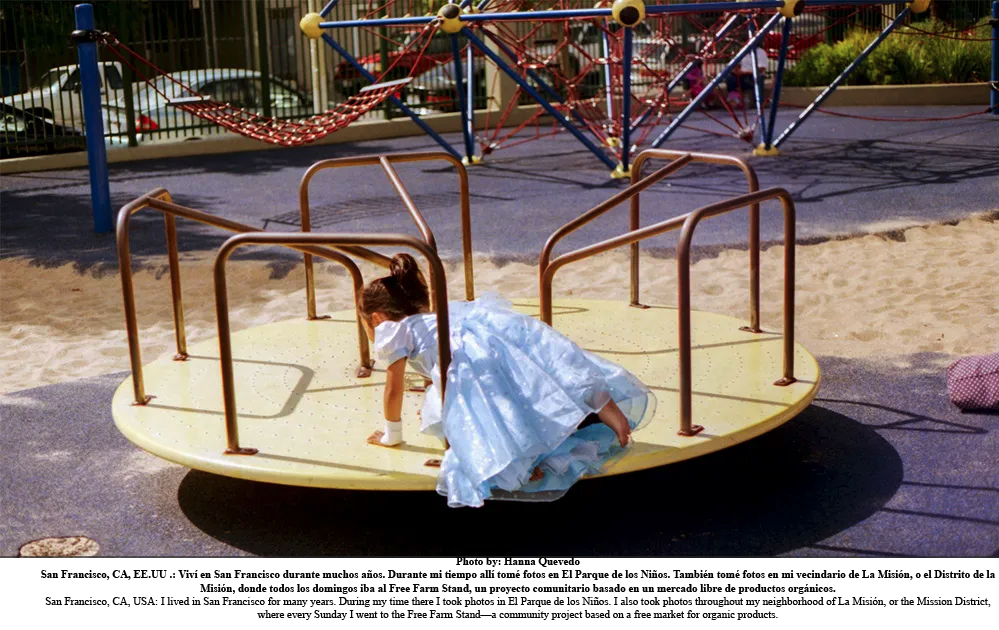
‘My Park Moment’ photo contest you will want to be part of

Compiled by the El Reportero’s staff

San Francisco, CA and New York, NY (April 14, 2021) — The Partnership for the Presidio, in col­laboration with non-profit Photoville, announces a call for entries to its My Park Moment photo contest, an opportunity for anyone to submit a photo of their fa­vorite park experience any­where in the world. From April 14 to May 28, ama­teur and professional pho­tographers alike are invited to submit images that show personal experiences in lo­cal and national parks: from a family picnic, to a walk in the Presidio, to a visit to Al­catraz or a trip to Yosemite.

A selection commit­tee of artists, educators, and non-profit leaders will choose 400 photos to dis­play outdoors in a dynamic, large-format show in the Presidio of San Francisco, part of the Golden Gate National Recreation Area, which is one of the most visited national parks in the country. The free show starts in September 2021 as a lead-up to the open­ing of the Presidio Tunnel Tops in Spring 2022. The show will take place at loca­tions surrounding the future Presidio Tunnel Tops area, where visitors can see the progress on the new trails, overlooks, and play areas while enjoying the show.

“The Partnership for the Presidio holds the value that parks belong to all of us. Parks are a shared trea­sure that bring us together, no matter our background or point of view,” said Mi­chael Boland, Chief Park Development and Visitor Engagement Officer for the Presidio Trust. “My Park Moment creates a place for people to share their park disidentestory and to celebrate the many moments to come at Presidio Tunnel Tops.”

The My Park Moment photo contest has several categories: Community Snapshot (Adult), Community Snapshot (Youth), and the Visual Story Award (Adult), which will award four photographers with a $2,500 cash prize for their multi-photo series.

Read more about the opportunities and how to submit at PresidioTunnelTops.gov/my-park-moment.


spot_img

Arturo Sandoval solidarizes with dissidentas

by Arturo Sandoval

Luis Manuel Otero Al­cántara, is a Cuban plas­tic artist, dissident and leader of the San Isidro Movement, a group of Cuban artists, journalists and academics formed in 2018 to protest against the government’s censor­ship of artistic expression in Cuba, for a long time he has been imprisoned, harassed and constantly threatened by the Cuban dictatorship, recently his works of art were confis­cated with impunity and destroyed and at the mo­ment he is on a hunger and thirst strike for more than a week, in protest against the abuses and lack of hu­man rights in Cuba. His life is in danger right now.

This is my mes­sage to him:

Luis Manuel Otero Alcántara: I want to see you too, give you a hug and tell you how much I admire and respect you.

Dear Luis, today more than ever we need you alive, lucid and vigorous as you have always been, if you die you will do the dictatorship a favor, and they will remove a great obstacle to continue doing their atrocities.

We appreciate your courage and your con­victions, but in this decisive moment for Cuba, your life, your word and your leader­ship are very necessary.

We beg you to give up your hunger and thirst strike.

Your LIFE is extremely valuable, and THE COUN­TRY needs you greatly.

spot_img

They’re censoring us up to our elbows

N O T E F R O M

T H E E D I T O R

D e a r r e a d e r s :

We are witnessing an unprecedented censorship, never seen before in the his­tory of the United States, where private individuals with biased agendas and special interests control what you can say through privately-owned internet platforms called social me­dia – which is today the vehi­cle for expressing ourselves.

Private individuals have usurped our rights to express ideas and political views, by censuring and banning those who express and expose views contrary to the official discourse and and those of the platform owners personal, biased beliefs. It reminds me of China, the former Soviet Union, North Korea, and Cuba, where the principle of liberty – and free speech – do not exist beyond a text on paper, and only those views coming from the government are accepted.

In the United States, The Founding Fathers wrote the First Amendment in response to two cen­turies of state-sponsored religious conflict and op­pression in America, and with a keen understanding of the religious persecution in European nations result­ing from official state re­ligions and religious wars.

Our country has been the standard and role model of Liberty in the so-called democratic world of nations. But today, without any pub­lic hearings and competent legal guards, behind close doors and without unbiased scrutiny, those individu­als – owners of the internet platforms – are doing and undoing our First Amend­ment rights as they please.

The 1st and 14th Insti­tute, founded by a group of bipartisan current and for­mer Silicon Valley tech ex­ecutives that are concerned about free speech in the United States, issued the fol­lowing statement regarding May 5’s decision by Face­book’s Oversight Board to continue the company’s ban on former President Trump.

“If inflammatory false content alone should cause a user to be banned, then much of today’s political speech would therefore need to be blocked and politi­cians banned since their speech is regularly inflam­matory and often labels opponents as evil people who deserve any harm they receive,” said Mike Mat­thys, co-founder of the 1st and 14th Institute. “There are numerous examples of such speech by members of both political parties that could be indirectly linked to future violent actions such as street riots, assas­sination threats, and arson.”

“People who agree with banning former President Trump because they dis­like his speech and politi­cal ideas should remember the Berkeley Free Speech movement of the 1960s when liberals fought for free speech and their rights to demonstrate in public,” Matthys said. “While cen­sorship targets conserva­tive persons today, it may target liberal persons in the future as the US gov­ernment has in the past.”


spot_img

14 surprising ways garlic improves your health (plus garlic tea recipe)

by Joanne Washburn

Not a fan of garlic? You’re missing out. Sure, its strong, pungent scent and flavor can take some get­ting used to, but the sulfur compounds that give garlic its unpleasant characteris­tics are also responsible for its many health benefits.

T h e a m a z i n g health benefits of garlic

Here are 14 good reasons to add garlic to your diet:

G a r l i c h e l p s treat colds – Garlic can relieve symptoms of the common cold pretty quickly. It can also lower your risk of catching a cold in the first place. A 2014 study showed that people who took a garlic tablet every day for three months had fewer bouts of the cold than people who took a placebo.

Garlic lowers blood pressure – Garlic helps blood flow more easily through your body. According to a 2014 report, aged garlic extract can lower blood pressure in people with hypertension. Health experts recommend eating at least four cloves of garlic per day to enjoy this benefit.

Garlic lowers choles­ terol levels – Raw garlic is rich in a sulfur compound called allicin, which helps lower cholesterol levels and prevent the oxidation o f b a d c h o l e s t e r o l . Oxidized LDL cholesterol c a n i n c r e a s e y o u r risk of heart disease.

Garlic can prevent neurodegenerative dis­ease – Garlic contains a powerful antioxidant known as S-allyl cysteine (SAC), which can protect your brain cells from oxidative stress and inflammation. Chronic inflammation can raise your risk of neurodegenerative diseases like Alzheimer’s a n d P a r k i n s o n ’ s .

Garlic aids in detoxi­fication – Eating foods contaminated with heavy metals like lead can damage filtering organs like your kidneys and liver. Luckily, garlic helps rid your body of lead and protects against organ toxicity.

Garlic helps heal wounds – Natural healers use garlic to treat wounds and prevent them from getting infected. For fast healing, place a poultice made from crushed garlic cloves on your wound.

Change it several times a day and continue applying the garlic poultice until your wound visibly improves.

Garlic helps main­tain strong bones

Garlic helps increase the levels of a hormone called estrogen. Menopausal women tend to have low estrogen levels that puts them at risk of osteoarthritis and bone loss.

Garlic improves di­gestion – Eating raw garlic cloves every day as part of a healthy diet can help ease digestive problems like diarrhea, colitis and intestinal gas. Garlic can also dispel worms and destroy harmful bacteria lurking in your gut.

Garlic strengthens the immune system – The phytonutrients in garlic can help boost your immunity and fight oxidative stress, which can damage your cells and trigger premature aging.

Garlic helps control blood sugar levels – There is some evidence that eating raw garlic cloves may help lower your blood sugar levels. Diabetics can greatly benefit from eating garlic.

Garlic helps prevent in­fections – Garlic can prevent the growth of Pseudomonas aeruginosa, a rod-shaped bacterium that causes urinary tract infections (UTIs) and kidney infections. Research indicates that garlic can also inhibit the growth of Esch­erichia coli, Helicobacter pylori and Candida albicans.

Garlic promotes weight loss – Some animal studies have shown that garlic can stimulate the body to burn more fat. Garlic can also “turn off” the genes involved in the formation of fat cells.

Garlic can relieve asthma – Boiled garlic cloves are a natural remedy for asthma. To ease your symptoms, drink a glass of milk with three boiled garlic cloves each night before bed.

Garlic helps treat acne – Garlic’s antibacterial properties can help treat skin conditions like acne. To treat acne, rub a piece of freshly cut garlic on your pimples. If your skin is sensitive, you can coat the garlic first in a mild carrier oil, such as jojoba or coconut oil, to minimize garlic’s sting. Natural News.

spot_img

Migrants continue crossing the southern border

They face robbery, ex­tortion and kidnapping, of­ten at the hands of officials

by Mexico News Daily

Almost a month ago the federal government announced a temporary closure of the southern border to nonessential traf­fic. This week, the White House announced that Mexico, Honduras and Guatemala would deploy troops “to make crossing the borders more difficult.”

Yet migrants continue to stream into the country en route to the United States. According to a report published Wednesday by The Guardian, Central American migrants were crossing into Mexico on a recent morning at Fron­tera Corozal, a remote border town on the Usu­macinta River in Chiapas, without having to show documents to anyone.

The newspaper said the situation “looked like business as usual,” noting that groups of men, women and children were disem­barking from boats onto Mexican soil before get­ting into taxis and speed­ing past an immigration of­fice to a crossroads. There they boarded vans for the next leg of their journey north: an approximately 150-kilometer trip to the town of Palenque, Chiapas.

There are police check­points on the Frontera Coro­zal-Palenque highway, but according to migrants, they were able to pass by paying — or were robbed by the officers they encountered.

“They’ve taken our money, and now we’re dead broke,” 27-year-old Christian, part of a group of Honduran construction workers, told The Guardian.

“And now we have to deal with the military. We need to figure out how we get north. We are al­ways fighting and figuring out a way to get there.”

Shortly after he took of­fice in late 2018, President López Obrador pledged to clean up Mexico’s immi­gration and customs forces, which he said were “rotten to the core.” He also vowed that his administration would treat migrants with respect and give them protection.

But human rights activ­ists say that soldiers, police officers and immigration officials continue to com­mit crimes against mi­grants, including robbery, extortion and kidnapping.

“It’s a cartel,” said Gabriel Romero, director of a migrant shelter near Mexico’s bor­der with Guatemala. “They [the authorities] are acting in cahoots with [smugglers] … with taxi and bus drivers. It’s a network taking advan­tage of migrants,” he said.

Still, migrants flee­ing poverty and violence in countries such as Hon­duras, El Salvador and Guatemala are prepared to risk their lives in their quest to reach the United States.

Even increased enforce­ment — the government de­ployed the National Guard in 2019 to stem migration flows and thus appease then United States president Donald Trump — failed to stop Central Ameri­cans and people from more dis­tant countries, including Haiti, Cuba and even African na­tions, from attempting to reach the United States via a long journey that includes cross­ing Mexico’s southern border.

Crackdowns instead have forced migrants to take riskier, more remote routes to enter and travel through Mexico. They are consequently ex­posed to an even greater risk of becoming victims of crimes such as robbery, rape, abduction and murder.

The latest crackdown on migrants may be even less ef­fective in stopping the flows of people, according to Tona­tiuh Guillén, a former chief of Mexico’s National Immigra­tion Institute who resigned in 2019 after the federal gov­ernment buckled in the face of Trump’s threat to impose blanket tariffs on Mexican goods if the country didn’t do more to curb migration.

spot_img