Thursday, September 3, 2026
Home Blog Page 199

Your content provider delivers text in the frozen tundra

Statue of Liberty sinks in the ocean in the sunset

by Jon Rappoport

In case you missed it, WRITING has fallen behind video.

“Ooo! Pictures! Let me watch! Let me SEE what he’s saying. I won’t remember any details because, how could I? The images flow by. But that’s all right. I just want to form an impression. Then I can tell other people, “YOU MUST WATCH THIS.”

In the new cultural tundra, writers aren’t writers anymore. They’re content providers. Sounds like charity work, or a shipping operation.

“Hello, Mike? Your content just arrived on the dock. We’ll have it at your office tomorrow, after it clears customs. It’ll arrive in a red box with Christmas tree stickers on the lid.”

And writing isn’t writing. It’s TEXT.

Which is a way of saying the words themselves don’t matter. What’s important is the INFORMATION. And since that’s the case, all articles should be boiled down to brief summaries with links. People just want the DATA.

After all, what do biological machines need? Precise packets of digits.

The latest trend is small-print messages below headlines that let us know how long it’s going to take to move through an article: “This is a six minute read.”

We must know that up front.

WAR AND PEACE: This is a 137-hour read.

Notice that “read” is now a noun. You’re not readING. You’re ingesting and incorporating the noun.

Words and writing will soon be seen as raw material for neural loading. Again, the shipping business. “Mike, give us another 30 seconds. We’ll have the data distributed in your cerebral cortex. We’re making room in your circuits, which for some reason are overloaded this morning.”

That issue is called ATTENTION SPAN. Content providers in the workforce must cater to “timing-out” in recipients’ brains.

Editor to content provider: “Bill, your piece is a 12-minute read. That won’t fly. Cut it to 4. Our profiling surveys show 85% of customers encounter a strain after 5.2. And Bill, don’t submit any more RANTS. That 21-minute read you turned in last week is unacceptable.”

Once upon a time, “rant” meant an unhinged outpouring. Now it’s any piece delivered with, what should I call it, EMOTION. That’s verboten. You see, the TECHNICAL CLASS of humans is bred to abhor feeling. It disrupts their arrogant calm. It’s a distraction from CONTENT.

I’m working on a Cliff Notes version of the very article you’re reading. It’s cliff-er than Cliff. I’m shooting for a 1.3-minute read.

Because you’re a machine with very narrow parameters of need, right?

I have to warn you, though. If you’ve gotten this far in the article, you might be human and you might be suffering from Eyes on Page Disease. It’s a psychological hangover from a bygone era. To cure it, watch thousands and thousands of videos, until they repopulate your mind to an advanced degree.

And one day, you’ll never know what you’re missing.

At parties, you’ll jam your cell phone in friends’ faces and say, “YOU HAVE TO WATCH THIS. IT’S ONLY A MINUTE AND A HALF. IT’S INCREDIBLE.”

(Rappoport is the author of three explosive collections, The Matrix Revealed, Exit From The Matrix, and Power Outside The Matrix.)

spot_img

Mexico asks US to commit $108 million a month to Central America jobs plan

The funds would support two employment programs in three countries


Mexico has asked the United States to provide US $108.4 million a month to fund the implementation of two employment programs in Central America.

As part of efforts to attend to the structural causes of migration in the region, the United States agreed last week to collaborate on the expansion of the Sembrando Vida (Sowing Life) tree-planting employment program and the Youths Building the Future apprenticeship scheme.

The programs – signature initiatives of the federal government, albeit ones that have been allegedly tainted by corruption –  will be rolled out in Guatemala, Honduras and El Salvador.

Mexico wants the United States to provide $86.4 million per month for Sembrando Vida and $22.03 million per month for Youths Building the Future, according to the newspaper Milenio, which obtained a document submitted to U.S. officials at high-level bilateral talks in Washington D.C. last Thursday.

Mexico proposed that the funding be provided via the United States Agency for International Development, commonly known as USAID. Mexico will design the programs and provide technical support to them, according to the document, entitled A Common Vision for the Region.

The federal government proposed the participation of 240,000 Guatemalans, Hondurans and Salvadorans in Sembrando Vida and 90,000 people aged 18 to 29 in Youths Building the Future. Participants in both would receive $360 per month.

Sembrando Vida beneficiaries would also have the opportunity to study at agricultural schools, according to the document. Mexico acknowledged that one barrier to the program could be participants’ inability to find land on which to plant timber-yielding and fruit trees. However, plans to facilitate access to land will be implemented, it said.

The apprenticeship scheme will provide training and financial support to young Central Americans for a period of two years. Some 5,000 workplaces are slated to participate in the program, which would likely commence sometime next year.

President López Obrador said earlier this year that the United States should issue temporary visas to Central Americans who work in Sembrando Vida for three years. But the United States has shown little interest in the proposal.

Mexico and the U.S. did, however, sign a memorandum of understanding in June to establish a strategic partnership to address the lack of economic opportunities in northern Central America.

After last week’s High Level Economic Dialogue in Washington, the White House said the United States and Mexico “will identify complementary and cooperative opportunities to improve livelihoods through the creation of jobs and opportunities in the short, medium, and long term in El Salvador, Honduras, Guatemala and southern Mexico.”

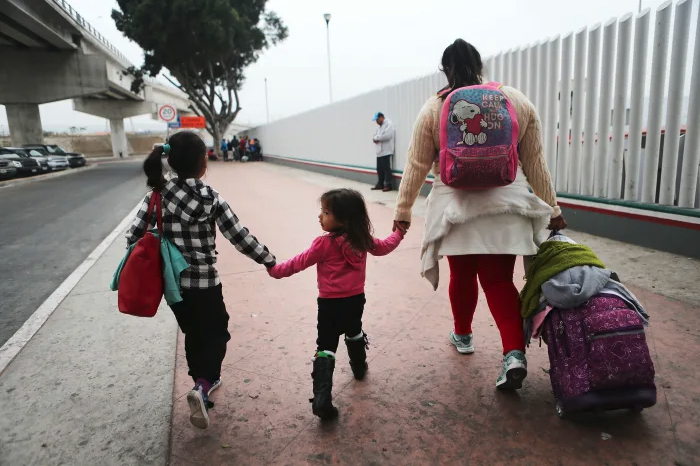
The increased cooperation between the two countries comes as record numbers of migrants stream into Mexico en route to the United States, while more than 212,000 migrants were detained in the U.S. in July after illegally crossing the border. The figure was the highest monthly total in more than 20 years.

With reports from Milenio 

Cuba’s president will be the guest of honor at Independence celebrations

López Obrador continues to show his affection for the nation

The president of Cuba will be the guest of honor and give a speech at Thursday’s Independence Day celebrations, becoming the first foreign leader to address the event.

President López Obrador confirmed Tuesday that Miguel Díaz-Canel would speak at a ceremony prior to a military parade in downtown Mexico City to celebrate the 211th anniversary of the beginning of the fight for independence in Mexico.

Speaking at his regular news conference, López Obrador defended the Cuban leader’s participation in the Fiestas Patrias, emphasizing that Mexico has friendly relations with all the world’s nations.

However, the president has a special affection for Cuba, declaring in July that the Caribbean island nation is an “example of resistance” and the whole country should be declared a World Heritage site.

He also called for an end to the United States trade embargo as a way to end large protests in Cuba earlier this year, and sent three ships carrying diesel, medical supplies and food to the country in what experts described as Mexico’s biggest aid run to the country in three decades.

At his press conference on Tuesday, López Obrador also responded to criticism from former president Felipe Calderón, who said that it was unacceptable for a dictator to take a central role in Mexico’s Independence Day celebrations.

“ … It’s good that he doesn’t like it!” the president said before accusing his longtime foe of hypocrisy because he met with former Cuban president Raúl Castro while he was in office.

López Obrador also said Tuesday that United States President Joe Biden wouldn’t come to Mexico this month to join celebrations marking the 200th anniversary of the end of the 11-year War of Independence against the Spanish.

“President Biden was invited for the 27th [of September]. He can’t be here, but the head of the United States Department of State will be here,” he said, referring to Secretary of State Antony Blinken.

spot_img

Mexico asks US to commit $108 million a month to Central America jobs plan

The funds would support two employment programs in three countries


Mexico has asked the United States to provide US $108.4 million a month to fund the implementation of two employment programs in Central America.

As part of efforts to attend to the structural causes of migration in the region, the United States agreed last week to collaborate on the expansion of the Sembrando Vida (Sowing Life) tree-planting employment program and the Youths Building the Future apprenticeship scheme.

The programs – signature initiatives of the federal government, albeit ones that have been allegedly tainted by corruption –  will be rolled out in Guatemala, Honduras and El Salvador.

Mexico wants the United States to provide $86.4 million per month for Sembrando Vida and $22.03 million per month for Youths Building the Future, according to the newspaper Milenio, which obtained a document submitted to U.S. officials at high-level bilateral talks in Washington D.C. last Thursday.

Mexico proposed that the funding be provided via the United States Agency for International Development, commonly known as USAID. Mexico will design the programs and provide technical support to them, according to the document, entitled A Common Vision for the Region.

The federal government proposed the participation of 240,000 Guatemalans, Hondurans and Salvadorans in Sembrando Vida and 90,000 people aged 18 to 29 in Youths Building the Future. Participants in both would receive $360 per month.

Sembrando Vida beneficiaries would also have the opportunity to study at agricultural schools, according to the document. Mexico acknowledged that one barrier to the program could be participants’ inability to find land on which to plant timber-yielding and fruit trees. However, plans to facilitate access to land will be implemented, it said.

The apprenticeship scheme will provide training and financial support to young Central Americans for a period of two years. Some 5,000 workplaces are slated to participate in the program, which would likely commence sometime next year.

President López Obrador said earlier this year that the United States should issue temporary visas to Central Americans who work in Sembrando Vida for three years. But the United States has shown little interest in the proposal.

Mexico and the U.S. did, however, sign a memorandum of understanding in June to establish a strategic partnership to address the lack of economic opportunities in northern Central America.

After last week’s High Level Economic Dialogue in Washington, the White House said the United States and Mexico “will identify complementary and cooperative opportunities to improve livelihoods through the creation of jobs and opportunities in the short, medium, and long term in El Salvador, Honduras, Guatemala and southern Mexico.”

The increased cooperation between the two countries comes as record numbers of migrants stream into Mexico en route to the United States, while more than 212,000 migrants were detained in the U.S. in July after illegally crossing the border. The figure was the highest monthly total in more than 20 years.

With reports from Milenio 

Cuba’s president will be the guest of honor at Independence celebrations

López Obrador continues to show his affection for the nation

The president of Cuba will be the guest of honor and give a speech at Thursday’s Independence Day celebrations, becoming the first foreign leader to address the event.

President López Obrador confirmed Tuesday that Miguel Díaz-Canel would speak at a ceremony prior to a military parade in downtown Mexico City to celebrate the 211th anniversary of the beginning of the fight for independence in Mexico.

Speaking at his regular news conference, López Obrador defended the Cuban leader’s participation in the Fiestas Patrias, emphasizing that Mexico has friendly relations with all the world’s nations.

However, the president has a special affection for Cuba, declaring in July that the Caribbean island nation is an “example of resistance” and the whole country should be declared a World Heritage site.

He also called for an end to the United States trade embargo as a way to end large protests in Cuba earlier this year, and sent three ships carrying diesel, medical supplies and food to the country in what experts described as Mexico’s biggest aid run to the country in three decades.

At his press conference on Tuesday, López Obrador also responded to criticism from former president Felipe Calderón, who said that it was unacceptable for a dictator to take a central role in Mexico’s Independence Day celebrations.

“ … It’s good that he doesn’t like it!” the president said before accusing his longtime foe of hypocrisy because he met with former Cuban president Raúl Castro while he was in office.

López Obrador also said Tuesday that United States President Joe Biden wouldn’t come to Mexico this month to join celebrations marking the 200th anniversary of the end of the 11-year War of Independence against the Spanish.

“President Biden was invited for the 27th [of September]. He can’t be here, but the head of the United States Department of State will be here,” he said, referring to Secretary of State Antony Blinken.

spot_img

Following a year of uncertainty, chase home lending study finds first-time homebuyers may lack confidence – but are still motivated to buy

Research Indicates that Consumers’ Likeliness to Purchase a Home in 2021 Remains High Amid Income Fluctuations

Sponsored by J.P. Morgan Chase

With the summer homebuying season well underway, today, Chase Home Lending released the findings of its new First-Time Homebuyer Study. The survey included more than 1,100 consumers who indicated that they are looking to purchase a home and are actively preparing to buy. Though the COVID-19 pandemic had a considerable impact, 60 percent of respondents said they were likely to purchase in the next 12 months, and 69 percent still see homeownership as an important part of building wealth.

Unsurprisingly, the majority of first-time homebuyers indicated that the COVID-19 pandemic changed their thoughts/plans on buying a home in 2020. Seventy percent of respondents said they were waiting to see how the housing market would play out last year. Change of income (61 percent) and re-evaluating how they would finance their home purchase (58 percent) also had a prominent effect on timelines and urgency to buy.

The study was commissioned to better understand the needs of first-time buyers looking for a home following the pandemic. Homebuying attitudes, behaviors and expectations were evaluated, placing an emphasis on how the events of the past year have impacted confidence, financial readiness and more.

“The events of the last year upended various aspects of our lives, including prospective homebuyers and their plans to purchase,” said Sean Grzebin, Head of Consumer Originations for Chase Home Lending. “Despite possible income changes and prolonged timelines, buying a home as a means to build wealth and stability still resonates with first-time homebuyers. The research shows that they are also open to making lifestyle changes in order to reach their homeownership goals.”

Consumers Take Action in 2021

Only one-in-four first-time homebuyers said they had strong confidence that they would be financially ready to purchase a home in the first half of 2021 – but this didn’t stop them from taking steps to set themselves up for success.

– 7 of 10 respondents made lifestyle changes in order to work toward homebuying success.

– 66 percent have already created monthly budgets and worked to improve their credit score

– More than half of respondents plan to research down payment assistance programs this year; 33 percent have already done so in 2021

– 77 percent of respondents said they are actively saving for a down payment

Confidence Higher Among Black and Latino Respondents

The study also revealed that nearly three-quarters of Black and Latino respondents agree that owning a home is an important step to building wealth, slightly above the overall average of 69 percent. Additionally:

48 percent of Black and Latino respondents felt knowledgeable or comfortable with the homebuying process while the average for all respondents came in lower at 40 percent

65 percent of minority respondents expect the homebuying process to be enjoyable, which is higher than the overall average of 51 percent

– When it comes to desired features in a home, 51 percent of Black and Latino respondents are looking for dedicated office space in their first home (vs. 45 percent total) and 42 percent want workout space (vs. 34 percent total)

The study is based on the responses of 1,100 U.S.-based consumers fielded between March 10 – 24, 2021 amongst those who have never owned a home. For more information about Chase Home Lending, visit www.chase.com/mortgage.

spot_img

The photographic show ‘My Moment in the Park’ opens

The exhibition will be available to the public throughout the year


by Araceli Martínez


The Presidio Association, in collaboration with the New York-based nonprofit Photoville, inaugurated the free outdoor photographic show My Park Moment at Presidio National Park in San Francisco with images showing favorite memories of a visit to the park.

The exhibit features 400 photographs taken by amateur and lens professionals, selected in a competition, capturing favorite memories in the parks such as a family picnic, a visit to Alcatraz or Yosemite, a walk in the Presidio, among many other experiences in parks. Some of those selected will receive prizes.

The contest was organized to celebrate the opening in the spring of 2022, of the Presidio Tunnel Tops, a new area within the Presidio National Park, built on top of the tunnels of the Presidio Parkway, which extends over 14 acres of trails, panoramic viewpoints, picnic sites and an interactive play area for children.

It was a distinguished committee of photographers, artists, and community leaders who chose more than 400 photos from 7,000 submitted by lens hobbyists and professionals from across the country.

The images capture the outdoor beauty and joy that time in nature can bring, as well as the social and cultural connections that are part of the park experience.

The photos are displayed at four sites in the Main Post and Crissy Field, which surround the future site of the Presidio Tunnel Tops: the Main Parade Ground on Anza Street, Sports Basement, 1180 Old Mason Street, and the Presidio YMCA.

What can we expect

While all of the photos in the original My Moment in the Park exhibit are professional quality, the majority in the “Instant Community” category were taken by people from across the country who attend the parks fairly frequently.

“The photo exhibit builds on our continued collaboration with the community to create the Presidio Tunnel Tops, which we hope will be welcoming and inclusive spaces for all of its visitors,” said Michael Boland, parks director for the Presidio Trust. He added that he offers a preview of the new experiences the park will offer at Tunnel Tops.

Laura Roumanos, executive director and co-founder of Photoville stated that “photography is a universal language that allows everyone to tell their own story. The opportunity to show these stories publicly is priceless. ”

“We are delighted that this program represents such diversity of gender, class and race in one of the most beautiful national parks in the country.”

In the Visual Story Award category, the winners come from the San Francisco Bay area and their stories portray the impacts of the covid-19 pandemic and the political events of the past year.

The images by Francess Santos show her two young children enjoying nature outdoors in Presidio Park. Marissa Leshnov photographed the Oakland OMies, a community of women of color who promote wellness, mindfulness and healing through yoga. “The parks continue to be a place of refuge, where the sense of community and wonder can be renewed,” said Leshnov.

In the group of people who selected the photos that were presented in the exhibition, are Jacqueline Bates, director of photography for California Sunday Magazine and Pop-Up Magazine; Sergio De La Torre, associate professor at the University of San Francisco; Isaac Haney-Owens, Creativity Explored artist; Ben Moon, Instagram Art Director; Nicole Frugé, visual director for the San Francisco Chronicle; Bruce Getty, owner of the agency and photographer; Moanalani Jeffrey, agency owner and photographer; Sean Uyehara; Jackie von Treskow of the San Francisco Arts Commission; and Monetta White, executive director of the Museum of the African Diaspora.

An exhibit guide, roadmap, and virtual exhibit listing all photographers will be available on the website beginning September 1, at PresidioTunnelTops.org.

spot_img

Not enough subs: California schools face severe teacher shortage by Joe Hong

Kelly Rhoden, the principal at Nevada Union High School, spent her morning Monday scrambling to find substitutes for her absent teachers.

The school, about 60 miles northeast of Sacramento, has 86 teachers. Thirteen were out on Monday.

“We have quite a few teachers out either because they’ve tested positive, they’re symptomatic, or they have their own children who are in quarantine,” she said. “At the end of the day, we just don’t have enough substitutes.”

Across California, the substitute teacher shortage is another burden in an already challenging school year. Administrators are taking desperate steps to make sure there’s an adult in the classroom when teachers are absent, resorting to using non-teaching staff who have their own critical responsibilities during the typical school day, especially during the first fully in-person school year of the pandemic.

Nevada Union High and the rest of the Nevada Joint Union High School District share a pool of substitute teachers with eight other districts in Nevada County. Last year, the pool was stretched so thin that Nevada Joint Union shut down schools due to a sub shortage. District officials are worried it’ll happen again.

“Last October, we had to go back to distance learning because I ran out of substitutes,” said Brett McFadden, superintendent of Nevada Joint Union High. “Not because we didn’t have enough protective equipment. I ran out of adults.”

McFadden said even he has had to sub for a class.

According to County Superintendent Scott Lay, the county went from having about 200 substitute teachers before the pandemic to less than 70 today. As a result, principals like Rhoden are forced to place counselors and administrators in classrooms. Even then, Rhoden fell short three substitutes on Monday.

The substitute shortage is worsened by an underlying teacher shortage. Several district officials interviewed by CalMatters said they started the school year with some classrooms being assigned a long-term substitute.

In hopes of attracting more subs, districts have increased their pay rates, triggering similar raises at neighboring districts. But administrators say money won’t create more educators.

“You get to a point where you’re just begging and borrowing people from all over the district,” McFadden said. “I love my students dearly, but I’m not gonna leave 30 of them alone in a room.”

How bad is the sub shortage?

California has seen declining numbers of new substitute teachers every year, according to the California Commission on Teacher Credentialing, the agency that licenses full-time and substitute teachers.

In the 2018-19 school year, the agency issued about 64,000 substitute teaching permits. In 2020-21, it issued close to 47,000.

Prospective substitute teachers need to hold a bachelor’s degree and meet the “basic skills requirement” either by providing a standardized test score or by having B’s or better in college-level reading, writing and mathematics courses.

“It’s not terrifically challenging to get a sub permit in California,” said Mary Sandy, the executive director of the Commission on Teacher Credentialing. “But the need is utterly critical.”

At San Bernardino City Unified, the number of substitutes at the district’s disposal shrank from 1,000 before the pandemic to 700.

Marcus Funchess, who oversees human resources for the district, said only about 92% of teacher absences are covered each day.

“Right now our substitute teacher shortage is a concern due to the number of teachers who might need to quarantine,” he said. “On one day we could have up to 45 jobs uncovered.”

Why is the substitute teacher force shrinking?

Aaron Estrada, a substitute in the Chula Vista Elementary School District, said many substitutes left the profession last year because the pay wasn’t worth the risk of being surrounded by unvaccinated students and staff.

“It’s difficult to try to make a living off substitute teaching,” he said. “For a lot of people, it didn’t seem worth it.”

Some school districts, especially those in rural communities, rely heavily on retired teachers to work as substitutes. But for those older educators, the risk of returning to the classroom is even greater.

“Retirees have their own fears,” said Rhoden, the principal at Nevada Union High. “They want to keep their own health at the forefront.”

Mike Teng, CEO of Swing Education, a company that helps over 200 school districts find substitute teachers, said the sub shortage is consistent with staff shortages in the service sector.

“It’s tough. Substitute teachers have left and haven’t come back,” he said. “And we’re potentially trying to compete with all the other industries for workers.”

Rosi Martinez, the president of the local teachers union at Chula Vista Elementary, said former substitute teachers are reluctant to return because they’re making more money from unemployment benefits.

“At one point we were only filling about half of teacher absences,” she said. “That’s pretty much unheard of.”

Rising pay and lowering barriers

In an effort to entice substitute teachers back into the classroom, the administration at the Chula Vista Elementary School District held an emergency meeting in early August to increase pay for subs.

The district increased pay for short-term subs from $122 to $200 a day. For long-term substitutes, the pay went from $180 to $283 a day. In response, the neighboring Sweetwater Union High School District increased its rate from $160 to $240 a day.

“You can say it’s a bidding war, but that’s just the market,” Teng said. “But substitute teachers still aren’t paid enough.”

Elk Grove Unified has proposed raising its substitute pay rates, especially for current and retired teachers and counselors. These substitutes could make $350 a day, once the district’s school board approves the raises.

At San Bernardino City Unified, the district gave substitutes a 2% raise and paid $12,000 for digital billboards to advertise its substitute positions on the freeways. Funchess said the district would increase pay if this aggressive advertising campaign doesn’t attract enough substitutes.

Apart from raising pay, district leaders said the Commission for Teacher Credentialing could take steps to remove other barriers like the $100 fee and the requirement for a bachelor’s degree.

“We could use any temporary reprieve,” Funchess said. “Some other states don’t require a bachelor’s degree to be a substitute teacher. It’s worth a discussion here.”

A sub shortage on top of a teacher shortage

The substitute shortage is just a symptom of an ongoing teacher shortage, according to district administrators. Because some districts across the state started the school year with unfilled teaching positions, some students have only had a substitute teacher in the weeks since school started.

In the 2020-21 school year, 13,558 of California’s teachers retired, 1,000 more than the previous year, according to data from the California State Teachers’ Retirement System.

Mary Sandy at the Commission on Teacher Credentialing said the agency must credential about 20,000 teachers a year to keep up with the staffing needs of districts across the state. Last year, only about 14,000 teachers received their credentials.

And while this year’s state budget includes a historic amount of funding for California’s schools, no amount of money can overcome the bottom line of a personnel shortage.

At Nevada Joint Union High School District, Superintendent Brett McFadden said despite raising the daily rate from $100 to $150 per day, finding substitutes continues to be a challenge especially in more rural and remote parts of the county.

“I don’t have a money problem,” he said. “I have a resource problem.”

Until district and state officials find more effective ways to recruit qualified teachers, principals like Rhoden will start their days rushing to put an adult in every classroom.

“I don’t know if another pay raise would work to be honest,” Rhoden said. “I just don’t think there’s enough teachers out there.”

Joe is the K-12 education reporter for CalMatters. His stories use data to highlight inequities in California’s public schools. Before joining CalMatters in June 2021, he was the education reporter at KPBS, the public media station in San Diego. Previously, he covered the schools in the Coachella Valley for The Desert Sun, a daily newspaper in Palm Springs. He has a bachelor’s degree in comparative literature from the University of California, Irvine and a master’s degree from Columbia Journalism School.

spot_img

Request for Qualifications/Request for Proposal – Peralta Community College

The Peralta Community College District (PCCD) is requesting the submittal of Statement of Qualifications (SOQs) from qualified firms to provide College of Alameda Construction Management Services Aviation Modernization Phase 2 (RFQ/RFP No. 21-22/06).  SOQ and Proposals are to be delivered to the PCCD Purchasing Department, electronically (via Vendor Registry), by 2:00 PM, on October 4, 2021.


Peralta Community College District (“District”) is seeking proposals from qualified persons, firms, partnerships, corporations, associations, or professional organizations to provide construction management services for the District’s Aviation Modernization, Phase II project (“Project”).


A Mandatory Pre-Proposal conference will be held on September 21, 2021 at 9:00 AM via Zoom: Conference Meeting: 977 9162 2691. Register in advance for this meeting:


https://cccconfer.zoom.us/meeting/register/tJMqfuiurDksE9Wa0B-OpcmpM4LGv1DvmTt-


After registering, you will receive a confirmation email containing information about joining the meeting.


Copies of the pre-qualification documents may be obtained by clicking on the following link: https://build.peralta.edu/vendorregistry or, by contacting the Peralta Community College District, Office of Purchasing, 501 5th Avenue, Oakland, California, 94606, Phone (510) 466-7225, Office Hours: 8:30 a.m. to 4:30 p.m.


Governing Codes:

GC 53068

EC 81641


Publication Dates: September 10, 2021 and September 17, 2021


If you have any questions regarding this RFQ/P, please submit them via Vendor Registry at the link above before 2:00 PM PST on September 23, 2021. Answers will be posted on the District website by September 30, 2021.

spot_img

Accounting critic says biggest problem facing Social Security, Medicare is trillions in unfunded debts

A sign is seen outside a US Social Security Administration building, November 5, 2020, in Burbank, California. (Photo by VALERIE MACON / AFP) (Photo by VALERIE MACON/AFP via Getty Images)

by Mark Tapscott

Shared by/from Epoch Times

September 2, 2021 – Social Security and Medicare trust funds are in dire financial condition due to rising benefit costs, but the biggest problem facing the two largest federal entitlement programs is how they’re funded, according to a nonprofit that advocates greater government transparency and accountability.

“Our bottom line is the trust funds are all a shell game, there is no money in the trust funds. As [former U.S. Comptroller-General] David Walker says, trust funds have no funds and should be distrusted,” Truth in Accounting (TIA) President Sheila Weinberg told The Epoch Times on Sept. 2.

Weinberg was referring to the fact that the trust funds receive what are in effect IOUs from the Treasury Department that are called “securities”—promises to pay a specified amount at a future date.

On Social Security, for example, the government pays interest on the securities, generally about 2 percent, and the total value of the securities is presently just less than $3 trillion. Securities are paid out of general revenues when they come due.

“We would also highlight the massive underfunding. Social Security is underfunded by $40 trillion, Medicare by $55 trillion. This represents the amount of money the government has promised in benefits, and they have no idea where they are going to get the money to pay for those promises,” Weinberg said.

The official U.S. national debt is $29 trillion, but Weinberg’s group maintains that the true amount is more than $133 trillion when the costs of benefits such as those promised by Social Security and Medicare are included in the calculation, according to the Chicago-based TIA.

Private sector pension plans are required by federal law to account for future benefits and to properly fund them. But the federal government doesn’t follow the same law for its own pensions.

Medicare has the largest unfunded benefits total at $55 trillion, followed by Social Security at $40 trillion, and government employee and retiree pensions such as the Civil Service Retirement System (CSRS) at $9 trillion. The official public debt and assorted other federal liabilities such as loan guarantees make up the balance.

Trustee reports made public earlier this week show that the Medicare trust fund that pays for hospitalization is due to reach insolvency in 2026, while the Social Security trust fund will reach that point in 2033, barring major reforms in how the two programs are funded and pay benefits.

Weinberg is far from alone in pointing to the unfunded debts of Social Security and Medicare.

“Yesterday’s reports on the financial status of various Medicare and Social Security trust funds once again identify unsustainable benefit promises in Medicare and Social Security programs,” Sen. Mike Crapo (R-Idaho) said in a statement on Sept. 1.

“The Hospital Insurance trust fund is projected to be exhausted around 2026; there are $60 trillion of unfunded liabilities in Social Security programs; and unfunded liabilities increased by trillions of dollars over the last year alone.”

Differences in unfunded liabilities calculations are typically due to differences in the number of years covered, how future benefits are estimated, and differences in demographic assumptions.

“While bipartisan efforts are necessary to make needed changes to address Medicare and Social Security long-term financial challenges, most Democrats want only to expand benefit promises further without generating sustainable trust fund solvency,” Crapo said.

“I agree with the report’s recommendation that ‘Congress and the executive branch work closely together with a sense of urgency to address these challenges,’ and urge bipartisanship and cooperation to do so.”

Crapo is the ranking minority member of the Senate Finance Committee, which would be a major player in any congressional or presidential initiative to reform the Social Security and Medicare trust funds.

President Joe Biden hasn’t offered any proposals to reform the funding underlying either Social Security or Medicare.

spot_img

Billboard Latin Music Week announces superstar events with Daddy Yankee, Karol G and Nicky Jam 

by the El Reportero‘s news services

The Sold-Out Celebration Launches a Virtual Streaming Experience in Partnership with LIVENow, Offering Registrants Exclusive Access to Latin Music’s Biggest Stars in Miami Sept. 20-25

New York, NY – Sept. 9, 2021– Billboard announced that its highly-anticipated Billboard Latin Music Week presented by Samsung will feature one-of-a-kind performances, panels, conversations and more with superstars Daddy Yankee, Karol G and Nicky Jam. Taking place at Miami’s Faena Forum Sept. 20-25, 2021, Billboard Latin Music Week will unite generations of talent with fans for an unforgettable celebration of Latin music, culture and entertainment.

This year’s Billboard Latin Music Week returns to Miami under the slogan “The Beat of Latin Music,” making its mark as the longest-running and biggest Latin music industry gathering in the world. For the first time, Billboard will launch a virtual streaming experience in partnership with LIVENow, offering viewing opportunities to international audiences.

Daddy Yankee, Karol G and Nicky Jam will also be honored at the Billboard Latin Music Awards, which will be broadcast live on Telemundo on Thursday, Sept. 23rd.

Billboard Latin Music Week will stream exclusively on LIVENow, and Passes can be purchased starting Wednesday, Sept. 8 HERE. Fan and industry executives can purchase the 2-day Conference Pass for $30 and Half-Day Passes for $10 to stream live panels and performances from the biggest Latin music stars.

To experience Billboard Latin Music Week’s unforgettable experiences, and to reserve your spot for limited-capacity events, register now!

On Sept. 22, fans will get up close and personal with Yankee as he discusses his 25-year career that launched reggaetón around the world in the second installment of The Superstar Q&A. The Puerto Rican hitmaker is also set to perform for a Billboard En Vivo concert that night at the Faena Forum exclusive to Billboard Latin Music Week registrants.

Meanwhile, Jam will bring his Rockstar Show live to Latin Music Week with Jhay Cortez as his special guest. This intimate experience set to take place Sept. 22 is exclusive to Billboard Latin Music Week registrants, and capacity is limited.

Under the slogan “The Beat of Latin Music,” making its mark as the longest running and biggest Latin music industry gathering in the world, this year’s event will continue through the end of the week as Billboard launches its En Vivo concert series in partnership with Samsung, Amazon Music and Bacardí.

The 2021 Latin Music Week will take place from Sept. 20-25 at the Faena Forum in Miami, and coincides with the 2021 Billboard Latin Music Awards broadcasting live via Telemundo on Sept. 23.

Matrix Resurrections first trailer reunites Neo and Trinity after 18 years

The Matrix 4, aka The Matrix Resurrections, got its first trailer on Thursday, giving us hints about what became of Keanu Reeves’ Neo and Carrie-Anne Moss’ Trinity in the wake of 2003’s The Matrix Revolutions. And it’s all to the tune of Jefferson Airplane’s White Rabbit.

The fourth movie in the Matrix franchise hits theaters and HBO Max on Dec. 22. The official site teased the trailer on Tuesday, inviting you to take the red or blue pill. Depending on your choice and the time of day, you’d be treated to different footage from the sci-fi adventure.

spot_img

City government challenged over decision regarding Columbus statue

The artistic community has made its displeasure known over the choice of sculptor and the process 21


by Mexico News Daily


An empty plinth on Mexico City’s Reforma Avenue, which once exhibited a statue of Christopher Columbus, continues to cause controversy. In the artistic community, the debate centers on not what should stand on the plinth, but who should be given the right to create it.

Mexico City Mayor Claudia Sheinbaum announced Sunday that a sculpture of an indigenous Olmec woman would stand, and that the Columbus sculpture — removed in October amid threats it would be knocked down — would be relocated to Parque América, a park in the affluent Polanco district.

Writer Guillermo Sheridan and Twitter users have argued that the choice of the new statue should be decided by a public vote, but it is the city government’s choice of sculptor that has sparked the most intense debate. Pedro Reyes has been selected to create a figure he said would be called Tlalli.

Artists collective Moccam said he was the wrong person. “The tribute to 500 years of the resistance of indigenous women must be created by a woman, identified as part of an original peoples and sculptor. Enough of neocolonialism,” it said.

The chief curator of the Museum of Contemporary Art, Cuauhtémoc Medina, called the process into question. “For decades, artists, historians and critics have expressed our disagreement with the arbitrariness with the way in which the elected authorities … perpetuate the idea of the artist as an ideological servant,” he said.

“I am very sorry that an artist of some importance, such as Pedro Reyes, has fallen into the trap of operating as an official sculptor,” he added.

Sheinbaum explained her reasoning for the new symbolic Olmec effigy, but did not address the choice of sculptor. “The most important thing is that indigenous women are recognized on the main avenue of the capital of all Mexicans. It is something extremely profound, it goes far beyond a single sculpture. It recognizes the place of classism and racism in the history of Mexico and how colonialism not only left different legacies, but ones that we have to put at the center: the discrimination that exists toward different cultures and particularly the recognition not only of the original peoples but of women,” she said.

She added that Columbus would not be banished from the city. “It’s not about [the Columbus statue] not existing in the city, but that it has an adequate, dignified location.”

Reyes, meanwhile, said he appreciated the weight of his duty .”It is a responsibility that I take with great seriousness and with a deep sense of love for our country … if anyone can teach us how to take care of this planet, it is our native peoples,” he said.

With reports from El Economista.


spot_img