Wednesday, September 2, 2026
Home Blog Page 193

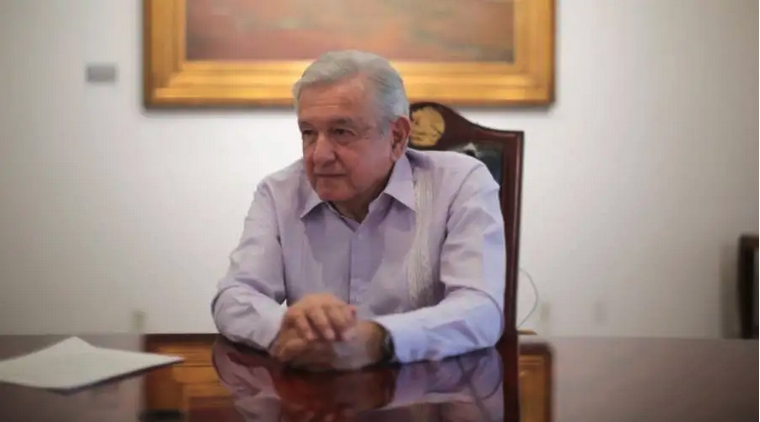
Nicaragua’s Ortega secures fourth term, US threatens sanctions

Biden signs bill urging Nicaragua sanctions after contested vote


Joe Biden rejected recent Nicaraguan elections in which President Daniel Ortega secured fourth straight term as ‘pantomime’


Reported by Aljazeera


US President Joe Biden has signed into law a bill calling for more sanctions and other punitive measures against the government of Nicaraguan President Daniel Ortega, who at the weekend secured a contentious fourth consecutive term in office.

Sunday’s elections took place after a month-long government crackdown during which dozens of opposition leaders, including seven presidential hopefuls, were arrested and others were forced into exile.

The so-called RENACER Act that Biden signed on Wednesday “imposes sanctions on the government of Nicaraguan President Daniel Ortega, to restrict multilateral bank lending, and to target regime corruption”, the White House said in a statement.

The bill was adopted in the US House of Representatives earlier this month after being approved by the full Senate in August.

It calls for sanctions on Nicaraguans deemed responsible for unfair elections, increased coordination of such measures with the European Union and Canada, and expanded US oversight of international lending to Managua.

Proud to see the US match Ortega’s tyrannical tactics with targeted actions & our uncompromising support for those crying out for freedom & basic rights,” the US Senate Foreign Relations Committee, chaired by Democrat Bob Menendez, who introduced the bill, said on Twitter.

The White House announcement comes as members of the Organization of American States (OAS) gathered in Guatemala for a previously scheduled meeting where the US is working with other countries on what they hope will be a strong resolution against Ortega.

The Sandinista leader, who governed Nicaragua from 1979 to 1990 before returning to power in 2007, on Monday night derided his US critics as “Yankee imperialists” and accused them of trying to undermine Nicaragua’s electoral process.

Ortega and his wife, Rosario Murillo, who also serves as vice president, secured 76 percent of the vote, the Supreme Electoral Council (CSE) said late on Monday after a preliminary tally of the ballots.

Cuba, Venezuela and Russia have offered Ortega their backing, but rights groups, as well as the US, United Kingdom, Spain, Costa Rica and other nations, rejected the elections as a sham. Biden on Sunday accused Ortega and Murillo of orchestrating a “pantomime election that was neither free nor fair”.

US Secretary of State Antony Blinken also said earlier this week that the country would consider additional sanctions and other measures “to promote accountability for those complicit in supporting the Ortega-Murillo government’s undemocratic acts”.

A State Department official declined to elaborate on sanctions in the works, the Reuters news agency reported. A US government source last week said initial targets would likely be individuals, security force members and government-controlled companies.

Political analysts have questioned whether increasing isolation will force Ortega’s hand, however, or risk worsening an already dire economic situation in Nicaragua and fuel migration.

More than 103,600 people already left the country since mass anti-government protests broke out in 2018. At least 300 people were killed in the ensuing government crackdown on the demonstrations, while more than 1,600 others were arrested, according to a tally by the Inter-American Commission on Human Rights.

The Ortega government has been accused of increasing authoritarianism since the 2018 protests, but the Nicaraguan president has defended his actions, accusing his opponents of being part of a US-backed effort to remove him from power.

spot_img

 Starting and Scaling a Small Business as a Minority Entrepreneur

Portrait of a happy business owner opening on the door at a cafe and smiling – small business concepts

Sponsored content from JPMorgan Chase & Co.


Ever dreamed of owning your own business? If so, you’re not alone. In fact, you’re among more than 60% of Americans with the same aspiration.

There are plenty of resources to support you in making that dream a reality, especially as the COVID-19 pandemic continues to impact minority-owned businesses. Our team at JPMorgan Chase, for example, has set aside 15,000 loans and $2 billion in capital for Black, and Latino and Hispanic businesses. There are many other companies across the country who have also launched initiatives to support long-term recovery and economic growth in minority communities.

Small businesses have the power to boost local economies, job creation and community development. Equipping small business owners with the capital, knowledge and tools necessary to start and develop a company is critical for success.

The most important factors in a first-time entrepreneur’s journey are the initial steps to launch – a foundational understanding of what you’ll need for a successful business is a good place to start. There are a few driving factors that can help you succeed:

– A reliable network: Having a mentor – or access to someone who’s done this before – can be extremely valuable. Whether asking questions, discussing ideas, or just offering general support, there are incredible champions in your local community. You can also supplement a local strong support network with JPMorgan Chase workshops, panel discussions and summits, as well as the Chase for Business mailing list and social channels, where you’ll find regular updates on networking and available learning opportunities. The Chase for Business offerings are great for both growing your knowledge of managing a business, as well as growing your network beyond your community.

– A relationship with your banker: Banking is about relationships, so I encourage and welcome you to stop by your local Chase or set up a digital appointment to begin cultivating one. JPMorgan Chase wants to know about the experiences of Black, and Latino and Hispanic entrepreneurs in your communities, including their must-know steps to financial success.

– Knowledge of operational tools: From digital payment systems to automated billing, there are tech-based software and service offerings available to simplify many aspects of managing a business. Digital media and marketing tools have also been game-changers for many of our clients as they look to reach and engage more customers.

– Access to funding and loans: Starting, maintaining and scaling a business costs money! Initial expenses can include everything from licenses to new equipment. Luckily, there are alternatives to covering these costs entirely on your own, like loans, grants, lines of credit and other capital set aside specifically for minority entrepreneurs.

Access to Capital

Undoubtedly, funding is crucial as an aspiring small business owner and securing capital can be challenging. However, there are options available to Black, and Latino and Hispanic business owners that you should be aware of. In addition to the traditional options and types of capital, JPMorgan Chase has reserved low-cost loans specifically for minority-owned businesses. Many local small business owners are able to secure loans fairly quickly by working with the Chase team. When you visit your local branch, ask us about the process for securing funding and we’ll walk you through all of your options – ranging from loans to lines of credit – including your eligibility and the pros and cons of each. Chase strives to present you with every option – even the ones you may have not originally thought were right for you – to give you all the information you need to make the right decision for yourself and your business.

Build a Network You Trust

Building a strong network and understanding the access you have to supportive resources will help you find the tailored support you need to get your business off the ground. For example, JPMorgan Chase’s Advancing Black Entrepreneurs platform was built in collaboration with Black Enterprise, National Urban League and other organizations that understand firsthand the challenges associated with starting a business. Many existing small business owners say the site’s free educational courses, on-demand resources and networking events have been extremely helpful in building the foundation they need to successfully navigate their small business journey. You don’t even need to be a Chase customer to access these free resources.

In addition to digital support, Chase’s local community managers at branches around the U.S. are building connections with Black and Hispanic communities to increase awareness and utilization of available resources, as well as organizing neighborhood networking events and enrichment workshops to help local entrepreneurs start or grow their businesses. These events, whether in-person or virtual are great to connect and network with your local community, and to better take advantage of all the tools and options available to you.

Lastly, the Chase Chats webcast series features a session with Shark Tank’s Daymond John, who discusses how Black business owners can navigate life as a business owner and, more specifically, lingering pandemic-driven issues. That webcast, along with the educational course on the same topic, offers great advice – from the importance of bookkeeping to pivoting your business model and developing contingency plans.

If you find yourself inspired to take the leap and start a business of your own, consider stopping by your local Chase branch to find out more about the tools, resources and capital available to you.

Portrait of smiling Hispanic grocery store owners
Front view portrait of a hispanic barber in a retro style barber shop.
spot_img

Where are the flashpoints in California redistricting?

by Sameea Kamal

A congressional map that splits Long Beach into two. The city of Fresno divided into three congressional districts. A state Assembly district in the Central Valley that could reduce the power of Latino voters.

These are only a few of the potential flashpoints as California’s independent redistricting commission slogged through its third week of working on early drafts of new legislative and congressional districts for the 2022 election and beyond — and as it released its official preliminary maps on Nov. 10.

But redrawing lines in response to public comments, advocacy groups’ pleas and commissioners’ own concerns can require cascading changes elsewhere, or could even mean blowing up entire statewide maps. And the pressure is on because commissioners face a compressed timeline.

Their foremost duty is to ensure every district in the state — 52 for Congress, 80 for state Assembly and 40 for state Senate — has about the same number of people. That’s about 761,000 Californians in each congressional district, about 988,000 in state Senate districts and 494,000 in Assembly districts. That can get complicated fast while trying to meet other requirements, such as not diluting any ethnic group’s vote and keeping districts geographically compact.

It’s even more complex this year because California is losing a congressional seat for the first time ever — and much of the tension centers on those maps. A series of marathon and at-times confusing meetings isn’t helping matters, either.

The commissioners have been discussing rounds of regional “visualizations” — hypothetical scenarios based on their direction to the line-drawers — while trying to incorporate some of the public input they’ve been receiving along the way, and in some cases going back to the drawing board.

In the first round of visualizations, for example, two longtime Black members of Congress were put in the same district in Los Angeles. That was fixed in the second round, but had ripple effects.

There were apparently so many issues with the third set of congressional districts — where the biggest changes from existing districts are expected — that after a closed session Nov. 7, the commission removed them from its website temporarily.

“Basically what we’re saying is, ‘The map is a hot mess.’ Is that correct?” commissioner Sara Sadhwani said at the Nov. 8 meeting, referring to congressional districts in San Diego.

Nonetheless, the commission released its official preliminary maps, ahead of a Nov. 15 deadline. After that, no changes can be made for two weeks as public comment meetings start Nov. 17.

Then, there could still be significant changes between the preliminary maps and the final maps, which are due to the Secretary of State’s office by a court-ordered deadline of Dec. 27.

Especially given the condensed timeline, the preliminary maps won’t be perfect, said Fredy Ceja, communications director for the commission. The commission is already acknowledging that some districts still need a lot of work and that it will be doing a lot of line drawing next month.

“The commissioners have been very, very responsive to the community. So if the community has said, ‘Hey, we want to stay lumped together with this community,’ they try to make that a possibility,” he told CalMatters.

“And of course, you get instances where there’s conflicting public opinion or comment, where members of a community say they want to either go northeast, south or west. They’re trying to weigh those conflicting opinions. But they’ve done it with a smile on their face nonetheless. I think they’re pretty excited to be at this juncture.”

Others aren’t as thrilled — either by the potential districts or the convoluted deliberations so far.

Here’s more detail on some flashpoints already drawing attention:

Partisan jockeying

Despite the mapping being done by an independent commission with a mix of Republicans, Democrats and independent members, the changes in districts still have ramifications for both parties — and hidden partisanship that continues to creep in.

And with control of Congress up for grabs, a lot of attention in California and across the country is focused on any built-in advantages for Democrats or Republicans in the new U.S. House districts heading into the 2022 election. That focus heightened after Republican wins in the Nov. 2 elections, including Glenn Youngkin flipping the Virginia governor seat.

California Democratic Party chairperson Rusty Hicks warned that Republicans could take the House by flipping only five seats nationally, which they could through gerrymandering, and said some of the most competitive races are in the state.

Rep. Kevin McCarthy — a Bakersfield Republican who hopes to replace Rep. Nancy Pelosi of San Francisco as House speaker — claimed that any Democrat who won in 2020 by 16 percentage points or less would have to fight for their seat next year. That would include six California House Democrats. But McCarthy, himself, could have a mostly new district, based on the latest draft maps.

Currently, Republicans hold 11 of California’s 53 U.S. House seats. The third set of lines showed nine districts where incumbents — some Republicans including Rep. Devin Nunes, as well as Democrats including Rep. Mike Levin — could face more competitive races, based on voter registration.

The draft congressional map creates 39 Democratic-leaning districts, 7 Republican-leaning seats and 6 toss-up districts, according to FiveThirtyEight, a political website.

Diluting voting power?

Of the many challenges that the census data delay caused, the Voting Rights Act data analysis may have been one of the most consequential.

After population numbers, the second highest criteria is that the district lines must comply with the federal Voting Rights Act — specifically, ensuring that minorities have equal access to electing representatives of their choice.

In the initial scenarios, observers quickly flagged that longtime Reps. Karen Bass and Maxine Waters — both prominent Black Democrats — ended up in the same Los Angeles district. While that potential conflict was lessened because Bass is already running for Los Angeles mayor, the draft map resulted in only one district L.A. district with at least 30% African American voters and likely to elect a Black representative.

That criticism was resolved in the second round of visualizations released and debated last week, which included two L.A. districts with at least 30% Black voter registration. The latest maps keep those lines.

But James Woodson, policy director for the California Black Census and Redistricting Hub, said concerns remain about congressional districts that split Black communities throughout the Bay Area, particularly in Pittsburg and Antioch.

“It’s important that Black communities are kept together in this area,” Woodson said, pointing to the lack of resources for low-income residents.

Woodson said the Hub also remains concerned about the “packing” of Black voters in Los Angeles into fewer Assembly districts and limiting their “political voice.”

After releasing draft maps for the Central Valley, the commission was inundated with calls from residents of both Kern and Fresno counties, who were strongly opposed to being grouped together in a congressional district.

Kern County residents spoke of concerns about competing water interests, as well as health equity, while residents from Fresno raised issues with the dilution of Latino votes by combining them with Kern County. But in the latest maps, they’re still together.

Fresno County residents also called in with their opposition to the city of Fresno being split into three different congressional districts.

Defining community

One of the cascading effects of preserving two Los Angeles congressional districts with sizable Black populations was breaking up Long Beach.

Commissioners noted the community input they heard from a broad swath of people in Long Beach, including the LGBTQ+ community and the Latino community, asking to unite the city in one congressional district. Now, Democrats Alan Lowenthal and Nanette Diaz Barragán represent parts of Long Beach.

In this week’s maps, Long Beach was split into two congressional districts. While commissioners acknowledged that wasn’t ideal, they said they wanted to be fair to other cities that were divided, including Irvine and other smaller cities.

If commissioners want to preserve the districts in Los Angeles and keep Long Beach together, however, they may need to cross county lines, something they initially tried to avoid.

Any changes to Long Beach could have a domino effect on the Vietnamese community in Orange County, which, despite residents’ calls to be grouped together as a community of interest, is primarily in a congressional district that divides Westminster and Garden Grove.

Another flashpoint is San Diego, where commissioners tried to create more Voting Rights Act districts with at least 50% minority voting-age populations, including one to preserve a Latino voting bloc in the southern part of the county.

The discussions did yield wins for some groups. The commission was able to keep the Hmong community in Central California together. Across congressional and legislative maps, most Native American tribes were also kept together.

And while the lines could change, Equality California, the largest LGBTQ+ civil rights group, hailed the congressional districts in San Francisco for keeping the community together.

“This is a good draft for reactions,” commission Chairperson Trena Turner said Monday night after completing the latest round of congressional maps. “We feel better about the reactions.”

spot_img

Biden signs bill urging Nicaragua sanctions after contested vote

Screenshot

Joe Biden rejected recent Nicaraguan elections in which President Daniel Ortega secured fourth straight term as ‘pantomime’

Reported by Aljazeera

US President Joe Biden has signed into law a bill calling for more sanctions and other punitive measures against the government of Nicaraguan President Daniel Ortega, who at the weekend secured a contentious fourth consecutive term in office.

Sunday’s elections took place after a month-long government crackdown during which dozens of opposition leaders, including seven presidential hopefuls, were arrested and others were forced into exile.

The so-called RENACER Act that Biden signed on Wednesday “imposes sanctions on the government of Nicaraguan President Daniel Ortega, to restrict multilateral bank lending, and to target regime corruption”, the White House said in a statement.

The bill was adopted in the US House of Representatives earlier this month after being approved by the full Senate in August.

It calls for sanctions on Nicaraguans deemed responsible for unfair elections, increased coordination of such measures with the European Union and Canada, and expanded US oversight of international lending to Managua.

Proud to see the US match Ortega’s tyrannical tactics with targeted actions & our uncompromising support for those crying out for freedom & basic rights,” the US Senate Foreign Relations Committee, chaired by Democrat Bob Menendez, who introduced the bill, said on Twitter.

The White House announcement comes as members of the Organization of American States (OAS) gathered in Guatemala for a previously scheduled meeting where the US is working with other countries on what they hope will be a strong resolution against Ortega.

The Sandinista leader, who governed Nicaragua from 1979 to 1990 before returning to power in 2007, on Monday night derided his US critics as “Yankee imperialists” and accused them of trying to undermine Nicaragua’s electoral process.

Ortega and his wife, Rosario Murillo, who also serves as vice president, secured 76 percent of the vote, the Supreme Electoral Council (CSE) said late on Monday after a preliminary tally of the ballots.

Cuba, Venezuela and Russia have offered Ortega their backing, but rights groups, as well as the US, United Kingdom, Spain, Costa Rica and other nations, rejected the elections as a sham. Biden on Sunday accused Ortega and Murillo of orchestrating a “pantomime election that was neither free nor fair”.

US Secretary of State Antony Blinken also said earlier this week that the country would consider additional sanctions and other measures “to promote accountability for those complicit in supporting the Ortega-Murillo government’s undemocratic acts”.

A State Department official declined to elaborate on sanctions in the works, the Reuters news agency reported. A US government source last week said initial targets would likely be individuals, security force members and government-controlled companies.

Political analysts have questioned whether increasing isolation will force Ortega’s hand, however, or risk worsening an already dire economic situation in Nicaragua and fuel migration.

More than 103,600 people already left the country since mass anti-government protests broke out in 2018. At least 300 people were killed in the ensuing government crackdown on the demonstrations, while more than 1,600 others were arrested, according to a tally by the Inter-American Commission on Human Rights.

The Ortega government has been accused of increasing authoritarianism since the 2018 protests, but the Nicaraguan president has defended his actions, accusing his opponents of being part of a US-backed effort to remove him from power.

spot_img

Medicinal plants: How to make cold remedies using herbs

by Joanne Washburn / Comments

Cold remedies are almost as common as the common cold itself. These remedies help ease your symptoms and keep you from feeling miserable. Plus, many of them are all-natural, having been made using herbs.

Read on to learn about four tried-and-tested cold remedies and how to make them.

Cold and flu vinegar

Apple cider vinegar (ACV) is a remedy that many people swear by. It’s believed to help relieve colds because of its antimicrobial properties. Unfiltered ACV also contains the “mother,” which is a mixture of yeast and bacteria. In essence, they work as probiotics – live microbes that are good for you, particularly your gut.

In 2018, researchers found that probiotics have an immune-boosting quality that helps the body combat colds.

Ingredients:

– 2 garlic heads, finely chopped

– 1 whole cayenne pepper

– 1/2 large red onion, finely chopped

– 4 cups raw ACV

– 1/4 cup ginger root, grated

– 1/4 cup turmeric root, grated

– 1/8 cup horseradish root, grated

– 1/8 cup thyme, chopped

Directions:

  1. Place the herbs and cayenne pepper in a clean one-quart jar.
  2. Fill the jar with raw ACV, making sure the herbs are submerged completely.
  3. Secure the lid. Leave the jar in a warm area, like on a sunny windowsill, for a month. Shake daily.
  4. Strain and discard the herbs. Take a tablespoon of the mixture daily during flu season.

Cold and flu tea

Drinking hot liquids like tea relieves nasal congestion and soothes the inflamed membranes lining your throat and nose. If you’re so congested that you can’t sleep at night, try this cold and flu tea recipe.

Ingredients:

– 4 slices ginger

– 1 chamomile teabag

– Cayenne powder, to taste

– Raw honey, to taste

Directions:

– Boil the ginger slices in 2 cups of water. Simmer for 20 minutes.

– Strain and discard the ginger slices. Steep the teabag in the ginger water for 5 minutes.

– Add cayenne powder and honey to taste. Drink three to four times daily to relieve cold and – flu symptoms.

Cough syrup

If you’re dealing with a bout of cough, try this all-natural cough syrup. Its main ingredient is honey, which has long been considered an effective cough suppressant. It coats and soothes the throat, effectively reducing the severity of coughs. Honey is generally safe for adults and older children. Avoid giving honey to infants and children younger than one year old.

This cough syrup also uses powdered echinacea and elderberry. Native Americans have used the roots and leaves of the echinacea plant to treat infections. Experts believe echinacea’s beneficial effects against respiratory infections can be attributed to powerful antioxidants known as flavonoids.

Elderberry also shows promise in treating colds, the flu and other respiratory infections. It’s typically sold as a syrup, which can be taken as is to reduce the severity of coughs. It’s also available in powdered form.

Ingredients:

– 1 cup raw honey

– 1/8 cup powdered echinacea

– 1/8 cup powdered elderberry

Directions:

– Place all the ingredients in a clean jar. Place the jar in a double boiler and heat gently.

– Simmer over low heat for 15 to 20 minutes. Don’t let the honey boil or burn.

– Remove from heat and let cool. Once completely cool, secure the lid.

– Take 1/2 to 1 teaspoon of the honey every two hours or as needed. Store in a cool, dark place.

Herbal steam inhalation

Steam inhalation is one of the most widely used remedies to relieve nasal congestion. It involves the inhalation of water vapor, which is thought to work by loosening mucus in the nasal passages, throat and lungs.

For best results, throw your favorite cold-fighting herbs into the mix. Effective ones include eucalyptus, thyme, sage, rosemary, peppermint, ginger, mint, lavender and orange peel.

Ingredients:

– 4 cups boiling water

– Preferred herbs

Directions:

– Place the herbs in a large bowl. Add boiling water.

– Drape a towel over the back of your head. Place your face over the bowl. Breathe deeply for 10 minutes.

Repeat as needed. Close your eyes and don’t shake or lean on the bowl to avoid burns.

– Cold and flu symptoms can be relieved easily by using all-natural home remedies made with herbs. Try any of the remedies shared above the next time you feel under the weather.


spot_img

Marilyn Monroe’s Mexican roots

Marilyn’s name was Norma and her mother was Mexican. We tell you some details of the Mexican roots of Marilyn Monroe

by Unknown Mexico

She had a Mexican boyfriend, she divorced in Chihuahua, and her mother was born in Piedras Negras, Coahuila. We talk about Marilyn Monroe’s Mexican roots.

Norma, a girl in constant abandonment

Marilyn Monroe’s real name was Norma Jean Mortenson, she was born on June 1, 1926. She was the daughter of Gladys Baker Monroe and Edward Mortenson.

About his father

We know from Christina Pernas that Marilyn was never in contact with her father, since Gladys (her mother) claimed that he had died in a traffic accident and it was, perhaps, a premonition: he died in a car, but until 1980. It was known that it was him because among the documents he carried appeared the birth certificate of Norma Jean Mortenson.

He was Martin Edward Mortenson, the father of the actress who did not know of her existence, as Gladys left him without telling him that she was pregnant, until many years later when she wanted to claim alimony. So Marilyn did not have a strong or close father image.

About her mother: Gladys Baker Monroe

Gladys was born on May 27, 1902 in Piedras Negras, Coahuila. She was Mexican! She was diagnosed with paranoid schizophrenia. And the mother-daughter relationship was marked by tragedy.

Tim Ott reported that on June 13, 1926, 24-year-old Gladys Baker brought her two-week-old daughter Norma Jeane Mortenson to Ida and Wayne Bolender’s foster home in Hawthorne, California.

And there began a long history of encounters and disagreements: Gladys struggled with her illness and with the illusion of taking care of her daughter. She had two more children: Robert and Berniece. The first one stayed with his father and died very young from kidney disease.

Berniece, on the other hand, managed to maintain a good epistolary relationship with Marilyn.

At some point in her ascending career, Norma decided to use a stage name: Marilyn Monroe and in the midst of this glamor she also decided to become an orphan in the public eye.

A journalist investigated and when fame was at its peak (around 1952) they discovered that she did have parents and that her mother had a mental illness. The true story came to light: the blonde actress was sexually abused in shelters, her mother tried to steal her from the home that gave her shelter from baby to 7 years old … and grim stories in which the constant was hysteria and the pain of separation: confusion, bewilderment.

The second link: she had a Mexican and communist boyfriend

In the book The Last Lover of Marilyn Monroe (2012, Xavier Navaza), one of the lesser-known chapters of Marilyn Monroe was revealed: she lived a fleeting romance with the young screenwriter and film director, José Bolaños Prado. He had ties to militants of the Mexican Communist Party, both Mexican and Spanish.

Marilyn and José met on Feb. 22, 1962 in a store in Mexico City. During that trip the legendary conference took place in which they took the photo that revealed that the blonde was not wearing underwear.

Lee: the town that knitted Marilyn Monroe a sweater

In 1962 she was 35 years old; he, 26. In a passionate fit they went together to Acapulco and from there to California. José was Marilyn’s companion during the official Golden Globe Awards. The love episode lasted 14 days.

Times were delicate for communists and even more so for Americans who sympathized with that ideology. So it is said that the FBI began an investigation, the fruits of which some say were a piece in the suicide that ended his days.

Chihuahua, party place for Monroe

It is known that Marilyn Monroe visited Ciudad Juárez, where she met Frank Sinatra for fun.

Perhaps these Mexican roots of Marilyn Monroe made her wear that mythical sweater in one of the actress’s most famous sessions and, also, pose, dressed in the china poblana costume.

spot_img

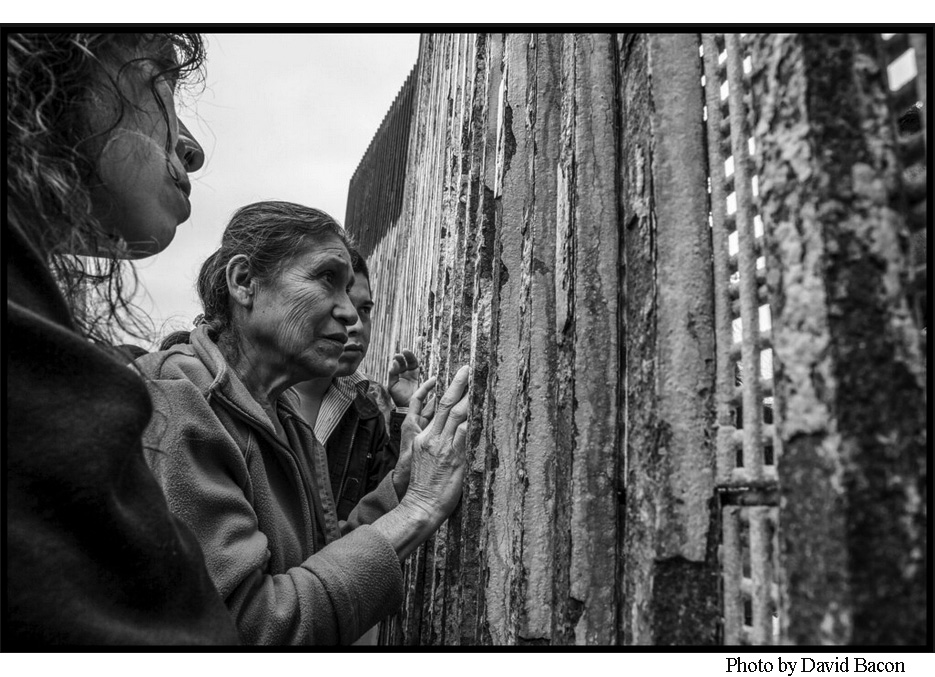
Immigrant victims of domestic violence still struggle to get asylum

Despite Trump’s era policies being reversed, the likelihood of finding protection in the US is lower than ever

by Jenny Manríquez

Ethnic Media Services

After escaping the abuse and persecution from an active gang member from La Mara 18 in her native El Salvador, Milagro won her asylum case in the United States last August on domestic violence grounds.
She crossed the Mexican border in 2015, escaping from her kidnapper, who repeatedly raped her and threatened to murder her family. “My life was always in danger, I filed a complaint (in El Salvador) but my case was not solved and they did not help me at all,” said Milagro during an Ethnic Media Services briefing that focused on the way domestic violence victims struggle to find protection in the United States.
The woman, who agreed that her story could be published without using her last name, was about to get married when the gang member became obsessed with her and began to harass her over the phone, saying that he would have her “whether you like it or not” .
Since then, the raping began repeatedly, including threats with weapons, blows to the entire body and burnings with an iron. Her rapist even fractured her hands.
“The last time he beat me for four hours, he wanted to kill me, he told me that he was going to cut me into pieces and leave half of my body at my grandmother’s, and half at my uncle’s.” After Milagro escaped, the gang member kept looking for her in every nook and cranny of her city, so she decided to leave the country.
“When I crossed (the border) I told them (immigration officials) that my life was in danger, that if I returned he would kill me, wherever I was he would look for me… Thanks to God and the lawyer I got it (the asylum), but it was a long struggle.”
Almost five years after presenting her case (December 2016), she received her status and with it, the path to legal residence in the country. She is the mother of a little girl, now pregnant with a boy, and although she is in a stable and healthy relationship, “there is still that trauma that one cannot remove. It is like a big burn and a scar remains, even if you want to erase it, you can’t.”
The U.S Refugee Act of 1980 allows people to apply for refugee status abroad or asylum status at the border or within the United States. They are eligible if they demonstrate what is known as “a well-founded fear,” meaning that the persecution is due to their race, religion, nationality, political opinion, or membership in a particular social group.
Marta Victoria Canossa, an immigration attorney for the Los Angeles-based firm Ortega, Canossa y Asociados, who is handling the Milagro case, stressed that it is important that those escaping domestic violence in their countries of origin present their case within the first year they enter the United States.
“It is very difficult for an abused woman to go to an American embassy and request asylum, even for those who have family already here in the United States or have an application pending,” she said. “This lack of resources at the embassy level forces women to present their claims at the Mexican border. If they don’t do it as soon as they cross, they have a year to do it.”
To support these claims, defenders have found useful reports issued every year by the State Department on the situation of the countries in Latin America, which highlight the problems faced by these abused women in finding help in their own governments.
VAWA and U Visa
For women who suffer domestic violence within the United States, they have two options: they can present their case through the Violence Against Women Act (VAWA) in force since 1984, or apply for a U visa.
“VAWA is available to people married to legal permanent residents or citizens of the United States,” Canossa said. Under this law, which also protects men, applicants are not required to submit a police report: their own declaration or a witness one, along with proof such as images and text messages, are sufficient. “Approval is taking from 21 to 28 months, but they can also apply for work permits while they wait,” Canossa said.
The application under VAWA must be made while the person is still married to the abuser or within two years of their divorce.
As for U VIsa, this relief is available to women who are victims of people who have no documents or were not married to US citizens. However, it requires a police report which “is sometimes challenging when the person is in a jurisdiction where the police don’t want to cooperate.”
The other difficulty is that the wait for the U visa exceeds 5 years, a time in which the person does not receive a work permit.
Sessions vs. Garland
The road to reaching these protections has been long. Beginning in the 1990s, guidelines were adopted on how women’s claims for domestic violence could fit into the Refugee Convention.
“In 2014 the Justice Department’s Board of Immigration Appeals issued a decision that explicitly recognized domestic violence as a basis for asylum,” Bookey said. “But in 2018, Trump’s Attorney General, Jeff Sessions, issued a decision that undid that precedent, using the case of our client, Miss AB.”
AB is a Salvadoran woman who endured 15 years of brutal domestic violence. Her partner’s brother was a police officer and he utilized that position to intimidate her, forcing her into exile, leaving behind her three young children. Although AB was eligible for asylum, Sessions rejected that decision and tried to undermine the availability of asylum for all women fleeing domestic violence and any form of harm from a non-government actor.

spot_img

Cooler weather, illness take toll on migrants caravan in Chiapas

At least six people have contracted dengue fever

by Ben Wein

Cold weather, a punishing pace, illness and the constant threat of detention or violence by Mexican authorities are taking their toll on the caravan of 2,500 migrants as it continues its journey northward through Mexico that began in Tapachula, Chiapas, on October 23.

The migrants walked 15 kilometers to the municipality of Mapastepec Saturday evening and rested on Sunday. There were complaints of cold on both Friday and Saturday night, and many children were reported sick. The National Immigration Institute (INM) said that five children and one adult contracted dengue fever, the newspaper El Sol de México reported.

The convoy reached the roadside village of Hermenegildo Galeana on Monday night, 120 kilometers from Tapachula.

But exhaustion is making some question their decision to participate. At least one family decided to abandon the caravan and take its chances with coyotes, human smugglers, in order to reach Mexico City. That method is dangerous and expensive but will seem increasingly tempting to families and slower walkers with enough money, who are struggling to keep up with the pace and the long distances.

“We’re very tired. The physical drain has been enormous … more than the physical tiredness, it’s the psychological exhaustion due to migration,” one migrant said late on Monday, referring to the constant threat of detention by authorities. “As long as our bodies can handle it, the fight will continue.”

Despite the hardship, the caravan appears to be growing, as migrants weave their way past immigration controls from Tapachula to join the convoy, organizer Irineo Mújica said.

They’d be well advised to exercise caution: the National Guard recognized its involvement in the killing of a Cuban migrant in Pijijiapán, Chiapas, on Sunday, about 36 kilometers north of where the caravan stayed the following night.

National Guard officers shot in the direction of a vehicle, killing the Cuban man and injuring four others, El Sol de México reported.

Before those details came to light, the INM stepped up its rhetoric against the caravan’s leaders, questioning their authority and accusing them of endangering the migrants. “It’s irresponsible that, due to the decisions of two people who call themselves leaders of the caravan, an agreement is not reached for authorities to provide foreigners with a regular immigration status, food and accommodation … to the detriment of their physical integrity,” it said in a press release on Sunday.

However, trust remains the stumbling block to reaching an agreement. Many migrants are fearful that once on an INM bus, they will be routed straight back to Tapachula, possibly to a prison-like detention center where many of them were held previously. That’s what happened to family members who were confronted by INM officials when they sought medical attention, El Sol de México reported.

Officials from a governmental organization that is observing the caravan said on condition of anonymity that the migrants’ mistrust of the INM was well-founded, and that promises to the contrary followed by a direct bus to Tapachula were an entirely plausible outcome of any deal.

The migrants are unlikely to receive another offer right away: Mexico is observing Day of the Dead through November 2, meaning holidays and reduced hours for many institutions.

Even before the Sunday shooting, the caravan was gaining political attention: Citizens’ Movement Deputy Salvador Caro Cabrera spoke in support of the migrants in Congress on October 28.

“The migrant caravan demands the attention of the federal government to achieve their proposal to gain asylum in our country. I could see from what hundreds of them told me that they haven’t had the treatment that the immigration law demands for them … We call on the federal government to resolve their migratory status before [the caravan arrives in Mexico City] to give freedom of transit to the [United States] border,” he said.


spot_img

Plant cures: Uses and benefits of basil essential oil

por Divina Ramírez

Basil essential oil is derived from the leaves and seeds of Ocimum basilicum, commonly known as basil. The herb is typically used for culinary purposes, particularly in Mediterranean cuisine. Basil essential oil is also commonly used as a natural medicine in parts of Europe, India and Central and Southeast Asia.

Uses and benefits of basil essential oil

Basil is a fragrant herb in the mint family (Lamiaceae) whose leaves are typically used as a garnish. Fresh basil leaves are also commonly ground to make pesto. Food historians believe basil came from India. Today, the herb is also cultivated in several Asian and Mediterranean countries, as well as in the United States.

Basil comes in many varieties, but the most popular types include:

– Sweet basil – Sweet basil has a mild and fresh flavor with hints of black pepper, anise and mint.

– Thai basil – Thai basil has a strong black licorice flavor. It is often used to liven up dishes.

– Lemon basil – Lemon basil has an intense citrus aroma. It is also popular in many Asian cuisines.

– Holy basil – Holy basil, also known as tulsi, is used in India’s Ayurvedic medicine as a remedy for colds, coughs and asthma. It is frequently consumed as tea.

Beyond adding aroma and flavor to dishes, basil also supports optimal overall health. The herb contains plenty of active compounds with beneficial properties, like eugenol and estragole. Basil essential oil contains high concentrations of these compounds, allowing it to relieve certain health problems and ward off others.

For instance, basil essential oil can provide relief from colds and the flu. Due to its antispasmodic effect, the oil is also frequently used to relieve whooping cough, as well as symptoms of asthma, bronchitis and other respiratory conditions.

Basil essential oil is also used as a digestive tonic due to its carminative properties. It can alleviate constipation and stomach cramps, as well as flatulence. It can also be used to alleviate bowel pain.

Additionally, basil essential oil has been found to be effective against many harmful bacteria, including:

– Bacillus cereus – This foodborne pathogen produces toxins that trigger vomiting and diarrhea.

– Escherichia coli – E. coli is most commonly associated with diarrhea, urinary tract infections and respiratory illnesses.

– Enterococci – These bacteria are a common cause of urinary tract infections.

– Listeria monocytogenes – This bacteria causes a serious infection called listeriosis, which may cause stiff neck, loss of balance, muscle aches, confusion and convulsions.

– Staphylococcus aureus – This is the leading cause of skin and soft tissue infections, such as boils, furuncles and cellulitis.

Basil essential oil is also widely used in aromatherapy to relieve mental fatigue, headaches and depression because of its calming nature. Regularly using basil essential oil may also provide clarity and mental strength. It may also improve blood circulation when inhaled.

How to use basil essential oil

Like most essential oils, basil essential oil can either be inhaled or applied topically. Since essential oils are highly concentrated, you only need to use a few drops at a time to enjoy their benefits.

If you want to go the inhalation route, you can either open your bottle of basil essential oil and inhale deeply or add a few drops of the oil to a diffuser and inhale the vapor. You can also do steam inhalation, which involves adding a few drops of essential oil to a bowl of hot water. Place a towel over your head and lean over the bowl, putting your face as close to the water as you can stand. Close your eyes and inhale deeply.

Basil essential oil can also be diluted in a carrier oil, such as olive oil and jojoba oil, and applied topically. Most essential oils are too strong to apply directly to the skin and may cause skin irritation, so it’s important to dilute them first. (Related: Essential oils for good health: How to use them and when to avoid them.) Natural News.

PlantMedicine.news has more articles about plants and herbs with medicinal uses.

Sources include:

PrepSchoolDaily.Blogspot.com

EverydayHealth.com

OrganicFacts.net


spot_img

Alternative Exposure 2021: Announcing the Grant Recipients

Southern Exposure Surpasses $1 million in Grants to Bay Area Arts Groups this Year.

by the El Reportero‘s news services

Southern Exposure is proud to announce the grant recipients of Round 15 of our Alternative Exposure Grant Program. Alternative Exposure grants fund the unincorporated, independent work of artists and collaboratives who invigorate and transform the San Francisco Bay Area arts community.

This year, we are granting a total of $60,000 to 14 projects, each receiving an award of $4,285. To date, Southern Exposure has awarded a total of $1,012,400 to 312 artists and projects, an enormous milestone for this project, thanks to major support from the Andy Warhol Foundation for the Visual Arts.

One of the fortunate grantees, is Alex Mejía, a doctoral candidate in the Race, Inequality, and Language in Education (RILE) program at Stanford University’s Graduate School of Education.

His research interests are centered on language, identity, social interaction, immigration/diaspora, racialization, and labor/capital. In addition to language and education research, Alex engages in multimedia art practices including video art, sound art, performance, and documentary film.

Puebla’s Dia de Muertos parade this year harkens to holiday’s Mexica roots

Event acknowledged Day of the Dead’s start in an ancient Nahua feast period

Day of the Dead — celebrated in modern times on November 1 and 2 — is based on ancient indigenous ceremonies that, at least in the Mexica or Aztec civilization, may have lasted for as long as two months.

This year, some residents of Puebla city decided that they wanted to put on a Catrina parade that would acknowledge the holiday’s beginnings in those ceremonies.

In one of the Mexicas’ two calendars, a religious calendar called the xiuhpohualli, Miccailhuitontli was the Mexica period of “the little feast of the dead,” which was a preparation for Huey Miccaílhuitl, “the great feast of the dead.”

The celebration of Miccailhuitontli has mostly been lost in Mexico, but a group in the city of Puebla decided to bring it back.

“In pre-Hispanic cultures, Day of the Dead began in what we would consider the month of September,” Esther Cortés Rojas, the co-coordinator of the Puebla event, said.

She and José Velázquez Guevara, the other coordinator, decided to celebrate Miccailhuitontli with workshops and a Catrina parade at the Taller Estudio de la Cura, an art school in the city.

“This is the first time we presented it,” Velázquez said. “This marks for us the beginning of Day of the Dead. We want people to understand this.”

The day began with a Mexica ritual.

“We ask for permission to have this ceremony. We perform a ritual to the four points,” Víctor Carreto Cabaños, the ritual’s leader, said.

The four points refer to both the four cardinal directions as well as the four elements that were important to the Mexica: earth, wind, fire and water.

To open the ceremony, Carreto chanted and hit a small drum while three assistants purified the space with incense. He explained that the ritual isn’t to ask permission from a god.

“In [the indigenous language of] Náhuatl, there is no word for god,” he said. “We believe in energy, the energy that is the universe.”

Organizers held workshops where attendees learned about the cempasúchil (Mexican marigold — the iconic Day of the Dead flower) and the role of cacao in indigenous cultures. They also got to make skulls out of amaranth.

But the highlight of the day was the Catrina parade.

Catrina is the iconic Day of the Dead figure, based on a 1910 etching by José Guadalupe Posada, popularized by a later work of Diego Rivera.

The figure, as intended by Posada, pokes fun at Mexicans who imitated European styles during the era of President Porfirio Díaz, known as the Porfiriato. The Catrina also pokes fun at death.

It takes time and patience to transform a person into a Catrina.

spot_img