Sunday, October 11, 2026
spot_img
Home Blog Page 172

‘Forgiveness’ and the sticky question of justice in Mexico

After decades of violence, how can Mexicans be ready to forgive?


by Steven Dudley


From narco-sanctioned music to secret videos and public banners, some Mexican drug traffickers have asked for forgiveness. But after decades of violence that, most recently, led to the murder of two Catholic priests, will Mexicans ever be ready to forgive?


It is about 90 seconds into what is a typical ranchera-homage, or narcocorrido, of Ovidio Guzmán — one of three brothers known collectively as the Chapitos, a faction of the modern-day iteration of the powerful Sinaloa Cartel — when the lead singer of the group, Código FN, suddenly feels the need for an aside.

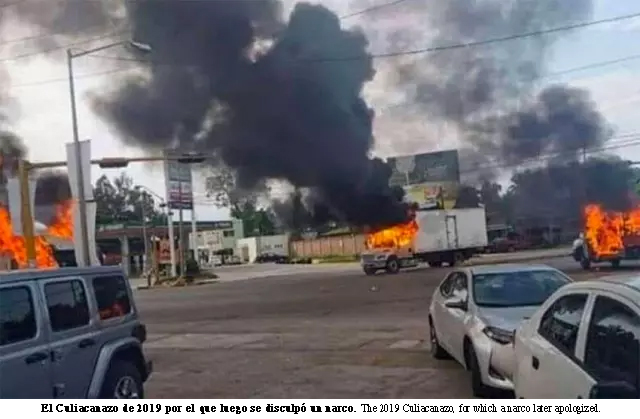
“Oh, and by the way, I would like to apologize for the Culiacanazo,” he hums, making reference to the violent October 2019 upheaval against authorities that followed Guzmán’s brief detention in Culiacán, the city that has long served as the Chapitos’ headquarters. “I didn’t fight,” the singer continues on behalf of Guzmán in the video in which he is frequently surrounded by burning vehicles. “The wellbeing of my daughters comes first.”

The Culiacanazo paralyzed the city for more than five hours. Amidst the chaos, the government backed down and freed Guzmán. But for the traffickers, there was still a need for atonement. During the fighting, between eight and 14 people died, and many others were injured. Cars were burned to hem in government forces, and gunfights put hundreds at risk and closed businesses and schools.

Perhaps even worse, armed men invaded the local army barracks and kidnapped several family members of army personnel, crossing a symbolic line that has long been respected by both sides (and kept an unwritten détente between them in place in areas like Culiacán).

However, that code, which ostensibly includes leaving “civilians” (and even soldiers’ families housed in enemy territory) alone, has never been particularly clear and is harder to enforce. This was evident most recently in northern Mexico where two priests and a tourism guide were killed in late June, allegedly by drug traffickers who chased the guide into a church where he’d sought refuge.

In response, Mexico’s archdiocese, in a rare confrontational editorial in its weekly publication, called on President López Obrador to “examine the security strategies.” And while the Catholic Church hierarchy may not speak for the entire Catholic clergy (in years past, other prominent priests, such as Alejandro Solalinde Guerra, have asked for “forgiveness” from the narcos, who he considers victims of neoliberal economics and corrupt politics), it remains an important barometer.

The “strategies” are popularly known as abrazos no balazos (hugs, not bullets), a reference to something López Obrador floated during his presidential campaign but has only partially followed as president. The idea is to ratchet down the tensions between the government and criminal groups, and open space for reconciliation via a less repressive approach than his predecessors.

For many, the Culiacanazo is the illustration of the strategy’s abject failure. AMLO, as he is popularly known, defended his decision to release Guzmán and withdraw the security forces, telling the media a couple of years after the event he did not want to “put at risk the population” or “civilians.” But AMLO has also used the security forces to go after criminal groups in much the same way as his predecessors. He has continued to arrest the heads of criminal organizations and deploy troops in large numbers to quell violence and criminality.

The results are mixed. Murder rates over the course of his administration are down only slightly from their record high. Of course, not all of these are organized crime-related murders, but a good portion are. What’s more, thousands have disappeared or fled the violence. Others have been forcibly recruited or trafficked by criminal groups. And still others have been forced out of business or school, as was clear on the day of the Culiacanazo when the city suddenly stopped.

Criminal groups try to make up for these barbarities by issuing public statements that often blame the authorities or rival groups; by buying off the public with public works projects, large festivals, or handouts; or by calling for and often providing vigilante justice against the perpetrators.

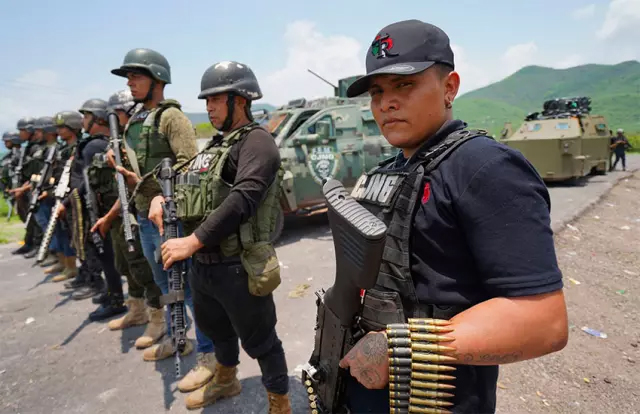
Following the murder of the two priests, for instance, purported members of the Jalisco New Generation Cartel issued a video asking other groups not to mess with priests, doctors, or teachers. “The war is between us,” one of the masked members said, reading from a script while surrounded by other, well-armed masked men.

When none of this works, the criminals often ask for forgiveness. Guzmán first issued a statement in 2019 on social media, saying via Instagram that he would like “to apologize for all the actions that were taken.”

By then, the passive-voice, narco-apology was a tradition of sorts. In 2013, the Knights Templar (Caballeros Templarios) asked for “forgiveness” following “commentary and criticism” in Michoacán, their home territory, in a message scrawled on a banner. In 2015, after numerous gun battles in Jalisco, the CJNG hung dozens of banners in the state promising people that the “problem is not with you.”

And in 2016, while speaking to a reporter, Rafael Caro Quintero — the long-time drug trafficker and, until recently, Mexico’s most sought-after fugitive — asked for forgiveness of “Mexican society for all the errors that I committed,” as well as the family of the murdered Drug Enforcement Administration agent for which he was once condemned to 40 years in a Mexico prison.

Just how these apologies fit into AMLO’s larger plan for hugs, not bullets is not clear. During his campaign, he floated the idea of an “amnesty” for narcos, “if and when it has the support of the victims, the family members of the victims.”

But after being elected — aside from a reference to the possibility of commuting the sentences of prisoners over the age of 65 who had been tortured — he has largely cloaked his idea of forgiveness in vague, quasi-religious terms. As president, he has also refused to spell out publicly if he is talking about judicial forgiveness in the form of an amnesty or pardons for narcos, religious forgiveness in the form of priestly or pastoral absolution, or narco-forgiveness of the type Guzmán and Caro Quintero seem to be asking for.

For many Mexicans, it may not matter. In addition to some parts of the Catholic Church hierarchy, victims’ organizations have routinely rejected this softer approach, with one prominent representative of the victims of narco-violence summing it up nicely when she said they would accept “neither forgiveness nor forgetting” in their fight to get justice.

In the days that followed the archdiocese’s blistering editorial, the two sides later appeared to move closer when the National Bishops Conference issued a statement “to unite us in a call for peace.” AMLO, in one of his morning press conferences, said he “supported” that statement without committing to any concrete steps.

Still, the lines remained clear: Forgiveness will not come easy from a society bloodied and battered from years of conflict, or even from an institution that is built on that very premise.

Reprinted from InSight Crime. Steven Dudley is a writer with InSight Crime, a foundation dedicated to the study of organized crime.

spot_img

NOTICE OF VOTE MEASURES IN THE CITY OF REDWOOD CITY

NOTICE IS HEREBY GIVEN that the following two measures will be voted on at the general municipal election to be held in the City of Redwood City on Tuesday, November 8, 2022.

REDWOOD CITY ELECTION PROCEDURES AMENDMENT

MEASURE ____

Amendment to the Redwood City Election Procedures Charter. Shall the measure amending the Redwood City Charter to align the date of the Redwood City General Municipal Election with the date of the Statewide General Election, clarify the date on which the election
of Redwood City must be certified and the City Councilors must be sworn in, and provide for the election of City Councilors by district to comply with state law, shall it be adopted?

Otherwise _________

AMENDMENT TO THE REDWOOD CITY MAYOR’S TERM CHARTER ACT MEASURE ____

Amendment to the constitutive act of the mandate of the mayor of the city Redwood City. Should the measure amending the Redwood City Charter be adopted to shorten the Mayor’s term from two years to one year in order to allow more Council members to serve as Mayors during their tenure on the City Council?
Otherwise _________

For more information or to obtain a copy of the Resolution, contact City Clerk Pamela Aguilar at (650)780-7220 or paguilar@redwoodcity.org.

NOTICE IS FURTHER GIVEN that the primary arguments for or against each of the measures
above may be submitted in writing to the Office of the City Clerk, 1017 Middlefield Road, Redwood City, CA 94063 for printing and distribution to the voters, in accordance with the provisions of the California Elections Code, no later than 5:00 p.m. August 2022. Rebuttal arguments by the authors of said primary arguments that have been selected to be printed in the voter information guide may likewise be filed before 5:00 p.m. on August 29, 2022.

The printed arguments presented to the voters shall be titled “Argument In Favor Of Measure ___” or “Argument Against Measure ___” and “Rebuttal Of Argument In Favor Of Measure ____” or “Rebuttal Of Argument Against Measure ___”, respectively. All arguments related to the above measures must be accompanied by the printed names and signatures of the authors presenting them. All arguments will have the following form:
The undersigned proponent(s) or author(s) of the argument __________ (principal/rebuttal)
____________ (for/against) ballot measure ___ at ____________________ (title of
election) for ____________ (name of jurisdiction) to be held on ______________ (date
election), hereby declares that said argument is true and correct according to
______________ (your) knowledge and beliefs.

Signed Date
____________________________ ______________________________
____________________________ ______________________________

No main argument for any measure shall exceed 300 words. Only one argument for and one argument against each measure will be selected for printing and distribution to voters. No more than five signatures should appear along with any argument.

The authors of the main arguments both for and against each measure that have been selected to be printed in the voter information guide may prepare and present rebuttal arguments not to exceed 250 words. The authors may authorize in writing any other person or persons to prepare, present or sign the rebuttal arguments. No more than five signatures will appear in conjunction with any rebuttal argument.

All arguments must be accompanied by the original signatures of the authors and must therefore be submitted in person. Contact City Clerk Pamela Aguilar at (650)780-7220 or paguilar@redwoodcity.org to schedule an appointment to present arguments before the deadline.

NOTICE IS FURTHER GIVEN that an evaluation period of ten calendar days will be set for the public review of said arguments. During this time, any registered voter eligible to vote on the measure, or the election official, may apply for a writ or court order requiring any or all of the materials to be changed or removed. The review period of the
primary arguments for or against the ballot measures will begin at 5:00 p.m. on August 19, 2022 and will end at 5:00 p.m. on August 29, 2022. rebuttal review

spot_img

FREE Music on the Courthouse Square – downtown Redwood City

Celebrating its Sweet 16 anniversary through September 2


Compiled by the El Reportero‘s staff


A favorite at the Redwood City Salsa Festival, “Edgardo & Candela” returns to combine dancing styles like Mambo, Cha-Cha-Chá, Merengue, Bolero, Bachata, Timba, Cumbia and much more. A great audience communicator and seasoned performer, Edgardo will assure that everyone is entertained while he mixes singing tunes by classic legends and the real treat: Edgardo’s original music, presenting him as a poetic lyricist and accomplished writer.

With top-quality local and national musical performers — from rock and reggae, to Salsa and much more— music fans of all ages will be thrilled to discover and enjoy the most popular summer concert series on the Peninsula! Redwood City is well known for its events, but Friday night’s Music on the Square is one of the most treasured nights of summer.

Aug. 5, Native Elements; Aug. 12, Edgardo & Candela; Aug. 19, Foreigner Unauthorized; Aug. 26, Foreverland, September 2, Steel ‘n’ Chicago

Edgardo & Candela – Salsa 6-8 p.m., Friday Aug. 12. FREE

At the Courthouse Square, 2200 Broadway, Redwood City. For more info call 650-780-7311.

https://www.redwoodcity.org/musiconthesquare

Video at: https://www.youtube.com/watch?v=djlFKVRSTng

https://www.musicandela.com


Tahoe Heartbeat Festival a music, art, culture, and community Benefit Event

Born from the desire to promote musical arts, conscience awareness, sustainability and green community efforts, Tahoe Heartbeat Festival will feature a full day and evening of national music headliners, local artists, arts & craft vendors, food & beverage offerings, games and more. All ages, families welcome, vendor village, food and beverage trucks.

Featuring Thievery Corporation, Trevor Hall, Ozomatli and more.

This fundraising event will benefit Tahoe Fund, a local 501c3 organization dependent on private funding to spearhead environmental projects around the Lake Tahoe Basin with an emphasis on forest health, lake clarity, sustainable recreation, transportation and stewardship. The Tahoe Fund provides a common vision from which to build a sustainable future for this irreplaceable resource and for those who cherish and enjoy this mountain landscape.

Saturday, Aug. 20, 2022 at 2 p.m., at Lake Tahoe Community College Outdoor Playing Fields, 1 College Dr. South Lake Tahoe, CA. Tickets on sale now: tahoeheartbeatfestival.com. To benefit the Tahoe Fund.

spot_img

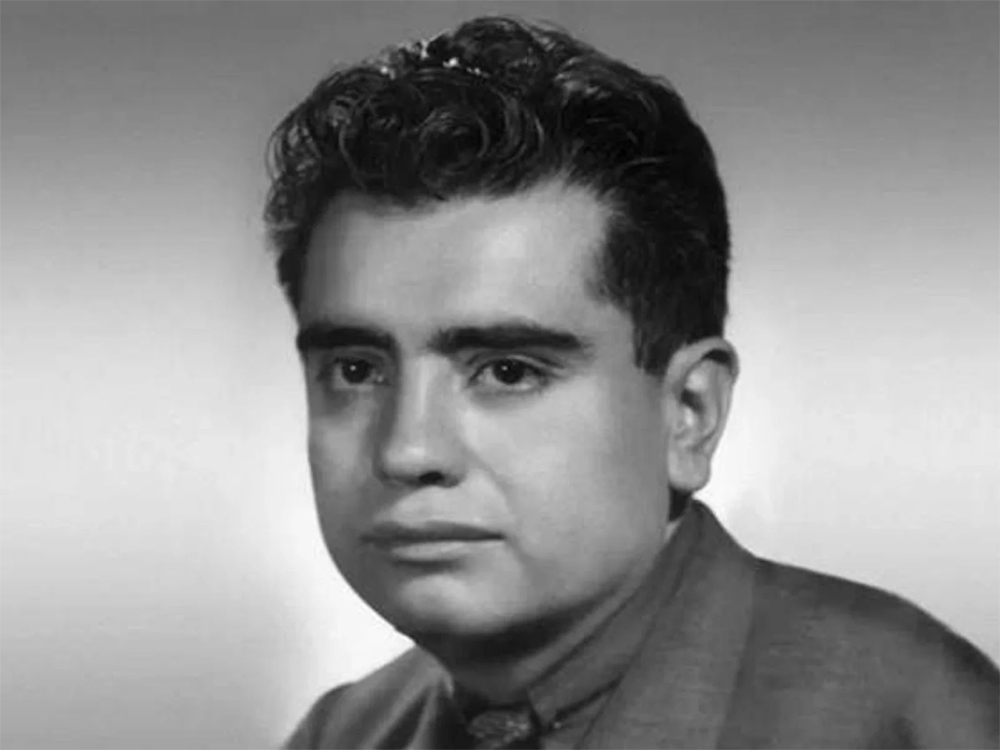
José Pablo Moncayo: The story of the illustrious Mexican composer

Learn the complete story of José Pablo Moncayo, author of the most famous Huapango in Mexico, considered a second national anthem


Shared/by Mexico Desconocido


José Pablo Moncayo is one of the most renowned Mexican composers of all time; His best-known work “El Huapango de Moncayo” is one of the famous classics of Mexican music. Check out his full story below.

The famous Mexican composer and conductor, José Pablo Moncayo, is an icon of Mexican musical nationalism of the 20th century. The main inspiration for his work was nature and it is reflected in the work carried out by the artist between 1931 and 1958.

Moncayo’s repertoire is broad and virtuous, ranging from pieces for piano, singing, trios and instrumental duets, quintets, sextets, chamber orchestra, ballet suite, choral opera, film music and symphony orchestra.

Learn about his life and what you can find of his work at the Fonoteca Nacional. Also know what his most important pieces were and everything about the Huapango de Moncayo, a pinnacle work that became a Mexican icon.

The story of José Pablo Moncayo, Mexican composer

José Pablo Moncayo García was born in Guadalajara, Jalisco on June 29, 1912 and died in Mexico City on July 16, 1958.

His first experience with music came when his father, a carpenter, was paid with a harpsichord. José Pablo Moncayo was six years old when his family moved to Mexico City and he began his musical life taking piano lessons with maestro Eduardo Hernández Moncada (iconic musician of the post-revolutionary years in Mexico) and entered the National Conservatory of Music at the age 17 in 1929.

Su primera experiencia con la música llegó cuando a su padre, carpintero, le pagaron con un clavecín. José Pablo Moncayo tenía seis años cuando su familia se mudó a la Ciudad de México y comenzó su vida musical tomando clases de piano con el maestro Eduardo Hernández Moncada (icónico músico de los años posrevolucionarios en México) y entró al Conservatorio Nacional de Música a la edad de 17 años en 1929.

Moncayo en el Conservatorio Nacional de Música

Durante esta etapa de su juventud, José Pablo Moncayo trabajó como pianista de jazz en cafés y acompañante en la radio para solventar sus estudios y contribuir a la economía familiar.

En su paso por el Conservatorio Nacional de Música, Moncayo fue discípulo de grandes maestros además de Hernández Moncada. Tuvo a Salvador Novo y Carlos Pellicer Cámara como profesores de literatura, también fue alumno de José Rolón; quien había recibido la formación de la pedagoga musical más importante de todos los tiempos: Nadia Boulanger.

Como profesor de Armonía, contrapunto y fuga tuvo al maestro Paul Dukas, autor de Aprendiz de Brujo; la mítica pieza que Disney utiliza en Fantasía 2000.

José Pablo Moncayo estuvo bajo la tutela del maestro Carlos Chávez, quien fue compositor, director de orquesta, profesor y periodista mexicano, además de ser el fundador de la Orquesta Sinfónica de México.

Se dice que esta “clase de creación musical” se convirtió en un “taller de composición”, donde los alumnos del maestro Chávez se convirtieron en sus colegas. Según la historia, estas clases iniciaron alrededor de 1930 y en 1931, Moncayo se incorporaría a la Orquesta Sinfónica de México como pianista y percusionista.

A partir de 1936, José Pablo Moncayo asumiría 5 veces el papel de director de la Orquesta Sinfónica de México, además de haber sido subdirector y director artístico de la misma.

Los Cuatro, el grupo del movimiento musical nacionalista

La historia dice que fue el maestro Carlos Chávez el responsable de unir a José Pablo Moncayo con sus contemporáneos Daniel Ayala, Salvador Contreras y Blas Galindo, creando en 1935 una agrupación llamada “Los Cuatro”; que se encargó de llevar sus composiciones con espíritu nacionalista a la relevancia internacional, especialmente en suramérica.

mexicodesconocido.com.mx De izquierda a derecha: Contreras, Ayala, Moncayo y Galindo.

En 1942 fue becado por el Instituto Berkshire y a su regreso asumió la dirección de la Orquesta Sinfónica de México, que luego se llamaría Orquesta Sinfónica Nacional. También fue director de la Orquesta del Conservatorio.

A lo largo de su vida y carrera, Moncayo fue profesor de composición y dirección en el Conservatorio Nacional de Música, además de otras asignaturas en la Escuela Superior Nocturna de Música y la Escuela de Iniciación Artística.

El maestro José Pablo Moncayo falleció un 16 de junio de 1958 a la edad de 46 años. Sus restos fueron depositados en la Rotonda de las Personas Ilustres el 22 de noviembre del 2012.

Obras cúmbres de José Pablo Moncayo

Moncayo ahondó en infinidad de expresiones musicales y su obra es extensa. Estas son sus piezas más destacadas:

Sonata para violín y piano, Sonata para viola y piano, Amatzinac (flauta y cuerdas), Sonata para violín y Violonchelo, Trío para flauta, violín y piano; el famosísimo Huapango de Moncayo, un poema sinfónico.

También están La Mulata de Córdoba, Muros Verdes, Sinfonía, Sinfonietta, Cumbres, Tierra de temporal, Bosques y la obra Tierra, su único ballet.

En sus últimos días, el maestro José Pablo Moncayo dejó inconcluso un concierto para piano y orquesta dedicado a su esposa.

¡Conoce la historia de la pieza más famosa de José Pablo Moncayo aquí!

José Pablo Moncayo en la Fonoteca Nacional

El Huapango de Moncayo, una de las obras del movimiento musical nacionalista más reconocidas de la historia y que se convirtió en un símbolo de nuestro país, puede ser apreciado en la Fonoteca Nacional en la ejecución de orquestas nacionales e internacionales; como la Orquesta Sinfónica Nacional bajo la dirección del maestro Carlos Chavez o la Orquesta Filarmónica de Rotterdam.

La Casa de los Sonidos de México puedes encontrar transmisiones radiofónicas de la Orquesta de la Universidad interpretando obras de Moncayo, así como las piezas Bosques, Cumbres, Muros Verdes y Tierra Temporal.

Además puedes encontrar piezas que se consideran inéditas como la canción para coro llamada La Canción del Mar y Cuento de la Potranca, creada para la película mexicana Raíces de Benito Alazraki, filme de corte indigenista basado en el libro de cuentos El Diosero, de Francisco Rojas.

spot_img

Solving the Tanking Economy

by Jon Rappoport


Subscribe to my substack. As I keep saying, it costs less than one breakfast a month at an old diner off the highway in 1990.

Here is the background for the podcast:

No more excuses for the Biden administration.

They—and many Republicans—are way past the point of “making mistakes.” They’re forcing the economy to tank.

That’s what they want.

You can’t take over an economy that’s thriving and lifting most boats. You have to drive it down, radically weaken its supports—and then step in, blame various scapegoats, and claim there is no way out of the crisis unless the government intervenes and enacts “a new deal.”

That new deal will involve some version of fixing prices of goods, wage “supports” and freezes, and control of key industries.

That’s where this is going. That’s the plan.

Climate change non-science is being deployed as one of the justifications—and there is a salad of verbiage about “a transition to a green economy.”

Which is, of course, baloney, because right now there are no alternative options for energy that can supplant oil.

Instead, poverty will deepen. Drastically.

The suicidal policies of this administration needed a man in the Oval Office who was so sold out, so mentally compromised, he could be induced to go along with the horror show.

Any person who can’t see that is whistling in the dark and holding a gun to his own head and telling himself a fairy tale about saving the planet.

And I’ve noticed that certain alternative news sites, who would ordinarily be blowing the trumpet for a transition to greenness, have recently shut up about it.

They see the handwriting on the wall. It’s not just theory anymore. The criminals in Washington are actually DOING it, and without a safety net in the form of viable non-oil energy. They have no safety net.

They intend to impose low, lower, and lowest energy production and energy use quotas on everybody. That’s the technocratic foundation for the future, and the future is sitting there in front of us now.

“Well, you see, while we bring solar and wind on line to replace oil, we’ll have to portion out available sources of energy…”

This is all about control of society at the top—consolidated and intensified. Call it socialism. Call it anything you want to. Labels don’t matter. The people who want tyranny and can impose it are killers.

They’ve been with us since people lived in caves. Now they believe they have the means to control, not hundreds or thousands, but millions and billions of humans.

Climate change, open borders, critical race theory, transgenderism, gun control, censorship, inflation, COVID fraud, toxic vaccines—these “inserts” all function to drastically weaken and cripple the nation and also serve as massive distractions while the sociopaths harden their power.

ENERGY is their number one target. Put a chokehold on energy and money and you run the world.

Every conceivable strategy to decentralize those two powers will throw a monkey wrench into their plan.

—In the podcast, I’ll be talking about solutions that could decentralize those powers.

Then I’ll take up the current proposal for a debate about the existence of the “COVID virus,” and show how one side of that debate has a massive misconception about real science.

I’ll explain how science should be done; and why the terms of the debate are much simpler than they imagine.

I’ve been around the block on this basic issue a few hundred times in the last 20 years; and I’ve been through all the whys and wherefores.

I’ve explored other versions of the debate, and I’ve seen the holes in the ways the debates have been framed.

I’ll lay it all out very clearly. I’ll explain what a real debate would look like.

Join me on the podcast!

— Jon Rappoport is The author of three explosive collections, THE MATRIX REVEALED, EXIT FROM THE MATRIX, and POWER OUTSIDE THE MATRIX, Jon was a candidate for a US Congressional seat in the 29th District of California. He maintains a consulting practice for private clients, the purpose of which is the expansion of personal creative power. Nominated for a Pulitzer Prize, he has worked as an investigative reporter for 30 years, writing articles on politics, medicine, and health for CBS Healthwatch, LA Weekly, Spin Magazine, Stern, and other newspapers and magazines in the US and Europe.

spot_img

Solving the tanking economy

by Jon Rappoport


Subscribe to my substack. As I keep saying, it costs less than one breakfast a month at an old diner off the highway in 1990.

Here is the background for the podcast:

No more excuses for the Biden administration.

They—and many Republicans—are way past the point of “making mistakes.” They’re forcing the economy to tank.

That’s what they want.

You can’t take over an economy that’s thriving and lifting most boats. You have to drive it down, radically weaken its supports—and then step in, blame various scapegoats, and claim there is no way out of the crisis unless the government intervenes and enacts “a new deal.”

That new deal will involve some version of fixing prices of goods, wage “supports” and freezes, and control of key industries.

That’s where this is going. That’s the plan.

Climate change non-science is being deployed as one of the justifications—and there is a salad of verbiage about “a transition to a green economy.”

Which is, of course, baloney, because right now there are no alternative options for energy that can supplant oil.

Instead, poverty will deepen. Drastically.

The suicidal policies of this administration needed a man in the Oval Office who was so sold out, so mentally compromised, he could be induced to go along with the horror show.

Any person who can’t see that is whistling in the dark and holding a gun to his own head and telling himself a fairy tale about saving the planet.

And I’ve noticed that certain alternative news sites, who would ordinarily be blowing the trumpet for a transition to greenness, have recently shut up about it.

They see the handwriting on the wall. It’s not just theory anymore. The criminals in Washington are actually DOING it, and without a safety net in the form of viable non-oil energy. They have no safety net.

They intend to impose low, lower, and lowest energy production and energy use quotas on everybody. That’s the technocratic foundation for the future, and the future is sitting there in front of us now.

“Well, you see, while we bring solar and wind on line to replace oil, we’ll have to portion out available sources of energy…”

This is all about control of society at the top—consolidated and intensified. Call it socialism. Call it anything you want to. Labels don’t matter. The people who want tyranny and can impose it are killers.

They’ve been with us since people lived in caves. Now they believe they have the means to control, not hundreds or thousands, but millions and billions of humans.

Climate change, open borders, critical race theory, transgenderism, gun control, censorship, inflation, COVID fraud, toxic vaccines—these “inserts” all function to drastically weaken and cripple the nation and also serve as massive distractions while the sociopaths harden their power.

ENERGY is their number one target. Put a chokehold on energy and money and you run the world.

Every conceivable strategy to decentralize those two powers will throw a monkey wrench into their plan.

—In the podcast, I’ll be talking about solutions that could decentralize those powers.

Then I’ll take up the current proposal for a debate about the existence of the “COVID virus,” and show how one side of that debate has a massive misconception about real science.

I’ll explain how science should be done; and why the terms of the debate are much simpler than they imagine.

I’ve been around the block on this basic issue a few hundred times in the last 20 years; and I’ve been through all the whys and wherefores.

I’ve explored other versions of the debate, and I’ve seen the holes in the ways the debates have been framed.

I’ll lay it all out very clearly. I’ll explain what a real debate would look like.

Join me on the podcast!

— Jon Rappoport is The author of three explosive collections, THE MATRIX REVEALED, EXIT FROM THE MATRIX, and POWER OUTSIDE THE MATRIX, Jon was a candidate for a US Congressional seat in the 29th District of California. He maintains a consulting practice for private clients, the purpose of which is the expansion of personal creative power. Nominated for a Pulitzer Prize, he has worked as an investigative reporter for 30 years, writing articles on politics, medicine, and health for CBS Healthwatch, LA Weekly, Spin Magazine, Stern, and other newspapers and magazines in the US and Europe.

spot_img

Study: Quercetin offers key benefits for your heart and immune system

by Zoey Sky


07/26/2022 – Quercetin is a flavonoid and plant pigment found in brightly-colored fruits and veggies. Many studies continue to prove its ability to help prevent heart disease and promote cardiovascular health.

Extensive population studies have revealed that people with diets rich in quercetin have low cholesterol levels and decreased incidence of heart disease and death.

Research has also shown that quercetin doesn’t just boost heart health, it also helps relieve allergies and enhances immune function.

Quercetin offers cardiovascular benefits

Quercetin is a potent antioxidant that helps reduce oxidative stress and inflammation, both of which are linked to heart disease. According to research, quercetin also helps reduce damage from experimentally-induced heart attacks.

Additionally, diets high in quercetin have been shown to protect against harmful LDL (low-density lipoprotein) cholesterol by decreasing its concentration in the blood. This, in turn, reduces the risk of heart attack and stroke because it prevents the buildup of atherosclerotic plaque in arteries.

Quercetin also helps the cardiovascular system by improving circulation and supporting healthy blood pressure. A clinical study found that taking 200 mg of quercetin every day enhances the production of beneficial nitric oxide — a chemical that relaxes blood vessels — and promotes endothelial cell function.

Quercetin boosts your immune system

Quercetin protects plants against damage from disease, harsh temperatures and chemical toxins. In studies, this translates to quercetin having potential anti-allergy, antiviral and immune-stabilizing abilities.

Quercetin can help prevent the depletion of antioxidants and protect the lungs during times of stress. It also helps prevent the spread of viruses. According to research, quercetin can significantly increase the respiratory antioxidant defense system in mice exposed to the H1N1 flu virus.

Studies have also revealed that quercetin helps block viral replication, thus reducing the ability of viruses to infect healthy cells.

Additionally, quercetin was found to boost immune defenses by helping increase the production of glutathione, the body’s master antioxidant and a crucial immune system component.

Data also suggests that quercetin may help prolong life. In a 2010 review of studies published in the journal Archives of Biochemistry and Biophysics, the authors wrote that quercetin could activate SIRT1, the “anti-aging” gene.

Quercetin helps reduce allergic reactions

Modern research is exploring the ability of quercetin to fight allergies.

Quercetin is a natural antihistamine and can help reduce allergic reactions by decreasing the activation of mast cells that release histamine and other inflammatory signals linked to allergies, asthma and skin conditions. This is why integrative healthcare providers often recommend quercetin to relieve hives, a runny nose, sinus congestion, sneezing, watery eyes and other cold and allergy symptoms.

Because of quercetin’s impressive ability to inhibit mast cells, researchers are investigating its potential to block fatal anaphylactic reactions like those caused by peanut allergies.

Quercetin is also a potential treatment for chronic obstructive pulmonary disease (COPD) and asthma, thanks to its ability to relax constricted airway muscles.

Boost your overall health with quercetin-rich superfoods

You can take supplemental quercetin as pills, capsules or in liposomal form. While there is no recommended daily amount of quercetin, many natural healers advise dosages of 500 mg taken twice daily.

Another option is to follow a healthy diet and eat lots of foods rich in quercetin like fresh, organic fruits and veggies. Foods rich in quercetin include unpeeled apples. One ripe apple contains about 50 mg of quercetin.

Other superfoods that contain quercetin include green tea, red onions, red and purple grapes and red wine. Quercetin is also found in blackberries, blueberries, broccoli, citrus fruits, dark cherries, raspberries and tomatoes.

Consume foods rich in quercetin like apples and grapes or take quercetin supplements to boost your heart health and immunity and reduce allergic reactions. Foods.news.

spot_img

Jalisco cartel now has presence in 28 states: US Congress

Only four states remain free of the ‘intensely expansionist’ criminal organization


by México News Daily


The Jalisco New Generation Cartel (CJNG) operates in Mexico City and 27 states, and is the dominant criminal organization in six states, according to a report by the United States Congressional Research Service (CRS).

A map published in the report shows that Sonora, Sinaloa, Durango and Tlaxcala are the only states where the CJNG doesn’t have a presence. It also shows that the CJNG is the dominant criminal force in its home state of Jalisco as well as Nayarit, Colima, Guerrero, México state and Veracruz.

Entitled “Mexico: Organized Crime and Drug Trafficking Organizations,” the report said the CJNG is an “extremely powerful cartel” with a “reputation for extreme and intimidating violence.”

The Drug Enforcement Administration (DEA) “considers the CJNG a top U.S. threat and Mexico’s best-armed criminal group,” the CRS said, noting that U.S. authorities have offered a US $10 million reward for information leading to the arrest of cartel leader Nemesio “El Mencho” Oseguera Cervantes, “who is believed to be hiding in the mountains of Jalisco, Michoacán, and Colima.”

Informed by media reports, the CRS report acknowledged that, according to some analysts, the CJNG has drug trafficking operations throughout the Americas, Asia, and Europe.

“The CJNG built its dominance internationally first through extending its presence through a rapid expansion inside Mexico,” it said.

“In 2016, many analysts maintained the CJNG controlled a territory equivalent to almost half of Mexico. The group has battled Los Zetas and Gulf Cartel factions in Tabasco, Veracruz, and Guanajuato, as well as the Sinaloa … [Cartel] in the Baja Peninsula and Chihuahua. The CJNG’s ambitious expansion campaign was characterized by high levels of violence, particularly in Ciudad Juárez and Tijuana.”

The CRS also said that the CJNG has consolidated “important components of the global narcotics supply chain” through its battle to dominate key ports on both the Pacific and Gulf coasts.

“In particular, the CJNG maintains reported control over the ports of Veracruz, Manzanillo, and Lázaro Cárdenas, which has given the group access to precursor chemicals that flow into Mexico from China and other parts of Latin America,” the report said.

“As a result, according to some analysts, the CJNG has pursued an aggressive growth strategy underwritten by U.S. demand for Mexican methamphetamine, heroin, and fentanyl. … Despite leadership losses, the CJNG has extended its geographic reach and maintained its own cohesion while exploiting the infighting among factions of the Sinaloa organization.”

The CRS described the cartel as “intensely expansionist” and acknowledged its “willingness” to attack government officials, such as Mexico City Police Chief Omar García Harfuch.

The report also profiled eight other major Mexican criminal groups, including the Sinaloa Cartel, the Gulf Cartel and La Familia Michoacana.

Once headed by imprisoned drug lord Joaquín “El Chapo” Guzmán, the Sinaloa Cartel is the “the Mexican crime organization with the largest international footprint,” CRS said. Its report cited a DEA estimate that the cartel was active in 15 of 32 Mexican entities in 2020 and noted that its leaders have successfully corrupted public officials from the local to the national level.

The report also said that many lawmakers in the current U.S. Congress are concerned about cartel-related violence in Mexico and its impact on border security.

“Some members have been evaluating the amounts and effectiveness of U.S. counternarcotics and security assistance to Mexico and assessing the overall U.S.-Mexico security relationship. Additional concerns focus on how … [cartel]-related violence has imperiled some licit economic sectors, negatively affected U.S.-Mexico trade, and contributed to the internal displacement and outmigration of Mexican citizens,” it said.

“Congress has engaged regularly with these issues, holding hearings, appropriating funds to support Mexico’s anti-crime efforts, and issuing directives and reporting requirements to U.S. agencies.”

spot_img

Ancient rulers’ ashes may have been used in the Mayan ballgame

Archaeologists hypothesize that remains of three 8th century rulers were used to vulcanize them


by the El Reportero‘s wire services


A discovery at an archaeological site in Chiapas has led a researcher to conclude that the ashes of ancient Mayan rulers aided the production of rubber balls that were used in the Mayan ballgame.

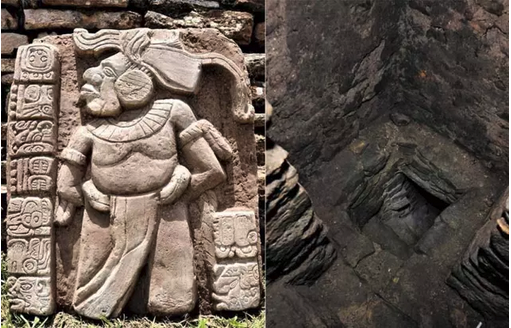
In 2020, over 400 vessels containing ashes, charcoal, rubber and roots were found in a pre-Hispanic crypt within the Temple of the Sun at the Toniná archaeological site near the town of Ocosingo.

In a statement published Monday, the National Institute of Anthropology and History (INAH) set out a hypothesis based on that discovery that was developed by INAH researcher Juan Yadeun Angulo, who has led research and conservation projects at Toniná for over four decades.

According to Yadeun’s hypothesis, it’s probable that the cadavers of at least three eighth-century Mayan rulers – two men and one woman – were reduced to ashes in order to use them during the production of rubber balls.

A “microscopic analysis” of the organic material contained in the vessels indicated that “specialized persons, possibly priests” cremated bodies of high-ranking members of society, INAH said. Yadeun has concluded that the sulfur of the ashes was used to vulcanize, or harden, the rubber used to make the ballgame balls.

Inscriptions on sculptures that delimit a Toniná ball court led the researcher to believe that sulfur in the ashes of the rulers Wak Chan Káhk´, Aj Kololte’ and Káwiil Kaan were used to vulcanize rubber. The first two male rulers died in the second half of the 8th century while the latter female passed away in the first half of the same century.

“It’s enlightening to know that the Mayans sought to turn the bodies of their rulers into a living force,” Yadeun said, referring to the rubber balls that ballgame players moved around a ball court with their hips and thighs.

“… Just as Egyptians tried to preserve bodies, we know here they were transformed in another way,” he said.

“… We have evidence they were incorporated into balls, which were gigantic during the classic period. … The three central discs of the [ballgame] court say that these … [rulers] came back to life 260 days later. They came out of the death cave,” Yadeun said.

spot_img

Ancient rulers’ ashes may have been used in the Mayan ballgame

Archaeologists hypothesize that remains of three 8th century rulers were used to vulcanize them


by the El Reportero‘s wire services


A discovery at an archaeological site in Chiapas has led a researcher to conclude that the ashes of ancient Mayan rulers aided the production of rubber balls that were used in the Mayan ballgame.

In 2020, over 400 vessels containing ashes, charcoal, rubber and roots were found in a pre-Hispanic crypt within the Temple of the Sun at the Toniná archaeological site near the town of Ocosingo.

In a statement published Monday, the National Institute of Anthropology and History (INAH) set out a hypothesis based on that discovery that was developed by INAH researcher Juan Yadeun Angulo, who has led research and conservation projects at Toniná for over four decades.

According to Yadeun’s hypothesis, it’s probable that the cadavers of at least three eighth-century Mayan rulers – two men and one woman – were reduced to ashes in order to use them during the production of rubber balls.

A “microscopic analysis” of the organic material contained in the vessels indicated that “specialized persons, possibly priests” cremated bodies of high-ranking members of society, INAH said. Yadeun has concluded that the sulfur of the ashes was used to vulcanize, or harden, the rubber used to make the ballgame balls.

Inscriptions on sculptures that delimit a Toniná ball court led the researcher to believe that sulfur in the ashes of the rulers Wak Chan Káhk´, Aj Kololte’ and Káwiil Kaan were used to vulcanize rubber. The first two male rulers died in the second half of the 8th century while the latter female passed away in the first half of the same century.

“It’s enlightening to know that the Mayans sought to turn the bodies of their rulers into a living force,” Yadeun said, referring to the rubber balls that ballgame players moved around a ball court with their hips and thighs.

“… Just as Egyptians tried to preserve bodies, we know here they were transformed in another way,” he said.

“… We have evidence they were incorporated into balls, which were gigantic during the classic period. … The three central discs of the [ballgame] court say that these … [rulers] came back to life 260 days later. They came out of the death cave,” Yadeun said.

spot_img