Tuesday, September 1, 2026
Home Blog Page 159

US imposes sanctions on Sinaloa Cartel-affiliated criminal organization  

The restrictions also apply to three transportation companies that may have smuggled drugs


by Mexico News Daily


The United States government has imposed economic sanctions on a Sinaloa Cartel-affiliated drug trafficking organization (DTO), three of its alleged members and three companies.

The U.S. Department of the Treasury (UST) said in a statement Wednesday that its Office of Foreign Assets Control (OFAC) had designated the Valenzuela DTO and its presumed leader Juan Francisco Valenzuela Valenzuela in accordance with a 2021 executive order — “Imposing Sanctions on Foreign Persons Involved in the Global Illicit Drug Trade.”

OFAC also designated “two Mexican nationals and Valenzuela DTO members, Héctor Alfonso Araujo Peralta and Raúl Rivas Chaires, as well as three Mexico-based transportation companies …  for having engaged in, or attempted to engage in, activities or transactions that have materially contributed to, or pose a significant risk of materially contributing to, the international proliferation of illicit drugs or their means of production,” UST said.

The department said that the Valenzuela DTO was originally established as a transportation cell but evolved into a “sophistical network that became invaluable to Sinaloa Cartel leadership.”

It said the organization was run by three Valenzuela siblings but Juan Francisco is “the last remaining sibling involved” due to the arrest of his brother and sister by U.S. authorities in 2020 and 2021, respectively.

UST said that “under the umbrella of the Sinaloa Cartel, the Valenzuela DTO is involved in the importation and transport of multi-ton quantities of illicit drugs, including methamphetamine, heroin and fentanyl, from Mexico to the United States.”

Juan Francisco Valenzuela, Araujo and Rivas all face trafficking charges in the U.S. but remain at large.

As a result of the sanctions imposed Wednesday, “all property and interests in property of the designated individuals and entities that are in the United States or in the possession or control of U.S. persons must be blocked and reported to OFAC,” UST said.

It also said that “persons that engage in certain transactions with the individuals and entities designated today may themselves be exposed to sanctions or subject to an enforcement action.”

“… Today’s action is part of a whole-of-government effort to counter the global threat posed by the trafficking of illicit drugs into the United States that causes the deaths of tens of thousands of Americans annually, as well as countless more non-fatal overdoses,” UST said.

Brian E. Nelson, undersecretary of UST’s Office of Terrorism and Financial Intelligence, said that the Valenzuela DTO “fuels the ongoing drug epidemic we face in the United States.”

“… Starving this network of resources will help deprive the Sinaloa Cartel of critical support it needs to traffic its dangerous illicit drugs,” he said.

Formerly led by imprisoned drug lord Joaquín “El Chapo” Guzmán, the Sinaloa Cartel is one of Mexico’s two most powerful criminal organizations, the other being the Jalisco New Generation Cartel (CJNG)

Texas Governor Greg Abbott last month designated both cartels as terrorist organizations.

Mexico News Daily


In other news from Mexico:


Most Mexicans want military to remain involved in public security: poll

The poll also garnered opinions about the trustworthiness of Mexico’s different public security institutions


Almost three-quarters of Mexicans agree with the government’s plan to continue using the armed forces for public security tasks until 2028, a new poll indicates.

constitutional bill extending the military’s involvement in public security by four years has already been approved by Congress and will become law once it has been ratified by a majority of Mexico’s state legislatures.

A survey conducted by the polling company Enkoll for the newspaper El País and broadcaster W Radio found that 73 percent of just over 1,000 respondents agreed with the plan to keep the military on the streets until 2028.

A similar number – 72 percent – said they agreed with the armed forces having control of customs, airports and border crossings, while 62 percent of those polled expressed support for the military’s construction of infrastructure projects such as the Felipe Ángeles International Airport and the Maya Train railroad.

The results are welcome news for President López Obrador, who has relied heavily on the military since taking office in late 2018  and seems intent on increasing the role it plays in public life.

Conducted face-to-face at people’s homes between October 14 and 17, the poll also garnered opinions about the trustworthiness of Mexico’s different public security institutions. As has traditionally been the case, the navy was deemed the most trustworthy security force, with 54 percent of respondents saying they trusted it a lot and an additional 16 percent expressing “some” confidence in the nation’s marines.

The army, National Guard and state police forces were all seen as less trustworthy, although a majority of respondents indicated they had a lot or at least some confidence in the first two institutions. However, only 13 percent of those polled said they trusted state police a lot while an additional 20 percent told Enkoll they maintained some confidence in their officers.

In a more telling revelation, two-thirds of respondents said they had little or no trust in their state police forces.

Asked whether they agreed with López Obrador’s assertion that corruption could be avoided by using the military to build public infrastructure projects, almost six in 10 respondents said they did. Just over one in 10 said they very much agreed with the claim while 47 percent indicated more restrained concurrence with the president.

Although Mexican newspapers have recently been filled with reports detailing the contents of a massive trove of emails and documents stolen from the Ministry of National Defense’s IT system by the Guacamaya hacking group, 71 percent of respondents said they hadn’t heard about the security breach and subsequent leak.

López Obrador downplayed the seriousness of the security breach, asserting that he didn’t expect any negative consequences from it, while Defense Minister Luis Cresencio Sandoval declined to meet with lawmakers to discuss the hacking incident. That response was neither particularly popular or unpopular among those polled, with 41 percent of respondents praising the government’s handling of the issue and 34 percent criticizing it. An additional 25 percent declined to comment on the government’s response or said they didn’t know anything about it.

A clear majority did, however, assert that the army’s digital security personnel “must assume responsibility” for the hacking of the army’s servers, a breach that resulted in the theft and subsequent leaking of six terabytes of data.

The media’s obtention of confidential and sensitive information has led to the publication of a huge number of revelatory reports, including ones on López Obrador’s health problems, the government’s plan to create an army-run commercial airline, a soldier’s sale of weapons to a criminal organization and the Mexican military’s planning and operational shortcomings.

spot_img

Schools in Dutch province serving insects to students

by Ramon Tomey


10/24/2022 – Primary schools in the Netherlands have begun serving insects to students, in a bid to gradually introduce the Great Reset’s goal of normalizing the consumption of bugs.

A report by the Dutch news site rtvoost expounded on the project, initially launched at the city of Zwolle in the northeastern province of Overijssel. School canteens in the city announced that mealworms and other critters will be on the menu. It remains unknown if parents agreed to, much less made aware of, these questionable nutritional experiments.

The Octopus primary school in Zwolle was among the schools who served insects on the menu. Its canteen served mealworms, lupine worms and other bugs for seventh grade students to try out.

Aside from offering insects as items on the school cafeteria, the school also gave students a chance to try out the bugs for themselves in the classroom through “teaching packs” that purportedly promote “healthy and sustainable eating.”

The provincial government of Overijssel created 100 of these teaching packs and made them available to 100 primary schools in the province. The teaching packs developed in collaboration with Wageningen University & Research formed part of the Dutch Food Week campaign by farmers and gardeners.

In one video, pupils from the Octopus school carefully put the worms in their mouths after initial hesitation. However, only a few found the insects appetizing. The rtvoost report added that Gert Harm ten Bolscher, a member of the Overijssel provincial executive council, saw the trials at the Octopus school as an opportunity to try out the insect menu for himself. (Related: Liberal university now pushing roasted crickets as food source… let the ‘Soylent Green’ propaganda begin!)

Free West Media (FWM) warned that the “taste week” involving insects may become permanent. “Some agricultural sections have already been converted to insect production and the choice is presented as a solution to the ‘world’s food problem,’” it said.

“With manipulative formulations, insects are presented as wholesome, desirable and even tasty food. In doing so, they openly admit that by manipulating children, the new ‘food’ could gain approval.”

Study reveals possible risk of insect parasites jumping to humans, thanks to bug eating

Moreover, FWM pointed out that “not a word is mentioned about toxins, pollutants and parasites associated with breeding insects.”

It then cited a July 2019 paper published in PLOS One that scrutinized the possible role of edible insects in transmitting parasites to humans who consume bugs. According to FWM, the study pointed out that “in the vast majority of cases, crickets from insect farms were teeming with parasites.”

The study authors from the University of Warmia and Mazury (UWM) in Poland collected 300 live insect samples from different farms that bred mealworms (Tenebrio molitor), migrating locusts (Locusta migratoria), Madagascar hissing cockroaches (Gromphadorhina portentosa) and house crickets (Acheta domesticus). They found that of the 300 samples they collected, 244 were positive for parasites. Ninety-one samples collected contained parasites potentially harmful to humans.

The researchers also touched on “unethical practices” done by individual breeders – including “feeding insects with animal feces from a pet shop, feeding insects with corpses of smaller animals or feeding insects with moldy food and even raw meat.”

“Edible insects are an underestimated reservoir of human and animal parasites. Future research should focus on the need for constant monitoring of studied insect farms for pathogens.”

Unfortunately, safety is no priority for the globalists working double time to push insect consumption on the rest of the world. They had already begun with bans on farming to address “emissions” in the name of “climate change,” with Dutch farmers suffering from such prohibitions. The insect consumption trial at Overijssel appears to be a second phase of this plan.

Ultimately, the globalists’ dream of humanity “eating bugs, owning nothing and being happy” will become a reality if people don’t dare to push back.

OLYMPUS DIGITAL CAMERA
spot_img

CA health-insurance open enrollment starts in two weeks

hospital waiting room with people with medical appointment

by Suzanne Potter

California News Service

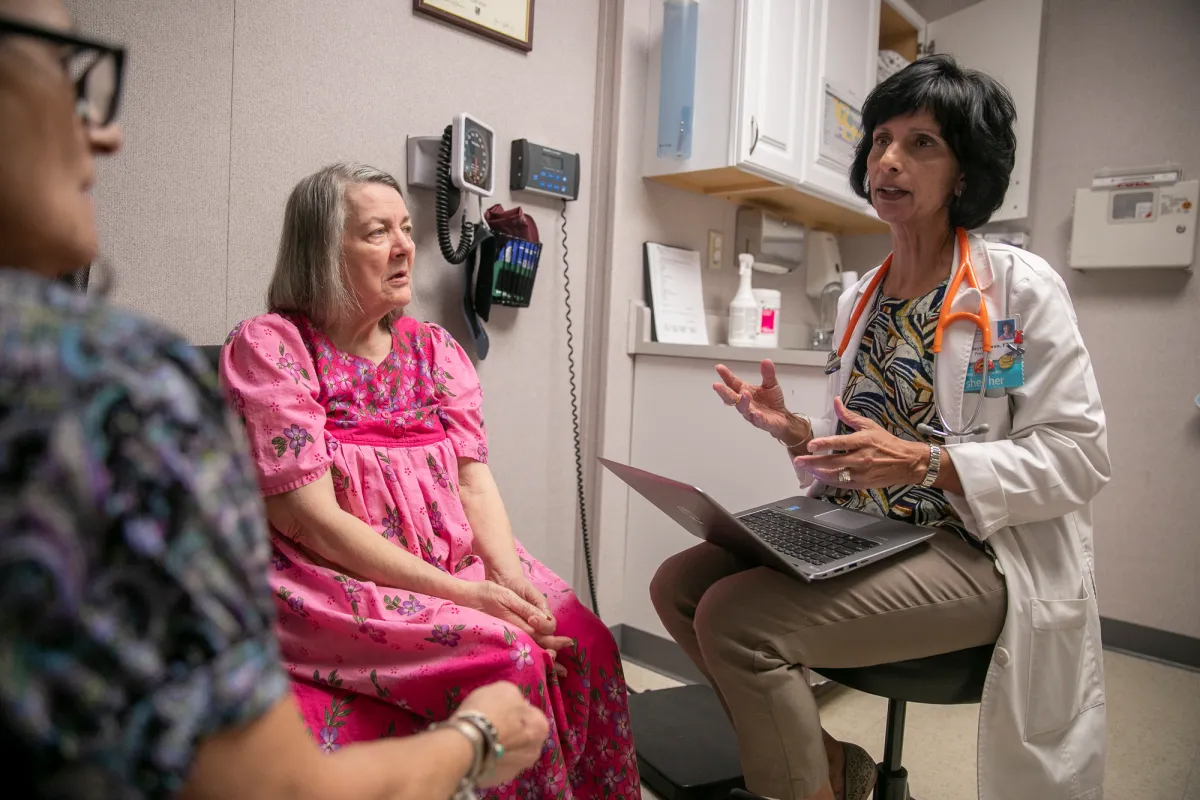
This year’s open enrollment period for health insurance is right around the corner, starting Nov. 1, and some employer-based health plans start their open enrollment even earlier.

People looking for insurance on the individual market can go to the Covered California website, CoveredCA.com.

James Scullary, a spokesperson for the state’s health insurance marketplace, said people might be surprised by the choices they find.

“Many consumers are finding out that if they weren’t eligible before, now they are. Or if they got a small subsidy a few years ago, that’s increased, so coverage may be more affordable than they thought.” Scullary said. “So really, regardless of your income, check out your options and see whether or not you can lower your monthly premiums.”

In California, the projected average premium for 2022 was $581 a month, a 1.8 percent increase over 2021, according to acasignups.net. But almost 90 percent of people who get their health insurance through CoveredCA get subsidies to bring down their monthly bill. The subsidies began with the Biden administration’s American Rescue Plan, and the new Inflation Reduction Act has extended them for another three years.

Dr. Rhonda Randall, chief medical officer at UnitedHealthcare, encourages people to consider their families’ unique needs when choosing a plan.

“Some things to consider are prescription drug benefits, mental health coverage, specialty benefits: things like dental, vision, hearing, critical illness insurance, and wellness programs,” Randall outlined.

This year, 13 insurers are participating in the Covered California exchange, which means people in all the state’s 58 counties will have a choice of at least two plans, and 81 percent of residents will be able to choose from four or more plans.

New CA report details tobacco industry marketing to vulnerable groups

A new report from Stanford University finds tobacco companies continue to directly target African Americans, women, and young people with their advertising, creating a larger market for a product which has been linked for years to cardiovascular disease and cancer.

It comes as efforts are underway at the state and federal levels to remove menthol cigarettes from the market.

Dr. Robert K. Jackler, professor at the Stanford University School of Medicine and the report’s lead author, said the preference among the targeted groups for menthol cigarettes is the product of a concerted campaign.

“Urban heavily Black-populated areas got carpeted by billboards and signs in store windows, discount coupons,” Jackler explained. “The companies would have vans that would give out free samples of cigarettes in poor neighborhoods.”

In 2020, the California Legislature prohibited most flavored tobacco products, but the law was put on hold when the industry gathered signatures to force a referendum. In November, voters will consider Proposition 31, which upholds the restrictions. And the industry is funding the “No on 31” campaign, arguing blocking adults from buying menthol products would lead to a drop in sales-tax revenue and create an illegal market, increasing crime.

Jackler predicted voters will pass the ballot initiative, reaffirming the California Legislature’s intention to remove most forms of flavored tobacco from the market.

“The tobacco industry is very cynical,” Jackler asserted. “They used the initiative petition to buy a couple of more years of profit off of California. They knew they were going to lose this, I think, in the election.”

The report finds tobacco companies market menthol to youth because it makes it easier to smoke, masking the taste and numbing the throat. It also noted menthol encourages deeper inhalation and thus, greater exposure to nicotine.

Dr. Jessica Sims, medical director of managed care at UCLA Health and an American Heart Association volunteer expert, thinks removing menthol cigarettes and flavored vaping products from the market will improve public health.

“Nicotine itself has been demonstrated to cause permanent harm to the teenage brain that’s still developing,” emphasized. “It causes difficulties with attention and memory, and can impact someone’s trajectory in life.”

In April, the FDA proposed to remove menthol cigarettes and flavored cigars from the market but no final rule has been issued. In 2009, Congress passed the Family Smoking Prevention and Tobacco Control Act, which prohibited all flavors other than tobacco and menthol in cigarettes.


spot_img

Supreme Court could strike down affirmative action

by Peter White

Ethnic Media Services

On October 31, the Supreme Court will hear two cases that will determine the future of affirmative action. Students for Fair Admissions (SFFA) is suing Harvard and University of North Carolina (UNC) for considering race in their application process. Further, SFFA says Harvard’s admission policies discriminate against Asian American applicants.

SFFA is a creation of conservative activist Edward Blum. He claims his non-profit has 22,000 members who were wrongly rejected by universities that use race conscious criteria to evaluate prospective students. None of Blum’s 22,000 alleged victims have testified. However, one was described but not named in the Harvard case as a Chinese student with first generation immigrant parents, perfect test scores and the best GPA in his class of 460.

In 2022, UNC received 43,500 applications for a freshman class of 4,325. UNC rejected 40,000 applicants. At that rate, if the top two dozen schools are considered, Blum’s 22,000 students account for just 2 percent of total rejections. That number falls to a negligible 0.0055 among the top 100 schools.

This is not a big problem, proponents of affirmative action say, especially given the fact that Harvard and UNC argue race in admissions creates campus diversity. The Supreme Court has held that to be a legitimate goal going back to the Bakke case in 1978.

In that case the justices threw out racial admission quotas but opened the door to the modern diversity rationale that was affirmed by the Court in Grutter v Bollinger: “The Equal Protection Clause does not prohibit the Law School’s narrowly tailored use of race in admissions decisions to further a compelling interest in obtaining the educational benefits that flow from a diverse study body.”

Blum argues that race-conscious admissions violate the Equal Protection Clause of the Constitution and Title VI of the Civil Rights Act of 1964. He has brought four lawsuits in recent years but has yet to win one. Given the 6-3 conservative majority on the high court, Blum’s ship could finally be about to come in.

“I think it is too early to tell what the Supreme Court will do with respect to the Harvard affirmative action case. Obviously, we are very concerned based on the Court’s makeup, but we also know that for several years now, in repeated attempts by the conservative elements, affirmative action cases have remained on the books and there is strong precedent on the books for the continued use of race in admissions policy,” said John C Yang, President and CEO, Asian Americans Advancing Justice-AAJC.

Yang spoke during a media briefing on the upcoming SCOTUS cases.

Yang noted that both the district court and the appellate court concluded there was no evidence of discrimination against Asian Americans.

“In the case of Harvard, Asian American enrollment at Harvard has increased significantly. They make up nearly 28 percent of the most recently admitted class, even though Asian Americans make up only approximately 7 percent of the American population,” he said.

Yang added that a number of surveys since 2010 found two-thirds of Asian Americans support affirmative action. He said that if Harvard stopped considering race in admissions the number of Black students would decline from 14 to six. Latino students would drop from 14 to nine. A Georgetown University study came to the same conclusion.

David Hinojosa is with the Lawyers’ Committee for Civil Rights Under the Law. He will be arguing the UNC case in front of the Supreme Court on October 31st at 10 am.

“A lot of people are betting against affirmative action. They’re betting against fairness and opportunity. But the history is on our side; the Constitution is on our side; the law is on our side, and so are the facts,” Hinojosa said.

The stakes couldn’t be higher, Hinojosa noted.

“They don’t want to just get rid of affirmative action. They want to completely whitewash history and reinstate all the privileges of yesteryear to today,” he said.

SFFA didn’t put any students on the stand. Harvard did. Sally Chen was one of them. The daughter of working class immigrants who speak limited English, Chen said she wouldn’t have the benefits of a Harvard education if not for Harvard’s race-conscious admissions policies.

“My dad was a cook in a Chinese restaurant and my mom worked in a bakery in Chinatown. Our family of six grew up in a one-bedroom apartment in San Francisco, and we struggled to make ends meet. I went to public schools all my life, and from a really young age, I often translated and advocated on behalf of my parents,” Chen said.

Applying to Harvard, Chen ignored her high school counselor’s advice and talked about her background. She said that was really crucial to “getting across who I am, why I want to do the work that I do today, and having this context made me a much stronger applicant.”

Today, Chen advocates for policies that open educational opportunities for all, but especially for limited English-speaking immigrant families, at Chinese for Affirmative Action in San Francisco.

“Having diverse perspectives at the table really made our education stronger, and it is an asset to the work that I do today where cross-racial coalition building is really key to what I do,” she said.

Chen was one of the couple hundred signatories to the amicus brief filed by the Legal Defense Fund (LDF) in the case. The fund represented 25 Harvard student and alumni organizations.

“All students deserve a fair shot at going to college, regardless of their income, where they grew up, or their racial and ethnic background,” said Michaele Turnage-Young, LDF Senior Counsel.

She said minority students, often poorer than their white counterparts, have less of an opportunity to amass the credentials that colleges consider in admissions. They are three to six times more likely than white students to attend a high poverty school.

“And many attend majority minority schools, which generally have, like high poverty schools, less experienced teachers, less advanced courses, inadequate facilities, less extracurricular activities, less arts instruction, less recess, and fewer classroom resources.”

College admissions officials try to balance out those things by looking at which minority students show the best potential even if their test scores aren’t the highest.

The plaintiffs in the case say admissions criteria should be color-blind.

“Our clients, in particular, are concerned that erasing race from the admissions process will make it impossible for applicants of color to present their authentic selves in their college application,” Turnage-Young said. Chen echoed that sentiment. “We wanted to get across how we wouldn’t want to be at an institution that didn’t value us,” she said.

spot_img

The real reason Biden is escalating America’s involvement in the Russia-Ukraine war

Without Russia as the bad guy, the Build Back Better agenda becomes naked to the world. The Ukraine conflict provides a visible shield to prevent any larger discussion


by the Treehouse


In a statement Monday from the White House, President Joe Biden pledged “to continue providing Ukraine with the support needed to defend itself, including advanced air defense systems.”

The statement was a result of a phone call between Biden and Ukrainian President Volodymyr Zelenskyy.

Two days prior, the Kerch Strait bridge between Russia and Crimea was bombed by Ukraine causing a section of the bridge to collapse. Yesterday, Russian President Vladimir Putin retaliated with missile strikes against several cities in Ukraine and key infrastructure for energy.

The U.S. State Department and CIA are continuing to lead and coordinate the Ukraine war effort with U.S. personnel in place to organize operations.

Like the bombing of the Nord Stream pipeline, it is highly likely the Kerch Strait bridge targeting was planned by Ukraine and the United States. However, we are not permitted to speak about these coordinated efforts. The bottom line is that the Biden administration is going further toward direct engagement with Russia through the proxy state of Ukraine.

From the New York Times:

President Vladimir V. Putin unleashed a far-reaching series of missile strikes against cities across Ukraine on Monday, hitting the heart of Kyiv and other areas far from the front line, in the broadest assault against civilians since the early days of Russia’s invasion.

Mr. Putin said the strikes on almost a dozen cities were retaliation for a blast that destroyed sections of a bridge linking Russia to the Crimean Peninsula, though they also seemed intended to appease hard-liners in Russia who had been openly critical over the prosecution of the war.

Denouncing the bombing of the Kremlin-built bridge, an embarrassing blow, as a ‘terrorist attack,’ Mr. Putin threatened more strikes if Ukraine hit Russian targets again.

‘No one should have any doubt about it,’ he said.

The baseline for the global aspect to the Ukraine conflict remains rooted in the economic cleaving underway. Saudi Arabia has expressed their alignment with the Organization of the Petroleum Exporting Countries (OPEC+), including Russia, on a coordinated oil supply. The NATO alliance broadly wants to pressure their partners away from oil, coal, and natural gas.

Thus on Sunday, prior to the phone call with Zelenskyy, Biden called German Chancellor Olaf Scholz:

President Joseph R. Biden, Jr. spoke today with Chancellor Olaf Scholz of Germany.  The leaders reiterated their condemnation of Russia’s attempted annexation of Ukrainian territory, as well as their ongoing commitment to hold Russia accountable for its brutal actions and provide security and economic assistance to Ukraine. The leaders also discussed recent developments in global energy markets and the importance of securing sustainable and affordable energy supplies.

The western ideologues, politicians, corporations, and banks are trying to force a new global energy system; however, there is opposition from multiple nations who see the effort to shift away from oil, coal, and natural gas as economic suicide.

We are now starting to see currencies in countries like Brazil and Mexico having greater stability and growth than the value in U.S. dollars. That said, in the long term the economics of this conflict will ultimately decide the outcome.

The citizens within the western alliance nations are suffering the consequences of the global economic cleaving. Energy driven inflation, a purposefully designed problem, is creating a recession amid the western alliance nations. The monetary policy of U.S., EU, CA, NZ and AU is currently constructed to lower economic activity to support the reduced amount of energy resources available.

Specifically, because the Ukraine conflict is being used as a justification for political economic and monetary policy, there appears to be no limit in what the U.S. will do to widen the ideological war against Russia. Unfortunately, the era of great pretending forbids anyone from talking openly about the true root of the issue.

It seems clear now that NATO, led by the U.S., is willing to escalate a European war if that’s what it takes to protect the climate change goals.

Without Russia as the bad guy, the Build Back Better agenda becomes naked to the world. The Ukraine conflict provides a visible shield to prevent any larger discussion, as evidenced by the attempt by Elon Musk to mitigate the Ukraine conflict by talking about a peace deal wherein Russia keeps the Russian speaking eastern Ukraine. In the week since that proposal became international fodder for ridicule, the conflict in Ukraine has intensified. This is not coincidental.

We are pretending our way into a war.

spot_img

Craving a snack late at night? Try these 6 sleep-promoting desserts

by Zoey Sky


Eating healthy doesn’t mean depriving yourself of things you love to eat. Instead, it’s more about eating everything in moderation, from red meat to desserts.

If you often enjoy midnight snacks, try to eat more healthy foods like nuts or fruits that help promote sleep.

Food, sleep and the circadian rhythm

Your body requires food like a car requires gasoline. It is a source of fuel that keeps the wheels turning.

However, if you get hungry at night, you can’t enjoy the same foods you eat in the morning or afternoon because you might have trouble falling asleep

Everyone has a circadian rhythm or an internal clock that tells the body when to wake up and when to rest. When the sun rises, your body’s ready to be active. On the other hand, when the sun sets, your body is also preparing to wind down. This is one reason why your late-night cravings should be curbed with sleep-promoting desserts that won’t disrupt this natural cycle.

If you often eat desserts, especially after dinner, you might often have trouble going to sleep. One such dessert is chocolate.

Chocolates contain trace amounts of caffeine. If you are sensitive to caffeine, eating only a few squares of this chocolatey snack could be enough to disrupt your sleep.

Milk can promote good sleep, but store-bought ice creams and other dairy desserts are full of added sugar and other sweeteners that will spike your blood sugar and disrupt quality sleep.

Fortunately, making some dietary changes can make it easier to meet your cravings and even promote a good night’s sleep. If you’re craving a sweet snack near bedtime, try eating small portions of foods that balance your blood sugar. These include healthy fats, moderate proteins and non-starchy vegetables and carbs.

The sleep-promoting desserts below will help curb your midnight cravings so you can get much-needed rest.

Almonds

Almonds are rich in essential nutrients like tryptophan and vitamin B6. These nutrients help support the neurotransmitter serotonin, which helps you fall and stay asleep.

Additionally, almonds are full of potassium and B vitamins, which help your nervous system relax.

Almonds have six grams of protein per ounce, one of the highest among nuts. Protein combined with fiber can help you stay full, satisfied and ready to go to sleep after a quick snack.

Freezer fudge

You can enjoy some fudge before going to sleep.

But unlike regular fudge, this 20-minute fudge recipe is rich in flavor and super decadent. It also won’t keep you up at night.

This simple recipe only requires three ingredients that are also good for you. It includes coconut oil, which is full of healthy fats, and almond or your choice of nut butter, another superfood full of “good” fat, protein and dietary fiber. This freezer fudge recipe also calls for chocolate protein powder.

Freezer fudge doesn’t contain any added sugar, making it a guilt-free after-dinner treat.

Ingredients:

– 1 cup coconut oil

– 1/2 cup almond butter (or your preferred nut butter)

– 1-2 scoops of chocolate protein

Preparation:

  1. Melt the coconut oil in a glass Pyrex bowl.
  2. Whisk in the almond butter and chocolate protein.
  3. Pour the mixture into an ice cube tray.
  4. Sprinkle the fudge mixture with a bit of salt.
  5. Place the fudge in the freezer for 20 minutes before eating.

Chocolate and nut butter

If you’re craving a sweet and simple treat, try a handful of chocolate chips melted with a spoonful of nut butter.

If you’re not sensitive to caffeine, you will enjoy this rich, chocolatey treat. To keep this snack guilt-free, use chocolate chips that are organic and free of added sugars.

Adding nut butter gives your snack protein, healthy fats and fiber.

Golden milk

According to Dr. Kulreet Chaudhary, a neurologist and pioneer in the field of integrative medicine, golden milk or turmeric milk can help settle your mind and body at the end of a long day.

Drinking golden milk can help you relax as you turn in for the night.

Ingredients for 1 serving:

– 1 cup milk (Use organic raw cow or goat milk, unhomogenized organic cow or goat milk, organic almond milk or organic coconut milk.)

– 1/4 cup of water

– 1-2 teaspoon of either ghee, coconut oil, or almond oil

– 1 teaspoon of honey

– 1/4 teaspoon of turmeric powder

– Cardamom powder or cinnamon powder (Optional)

Preparation:

  1. Add the turmeric powder to the cup of water in a pot. Heat the mixture until it becomes a paste. Stir occasionally to help dissolve the turmeric powder.
  2. Add the milk to the turmeric paste in the pot.
  3. Add the ghee, coconut oil or almond oil to the milk mixture.
  4. Add a pinch of either cardamom powder or cinnamon powder.
  5. After the milk has cooled enough to touch, add one teaspoon of honey before drinking.

Superfood banana split

According to studies, the potassium in bananas might help restless sleepers get a good night’s sleep. Eating bananas can help you fall asleep, but this superfood banana split doesn’t include ice cream.

When making this healthier banana split, add either plain coconut or Greek yogurt and top with a bit of your favorite nut butter.

Yogurt bark

Store-bought chocolate barks taste great, but they are usually bad for you since they are full of added sugars that will keep you up.

For a healthier alternative, try whipping up some homemade yogurt bark. This recipe can be both keto- and vegan-friendly, depending on your choice of ingredients.

Yogurt bark is also full of probiotics and you can customize it using your favorite fruits and ingredients.

Ingredients for 12-16 servings:

  • 1-2 cups coconut yogurt (Use Greek yogurt if you want more protein and do not have a dairy intolerance.)
  • 1-2 cups nut butter (Almond, peanut butter or a blend)
  • 1/2 cup chocolate, melted

Preparation:

  1. Whisk the yogurt and nut butter together. Pour the mixture onto a parchment paper-lined sheet. Freeze for 15-20 minutes.
  2. In a double boiler melt your favorite chocolate. The chocolate you use will make the yogurt bark keto, organic, or protein-loaded based on your choice.
  3. Pour the melted chocolate on top of the yogurt mixture. The chocolate will freeze, so add a bit of flaky salt quickly or give it an extra drizzle of chocolate at the end and then sprinkle.
  4. Freeze for 10 more minutes. Slice before serving.

Other yogurt bark variations:

  • Remove the almond butter and blend with strawberries. Top with dehydrated strawberries, nuts and coconut to make a fruity yogurt bark.
  • Use Greek yogurt and add a bit of vanilla extract for added protein.
  • Top the yogurt bark with your favorite crunchy superfood for added texture.

More sleep-promoting superfoods

Still feeling hungry? Here are more superfoods that can help you sleep better.

Cherries

Tart cherry juice intake is linked to improved sleep duration and sleep quality in healthy adults.

Fresh cherries also offer similar benefits because it is full of melatonin, which is crucial “for healthy sleep-wake cycles.” Other people take melatonin or magnesium supplements before going to bed, but drinking some tart cherry juice is a more natural alternative.

Oatmeal

Oatmeal is often eaten as part of a healthy breakfast, but this superfood can also help you get a good night’s sleep. Oats help your body release sleep hormones like melatonin.

Walnuts

Walnuts are chock-full of tryptophan, a sleep-enhancing amino acid. Tryptophan is converted to serotonin in your brain, which induces sleep.

Additionally, walnuts are full of beneficial omega-3 fatty acids, which have been linked to increased cardiovascular health, better cognitive function, decreased symptoms of depression and reduced inflammation.

Snack on some walnuts after dinner to prepare your body for a good night’s rest.

Skip the sugary desserts after dinner and make a healthy, sleep-promoting snack like freezer fudge or yogurt bark. You can also eat tasty superfoods like almonds, bananas or walnuts to improve sleep quality. Food.news.

spot_img

Mexico-U.S. security talks focus on weapons and fentanyl trafficking

The U.S. should check vehicles leaving their country as thoroughly as those entering, Ebrard said


by Mexico News Daily


Combating the smuggling of weapons and fentanyl will remain a priority for Mexico and the United States over the coming year, Foreign Affairs Minister Marcelo Ebrard said Friday after attending high-level security talks in Washington a day earlier.

Speaking at President López Obrador’s morning press conference, Ebrard said that the year-old security agreement between Mexico and the U.S. – the Bicentennial Framework for Security, Public Health and Safe Communities – is already yielding results, but acknowledged that more needs to be done to stop the southward flow of weapons and the northward flow of fentanyl and other drugs.

He said that Mexico and the United States are working together to combat the production of fentanyl, an activity in which powerful Mexican criminal organizations such as the Jalisco New Generation Cartel and the Sinaloa Cartel are engaged.

“We have a common plan for 2023, which is to drastically reduce the trafficking of weapons to Mexico and … to increase controls on precursor chemicals and the movement of fentanyl [to the United States],” Ebrard said.

The foreign minister offered a summary of the “fruits” of the bilateral security agreement, as presented in Washington during the high-level security dialogue in which he, Security Minister Rosa Icela Rodríguez, Attorney General Alejandro Gertz Manero and other high-ranking Mexican officials exchanged views with U.S. officials including Secretary of State Antony Blinken, Attorney General Merrick Garland and Secretary of Homeland Security Alejandro Mayorkas.

Ebrard highlighted that Mexican and U.S. authorities have seized over 32,000 firearms and 17 million rounds of ammunition over the past year, preventing them from reaching the hands of organized crime members in Mexico.

Ebrard also said that over 5 tonnes of fentanyl pills, 154 tonnes of methamphetamine and 94 tonnes of cocaine were seized over the past year.

“If we hadn’t worked together, these tonnes [of drugs] – which could poison thousands of people – would have arrived in the United States,” he said.

“… Mexico is confiscating more cocaine than the United States,” Ebrard added.

The foreign minister said that the security agreement also contributed to a 9.2% decline in homicides in Mexico in the first nine months of the year. Kidnappings and robberies have also declined, he said.

Ebrard said that Mexico proposed 20 measures to U.S. officials to strengthen the fight against arms trafficking. One proposed measure is for the United States to increase checks of vehicles heading to Mexico from that country.

Ebrard said that Mexico is “respectfully” asking the United States to help stop the flow of weapons from 10 counties in Arizona and Texas that have been identified as leading sources of firearms smuggled across the border.

He asserted that United States authorities should be checking vehicles leaving that country with the same thoroughness as they check those entering the U.S.

“What comes in is important but so is what goes out,” Ebrard said. “That’s essentially what we’re saying.”

The foreign minister highlighted that the military and the National Guard check vehicles on the Mexican side of the border.

At a press conference with U.S. officials in Washington on Thursday, Ebrard declared that the Bicentennial Framework “is working,” even though a range of bilateral security challenges remain.

“There is still a way to go. This doesn’t mean that everything has been solved. But the most important indicator is that for the first time in the last few years we have seen a reduction in the homicide rate in Mexico,” he said.

For his part, Secretary of State Blinken said that officials at Thursday’s high-level meeting looked at progress toward “three main goals” that were established in accordance with the bilateral security agreement – “protecting our people, preventing transborder crime [and] pursuing criminal networks.”

“We’ve made significant progress, reflected in unprecedented investments, legislation [and] law enforcement action. And these efforts have already made a tangible difference in the lives of Mexicans and Americans,” he said.

“Today’s discussion focused on the areas where we need to make even more progress, such as redoubling our efforts to combat the threats of fentanyl production and trafficking, arms trafficking, and the exploitation of migrants.”

The secretary of state also highlighted the United States’ broader cooperation with Mexico, and declared that the partnership between the two countries is in great shape.

“Across the bilateral, the regional, and global cooperation, we have I think one of the strongest – if not the strongest – partnership we’ve seen, certainly in my experience,” Blinken said.

In a joint statement, the Mexican and U.S. governments said they “remain committed to an enduring partnership based on mutual trust and respect for each country’s sovereignty and independence.”

“The Bicentennial Framework reaffirmed our commitment to take concrete actions on both sides of the border to address the shared security challenges affecting our communities, including human trafficking and smuggling, violence and illicit firearms, as well as substance use disorder and illicit drugs,” they said.

“The United States and Mexico recognize our shared commitment to uphold the rule of law through enhanced law enforcement cooperation and protect our communities from transnational criminal organizations.”

The two countries committed to pursuing 13 “actions” over the next year, among which were “commit to and implement an action plan to prevent the consumption and trafficking of synthetic drugs, specifically fentanyl and methamphetamines” and “prepare a collaborative report on arms trafficking to identify routes, organizations and tactics used to traffic firearms.”

spot_img

Chase brings payday early to Secure Banking customers

New enhancement builds on the bank’s efforts to give customers more access and value


by Corporate News


Chase today announced it is giving Secure Banking customers more flexibility over how they manage their money by providing access to direct deposits up to two days early.

Beginning this month, Secure Banking customers will receive access to eligible direct deposits, such as payroll, tax refunds, government benefits, and pensions, up to two business days early. This covers nearly 90 percent of Secure Banking direct deposits.

“Millions of customers rely on payday to keep up with their bills, so having early access helps them manage unexpected expenses and avoid potential late fees,” said Jennifer Roberts, CEO of Chase Consumer Banking. “This is another way we are giving customers more value and greater flexibility over their finances.”

There is no enrollment required. Secure Banking customers who have direct deposit will automatically receive it up to two days earlier. Customers can sign up for direct deposit alerts to be notified when their money is available in their accounts. Customers who already signed up for direct deposit alerts will be notified via text, email or push notifications when funds have been credited to their account.

Chase Secure Banking already helps customers pay bills, cash checks, and send money — all for the same $4.95 monthly service fee. Secure Banking customers:

– Need no minimum deposit to get started

– Pay no overdraft fees because they can spend only what they have

– Have access to 16,000 Chase ATMs and 4,700 branches

– Can review their account and pay bills through the Chase Mobile app and chase.com

– Receive text and email alerts to help them monitor their balance and transactions

“Secure Banking customers have told us that early access was one of the most appealing benefits we could offer,” said Ryan MacDonald, Head of Growth Financial Products. “At a time when budgets are stretched thin by competing priorities, this is a compelling option to give households more control over how they manage their financial lives.”

Chase Secure Banking customers say they save an average of $50 a month on fees, compared to solutions they used before they opened their account.

spot_img

Mexico agrees to take Venezuelan migrants expelled from US

Newly expelled Venezuelans ‘want answers and we don’t know what to tell them,’ a Matamoros shelter director said

by Mexico News Daily


The United States has begun expelling Venezulean migrants to Mexico after the neighboring countries reached a new immigration agreement earlier this week.

The U.S. Department of Homeland Security (DHS) announced Wednesday that “effective immediately, Venezuelans who enter the United States between ports of entry, without authorization, will be returned to Mexico.”

The Associated Press and Reuters reported that expulsions of Venezuelans have already begun.

The DHS said in a statement that the “joint actions with Mexico” were designed to “reduce the number of people arriving at our southwest border and create a more orderly and safe process for people fleeing the humanitarian and economic crisis in Venezuela.”

The announcement of the deal came less than a month before midterm elections in the United States at which the Democratic Party – portrayed as being weak on immigration by its rivals – runs the risk of losing control of Congress.

The DHS said Wednesday that “almost four times as many Venezuelans as last year attempted to cross our southern border, placing their lives in the hands of ruthless smuggling organizations.”

“…The actions the United States and Mexico are announcing today are intended to address the most acute irregular migration and help ease pressure on the cities and states receiving these individuals,” the department said.

The DHS said that the U.S. government’s “comprehensive effort to reduce the irregular migration of Venezuelans also includes a new process to lawfully and safely bring up to 24,000 qualifying Venezuelans into the United States.”

“The United States will not implement this process without Mexico keeping in place its independent but parallel effort to accept the return of Venezuelan nationals who bypass this process and attempt to enter irregularly.”

Secretary of Homeland Security Alejandro Mayorkas said that “these actions make clear that there is a lawful and orderly way for Venezuelans to enter the United States, and lawful entry is the only way.”

“Those who attempt to cross the southern border of the United States illegally will be returned to Mexico and will be ineligible for this process in the future. Those who follow the lawful process will have the opportunity to travel safely to the United States and become eligible to work here.”

The Mexican government noted in its own statement Wednesday that the United States program is for Venezuelans who arrive to that country by air rather than by crossing the land border, and that it is based on the “Uniting for Ukraine” scheme, under which Ukrainians fleeing Russia’s invasion have been able to enter the U.S. to live and work for a period of two years.

The Mexican government also said that the United States had accepted its request to “substantially increase” visas for workers from Mexican and other countries in the region, indicating that there was a precondition for its agreement to accept Venezuelans.

“The United States has announced it will grant 65,000 additional H2-B visas for temporary non-agricultural workers, of which 20,000 will be allocated to people from Central America and Haiti,” the federal government said.

With regard to the DHS announcement on expulsions, the government said it would “temporarily” allow “some people of Venezuelan nationality” to enter Mexico via the northern border.

Mexico has been accepting migrants expelled under the Donald Trump-era “Remain in Mexico” policy and the COVID-related Title 42 provision, but “Venezuelans who crossed illegally into the United States were often allowed to stay because it was difficult to send them back to Venezuela or Mexico,” Reuters reported.

Citing two unnamed U.S. officials, the news agency said that as many as 1,000 Venezuelans per day could be expelled to Mexico under the new agreement. About 300 were sent to Mexico after the deal was announced Wednesday, the sources said.

The Associated Press reported that the United States expelled Venezuelans via several border crossings on Thursday. The news agency said it was informed of the expulsions by Catholic Church shelters in the border cities of Matamoros Ciudad Juárez and Piedras Negras.

“The people are very angry, very annoyed,” said Francisco Gallardo, a priest and director of the Casa del Migrante shelter in Matamoros, where some 120 Venezuelans arrived on Thursday.

“They’re surprised, they want answers and we don’t know what to tell them,” he said.

Yadimar, a young pregnant Venezuelan woman, and her husband were expelled from El Paso to Ciudad Juárez.

“They didn’t ask us anything. They put a bracelet on us and sent us back,” she told Reuters.

“We’re on the street. We don’t even have money to pay for a place to stay.”

In Mexico City, the director of a group that assists Venezuelan migrants told Reuters that “we’ve been overwhelmed by the news” that those who are apprehended after entering the U.S. illegally will be returned to Mexico.

Lizbeth Guerrero predicted that many Venezuelans who are already in Mexico will continue to the northern border and attempt to enter the U.S. because they have nothing to return to at home, where poverty and crime are major problems.

United States data shows that over 150,000 Venezuelans were apprehended at the U.S.-Mexico border between October 2021 and August 2022, compared to just under 48,000 in the 2021 U.S. fiscal year.

Rosa María González, a National Action Party deputy who heads up the migrant affairs committee of the lower house of Mexico’s Congress, called on the U.S. government to issue more visas to Venezuelans because Mexico’s labor market can’t accommodate all those who have arrived here.

If Venezuelans can’t find a job here and can’t seek asylum in the United States they are at risk of becoming prey for violent crime gangs, she said.

“They make more money out of migration than they do from drugs,” the lawmaker said.

spot_img

Affordable Connectivity Program (ACP) Enrollment

Event is Happening Saturday, October 22 to help


Residents Get Connected to Home Internet!
WHAT: Volunteers across California are stepping up and joining Get Connected! California, a
statewide outreach and awareness mobilization effort to close the Digital Divide.


Residents are invited to attend Free Affordable Connectivity Program (ACP) Enrollment event
enroll for free or lowcost Internet. Residents will also have an opportunity to win a Chromebook
when they apply for the Affordable Connectivity Program benefit.


WHO: Get Connected! California is a program of the California Emerging Technology Fund that
focuses in on increasing enrollment for the Affordable Connectivity Program (ACP), a federally
funded program with the mission to provide eligible people with free or lowcost Internet access.


WHERE:

City: Alameda, CA 94501
Location: City Hall West
Address: 950 W Square Mall
Hours: 12 AM 3 PM
City: Oakland, CA 94601
Location: Tech Exchange
Address: 2530 International Blvd
Hours: 10 AM 4 PM


City: San Francisco, CA 94102
Location: St. Anthony’s Tenderloin Tech Lab
Address: 150 Golden Gate Ave
Hours: 10 AM 1 PM


City: Calistoga, CA 94515
Location: Calistoga Library
Address: 1108 Myrtle St
Hours: 11 AM 3 PM
WHEN: Saturday, October 22, 2022
PHOTO OPS: Families enrolling in a program to get free or affordable Internet, children with
parents, and people winning a computing device in a raffle.

spot_img