Tuesday, September 1, 2026
Home Blog Page 145

Once in Oaxaca: meet Australian artist and gallerist Jaime Levin

photo: Levin, an expat artist and architect, is making a name for himself in Oaxaca city with his gallery and café, Once in Oaxaca. (@Bucketlistbri/Instagram)


Jaime Levin is a 29-year-old expat artist and architect making a name for himself in Oaxaca city with his gallery and café, Once in Oaxaca. In this profile, Levin talks about why he swapped the Australian coast and an architecture career in Denmark for living the Mexican dream in Oaxaca


Shared from/by Gordon Cole-Schmidt


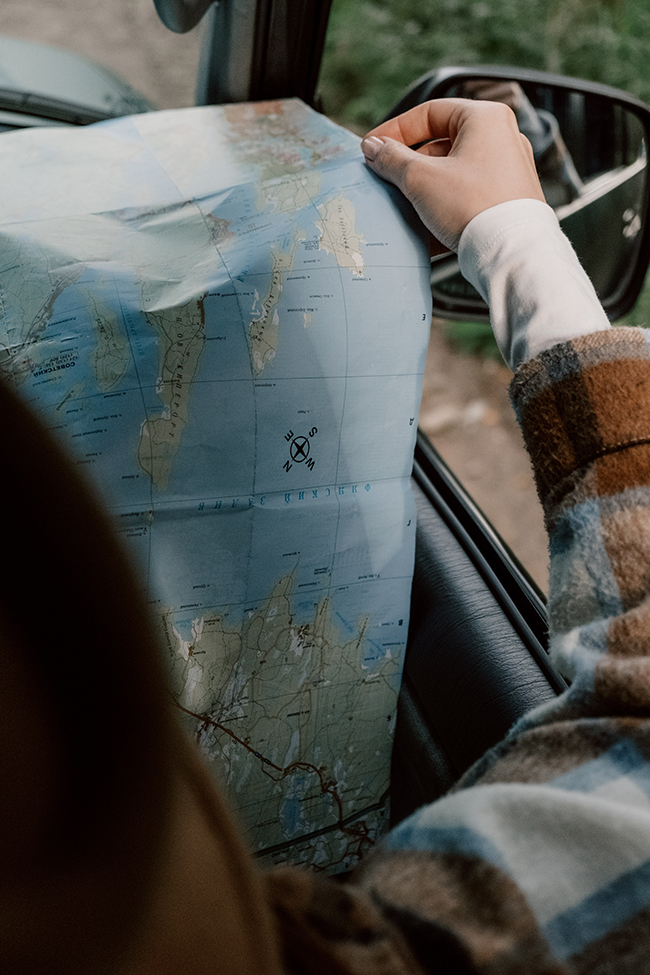
From murals adorning stone walls of several city hotspots, to hand-drawn city maps in bustling cafes and restaurants, Levin’s work is never far from the view of keen-eyed tourists and residents of the city.

In March, he celebrated one year since opening his own gallery, and he has exciting plans for expansion across Mexico.

On the table at his café where we meet to chat, there are two elegant carrot cupcakes from chef Miri Cole and an espresso from local coffee roasting company Nómada. Next to the coffee machine, I can see Levin’s famous city maps, his illustrated children’s book and custom-designed mezcal bottles.

We’re in Barrio de Jalatlaco — the second oldest, and arguably, the most trendy neighborhood in the city.

“When I first arrived in Oaxaca in 2019, I was delivering sandwiches for a coffee shop and had a rough plan to stay and learn Spanish. Then I discovered the architecture here, and it blew me away. The buildings, streets, ceramics, everything … I spent my free time drawing the city in my sketchbook,” Levin explains.

“I was meeting lots of different local people on my delivery runs and started speaking to them in broken Spanish about my drawings. I found the people of Oaxaca were really taken by my drawings of buildings they grew up with. I didn’t know exactly what that meant, but I felt there was a connection there.”

Running his own gallery and creating his artistic brand, which has garnered thousands of followers on Instagram, wasn’t a formal plan. It started when Levin decided to turn his sketches into postcards.

He stands up from our table to dash inside to bring me his first collection of pocket-sized drawings.

“I showed cafés these drawings of their buildings, and they were very happy to put them for sale next to the bread and pastries.”

Six months later, the onset of the pandemic caused Levin’s life — like most of ours — to take unexpected turns. With cafés and restaurants closing, the demand for his drawings fell and he needed to adapt quickly.

“For several long evenings, I talked for hours with friends who owned cafés which were forced to close about what we could do to keep their businesses alive,” he said. “The conversations all seemed to point to one avenue — growing a social media presence.”

This marked a turning point in Levin’s career in Mexico. Under the name “Once in Oaxaca,” he began uploading his illustrations on Instagram, growing a loyal following of local people, businesses and tourists. At the same time, he started an Etsy shop and began selling his art and accepting commissions for larger works.

“It was a crazy time, but it helped me realize [that] opening my own physical gallery had to be the project’s next step.”

During the summer of 2021, he found the ideal location for his first gallery.

“This space was a blank canvas. It was the first time I could design a commercial space in Oaxaca, and my architectural mind was going wild! I designed every detail in there, from the chairs [and] tables to individual shelves and wall hangings,” he said. “I loved meeting people who could help me realize the vision, and this really showed me the huge potential in collaborating with other creatives here.”

Almost an hour into our conversation, as he begins to tell me about his favorite collaboration — a children’s book illustrated and launched with speech therapist, Viri Pacheco to help young children overcome speech impediments — we’re interrupted by two friendly faces who congratulate Levin on his one-year anniversary.

A steady flow of locals and tourists have been arriving since the café opened an hour ago at 8 a.m. The place won’t close its doors for another 12 hours — a routine Levin keeps seven days per week, all year round.

“It’s hard work, but I love the process of growing, and my team is fantastic. I need to give my time to give it the best chance of success,” he said.

Following the rapid growth of Once in Oaxaca, Levin opened his second creative space — Micha — six months later in October 2022 with his girlfriend Ingrid Flores, a designer who is working on clothing and furniture design. He says that he hopes to expand nationally, into Mexico City and Mérida.

I ask what drives his obsessive work ethic and what motivates him.

“I’m not from here, but when Oaxacan people come by who know the buildings I’ve drawn and tell me they love the way I’ve captured it, in a way a photo can’t … to me, that’s the coolest thing ever,” he said.

“I don’t think the project would have been possible in Australia or in Denmark,” he added. “I feel so much more free to work creatively here, and the support and guidance has been fantastic.

“I feel like anything is possible!”

  • Once in Oaxaca is located at Curtidurias 121C, Barrio de Jalatlaco, 68080 Oaxaca de Juarez. 

Gordon Cole-Schmidt is a public relations specialist and freelance journalist, advising and writing on companies and issues across multi-national communication programs.

spot_img

AMLO criticizes DEA for unauthorized operations in Mexico

by Mexico News Daily


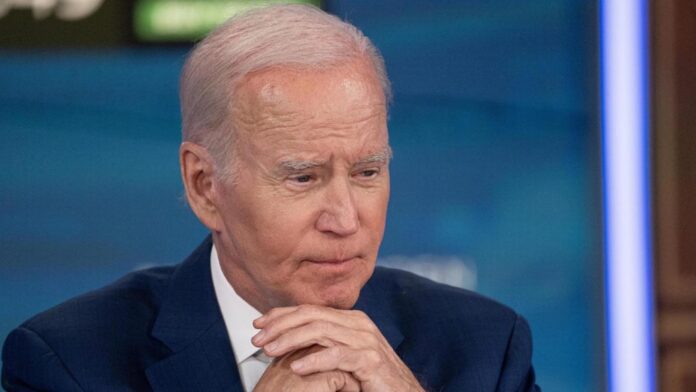
President López Obrador has accused the United States government of “abusive interference” and espionage after the U.S. Drug Enforcement Administration (DEA) revealed that it had infiltrated the Sinaloa Cartel.

The United States Department of Justice (DOJ) announced Friday that it had unsealed charges against 28 high-ranking Sinaloa Cartel members, including three known as “Los Chapitos” – the children of former Sinaloa Cartel leader Joaquín “El Chapo” Guzmán.

DEA Administrator Anne Milgram told a press conference that the DEA “proactively infiltrated the Sinaloa Cartel and the Chapitos network” over the past year and a half. The law enforcement agency “obtained unprecedented access to the organization’s highest levels, and followed them across the world,” she said.

Milgram also said that the Chapitos, one of whom is the recently-detained Ovidio Guzmán, “pioneered the manufacture and trafficking of fentanyl, … flooded it into the United States for the past eight years and killed hundreds of thousands of Americans.”

López Obrador said Monday that the DEA carried out its infiltration operation in Mexico without the authorization of federal authorities. He pledged to raise the issue with the United States.

“There can’t be foreign agents in our country, no. We can share information, but those who can intervene [in Mexico] are elements of the Mexican Army, the Navy, the National Guard and the federal Attorney General’s Office,” he said.

López Obrador said that the DEA’s infiltration of the Sinaloa Cartel in Mexico amounted to “arrogant” and “abusive interference” that “mustn’t be accepted under any circumstances.”

“How can they be spying! … Acts of espionage cannot be used,” he said.

“It’s not the same time as before. I’ve already said it here — during the government of Felipe Calderón … [the United States] brought everything but the kitchen sink into the country; they were allowed [to]. They had an overly intense relationship with the Ministry of the Navy, and the time came when it wasn’t cooperation but rather subordination of the …navy to the United States agencies,” López Obrador said.

He said that the United States Department of State and Department of Justice need to “put things in order” because “everything is very loose.”

The president questioned how the U.S. government could “blindly trust” DEA agents when “it is proven that many of them — or some, so as not to exaggerate — maintain, or maintained, links with organized crime.”

López Obrador specifically cited the case of the DEA’s former top official in Mexico, Nicholas Palmeri, who was ousted last year due to improper contact with lawyers for drug traffickers.

He also spoke about U.S. government links to Genaro García Luna, Mexico’s former federal security minister under former President Felipe Calderón. García Luna was convicted in New York on drug trafficking charges in February.

López Obrador’s condemnation of the U.S. government’s “interference” in Mexico comes just days after high-ranking officials from the two countries met in Washington D.C. to discuss bilateral security cooperation, especially joint efforts to combat the trafficking of synthetic drugs and firearms.

The president said that the DEA’s unauthorized infiltration operation in Mexico would not affect the ongoing security cooperation, but he rebuked the U.S. government for perpetuating its “bad habits” of the past.

He said last month that the U.S. government thinks it is “the government of the world,” but he has avoided making any direct criticism of President Joe Biden.


US brings charges against Sinaloa Cartel, including Los Chapitos

The United States Department of Justice announced on Friday that it had unsealed charges against 28 high-ranking Sinaloa Cartel members, including three known as “Los Chapitos” — the children of jailed former Sinaloa Cartel boss Joaquín “El Chapo” Guzmán.

To date, Ovidio Guzmán is the only one of the three of Guzman’s sons who has been detained. He is currently in custody in Mexico and has been fighting extradition to the United States.

At a press conference on Friday afternoon, U.S. Attorney General Merrick Garland said that seven other defendants named in the indictments were already in custody in other countries and that they were pursuing over 100 more people charged with helping Los Chapitos’ Sinaloa Cartel fentanyl operation “flood the U.S.” with the deadly synthetic drug.

The three “Chapitos” — a nickname meaning “little Chapos” — are Ovidio Guzmán López, Jesús Alfredo Guzmán Salazar and Iván Archivaldo Guzmán Sálazar. They run a faction of the Sinaloa Cartel known as its most violent.

The U.S. government is also offering a reward of US $10,000 for information leading to the capture of any one of Los Chapitos.

The full roster of individuals charged includes operators around the world who the DOJ says are responsible for – among other crimes – drug and weapons trafficking, buying chemical precursors for fentanyl, money laundering, murder, extortion, kidnapping and torture, all in order to operate the complex networks needed to ensure the Sinaloa Cartel’s drug trafficking operation continues to function.

The charges have been filed by federal courts in Illinois, New York and the District of Columbia.

“Today, the Justice Department is announcing significant enforcement actions against the largest, most violent, and most prolific fentanyl trafficking operation in the world – run by the Sinaloa Cartel and fueled by Chinese precursor chemical and pharmaceutical companies,” Garland announced at a press conference late Friday morning.

Garland said that the charges attacked “every aspect of the cartel’s operations,” seeking arrests of people around the world. In addition to Los Chapitos, the list of those charged includes:

  • Suppliers in China who sell fentanyl precursors to the cartel
  • A Guatemalan-based broker who purchases the precursor chemicals on behalf of the cartel
  • Operators of the Sinaloa Cartel’s clandestine fentanyl labs in Mexico
  • A weapons trafficker who supplies the cartel with arms smuggled from the U.S.
  • Money launderers who the DOJ says helps the cartel move money internationally
  • Members of the Sinaloa Cartel who serve as brutal security enforcers

The DOJ also revealed that the U.S. Drug Enforcement Administration (DEA) had infiltrated the Sinaloa Cartel and has spent a year and a half tracking the highest levels of the group across the world.

“Today’s indictments send a clear message to the Chapitos, the Sinaloa Cartel, and criminal drug networks around the world that the DEA will stop at nothing to protect the national security of the United States and the safety and health of the American people,” said DEA Administrator Anne Milgram at a press conference Friday afternoon.

In February, Milgram told reporters that Mexico could be doing more to combat the Sinaloa and the Jalisco New Generation cartels.

Fentanyl seizures in the U.S. have increased by more than 400% since 2019, according to U.S. government officials, and 2023 has already seen more fentanyl seized to date than in the entirety of 2022.

The Department of Justice regards Los Chapitos as a significant piece of the fentanyl trafficking problem. According to the Drug Enforcement Administration (DEA), they are responsible for the majority of the drug currently in the United States.

“The Sinaloa Cartel is largely responsible for the surge of fentanyl into the United States over the last eight years,” Garland said.

The indictments describe in detail the cartel’s brutality and callousness — and its prioritization of financial gain at all times, even when they knew the drugs they were sending to the U.S. would prove fatal.

Los Chapitos’ security forces, said Garland, also regularly engage in torture and brutal acts of violence, Garland said, including injecting victims with massive doses of fentanyl until they overdose and feeding people to the Chapitos’ pet tigers.

The wide-ranging charges come as pressure intensifies on Mexico to stem the flow of fentanyl into the United States. The two countries held high-level meetings on Thursday in Washington D.C. to discuss how best to work together to combat the trafficking of both synthetic drugs like fentanyl and weapons.

According to U.S. government data, fentanyl is the leading cause of death for Americans between ages 18 and 39 and led to the deaths of more than 100,000 people from overdoses between 2021 and 2022 — almost 300 per day.

With reporting by the Department of Justice, AP News, Latinus and NPR

spot_img

US judge orders Peru ex-leader detained for extradition

Shared from/by Olga R. Rodríguez


A U.S. judge on Wednesday ordered former Peruvian President Alejandro Toledo Manrique to surrender to federal agents after an appeals court denied his latest motion to stop his extradition back to Peru, where he faces charges he accepted millions of dollars in bribes.

Magistrate Judge Thomas S. Hixson in San Francisco ordered Toledo, who has been under house arrest, to turn himself in Friday to U.S. Marshal agents in San Jose. Toledo will be placed in a San Mateo County jail while he awaits extradition to his native country, where authorities say he accepted bribes as part of a mammoth corruption scandal in which four of Peru’s ex-presidents have been implicated. Toledo denies the charges.
Federal prosecutors have said Peruvian officials will travel to California to pick up Toledo and fly him back to Peru. When that will happen was not immediately known. Hixson’s order comes after the Ninth U.S. Circuit Court of Appeals on Tuesday denied Toledo’s latest effort to stay his extradition.

Toledo, 77, is accused of taking $20 million in bribes from Odebrecht, a giant Brazilian construction company that has admitted to U.S. authorities that it bribed officials to win contracts throughout Latin America for decades. He had sought a stay on his extradition pending a legal challenge to the U.S. State Department’s decision to send him back to Peru.

On Wednesday, Tamara Crepet, one of Toledo’s defense attorneys, asked Hixson to delay the former president’s extradition until Tuesday so he could see his psychiatrist one last time but the judge sided with Assistant U.S. Attorney Kyle Waldinger who asked that he be placed in custody as soon as possible.

“He is elderly and does have health issues … and he’s always going to have medical appointments coming up no matter when the extradition is,” Waldinger said.

Toledo, who was Peru’s president from 2001-2006, was arrested in July 2019 at his home in Menlo Park, California. He was initially held in solitary confinement at the Santa Rita Jail about 40 miles (60 kilometers) east of San Francisco, but was released in 2020 because of the COVID-19 pandemic and his deteriorating mental health. He has been under house arrest since then.

The Odebrecht corruption scandal has shaken Peru’s politics, with nearly every living former president now on trial or under investigation.
Former President Ollanta Humala is standing trial on charges that he and his wife received over $3 million from Odebrecht for his presidential campaigns in 2006 and 2011. Both have denied any wrongdoing.

Ex-leader Pedro Pablo Kuczynski, who left office in 2018, is under house arrest for similar charges.

Former leader Alan García, in office from 2006-2011, fatally shot himself in the head in 2019 as police arrived at his home to arrest him.


spot_img

Thanks to God and to all the sponsoring companies we are celebrating 32 years

Thirty-two years ago a baby was born that I called The Reporter, but later, at my journalist father’s insistence, I renamed it El Reportero, because it was born as an English publication, and became the bilingual newspaper that you all know now.

There was no internet yet, and unlike today’s technology where pages are created on the computer and sent to the print shop by email, one had to bring the finished art in person.

Before, I would print the pages on a printer, and with scissors I would cut out the content and paste it on cardboard, like putting together a puzzle. It was then taken to the printing shop, where the pre-press technician took the photos and created the plates, which are (still) placed on the rotary press – and then the bundle of newspapers comes out already tied, ready for distribution.

The first time I went to the printing press – one that was on 16th Street in SF – to pick up the first edition of The Reportero, I passed by Mission Street, and I was on my way to the University. I was eager to start distributing – the 10,000 copies I had just picked up – at SF State University.

I stopped for the traffic light at 25th Street. To the left was the famous Taqueria, and next to it was the newly opened Casa Blanca Taqueria, owned by Blanca and Barnes Gomez, and now gone.

My car, which was a two-seater, a white Pontiac GT, didn’t have room to hold all the copies, so I spread them out in front and on the hood of the car.

What is that?” Barnes asked me curiously.

“It’s my newspaper,” I replied excitedly. “I come from the printer.”

Immediately I got out stopping traffic in double parking in the middle of the street – to hand out some copies of the newspaper to him and his friends.

When I got into my car, I said to myself with great enthusiasm: “is a community newspaper!”

What you see now, dear readers, is the fruit of a passion that I already had in me since my birth, and that I suddenly discovered unintentionally. Simply, I heard a phrase that someone said: “journalism has the highest ethics of all professions”, and with that reference I chose to choose the career of journalism to that of law, since I had already dealt with that field when I graduated with a certificate in Paralegal Studies at one of those non-certified colleges out there that offer certificates without much value.

I hope to continue telling you my story and that of El Reportero in future editions. But today I thank God for the energy deposited in me to reach these 32 years that the newspaper is fulfilling, and to the companies that have sponsored us.


spot_img

Truckers block US border crossing

Mandatory inspection for every vehicle has throttled the flow of commercial traffic

by Mexico News Daily

Truckers blocked an international crossing between Tamaulipas and Texas on Monday to protest the Lone Star State’s more stringent inspection policy for commercial vehicles.

Governor Greg Abbott last week directed Texas authorities to conduct more thorough inspections of all commercial vehicles crossing into the state from Mexico in order to detect drugs and migrants trying to enter the U.S. illegally.

“Governor Abbott announced on Wednesday aggressive actions by the state of Texas to secure the border in the wake of President Biden’s decision to end Title 42 expulsions” next month, the Texas government said in a press release, referring to expulsions to stop the spread of the coronavirus.

Truck drivers say that the enhanced inspections, which began last Thursday, have resulted in them being stranded at the border for up to 16 hours.

On Monday, they blocked the Pharr-Reynosa International Bridge to protest the lengthy inspections, which drivers say take about 45 minutes per truck and are not conducted after 10:00 p.m., leaving truckers stranded overnight.

The bridge normally opens at 6:00 a.m. but didn’t open on Monday morning. It is is the most important point of entry for food imports to the United States.

“Colleagues have fainted from the heat in the cabin – they don’t let you get out,” one protesting trucker told the newspaper Reforma.

“A lot of colleagues suffered hunger and thirst on the first day and they couldn’t go to the bathroom. They took lunch and water the next day, but they were still unable to go to the bathroom,” he said.

“They start [the inspections] at six in the morning and they leave at ten at night. … You have to wait until the next day to unload.”

Truckers said they were previously able to take as many as three loads of freight across the border per day, but now they can only transport one load every two or three days, which affects drivers’ earnings. “You spend what you earn on food,” one trucker said.

Texas State Senator Juan Hinojosa told the news website Border Report that 3,000 trucks per day usually crossed the Pharr-Reynosa bridge into Texas, but only about 300 per day had made it across since the stricter inspection process began.

“The truckers from Mexico are upset because they don’t have food. They don’t have bathrooms to use. They’re running out of fuel and some of the produce is rotting. So they are pretty upset,” Hinojosa said.

He and other Texas senators who represent border communities sent a letter to Abbott urging him to reconsider the mandatory inspection policy for all trucks.

Nuevo León authorities said that Governor Samuel García would travel to the Laredo-Colombia Solidarity International Bridge on Monday afternoon to lobby for swifter inspections.

“They’re now inspecting 100% of trucks … and that has been delaying the entire trade flow,” said Nuevo León Regional Development Minister Marco González.

“That’s why the governor will arrive to [the border town of] Colombia today,” he said.

“We have a meeting with businesspeople and customs authorities, … [including those] from Texas to look at the problem. The governor will make an announcement of an action … that will help speed up [border crossings],” González said.

But getting the Texas government to drop or change its recently implemented policy would appear to be a difficult proposition given its tough border security rhetoric.

“The Biden Administration’s open-border policies have paved the way for dangerous cartels and deadly drugs to pour into the United States, and this crisis will only be made worse by ending Title 42 expulsions,” Abbott said last week.

“With the end of Title 42 expulsions looming next month, Texas will immediately begin taking unprecedented action to do what no state has done in American history to secure our border. The new strategies announced … will further strengthen our already robust response to the Biden border disaster, and we will use any and all lawful powers to curtail the flow of drugs, human traffickers, illegal immigrants, weapons, and other contraband into Texas,” the governor said.

With reports from Reforma, The Border Report and The Texas Tribune


spot_img

Want to improve your brain performance? Eat avocados

by Joanne Washburn

Here’s one good reason to eat avocados: They can help improve your ability to focus on tasks even in the face of distraction, particularly if you’re overweight or obese.

In a study published in the journal Current Developments in Nutrition, researchers found that overweight or obese participants who ate a fresh avocado every day did better on a cognitive test that measured attentional inhibition than those who didn’t eat an avocado.

The researchers believe that the avocado’s beneficial effects on cognitive performance could be due to nutrients like fiber, monounsaturated fats and lutein.

Previous studies have shown that people who are overweight or obese are at an increased risk for dementia and cognitive decline in later life. The researchers of the study were interested to know whether dietary approaches, such as adding an avocado to your daily meals, may have benefits for cognitive health, especially in midlife.

To that end, they gave daily meals to 84 adults who were overweight or obese for 12 weeks. The meals were identical in calories and macronutrients, but one group’s meals included a fresh avocado every day. The control group had no avocado in their meals.

At the beginning and end of the study, the participants had to complete three cognitive tests that measured attention and inhibition. The researchers also measured the participants’ levels of lutein, a powerful compound that accumulates in the retina. Lutein, which is found in avocados, is linked to better cognitive function.

They found that participants who had avocados with their meals did better than those in the control group on a cognitive test called the Flanker task, which measures attentional inhibition. This refers to the ability to maintain focus on tasks even if there are distractions.

However, there was no significant difference in the other two cognitive tests.

According to the researchers, some nutrients in avocados could have triggered a specific action in the brain that supports its ability to focus on the task at hand even in the face of distraction.

The participants who had avocados had higher levels of lutein at the end of the study, but the researchers found that changes in their lutein levels were not correlated with their enhanced cognitive performance.

It’s possible that other nutrients in avocados could have improved cognitive performance. Since their analyses focused on lutein, further studies may shed light on whether other nutrients in avocados affect cognitive performance.

How to incorporate avocados into your daily meals

Avocados are an incredibly nutrient-dense food. Just one ounce of this creamy fruit has 80 calories. It also provides good amounts of healthy fats, fiber, protein, B vitamins, vitamin K and copper, among other nutrients.

There are many different ways to make avocados a part of your daily food intake. Here are some ideas:

  • Eat it as a snack – Sprinkle avocados with a pinch of salt and pepper and enjoy them as a tasty snack or dessert. You can also use other seasonings like paprika and cayenne pepper.
  • Stuff it with an egg – For a healthier breakfast, fill half an avocado with an egg and bake for 15 minutes or until the egg white has fully set. Top with fresh herbs and spices. If you’re vegan, you can simply replace the egg with other ingredients, such as vegetables, fruits and beans.
  • Mix it into scrambled eggs – Add diced avocados to scrambled eggs when they’re halfway cooked.
  • Put it on toast – Spread puree avocado on toast or sandwiches for a nutrient boost.
  • Add it to salads – Make your salads more filling with some avocado slices.
  • Blend it – Blend avocados with vegetables, fruits and Greek yogurt for a nutrient-dense smoothie.
  • Make guacamole – Make guacamole for dipping by mashing avocados, herbs and seasonings in a bowl. Serve it with toast, vegetables or bread.

Avocados are an incredibly nutritious fruit that can help improve cognitive function in older age. Enjoy the cognitive benefits of avocados when you incorporate them into your daily meals.

spot_img

Explore the Digital World During SF Tech Week

Omar Sosa en Freight & Salvage en Berkeley. Con Gustavo Ovalles, el viernes y sábado 15 y 16 de abril, 8 p.m. Entradas 510-644.2020

San Francisco’s Technology Conference is back with something for everyone

Compiled by the El Reportero‘s staff

San Francisco — San Franciscans have emerged from COVID into a world changed by technology – and SF Tech Week (May 8-14) is here to help make sense of it all. A collaborative effort between San Francisco Public Library and many community partners, Tech Week is the technology conference for all of San Francisco, featuring more than 50 sessions on everything from launching your business website to unearthing the restaurant menu behind a QR Code.

“Our goal with SF Tech Week is to spread the word about all the wonderful free resources offered in San Francisco for technology training and access – and to help everyone take their next step with tech, whether they’re a new computer user or launching a new career,” says Kate Eppler, Digital Equity Manager at San Francisco Public Library.

SF Tech Week 2022 features events in topic areas like “Safety,” “Families” and “Work and Business.” The schedule includes sessions on streaming video, parenting in a digital age and even an overview of cryptocurrency and Web3. There are many opportunities for one-on-one help and free computer troubleshooting. A special highlight: staff from SF Tech Council and others are available for a Tech Help Pop-Up on Thursday, April 12, at the Main Library to answer any questions about devices and technology that cause frustration and head-scratching. SF Tech Week includes events in English, Spanish, Cantonese, Mandarin and Russian.

SF Tech Week 2022 features both in-person events and virtual sessions. All Tech Week events are free.


World Premiere Monument, Or Four Sisters (A Sloth Play)

The Magic Theatre (Sean San José, Artistic Director and Kevin Nelson, Managing Director) is pleased to announce the cast and creative team for the World Premiere of Sam Chanse’s Monument, Or Four Sisters (A Sloth Play).

Directed by Giovanna Sardelli, Monument, Or Four Sisters (A Sloth Play) will perform from May 11–29, 2022, at Magic Theatre’s Fort Mason location – Fort Mason, 2 Marina Blvd., Building D, 3rd Floor, San Francisco.

Single tickets range from $20 – $70 and are on sale now at MagicTheatre.org. Tickets are also available as part of a 2022 Season Pass (still available for a limited time).

spot_img

My new podcast: The Great Tradition of Imagination

And what it means for you, the individual, now.And for the next 10,000 years of Earth Culture

by Jon Rappoport

My new podcast, THE GREAT TRADITION OF IMAGINATION, is now up at my substack page. You can go there and listen to it.

This podcast is 30 years in the making. It’s filled with personal stories that illustrate the Great Tradition; as well as my research on the subject that actually began in 1961, in New York.

At that time, I was working with an extraordinary healer, Richard Jenkins, whom I write about in my book, The Secret behind Secret Societies. Richard was a key figure in pointing me to breakthroughs about imagination and what they meant.

For the past few thousand years, Earth Culture has done everything in its power to downplay and bury and distort the power of imagination.

This is more than an elite operation. It’s an effort of the rational mind to take charge of ALL aspects of life, under the assumption that there is no other way for humans to survive.

To say this is a “mistake” is like saying failing to eat food or breathe air is a mere mistake. The vast overreach of the rational mind has imposed incredible limits on the individual human being.

The truth is, the individual certainly does need the rational logical mind; it is essential; BUT it is not everything. Left to its own devices, without a “partner,” it eventually becomes destructive—because it comes to resemble a Machine.

And humans have an astounding ability not to notice they are beginning to think and act like machines, in patterned and repetitive ways.

But when humans finally open the door wide to their own imaginations, the whole basis of living shifts.

Given its unlimited space, imagination is another kind of breathing. We don’t stop and question our intake and exhale of air. And when we begin to navigate life through and by imagination, we don’t question that, either. It’s a FACT, as natural as any physiological process.

Except when imagination is in full play, the LEVEL of living and experiencing and pursuing our desires rises.

Unlike other cultural traditions recorded in the history books and taught in schools, the Tradition of Imagination has never been recorded or taught.

And it doesn’t exist in groups. It exists in individuals, in every area and country, down through time.

The Tradition of Imagination isn’t borrowed or stolen or bought. It is alive, potentially, in every individual. It’s never too late to wake it up.

Over the years, I’ve often written, “Every individual is an artist of Reality.” In my new podcast, I have a lot to say about what that means, and the extraordinary “distances” it can travel.

Everything I’ve written over the past 30 years has had three motives.

One: Expose and attack the crimes of the cartels and their elites who are trying to run this world.

Two: Expose the absurd and destructive Culture that is spreading across the world.

And three: Clear away, and put to the side, all this insanity and show what a real Culture would look like, when that Culture IS THE INDIVIDUAL AND THE POWER OF HIS IMAGINATION IN ACTION.

I always come back to the individual and I always will. Espero que vayas a substack y escuches mi nuevo podcast, https://jonrappoport.substack.com/p/the-great-tradition-of-imagination?s=r.

– Jon Rappoport is the author of three explosive collections, The Matrix Revealed, Exit From The Matrix, and Power Outside The Matrix.

spot_img

Attorney General Bonta Urges CFPB to Prohibit Mortgage Servicers From Charging “Pay to Pay” Fees

Submitted by the Attorney General Office

OAKLAND – California Attorney General Rob Bonta today, as part of a multistate coalition, urged the Consumer Financial Protection Bureau (CFPB) to prohibit mortgage servicers from charging excessive payment fees. Currently, many mortgage servicers charge “pay to pay” fees for payments made online, by phone, or through a third-party service, with fee amounts often exceeding the actual cost to the servicer to process the payments. In today’s letter, the coalition argues that these fees are excessive and exploitative because homeowners are unable to choose their servicer and thus are a captive market.

“For struggling homeowners trying to make their monthly mortgage payment, ‘pay to pay’ fees only rub salt in the wound,” said Attorney General Bonta. “The fact is: We are facing a housing affordability crisis of epic proportions here in California. And as costs of living continue to rise, the last thing Californians need is mortgage servicers taking advantage of this captive market in order to pad their bottom lines. I urge CFPB to put a stop to these abusive junk fees.”

When homeowners decide to take out a mortgage, many believe that they are entering into a long-term relationship with a specific financial institution. Unfortunately, after origination many mortgage loans and their servicing rights are sold in secondary markets, and may be sold many times over the course of the loan. This means that homeowners don’t and can’t know who will service their mortgage loan and are therefore unable to avoid “pay to pay” fees by taking their business elsewhere.

Homeowners are often forced to pay “pay to pay” fees to avoid late fees – but simply choosing the lesser of two evils doesn’t mean these homeowners really had a choice. “Pay to pay” fees generally range from a few dollars to over $10 per payment, generating significant income for some mortgage servicers. The most basic function of a mortgage servicer is to accept payments. The concept that a servicer ought to be able impose an additional charge to generate extra income for performing its core function is fundamentally flawed.

“Pay to pay” fees are just one example of exploitative junk fees charged to consumers in a multitude of financial products and services. In today’s letter, the coalition urges CFPB to prohibit mortgage servicers from charging these fees and to investigate fees in other captive markets.

Attorney General Bonta joins the attorneys general of Illinois, Colorado, Connecticut, Delaware, the District of Columbia, Hawaii, Iowa, Maine, Maryland, Massachusetts, Michigan, Minnesota, Nevada, New Jersey, New Mexico, New York, North Carolina, Oregon, Pennsylvania, Rhode Island, and Washington, as well as the Hawaii Office of Consumer Protection in filing the comment letter.

spot_img

Stunning Photo Resurfaces of Skyscrapers Lit Up with Crosses on Good Friday in 1956

Faith leaders and ordinary Americans are stunned by a spectacular public display of Christian faith that lit up the skyscrapers of New York City on Good Friday in 1956 and resurfaced on social media this week.

“It’s a very powerful image,” Alex McFarland, president of McFarland Ministries in North Carolina, told Fox News Digital.

“My heart was moved to think about that time when publicly and culturally we were not ashamed to invoke not only God, but invoke Jesus Christ.”

The photo shows three Wall Street skyscrapers emblazoned with bright crosses — lights turned on inside each building to illuminate the image of the cherished Christian symbol against the darkness of unlit rooms and the night sky around them.

Each cross measured 150 feet tall.

The trio of towers with crosses appears to create the effect of Jesus crucified on Calvary on Good Friday beside two thieves, one who mocks the Savior, according to the Gospel of Luke, and the other who repents and asks to be taken into the Kingdom of Christ.

It’s a moment and an image at the very core of Christianity.

But the values upon which the nation was founded appear not only to be waning today, but under direct assault by politicians, pop culture, education and academia.

“My heart was moved to think about that time when publicly and culturally we were not ashamed to invoke not only God, but invoke Jesus Christ.” — Alex McFarland

“A mere 65 years ago, New York City celebrated the ultimate sacrifice of Jesus’ death on Calvary for all to see. There is no question the nation has performed a complete transformation, and not for the better,” Patti Garibay, founder of American Heritage Girls in Cincinnati, told Fox News Digital.

She called the image of the skyscrapers with crosses “otherworldly.”

Last month, a poll from The Wall Street Journal found that just 39% of Americans say their religious faith is very important to them, compared with 62% as recently as 1998.

The nation’s rejection of Judeo-Christian values has been accompanied by a breakdown of basic and once-sacred building blocks of society, including the family.

In 1950, only 5% of U.S children lived in single-parent homes, according to federal data.

Today, that figure is 38% among non-immigrant families, and as high as 50% in some states.

“Religious faith and its public expression were once readily welcomed in American society.” — Fr. Jeffrey Kirby

The breakdown of the family creates a whole slew of related social ills, including crime, poverty and failures in education.

“The fruit of evil is chaos, disorder and confusion,” Rabbi Kirt Schneider of Ohio, author of “Messianic Prophecy Today” and host of the TV program, “Discovering the Jewish Jesus,” told Fox News Digital.

“Everything is compromised. Everybody thinks their moral standing is more compassionate than the word of God.”

He cited the so-called “gender-fluid” movement as an example of this chaos — and conveyed his belief that people are so lost without foundational values they can no longer accept the reality of gender as created by God and defined by science.

“The vacuum is filled by chaos,” he said.

Rabbi Schneider said he was immediately uneasy upon seeing the overt displays of Christian faith in the photos of the New York City skyscrapers — and understands why others might have felt same in 1956.

“The image might have struck in hearts of many Jewish people because they had been persecuted over the centuries” and often by Christians, the rabbi said.

But the image from 1956 sets in relief the state of society today that has swung recklessly too far the other way — not only unwilling to publicly display faith in God, but rejecting and mocking that faith.

“People have drifted away from God’s word,” said the rabbi. “They’re no longer willing to stand on the foundation this country was founded upon.”

The photo of the skyscrapers in the financial heart of the nation was sent over the wire by United Press Telephoto and appeared in newspapers around the United States — often front page center.

“Religious faith and its public expression were once readily welcomed in American society,” Fr. Jeffrey Kirby, pastor of Our Lady of Grace Catholic Church in Indian Land, South Carolina, told Fox News Digital.

“The onslaught of aggressive secularism, however, has sadly robbed us of this aspect of our humanity. Rather than being encouraged, religious expression is actively suppressed and dismissed.”

Said McFarland, “The historical record is that our country was founded by Christians on Christian principles. Our Constitution, our Bill of Rights, our advocacy for human rights around the world, the foundation of our faith in human rights, were birthed with Christian DNA.”

spot_img