Saturday, October 17, 2026
spot_img
Home Blog Page 107

Aid deadline approaches for CA Community College students

by Selen Ozturk

Although California Community Colleges are the nation’s largest higher education system, student aid is the reason many students can afford education at all.

This aid is available through the Free Application for Federal Student Aid (FAFSA) and the California Dream Act Application (CADAA) for the 2024-2025 academic year, but  community college students must apply by Tuesday, September 3.

Student aid  

“It’s not too late to go to college. $383 million in aid is available by September 3,” said Dr. Daisy Gonzales, executive director of the California Student Aid Commission (CSAC), at a Thursday, August 15 Ethnic Media Services briefing about student aid. “That deadline is a lifeline for students and for California’s ability to continue as a national leader in higher education for mixed-status families and immigrant students.”

There are 116 community colleges in California. Of the over two million students attending them, over 70 percent come from diverse ethnic backgrounds, with 48 percent identifying as Hispanic.

54 percent of all California students who qualify for financial aid — meaning that their annual income is below $40,000 — attend a community college in the state. 65 percent of California community college students come from Perkins Economically Disadvantaged backgrounds.

“Resources are available to help you — regardless of you or your family’s documentation status — cover tuition and costs like rent, food, transportation, books and even childcare,” said Gonzales.

Students who submit their application by September 3 are made eligible for all of the grants and scholarships available in California.

I’m living proof of the power of financial aid,” Gonzales continued. “As a foster youth in Los Angeles, I received the incredible gift of a Cal Grant and a Chafee Foster Youth grant, which let me into  Los Angeles Valley College at age 15. Later, I went to Mills College in Oakland, and then earned a Master’s and PhD at the University of California Santa Barbara.”

“I’ve dedicated my entire career to education, because of this gift,” she added. “There’s still money on the table, and it can make a difference as to whether students can afford their education.”

“I’m still being contacted by undocumented students who are being told, both in high school and adult school and other places that college is not for them,” said Nancy Jodaitis.

“I want to make sure this message comes through loud and clear: Regardless of what happens at a national level, not that it won’t impact us, not that fear isn’t present, but California will continue to stand with immigrants, who have been such an integral part of our community and our state,” she added

In his 2022-2023 state budget, Governor Newsom established a goal for 70 percent of Californians to earn a post-secondary] college degree by 2030.

Immigrant and low-income community college students are key to achieving this goal. California community colleges serve 55 percent of the state’s DACA students, and over 50 percent of all California students qualify for free tuition at a community college through the aid available until September 3.

“Financial aid is not considered part of public charge,” Jodaitis explained. “Every public college and university in California has someone dedicated to supporting undocumented students at the school, and your information will not be shared.”

Student challenges and successes

“Without financial aid, I don’t think I could be I am now,” said Ivan Hernandez, president of Student Senate for California Community Colleges. “I was born in the U.S. but grew up in Mexico. I moved back for treatment after a leukemia diagnosis, and stayed to pursue higher education. My family didn’t have ways to support my education financially, so it was up to me to apply for aid.

“However, this year has been extremely frustrating and challenging for individuals from mixed status families such as myself to access higher education,” he continued.

This year, even students as proactive as Hernandez are facing challenges that threaten their education — namely, FAFSA rollout delays and glitches with a new application form involving miscalculations to formulas used to determine aid.

“I’m the type of individual who usually gets their FAFSA application in a week or two after the application has opened,” — December 2023 for this academic year, said Hernandez. “But I just submitted my FAFSA last week. It was months and months of stress about how I was going to pay for college. I’d made it this far, I didn’t want to give up. I considered getting loans.”

“I constantly reached out to my institution, and FAFSA and I didn’t hear much back from them other than ‘We’re working on it,’” he continued. “But I reached out to CASC and they walked me through, one-on-one, how to fill out the form. It only took about two hours to get done … It actually was easier than the old form, but many students are struggling with the new language being used — even with translated forms, if specific words don’t translate well to other languages.”

FAFSA and CA Dream Act application help is available in multiple languages through CASC — including Spanish, Mandarin, Korean, Armenian and Arabic — by way of resource sheets, online chat, email support under studentsupport@csac.ca.gov and phone support under (888) 224-7268.

“My parents, who never made it to middle school, always say to me, education is the only thing no one can take away from you,” said Hernández. “The California Community College system really changed my life.”

“Especially among undocumented and non-traditional students working full-time and supporting dependents, I see a lot of fear in adjusting back to a classroom, or not having the time to ask for help in-person. But there’s a lot of support available,” he continued. “It’s an investment in the betterment of yourself and your family.

“My message to students is: Sí se puede, sí se pudo, y siempre se podrá,” Hernandez added. “Regardless of challenges you encounter, you can do it, there is always a way.”Students can apply for aid online through FAFSA and CA Dream Act.


spot_img

Millions of Californians have medical debt, but new proposed rules would no longer affect their credit scores

About 4 in 10 Californians are carrying medical debt. Lawmakers are advancing a bill that would prevent that debt from affecting credit scores

by Ana B. Ibarra

August 27, 2024 – Medical debt weighs heavily on the lives of millions of Californians. It can ding their credit scores and hurt their chances of landing a rental or securing a home mortgage.

Earlier this year, the Biden administration announced a proposal to stop medical debt from showing up on credit reports. That proposed rule is under consideration with an uncertain timeline.

California lawmakers are moving faster with a  similar measure that would take effect as soon as January if it becomes law.

Sen. Monique Limón, a Santa Barbara Democrat, is carrying Senate Bill 1061, which would remove medical debt from credit reports and prohibit debt collectors from reporting patients’ medical debt information to credit agencies. It would pertain specifically to debt owed to a medical provider, such as a hospital or a doctor’s office.

It passed the Assembly on Monday and is heading to the Senate for a final vote. Until recently, the bill would have also included debt charged to medical credit cards and specialty loans, but changes in the Assembly Appropriations Committee redefined “medical debt” to exclude these.

Limón was surprised by the changes. The amendments were a win for a coalition of bankers and lenders that had been requesting that change for months. Following the amendments, the coalition removed its opposition to the proposal.

“This legislation passed through three Assembly policy committees without the most recent amendments by Assembly Appropriations, which substantially weaken the bill,” Limon told CalMatters in an emailed statement. “It is clear that … influential entities opposed to the measure prevailed.

“In spite of this disappointing setback, I plan to continue pushing for the passage of SB 1061 in the hope that we can provide partial relief to consumers.”

Representatives for Assembly Speaker Robert Rivas would not comment on the bill and Assembly Appropriations Committee Chairperson Buffy Wicks did not reply to messages and emails asking why the changes were made. Those lawmakers can change bills in the Appropriations Committee.

Supporters of Limon’s bill say even though the feds are moving in a similar direction, California’s bill still has merit.

“The (federal) rulemaking right now, it’s just a proposal. It could get watered down, they take a long time. And then, of course, depending on what happens with the election, there’s a big question mark of what happens to any of our federal rules,” said Jenn Engstrom, state director with the California Interest Research Group, a co-sponsor of the bill. “So rather than leaving it up to the uncertainty of the federal government, we think it’s really important that California has a strong role here.”

The bill is backed by Attorney General Rob Bonta and the California Nurses Association, among other health advocates. Proponents argue that people acquire medical debt through no fault of their own. After all, going into debt because you need surgery is not the same as going into debt for a luxury vacation. Experts and advocates say medical debt is also more prone to inaccuracies because of mistakes in billing or disputes with insurers.

The bill “does not forgive debt, but it does ensure that when it’s not reported we don’t negatively impact credit scores for a lifetime for people,” Limón said.

If the bill makes it to the governor’s desk and he signs the bill, California would join states such as Colorado and New York in prohibiting medical debt from damaging credit scores.

The burden of medical debt

About 4 in 10 Californians report carrying some type of medical debt, according to the California Health Care Foundation. Nationally, the average medical balance on credit reports is around $3,100.

“The impact of this debt is so well-known that many people take it into consideration when deciding whether to seek care when they need it, and many opt not to, deciding to steer clear of the (medical) bill, which puts their health at risk,” said Katie Van Deynze, a policy and legislative advocate with the consumer advocacy group Health Access California.

In June, the Biden administration announced a proposal that would bar medical debt from appearing on credit reports. It’s expected  to help raise the credit scores of approximately 15 million Americans by an average of 20 points, according to the administration’s announcement. The administration estimates that would translate to the approval of about 22,000 additional mortgages every year.

The federal proposal also leaves out medical credit cards, a gap Limón was hoping to close.

Medical credit cards may be offered by medical providers as an option to cover the cost of a procedure. They can be enticing, offering people the option of no payment upfront and a promotional period of deferred interest. However, if interest does kick in, it can be higher than that of a regular credit card.

Groups such as the California Bankers Association argued that the definition of “medical debt” in Limón’s bill was too broad. The only debt that should be included in this legislation, they said, is the kind that is directly owed to a medical facility or provider. In hearings and letters to the Legislature, lobbyists for these groups argued that medical credit cards could also be used for elective procedures, fitness programs and veterinary services, among other expenses. That type of debt, they argued, should not be hidden from creditors.

Medical debt forgiveness

The topic of medical debt resonates so much with the public that some local governments and states are going one step further and pushing for debt relief programs.

This summer the Los Angeles County Board of Supervisors announced a pilot program to buy off millions worth of its residents’ medical debt through a partnership with the national nonprofit Undue Medical Debt. Hospitals and other providers can sell unpaid debt to companies that would profit from collecting that money. Undue Medical Debt leverages this arrangement and purchases debt for cents on the dollar, but instead of collecting the debt, it cancels it.

Through this model, county supervisors estimate they can spend $5 million to cancel $500 million worth of debt for 150,000 low-income residents. Medical debt in Los Angeles County surpasses $2.9 billion, according to an analysis by the county’s public health department.

New York City and Arizona have done similar deals with the same nonprofit. And just last week, New Jersey Democratic Gov. Phil Murphy announced that the state would use leftover pandemic relief dollars to eliminate $100 million worth of medical debt for 50,000 residents.

Democratic presidential nominee Kamala Harris has pledged to build on the current administration’s efforts to wipe medical debt from credit reports by incorporating debt forgiveness. Among her campaign promises: “Work with states to cancel medical debt for millions of Americans.”

Last month, the Washington Post reported that Harris had been working with North Carolina to incentivize hospitals there to forgive patients’ medical debt in exchange for additional Medicaid dollars. In mid-August, North Carolina Democratic Gov. Roy Cooper announced that all of the state’s 99 hospitals agreed to participate in this program. About 2 million low- and middle-income North Carolina residents are expected to benefit starting next summer.

Supported by the California Health Care Foundation (CHCF), which works to ensure that people have access to the care they need, when they need it, at a price they can afford. Visit www.chcf.org to learn more.

spot_img

The hidden benefits of camu camu: This Amazonian superfruit may help reverse non-alcoholic fatty liver disease

by Olivia Cook

08/27/2024 – For years, doctors have faced challenges in treating non-alcoholic fatty liver disease (NAFLD), a condition affecting over 25 percent of adults globally. But a recent discovery points to an unexpected remedy: the camu camu berry from the Amazon rainforest.

NAFLD is marked by fat buildup in the liver, which can lead to inflammation, scarring and even liver failure if not addressed. It’s closely associated with diabetes, metabolic disorders and obesity, making it a significant health concern as global obesity rates climb. Currently, there are no approved medications for NAFLD, leaving diet and exercise as the primary treatments for this disease.

This is why researchers are examining the camu camu berry, a small red fruit native to the Amazon rainforest. The berry is rich in antioxidants, fiber and polyphenols – plant compounds with evidence-based health benefits.

The camu camu berry, a small red fruit native to the Amazon, is rich in antioxidants, fiber and polyphenols–plant compounds with evidence-based health benefits.

In this study, 30 obese or overweight adults with high triglycerides were enrolled in a randomized, double-blind, placebo-controlled trial. They were split into two groups: one received 1.5 grams of camu camu powder daily, while the other got a placebo (maltodextrin) for 12 weeks, followed by a four-week break before switching treatments.

Researchers focused on measuring liver fat content using magnetic resonance imaging (MRI), along with other indicators of liver and metabolic health and changes in gut bacteria. After 12 weeks, those taking camu camu saw a notable 15.85 percent reduction in liver fat, while the placebo group experienced an 8.42 percent increase. Camu camu also lowered liver enzymes ALT and AST, which are markers of liver damage.

Additionally, the camu camu group had beneficial changes in their gut microbiome, including more good bacteria, like Lactobacillus, and fewer harmful ones linked to NAFLD. However, there were no changes in body weight or overall body fat between the two groups.

Evidence-based health benefits of camu camu

Scientifically known as Myrciaria dubia, camu camu has more proven health benefits. Here are some of them:

Rich in vitamins and minerals

Camu camu stands out for its high vitamin C content. Vitamin C helps with boosting the immune system, collagen production, iron absorption and wound healing. A 100-gram serving of camu camu fruit pulp contains between 877 to 3,133 milligrams of vitamin C, although levels can vary depending on where the plant is grown. Besides vitamin C, camu camu also provides calcium, copper, magnesium, manganese, potassium, sodium and zinc.

Boosts the immune system

The antioxidants in camu camu, including anthocyanins, support immune health by affecting key immune cells (dendritic cells, lymphocytes and macrophages). Vitamin C in camu camu helps keep cells healthy by protecting them from damage caused by harmful molecules produced during inflammation. It boosts the ability of immune cells to engulf and destroy harmful particles and germs (phagocytosis). Vitamin C also helps white blood cells, called neutrophils, move to infection sites to fight off invaders. At the same time, it helps prevent too much damage to tissues by supporting the natural process of cell death and clearing away damaged cells.

Supports healthy blood sugar levels

Research published in the open access, peer-reviews journal Metabolites showed that the lowest dose of camu camu extract effectively reduced non-HDL cholesterol, which includes all the harmful types of cholesterol and free fatty acids. Only the highest dose of camu camu extract prevented fat accumulation, issues related to high-fat diets, such as insulin resistance, liver cholesterol buildup, liver triglyceride accumulation and weight gain. Both low and high doses of the fruit extract were found to be effective in lowering blood sugar levels and enhancing glucose tolerance.

Supports cardiovascular health

Camu camu is beneficial for heart health. It can improve blood pressure and promote better blood flow – helping protect the heart and arteries from diseases. Food.news.


spot_img

Quinteto Latino highlights the best of Latin American music

Quinteto Latino

by Magdy Zara

Quinteto Latino is a wind quintet, with just a flute, oboe, clarinet, horn, and bassoon expertly fused together, dedicated to breaking down the racial and social barriers that have long plagued the world of classical music.

A unique Bay Area-based chamber ensemble noted for showcasing compositions by artists of Latin American heritage, these acclaimed musicians are dedicated to building community through classical music, performance, and advocacy.

Additionally, they highlight the vibrant colors and vigorous rhythms of Latin American music. The group’s programs feature a mix of newly composed works by celebrated composers such as Gabriela Lena Frank and arrangements of beloved Latin folk tunes.

The concert, which will be free admission, is scheduled for this Thursday, Sept. 5, starting at 12:30 p.m. at the Great Lawn, Yerba Buena Gardens, located on Mission St. between 3rd and 4th streets in San Francisco.

Celebrate Brazil’s independence at BrazilianFestSF

The invitation is open to all those who wish to have a different time, and enjoy the most lively Brazilian party in São Francisco with music, dance, food and lots of fun.

BrazilianFestSF is a series of events that take place between the months of July and October.

These events are suitable for the whole family and with free admission, it has a rich entertainment program that includes dance classes, performances, live music, a variety of Brazilian delicacies selected by local chefs, activities for children, soccer and much more.

BrazilianFestSF will get people moving, promoting social engagement, community building and well-being.

Some of the invited artists will be: Mariana Bonetti; Paulo Presotto and Veesh Maria; Oakland Samba Revue; Jackson SP; Alex Costa; Pedro and Felipe; Maracatu Pacifico; Liza Silva and Voz do Brasil, among other local bands.

The event is this Sept. 8 (celebration of Brazilian Independence Day) from 11 a.m. to 6 p.m., at The Crossing at East Cut – 250 Main Street, San Francisco.

The Golden Gate Park Band performs with Ballet Folklórico Mexicano

As part of the Golden Gate Park Band’s 2024 summer concert lineup, it is scheduled to perform jointly with Ballet Folklórico Mexicano de Carlos Moreno.

With more than 30 professional musicians, the GGPB performs a wide variety of wind band music that reflects the culture, traditions, and values ​​of San Francisco and the Bay Area while delighting audiences of all ages and interests.

The GG Park Band will play attendees’ favorite Mexican pieces on this occasion, such as: Cielito Lindo, Iwai, Huapango, Mancoyo, and much more.

This completely free concert is scheduled for Sunday, Sept. 8 and 15 starting at 1 p.m., at the Spreckels Temple of Music (also known as Bandshell), located in Golden Gate Park, 75 Hagiwara Tea Garden Drive (at Music Concourse Drive – between the Museum and de Young Academy of Sciences) San Francisco.

spot_img

Hispanic Heritage Awards mark official kickoff of Hispanic Heritage Month

by Zurellys Villegas

The Hispanic Heritage Foundation (HHF) is set to light up the Kennedy Center stage with a night of star-studded celebration. The 37th annual Hispanic Heritage Awards promise to be an unforgettable event, highlighting the achievements and diversity of the Latino community in the United States.

This year, the gala will be hosted by talented actress and singer Annie Gonzalez, known for her role in the film “Flamin’ Hot.” Her charisma and energy will undoubtedly infect the audience and the millions of viewers who will tune in to the broadcast on Public Broadcasting Service (PBS).

The list of guest artists is a true delight for lovers of Latin music. Los Ángeles Azules, honored this year, will delight the audience with their iconic rhythms. Additionally, emerging talents such as Morat, Nathy Peluso, Cimafunk and Ximena Sariñana will get everyone dancing.

Leading figures from the entertainment, sports and business industries will also be present. Among them John Leguizamo, Emilio Estefan, Pati Jinich and La Familia Clemente, who will lend their talent to the celebration.

This year’s honorees include renowned designer Carolina Herrera, entrepreneur Rea Ann Silva, NBA star Carmelo Anthony and writer Julio Torres. In addition, a posthumous tribute will be paid to baseball legend Roberto Clemente.

“We are excited to celebrate our honorees and our entire Latino community through this event,” said Antonio Tijerino, President and CEO of HHF. “The Hispanic Heritage Awards are an opportunity to recognize the achievements of our leaders and artists, and to inspire future generations.”

The ceremony, which will air on Sept. 27 on PBS, will showcase the rich culture and talent of Latinos. The event will include emotional moments and surprises that will leave an indelible mark on the public.

A Month to Celebrate

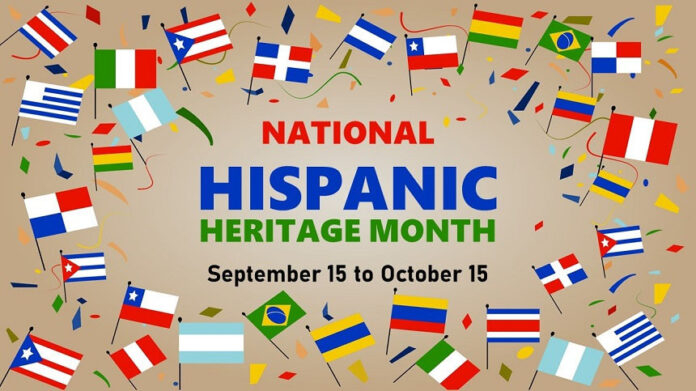
The Hispanic Heritage Awards mark the official start of Hispanic Heritage Month, a celebration that runs from Sept. 15 to Oct. 15. These dates were chosen to commemorate the anniversaries of independence of several Latin American countries, including Costa Rica, El Salvador, Guatemala, Honduras, Nicaragua, Mexico and Chile.

Since its creation in 1968, Hispanic Heritage Month has been an opportunity to recognize the contributions of the Latino community to American society. Through cultural, educational and artistic events, the aim is to promote diversity and inclusion, and celebrate the traditions and customs of the different Hispanic countries.

On that date, President Lyndon B. Johnson signed a law designating the week of September 15 as “National Hispanic Heritage Week,” according to the Office of the Historian and the Office of Arts and Archives of the U.S. House of Representatives.

It is a “great contribution to our national heritage made by our people of Hispanic descent, not only in the fields of culture, business and science, but also through their valor in battle,” the statement reads.

A Legacy of Excellence

The Hispanic Heritage Awards have become one of the most important events on the Latino cultural calendar in the United States. Throughout its 37-year history, they have recognized hundreds of leaders and artists who have left an indelible mark in various fields.

This year, the HHF continues its commitment to highlighting Latino excellence and talent. The Sept. 5 ceremony will be a testament to the growth and influence of the Hispanic community in the United States.

spot_img

New rules coming soon to help people clear old criminal records

by Suzanne Potter, Producer

Starting October 1st, it will get a lot easier for people with old felony convictions to get them expunged from their record – as Senate Bill 731, passed two years ago, is fully implemented. Before, only records from 2005 or later could be cleared, but now the law covers records from as far back as 1973.

Saun Hough, vocational services administrator with the nonprofit Shields for Families in South L.A., said this is significant.

“It’s estimated that an additional 4.5 million people will have felony records that are now eligible for expungement,” Hough explained.

Advocates of criminal justice reform spoke out in Sacramento on Wednesday to raise awareness as part of the Time Done Day of Advocacy. The law also allows petitions for expungement to be filed at your local courthouse, and the state Department of Justice will start conducting automated petitions. A website called expungemyrecord.org just launched this week to help people navigate the process.

Hough said clearing the criminal record of old convictions can vastly improve a person’s chances of getting a job, renting an apartment, obtaining a professional license, and much more.

“It allows for the opportunity to coach your children’s team literally, it allows for the opportunity to be members of your HOA board. it just really allows for full participation back into society and into your community,” Hough continued.

People can petition to have many types of non-sexual felony convictions expunged two years after completing any parole or probation as long as they have no new offenses.

California faces a big shortage in the health care workforce, so health centers in San Diego are taking matters into their own hands, launching a training program for medical assistants.

The Laura Rodriguez Medical Assistant Institute, part of the Family Health Centers of San Diego, has graduated dozens of new medical assistants since January of last year.

Pauline Lucatero, chief academic administrator for the institute, said multiple factors led to the shortage.

“This is just due to the aging population and retirement,” Lucatero observed. “I also believe that trying to recover back from COVID, we lost a lot of professionals.”

The program recruits students from the community. In fact, 65% of its graduates started out as a patient of the health centers. The Bureau of Labor Statistics projected jobs for medical assistants would grow 14% from 2022 to 2032. The training program was made possible by a $450,000 grant from the nonprofit Direct Relief.

The program costs about $7,200. Students can get a loan, which can be forgiven if they work for Family Health Centers of San Diego for three years. Students can do the training in four and a half months full-time or eight months part-time. The next full-time class starts Oct. 7.

spot_img

Thousands of indigenous people march in Bogotá in search of direct dialogue with Petro

Screenshot

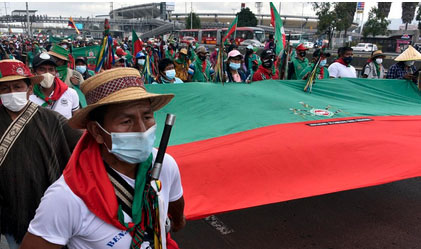
More than 3,000 indigenous people from the Colombian department of Cauca are marching in Bogotá in search of direct dialogue with President Gustavo Petro. The communities plan to remain in the capital, and assure that more people will arrive until an agreement is reached that satisfies their demands in the face of the humanitarian crisis that the territory is suffering due to armed violence. Our colleague Andrés Fernández Sánchez gives us more details from the field

by the El Reportero‘s wire services

August 27, 2024 – It was the first mobilization in the streets of Bogotá since they arrived a week ago from the department of Cauca, after traveling more than 500 kilometers by bus, to camp in a park in the city center waiting to reach political agreements with the high government.

“Today (the indigenous movement) shows the country that it is not subjugated to any government, that we support this government, yes, but that we have the character and the capacity for self-criticism to say what is not working well,” Jhoe Sauca, senior counselor of the Cauca Regional Indigenous Council (CRIC), the highest authority of the community in the region, told The Associated Press.

“The robbery of the century”: Petro reacts after multimillion-dollar corruption scandal in Colombia

More than 2,000 projects to benefit the most vulnerable communities were not completed or their contracts expired, without the works being carried out


The president of Colombia, Gustavo Petro, described as “the robbery of the century” the report of a multimillion-dollar sum of resources that were assigned to public works that present irregularities both in the time of execution and in the expiration of the contracts.

“There are 12 billion lost in the royalty system. The robbery of the century. Works that appear to be done and when they are visited they never started,” wrote the head of state.

The Colombian president commented on the statements made by the director of the National Planning Department (DNP), Alexander López Maya, who asked for a swift investigation of the 2,094 projects that “did not comply with contractual obligations,” that is, those that belong to suspended or expired contracts, and whose investment had been 12 billion pesos (2.9 million dollars). “These resources are practically lost,” he added.

This millionaire sum was allocated to projects, through the General System of Royalties (SGR), a coordination scheme between territorial entities and the Government to manage and execute the income from the exploitation of non-renewable natural resources.

“Twelve billion that should have built peace”

According to the head of Planning, of those 2,094 resources that did not comply with their contractual obligations, 1,497 have an expired execution period that amounts to nine billion pesos (2.2 million dollars); 301 have all contracts suspended for a value of one billion pesos (248,000 dollars) and 296 have all contracts suspended and have expired execution deadlines for a value of two billion pesos (496,000 dollars).

“Twelve billion pesos that should have been used to resolve the problems of drinking water, basic sanitation, building schools, health centers, roads to connect the territories. Resources that should have been used to build peace.”

López Maya illustrated that with 12 billion pesos, the access to water for all the people of La Guajira, who have had a historical lack of access to the resource and drought, could be solved in a “definitive” way; a sewerage and aqueduct system for the city of Quibdó, capital of the department of Chocó, one of the poorest in Colombia; or the supply of drinking water for the region of Urabá.

spot_img

US resumes humanitarian program for migrants from Cuba, Nicaragua, Venezuela and Haiti

Marvin Ramírez, editor

As this edition was preparing to go to press, the US government announced that the US has resumed issuing humanitarian parole for migrants from Cuba, Haiti, Nicaragua and Venezuela, which allow people from these countries to travel and enter the country legally, and which was suspended earlier this month to investigate possible fraud.

The Department of Homeland Security (DHS) confirmed to the press that after a pause of almost four weeks it has restarted the program that grants monthly entry to up to 30,000 people from these four countries to the US and allows them to obtain a work permit for a period of two years.

It was definitely a shame for many that humanitarian parole had been suspended, but now it is a cause for joy for many.

During this temporary suspension an updated review process was carried out and now the procedure to obtain authorization is different.

The elimination or not of parole for people from these countries to travel to the United States by 2024 had awakened fear for many citizens of these nations, who have been waiting for a sponsor to emigrate to the northern country and start a life from scratch, without a future in their countries of origin.

I know a good number of people who arrived in the San Francisco Bay Area very excited, happy to have been able to arrive in the United States legally, guaranteed to be able to work with their respective documents, without the fear that undocumented immigrants suffer of not being able to develop due to lack of immigration documents.

Now they are contributing to the public treasury and to their families in their countries, and complying with the ordered immigration requirements.

Although humanitarian parole (or humanitarian parole) is only for two years, the dream of the beneficiaries is for these immigrants, the American dream that we citizens or authorized residents know.

The American dream is the national spirit of the United States, according to which each person has the freedom and the opportunity to succeed and achieve a better life. The phrase was popularized by James Truslow Adams during the Great Depression in 1931 and has had different meanings over time.

The suspension came after an internal report by the Department of Homeland Security (DHS) found that thousands of sponsors of migrants listed false Social Security numbers and phone numbers, including in some cases those belonging to people who have already died.

The DHS explained that the selection process has been improved, especially for sponsors of people who apply under a figure known as “parole.”

“DHS has incorporated additional research of sponsors based in the US to strengthen the integrity of the processes,” the agency highlighted.

The program, which began at the end of 2022 only for Venezuelan citizens and was later expanded to include the other three nationalities, has allowed the entry of almost half a million migrants to the US, according to DHS data.

To apply for parole, migrants need to have a sponsor in the U.S. who already has legal status and can demonstrate sufficient income to financially support the program beneficiary.

The enhanced screening measures announced include, among others, increased scrutiny of sponsors’ financial records and criminal records, and methods to identify the filing of multiple applications by a single sponsor.

For those wondering what will happen when the two-year period expires, yes, they will be able to extend it through asylum.

People who entered with parole can apply for asylum online by creating an account on the USCIS website and filling out Form I-589. The deadline to do so is one year from their arrival in the United States. This process does not require the payment of any fee. The only drawback to requesting asylum would be not being able to return to their country of return, something that many beneficiaries of parole will not want to do, since the idea of ​​emigrating temporarily through this program is to provide for themselves financially, and perhaps be able to regularize their status through other available means, or return to their countries.

These options include: work visas, study visas, family petitions, marriage visas, or asylum for which the migrant who arrived under parole can apply.

Congratulations and success to the citizens of Cuba, Nicaragua, Venezuela, and Haiti.

spot_img

Former diplomat: Netanyahu leading Israel ‘into the abyss’ to draw the US into full-scale war

Benjamin Netanyahu

NOTE FROM THE EDITOR:

The content of this article is solely the opinion of its author, and does not reflect the view and opinion of the editor or El Reportero. It is published to promote diversity of ideas and opinions and for entertainment.

In an interview with Judge Andrew Napolitano, former U.S. Assistant Secretary of Defense Chas Freeman explains how Israeli, British, and European governments are trying to draw the U.S. into full-scale wars in the Middle East and Ukraine

by Frank Wright

In an interview with Judge Andrew Napolitano, former U.S. Assistant Secretary of Defense Chas Freeman explains how Israeli, British, and European governments each are trying to escalate the conflicts in the Middle East and Ukraine – to draw the U.S. into full-scale wars.

In a patient examination of the “worst nuclear crisis since 1962,” Freeman moves in his August 22 appearance from detailing the brinkmanship of British-led escalation in Ukraine to the question of whether the world “can tolerate the aggression of the state of Israel.”

Freeman adds that not only is the state of Israel facing self-destruction – but it is being led “into the abyss” by Benjamin Netanyahu.

“Netanyahu and the other yahoos around him have led Israel into the abyss – and they don’t have a plan to get out,” he says.

Freeman, the one-time U.S. Ambassador to Saudi Arabia, frames the mounting crisis in foreign affairs with an examination of both theaters of potential world war in the Middle East and in Ukraine.

“Pushed far enough against the wall, the Russians will counter-escalate to the nuclear level,” says Freeman, noting the dangers created by the “clearly British-led” attempt to escalate the war against Russia.

Freeman calmly explains the apocalyptic risk of this strategy of escalation, pursued by the U.K. and Europeans in Ukraine and of the Netanyahu regime in Israel – both of whose aim is to secure U.S. involvement in a full-scale war their actions are designed to ignite.

“There are ample reports of the presence of troops from various NATO countries, including the United States,” in the recent offensive into the Russian region of Kursk, says Freeman. Therefore, he says, “we can’t simply dismiss the Russian assertion that this is a NATO invasion, and not merely Ukrainian.”

Freeman says the U.S. and its allies “have become a belligerent” as a result – which is an act of open war on Russia by the West.

Freeman says this reckless move towards full-scale war was not undertaken on the orders of the U.S.

“I don’t think [Ukraine] had the authority to do that from the Pentagon,” he says. “This is where the alleged British involvement in planning and launching this incursion comes in.”

Freeman says the reason for this action is to ensnare the U.S. in a wider war.

“If the British actually did that, then their purpose must have been to manipulate the United States into our own escalation to follow them.”

Moving to Israel, Freeman bluntly asks how long the world can tolerate such a criminal and “sociopathic” state, which he says is basically anti-Christian in nature.

“Israel [has] become the negation of the humane values that inspired our Christian religion,” Freeman continued. “And it is basically sociopathic.”

He applies this diagnosis to the Israeli leader.

“Mr. Netanyahu – personally, I think – is a sociopath. A lot of Israelis have criticized him essentially for that.”

Citing the observations of retired British diplomat Alastair Crooke, another regular guest on Napolitano’s show, Freeman says of Netanyahu, “Unfortunately he fits into the larger context that Alastair Crooke outlined: How can a society long survive that supports man-rape in prisons as a legitimate tool?”

Freeman is referring to the videotaped incident of a group of Israeli soldiers sodomizing a detained Palestinian with what appears to be a metal rod. The incident was discussed in the Israeli parliament, the Knesset, whose members agreed that any such measures were “legitimate” means of treatment of its prisoners, all of whom it labels as terrorists.

The former diplomat notes how Israel’s insistence that “we accept [and] endorse their right to exist” is actually “coded language for, ‘No one else has the right to exist between the River and the Sea,’ and therefore there can be no Palestinian self-determination.”

“I think … people are asking can we tolerate a society like this that is so sadistic, so murderous, so indifferent to international law and human decency,” he says, concluding that “much of the world is prepared to say no.”

Freeman, whose career was ended in 2009 after a campaign against him by the powerful Israel lobby in the United States, gives a view that is obvious to anyone outside the Western media propaganda bubble.

For “complex reasons,” he says that in “the United States we remain devoted to Israel” and that “there are some European countries that remain devoted to it – but elsewhere Israel is regarded as not just as a pariah but as a criminal.”

Freeman’s patient explanation of the crises in Israel and Ukraine is brief, carefully reasoned and comprehensive. The explanatory power of Freeman’s view makes this presentation one of the most powerful statements on foreign affairs seen in recent times.

This is a view wholly absent from the mainstream media, which even the editor of the Wall Street Journal admits has “gaslit” the American people for years “all in the name of ‘democracy.’”

Freeman’s diplomatic take on the bipolar disorder of the Globalist-Zionist regime is simply a statement of fact to millions of people who fear the replacement of their everyday lives with a state of emergency that is rapidly deteriorating.

spot_img

AMLO says Mexico’s relationship with US and Canadian embassies ‘on pause’

by Mexico News Daily

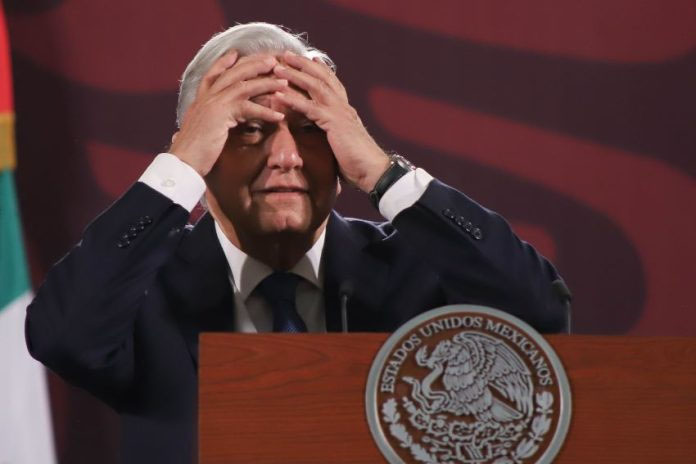
The Mexican government’s relationship with the United States Embassy in Mexico is “on pause,” President Andrés Manuel López Obrador said Tuesday, five days after U.S. Ambassador Ken Salazar voiced concerns about his proposed judicial reform.

López Obrador also told reporters at his morning press conference that the government was pausing ties with the Canadian Embassy in light of the Canadian ambassador’s remarks about the same proposal.

“How are we going to allow [Salazar] to opine that what we’re doing is wrong,” he said.

“We’re not going to tell him to leave the country, we’re not doing that, but we do have to read the constitution, which is like reading him the riot act,” López Obrador said.

He said that the government’s relationship with Salazar is “good, but on pause,” explaining that the suspension began immediately after the ambassador spoke out against his judicial reform proposal, which could be passed by Congress as soon as next month.

López Obrador — who would like to see the proposal passed before he leaves office on Oct. 1 — also said that Mexico’s relationship with the U.S. Embassy in Mexico is on pause, but the broader bilateral relation “continues.”

Nevertheless, he made it clear that he believes that Salazar was speaking on behalf of the U.S. government, not just himself, when he released his statement on the judicial reform last Thursday. López Obrador also asserted that the United States and Canada acted in concert.

In his statement last Thursday, Salazar said he believed that the “popular direct election of judges is a major risk to the functioning of Mexico’s democracy.”

“… I also think the debate over the direct election of judges … as well as the fierce politics if the elections for judges in 2025 and 2027 were to be approved, will threaten the historic trade relationship we have built, which relies on investors’ confidence in Mexico’s legal framework,” the ambassador added.

“Direct elections would also make it easier for cartels and other bad actors to take advantage of politically motivated and inexperienced judges,” Salazar said.

For his part Canadian Ambassador Graeme Clarke said in an interview published late last week that Canadian investors were concerned about the judicial reform proposal.

López Obrador announced last Friday that the government was sending diplomatic notes to both the United States and Canada in light of the ambassadors’ remarks.

Salazar subsequently said that “the concerns” he expressed about the direct election of judges were made in the “spirit of collaboration.”

He also said he was willing to engage in dialogue with Mexico’s leaders.

On Monday, López Obrador said that he and the U.S. ambassador — a semi-regular visitor to the National Palace — were going to give each other some “time” before reconvening.

The president claimed that the government of Canada acted in an “embarrassing” way by joining the United States’ protest against the judicial reform proposal.

“It looks like an associate state, [they acted] together,” he said.

“They wanted to interfere in matters that only correspond to Mexicans,” López Obrador added.

He said that the pause in the relationships with both the United States and Canadian embassies would continue until representatives of the two countries learned to respect the sovereignty of Mexico — which Salazar has stressed he does, including in an X post early Tuesday afternoon.

“We’re not going to give them advice nor say that this is good or this is bad,” López Obrador said, even though he has been critical of the U.S. government and Congress for not approving greater funding for regional development programs that could help reduce migration, and of the U.S. embargo against Cuba.

“We want them to be respectful — for there to be a reciprocal relationship with regard for respect for sovereignty,” the president said.

Opponents of the judicial reform proposal say that the direct election of judges from candidates nominated by the sitting president, the Congress and the judiciary itself threatens the independence of Mexico’s justice system. Judicial elections, in some cases, would coincide with political elections, a situation that critics believe could lead to politicization of the judiciary.

If the proposal is approved, all 11 justices of the Supreme Court — which has handed down rulings against the current government’s policies and projects — could be replaced next year.

If a majority of justices sympathetic to the agenda of incoming president Claudia Sheinbaum are elected to the Supreme Court, Sheinbaum’s capacity to enact — and maintain — policies that face legal challenges could be enhanced.

Approval of the judicial reform proposal is likely given that the ruling Morena party and its allies will have a supermajority in the lower house of Congress and a strong majority in the Senate.

The last straw?

Beyond Salazar’s statement about the proposed judicial reform, López Obrador has been irked by the United States’ funding of organizations he regards as opponents of his government.

Earlier this month, he once again railed against the United States government’s funding — via the U.S. Embassy in Mexico — of Mexicans Against Corruption and Impunity, an anti-graft group that has exposed alleged corruption in his administration.

“It’s outrageous … that a government that is a friend, a neighbor, is financing a group that opposes a legal, legitimate government. What’s that called? Interventionism,” López Obrador said Aug. 14 after announcing that he would send a letter to U.S. President Joe Biden to complain about the issue.

In light of Salazar’s remarks, the president reiterated that the federal government doesn’t accept “interference” in Mexico’s internal affairs.

“We don’t accept any representative of foreign governments intervening in matters that are solely up to us to resolve,” he said.

The Mexican government has also been less than satisfied with the information the U.S. government has provided about the arrests of alleged Sinaloa Cartel leaders Ismael “El Mayo” Zambada and Joaquín Guzmán López in New Mexico last month.

The Federal Attorney General’s Office said earlier this month that the United States Department of Justice had not provided a range of information it requested about the case.

spot_img