by the El Reportero staff
The United States government has announced that it will suspend all immigrant visa processing for citizens of 75 countries beginning January 21, 2026 as part of a major shift in immigration policy aimed at reducing the number of applicants deemed likely to rely on public benefits. The decision, issued by the U.S. State Department, will remain in effect indefinitely while officials reassess screening and vetting procedures under the law. (Reuters)
This suspension applies only to immigrant visas — the visas that allow people to live permanently in the United States — and does not affect nonimmigrant visas such as tourist, student, or business visas. U.S. officials said consular officers have been directed to refuse immigrant visas from affected nationalities during the review period. (WABE)
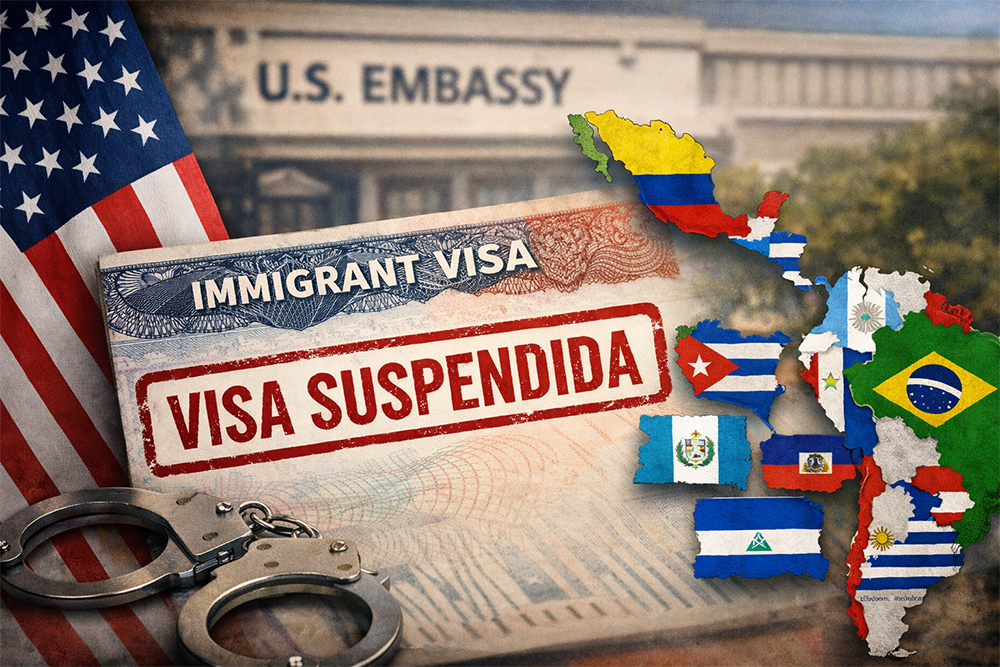
Among the 75 countries on the list are several Latin American and Caribbean nations, creating significant concern in communities with family ties to the U.S. Affected countries in this region include Brazil, Colombia, Cuba, Guatemala, Nicaragua, Haiti, and Uruguay. Citizens of these nations who are applying for immigrant visas will face delays or indefinite pauses in processing under the new policy. (Envoy Global, Inc)
The suspension stems from enforcement of the so-called “public charge” rule, which allows immigration officials to deny visas to people they believe could become dependent on government assistance. The Trump administration and the State Department say the pause will allow time to improve how applicants are screened to ensure financial self-sufficiency. Critics argue that the policy unfairly restricts legal immigration and could separate families, especially those from the Americas with long histories of migration to the United States. (The Washington Post)
While immigrant visas from these countries are on hold, existing visas already issued will not be revoked, and individuals with current appointments may still attend interviews, even though no new visas will be granted until further notice. (Diario AS)
Community leaders and immigrant rights groups are watching closely as this policy takes effect, urging clarity and support for affected families across Latin America and beyond.