by Marvin Ramirez
In cities across the United States, particularly San Francisco, residents increasingly live under a governance more focused on extracting revenue than public welfare. Citizens, especially those who commute by car, face a growing number of fines and taxes, implemented through mechanisms that target everyday life in ways that feel oppressive rather than protective.
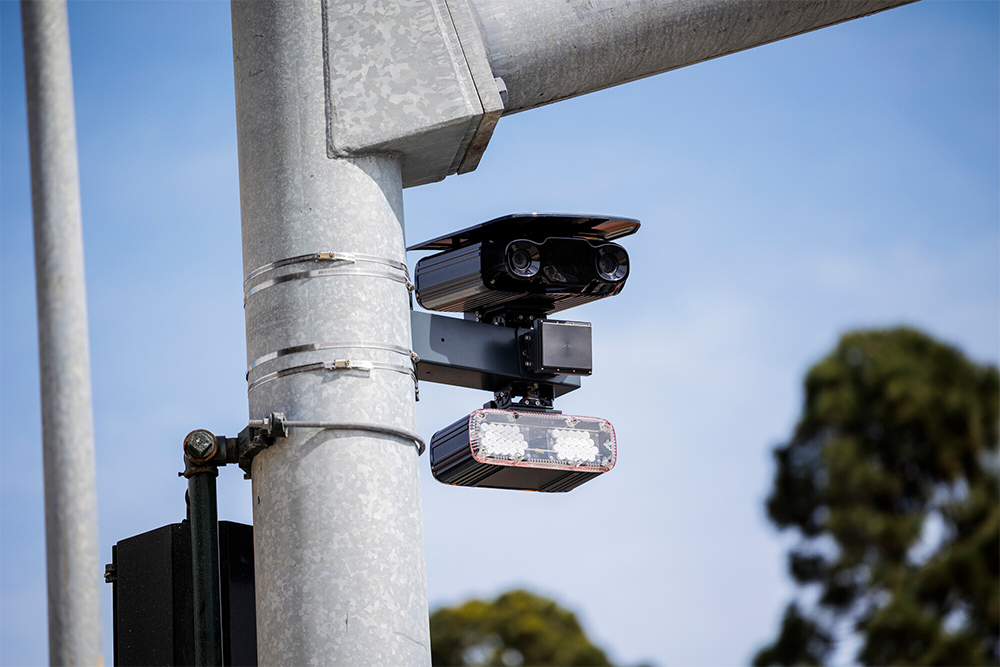
Surveillance cameras have become one of the most tangible symbols of this approach. Installed in locations where people routinely drive five or ten miles over the posted speed limits, these cameras generate revenue for the city while creating a constant state of psychological stress for drivers. Often, these zones are empty at night, and there are no traffic studies justifying the cameras’ locations. The purpose is clear: to catch ordinary people in the act of minor infractions and extract money from them. Citizens become trapped in a network of “invisible cells” designed by bureaucrats and technocrats who profit from enforcing compliance. These officials are paid to ensure the system works, yet few consider the broader consequences of cultivating fear and mistrust among the population.
Parking, too, has been transformed from a convenience into a minefield. Parking meters, once simple tools to regulate short-term parking, are now mechanisms to squeeze additional revenue. Increasingly, entire parking zones are being converted into commercial parking only, restricting access for residents and forcing them to pay higher fees or park farther from their destinations. Citizens pay for parking, only to find they may be fined later for minor overages, even when they are home resting after a long day at work. Sundays and evenings, traditionally considered low-risk times, have now been threatened, as extended parking enforcement continues to penalize residents quietly, almost invisibly.
Other cities, including San Bruno, have experimented with similar strategies, and the cumulative effect is that people gradually lose freedom and convenience in their daily routines without noticing until it is too late.
One can liken this approach to a parable: a man wanting to catch wild pigs scattered small amounts of corn. Over time, the pigs returned repeatedly, drawn by the reward. The man added fences incrementally, and the pigs continued coming, unaware of the eventual trap. This is a metaphor for urban regulations and municipal revenue strategies. Incremental fines, restrictions, and surveillance condition citizens to comply while eroding autonomy and security.
The city’s tactics extend beyond cameras and meters. Red-painted streets, designated for buses and taxis, were justified as a means to reduce congestion. Initial studies show such changes saved drivers a mere three minutes—hardly transformative. Yet restrictions remain, limiting flexibility even during low traffic. Prohibitions against left turns, enforced at night when streets are empty, highlight how regulations increasingly serve bureaucratic control rather than practical necessity.
Local community political leaders often turn the other way, benefiting from city revenues, and avoid acknowledging that the only way to change course is through the ballot. This reluctance to confront higher authorities leaves citizens vulnerable to a cycle in which daily life is regulated and monetized without meaningful oversight or recourse. This is not governance—it is exploitation disguised as civic planning.
The problem is not the need for public services or infrastructure but the prioritization of revenue over citizen well-being. Rules intended to improve safety and efficiency often serve as traps, leaving citizens to bear the burden while the state and its technocrats profit. The cumulative effect is a subtle but pervasive erosion of personal freedom: psychological stress imposed by cameras, fines, restricted movement, and commercial-only parking zones; an invisible net that limits navigation of one’s city; and a growing sense that ordinary residents are merely a revenue source rather than a constituency whose welfare matters.
Ultimately, these changes occur through the electoral process, yet voters may not recognize gradual restrictions until it is too late. It is essential to hold policymakers accountable, question regulations that prioritize revenue over public interest, and demand transparency in decisions affecting daily life. Without vigilance, the city risks creating a population perpetually constrained by rules designed less to protect and more to profit, leaving freedom and trust as the real casualties.