Traditional Tarahumara Medicine: Learn about the plants, rituals, and ancestral knowledge with which the Rarámuri have healed for generations
Traditional Tarahumara medicine is protected deep in Mexico’s Sierra Madre Occidental, among towering mountains and winding roads, an ancestral knowledge that has guided the Rarámuri for generations. In a world rapidly moving toward digital and instant access, this tradition reminds us that health begins with listening to the body and the environment.
The Tarahumara, also known as the Rarámuri, built their history in close connection with the land. Over time, this indigenous people have developed a healing system that combines medicinal plants, spiritual rituals, and a deep understanding of the balance between body, mind, and spirit. For them, healing is not only curing physical illness, but restoring harmony at all levels of being.
Balance in Traditional Tarahumara Medicine
For the Tarahumara, health is a state of balance between the individual, the community, and the natural world. Therefore, it is understood that illnesses do not arise on their own, but rather as a result of imbalances: from spiritual disharmony to the evil eye or poor nutrition.
Therefore, the wise men—known as medicines—not only prescribe plants, they also perform healing rituals, sweat lodges, cleansings, and ceremonial dances. Each act has a profound intention: to restore lost harmony.
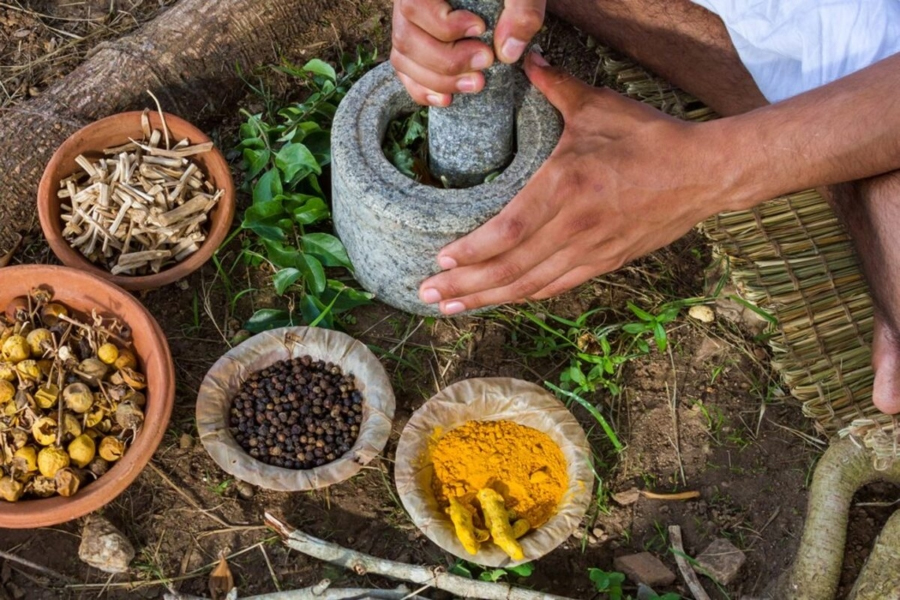
This healing system not only soothes the body; it also embraces the soul. Medicinal plants occupy a central place in this practice. Among the most commonly used are:
- Arizona (Rattlesnake): with anti-inflammatory and analgesic properties, it is used for muscle and joint pain.
- Jicama: its leaves and roots are boiled to relieve digestive problems.
- Mullein: effective for treating respiratory conditions thanks to its expectorant properties.
- Aloe vera: used to treat burns and wounds for its healing properties.
- Chamomile: a natural sedative, ideal for insomnia and anxiety.
- Sweet wood: with antimicrobial effects, it is used against intestinal infections.
In addition to the plants themselves, application methods have also been refined over the years. These are some of the most common:
- Infusions with dried leaves for digestive and nervous ailments.
- Decoctions of boiled roots to extract active compounds.
- Poultices applied directly to the skin.
- Ointments made with herbs and fats to relieve pain.
- Tinctures that preserve the properties of plants in alcoholic solutions.
The preparation of these remedies is not only a technical process; it is also an act of cultural transmission. In every blend, in every infusion, the elders teach the younger generation how to care for their health without breaking their bond with nature.
What risks does it face?
Traditional Tarahumara medicine faces major challenges today. The migration of young people, the loss of biodiversity, the advancement of modern medicine, and the lack of educational programs have created a break in the chain of knowledge transmission. Many young people no longer recognize plants or know how to use them. The tradition is at risk of being diluted.
But there is also hope. Community workshops, documentation projects, and new ways of valuing Indigenous knowledge are helping to revitalize these practices. Integrating traditional medicine with certain modern scientific approaches does not mean losing its identity, but rather strengthening it through collaboration.
Preservation of Traditional Medicine
Preserving traditional Tarahumara medicine is much more than protecting a healing method: it is preserving a worldview in which health is connected to the land, the cycles of life, and the community. Each plant, each ritual, and each shared story represents centuries of observation, respect, and wisdom. In these times, when we are seeking new forms of well-being, the legacy of the Rarámuri offers us a profoundly human response: healing is also remembering who we are and where we come from.
Healers play an essential role in Indigenous communities.