Shared/by México Desconocido
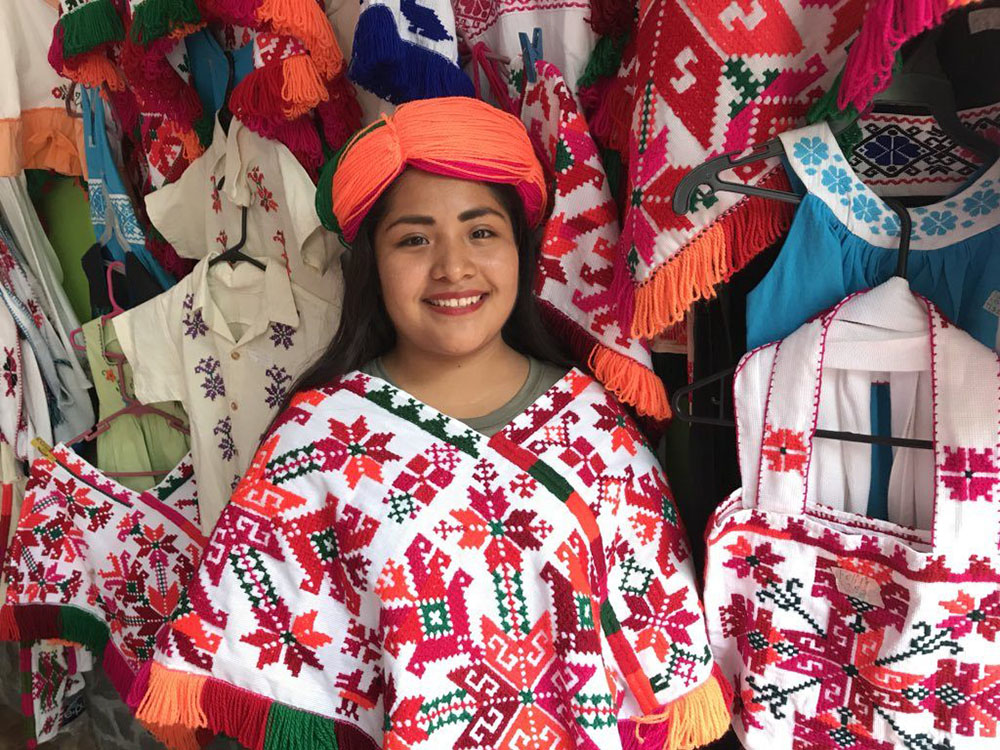
The quechquémitl is more than just a shawl. It is one of the few garments of pre-Hispanic origin that are still used. We tell you about this clothing that our ancestors used
The quechquémitl is a garment of pre-Hispanic origin, one of the few whose use has survived. Its name comes from the Nahua voice quechtli, neck, and quemitl, dress. In the State of Mexico it is made of wool, while in Puebla, Veracruz, San Luis Potosí and Hidalgo it is manufactured from cotton.
As for the designs, each ethnic group has their own, according to their worldview and artistic style. Among the main safeguards of this beautiful clothing are the Otomí, Huasteca, Totonac and Mayan cultures.
The history of the quechquémitl is very remote, prior to the colonization of the peoples that inhabited Mexico. Its use was expanded to almost all corners of Mesoamerica and represented, along with the huipil, the quintessential feminine garment. Although the place where the quechquémitl was created is still unknown, it is very likely that it was created in the region of the Gulf of Mexico.
Although the place where the quechquémitl was created is still unknown, it is very likely that it was created in the region of the Gulf of Mexico.
Among the peoples where its use was most widespread were the Nahuas of central Mexico, Otomi, Mazahuas, Huastecs and Purépechas. On the other hand, the garment is also linked to the female deities of fertility, for which its use could be exclusive to the nobility of the Valley of Mexico.
After colonization, the quechquémitl became of daily use for all indigenous women regardless of socioeconomic status. It used to be worn together with the huipil or on the naked torso.
Prehispanic era
Before the Spanish invasion, the quechquémitl was made by women, who actually manufactured the textiles. At this time they were made with the backstrap loom technique. Later they were dyed and embroidered with elements that symbolized the history and religion of the peoples of the women who made them.
The elements varied from region to region. In the case of the Huasteca peoples, they used to embroider the Huasteca flower, animals that represented the spirit of the people, etc. In the quechquémitl everything had a symbolic character, for example the fringes were a sign of singleness, while heddle represented that the woman was married.
News of the quechquñemitl
Currently there are many different versions of the quechquémitl, which fortunately has survived to this day. For example, in Veracruz it is made of gauze and in Puebla it is made with thick threads to cope with low temperatures.
Although the loom has fallen into disuse and modern sewing machines are often used, embroidery continues to have its own technical personality, as well as traditional motifs. They are usually decorated with fringes, animals, mestizo and indigenous motifs, which varies from region to region. According to researcher Claudia Rocha:
“What indigenous women reflect in the textiles they make is related to the idea they have about destiny. Textile production of pre-Hispanic origin has been an ancestral activity that shows the philosophy and thought of a culture in the designs of animals, plants, human beings and gods referred to in its oral tradition.