
by Marvin Ramírez
In the midst of the intensifying immigration crackdown, one reality is impossible to ignore: millions of undocumented families in the United States are living in fear, and their children are caught in the crossfire. Many of these children were brought here at a young age or were born on American soil. They attend school, receive medical care, and live as any other child might—until the threat of their parents’ arrest and deportation shatters their sense of safety.
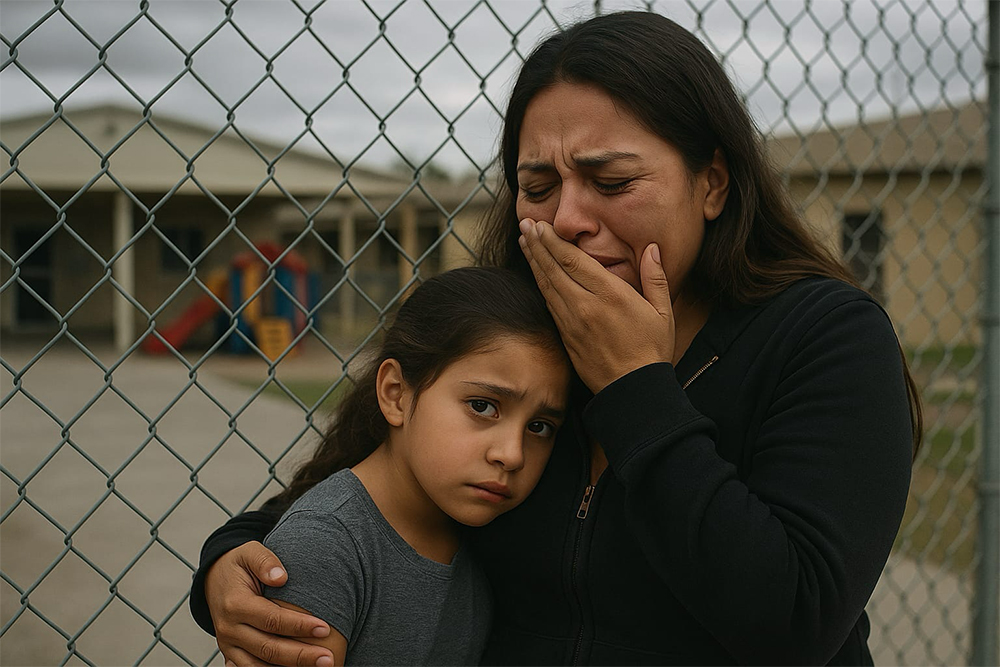
Recent deportations have sent a wave of fear through immigrant communities. Parents are increasingly afraid to drop their children at daycare or pick them up from school, worried that immigration agents might be waiting. The thought is heartbreaking: how many children will end up in limbo, left without their parents, or forced to abandon school altogether out of fear?
For working-class immigrant families, child care centers are lifelines. They allow parents—many of them single mothers—to hold jobs, pay taxes, and contribute to the economy. These are not people hiding in the shadows, but members of our communities who mow lawns, build houses, clean offices, and care for our elderly. They are working honestly, often in jobs others refuse to take, and they are paying into the very system that now seeks to uproot them.
Critics argue that the law is the law, and that entering without documentation must have consequences. It is true that border policy must be enforced and improved. But we cannot lose sight of the human dimension. The current approach risks punishing children for decisions they did not make, and it ignores the desperation—political instability, economic collapse, violence—that drives many to flee their countries in the first place.
Some states, like Florida, are considering bipartisan proposals to allow certain undocumented immigrants to work legally without granting full amnesty. Such ideas could provide stability while avoiding the political backlash associated with blanket legalization. But time is running out for many families.
History shows that immigration policy can be both firm and compassionate. As a nation, we must decide whether our legacy will be one of breaking families apart or finding solutions that uphold both the law and our moral responsibility. Children should not be collateral damage in the enforcement of immigration policy. The soul of the country is watching.