
by Marvin Ramirez
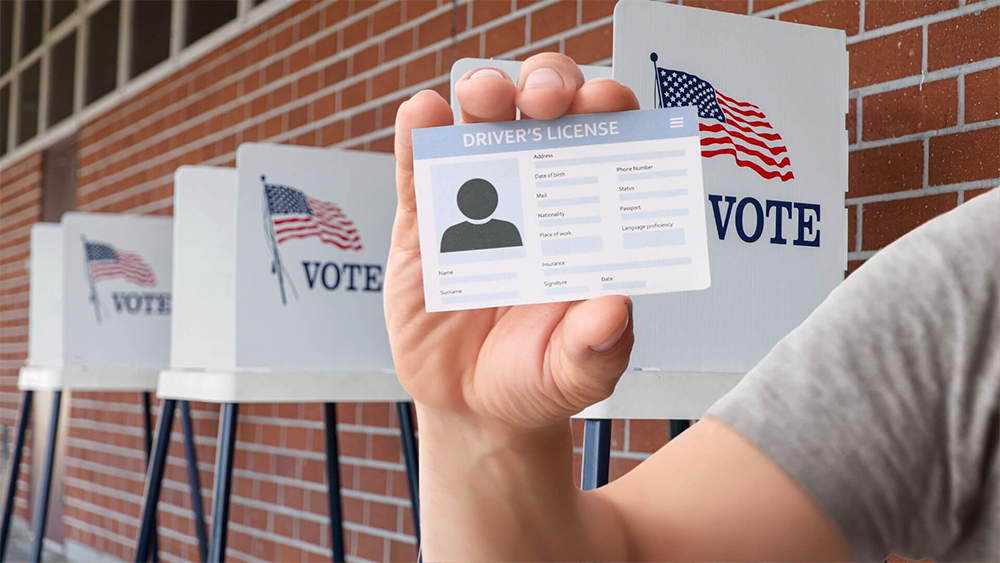
Voting is not just a civic duty — it’s the foundation upon which all democratic institutions rest. Yet today, the integrity of that act has become a source of controversy. While both major political parties agree that every eligible citizen should have access to the ballot, they diverge on how to ensure that each vote is legitimate. At the center of that debate stands one question: should voters be required to present valid identification before voting?
The logic behind voter ID laws is simple: to confirm that the person voting is indeed who they claim to be. It’s a safeguard, not a barrier. Americans present identification for countless routine activities. From banking to traveling, from entering federal buildings to receiving public benefits — ID is a part of everyday life. Voting, arguably the most consequential act of citizenship, should not be the exception.
Critics warn that voter ID laws could suppress turnout among marginalized groups. Yet experience in several states tells a different story. In Georgia, for example, turnout among Black and Hispanic voters increased after the state implemented ID requirements, thanks in part to outreach and free ID programs. The data suggest that when governments make it easy to obtain identification, participation remains strong — and public confidence rises.
The integrity issue becomes more pressing in states like California, where mail-in voting is now the default. While mail voting expands access, it also creates vulnerabilities. Ballots sent to outdated addresses can fall into the wrong hands. Even if intentional fraud remains rare, the perception of insecurity can be just as damaging. In democracy, perception shapes legitimacy.
A voter ID system could coexist with mail-in voting if properly implemented. Ballots could require a verified voter ID number, just as tax filings use Social Security numbers. Digital verification methods already exist that can confirm identity without requiring in-person presence. What’s missing is political will — not technology.
Rather than framing voter ID as a partisan issue, leaders should view it as a civic responsibility. A bipartisan effort to ensure both access and security would strengthen faith in democracy. The federal and state governments could jointly fund initiatives to issue free identification to all eligible citizens, with mobile units reaching rural and underserved areas.
No American should be prevented from voting due to lack of identification — but neither should Americans have to question whether their elections are secure. Both values can coexist.
As 2026 approaches, lawmakers could introduce a gradual implementation plan, giving citizens ample time to obtain identification. Public information campaigns could educate voters, ensuring no one is left behind. This balanced approach would make elections more credible, not less inclusive.
Ultimately, the question is not whether we trust voters — it’s whether we trust the system that counts their votes. Requiring voter ID is not about restricting democracy; it’s about reaffirming it.
In a time when misinformation and division threaten national unity, restoring confidence in elections should be a shared goal. One person, one vote — verified, legitimate, and trusted. That is the cornerstone of a healthy democracy.