by Marvin Ramírez
The modern world often claims to stand firmly for human rights, justice and compassion. Yet recent events across the Middle East reveal something deeply troubling about today’s global activism: outrage frequently appears selective.
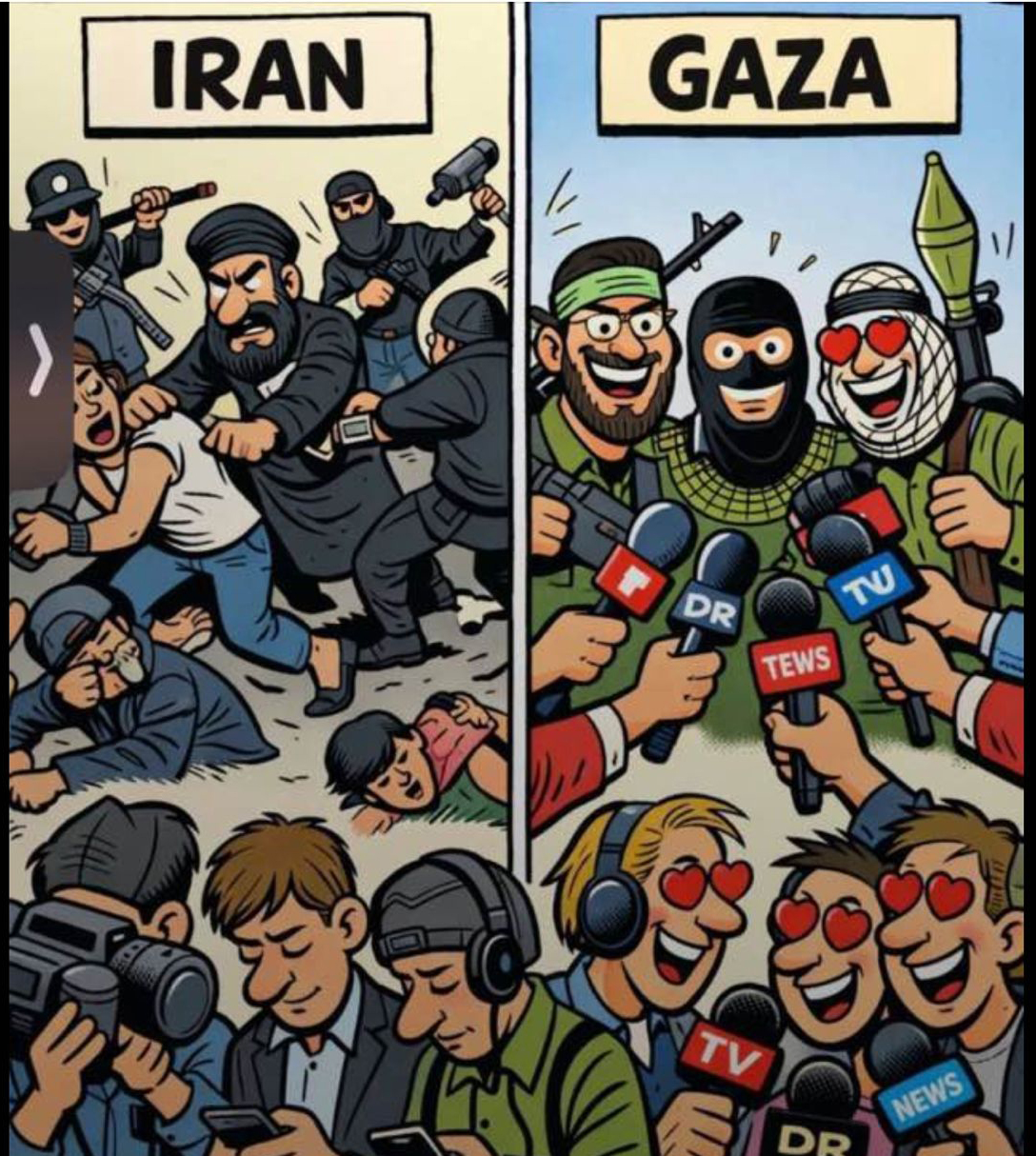
Over the past months, massive protests have erupted across Western cities over the war in Gaza. Demonstrators have filled the streets of New York, London, Paris and even San Francisco carrying banners demanding an end to the violence and calling for justice for Palestinian civilians. The images coming out of Gaza—destroyed neighborhoods, displaced families and civilian casualties—are tragic. No decent person can watch those scenes without feeling sorrow and concern.
But a difficult question increasingly emerges: why do some tragedies ignite worldwide protests while others receive far less attention?
Take Iran.
For years, millions of Iranians have lived under a political system where basic freedoms are severely restricted. Protests demanding reform have repeatedly been met with violent repression. Demonstrators have been arrested, beaten, imprisoned and in many cases killed. Various human rights organizations and reports from inside Iran have documented large numbers of deaths during government crackdowns on dissent.
In some of the most severe waves of repression, estimates suggested that thousands of protesters were killed within short periods as authorities attempted to silence nationwide demonstrations. These were not foreign wars. These were citizens confronting their own government.
Yet outside Iran, the global response was comparatively limited.
Inside the country, the danger of protesting is very real. Citizens who challenge the government risk imprisonment—or worse. In such situations, the outside world becomes the only voice for those who cannot safely speak. That is when international solidarity is supposed to matter most.
Now the situation has taken another dramatic turn.
Ayatollah Ali Khamenei, Iran’s Supreme Leader for more than three decades, was recently killed amid escalating conflict involving the United States and Israel. His rule, which began in 1989, was marked by strong hostility toward Western powers and strict control over political life inside Iran. His government oversaw repeated crackdowns against protest movements demanding greater freedoms and economic reform.
Following his death and the intensification of regional tensions, demonstrations have suddenly appeared again across many Western cities—this time protesting military action against Iran.
For many observers, the contradiction is difficult to ignore.
When Iranian protesters were being arrested, beaten or killed by their own government, large international demonstrations were relatively rare. But when outside powers confront the regime responsible for those crackdowns, protests quickly multiply.
This raises an uncomfortable question: what exactly is the principle guiding these movements?
If the purpose of activism is to defend human rights and protect innocent lives, then the standard must be universal. The suffering of civilians in Gaza deserves attention. But so does the suffering of Iranians facing repression from their own government.
Justice cannot depend on who the perpetrator happens to be.
Otherwise, activism begins to resemble political alignment rather than a consistent defense of human dignity.
This does not mean protests against war are illegitimate. War is always tragic. Civilians are always the first to suffer. It is natural for citizens to demand peaceful solutions whenever possible.
But protest also carries responsibility.
When movements claim to speak in the name of humanity, their moral vision must include all victims—not only those whose suffering fits a particular political narrative.
If civilians die in Gaza, it matters.
If protesters are killed in Iran, it matters.
If children are abused or exploited anywhere in the world, it matters.
And if authoritarian governments silence dissent through violence, the world should respond with the same urgency.
Justice that appears loudly for some victims but remains quiet for others risks becoming hollow justice.
Human rights cannot be selective. Compassion cannot depend on ideology or politics.
The world does not need louder slogans.
It needs moral consistency.
Only when global activism applies the same moral standard everywhere—regardless of geography, ideology or political convenience—can the call for justice carry real legitimacy.
Otherwise, the silence surrounding some victims will continue to speak louder than the protests for others.
Sources: Reports and background information from Associated Press, Reuters, BBC News, Amnesty International and Human Rights Watch.