by Marvin Ramírez
In San Francisco, like in so many cities across the United States, the relationship between citizens and their local government has shifted in a way that feels less like stewardship and more like exploitation. Rather than protecting the interests of residents, City Hall has found endless ways to extract money from its people—often through mechanisms that feel arbitrary, unjust, and predatory.
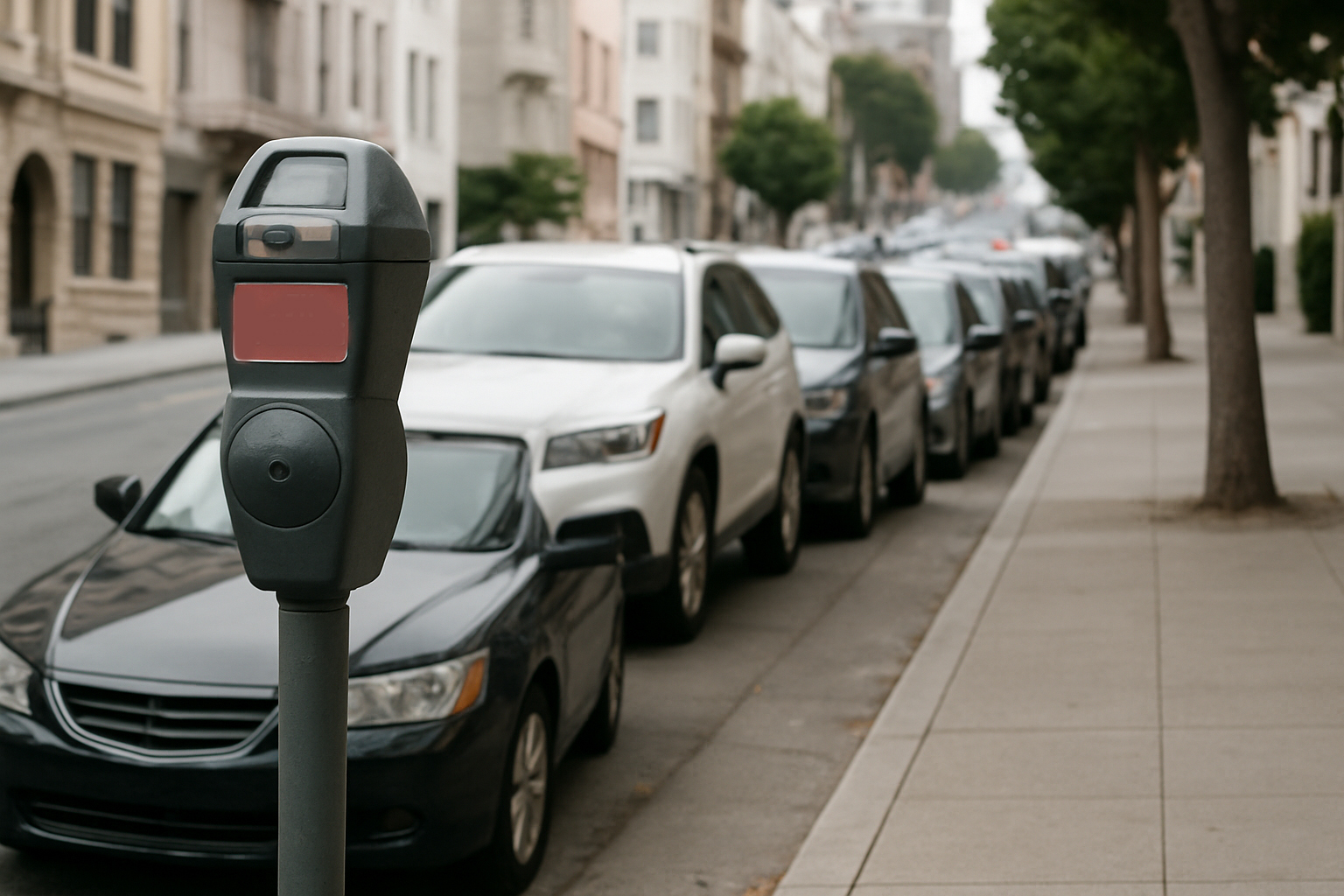
The most obvious example of this is parking. The city has systematically reduced the number of available parking spaces, imposed endless restrictions, and deployed armies of meter maids and cameras, not because it improves quality of life, but because it fills government coffers. Parking enforcement has become less about order and more about revenue. Every San Franciscan knows the pain of a ticket that can easily exceed $100, sometimes for nothing more than stopping briefly to pick up food, drop off a passenger, or run into a store.
The truth is that none of this is truly about traffic safety. Officials rarely provide solid data to justify these restrictions, yet they persist in creating “no parking” zones, installing new meters or removing them wherever the city can maximize revenue, and raising fines. They are not acting as public servants but as tax collectors. And let us be clear: these are not taxes voted on by the people. They are hidden taxes, imposed through the back door, disproportionately hurting working-class residents who already struggle to pay rising rents, groceries, and transportation costs.
If city leaders were serious about fairness, they would rely more on straightforward, voter-approved mechanisms like a sales tax. Consumer spending is constant in a city like San Francisco; taxing sales directly would distribute the burden more evenly, in line with the economic activity that sustains the city. Instead, politicians prefer to squeeze people where they are most vulnerable—through parking fines, speeding cameras, and an ever-growing list of obscure regulations.
This is not accidental. It reflects a broader shift in governance that began decades ago. Historically, San Francisco’s Board of Supervisors were part-time positions with modest compensation. Supervisors served their communities without the inflated salaries and career ladders of today’s political machine. City government was leaner, less expensive, and more accountable. In those years, life in San Francisco was affordable. You could rent a room for $60 or buy a home for $70,000. Streets were friendlier, communities tighter, and residents felt less like walking wallets.
Then came the change: in 1999, a measure was passed converting these positions into full-time, highly paid roles. Today, supervisors earn an annual salary of $163,878. Along with this shift came ballooning government expenses, a self-reinforcing political class, and the beginning of the city’s obsession with monetizing every aspect of public life. Parking meters spread from downtown into working-class neighborhoods like the Mission. What once cost a few cents now costs dollars, and the penalties for small mistakes have skyrocketed into triple digits.
Community leaders once stood up for residents, resisting parking meters in mixed-use areas. But those voices have gone silent. Today, no candidate dares to campaign on making parking easier. Instead, they support policies that reduce parking, pushing a narrative that cars are the problem. In reality, the problem is that people are punished for needing to use their vehicles in daily life. Residents who work long hours, who must drive for their jobs, who need to pick up their children or groceries, are forced into impossible situations. A single parking ticket can erase a day’s wages.
What we are witnessing is the capture of government by corporate logic. City Hall behaves less like a representative body and more like a corporation. And what is a corporation? It is not a living being, but a legal fiction—an entity created on paper, existing to extract profit. Unfortunately, too many politicians now see their role not as defending the people but as serving this corporate model of government. They enact laws that enrich the institution at the expense of its citizens.
San Francisco deserves better. Cities are meant to serve their residents, not prey on them. Government should not treat working families like an ATM. If City Hall insists on raising money, it should do so transparently, through taxes debated and approved by the public, not through hidden fees and predatory enforcement.
Politicians must remember their duty: they were elected to represent people, not to prop up a corporate state. Until they return to that principle, residents of San Francisco—and cities across the nation—will continue to feel like hostages in their own communities, paying ransom in the form of tickets, fines, and fees just to live their daily lives.