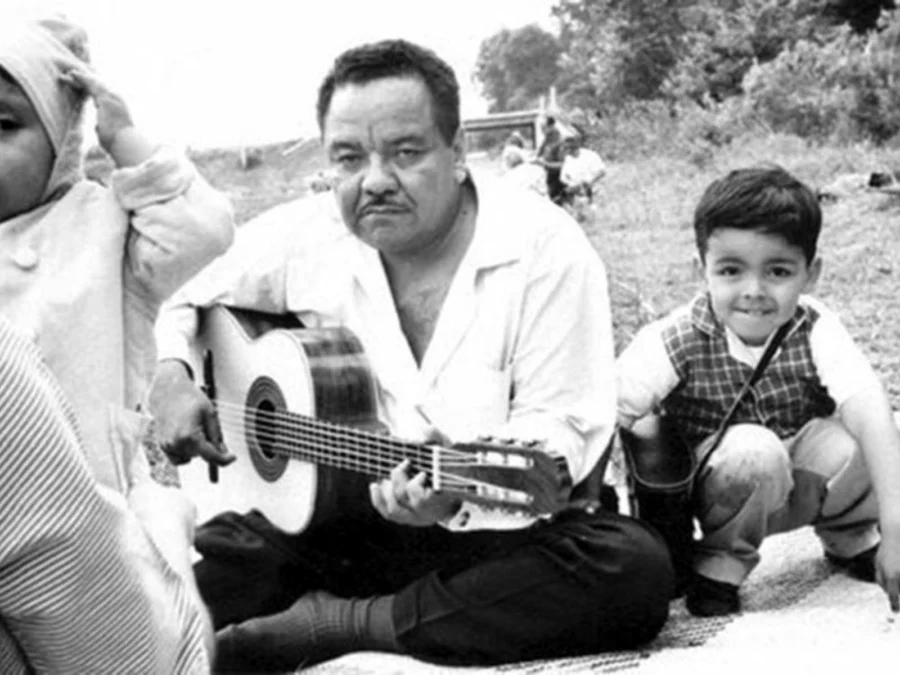
by Mexico Desconocido
Get to know the story of Sabor a mí, the most romantic bolero in the world and the life of Álvaro Carrillo, the most romantic Oaxacan singer-songwriter in Mexico
Sabor a mí is the most famous song by composer Álvaro Carrillo and probably the most romantic bolero in the world, as it has been performed to date by internationally renowned artists. Learn about the history of this immortal piece and details that you did not know about the life of the famous Mexican singer-songwriter.
Álvaro Genaro Carrillo Alarcón was born in Cacahuatepec, Oaxaca, on December 2, 1919 and among his more than 300 songs, the most famous is Sabor a mí (1959), probably the most romantic Mexican bolero that exists.
Álvaro Carrillo was an agricultural engineer and practiced his profession for a time. However, his passion for music and composition were present in his life from an early age; so he could never resist leading a bohemian life.
By chance and victim of the leftovers of the Mexican Revolution, “El Maestro” (as Carrillo was known) had a life full of glories and events that led him down the path of musical success beyond borders.
Álvaro Carrillo: A Romantic Oaxacan Composer
Humility and infinite creativity when composing songs were characteristic aspects of maestro Álvaro Carrillo; whose romanticism and talent gave him a more than deserved place among the most famous singer-songwriters in Mexico.
He was the son of José María Carrillo Jiménez (originally from Cacahuatepec) and Candelaria Morales de Carrillo (from Juchitán, Oaxaca).
Álvaro and his brothers: Seledoneo, Porfirio and Rosa María, lost his mother when they were very young, being adopted by his father’s second wife; Teodora Alarcón, from whom they took their second surname because of the affection with which she received them and grew up.
After studying primary school in Cacahuatepec, he entered the San Pedro Amuzgos Indigenous Agricultural Boarding School in Oaxaca, around 1935, which was closed due to the process of land distribution that the country was going through.
During this stage of his life; Álvaro Carrillo spent his time at popular festivals playing and learning about the different coastal sounds such as Chilean, boleros and rancheras.
Later, the government ordered that the laggards of the San Pedro Amuzgos Indigenous Agricultural Boarding School rejoin their studies at the Ayotzinapa Boarding School, in Guerrero.
During his youth, his romantic character and musical talent were the perfect formula for songs like Celia, inspired by a girl he had fallen in love with; or La Amuzgueñita, a song he made at the request of a friend of his, dedicated especially to his girlfriend.
The stories about Álvaro Carrillo’s early days tell that he came to help his schoolmates by serenading the girls they wanted, with a special song written by Carrillo; that he changed his name according to the lady they went to visit.
Around 1940, he entered the National School of Agriculture in Chapingo, which at that time had a militarized regime; so Carrillo always had serious problems, because he constantly ran away to play.
According to the story, his passion for composing songs and making music caused him to drop out of school and miss 1 year. It is said that the director of the school convinced him and that is how he managed to finish his degree in Agricultural Engineering in 1945.
At the end of his degree, he left as a legacy the song “La Llorona Chapinguera” (Adaptation he made of the lyrics of a popular song from the Isthmus of Tehuantepec) and “Adiós Chapingo”, considered a hymn by said institution.
Álvaro Carrillo abandons his career and dedicates himself to music
Carrillo worked as an agricultural engineer at the National Corn Commission, a time when he celebrated a great friendship with the Los Duendes trio, who recorded his song “Amor mío”; whose great success was the reason why the composer would leave his work to dedicate himself to music completely.
Great songs like Songbook, God will know and Sabor a mí are just some of the great successes of the maestro; that he came to dominate genres such as the pasodoble, the chilena, the bambuco, the ranchera, the bolero and many others.
Among the artists who came to collaborate with him are Los Duendes, Los Ases, Los Panchos, Gloria Estefan, Frank Sinatra, José José, Luis Miguel, Rocio Dúrcal, Eydie Gorme, Vicente Fernández and endless great voices around the world.
Among the amusing stories that are told about Maestro Carrillo, a very famous one was the time that a guerrilla who studied at the same school as him, sent for him to go and sing to the barracks; to which the virtuoso accepted and spent a week with his school friend, taking home a rifle and a machete as a gift.
Another legend tells that one day Carrillo was at the post office and when he bought a stamp he asked “How long are you going to be a lady?” to which the dispatcher replied “Miss, please” and the teacher said “God knows.”
All those who knew him at some point and heard the story confirm that it most certainly happened that way, since Álvaro Carrillo was well known for finding inspiration almost anywhere and in the least expected situations.
One more story tells that one day President Adolfo López Mateos sent for him to hear him sing. At the end of their meeting, the anecdote tells that the president gave him a blank check and asked him how much he wanted to put on it; to which the singer-songwriter, always humble, replied: I don’t know, whatever you want, I shouldn’t abuse.
In more recent times, figures such as the Mexican Natalia Lafourcade or the North American Kali Uchis have interpreted the songs of the master
Sabor a mí, the story of the most romantic bolero in the world
Sabor a mí is Álvaro Carillo’s best-known song and has been performed over the years by artists from all over the world. It was registered on July 11, 1958.
The piece was popularized internationally by the Los Panchos trio in the company of the extremely talented Eydie Gormé in 1959.
On one occasion, the Japanese singer Yoshiro Hiroishi (who came to record his version officially) visited Mexico City and as a sign of respect and affection for the work of the Oaxacan composer; he tracked him down at the venue where he was performing, dressed in traditional Japanese clothing, and sang Taste of Me for his author.
The story of how Sabor a mí was born tells that in December 1957, Álvaro Carrillo was engaged to Ana María Incháustegui and they met at a candlelight evening.
The artist drank cognac and kissed her beloved, while she, after a while, demanded that he stop drinking so much; saying that from so much drinking and kissing her and he was getting her drunk and with the taste of liquor on her lips.
It is here that Carrillo responded:
What you carry in your mouth is not the taste of liquor, it is the taste of me.
Both, poets in the soul and accomplices in art, knew instantly that that phrase and that moment would be the inspiration for a song. But they never imagined that Sabor a mí would become the most romantic bolero of all time, born from a kiss of love and liquor.
Teacher Álvaro Carrillo tragically passed away on April 3, 1969, when he was returning from the inauguration of the governor of the State of Guerrero. On the Mexico-Cuernavaca highway, the artist, his wife and his driver lost their lives after a car accident in which two of his children were unharmed.