by Marvin Ramírez
San Francisco’s parking crisis has moved from downtown into the heart of our neighborhoods. In residential areas across the city, formerly available curb space is disappearing under freshly painted red and white zones—often justified with vague “safety” or “emergency access” arguments that lack public explanation or measurable justification.
Residents who once relied on street parking outside their homes now circle their blocks for up to 40 minutes. In many cases, curbside space has been restricted for hypothetical scenarios that never materialize—like an ambulance that might need to park there someday, even when there’s no history of emergencies on that street.
These decisions feel arbitrary and top-down, and they’re creating real hardship for working families, seniors, and renters who don’t have private garages.
The San Francisco Municipal Transportation Agency (SFMTA), already facing a projected $322 million budget deficit by 2026, has eliminated thousands of curbside spots across the city. Though this is often framed as a move toward sustainability or public safety, the truth is messier. In residential zones especially, red and white zones now dominate curb space—without community input, data transparency, or clear benefit.
To make matters worse, while parking spots vanish, the city keeps raising fees. Street-cleaning tickets are up 5 percent, and residential parking permits are set to rise to $215 per car by 2025. These increases are sold as minor adjustments, yet they disproportionately hit low- and middle-income residents—especially those who have no choice but to drive because they live in transit deserts or work odd hours.
City officials continue to use “safety” as a blanket excuse for parking restrictions, but data often fails to support their claims. For example, Ocean Beach will soon lose 90 free parking spaces in the name of park access—despite no history of fatalities there. Similar logic is being used in quiet residential blocks where emergency response times haven’t changed in decades. Why take away a family’s only realistic parking option based on a hypothetical?
In response to this creeping curb seizure, some citizens are considering the ballot initiative process. The idea is simple: draft a measure to restore parking in residential areas where no evidence of danger exists, collect the required 10,000 signatures, and place the issue on the 2026 ballot. The goal isn’t to halt all changes, but to bring balance, transparency, and public accountability to the curb management process—especially in neighborhoods where people live, raise families, and grow old.
This initiative would empower voters to challenge bureaucratic overreach and prevent the quiet erosion of one of the few public goods that still serve everyday San Franciscans: residential street parking.
Community organizations—neighborhood councils, religious groups, senior associations, youth sports clubs—can and should get involved. So should small businesses and delivery workers who also depend on predictable curbside access. Even rideshare drivers suffer from these new restrictions, now forced to stop in the middle of the street where white zones once gave them safe, legal loading areas.
The media, including this newspaper, must help reframe the debate. This is not about cars versus bikes. It’s about the right to live in a city that listens to its residents, uses data to justify changes, and values basic daily functions—like parking near your home or unloading groceries—just as much as it values visionary urban design.
There are smart, modern solutions that don’t pit one group against another: shared-use curb zones that function differently by time of day, or residential permits that offer priority in high-impact areas. European cities like Paris and Amsterdam are pioneering these approaches. Why not San Francisco?
Meanwhile, SFMTA’s plans to convert many two-hour zones into “pay or permit” areas won’t solve anything. They simply extract more money from residents while offering no guarantee of available parking. It feels less like policy and more like punishment.
A successful initiative would establish a few key principles:
- Restore residential parking where there’s no record of safety hazards.
- Require public hearings and data before eliminating more consecutive spaces.
- Make city audits on curb policy public and easy to understand.
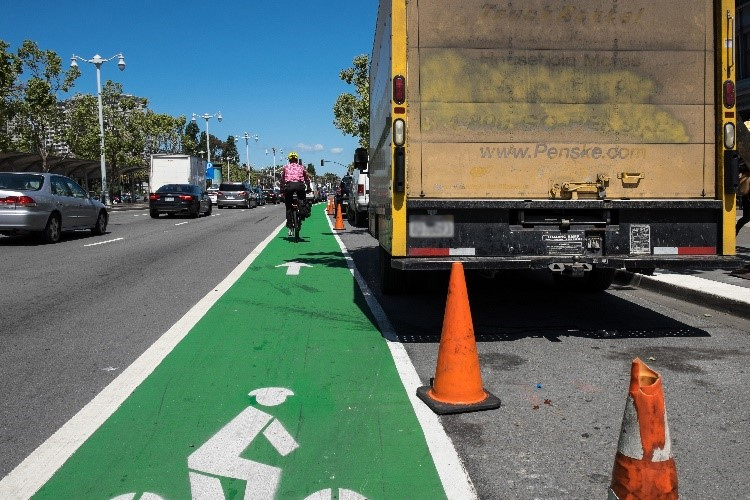
This wouldn’t stop the creation of safe bike lanes or improved transit—but it would restore fairness and transparency to the way the city manages its residential curb space.
A livable city works for everyone. If San Francisco wants to lead on climate, it must also lead on equity. That means ensuring working people, seniors, and families can still park near their homes—without being priced out or pushed aside in the name of abstract policy goals.
It’s time to get informed, get involved, and reclaim the curb. When someone offers you a petition on your street corner—sign it. You’re not just fighting for parking. You’re voting for common sense, transparency, and the right to live with dignity in your own neighborhood.