by Marvin Ramírez
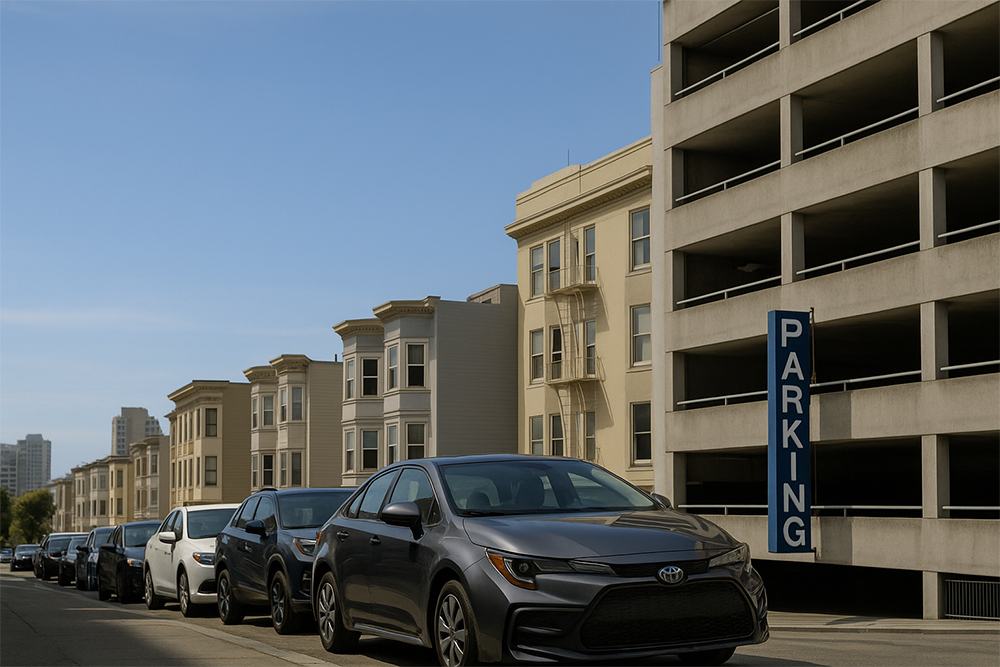
In neighborhoods where Latino families and small businesses coexist, parking is not a convenience—it is a lifeline. Yet, over the past several years, our city has systematically removed hundreds of parking spaces, replacing them with red zones, yellow zones, and other restrictive markings. Officials have offered countless justifications—safety here, traffic flow there—but when pressed for statistics or data to support these claims, they have none to show. This is not a matter of speculation; it is a matter of lived experience for residents, business owners, and patrons who rely on accessible parking every day.
Despite numerous editorials and community voices raising the alarm, very little has changed. Last month, after one of my editorials hit the press, the president of the Chamber of Commerce, Carlos Solórzano, reached out to Marcos Gutiérrez, the radio director, which led to a long and thorough interview. I emphasized during that discussion that this conversation should not stop at publicity—it must lead to concrete action. Yet, the reality is frustrating: city leaders and politicians rarely act, even when clear solutions are presented.
Why is this the case? Could it be that political leaders are influenced, directly or indirectly, by interests that prefer parking restrictions to remain in place? Are they prioritizing revenue from fines over the needs of citizens and local businesses? Whatever the reason, the result is undeniable: neighborhoods lose essential parking, small businesses lose customers, and residents—especially those who live near commercial areas—lose the convenience and quality of life they once had.
In past elections, parking was a central campaign issue. Candidates would debate solutions, propose public parking projects, and even combine parking with affordable housing developments. A prime example is the public parking lot built at 21st Street and Bartlett, which included affordable housing above. That project, to this day, stands as one of the most beneficial constructions in the area. Yet, after that, the focus shifted dramatically. The prevailing political narrative became the reduction of car use, without acknowledging the reality: we live in a country where cars are essential for daily life. Public transportation, while useful for some, cannot fully support the mobility needs of most residents, nor can it replace the convenience of accessible parking for local commerce.
Meanwhile, citizens face another harsh consequence: fines. As parking spaces vanish and restrictions multiply, people are hit with high tickets—penalties that sometimes force families to make impossible choices just to pay them. These fines disproportionately affect residents who rely on cars for work, school, or shopping. While the city touts safety and modern planning, the human cost remains invisible to those making the policies.
It is time for citizens to recognize the power they truly hold. The solution is not to passively hope for better leadership—it is to demand it, and to insist that parking policies and other critical community issues be placed directly on the ballot. Only through direct voter involvement can we hold politicians accountable for decisions that materially impact our neighborhoods. We must push for measures that protect existing parking, prioritize access for local businesses, and respect the needs of residents.
The message is clear: change will not come on its own. It will not come from editorials alone, radio interviews, or polite letters to city hall. Change will come only when the community acts collectively, united in purpose, and unwilling to accept inaction from those who claim to represent us. Political campaigns should once again be judged on how they plan to address the needs of their constituents—not on empty rhetoric about safety or urban planning devoid of real-world evidence.
Parking is more than a space for a car—it is a symbol of accessibility, opportunity, and fairness. It affects commerce, community life, and the well-being of residents. If citizens do not take responsibility and push for meaningful reforms, we will continue to lose not just parking spaces, but control over the quality of life in our neighborhoods. It is time to act, to demand accountability, and to ensure that our voices shape the future of our city—not the other way around.
We cannot afford to wait any longer. Let us channel frustration into action, insist on placing essential measures on the ballot, and force our leaders to act in the public interest. Our neighborhoods, our businesses, and our families depend on it.