by Suzanne Potter
California News Services
The ongoing teacher shortage continues to affect California schools, particularly in the arts, where many districts are struggling to hire qualified instructors even though new state funding is available through Proposition 28. As a result, community-based nonprofits are stepping in to ensure students still have access to arts education.
Approved by voters in 2022, Proposition 28 dedicates roughly $1 billion annually to arts and music education across the state, with the goal of hiring more teachers in dance, media arts, music, theater, and visual arts. Schools can also allocate up to 20% of those funds to supplemental programs provided by community arts organizations.
Elda Pineda, deputy director of the nonprofit P.S. ARTS—which currently serves more than 33,000 students at 102 schools throughout southern and central California—said the funding is crucial but noted that the lack of credentialed arts teachers remains a serious challenge.
“Not having the amount of credentialed teachers needed to take these jobs is an obstacle,” Pineda explained. “But there are ways to think outside of the box in order to get teachers into the schools so kids can get arts programming right away.”
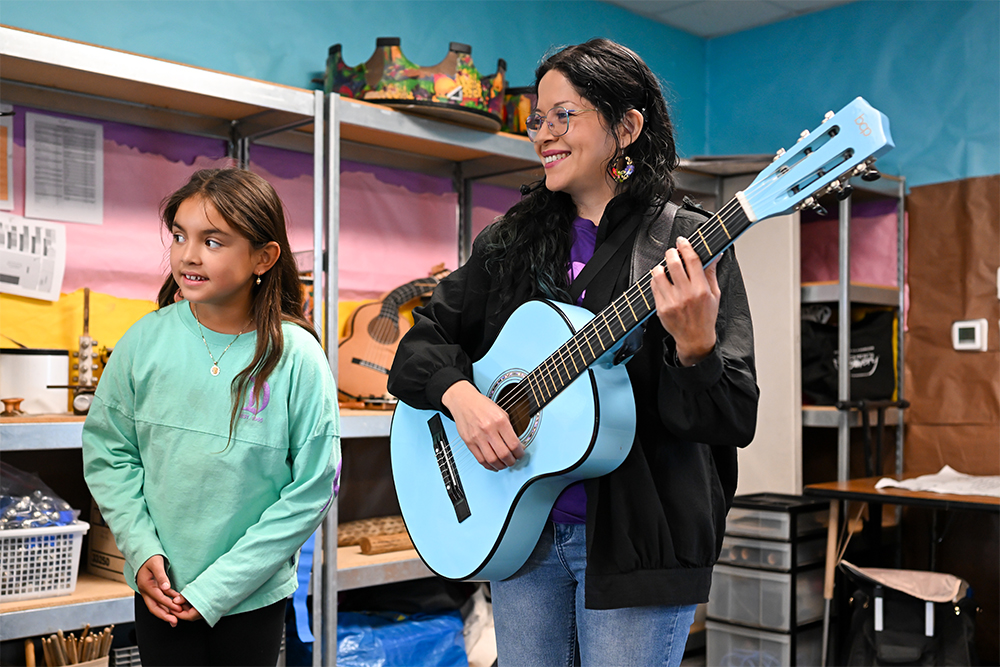
To bridge the gap, schools may apply for waivers if they cannot find a credentialed arts teacher. Organizations like P.S. ARTS train working artists—many of them professionals in their fields—to deliver in-class instruction during the school day or to lead after-school arts programs. The nonprofit also uses grants and partnerships to help subsidize these services in under-resourced districts, ensuring equitable access for all students.
Gilda Davidian, associate director of communications for P.S. ARTS, emphasized that in-person arts education plays an essential role in combating the social isolation many students experience today.
“It’s not just training in drawing or theater,” Davidian said. “This is about learning through all kinds of creative processes, connecting with others, and developing the confidence to express yourself.”
As California works to rebuild its arts education workforce, community partnerships like these are proving vital to keeping creativity alive in classrooms across the state.