por Marvin Ramírez
Baseball, Nicaragua’s national sport, is once again placing the country on the international stage. The World Baseball Softball Confederation (WBSC) has officially announced that Nicaragua will host the 2026 U-23 Baseball World Cup. The decision was made by the WBSC Executive Committee, which awarded the hosting rights to the Nicaraguan Baseball and Softball Association (ANBS), the newly unified national federation.
This will be the first WBSC U-23 event held in Nicaragua, although the country has previously hosted the Baseball World Cup in 1948, 1950, 1972, 1973, and 1994. The selection represents a major achievement for national sports and a chance to showcase Nicaragua’s rich baseball legacy to the world.
A national passion
Baseball in Nicaragua is more than a sport—it’s a deeply rooted national passion. Introduced in the late 19th century, it spread quickly and became widely popular. The first professional league emerged in the 1950s, and in 2004, the Nicaraguan Professional Baseball League (LBPN) was founded, elevating the level of competition.
The country has produced legendary players who’ve made their mark both locally and internationally. Among them are MLB pitcher Dennis Martínez—whose name adorns the national stadium in Managua—as well as Marvin Bernard and David Green, who helped establish Nicaragua’s reputation as a land of baseball talent.
A rising national team
The announcement comes at a moment of momentum for Nicaraguan baseball. In the 2024 U-23 Baseball World Cup, held in Shaoxing, China, the national team won a historic bronze medal after defeating the host nation. It was Nicaragua’s first medal in the U-23 category since the tournament’s creation in 2014.
In that edition, Japan took gold and Puerto Rico silver. Nicaragua completed the podium, confirming the nation’s growing prominence in youth international baseball.
Venues and organizational readiness
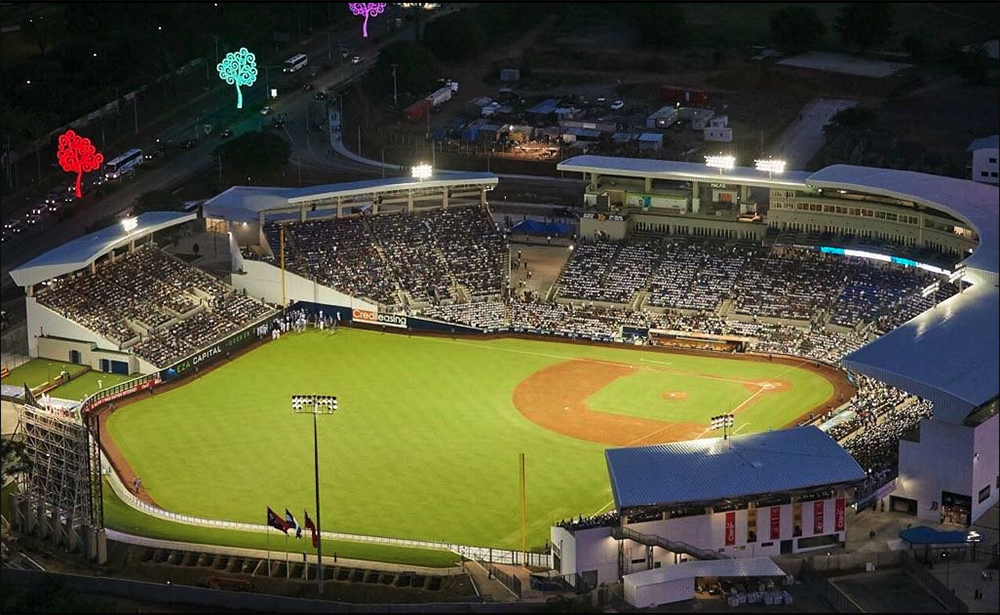
The bid presented by the ANBS to the WBSC included three stadiums ready to host international competition: the National Stadium “Soberanía” in Managua (15,000 seats), the new Roberto Clemente Stadium in Masaya (4,000 seats), and the Rigoberto López Pérez Stadium in León (6,300 seats). These venues will allow games to be spread across cities, ensuring high-quality facilities and broader national engagement.
Honoring a rich baseball history
Evelio Evaristo Gómez, a Nicaraguan baseball scout based in San Francisco, welcomed the news with pride and historical perspective:
“This is something epic and a source of great pride for Nicaragua to host such an important event. The country has high-quality stadiums where teams will feel safe and comfortable,” he said.
Gómez added, “Let’s go back before the 1940s and remember legendary center fielder Stanley Cayasso. Then came the powerful utility hitter Duncan Campbell, who signed with the Pittsburgh Pirates and—had he not died—would’ve been the first Nicaraguan in the Major Leagues. In the 1960s, we had the great pitcher René ‘El Ñato’ Paredes, who won the Triple Crown in 1965. Then in the 1970s, we saw a generation of stars who famously defeated Cuba in the Baseball World Cup—players like Julio Juárez, Vicente López, Calixto Vargas, and César ‘La Maravilla’ Jarquín.”
He emphasized that this new opportunity is “a recognition of a forgotten history now brought back into the spotlight.”
A tournament of global prestige
The WBSC U-23 Baseball World Cup has become one of the premier global tournaments for rising professional talent. Since transitioning from U-21 to U-23 in 2016, it has grown in prestige and is held every two years. The 2026 edition will be the seventh overall and the fourth hosted in the Americas, following Mexico (2016 and 2020) and Colombia (2018).
The tournament serves as a launchpad for young players aiming to reach professional leagues. Hosting such a competition in Nicaragua presents a unique chance for local talent to shine on a global platform.
Unified federation: A key factor
The recent establishment of the Nicaraguan Baseball and Softball Association (ANBS) was crucial to securing the WBSC’s approval. This new unified governing body replaces older entities and provides a more stable foundation for the sport’s development.
The ANBS demonstrated effective planning and long-term vision. Its strong technical proposal, institutional support, and public enthusiasm played a major role in the WBSC’s decision.
Economic and social impact
Beyond the playing field, the U-23 World Cup is expected to boost the local economy, particularly in tourism, hospitality, commerce, and transportation. The arrival of international delegations, media, and fans will provide economic stimulus to the host cities.
Socially, the tournament will inspire a new generation of Nicaraguan athletes. Seeing world-class baseball up close may encourage hundreds of young people to take up the sport and foster healthier lifestyles.
A future-forward vision
This announcement confirms Nicaragua’s rising status in the international baseball community. With a bronze medal in 2024, upgraded stadiums, and a unified federation, the country is poised for greater achievements.
The 2026 WBSC U-23 Baseball World Cup will be more than just a tournament—it will be a celebration of national talent and pride. Baseball, once again, becomes a symbol of hope and greatness for the entire nation.
– With reports provided by independent sources.