by El Reportero‘s wire services
Thousands of undocumented immigrants are being deported from the United States to Latin America in a wave of enforcement actions that experts say is harming both the U.S. economy and straining social systems in recipient countries.
Since January 2025, both the Biden and Trump camps—under bipartisan pressure to “restore border security”—have escalated removal flights, many operated by military aircraft. Ecuador’s Foreign Ministry reports 1,828 citizens repatriated between January and March aboard 18 flights. Mexico, by mid-February, had received 13,455 deportees, including nearly 3,000 from other nations.
Guatemala, Panama, and Venezuela have also received deportees, often under pressure. “We have tools—economic and political—to ensure compliance,” a senior U.S. official said, referencing threats of tariffs and canal fees aimed at Panama and Costa Rica.
In Colombia, deportation flights triggered a diplomatic standoff. President Gustavo Petro rejected flights lacking due process. Washington retaliated with visa sanctions and suspended agricultural import waivers, leading to a compromise.
Essential workers abruptly removed
In the U.S., businesses report losing key workers in agriculture, construction, eldercare, food service, and manufacturing—industries long dependent on immigrant labor.
“Undocumented workers are the backbone of our supply chain,” said a spokesperson for a coalition of meatpacking and farming firms. “Without them, the system collapses.”
Undocumented immigrants make up nearly half of the U.S. agricultural workforce. The Los Angeles Times noted, “If the dairy industry lost its immigrant workforce, the cost of a gallon of milk would double.”
Construction—where up to 25 percent of the workforce may be undocumented—faces labor shortages that could worsen the housing crisis. Arizona’s previous crackdown caused a 2 percent drop in state GDP.
In Seattle, restaurateur Eric Tanaka said: “We’re fully dependent on our immigrant coworkers… There’s no way we could do what we do without them.”
Eldercare is also impacted. “Immigrants… are much more likely to work in the types of jobs where we’re seeing prices go up,” said Chloe East of the National Bureau of Economic Research.
Economic ripples
The Peterson Institute for International Economics estimates that deporting 1.3 million undocumented immigrants could shrink GDP by up to 1.5 percent within three years. Moody’s Analytics predicts a possible GDP hit between 2.6 percent and 6.2 percent.
Labor shortages, already worsened by an aging U.S. population, are now compounded by stepped-up enforcement. Many small businesses—particularly in Latino communities—report closures or reduced hours due to lack of staff.
“There’s going to be supply chain issues. There’s going to be increases in prices, decreases in services,” said David J. Bier, an analyst at the Cato Institute.
Tax contributions are also at stake. In 2022, undocumented immigrants paid $59.4 billion in federal taxes and $13.6 billion to state and local governments. They also contributed more than $12 billion to Social Security and Medicare despite being ineligible for benefits.
According to Wired, over 40 U.S. companies, including firms in food and construction, warned in 2025 SEC filings that immigration enforcement poses serious operational and financial risks.
Strain on Latin America
Latin American countries receiving deportees face rising economic and social pressures. In El Salvador, 137 Venezuelan migrants were recently jailed under emergency laws—despite most having no criminal records.
“These are not criminals—they’re victims of political bargaining,” said a Salvadoran human rights attorney. “They’re held in maximum-security jails with no trial.”
Caribbean nations including Jamaica, St. Lucia, and St. Vincent have called for slower deportations and more financial aid. Many health systems, housing agencies, and schools lack the capacity to absorb the influx.
Remittances—a key economic pillar in many Latin American nations—are in jeopardy. The World Bank warns that even a 10 percent drop could plunge thousands of families into poverty.
In Panama and Costa Rica, deportation flights are delivering non-citizen deportees—including Haitians and Venezuelans—to remote detention centers. These “proxy deportations,” facilitated by U.S. agreements, have drawn criticism.
Policy at a crossroads
Despite the surge in deportations, industry leaders and economists are urging lawmakers to adopt a more balanced approach. Several groups have proposed targeted legalization for long-term workers in essential sectors.
The National Restaurant Association and American Farm Bureau Federation have sent letters to Congress advocating for temporary work permits for undocumented workers. Without such measures, they warn, inflation will rise and businesses will close.
A 2024 Gallup poll found that 72 percent of Americans support legal status for undocumented immigrants who have been in the U.S. more than five years and have no criminal record.
So far, lawmakers have focused on enforcement.
“Deportation policy is being used as a tool of political theater,” said immigration law professor María Cristina García. “But the real costs—economic and human—are becoming impossible to ignore.”
Human toll and global implications
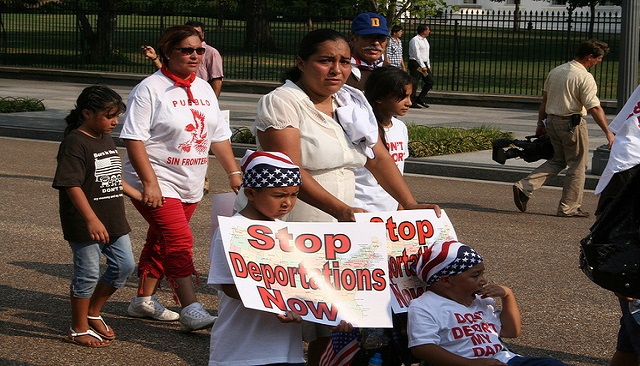
Beyond economics, the deportation wave is tearing apart families and destabilizing communities. From California farms to Central American villages, the effects are felt on both ends of the journey.
While immigration remains politically divisive in the U.S., the consequences of deporting those who quietly sustain major industries are increasingly visible.
As the U.S. enforces stricter immigration control, one question grows louder: Can the economy afford the cost?
With reports from The Washington Post, Wired, El Espectador, Human Rights Watch, and the Los Angeles Times.