by Marvin Ramírez and the El Reportero‘s staff
Leandro “Gato” Barbieri, the Argentine saxophonist whose raw, passionate playing style helped shape Latin jazz and whose music touched audiences across continents, died on April 2, 2016, in New York City. He was 83.
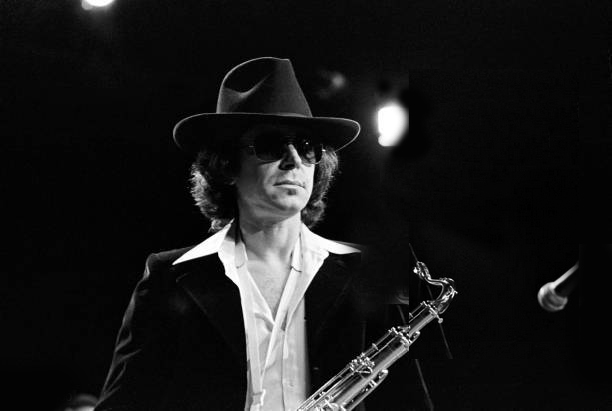
Barbieri’s death was confirmed by his wife, Laura, who said the cause was pneumonia. With his trademark wide-brimmed hat, dark sunglasses, and blazing tenor saxophone, Barbieri forged a singular sound that fused jazz, tango, Latin American folk rhythms, and political urgency into something entirely his own.
Born on November 28, 1932, in Rosario, Argentina, Barbieri grew up immersed in the tango music of his homeland. Inspired by Charlie Parker, he picked up the clarinet and later the saxophone, eventually moving to Buenos Aires and then to Europe, where he worked with jazz luminaries like Don Cherry and Carla Bley.
His breakout came in the 1960s and early 1970s, when his powerful, avant-garde playing caught the attention of the international jazz scene. But it was his score for Bernardo Bertolucci’s 1972 film Last Tango in Paris that brought him to mainstream fame. The haunting, sensual soundtrack earned him a Grammy Award and established him as a leading voice in the emerging genre of Latin jazz.
In the years that followed, Barbieri released a string of influential albums, including Chapter One: Latin America and Caliente!, blending traditional South American sounds with jazz improvisation and funk rhythms. His music resonated deeply during times of political upheaval across Latin America, offering both solace and resistance through sonic expression.
“Music is the soul of a country,” Barbieri once said. “When you play the music of your people, you’re telling their story.”
Barbieri’s style was known for its emotional intensity—each note seemed to cry out with yearning, defiance, or celebration. Whether playing in small clubs or large festivals, he captivated audiences with a blend of romanticism and fire rarely seen in jazz performers.
The shock of his passing still ripples through the global jazz community, including musicians in the Bay Area who grew up studying his records. “It pains me deeply to hear of his passing. For us saxophonists, Gato is a great example to have—to follow in his footsteps, to try, even though it’s unreachable. He was a beast of a beast, that kind of musician. A tremendous musician of the old school. We are of death—may God have him in His holy glory,” said Nicaraguan saxophonist and San Francisco resident Julio César Molina.

Another Nicaraguan saxophonist from the Bay Area, Mario Vega, who has spent over 50 years behind the saxophone, said he grew up listening to Barbieri’s music.
“The sound he had—not unique, but very expressive. A strong sound. Nothing ordinary,” Vega told El Reportero. “His way of expressing himself influenced how I play.”
Vega noted that Barbieri had the rare gift of sonic identity. “It’s hard to match. A sound that, when you heard it, you instantly knew who was playing. That’s something every musician wants—to be recognized by their sound. I wish people would recognize me that way.”
Vega, who saw Barbieri perform live several times, also recalled the powerful impact of Barbieri’s collaborations. “When he worked with Santana, the impact was huge. And when he played, he surrounded himself with musicians who gave him the perfect foundation to improvise.” Reflecting on Barbieri’s passing, Vega added, “It’s a big loss. That’s life—some come, and others go.”

In later years, Barbieri continued to tour and record, even after undergoing heart surgery in the late 1990s. He was a familiar figure in New York’s jazz scene and was honored with a Latin Grammy Lifetime Achievement Award in 2015, just one year before his passing.He is survived by his wife Laura and his son, Christian.
Barbieri’s music, like the feline nickname he carried all his life, was agile, fierce, and untamed. His saxophone voice will echo for generations in the history of Latin jazz and beyond.
https://www.facebook.com/search/top?q=gato%20barbieri
With reporting from archival sources and jazz community tributes.