by the El Reportero staff
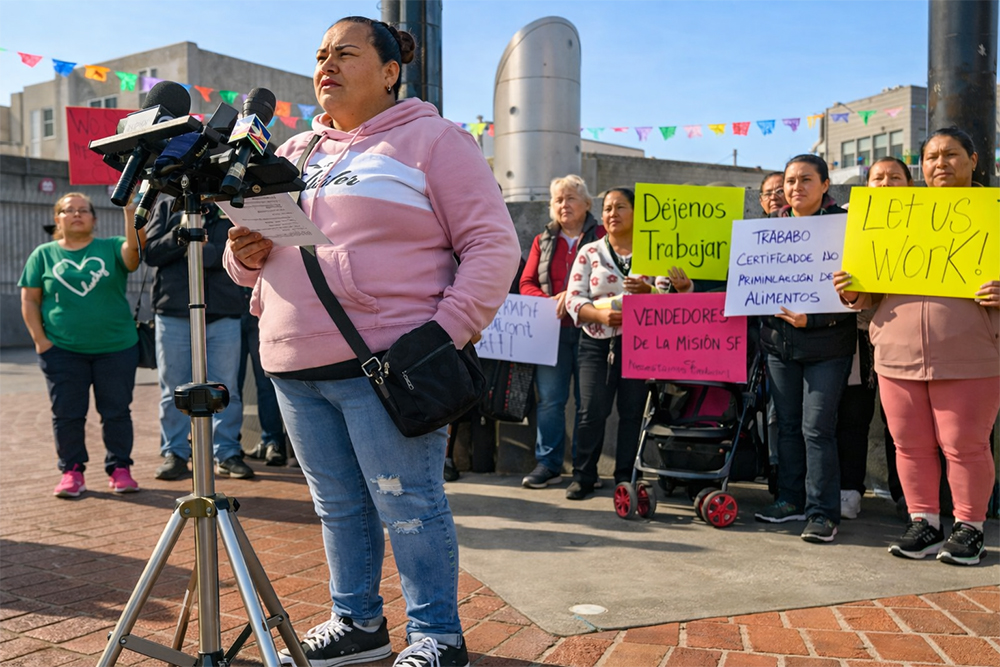
In recent days, street vendors in the Mission District and community activists have mobilized around Mission Street and 24th Street, as well as at city hall, to express their concerns about proposed regulations that—they say—could increase their operating costs and jeopardize their livelihoods. Organizations working with informal vendors have warned that new requirements for equipment, permits, and access to commercial kitchens would raise entry costs to levels difficult for small entrepreneurs to afford.
The vendors’ advocates point out that they are not opposed to regulation, but they are asking for realistic pathways and financial support that would allow them to formalize their businesses without being forced out of the market. They propose gradual schemes, accessible health and safety training, and micro-enterprise options that reduce economic barriers, especially for immigrant families who depend on these sales as their primary income.
However, Latino restaurant owners in the Mission and surrounding areas have expressed a different concern: the direct impact on their sales. “It’s not fair competition; they don’t pay rent or taxes like we do,” said a restaurant owner on the 24th Street commercial corridor, who asked not to be identified. Formal businesses say they comply with high rents, payroll, licenses, and strict health regulations, while watching street vendors attract customers in the immediate vicinity of their establishments.
This clash of interests has reignited a fundamental debate in the neighborhood: how to balance the vitality of street commerce with fair competition and public health standards. For some community leaders, the challenge is not to choose between vendors and restaurants, but to design rules that allow for coexistence: defined zones and hours, low-cost permits with a gradual transition to formality, and support programs so that street vendors can integrate into the regulated economy without disappearing.
City officials have indicated that any regulatory updates aim to protect public health and regulate the use of public space, but activists are demanding that decisions be made with the direct participation of those who depend on street vending for their livelihood. At the same time, restaurant owners are requesting consistent enforcement of the rules to avoid competitive disadvantages compared to businesses operating outside the formal framework.
While discussions continue, the issue remains sensitive in the Mission District, a neighborhood where street food is part of the cultural identity and livelihood of many families. The discussion aims to find a middle ground that preserves this tradition without jeopardizing established businesses or consumer safety.