by the El Reportero staff
Las Posadas is one of the most enduring and meaningful Christmas traditions in Latin America, blending faith, community, music, and cultural expression. Celebrated each year from December 16 through December 24, Las Posadas is a novenario—a nine-day devotion—that reenacts the biblical journey of Mary and Joseph as they searched for shelter in Bethlehem before the birth of Jesus. While its roots trace back to colonial Mexico, the celebration has spread throughout Latin America and continues to thrive among Hispanic and Latino communities in the United States.
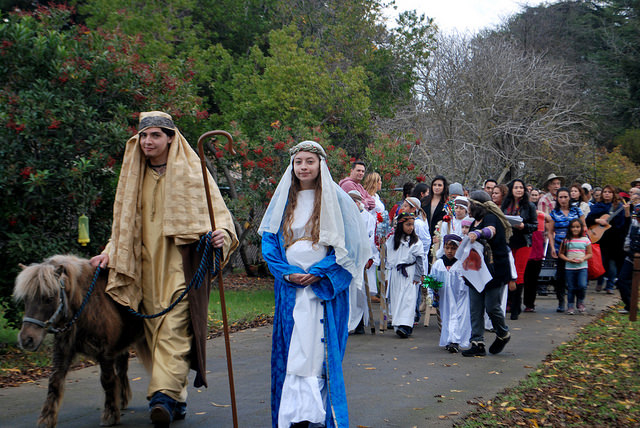
In Mexico, where Las Posadas originated in the 16th century, the celebration remains especially vibrant. Each evening, families and neighbors gather to form a procession, often led by children dressed as Mary and Joseph. Carrying candles, singing traditional verses, and sometimes accompanied by musicians, the group goes from house to house asking for lodging. The ritual call-and-response songs—where homeowners initially deny shelter before welcoming the travelers—are central to the experience. Once admitted, the night turns festive with prayers, food, warm drinks like atole or ponche, and the breaking of a colorful piñata.
In Central American countries such as Guatemala, Honduras, and El Salvador, Las Posadas share similar religious elements but incorporate local customs. In Guatemala, elaborate street processions may include images of the Virgin Mary, floral decorations, and fireworks. In El Salvador, the celebrations are often more intimate, centered around family homes and parish communities, with an emphasis on prayer, music, and traditional foods like tamales.
South American countries celebrate Las Posadas in more varied forms. In Colombia and Venezuela, the novena tradition is closely tied to the “Novena de Aguinaldos,” which includes nightly prayers, carols, and family gatherings rather than processions. In Peru and Ecuador, Catholic parishes often organize reenactments of the Nativity story, blending Las Posadas themes with local folklore, dances, and regional music.
Among Hispanic and Latino communities in the United States, Las Posadas has become both a religious observance and a cultural statement. Churches, community centers, and neighborhoods organize processions that reflect life in the diaspora, sometimes highlighting themes of migration, hospitality, and social justice. While the setting may differ, the essence remains the same: opening doors, sharing food, and strengthening community bonds.
Across Latin America and beyond, Las Posadas continues to evolve while preserving its core message—hospitality, faith, and togetherness—making it a powerful and living tradition during the Christmas season.