Saturday, September 5, 2026
Home Blog Page 440

Peru wins maritime dispute, but some relief for Chile

by the El Reportero’s wire services

Sebastian PiñeraSebastian Piñera

Peru registered a significant maritime victory over Chile on 27 January; a victory which proved elusive on the high seas during the War of the Pacific (1879-1883) but was achieved on terra firma in a courtroom at The Hague.

The International Court of Justice (ICJ) finally brought down the curtain on six years of legal conflict when it announced its verdict on the bilateral maritime dispute brought by Peru in 2008.

Both Chile’s President Sebastián Piñera and his Peruvian peer Ollanta Humala expressed their satisfaction with the ruling but the visual contrast between them was stark enough to conclude that Humala’s assessment that Peru had got 70 percent of what it had sought was accurate: it was a grave looking Piñera who read a public declaration from the La Moneda presidential palace in Santiago; a jubilant Humala who cavorted around with First Lady Nadine Heredia, cabinet ministers and congressional deputies, all smiles and hands aloft, in Lima. By Latin News.

CIA & DEA covert actions in Colombia and Mexico revealed

Two major reports published by newspapers in the US and Mexico have revealed details of covert U.S. operations in Colombia and Mexico — run by the Central Intelligence Agency (CIA) in the former and by the Drug Enforcement Administration (DEA) in the latter. In Colombia the CIA acted with the full knowledge of the government; in Mexico, apparently not. In the case of Colombia it has confirmed Ecuador’s suspicions about US involvement in the 2008 strike against a Fuerzas Armadas Revolucionarias de Colombia (Farc) camp in its territory; in that of Mexico it has added substance to repeated claims that the Sinaloa drug trafficking organisation (DTO) has enjoyed special treatment. Security & Strategic Review – January 2014 (ISSN 1741-4202). By Latin News.

Hague ruling leaves Humala without unity card

On 27 January, the International Court of Justice (ICJ) at The Hague issued a ruling largely in favour of Peru in a maritime dispute with Chile, filed by Peru in January 2008. The Lima government led by President Ollanta Humala hailed the ruling, claiming that it awarded “more than 70 percent of Peru’s demands”, giving it “some 50,000km2 of [additional territorial] waters”.

In the run-up to the ICJ decision President Humala had called for unity among the political establishment and there was widespread public enthusiasm for the ruling. The political gains for the unpopular president and his administration, however, may turn out to be quite meagre. By Latin News.

Central American Fair For Thoroughbred Horses concludes in Nicaragua

The Fifth Annual Central American Fair of Spanish Thoroughbred Horses has ended in the Nicaraguan city of Granada, 46 kilometers of the capital, after four days in which about 200 horses were shown off.

Delegations such as Costa Rica, Guatemala and Nicaragua, participated in the event held at the Cocibolca Jockey Club, and were satisfied at its conclusion by the performance of their horses, which won awards during the event.

According to various media, the award for the best show example was given to a Nicaraguan horse, while Costa Rica was awarded for young champion with best moves and Central American sub champion.

The award for the adult champion with best moves was given to a horse from Guatemala, along with the gold medal for the grand champion.

Nicaragua also won awards for champion colt, young champion and champion in functionality, reported the press’s citing sources of the Nicaraguan Association of Breeders of Spanish Thoroughbred Horses.

In recent statements, the general coordinator of the fair, Alberto Gallegos, said that the event would be attended by more than 43 horse breeders from Central America, Colombia, Ecuador, Mexico, the U.S. and Spain. By Prensa Latina.

spot_img

Chief of Police harrassed by feds, placed on leave after signing pledge to the Constitution

Sino Sheriff orders Shane Harger to disband entire police department due to “political affiliations”

by Paul Joseph Watson

A police chief was detained and harassed by federal agents while traveling to a constitutional convention before returning home to be told he was being placed on administrative leave and ordered to disband his police department after signing a pledge to uphold the bill of rights.

Police Chief Shane Harger of the Jemez Springs, NM Police Department was flying out of Albuquerque Airport last week on his way to a Constitutional Sheriffs and Peace Officers Association (CSPOA) convention taking place in Las Vegas. CSPOA is an organization headed up by Sheriff Richard Mack under which law enforcement officers gather to re-affirm their commitment to uphold and defend the Constitution.

Before passing security, Harger was approached by a TSA agent who asked the police chief to show his credentials. Moments later, a man claiming to be a “federal agent” also asked to see Harger’s credentials before telling him he was a “person of interest.” The federal agent then demanded to know where Harger was traveling to and why.

When Harger told the federal agent he was attending the Constitutional Sheriffs and Peace Officers Association Convention in Las Vegas, he was detained for 35 minutes before finally being allowed to board the airplane.

On Tuesday January 28, a day after his return, Harger was placed on administrative leave and ordered by Sandoval County, NM, Sheriff Douglas C. Wood to disband his entire police department due to his “political affiliations”.

What were his political affiliations? While attending the convention, Harger, along with 38 other police officers, signed a declaration affirming their pledge to “obey and observe” the U.S. Constitution, in addition to refusing to carry out unconstitutional orders such as gun confiscation without constitutionally compliant warrants, violations of the 4th amendment without probable cause, detainment or incarceration of citizens without probable cause, or working with the military for domestic law enforcement.

In other words, Harger was targeted for federal harassment and subsequently suspended for re-affirming his belief in the very Constitution he took an oath to uphold and protect in order to become a police officer in the first place.

“Despite having received a meritorious commendation from the Mayor of Jemez Springs on January 22, 2014, it seems that no one in the village government is willing to come to the assistance of Harger. It appears that Harger’s stance to defend and uphold the Constitution has put him and his entire department of ten part-time and volunteers out of business,” writes Vincent Finelli.

“I was at the convention and I never saw nor heard anyone say nor do anything that was a violation of any law. The CSPOA convention was an assembly of peace-loving Americans who just wanted to uphold their oath of office, that being to support and defend the US Constitution and Bill of Rights for all of us, We The People,” adds Finelli.

Harger’s treatment is yet another disturbing indication that the federal government, in addition to law enforcement authorities, view Americans who support the bill of rights as domestic extremists. Harger’s position as Chief of Police also shows that they are desperate to prevent citizens who identify as constitutionalists, tea partiers or libertarians from holding any position of influence within law enforcement or society in general.

Harger’s potential dismissal for his patriotic and constitutional “political affiliations” is a chilling reminder that such positions are not only not welcomed but actively discriminated against by the federal government.

Paul Joseph Watson is the editor and writer for Infowars.com and PrisonPlanet.com. He is the author of Order Out Of Chaos. Watson is also a host for Infowars Nightly News.

In other news:

NFL: Microcosm of the Corporate Class Billions stolen from tax payers

by Kurt Nimmo
Infowars.com

Alexis García has produced a video for Reason.tv showing how an NFL franchise is not a good idea, especially for cash-strapped cities.

“The NFL is good at fleecing taxpayers,” ESPN columnist Gregg Easterbrook and the author of The King of Sports: Football’s Impact on America told Garcia. “It’s about a billion dollars a year I’ve calculated in public subsidies to NFL owners and this is a group that consists almost entirely of billionaires and yet receiving significant public subsidies every year.”

The organization closely resembles the corporate class sucking the life-blood out of America. Like banksters and transnational companies, it depends of corporate socialism. It buys politicians who agree to use tax dollars to subsidize operations and build lavish stadiums. It is owned by billionaires. (See an interactive Muckety map here.)

“Judith Grant Long, a Harvard University professor of urban planning, calculates that league-wide, 70 percent of the capital cost of NFL stadiums has been provided by taxpayers, not NFL owners. Many cities, counties, and states also pay the stadiums’ ongoing costs, by providing power, sewer services, other infrastructure, and stadium improvements,” Easterbook writes.

The NFL does not pay a dime in taxes. The IRS says it is a 501(c)(6) tax-exempt organization. Like the Rockefellers and the elite, the NFL exploits the tax code to avoid paying taxes the rest of us pay at gunpoint.

But the NFL is hardly run like a charity on a shoestring with a volunteer staff.

“Goodell’s taking some $30 million from an enterprise made more profitable because it hides behind its tax-exempt status does not seem materially different from, say, the Fannie Mae CEO’s taking a gigantic bonus while taxpayers were bailing out his company,” writes Easterbrook.

In September, Oklahoma Republican Senator Tom Coburn introduced legislation to put an end to the NFL’s tax exemption.

Coburn’s bill, however, is not a sure deal.

spot_img

Studies show that spirulina can help prevent cancer, boost brain

by Michael Ravensthorpe

Spirulina is a type of green algae that grows in fresh water bodies. It is a survivor plant which, unlike most flora, is able to withstand considerable temperature variations and still thrive. It is cultivated worldwide and has been harvested as a food source for thousands of years.

According to David Wolfe, author of the book, Superfoods: The Food and Medicine of the Future, spirulina is one of the most nutritious foods in the world. In fact, it has become synonymous with the “superfood” label. This article contains an overview of spirulina’s health benefits and the studies that confirm them.

Research into spirulina

Rich in nutrients – Spirulina’s biggest attraction is its incomparable levels of nutrients. According to spectral analysis provided by Self’s “NutritionData,” a 28 gram (1 ounce) serving of dried spirulina contains 44 percent of our RDI of iron, 32 percent of our RDI of protein, 60 percent of our RDI of riboflavin, 44 percent of our RDI of thiamin and a whopping 85 percent of our RDI of copper. The same serving size also contains smaller amounts of vitamins A, C, E and K, numerous other B-vitamins and trace minerals, and essential fatty acids. This astonishing nutritional profile makes spirulina a near-perfect food, lacking only in vitamin D.

Cancer prevention –

According to a 2004 study published in Biochemical Pharmacology, spirulina contains a protein, C-phycocyanin, that can significantly reduce the proliferation of cultured leukemia cells by causing the cells to undergo apoptosis (“cell death”). A later 2009 study published in the Cancer Science journal found that mice that were fed a spirulina extract had increased activity of natural killer cells (immune cells that kill cancer cells) than those fed the placebo. The researchers concluded that “NK activation by spirulina has some advantage in combinational use with BCG-cell wall skeleton for developing adjuvant-based antitumor immunotherapy.”

Antiviral properties

A 2005 study published in Current Pharmaceutical Biotechnology has shown that spirulina’s “high concentration of natural nutrients” can improve white blood cell activity and stimulate antibodies. These properties make spirulina an excellent guard against many serious viruses. “[Spirulina preparations] have been found to be active against several enveloped viruses including herpes virus, cytomegalovirus, influenza virus and HIV,” claim the researchers. “They […] inhibit carcinogenesis due to anti-oxidant properties that protect tissues and also reduce toxicity of liver, kidney and testes.”

Liver protection

Though consuming spirulina can boost the health of all our organs, research has shown that it is especially beneficial for our livers. An Indian-Malaysian study published in the December 2008 issue of International Journal of Integrative Biology, for instance, found that mice that were fed spirulina extracts experienced elevated liver enzymes, protecting them from liver damage. The researchers noted that spirulina’s antioxidant concentrations were responsible for this benefit.

Boosts brain function

A 2005 study published in the Journal of Experimental Neurology has demonstrated that a spirulina dose of 180 milligrams per kilogram of weight had the ability to reduce brain damage and aid the recovery of neurons in rats who had suffered strokes. The researchers acknowledged a connection between improved brain function and a “diet enriched in antioxidants and anti-inflammatory phytochemicals.”

spot_img

Surveillance net: “beyond anything that has ever existed previously

by Marvin Ramirez

Marvin J. RamirezMarvin Ramirez

NOTE FROM THE EDITOR: I found this article among an archive of stories that I have kept for the purpose of publishing it when the time was right. It was sent to El Reportero in May 2012, but it is so relevant to the present, that I decided to print it now.

by Eric Peters

After a certain point, it’s not paranoia

The latest brick in the wall is the predictably named “Moving Ahead For Progress in the 21st Century Act,” also known as Senate Bill 1813. (See here for the full text of the bill itself; the relevant section is 31406.) This legislation – already passed by the Senate and likely to be passed by the House – will impose a legal requirement that all new cars made beginning with the 2015 models be fitted with so-called Event Data Recorders (EDRs). These are the “black boxes” you may have read about that store data about how you drive – including whether you wear a seat belt and how fast you drive – ostensibly for purposes of post-accident investigation.

These EDRs are not new. GM and other automakers have been installing them in new cars for years – in GM’s case, since the late 1990s. What’s new is the proposed federal mandate, which would make it illegal to not have one – or (in all likelihood) to remove or disable one in a car required to have the device.

The question arises: why?

Several possibilities come to mind:

First, the EDRs could – and almost certainly will be – tied into your vehicle’s GPS. (Most new and late model cars, conveniently, already have this, too.) Then data about your driving can be transmitted – as well as recorded. To whom? Your insurance company, of course. Progressive Insurance already has such a system in place – voluntary, for the moment. (See here for more on that.)

When EDRs are mandated, you will no longer have a choice.

We’ll be told it’s all for the sake of (groan) “safety” – just like the old 55 MPH highway speed limit and every radar trap in the country. Of course, it’s really for the sake of revenue – the government’s and the insurance company’s. Your rates will be “adjusted” in real time, for every incident of “speeding” or not buckling up.

It’ll be so much more efficient than using cops to issue tickets. After all, so many fishes escape!

With an EDR in every car, no one will escape. Your “adjusted” premium will be waiting for you when you get home.

You’ve got mail!

And naturally, they – the government, insurance companies – will be able to track your every move, noting (and recording) where you’ve been and when. This will create a surveillance net beyond anything that ever existed previously. Some will not sweat this:

After all, if you’ve got nothing to hide, why worry? Except for the fact that, courtesy of almost everything we do being either “illegal” or at least “suspicious” we all have a great deal to hide. The naivety of the Don’t Worry, it’s No Big Deal crowd is breathtaking. Did the average Soviet citizen also “not have anything to hide,” and hence why worry?

But the last possibility is probably the creepiest possibility: EDRs tied into your car’s GPS will give them – the government and its corporate fuck buddies – literal physical control over (hack) “your” vehicle. This is not conspiracy theorizing. It is technological fact. Current GM vehicles equipped with the same technology about to be mandated for every vehicle can be disabled remotely. Just turned off. All the OnStar operator has to do is send the appropriate command over the GPS to your car’s computer, which controls the engine. It is one of the features touted by OnStar – of course, as a “safety” feature.

In the future, it will be used to limit your driving – for the sake of “energy conservation” or perhaps, “the environment.” It will be the perfect, er, vehicle, for implementing U.N. Agenda 21 – the plan to herd all of us formerly free-range tax cattle into urban feedlots. So much easier to control us this way. No more bailing out to the country or living off the grid – unless you get there (and to your work) by walking.

The pieces are all coming together.

First, computer-controlled cars. Next, widespread adoption of GPS in cars. Then, EDRs tied into them.

Viola. “Your” car is suddenly under the control of others. Just as “your” other (cough, hack) property – “your” home, for example – is under the control of others. It does not matter that you paid for it. Or even that you have the legal fiction of ownership. You do not control “your” property – hence it is really the property of others. You are merely allowed to use said property – under certain conditions, by the leave of the true owners – the government and its cronies in the corporatocracy.

And once SB 1813 is passed and signed into law, there will no longer be an opt-out. In fact, sure as the rooster crows in the morning, you can bet the next step will a law requiring older cars not originally fitted with the technology be fitted with it – or else decommissioned. (I wrote about that previously.) It is inconceivable that they – the government and its insurance company cronies – will allow anyone to drive a vehicle not subject to this monitoring and control.

They will insist it’s not “safe” – and of course, “unfair” that owners of older cars not equipped with EDRs are able to “get away” with “speeding” and not wearing their seat belts.

Our cars were once a tangible expression of the freedom ideal. They are fast becoming mobile cages. And the really devilish thing is they’re making us pay the costs of our own imprisonment, too.

Throw it in the Woods?

This article has been contributed by Eric Peters. Visit his web site at Eric Peters Autos and follow his regular commentary on politics, world events, and alternative news. http://ericpetersautos.com/category/politics/.

spot_img

How will the economy improve in 2014 if aalmost everyone has less money to spend

by Michael Snyder
Economic Collapse Blog

Is the U.S. consumer tapped out? If so, how in the world will the U.S. economy possibly improve in 2014? Most Americans know that the U.S. economy is heavily dependent on consumer spending. If average Americans are not out there spending money, the economy tends not to do very well.

Unfortunately, retail sales during the holiday season appeared to be quite disappointing and the middle class continued to deeply struggle. And for a whole bunch of reasons things are likely going to be even tougher in 2014. Families are going to have less money in their pockets to spend thanks to much higher health insurance premiums under Obamacare, a wide variety of tax increases, higher interest rates on debt, and cuts in government welfare programs. The short-lived bubble of false prosperity that we have been enjoying for the last couple of years is rapidly coming to an end, and 2014 certainly promises to be a very “interesting year”.

Obamacare rate shock

Most middle class families are just scraping by from month to month these days.

Unfortunately for them, millions of those families are now being hit with massive health insurance rate increases.

In a previous article, I discussed how one study found that health insurance premiums for men are going to go up by an average of 99 percent under Obamacare and health insurance premiums for women are going to go up by an average of 62 percent under Obamacare.

Most middle class families simply cannot afford that.

Earlier today, I got an email from a reader that was paying $478 a month for health insurance for his family but has now received a letter informing him that his rate is going up to $1,150 a month.

Millions of families are receiving letters just like that. And to say that these rate increases are a “surprise” to most people would be a massive understatement.

Even people that work in the financial industry are shocked at how high these premiums are turning out to be…

“The real big surprise was how much out-of-pocket would be required for our family,” said David Winebrenner, 46, a financial adviser in Lebanon, Ky., whose deductible topped $12,000 for a family of six for a silver plan he was considering. The monthly premium: $1,400.

Since Americans are going to have to pay much more for health insurance, that is going to remove a huge amount of discretionary spending from the economy, and that will not be good news for retailers.

Get ready for higher taxes

When you raise taxes, you reduce the amount of money that people have in their pockets to spend.

Sadly, that is exactly what is happening.

Congress is allowing a whopping 55 tax breaks to expire at the end of this year, and when you add that to the 13 major tax increases that hit American families in 2013, it isn’t a pretty picture.

This tax season, millions of families are going to find out that they have much higher tax bills than they had anticipated.

And all of this comes at a time when incomes in America have been steadily declining. In fact, real median household income has declined by a total of 8 percent since 2008.

If you are a worker, you might want to check out the chart that I have posted below to see where you stack up. In America today, most workers are low-income workers. These numbers come from a recent Huffington Post article…

-If you make more than $10,000, you earn more than 24.2% of Americans, or 37 million people.

-If you make more than $15,000 (roughly the annual salary of a minimum-wage employee working 40 hours per week), you earn more than 32.2% of Americans.

-If you make more than $30,000, you earn more than 53.2% of Americans.

-If you make more than $50,000, you earn more than 73.4% of Americans.

-If you make more than $100,000, you earn more than 92.6% of Americans.

-You are officially in the top 1% of American wage earners if you earn more than $250,000.

-The 894 people that earn more than $20 million make more than 99.99989% of Americans, and are compensated a cumulative $37,009,979,568 per year.

It is important to keep in mind that those numbers are for the employment income of individuals not households. Most households have more than one member working, so overall household incomes are significantly higher than these numbers.

Higher interest rates mean larger debt payments

On Tuesday, the yield on 10 year U.S. Treasuries rose to 3.03 percent. I warned that this would happen once the taper started, and this is just the beginning. Interest rates are likely to steadily rise throughout 2014.

The reason why the yield on 10 year U.S. Treasuries is such a critical number is because mortgage rates and thousands of other interest rates throughout our economy are heavily influenced by that number.

So big changes are on the way. As a recent CNBC article declared, the era of low mortgage rates is officially over…

The days of the 3.5 percent 30-year fixed are over. Rates are already up well over a full percentage point from a year ago, and as the Federal Reserve begins its much anticipated exit from the bond-buying business, I believe rates will inevitably go higher.

Needless to say, this is going to deeply affect the real estate market. As Mac Slavo recently noted, numbers are already starting to drop precipitously…

Government benefit cuts

Well, if the middle class is going to have less money to spend, perhaps other Americans can pick up the slack.

Or maybe not.

You certainly can’t expect the poor to stimulate the economy. As I mentioned yesterday, it is being projected that up to 5 million unemployed Americans could lose their unemployment benefits by the end of 2014, and 47 million Americans recently had their food stamp benefits reduced.

So the poor will also have less money to spend in 2014.

spot_img

Joan Manuel Serrat concludes shows in Mexico, DF

by the El Reportero’s news services

Juan Mahuel SerratJuan Mahuel Serrat

Spanish singer songwriter Joan Manuel Serrat will give today in Mexico City the last of five concerts in the Palace of Fine Arts, where the artist will share with the audience new and old songs.

“Fasten up your garter and seat belts because we are going to travel in time and through nostalgia,” the Catalan musician warned during his first presentation, performed on Jan. 27.

On Sunday inhabitants of the capital had the possibility to enjoy Serrat’s last concert, who has been acclaimed in each of his previous presentations and forced to go back to stage and perform other memorable songs such as Fiesta y Lucia.

Yesterday, the concert of one of the most renowned songwriters of Spanish and Catalan music was broadcasted live on giant screens set in the terrace of the Museum of Fine Arts, and also in Guadalajara and Colima cities.

As part of his tour in Mexican territory, Serrat will also perform in 2014 in Veracruz, Tabasco, Yucatan, Quintana Roo, Oaxaca, Queretaro, San Luis Potosi, Sinaloa, Baja California, Sonora, and Chihuahua.

Argentina to have greater representation at Monologue Festival

Argentina will participate at the Second Latin American Monologue Festival that will take place next February 12th to the 15th in Cienfuegos, Cuba, as the best represented foreign country with six theater troupes, organizers said today.

Playwright Miguel Cañellas, director of the festival’s main venue Tomás Terry Theater, told Prensa Latina the contest coincides with the theater’s 124th anniversary, founded on February 12th, 1890.

The Argentinian representation, integrated by companies like Sin testigos, Chakarunas, Tan solo hazlo, Proxemia cero, La Espina and El Rito Prohibido-Teatro, is outnumbered only by the Cuban one, this time with seven companies: Teatro de la Luna, Mujeres fuentes de creación, Teatro Pálpito, Buendía-Alba, Mejunje, Teatro del Puerto and Teatro Rumbo.

In general, around 26 theater troupes from Brazil, Colombia, Italy, Mexico, Puerto Rico, Uruguay and Venezuela will also compete.

The five-day festival 2014will include more than 60 performances in Cienfuegos only, but Havana, Matanzas and Villa Clara will also join the festival. Prensa Latina contributed to this report.

French Film Academy Nominates “Blancanieves,” “Gravity” for Best Foreign Film

Spanish director Pablo Berger’s “Blancanieves” and “Gravity” from Mexico’s Alfonso Cuaron will vie for the Cesar Award for best foreign film, the French film academy said Friday.

“Blancanieves” and “Gravity” will compete at the gala to be held Feb. 28 at the Theatre du Chatelet in Paris against such movies as Woody Allen’s “Blue Jasmine” and “Django Unchained” by Quentin Tarantino.

Also seeking the prize will be the Italian production “La Grande Bellezza” by Paolo Sorrentino, and the Belgian films “Dead Man Talking” by Patrick Ridermont and “Alabama Monroe” by Felix Van Froeningen.

At the last Cesar Awards, the prize for best foreign film went to “Argo” by Ben Affleck, which went on to take the Oscar in Hollywood for best picture.

Jennifer López Releases Music Video for “Same Girl” (VIDEO)

In a song that will have you remembering Jenny From the Block, Jennifer Lopez shoots the video in her old neighborhood, The Bronx.

The song, Same Girl, is the new single from J.Lo’s forthcoming eighth studio album.

It is obvious that the American Idol judge is trying to give off the message that she hasn’t changed when you listen to the lyrics.

“Why you tryna put the world up on my shoulders? … Too damn grown, I don’t owe nobody … Why you tryna put the world up on my shoulders? … Too damn grown, I don’t owe nobody … Cuz in the end I’m still the same girl.”

spot_img

LA GENTE return to California for their first SF 2014 show

Compiled by the El Reportero’s staff

La GenteLa Gente

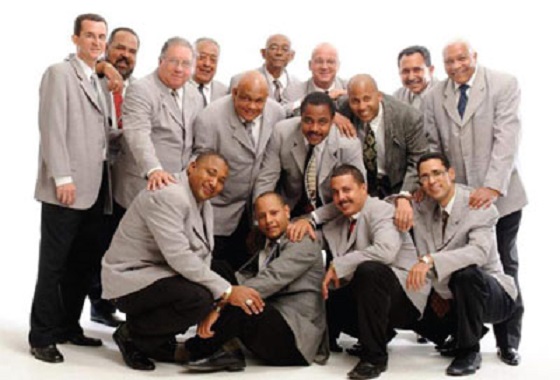
After some time on the road in Miami and beautiful New Orleans, LA GENTE team up with our musical hermanos SOL TEVÉL and the one and only DJ KUSH ARORA! And they will be debuting some brand new material. As always this is a late night party that doesn’t stop till that last person drops!

This Saturday Feb. 8, at 9 p.m. Live @ The Boom Boom, 1601 Fillmore, SF. Cover is $10/$15.

And on the following week, GENTE brings you another night of joy at the Next of the Woods, at 406 Clemente Street, SF, featuring Whitney Myer at their 3rd Annual Arts and Tapas for Valentine’s Day with Visual Art artists Alexa Trevino and Iván López. On Friday Feb. 24. Admission includes live music, food, all you can eat and art exhibition! www.LaGenteMusicSf.com.

The EX POSTAL FACTO LECTURES

An afternoon of panel discussions related to correspondence art takes place at the San Francisco Public Library as part of the Ex Postal Facto conference. The lecture series is part of the closing events related to the three-day conference.

Hosted by the San Francisco Public Library’s Book Arts and Special Collections The Ex Postal Facto lectures feature luminaries of the West Coast correspondence art scene, in addition to contemporary artists working within the genre. The first panel of the day, “The History of West Coast Mail Art,” features speakers Lowell Darling (visual/conceptual artist), Leslie Caldera of Los Angeles (correspondence artist), Carl Chew of Seattle (artistamp maker) and Anna Banana of Canada (artistamp maker). The panel will be moderated by San Francisco writer and visual artist John Held, Jr.

A second lecture titled “Artistamps and Their Makers: Seeing the World in Miniature” features artists working in the field of faux philatelics, also known as “artistamps”. The work of James Cline (Founding Postmaster, Black Rock City Post Office), James Felter (Postes Mraur), Harley (Terra Candella), and Ginny Lloyd (Gina Lotta Artistamp Museum) will be highlighted. The discussion will be moderated by correspondence artist and Ex Postal Facto organizer Jennie Hinchcliff.

The lectures are the culminating event of the Ex Postal Facto conference — a celebration of correspondence art, letter writing, and faux philatelics. Held February 14 – 16 at various venues throughout San Francisco, Ex Postal Facto brings together “Networkers” from across North America – artists whose primary artistic medium is the postal system, and whose goal is to encourage open dialogue via the mail. For more information about the conference, please visit: www.expostalfacto.wordpress.com.

Schedule for Sunday,

Feb. 16, 2014: 1:00 p.m. – 200 p.m.: “The History of West Coast Mail Art”.

2:30 p.m. – 3:30 p.m.: “Artistamps and informació Their Makers: Seeing the World in Miniature”.

3:45 p.m. – 4:30 p.m.: public reception in the Latino-Hispanic Community Meeting.

–During the reception, Ex Postal Facto passport stamping will be available. Information about obtaining a passport for the weekend can be found at the Ex Postal Facto website. (In order to receive a commemorative stamp, attendees must have an Ex Postal Facto passport).

At the Koret Auditorium, Main Library, San Francisco.

spot_img

Boxing

The Sport of Gentlemen

Boxing” de Molina

Saturday, February 8 – TBD –

Junior flyweights: Adrian Hernandez (28-2-1, 17 KOs) vs. Janiel Rivera (10-1-2, 6 KOs).

Friday, February 14 – Buenos Aires, Argentina –

Flyweights: Juan Carlos Reveco (32-1, 17 KOs) vs. Manuel Vides (15-2, 9 KOs).

Saturday, February 15 – Los Angeles, California –

Featherweights: Jhonny Gonzalez (55-8, 47 KOs) vs. Abner Mares (26-1-1, 14 KOs).

Saturday, February 15 – Buenos Aires, Argentina –

Flyweights: Juan Carlos Reveco (32-1, 17 KOs) vs. Manuel Vides (15-2, 9 KOs).

Saturday, February 22 – Macao, China (HBO) –

Lightweights: Miguel Vazquez (33-3, 13 KOs) vs. Denis Shaflikov (33-0-1, 18 KOs).

spot_img

For some campesinos, winter is farming season

Peasants work in the winter harvest in fields of California.

by David Bacon

By December in Santa Maria and the Santa Ynez Valley, on California’s central coast, the work season is coming to an end for most farm workers. Many campesino families, who travel north to Oregon and Washington for the strawberry and fruit harvests during the summer and fall, have returned. Hopefully they’ve saved enough money to last through the winter until work here starts again in the spring.

A lucky few manage to get work during the winter. The last strawberries are still being picked, although there’s not much fruit in the rows any longer. Pruning in the grapevines doesn’t begin until January.

Some crops in the valley last through the winter, though. This is planting season for broccoli, a beautiful and delicious flower originally brought to North America by Italian immigrants.

Like many crops, its cultivation has become very systematized. On most modern farms, no longer does anyone scatter seeds on the damp earth. Instead, the first broccoli seedlings are grown in nurseries. Then, when the plants are a few inches tall, they’re put into plastic flats and loaded onto trucks for the journey to the field.

There workers sit on a mechanical planter, pulled through the field by a tractor. As it moves, they drop seedlings into plastic tubes, which then guide the young plants into the mechanism that inserts them into the dirt. Behind the planter come other workers, who catch the places the mechanical harvester misses.

Still, on some ranches, the old system prevails. There seeds are planted along the rows, and when they sprout, they need to be thinned so that each plant has room to grow. Workers work their way down the rows, chopping away the excess plants.

And on some ranches, the tool passed out by ranch foremen to do this chopping is an old enemy of farm workers — the short handled hoe, or “el cortito”. Workers using a regular hoe can work standing up. But a short handled hoe makes them bend over almost double. Foremen believe that this makes workers space the plants more accurately, and makes them work faster.

Even a day at such labor produces a lot of pain, and years spent using this illegal tool can lead to degenerated disks and other spinal injuries. In 1972, Mo Jourdane, a lawyer for California Rural Legal Assistance, filed a demand with the state’s Division of Industrial Safety, to stop California growers from using this tool. In 1975, under pressure from the United Farm Workers, Governor Jerry Brown, then in his first term, forced state regulators to implement a ban.

Yet some growers still haven’t heard the news.

Perhaps they believe there’s no longer a movement to enforce the ban. And in fact, conditions for California farm workers may have improved in some ways in the last three decades, but in others they have fallen backwards.

Finally, the planters and thinners leave the fields. Then irrigators come last. They lay out and connect the pipes to the well pumps, bringing water into the field, and screw on the sprinkler heads. As they open the valves, dry sandy dirt turns dark brown under the spray, and the troughs between the rows fill with water and mud. Even in the winter in a coastal valley, California is still a semi-desert. Joseph DiGeorgio, the king of California agribusiness and its largest grower for decades, said the state’s produce was made up of water, labor, more labor, and freight to bring it to market. With no irrigation, and with no workers, there would
certainly be no broccoli.

In other related news in immigration and immigrants rights

Growing clash between immigrant rights activists and washington dc power brokers

This fall, when Congress couldn’t pass immigration reform bills — even ones deeply unpopular among many immigrants themselves — one of the most important responses came from Oaxaca. In the capital of this southern Mexico state a representative of a Silicon Valley union sat down with a state agency and an organization of indigenous migrants, and signed an agreement for mutual cooperation.

All three groups pledged to work to protect the rights of Oaxacans who have migrated to the U.S. — about 800,000 now live in California alone. “Our objective,” the agreementreads, “is the protection of the human and labor rights of Oaxacan workers and their families, in the food and commercial industries.”

It lists a number of shared commitments, including explaining to immigrant workers their labor rights in the U.S., helping them file claims when they’re hurt at work, and advocating for them when they face government agencies.

According to Gerardo Dominguez, a union leader, “we have a state government in Oaxaca that’s willing to do something beyond its borders to help its people who now live here. Our relationship can grow in ways that will help our union, and give these workers much more power over their own lives.” The agreement was signed also by Rufino Dominguez, director of the Oaxacan Institute for Attention to Migrants (IOAM), and Bernardo Ramirez, the binational coordinator of the Binational Front of Indigenous Organizations (FIOB).

The need for an agreement like this was dramatized this year by the debate over the “comprehensive immigration reform” bills in Congress.

While one of them, passed by the Senate in June, S. 744, does contains some protections for immigrant workers trying to organize unions, it also contains vastly increased enforcement measures that would lead to the firing and deportation of thousands of undocumented people. Even harsher bills in the House of Representatives contain stricter enforcement terms with no worker protections at all. Labor unions have been a vocal critic of those measures, particularly the provision that would require all employers to use the government’s E-Verify system to identify, and then fire, workers without legal immigration status.

spot_img

Abandoned Mexican hotel turned into shelter for deportees

by the El Reportero’s wire services

flag

Angeles sin Fronteras, a group formed to assist people deported from the United States, has created five shelters to help migrants, who often end up penniless on the streets of Mexican border cities.

The newest shelter was opened in Mexicali, the capital of the northwestern state of Baja California, where the group rented an abandoned hotel to serve as a refuge for the rising number of poor deportees in the area.

The 50-room building, known as “El Cinco” (Number Five), is being used by Angeles sin Fronteras to temporarily house 60 people.

One of those living at the shelter is Pablo Hernandez, a 26-year-old who lives in a room lit by a candle and furnished with a piece of cardboard and a blanket.

Hernandez, who lived in the United States from the age of 2 until he was deported a year ago, has found shelter at the building in Mexicali’s red light district.

“I don’t know how I ended up here, how I fell into drug use,” Hernandez, whose relatives live in Texas, told Efe. “I just want another chance to return to my familiy.”

Mexicali, like many other border cities in Mexico, has experienced a surge in the number of deportees who have arrived from the United States. Many of these people lived in the United States for most of their lives and end up on the streets in Mexico, often becoming depressed and using drugs to deal with the fact that they have nowhere to go.

El Cinco does not have electricity, running water or bathrooms, and the building’s residents live off money earned from washing cars or handouts.

“We have to help them so they can develop. They have great potential and we want to show that not all of them are criminals and they can contribute something to society,” Angeles sin Fronteras member Sergio Tamai told Efe.

Bolivian Telecom Company Connects with New Communications Satellite

Bolivian state-owned telecommunications company Entel has established contact with the Tupac Katari satellite, which the Andean nation put into orbit in December, President Evo Morales said.

The first contact with the satellite was made on Tuesday, Morales said during a military ceremony in the central region of Cochabamba.

“We have good news our Entel has had successful contact with our communications satellite, Tupac Katari. We are very happy, proud of our satellite,” Morales said Wednesday.

The satellite is expected to be fully operational in March, the president said.

The Tupac Katari satellite, or TKSat-1, named for the Indian leader who staged a rebellion against the Spanish Empire in the 18th century, was built by China Great Wall Industry Corporation, or CGWIC, an aerospace company that is a unit of China Aerospace Science and Technology Corporation. The TKSat-1 was manufactured under the terms of a cooperation agreement signed by Bolivia and China in 2009. The $302 million project was largely financed with a loan from the China Development Bank and the Tupac Katari was developed from the Chinesemade DFH-4 platform.

The satellite was launched on Dec. 20 from China’s Xichang Satellite Launch Center in Sichuan province.

The TK Sat-1 entered geostationary orbit last weekend and China turned control of the satellite over to Bolivia.

The satellite will be operated by ground control stations in the Bolivian regions of La Paz and Santa Cruz staffed by civilian and military personnel trained in China. The TKSat-1 weighs 5, 200 kilos (11,453 pounds) and is expected to function for 15 years.

The satellite will improve telecommunications and Internet access in isolated rural areas of Bolivia. The TKSat-1 is also equipped to relay radio and television signals, and to provide service for neighboring countries in South America. Bolivia expects to save around $15 million as it will no longer need to lease capacity on foreign-owned satellites.

spot_img