Thursday, July 30, 2026
Home Blog Page 426

What César Chávez missed: the diversity of the farm workers movement

[Author]Roundtable conducted by David Bacon[/Author]

The new movie, César Chávez – History is Made One Step at a Time, directed by Diego Luna, tells the story of the Grape Strike of 1965.
This epic 5-year labor battle led to the organization of the United Farm Workers, and made César Chávez a social movement hero. The movie has provoked controversy over its depiction of his role, and the accuracy of the history it recounts of those events.
In this roundtable, labor journalist David Bacon, a former organizer for the UFW and other unions, explores these themes with four guests.

Eliseo Medina was a farm worker when the strike started, and became a noted labor organizer, first in the UFW and later in the Service Employees Union.
Doug Adair was an activist in the 1965 strike, and then worked the rest of his life as a farm laborer in the grapes in the Coachella Valley.
Dawn Mabalon is a professor of history at San Francisco State University, and an authority of the history of Filipinos in California.
Rosalinda Guillen comes from a farm worker family in Washington State, worked as a UFW organizer, and today organizes farm labor in Skagit and Whatcom Counties, north of Seattle, with Community2Community.
David: How did the movie square with your memories of the grape strike as a participant?
Eliseo: It’s a good time for this movie to come out and show not only the challenges immigrants face, but also the fact that they’re willing to struggle and that when they do they can win, regardless of the power structure. It could’ve done a much better job of telling the full story, but it’s impossible to tell 10 years worth of history in 2 hours.

David: The film presents the UFW as a movement mostly of Chicanos and Mexicanos, but it was also a multinational union, including African-Americans, Arab, and even white people. That doesn’t come through as much.

Eliseo: When I was a farm worker, before the strike began, we lived in different worlds — the Latino world, the Filipino world, the African-American world and the Caucasian world. I do wish that that had been more explicit because certainly the contribution that was made by the Filipino workers to the strike and the movement was an incredible part of the success of the union. The fact that we also had Caucasians and African-Americans participating in the strike never even gets brought up.
David: There has been criticism of the movie’s portrayal of Filipino workers. How do you feel about that?
Dawn: Filipinos had been organizing, not just that year, but for decades before. The growers had always divided Mexicans and Filipinos. What was so powerful about that moment in Delano was that those two groups defied this. But the way they came together was downplayed. There was so little context that there’s no understanding that it was these other people, in particular Larry Itliong, who really sparked the strike.

Larry went to Delano in the early 1960s, sent by the Agricultural Workers Organizing Committee, the AFL-CIO union founded in Stockton. He already had decades of labor experience with the Alaskan salmon cannery union. He organized a failed strike of asparagus workers in Stockton in 1948 and a successful strike in 1949. He had more experience than everyone, Dolores Huerta and Cesar included.

Doug: The original spark in Delano was when Filipinos workers began sitting in at the camps. It wasn’t a strike with picket lines, but a sit-in and refusing to go to work. Larry began going around to the camps seeing if he could use the sit-ins to negotiate better wages.

David: The film did show the sit-in in the camps, which surprised me. Not many people know that happened, and it’s a very important part of history. The movie starts with a little section where Cesar is the head of the Community Service Organization (CSO), but doesn’t show him organizing protests about the bracero program, in which growers were able to bring workers from Mexico under very abusive conditions, sending them back at the end of the season. Should the movie have said more about it?

Doug: Workers first went on strike in Coachella in the spring of 1965 because the bracero program was being phased out. With braceros, it was almost inevitable that strikes would lose. When the government said growers had to offer $1.40 an hour if they wanted to hire braceros AWOC demanded the same wage. That was the spark that set off the strike. Actually if it had been up to Cesar, there wouldn’t have been a strike in Delano because he didn’t feel our union was ready. There was no money in the bank, and he wanted to do more organizing. He used to say “we’re not a union, and we’re not gonna start strikes.”

David: The movie stops when the industry-wide grape contract gets signed. Did the contract and the union change life for farmworkers and was it a permanent change?

Doug: When I worked under that first contract our wages and benefits were over double the minimum wage of American workers. We had a health plan that was the envy of many other unions. We could sit down with the growers and negotiate over grievances. We wouldn’t always win, but we could negotiate our working conditions.

The movie did show that workers can join together in spite of appalling conditions and improve their wages and working conditions. That did come through. It is a possible to change history with concerted action, by getting together.
Rosalinda: Today farmworkers can organize because of the example of the farmworkers in the 60s and 70s in California. The movie shows clearly what it looks like to organize and come together. This is one of the legacies of César Chávez, this coming together of different workers with different religions and different political views.

Doug: But I think the movie did show the viciousness of the growers and their local power structure; district attorneys and the cops and thugs on the side of the growers. The whole local structure was against the union and the farmworkers.
Rosalinda: And it’s still like that.

Eliseo: Clearly the union was able to begin lifting workers out of poverty. They had paid holidays, vacations and health insurance. Unfortunately, at the time when we were poised to completely change these workers’ lives we lost focus. As a result, workers today are back where they were before the union. Most are working at minimum wage again. Employers are back to just trying to get the work done in the cheapest way possible, regardless of the impact on workers.

David: At one point the growers say they are going to bring in “illegals” – they use that word, not “undocumented” – by the truckload. Do you think this experience shaped how Cesar saw the question of immigration?

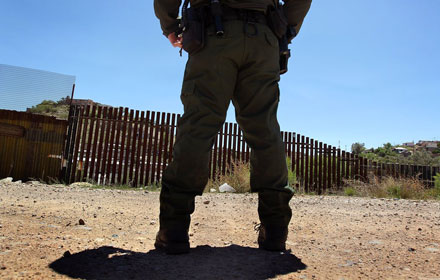
Eliseo: The growers knew very well that divide and conquer was an important strategy, so they were not above using workers to break the strike, whether they were documented or undocumented. And they certainly felt that having a captive work force would make it easier for them. What the union wanted was to make sure that no one was used to break the strike, regardless of their status. The union and the strike was a movement of documented and undocumented people. Some of the strongest and most active people were undocumented. In many cases when workers began to organize, growers would call in the Border Patrol to scare people and arrest and deport them.

DUE TO LACK OF SPACE, THIS ARTICLE WAS CUT. TO SEE THE COMPLETE INTERVIEW, PLEASE VISIT: http://inthesetimes.com/article/16701/what_cesar_chavez_missed

spot_img

Latin Dance Fusion with Tika Morgan at Dance Mission Theater

[Author]Compiled by El Reportero’s staff
[/Author]
Tika’s Latin Dance Fusion brings together the music and basic steps of many Brazilian Dances, Salsa Suelta, Reggaetón and more into an accessible, high energy class. Experience the depth, beauty and power of these culturally rich movements founded in the African Diaspora. Class begins with body alignment, isolation’s, and stretching. You will learn choreography as you move by working in half time and through repetition. This class doesn’t stop and is a workout for the body and soul! You will sweat! Open level – Shoes optional.
On Tuesdays 6:30 – 7:45 p.m., May 6 to June 10. Only 6 classes! All Levels
$13/class or $60 for all six (class passes accepted).

Jazz Department at CCSF presents special guest artist, on trumpet from New York: Eddie Allen
City College Of San Francisco Music Department and Concert and Lecture Series present “The Spring Jazz Concert,” featuring the Advanced Jazz Band and The Jazz/Rock Improvisational Workshop. Directed by David Hardiman, Jr., Master of Ceremonies, David Hardiman Sr.
On Tuesday, May 13, 2014, 8 p.m. to 10 p.m. at City College of San Francisco’s Diego Rivera Theater, Ocean Campus, at 50 Phelan Avenue San Francisco, Free!! Open to the public.

Exciting time at the Mexican Museum
Celebrate National Museum Day at The Mexican Museum during its free Family Sunday from noon to 3:30 p.m. After viewing La Cocina: The Culinary Treasures of Rosa Covarrubias, children and adults will paint pottery and plant their own Mexican herbs to take home. This event will take place on Sunday, May 18.
The Mexican Museum is open Wednesday – Sunday from noon to 4 p.m., located at Fort Mason Center, Building D, Marina Boulevard and Buchanan Street, in San Francisco. FREE Admission. The Museum offers a wide variety of programs, including Family Sundays, exhibitions, special events, lectures and public programming throughout the San Francisco Bay Area. For more information, please visit: http://www.mexicanmuseum.org or call (415) 202-9700.
The Museum is currently preparing for the completion of its permanent home, which will be built in downtown San Francisco’s Yerba Buena Garden Arts District and is expected to open in 2018.

Benefit dance for El Tecolote
Sway to the hot Latin rhythms of the 10-piece Cesar’s Latin All-Stars in a benefit dance-concert for El Tecolote newspaper on Saturday, May 17, from 9:30 p.m. to 2 a.m. at the new Cesar’s Latin Palace located at 820-26th Street near Third St., in San Francisco. The evening includes a food sale and raffle. Doors open at 7 p.m. Admission is $10. Must be 21 years or older. There is plenty of security and free parking. For more information, call Mabel Jiménez at (415) 648-1045.

Visceral – Carlos Mojica and Kamalky Laureano at Paul Mahder Gallery
The Paul Mahder Gallery is pleased to present Visceral, new photorealistic paintings and drawings by two important new artists from the Dominican Republic, now living in Mexico City, Carlos Gomez Mojica and Kamalky Laureano. This exhibit marks the West Coast Premiere and only the second time their work has been seen in the United States.
Visceral, a photorealistic paintings and drawings by artists Carlos Gómez Mojica
and Kamalky Laureano. Opening Public Reception Saturday, May 17, 2014, 6-8 p.m., at 3378 Sacramento Street @ Walnut, San Francisco, California. Admission is free. For more info paul@paulmahdergallery.com or call (415) 474-7707.

spot_img

Antonio Banderas on Hispanic artists and their roles in Hollywood

[Author]by the El Reportero’s news services[/Author]


Spanish actor Antonio Banderas said here that he is proud to be a part of the generation of Hispanic artists who managed to open the doors of Hollywood and consolidate themselves in the movie mecca.

Banderas, who was in Bogota to present his new ladies’ fragrance, “Her Golden Secret,” recalled at a press conference his early years in movies and gave details about his most recent film project, The 33, about the Chilean miners who were trapped in a collapsed mine for 70 days in 2010.

The 53-year-old actor said that one of the first things he was told when he arrived in the United States was that if he stayed in Hollywood “I was going to be a villain all my life” in terms of the roles that came his way, since “blacks and Hispanics” are (or were) the bad guys in film.

The interesting thing, Banderas added, was that when he starred in the 1998 film The Mask of Zorro, the bad guy was blond and “had blue eyes.”

Hispanics who have made a career in movies or in any other professional sphere in the United States “have struggled a lot, have come from countries in conflict, where many difficulties have occurred” with the aim of having their children go to college, Banderas said.

The children of those pioneers “currently are in positions of power (and that) had to be reflected in Hollywood,” he added.


Eva Longoria at Tribeca Film

Festival with Her “Food Chains” Documentary

Actress Eva Longoria showed her more committed side at the Tribeca Film Festival as producer of “Food Chains,” a documentary about the abuse farm workers suffer and which, according to her, now means the achievements of Cesar Chavez and Dolores Huerta have been dismantled.

Twenty years after the death of farm workers’ leader Cesar Chavez, who in the 1970s led the fight for Latino laborers’ rights and formed the United Farm Workers union, Longoria asked the New York festival audience what it is that’s making us go backwards.

The film documents the six-day hunger strike that members of the UFW went through at the doors of the powerful Publix supermarket chain to demand a 1-cent pay raise for farm workers for every pound of tomatoes they pick.

The film also reviews the dark history in the fields from the days of plantation workers when the United States was founded to the massive abuse of farm workers by vast supermarket chains to get the lowest, most competitive prices.

The actress, known by most TV viewers for playing Gaby in “Desperate Housewives,” said the treatment of field hands in Florida and California is not, contrary to what people think, a subject related to immigration. It’s something much deeper, she said, it has to do with human rights.

“Food Chains” reveals chilling data about the food industry, in which supermarkets alone generate worldwide revenues of some $4 billion a year – but pay field hands an average of $12,000 a year to gather, in the case of tomato harvesters, about 2 tons of food per day.


spot_img

Why the people must say no to Globalization

It is necessary to recognize that the globalists, pawned in governing the world under the World Government (New World Order) headed by the U.N., have a major obstacle in the way for their harmful plans: Russia and Syria, and partly, also China and North Korea.

That’s why it is important to stop the advance of Globalism, not supporting its advance towards the destruction of Russia and Syria, since it helps supporting a world balance. It’s better to have three opinions than only one.

If perhaps you think in Globalism, you must compare it with Internationalism. Globalism wants to get rid of the borders and with it the constitutions of every sovereign nation to govern them at its pleasure from a central government, without borders to stop them, and in this way to control the wealth and economy of the world through the International Monetary Fund, which is the Central Bank of the World.

Internationalism trades between sovereign countries that are governed by their own constitutions and laws and with mutual respect among nations.

The globalists do not want independent nations, rather they want dependent nations that cannot hinder their pretensions. At present, they want to turn Ukraine into a country-client and to enslave the country by in-debting her up to the neck – as they have done with their clients of Europe (which are no longer countries), – and nations in the Third World, who will continue to be lent to without limits until they are not able to pay. The globalists will then foreclose on their on them and take their resources, which eventually turn their countrymen into slaves of the World Bank.

And right now, the globalists have almost encircled Russia to destroy or diminish her power, which will allow them to govern the world without obstacles, under a socialistic system assisted by the World Health Organization (entrusted to vaccinate the slaves), and the UNESCO (entrusted to control the education of the slaves with irrelevant teachings and mediocre education, including the supply of funds endowed to the Universities, so that they promote the global courses of study that will help them govern the slaves: International Relations, International Commerce, Global Economy, etc.) and adhere them to the International Court of Justice in the The Hague, which is the one Court that will decide any case that should arise as far as in a small village like Masaya, Nicaragua, on the course of the waters of a river, for example.

They already destroyed the European republics with the European Union, the African countries with the African Union, and the Asian countries with the Asian Union, and the banker-gangsters now bribe the chiefs of the former countries with their famous aid and loans at low interest. And it shouldn’t be forgotten that these unions of countries are governed by officials not elected in elections by the people.

During the administration of Mexico’s President Vicente Fox, he, together with President George W. Bush of the United States, and the Prime Minister of Canada Jean Chrétien, signed the la the North American Union (Unión de Norteamérica). However, this agreement has not materialized, and they have kept it low profile.

And rumors are going around that they now want to create the Central American Union, but we will not allow it. We must denounce it! They already are spreading the idea throughout the whole American continent with those famous free-trade agreements… Wake up, Mexicans, Central Americans and South Americans!

For now, those countries are still sovereign nations because they have their own constitutions and Supreme Courts of Justice. However, they could become obsolete if they adhere to the The Hague and sign all the agreements and treaties offered by the U.N., like the small arms control treaty, which will disarm the peoples and in doing so, block their chance to rebel or defend themselves from the enemy – which sometimes is their own government). And this includes the climatic control agenda, which goal is to impose a global tax on all the people in the world for allegedly causing global warming by merely existing as human beings, which essentially places a tax– and a price– on life.

And that’s why the reduction of population is in the agenda via the extermination with vaccines, the pandemics, the water pollution and the air, and the wars – that do not happen by chance.

Ah, I almost forgot: now with Monsanto, the production of food, energy, and exports and imports would be monopolized by a world central government.

Pay attention to the U.N. Agenda 21, because all this agenda is in there, as well as the nationalization of private property. Just watch out why some governments dictate the prices and want to control production in other countries – especially the self-designated Socialists nations. Liberty is in danger, dear reader. Say no to globalization and to the emerging global government. Do not support anything the United Nations mandates.

spot_img

Families of immigrants beg Obama to stop deportatiions

[Author]by the El Reportero’s wire services[/Author]

Immigrant mothers on Wednesday visited Washington to deliver more than 1,000 postcards on which they are urging President Barack Obama to use his executive power to halt deportations.

Coinciding with the May 11 celebration of Mother’s Day, immigrant mothers traveled to Washington from Boston, Chicago, Los Angeles, Houston and San Francisco to make their request.

United by a common history, emigration to the United States in search of a better life for their family or fleeing from threats in their countries in some cases, now the women are afraid that a family member will be deported, or even themselves, and that they will be separated from their children.

It is a fear that brings tears to the eyes of Monica Ruiz, who arrived in the United States 23 years ago as an undocumented migrant, “with high hopes because my daughters were going to have all that I didn’t have,” as she said at an event at the doors of the Lutheran Church of the Reformation, near the Capitol.

But the daily reality is that “they can detain me and separate me from my daughters,” she said, urging first lady Michelle Obama, as a mother, to intercede for her and other mothers: “Let her heart be moved and let her know the suffering that, for mothers, is separation from their children.”

The mothers were accompanied by members of the National Alliance of Latin American and Caribbean Communities, or NALACC, and other supporters of the Power of the Pen campaign.

The activists recalled that Obama said in his State of the Union address that he would use his executive power when Congress did not take action to move forward, and therefore they asked him to use “the power of his pen” to halt deportations given the failure of the House of Representatives to approve immigration reform.

NALACC president Angela Sambrano recalled that in the last six years more than two million people have been deported.

Sambrano emphasized the “irreparable” harm that is done to children by deportations and said that in Mexico there are some 500,000 U.S.-born children who have left this country because their parents have been expelled, while others have remained in the United States with some other relative.


Ten members of elite police unit in Tamaulipas arrested for links to cartel

Ten members of an elite police unit in the northeastern Mexican state of Tamaulipas were arrested on charges that they had links to a criminal organization and handed over to federal prosecutors, state officials said.

The state police officers are suspected of having ties to a gang that operates in Ciudad Victoria, the state capital, the Tamaulipas Public Safety Secretariat said in a statement.

The officers were riding in patrol cars in an area outside their assigned sectors when they were arrested, the secretariat said.

“The initial questioning established that there are indications that the state police officers colluded with a criminal group, so it was decided to arrest them and turn them over to federal prosecutors to determine whether there is enough evidence to make a case,” the secretariat said.

The secretariat said last October that the special police units had been deployed in Tamaulipas’s 43 municipalities to “provide security and peace of mind to residents.”


spot_img

3 common medical procedures that ruin your long-term health

by Derek Henry

Today’s custom is that if a person has a more serious health issue, conventional medicine is the unquestionable source of answers. Although results often appear to be helpful and “life-saving” on the surface, there often comes serious long-term damage that severely compromises quality of life. In that vein, here are three hospital procedures that can ruin long-term health.
Chemotherapy
Chemotherapy has been widely used with one or more cytotoxic drugs, with the expectation that this deadly poison will kill off rogue cancer cells and leave the patient with enough healthy cells to regain their health.
Researchers from the Fred Hutchinson Cancer Research Center in Seattle, Washington, observed the effects of chemotherapy on healthy cell tissue and found that it damages the DNA of healthy non-cancerous cells which in turn causes them to produce molecules that in turn produces more cancer cells.
Even worse, they also found that a major side effect to this procedure is that cancer cells grow more virulent than they were before the treatment. As a result these “super” cancer cells no longer respond to chemotherapy, which means it becomes even more deadly.
Take a more natural approach to kill off cancerous cells, without severely damaging the body, and look to eliminate all forms of sugar.

Vaccines
Vaccines have become a heavy debate that has left many people wondering whether vaccinations are the panacea to all the dreaded illnesses we can contract, or simply a poisonous injection that has little effectiveness compared to a healthy and holistic lifestyle.

Recently, shocking statements were noted on the package insert of the “Diphtheria and Tetanus DTaP Toxoids and Acellular Pertussis Vaccine Adsorbed” (also known as the Tripedia vaccine) that stated that this vaccine had not been evaluated for its “carcinogenic or mutagenic potentials or impairment of fertility.”

It was also noted “adverse events reported during post-approval use of Tripedia vaccine include idiopathic thrombocytopenic purpura, SIDS, anaphylactic reaction, cellulitis, autism, convulsion/grand mal convulsion, encephalopathy, hypotonia, neuropathy, somnolence and apnea. Events were included in this list because of the seriousness or frequency of reporting.”
However, some may believe that vaccine side effects are worth the long-term immunity they provide against infectious disease, as opposed to building up natural immunity. Barbara Loe Fisher, president and co-founder of the National Vaccine Information Center, explains the error in that thinking:
“Whereas natural recovery from many infectious diseases usually stimulates lifetime immunity, vaccines only provide temporary protection and most vaccines require ‘booster’ doses to extend vaccine-induced artificial immunity.”
So to maintain that artificial immunity, people are often subject to additional injections full of dangerous preservatives and agents, which puts their long-term health at more risk.
Take a more natural immune building approach by increase immune building foods and herbs and getting plenty of vitamin D, while reducing and eliminating processed foods, refined sugar, alcohol, and glutinous grains.

Antibiotics

Prescription antibiotics are perhaps the most widely used form of medication, and have saved the lives of many with deadly bacterial infections. However, much like chemotherapy, antibiotics do not distinguish between good and bad, and as a result wipes out all bacteria in its path.

With more than 100 trillion good bacteria in the body (10x more than cells) that play a critical role in overall health and well-being, killing them is not an effective answer to maintain good health. In fact, destroying those helpful bacteria will slowly but surely destroy digestive and immune function, which can then result in severe complications like Candida and cancer.
Look into more natural antibiotics like garlic, colloidal silver, oil of oregano, Echinacea, and manuka honey.

spot_img

Activists in Easter Ukraine sound alarm on CIA-led death squads

CIA has overturned political movements unacceptable to the political and financial elite in U.S.

[Author]by Kurt Nimmo[/Author]
[url href=”Infowars.com”]
[/url]

Soon after the United States invaded Afghanistan, the Pentagon began to rely on CIA-trained Afghan paramilitaries to hunt down Taliban and al-Qaeda fighters in Kandahar, Khost, Paktia, Paktika and other provinces. The Counterterrorist Pursuit Team was modeled after U.S. Special Forces. It engaged in a number of activities, including delivering insurgents to the CIA for interrogation. In addition to Afghanistan, the team crossed over into Pakistan to hunt down senior al-Qaeda leaders, according to author Bob Woodward.

The CIA’s Special Operations Group was involved in Afghanistan prior to the invasion and establishing the elite Afghan paramilitary team. “They don’t play by the normal rules because they don’t have to,” Tod Robberson wrote for The Dallas Morning News in October, 2002. “That’s a big reason why the United States increasingly prefers to deploy CIA paramilitary troops whenever it prepares to enter global hot spots such as Afghanistan or Iraq. U.S. military officials and other analysts say the CIA has a long history of sending highly trained commandos to some of the world’s most dangerous places, sometimes well in advance of conventional fighting forces but often right alongside them.”

“At the end of the day, the most important aspect of these operations is that no one knows about them,” Charles Heyman, editor of London-based Jane’s World Armies, told the newspaper.
CIA in Ukraine Despite this rule it is no secret both the CIA and the FBI are working with the February junta in Kyiv. The German tabloid Bild reported last Sunday the American agencies “are advising the interim Kiev government on how to stifle the growing unrest in the country,” according to The Moscow Times.
Prior to this, in mid-April, it was discovered CIA director Brennan had visited the capitol of Ukraine. Speculation flew fast and furious, from Forbes speculating Brennan’s trip was about cyberwarfare to The Daily Beast suggesting the visit concerned intelligence-sharing.

Considering the overall objective in Ukraine, such speculation misses the mark. If the Kyiv regime is going to prevent secession and mutiny within the important industrial and agricultural oblasts of the country, it will use a heavy and brutal hand, one specializing in covert warfare, murder, and terrorism. The CIA was designed specifically to conduct unconventional war behind the scenes and not play by the rules.

“A source close to Ukraine’s security agencies has told the RIA Novosti news agency that Brennan came to Kiev last Saturday and met with Ukraine’s security chiefs before the Ukrainian Interior Ministry said it was launching a special operation against those pressing for federalization in the east of Ukraine,” The Voice of Russia reported on April 14.
The CIA boasts a long and sordid record in stifling political movements, often with violence, those unacceptable to the political elite in the United States.
“Secret CIA operations constitute the usually unseen efforts to shore up unjust, unpopular, minority governments, always with the hope that overt military intervention … will not be necessary. The more successful CIA operations are, the more remote overt intervention becomes, and the more remote become reforms,” writes former CIA case officer Philip Agee.
Ukrainian fascists instrumental during Cold War
Widely unknown and never mentioned by the establishment media is the fact the CIA has long shared a relationship with the ultra-nationalist and fascist faction now ruling Ukraine. The United States established important links with Ukrainian emigre groups beginning in 1945 at the outset of the Cold War began.

The Strategic Service Unit (SSU), the successor to the Office of Strategic Services, or OSS, during the Second World War, and the precursor to the CIA, learned ultra-nationalist groups in Ukraine were resisting Soviet occupation following the war. The SSU cooperated with a number of Ukrainian groups opposed to the Soviets, including those who collaborated with the Nazis during the war and harbored deep hatred toward Jews, Poles and Russians.

By 1949 the CIA use of Ukrainians received official sanction in Washington. Project CARTEL was initiated to support resistance within the Soviet Union. By 1950 the U.S. had entered into discussions with the British on further supporting the ultra-nationalist resistance to Soviet occupation.

The CIA “maintained an operational relationship with the Ukrainians that provided to be not only its first, but also among its most resilient projects with anti-Communist emigre groups,” writes Kevin C. Ruffner in a declassified CIA document. “With Agency funding, the Ukrainians established a research institute in New York and published a number of anti-Soviet publications… From this base in the United States, the Ukrainians continued their struggle against Soviet oppression until the collapse of the USSR.” CIA collaboration with emigre Ukrainians continued after the fall of the Soviet Union, most successfully during the 2004 Orange Revolution, and included such notables as American-born Kateryna Yushchenko, the wife of Viktor Yushchenko, who was hoisted to power after the western-engineered revolution.

“Opposition candidate Viktor Yushchenko in the Ukrainian presidential elections is firmly backed by the Washington Consensus,” Michel Chossudovsky wrote in 2004. “He is not only supported by the IMF and the international financial community, he also has the endorsement of The National Endowment for Democracy (NED), Freedom House and the Open Society Institute.” NED is, for all practical purposes, the bastard child of the CIA. “We should not have to do this kind of work covertly,” NED president Carl Gershman told The New York Times in 1986, three years after the subversive organization was established. “It would be terrible for democratic groups around the world to be seen as subsidized by the CIA. We saw that in the 60s, and that’s why it has been discontinued. We have not had the capability of doing this, and that’s why the endowment was created.”“A lot of what we do today was done covertly 25 years ago by the CIA,” added Allen Weinstein, who drafted legislation creating NED, a few years later.

While NED works over the board with NGOs and “democracy” groups in foreign countries to overthrow governments targeted by the financial and political elite, the CIA deals in the dirty business of violence against targets when the ballot box fails or a counter revolution begins.

It would be naive to assume the CIA is not currently working hand-in-hand with its Cold War partners, the neo-Nazi and fascist ultra-nationalists who are presently directing Ukraine’s security apparatus against opposition in the eastern and southern part of the country. This effort, as Brennan’s visit revealed, is of upmost importance following the failure of the Ukrainian military to impose junta rule in rebellious areas.

Punitive action against resistance by CIA and Right Sector Iskra-news.info, a Russian language site, believes the Natsgvardii, the Ukrainian National Guard, is working closely with Right Sector on a “punitive action” against activists in the east who plan a referendum on autonomy this Sunday.

“We understand that people are highly motivated. Because they have been three months in the Maidan. They are all volunteers. They agreed they want to defend Ukraine. They will be given the opportunity to show themselves,” Deputy Interior Minister Nikolay Velickovic said about new members of the National Guard in April.

“Kiev is not only faced with the stubborn resistance of the militia, but also to the unwillingness of the army to conduct large-scale operations. Soldiers do not have enough uniforms and supplies, vehicles or fuel,” a report posted on the site from eastern Ukraine states. “Therefore, to a large extent, the government is counting on the newly created Natsgvardii and the militant Right Sector.” The National Guard and Right Sector are “involved with foreign mercenaries.” These allegedly include the American firm Greystone (formerly Black Water) and “30 foreign military sabotage groups of between four to six people each from Germany, Poland, the United States and Georgia.”

Another Russian language website, 57.mid, carries a report from Ukraine claiming the CIA has teamed up with Right Sector to “maximize the number of casualties among the civilian population in order to outshine the massacre of May 2 [the House of Trade Unions fire that killed at least 46 people]” and terrorize the pro-Russian population of the Odessa, Mykolayiv and Kherson regions.
If these reports are indeed accurate, there may be a wave of terror and bloody reprisal in the lead-up to the referendum vote. Fascist gangs, steeped in ethnic hatred and a distorted nationalistic mythos, paired with neoliberal imperatives directed with ruthless precision by the CIA, will result in a new crisis, possibly one that will ultimately prod a reluctant Russia to intervene.
“When India was neoliberalized, far-right thugs backed by and even steered by local police, roamed the streets at night targeting the homes of various leftists such as labor leaders, writers and political opposition and dissidents,” writes Scott Creighton. “Countless people were dragged from their homes and beaten to death by the mobs in front of their wives and children while the law stood by and did nothing. This was done to ensure the stability of the new neoliberal system for years to come.”

The CIA cut its teeth on this sort of murderous behavior in Indonesia where it methodically compiled exhaustive lists of enemies, a tally ultimately resulting in the death of an estimated 250,000 people by the Suharto regime.

“For the first time, U.S. officials acknowledge that in 1965 they systematically compiled comprehensive lists of Communist operatives, from top echelons down to village cadres. As many as 5,000 names were furnished to the Indonesian army, and the Americans later checked off the names of those who had been killed or captured, according to the U.S. officials,” the Spartanburg, South Carolina Herald-Journal reported on May 19, 1990.

A similar pattern appears to be unfolding in eastern Ukraine. “So going back to Friday’s slaughter of dissidents and labor leaders in Odessa. Sound familiar?” Creighton asks, comparing the CIA’s behavior in Indonesia to that now forming in Ukraine.

spot_img

Hunger on the border – Latino elders struggle to eat in South Texas

[Author]Yolanda González[/Author]

DALLAS, Texas–For Guadalupe and Socorro Lechuga, getting enough to eat every day is the biggest challenge they face in their old age. “We’re usually hungry because it’s hard to get enough to eat, except when someone gives us some vegetables,” said the married couple, who are 76 and 62 years old.

Residents of one of the settlements called colonias along the southern border of Texas, the elderly couple, originally from Mexico, say they can only spend $10 to $15 per week to supply a minimum pantry of beans, sugar and coffee.

Barely enough Social Security Guadalupe receives a monthly paycheck of $700 from Social Security. Even if he could find work at his advanced age, he is confined to a wheelchair stemming from an injury he received from a fall, he said. Socorro doesn’t work and takes care of him.

“That money is barely enough to pay the rent for the land where we live, the electricity, water bills and the truck we use, so the remaining money is used to buy some food,” the couple explained. They live in a colonia, an unincorporated community along the border, called Cardenales Delta, in the outskirts of Mission, Texas.

Sometimes they eat potatoes, packaged instant soups, eggs and bread that are included in the food given away by local groups, as well as vegetables donated by nearby farmers, said Guadalupe, who emigrated from Zacatecas, Mexico decades ago.

“My monthly check isn’t enough for food since it doesn’t increase when food prices go up,” he noted. “We aren’t getting by with what we make, but we try,” he said.
The Lechugas’ case is not unique. The number of Hispanic elders who suffer from hunger and food insecurity is a reality in Southern Texas, according to research by Joseph Sharkey, PhD, and colleagues at the Texas A&M Health Science Center of the University of Texas A&M.

Choosing Between Medicine and Food “In the homes of elders of Mexican origin, there are limited financial resources that often make people have to choose between paying for services or medicine and other expenses such as food,” said Sharkey.
The report analyzes the results of a field study among 95 elderly participants in 14 groups living in four border areas of South Texas. Participants were interviewed in Spanish about the conditions of their food supply by promotoras de salud, or community social workers.

Among the research findings are that elders of Mexican origin in that region deal with crucial challenges that prevent them from getting food. Key barriers to nutrition are advanced age for employment, language barriers since many are monolingual, physical disabilities, lack of education and immigration status.

Despite this, “The elders are strong and face their reality of social disparity as a situation that is better than living in Mexico in most cases,” said Sharkey, who stressed that their poverty level in South Texas is similar to that of Mexican immigrants elsewhere in the United States, such as in Georgia and New York.

The Texas A&M study found that 91.6 percent of elders interviewed were born in Mexico, 55.8 percent are married and 63.2 percent make less than $700 per month. A little over half said they are on food stamps, over one-third resort to food banks or seek support from churches, and one-fourth get free meals provided to seniors.

“Most of the elderly respondents come from the countryside, and many used to plant their vegetables and raise livestock as a food source, in addition to collecting wild fruit or other food in their home country. Now they can’t do that here,” Sharkey added.

Food insecurity remains high 

Sharkey noted that some of the colonias along the southern border of Texas, have implemented community gardening programs using raised beds on the otherwise arid soil, to grow vegetables the residents can share.

Some local efforts to improve the food supply and prevent hunger among elders include education about managing and acquiring food, such as instructions on proper refrigeration and information about buying economical and nutritious food, Sharkey said.

Sharkey cited another recent survey of 140 elderly women, which found that two out of three experience hunger in the colonias on the Texas border.

Texas has the second-highest rate of food insecurity in the United States and is home to 9 million households at risk of hunger, according to a report by the U.S. Department of Agriculture.
What’s more, Texas has the two counties with the most extreme poverty level nationwide, Cameron and Hidalgo, both on the Texas-Mexico border. More than four of 10 residents there, most of them Hispanic, live in poverty, according to research by the University of Texas at Austin.

The study found that more than half of impovertished elders in those counties are Hispanic and that most impoverished communities along the Texas-Mexico border were concentrated in the colonias.
The National Hispanic Council on Aging (NHCOA) has pointed out that many elders in the United States suffer from hunger and food insufficiency. According to that organization’s president Yanira Cruz, “Many old people go to bed on an empty stomach.”

The poverty level among Hispanic seniors in the United States is 17.9 percent, according to a recent report by NHCOA. The Economic Policy Institute estimates that 70 percent of Latino seniors are “economically vulnerable,” while 30 percent are so impoverished they face hunger or food insufficiency.

Yolanda González Gómez wrote this story for HuffPost Voces with support from the Journalists in Aging Fellows Program, a project of the Gerontological Society of America and New America Media.

spot_img

Agenda 21 in one lesson

Marvin

NOTE FROM THE EDITOR: Dear readers, I am bringing to you this article, which, although there is no clear author, its content is relevant to what El Reportero’s focus on liberty is. This article has been published in many liberty-focused blogs in the internet, and it brings more light as to what Agenda 21 is all about. Hope you enjoy it and learn from it.

by an unknown author

Awareness of Agenda 21 and Sustainable Development is racing across the nation as citizens in community after community are learning what their city planners are actually up to. As awareness grows, I am receiving more and more calls for tools to help activists fight back. Many complain that elected officials just won’t read detailed reports or watch long videos. “Can you give us something that is quick, and easy to read that we can hand out,” I’m asked.

So here it is. A one-page, quick description of Agenda 21 that fits on one page. I’ve also included for the backside of your hand out a list of quotes for the perpetrators of Agenda 21 that should back up my brief descriptions.

A word of caution: use this as a starter kit, but do not allow it to be your only knowledge of this very complex subject. To kill it you have to know the facts. Research, know your details; discover the NGO players in your community; identify who is victimized by the policies and recruit them to your fight; and then kill Agenda 21. That’s how it must be done. The information below is only your first step. Happy hunting.

What is Sustainable Development?

According to its authors, the objective of sustainable development is to integrate economic, social and environmental policies in order to achieve reduced consumption, social equity, and the preservation and restoration of biodiversity. Sustainablists insist that every societal decision be based on environmental impact, focusing on three components; global land use, global education, and global population control and reduction.

Social Equity (Social injustice)

Social justice is deterscribed as the right and opportunity of all people “to benefit equally from the resources afforded us by society and the environment.” Redistribution of wealth. Private property is a social injustice since not everyone can build wealth from it. National sovereignty is a social injustice. Universal health care is a social injustice. All part of Agenda 21 policy.

Economic Prosperity

Public Private Partnerships (PPP). Special dealings between government and certain, chosen corporations which get tax breaks, grants and the government’s power of Eminent Domain to implement sustainable policy. Government-sanctioned monopolies.

Local Sustainable Development policies

Smart Growth, Wildlands Project, Resilient 1Cities, Regional Visioning Projects, STAR Sustainable Communities, Green jobs, Green Building Codes, “Going Green,” Alternative Energy, Local Visioning, facilitators, regional planning, historic preservation, conservation easements, development rights, sustainable farming, comprehensive planning, growth management, consensus.

Who is behind it?

ICLEI – Local Governments for Sustainability (formally, International Council for Local Environmental Initiatives). Communities pay ICLEI dues to provide “local” community plans, software, training, etc. Addition groups include American Planning Council, The Renaissance Planning Group, International City/ County Management Group, aided by US Mayors Conference, National Governors Association, National League of Cities, National Association of County Administrators and many more private organizations and official government agencies. Foundation and government grants drive the process.

Where did it originate?

The term Sustainable Development was first introduced to the world in the pages a 1987 report (Our Common Future) produced by the United Nations World Commission on Environmental and Development, authored by Gro Harlem Brundtland, VP of the World Socialist Party. The term was first offered as official UN policy in 1992, in a document called UN Sustainable Development Agenda 21, issued at the UN’s Earth Summit, today referred to simply as Agenda 21.

What gives Agenda 21 Ruling Authority?

More than 178 nations adopted Agenda 21 as official policy during a signing ceremony at the Earth Summit. US president George H.W. Bush signed the document for the US. In signing, each nation pledge to adopt the goals of Agenda 21. In 1995, President Bill Clinton, in compliance with Agenda 21, signed Executive Order #12858 to create the President’s Council on Sustainable Development in order to “harmonize” US environmental policy with UN directives as outlined in Agenda 21. The EO directed all agencies of the Federal Government to work with state and local community governments in a joint effort “reinvent” government using the guidelines outlined in Agenda 21. As a result, with the assistance of groups like ICLEI, Sustainable Development is now emerging as government policy in every town, county and state in the nation.

Revealing Quotes  From the Planners

“Agenda 21 proposes an array of actions which are intended to be implemented  by EVERY person on Earth…it calls for specific changes in the activities of ALL people… Effective execution of Agenda 21 will REQUIRE a profound reorientation of ALL humans, unlike anything the world has ever experienced… ”

Agenda 21: The Earth Summit Strategy to Save Our Planet (Earthpress, 1993). Emphases – DR Urgent to implement – but we don’t know what it is!

“The realities of life on our planet dictate that continued economic development as we know it cannot be sustained…Sustainable development, therefore is a program of action for local and global economic reform – a program that has yet to be fully defined.” The Local Agenda 21 Planning Guide, published by ICLEI, 1996.

“No one fully understands how or even, if, sustainable development can be achieved; however, there is growing consensus that it must be accomplished at the local level if it is ever to be achieved on a global basis.” The Local Agenda 21 Planning Guide, published by ICLEI, 1996.

Agenda 21 and Private Property

“Land…cannot be treated as an ordinary asset, controlled by individuals and subject to the pressures and inefficiencies of the market. Private land ownership is also a principal instrument of accumulation and concentration of wealth, therefore contributes to social injustice.” From the report from the 1976 UN’s Habitat I Conference.

“Private land use decisions are often driven by strong economic incentives that result in several ecological and aesthetic consequences…The key to overcoming it is through public policy…” Report from the President’s Council on Sustainable Development, page 112.

“Current lifestyles and consumption patterns of the affluent middle class – involving high meat intake, use of fossil fuels, appliances, home and work air conditioning, and suburban housing are not sustainable.” Maurice Strong, Secretary General of the UN’s Earth Summit, 1992.

Reinvention of Government

“We need a new collaborative decision process that leads to better decisions, more rapid change, and more sensible use of human, natural and financial resources in achieving our goals.” Report from the President’s Council on Sustainable Development

“Individual rights will have to take a back seat to the collective.” Harvey Ruvin, Vice Chairman, ICLEI. The Wildlands Project

“We must make this place an insecure and inhospitable place for Capitalists and their projects – we must reclaim the roads and plowed lands, halt dam construction, tear down existing dams, free shackled rivers and return to wilderness millions of tens of millions of acres or presently settled land.” Dave Foreman, Earth First.

What is not sustainable?

Ski runs, grazing of livestock, plowing of soil, building fences, industry, single family homes, paves and tarred roads, logging activities, dams and reservoirs, power line construction, and economic systems that fail to set proper value on the environment.” UN’s Biodiversity Assessment Report.

Hide Agenda 21’s UN roots from the people

“Participating in a UN advocated planning process would very likely bring out many of the conspiracy- fixated groups and individuals in our society… This segment of our society who fear ‘one-world government’ and a UN invasion of the United States through which our individual freedom would be stripped away would actively work to defeat any elected official who joined ‘the conspiracy’ by undertaking LA21. So we call our process something else, such as comprehensive planning, growth management or smart growth.” J. Gary Lawrence, advisor to President Clinton’s Council on Sustainable Development.

In this October 2, 1992 session, the House of Representatives passed HC 353, a resolution calling for the U.S. to assume a strong leadership role in implementing the sustainable development recommendations of the Rio Earth Summit including Agenda 21. Hear sponsors E. Engel (D-NY), N. Pelosi (D-CA) and W. Bloomfield (R-MI).

spot_img

The Cliven Bundy standoff: Wounded Knee revisited? Part 2

by Marvin Ramirez

Marvin J. RamirezMarvin Ramirez

NOTE FROM THE EDITOR: The topic of the following story, authored by Willian Norman, with Liberate Blog, is of historical nature, as well as political, sovereign and God given rights. It’s about a recent issue still going on, where the Federal government is trying to steal the private property of an American family – their ranch. This family and many other families, also ranchers and militias – yes militias, you heard it right, like those ones mentions in the 2nd Amendment to the Constitution of the United States – recently stood up to heavily armed Federal agents, determined to confront and stop them from stealing the Cliven Bundy family property and cattle. Many feared and still fear, that the stand off would end like the 1993 event in the community of Elk, Texas, known as the Waco Massacre, where entire families where massacred by Federal and State law enforcement agents. http://en.wikipedia.org/wiki/Waco_Siege.

Due to its length, El Reportero divided this article in two parts. THIS IS PART 2 AND LAST.

by William Norman Grig
Pro Liberate Blog

In 1993, the same federal Leviathan State that unilaterally “modified” binding treaty agreements with Indian tribes and bands decided to “modify” the terms of the Bundy family’s grazing permit. This was done in the service of a doctrine even more insidious than Manifest Destiny: A new religion in which all human property rights – including, some adherents insist, the right to live itself – are to be sacrificed on the altar of “biocentrism.” The central tenet of that religion is that “Human beings are not inherently superior to other living things.”

However, there are certain superior specimens within the ranks of humanity who possess a gift of seership that permits them to discern the true needs of nature. On occasion, these infinitely wise and limitlessly benevolent beings – most of whom have found a niche in some foundation-funded eco-radical lobby – will identify “endangered” or “threatened” species whose supposed claim to a “habitat” outweighs property rights and all human needs.

Since none of those non-human creatures can speak on their own behalf, we should consider ourselves extravagantly blessed by the presence of eco-seers capable of discerning their needs, bureaucrats willing to harken to their inspired counsel, and judges who dutifully ratify bureaucratic decisions without being unduly burdened by respect for property rights.

In 1993, acting on an infallible ecocentric pronouncement, the Bureau of Land Management decreed that the land on which Cliven Bundy and his neighbors had long grazed their cattle was actually the “habitat” of the desert tortoise.

Although the BLM – like other agencies involved in administering Washington’s illegal colonial occupation of western lands – has been influenced by biocentrism, it’s not likely that its upper echelons are filled with True Believers in anything other than the Bureaucratic Prime Directive: “Maintain what we have, and expand where we can.”

The BLM’s revisions were imposed during the reign of Interior Secretary Bruce Babbitt, who in a letter two years earlier (written while he was head of the League of Conservation Voters) declared: “We must identify our enemies and drive them into oblivion.” Babbitt and his comrades have acted with what Sherman described as “vindictive earnestness” in pursuing that objective: In the past twenty years they have all but eradicated cattle ranching in the southwestern United States.

In his book War on the West, William Pendley of the Mountain States Legal Foundation observes that “the enormous might of the federal government has always meant that the life of the West was in the hands of strangers living thousands of miles away. Like the weather that can sweep down upon Westerners and change their lives in an instant, the federal government has always loomed as a distant threat.”

During Babbitt’s tenure at the Department of the Interior, the federal eco-jihad specifically targeted “the most enduring symbol of the American West – the cowboy – seeking to price and regulate the rancher off federal grazing lands and out of business, destroying the economy of rural areas.” One of the first initiatives undertaken by Secretary Babbitt in pursuit of his vision of a “New West” was to seek a 230 percent increase in grazing fees charged to ranchers on federally administered lands.

Although the proposed fee increase was thwarted by a Senate filibuster, the effort to destroy the ranching industry continued. After the fee increase was proposed, an Interior Department memo surfaced which revealed that Babbitt wanted “to use price increases as a straw man to draw attention from management issues.” While ranchers fought the grazing fee increase, Babbitt and company created “Range Reform ’94,” a cluster of proposed federal land use and environmental regulations which Pendley describes as “A Thousand and One Ways to Get Ranchers off Federal Land.”

During the late 1990s – a period in which Babbitt, appropriately, was mired in a scandal involving decades of federal fraud, embezzlement, and graft in the Indian Trust Fund System – ranchers rallied to hold off the federal assault. But like the Plains Indians, the ranchers were facing an implacable enemy unburdened with respect for the law and blessed with access to limitless resources.

Of the 52 ranchers in his section of Nevada, Cliven Bundy is the only one who has refused to go back to the reservation. So the heirs to Sherman and Sheridan have mobilized an army to protect hired thieves who have come to steal the Bundy family’s cattle with the ultimate purpose of driving him from the land.

Their objective is not to protect the desert tortoise, but to punish a defiant property owner and entrepreneur. This potentially murderous aggression is being celebrated by Progressives as a worthy effort to make dangerous radicals “feel the superior power of the Government.”

For more than two decades, Bundy has defied the federal land management bureaucracy, and his continued resistance could catalyze a general revolt against their designs for the western United States.

Their intent, as described by Pendley, is to transform the West into “a land nearly devoid of people and economic activity, a land devoted almost entirely to the preservation of scenery and wildlife habitat.

In their vision, everything from the 100th meridian to the Cascade Range becomes a vast park through which they might drive, drinking their Perrier and munching their organic chips, staying occasionally in the bed-andbreakfast operations into which the homes of Westerners have been turned, with those Westerners who remain fluffing duvets and pouring cappuccino.”

The high priests of biocentrism and their bureaucratic allies aren’t going to let a handful of ragged but resolute ranchers “check and stop the progress” of Manifest Destiny.

In 1875, amid an entirely contrived Indian Scare in Corrine, Utah, Indian Agent William H. Danilson sent a telegram to Washington complaining about the dangerous “extremism” that had seized the restive Shoshones. “They are taught to hate the government, and look with distrust upon their Agents,” complained the bureaucrat. The Indians impudently maintained that “Bear River Valley belonged to them” and were preparing to resist efforts to evict them from their property.

“Their whole teachings [are] fraught with evil,” concluded Danilson, scandalized that Indians would believe in the sanctity of property, and thus expected the federal government to keep its promises.

Historian Brigham D. Madsen records that an Army investigation of that 1875 Indian Scare found that the Shoshones – who were, as usual, starving because of the government’s failure to deliver promised rations – posed no threat. Nonetheless, the military “issued an ultimatum that all reservation Indians were to return to their reservations at once or [the local commander] would use military force to compel them to do so.”

It didn’t matter that the Indians had done nothing wrong, and that the government had acted illegally: The cause of “law and order” meant that the government simply had to prevail. That was the central theme in Washington’s dealings with the Indians – and in its conduct toward western landowners as well.

Fifteen years after the Corinne Indian Scare, the final flickers of Indian resistance were extinguished by Leviathan in the bloody snows of Wounded Knee. Our rulers clearly intend to use the standoff in Clark County to suffocate remaining resistance to the western states land grab. The only matter left unresolved is the question of how much violence they are willing to employ to accomplish that end.

spot_img