Monday, September 7, 2026
Home Blog Page 390

Alcatraz Island is home to a special exhibit, Prisoners of Age

Compiled by the El Reportero’s staff

The National Park Service is pleased to announce the return of the award-winning “PRISONERS OF AGE” exhibition from photographer Ron Levine and designers Michael Wou and Russel Volckmann to Alcatraz Island now through December 2015. This exhibit marks the next in a series on Alcatraz that focuses on aspects of crime and punishment, incarceration, freedom and social justice.
“PRISONERS OF AGE” is an evocative series of photographs and chronicles of elderly men and women, taken over a period of 18 years, at prisons and prison-wards for geriatric offenders in the United States and Canada. Prisoners of age comprise the fastest growing age group in the United States. One-in-ten inmates is 55 or older.
A decade ago, that was one-in-twenty. Existing prison space is in serious decline and medical costs are soaring. Incarcerating geriatric men and women in prison is becoming prohibitively expensive- up to 9 times the cost of a younger inmate.
As Federal and State prisons begin to look more like high security nursing homes, the people who manage North America’s prison system worry about how to handle the imminent explosion in the geriatric population. Through photography and interviews, “PRISONERS OF AGE” offers a microcosmic glimpse of what lies ahead in this new millennium.
The exhibition features 60 larger than life photographs and revealing narratives from conversations with the inmates, guards and prison officials. The exhibition is designed by Michael Wou and Russell Volckmann.
The exhibit is displayed in the New Industries Building through December 2015 and will be open to the public visiting Alcatraz Island during daytime hours for no extra charge.  Exhibit hours are 10:00am to 2:00pm.  For additional information, please call NPS Alcatraz at 415-561-4900.

StudioSoad present its fall SF Open Studios 2015
Lots art for sale. Don’t let your wall be empty or with crap. We have the finest art by the finest artist in the city. Friday, Oct. 30, 6-9 p.m., Saturday, Oct. 31, Sunday, Nov. 1, at 11 a.m. to 6 p.m. At Arc Studios & Gallery, Beyond the Gallery Wall,  StudioSoad Arc Studio #101, at 1246 Folsom Street, San Francisco, between 8th & 9th Streets SOMA.

spot_img

Cuban group Buena Vista Social Club to perform at the White House

by the El Reportero’s news services

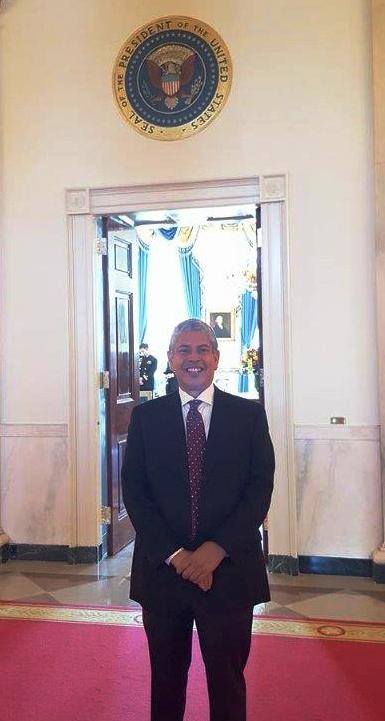
Cuban group Buena Vista Social Club will perform today at the White House during the reception that President Barack Obama will offer on occasion of the Hispanic Heritage Month, announced the U.S. executive.
Government sources said that ‘Buena Vista Social Club is the first Cuba-based group to perform at the White House in more than 50 years’.
The musical project rescued and brought together in the 90s of last century great figures of Cuban music, thanks to the efforts of the guitar player from the United States Ry Cooder. For two decades, the group, which took its name from a social and musical Havana Club has performed in countless venues around the world.
During the celebration, Obama will deliver a speech on the occasion of Hispanic Heritage Month, which is celebrated since 1968 and runs from September 15 until this Thursday-and for the first quarter century of the White House Initiative for Educational Excellence for Hispanics.
This summer, the United States and Cuba reestablished diplomatic ties as part of a process of normalization of bilateral relations announced last Dec. 17.

Festival Photo Mexico to bring together 500 photographers
The First International Festival Photo Mexico 2015 will bring together 500 photographers from 33 cities, with 130 exhibitions in 122 venues and the participation of 31 museums and 21 Mexican states.
About this initiative, Rafael Tovar y de Teresa, president of the National Council for Culture and Arts (Conaculta), said Photo Mexico represents an opportunity to disseminate photography.
He described the event as fundamental to understand the richness of photography in the contemporary cultural offer.
Meanwhile, Elena Navarro, director of the festival, explained that the event opens with exhibitions ranging reflection and analysis of art image from the daguerreotype to the latest digital techniques.
Photo Mexico 2015 International Festival will open with the exhibition La Cámara de las Maravillas (The chamber of wonders).
This event invited several of the most important public and private collections in Mexico and abroad to participate in its program of exhibitions.

Film Desert shines in Cinema International Sample in the UK
The film Desert directed by the Mexican filmmaker Jonas Cuarón, captured the attention of moviegoers gathered at the International Film Festival of London, scheduled until Sunday in this capital.
In the film by Cuarón, immigration is a recurring theme in Latin American cinema, complemented by various human virtues, including heroism and hope.
Starring Mexican actor Gael García Bernal, the film won the FIPRESCI prize in the Special presentations category of the 40th edition of the Toronto International Film Festival in Canada.
Considered the most important film event in the UK, the London Film Festival will present a film called Chronicle, directed by Michel Franco, who won the award for best screenplay in Cannes, France.
The film illustrates the life of David (Tim Roth), a nurse who has strong links with terminal patients, but in his personal life, he is reserved and distant.
Meanwhile, the film Las Elegidas (The Chosen) by film director David Pablos; A Thousand-Headed Monster, by filmmaker Rodrigo Pla; and Lucifer, by the director Gust Van den Berghe, are other attractions of the British appointment.

spot_img

Energy wars: ‘massive’ oil discovery in Israel

by Jon Rappoport

For decades, Israel has been searching for oil in its own lands, with the hope of gaining energy independence.
Recent reports from Genie, a US oil-exploration company, suggest oil has been found in Israel. Lots of it.
Cautionary statements from experts have followed: there is a difference between oil in the ground and oil that can be brought to the surface cost-effectively.
And as long as OPEC oil-exporting nations are setting a very low price per barrel, bringing Israeli oil to the surface would be more difficult, financially speaking.
The oil is actually in the Golan Heights, which was taken by Israel, from Syria, in the 1967 war. The ownership of the area is still contested. (Haaretz: “Genie Confirms Report of Possible Big Golan Oil Find,” Oct 11, 2015).
However, given the current war in Syria and the massive chaos there, Syria would certainly be less likely to challenge Israel’s oil claim with meaningful force. Is the Syrian-war escalation in part an effort to pave the way for Israeli oil?
If the initial celebratory announcements about how much oil is under the ground, in Golan, are correct, Israel could be looking at a long-sought, massive upswing in its domestic energy capability.
That’s not all. Genie, the US company that is doing the drilling-exploration in Golan, has some very interesting characters on its strategic advisory board—men who can exert influence on all sorts of geo-political operations.
For example, Rupert Murdoch; and Jacob Rothschild, the chairman of the Rothschild Foundation and the J Rothschild group of companies.
For example, ex-CIA director James Woolsey.
And Dick Cheney.
And Lawrence Summers, former president of Harvard University, former Secretary of the Treasury under Bill Clinton, director of the National Economic Council under Obama. (Will we see the involvement of the Harvard Endowment Fund in this Israeli oil operation?)
And Bill Richardson, former Secretary of Energy under Bill Clinton.
Who would obtain a license to bring up all this oil? Afek Israel Oil and Gas, which is a subsidiary of Genie, for whom the above-mentioned men serve as advisors. In fact, we have this from Genie’s website:
“Afek is characterizing a potentially significant oil and gas resource in Northern Israel pursuant to an exclusive, 3 year petroleum exploration license issued by the government of Israel.”
Mint Press News reports, in “Israel Takes Advantage Of Syrian Civil War To Expand Illegal Golan Heights Settlements,” Oct 13, 2015:
“Israel is taking advantage of the chaos in Syria to expand its illegal settlements in the Golan Heights, just as new oil reserves were discovered in the contested region… Now, Israel hopes to quintuple the size of its settlements over the next five years by adding an additional 100,000 settlers to the region. The plan was proposed by Naftali Bennett, a senior Israeli minister and member of the right-wing Jewish Home party, and, according to a report from The New York Times last week, Bennett is just one of ‘many Israeli leaders and thinkers seizing on the chaos in Syria to solidify Israel’s hold on the Golan.”
Seizing on the chaos, after the fact? Or promoting and instigating the chaos in the first place, in order to clamp down on the Golan, with oil as the ultimate prize?
Exactly how long ago did the Genie people actually know there was oil under the Golan? Did they delay their announcement, to make it seem as if the Syrian escalation was just an unrelated coincidence?
Depending on the size of the oil find under the Golan, the whole configuration of oil-control in the Middle East could be affected. Who has it, who owns it, who sells it, who buys it, and who sets the price.
Israel’s apparent long-term plan to weaken and disable nations in the Middle East, including Syria, could certainly raise the price of oil from that region, making it cost-effective to bring up all the oil under Golan—however many barrels that turns out to be.
Putin’s recent attacks on Syria also involve an effort to jack up oil prices by “increasing uncertainty” in the region. Long term, Putin wants to extend his influence in the Middle East (e.g., Iran and Iraq), hopefully allowing him to keep oil prices at a level that would bring rescue to the Russian economy, which, as an oil exporter, has been languishing under low-cost oil.
Everybody and his brother wants a piece of the pie. As usual, war is a strategy for getting it, while the war-makers suppress actual (not fake) energy alternatives.
These psychopaths always favor destruction to solutions that can bring tranquility and abundance.
(Jon Rappoport is he author of three explosive collections, The Matrix Revealed, Exit From The Matrix, and Power Outside The Matrix).

spot_img

Freemansons, the oldest and largest fraternal organization in the world

NOTE FROM THE EDITOR

Dear readers, during my research for unusual and controversial subjects, I found this great, historical article published by Spoonfed, about the Freemasons, so, sit down comfortably and get ready to learn about this intriguing organization that has existed for several centuries, and which has included among its members monarchs, presidents, good and evil leaders in the history of the world. – Marvin Ramírez

by the Spoonfed Truth

Who are the Freemasons? They belong to the oldest and largest fraternal organization of the world. Fraternities, or brotherhoods go as far back as Ancient Rome and Greece
The development of fraternities in the modern day can be trace from trade unions or guilds that emerged in England. Among guilds that became prosperous are the Freemasons, Odd Fellows and Foresters. Most people have never heard of the other two. It is interesting to note that many former U.S Presidents are Freemasons.
Freemasonry arose from obscure origins in the late 16th to early 17th century. Freemasonry now exists in various forms all over the world, with a membership estimated at around six million, including approximately 150,000 under the jurisdictions of the Grand Lodge of Scotland and Grand Lodge of Ireland, over a quarter of a million under the jurisdiction of the United Grand Lodge of England and just under two million in the United States. While Freemasonry has often been called a “secret society,
Freemasons themselves argue that it is more correct to say that it is an esoteric society, in that certain aspects are private.

Membership is voted upon by the members, thus it is not open to the public. They are obligated and swear to abide by the rules of the fraternity and to keep the “secrets of Freemasonry”. This secret is closely guarded. The pyramid hierarchy is very prominent to the Freemasons who ascend to levels they call degrees, which basically represent how much they are allowed to know
With the general population of freemasons below a certain degree, most people believe 33rd is the highest degree. Publicly the Freemasons seem just like another other club. As a front, those at the bottom of the Freemason social pyramid often do charitable work, and work on giving the Freemasons an ordinary outward appearance.
hroughout history some members of the fraternity have made no secret of their involvement, while others have not made their membership public. In some cases, membership can only be proven by searching through the fraternity’s records. Such records are most often kept at the individual Lodge level, and may be lost due to fire, flood, deterioration, or simple carelessness. Grand Lodge governance may have shifted or reorganized, resulting in further loss of records on the member or the name, number, location or even existence of the Lodge in question. In areas of the world where Masonry has been suppressed by governments, records of entire Grand Lodges have been destroyed. Because of this, masonic membership can sometimes be difficult to verify.
Some of the known notable Freemasons include U.S Presidents: George Washington, Andrew Jackson, James Monroe, Andrew Johnson, William McKinley, Theodore Roosevelt, William Howard Taft, Warren G. Harding, Franklin D Roosevelt, Harry S. Truman, James Muchanan, James Polk, Lyndon B. Johnson and Gerald R. Ford. Then of course political leaders world wide such as Winston Churchhill, Cecil Rhodes, Benjamin Franklin, Bob Dole, Prince Philip, Jesse Jackson, Al Gore, Andrew Carnegie, Henry Kissinger, to name a few. Not to mention prime ministers, governors, presidents, politicians from many different countries, writers, senators, actors, astronauts, adventurers such as Lewis and Clarke and Charles A. Lindbergh, philosophers, lawyers, judges, religious leaders, and heads of all kinds of organizations.”
The Scottish Rite Third-Degree Master Mason oath is as follows – “I do promise and swear upon the Holy Bible never to reveal where I have received this degree…. and in failure of this I consent to have my body opened perpendicularly and to be exposed for eight hours in the open air, so that the venomous flies may eat my entrails, my head to be cut off and put on the highest pinnacle of the world, and I will always be ready to inflict the same punishment on those who shall disclose this degree and break this obligation.”
In Humanum Genus” Pope Leo XIII does an excellent job explaining how the Freemasons work:
“In consequence, the sect of Freemasons grew with rapidity beyond conception in the course of a century and a half, until it came to be able, by means of fraud or of audacity, to gain such entrance into every rank of the State as to seem to be almost its ruling power
There are several organized bodies which, though differing in name, in ceremonial, in form and origin, are nevertheless so bound together by community of purpose and by the similarity of their main opinions, as to make in fact one thing with the sect of the Freemasons, which is a kind of centre whence they all go forth, and whither they all return. Now, these no longer show a desire to remain concealed; for they hold their meetings in the daylight and before the public eye, and publish their own newspaper organs; and yet, when thoroughly understood, they are found still to retain the nature and the habits of secret societies.
There are many things like mysteries which it is the fixed rule to hide with extreme care, not only from strangers, but from very many members, also; such as their secret and final designs, the names of the chief leaders, and certain secret and inner meetings, as well as their decisions, and the ways and means of carrying them out. This is, no doubt, the object of the manifold difference among the members as to right, office, and privilege, of the received distinction of orders and grades, and of that severe discipline which is maintained.
Candidates are generally commanded to promise – nay, with a special oath, to swear – that they will never, to any person, at any time or in any way, make known the members, the passes, or the subjects discussed.
Thus, with a fraudulent external appearance, and with a style of simulation which is always the same, the Freemasons, like the Manichees of old, strive, as far as possible, to conceal themselves, and to admit no witnesses but their own members. As a convenient manner of concealment, they assume the character of literary men and scholars associated for purposes of learning. They speak of their zeal for a more cultured refinement and of their love for the poor; and they declare their one wish to be the amelioration of the condition of the masses, and to share with the largest possible number all the benefits of civil life.
Were these purposes aimed at in real truth, they are by no means the whole of their object. Moreover, to be enrolled, it is necessary that the candidates promise and undertake to be thenceforward strictly obedient to their leaders and masters with the utmost submission and fidelity, and to be in readiness to do their bidding upon the slightest expression of their will; or, if disobedient, to submit to the direst penalties and death itself. As a fact, if any are judged to have betrayed the doings of the sect, or to have resisted commands given, punishment is inflicted on them not infrequently, and with so much audacity and dexterity that the assassin very often escapes the detection and penalty of his crime


spot_img

Italy and Austria join growing list of countries banning GMO agriculture

by J. D. Heyes

European nations are leading the world in rejecting genetically modified organisms in food and crops, with two more countries recently joining the list: Italy and Austria.
As reported by Nation of Change, Italian ministries have opted to utilize the newly created European Union rules that permit member countries to opt out of growing GM crops. Austrian officials joined in as well, with both nations making the decision to stop growing eight varieties of GM maize, which essentially amounted to a complete ban on GM crops.
The EU’s opt-out regulations were implemented earlier this year. They allow member states to decide on their own if they want to continue using GM crops or ban them altogether.
As reported by Sustainable Pulse, a number of other countries in the EU have also opted out of GM crops.
Wales: “These new rules proposed by the European Commission provide Wales with the necessary tools to maintain our cautionary approach by allowing us to control the future cultivation of GM crops in Wales,” said Welsh Deputy Minister for Farming and Food, Rebecca Evans. “It will allow us to protect the significant investment we have made in our organic sector and safeguard the agricultural land in Wales that is managed under voluntary agri-environment schemes.”
She added: “Farming and food processing businesses remain the driving force of our rural economy. Our emphasis is on competing on quality, strong branding and adding value through local processing. We, therefore, need to preserve consumer confidence and maintain our focus on a clean, green, natural environment.”
Poland: In 2013, the Polish government actually adopted a regulation that banned GMO farming in the country, well ahead of the EU action. But once the EU approved its regulation giving member nations the right to ban if they chose, that was more than enough authority for the Polish government to act.
“Now we no longer have to explain the scientific aspects and we can already relate to social issues,” Polish Agriculture Minister Marek Sawicki said at the time of the country’s ban.
Germany: German government officials announced in late September that the country would no longer permit the cultivation of GM crops, as stated by German Agriculture Minister Christian Schmidt.
Slovenia: Slovenian Agriculture Minister Dejan Zidan said in announcing the country’s ban that “the government adopted the decision for a request for the exclusion of the entire geographical territory of Slovenia for GM maize to the EU, including the already registered variety MON 810 and seven other varieties which are in the process of registration with the European Commission. This allows me to formally send the request as the Ministry of Agriculture in accordance with the law for the exclusion of Slovenia with the regards to the cultivation of GM maize.”
Serbia: State Secretary in the Serbian Ministry of Agriculture and Environmental Protection Danilo Golubovic recently announced the country’s GMO ban. In making the announcement, Golubovic said the decision was based on a desire to improve public health and safety.
Bulgaria: This government has decided to burnish its clean and green image by banning GM crops. As noted by Sustainable Pulse’s director, Henry Rowlands, “Bulgaria is home to a wide variety of unique flora and fauna and is also the base of many ancient civilizations, it is with this background that Bulgarians know what is at risk when it comes to using an untested and unnecessary technology.”
European nations that have opted out of growing GM crops thus far are Latvia, France, Austria, Cyprus, Lithuania, the Netherlands, Scotland, Northern Ireland, Poland, Germany, Greece, Croatia, Hungary, Slovenia and Italy, Sustainable Pulse reported.

spot_img

Indigenous migrants demand change in the fields

TIJUANA, BAJA CALIFORNIA NORTE, MEXICO - 29MARCH15 - Striking farm workers from the San Quintin Valley in Baja California took busses to Tijuana, and marched to the U.S. Mexico border, to draw attention to the fact that the tomatoes and strawberries they pick are exported to the U.S. The workers are almost all indigenous Mixtec and Triqui migrants from Oaxaca, in southern Mexico. Copyright David Bacon

From Baja California to Washington State

photo and story by David Bacon

When thousands of indigenous farm workers went on strike in the San Quintin Valley of Baja California on March 16, their voices were not just heard in the streets of the farm towns along this peninsula in northern Mexico. Two years earlier, migrants from the same region of Oaxaca struck one of the largest berry growers in the Pacific Northwest, Sakuma Farms, and organized an independent union for agricultural laborers, Familias Unidas por la Justicia (Families United for Justice).
Indigenous Oaxacan migrants have been coming to California for at least three decades, and the echoes of San Quintin were heard as well in towns like Greenfield, where worker frustration has been building over economic exploitation in the fields and discrimination in the local community.
“We are the working people,” declared Fidel Sánchez, leader of the Alianza de Organizaciones Nacionales, Estatales y Municipales para Justicia Social (the Alliance of National, State and Municipal Organizations for Social Justice). “We are the ones who pay for the government of this state and country with the labor of our hands.” This was not an excess of rhetoric. In just the first two weeks of striking at the height of the strawberry season in April, Baja California’s conservative Governor Francisco Vega de Lamadrid estimated grower losses at over forty million dollars.
While the strike demands ranged from a daily wage of 200 pesos ($13) to better conditions in labor camps, Sanchez explained it in basic terms: “We want to work as men, as fathers of our families. Our wives suffer the most from these hunger wages, because they have to stretch 700 or 800 pesos so that it can cover the cost of the food, of the clothes for our children and their schoolbooks and pencils, for their medical care when they get sick, for the gas and water so that we can wash up.”
Agribusiness farming started in San Quintin in the 1970s, as it did in many areas of northern Mexico, to supply the U.S. market with winter tomatoes and strawberries. Baja California had few inhabitants then, so growers brought workers from southern Mexico, especially indigenous Mixtec and Triqui families from Oaxaca. Today an estimated 70,000 indigenous migrant workers live in labor camps notorious for their bad conditions. Many of the conditions are violations of Mexican law.
Once indigenous workers had been brought to the border, they began to cross it to work in fields in the U.S. Today the bulk of the farm labor workforce in California’s strawberry fields comes from the same migrant stream that is on strike in Baja California. So does the migrant labor force picking berries in Washington State, where workers went on strike two years ago.
Two of the 500 strikers at Sakuma Farms were teenagers Marcelina Hilario from San Martin Itunyoso and Teofila Raymundo from Santa Cruz Yucayani. Both started working in the fields with their parents, and today, like many young people in indigenous migrant families, they speak English and Spanish – the languages of school and the culture around them. But Raymundo also speaks her native Triqui and is learning Mixteco, while Hilario speaks Mixteco, is studying French, and thinking about German.
“I’ve been working with my dad since I was 12,” Raymundo remembers. “I’ve seen them treat him bad, but he comes back because he needs this job. Once after a strike here, we came up all the way from California the next season, and they wouldn’t hire us. We had to go looking for another place to live and work that year. That’s how I met Marcelina.” They both accused the company of refusing to give them better jobs keeping track of the berries picked by workers – positions that only went to young white workers.

“When I see people treat us badly, I don’t agree with that,” Hilario added. “I think you have to say something.”
Rosario Ventura was another Sakuma Farms striker. She lives in California, and comes to Washington with husband Isidro, for the picking season. Ventura is from a Triqui town, while her husband Isidro is from the Mixteca region of Oaxaca. They met and married while working at Sakuma Farms, something that might never have taken place if they’d stayed in Mexico.
But Ventura didn’t come to the U.S. for romance. During the dry years in San Martin Itunyoso, “there is nothing with which to get food, nothing. Sometimes we were starving because there would be no money.”
Nevertheless, her father wept when she announced she was leaving, saying she’d never return. In some ways he was right. “If you go you aren’t going to come back — it is forever. That is what he said,” she remembered. “I don’t call or even talk with him, because if I do, it will make him sad. He’ll ask, ‘When will you return?’ What can I say? It is very expensive to cross the border. It is easy to leave the U.S., but difficult to cross back. When I came, in 2001, it cost two thousand dollars.”
Miguel López, a Triqui man who lives in Greenfield, in California’s Salinas Valley, came for the same reasons, and had an even harder time when he arrived twenty years ago. With no money he couldn’t rent an apartment. “I lived under a tree with five others, next to a ranch,” he recalled. “It rains a lot in Oregon, and there we were under a tree.”
Eventually he found work, and after some years, brought his family.
“Indigenous people face discrimination at school and around town in general. Many people speak badly of Triqui or indigenous people,” said López.
“Foremen insult workers and call them burros,” he charged. “When you compare people to animals, this is racism. We’re human beings.” But, he cautioned, discrimination involves more than language. “Low wages are a form of racism too, because they minimize the work of migrants,” said Bernardo Ramírez, former binational coordinator of the Frente Indigena de Organizaciones Binacionales (Binational Front of Indigenous Organizations).
The big agribusiness corporations that market the strawberries, blueberries and blackberries sold in the U.S. dispute such charges. Sakuma Farms says it guarantees its workers $10/hour with a piecerate bonus, and workers have to meet a production quota.  But these companies should start paying attention to these voices.  They are not only coming from their own workers, who produce their profits, but they express a building anger and frustration at the continued poverty among Oaxaca’s indigenous migrants.  Maybe the growers should learn Triqui and Mixteco, so they can hear what’s being said.

spot_img

Repossessions spike 66 percent as foreclosure crises lingers

by Diana Olick

CNBC Reported: New foreclosures may be back to nearly normal, but the mess from the epic housing disaster in the last decade is far from gone. Bank repossessions, the final stage of the foreclosure process, jumped 66 percent year over year in the third quarter of this year, according to RealtyTrac, a foreclosure sales and analytics company. It’s the largest annual rise ever recorded in bank repossessions by RealtyTrac. More than 123,000 homes went back to the bank in just three months.
“In states such as New Jersey, Massachusetts and New York, a flood of deferred distress from the last housing crisis is finally spilling over the legislative and legal dams that have held back some foreclosure activity for years,” said Daren Blomquist, vice president at RealtyTrac. “That deferred distress often represents properties with deferred maintenance that will sell at more deeply discounted prices, creating a drag on overall home values.”
New York and New Jersey have the longest foreclosure timelines in the nation. In both states, foreclosures can take well more than three years. New Jersey has a formidable judicial process, as well as a strong voice in nonprofit housing activists working with distressed homeowners. Those combined to keep the foreclosure process at a snail’s pace, until now. Banks have finally reached a point where they can push foreclosures forward, having streamlined all the extra paces required by laws and court rulings.
“Additionally, more nonbank lenders who purchased nonperforming loans over the past couple years are moving forward with foreclosure, having passed the foreclosure moratorium of six to 12 months required by many of these purchase agreements,” said Blomquist.
With the backlog finally moving, New Jersey now has the nation’s top foreclosure rate, just beating Florida, which was once the poster child for the housing crash and which also has a judicial foreclosure process. Foreclosure activity in the Garden State is more than twice the national average. New foreclosures there are falling, but bank repossessions jumped 351 percent from a year ago. Atlantic City now boasts the highest metropolitan foreclosure rate. Trouble in the local casino economy now is causing more new foreclosures, but the bulk of the bank repossessions are on homes that were in default well before that.
While states like Michigan, Texas and Washington are also seeing increases in foreclosure activity, their numbers are far closer to normal levels. Foreclosure starts historically speed up between September and November before holiday moratoria set in.
“The third-quarter increases are a sign that the foreclosure market has settled into a normalized pattern close to or even below precrisis levels, and in those states the overall housing market should easily absorb the additional foreclosure activity with little impact on home values,” added Blomquist.
Foreclosure activity in formerly hard-hit states, like Arizona and California, is falling. Those states had much swifter systems for processing foreclosures, and investors helped to put a floor on home prices. In New Jersey in August home prices were still higher than a year ago, but just barely, up 2 percent from a year ago according to CoreLogic. Compare that to national gains of 6.9 percent.
Now, with a slew of distressed properties hitting the market in the East, home prices could be under further pressure. Investors, apparently, are not there yet in force the way they were in the West.
“There are so many of them coming so quickly that investor demand hasn’t kept pace with the new supply. That will probably change,” said Rick Sharga, executive vice president at Auction.com, a real estate auction company.
A lot of the properties, added Sharga, are either still occupied or not suitable for owners yet. They will need to be rehabbed before they’re worth anything. Also, companies like Auction.com, which investors follow, are not a part of the auction process in those judicial states, because auctions are usually done by local county sheriffs.
http://www.cnbc.com/2015/10/14/repossessions-spike-66-as-foreclosure-crisis-lingers.html

spot_img

SF Mission Neighborhood Center is recognized by the White House

by the El Reportero’s wire services

SAN FRANCISCO – Mission Neighborhood Centers, Inc. (MNC) has been selected as one of over 100 Commitments to Action from the public, private and non-profit sectors to be honored by the White House Initiative on Educational Excellence for Hispanics on Thursday, Oct. 15, 2015 in Washington, D.C.
San Francisco’s Hispanic/Latino families reflect national trends, such as 25 percent of all Hispanic infants and toddlers live in poverty and only one of eight children, 3 to 5 years of age attend preschool.
Of those who do not attend, as many as one in four are at risk for social delay or developmental disability, yet only 61 percent of infants and toddlers receive developmental screening.
MNC has a 56-year history of providing culturally sensitive, multi-generational community-based programs to low-income Hispanic/Latino immigrant and non-immigrant families. As the city’s largest provider of Head Start/Early Head Start preschool and early care programs, MNC serves 413 children at 10 sites throughout the greater Mission district. Their parents and family members also benefit from Head Start mandated family support services and additional family engagement, parent leadership and civic engagement training, all provided by bi-lingual staff.
In celebration of this extraordinary national recognition, MNC’s Head Start staff, parents and children will participate in the #LatinosAchieve social media campaign generated by the White House Initiative on Thursday, Oct. 15, 2015.

UC Berkeley breaks up Native religious ceremony, forcibly removes Ohlone elder
ALBANY, CA—Before dawn on Wednesday, Oct. 14, UC Berkeley Police forcibly removed an Ohlone Elder from the Gill Tract Farm where he was engaged in a religious ceremony.
The multi-day ceremony began Sunday, Oct. 11, led by the Indigenous Land Action Committee (ILAC), a group of indigenous people who organized the ceremonial observance to honor the land and the ancestors who lived on the land, to mark Indigenous Peoples’ Day, and to protect the land from immanent development. ILAC also sent a letter to the UC administration inviting the university “to engage in dialogue about the preservation of this sacred land.”
Rather than respond to the letter, UC Police arrived Wednesday morning at 5 a.m. ready for a raid. Those on the land in solidarity with the indigenous peoples gathered their belongings and exited.
UC Berkeley has a fraught history with the Native American community. UC Berkeley has the second largest collection of Native American ancestral remains and sacred objects in the nation. For years they have come under criticism for being slow to return the remains of the over 10,000 Native Americans which were long held in drawers and cabinets in the Hearst Gym basement, as required by the 1990 federal Native American Graves Protection and Repatriation Act.
All this occurred one day before UC Berkeley hosts the 30th annual California Indian Conference, which was started in Berkeley in 1985.
A few hours after disrupting the ceremony, the University of California posted around the clock security guards and and set up temporary flood lights on the land. (Submitted by the Indigenous Land Access Committee).

spot_img

The Library welcomes Kindie Rockers for 7th Annual Tricycle Music Fest

Compilted by the El Reportero’s staff

October is here and everyone knows it’s time to break out your dancing shoes for some Tricycle Music Fest fun.
Each week in October will feature a different performer, offering their brand of Kindie Rock!
Frances England will bring her Kindie Rock music to Parkside and Mission Bay Branches. From October sun on Friday, Oct. 9th at 4:30 p.m. at Mission Bay Branch. Then she will perform her toe tapping beats at the Parkside Branch on Saturday, Oct. 10 at 3:30 p.m.
Our third weekend of performances will be performed by none other than the Grammy and Emmy winning team of Lucky Díaz and the Family Jam Band. With their new featured album, Adelante!, they will be sure to get the crowd jumping, dancing and singing along. The Richmond Branch will be hosting them at outdoor family fun day on Friday, Oct. 16 at 3:30 p.m. On Saturday, Oct. 17 at 3 p.m., the band will be performing at Bernal Heights Branch.

Los Cenzontles (The Mockingbirds) Mexican roots, cross cultural, songs of conscience
Los Cenzontles, a group of musicians and dancers that digs deeply into their Mexican cultural roots to promote tradition, pride and cultural awareness. Through research, performance, media production and collaborations, the group has played a leading role in the roots revival in the U.S. and Mexico since 1989.
Los Cenzontles is a group of musicians and dancers that digs deeply into their Mexican cultural roots to promote tradition,pride and cultural awareness. Through research, performance, media production and collaborations, the group has played a leading role in the roots revival in the U.S. and Mexico since 1989.
The groupo performs rancheras, boleros and many varieties of Mexican son including those from the traditional mariachi of Jalisco, pirekuas of Indigenous Michoacán and son Jarocho of Veracruz, and composes new music in traditional and cross-cultural styles that promote socially conscious messages of cultural awareness. They have released 23 CDs, three full-length documentaries and hundreds of digital videos, and will perform songs from the new release.
On Saturday, Oct. 17, at the Freight & Salvage Coffeehouse, 2020 Addison Street, Berkeley, Doors open at 7 p.m., the Show starts at 8 p.m., $23 adv/$25 door

spot_img

Managua ready for Joan Manuel Serrat Concert

by the El Reportero’s news services

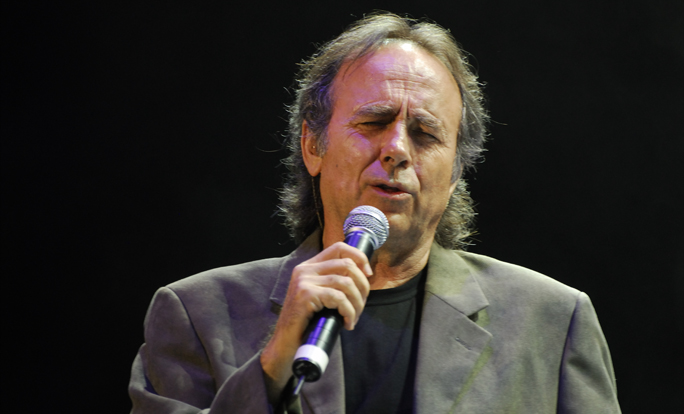
Lovers of the music by Spanish singer songwriter Joan Manuel Serrat are delighted in this capital, while Oct. 24, the date of his single concert in Nicaragua, at the National Theater Ruben Dario, is getting closer.
The concert is part of the world tour Untidy Anthology, the title of his latest album, which started in late February in Montevideo.
With this quadruple album, Serrat reviews his whole career and will have 30 guests colleagues to help him cover the extensive repertoire: Paquita la del Barrio, Silvio Rodríguez, Les Luthiers, Calle 13, Miguel Ríos and others.
With this tour, the author of the song Mediterraneo is celebrating his half-a-century career, which started on Feb. 18, 1965 at the studio Toreski, at Radio Barcelona.
Starting on Monday, when he will give his concert in the Mexican city of Guadalajara, the 71-year-old Catalan artist will perform in five other stages in Mexico, until October 17 in Puebla, to start then the Central American segment, with presentations in Guatemala (Oct. 21), San Salvador (Oct. 22), Managua (Oct. 24) and San Jose (Oct. 27).

Contemporary dance of Cuba to present Carmina Burana in Mexico
Danza Contemporanea de Cuba (DCC) will present in Mexico a version of Carmina Burana, winner there in 2009 of the Luna Award for the Performing Arts.
The work will be seen on Oct. 8 and 9 in the National Auditorium, main space for shows in the country, with capacity for 12,000 spectators.
This piece involves putting a backdrop of LED screens and a smaller circle one in the center, where they project a video of various contents, from the origin of the universe and some of the current events in any street to the possible destruction of everything we know.
The relation between the physical and spiritual seems inescapable in a piece that aims to tear the soul of anyone, and the dancers assume that with strength and conviction.
To complete the cast, the production includes 68 musicians, a choir of 100 voices, 35 children and three singers (a baritone, a soprano and countertenor), as pointed by DCC director, Miguel Iglesias.

Uruguay pays posthumous tribute to writer Eduardo Galeano
With a tribute to Uruguayan writer Eduardo Galeano, who recently died, the 38th edition of the International Book Fair in Montevideo will be opened today by national and foreign authors.
More than 43 exhibitors and authors from Cuba, Argentina, Chile, United States and Nordic countries, and numerous Uruguayan intellectuals, are participating in the homage to the author of Las venas abiertas de América Latina (The Open Veins of Latin America).
According to the Uruguayan Book Chamber, organizer of the annual event, which runs until Oct. 11, some 175 cultural events will also be held.

spot_img