Thursday, August 6, 2026
Home Blog Page 261

Cine Latino brings the best in Latino films on 2019

Compiled by the El Reportero’s staff


In just a few days Cine+Mas SF presents the 11th San Francisco Latino Film Festival with over 90 films including shorts, features, and documentaries. There are 12 documentary features, 14 narrative features, and nine shorts programs to choose from. Most features are San Francisco premieres with a few US and West Coast premieres in the mix.

Most films only screen once. Screenings take place at the Alamo Drafthouse, the Opera Plaza Theaters and the Roxie Theater where we will be opening. Additional screenings at the ATA and Eastside Cultural Center.

A beautiful biopic about Carlos Acosta, a legendary ballet dancer from Cuba who became the first black principal dancer with the Royal Ballet of London. The film is directed by Catalan filmmaker Iciar Bollain (The Rain, The Olive Tree).

The 11th San Francisco Latino Film Festival presented by Cine+Mas SF runs from Sept. 20-29. Opening Night at Roxie Theater.

Environmental film section, guest filmmakers at most screenings – feature docs and shorts. Premieres with filmmakers in town: Tattoo of Revenge, Quinceañera, Bathroom Stalls & Parking Lots, Bring Me an Avocado; Carlos Almaraz Playing with Fire (Richard Montoya, director).

Provocative documentaries; Decade of Fire– when local government plays a role in gentrification; Councilwoman– in the year of the woman see a Dominican immigrant, hotel housekeeper run for political office; a profile on Carlos Almaraz – prolific Mexican-American artist made a mark on the art world and put a spotlight on Chicano art.

Fun documentaries like Amigo, Skate and Santa Lives in My Town. Skateboarding in Cuba and guys that make a living as Santa Claus in Argentina.

Sept. 20-27 Roxie Theater

Sept. 20-22 at ATA.

Sept. 20 Opening Night Party at Amado’s 998 Valencia & 21st St.)

Sept. 21 at Alamo Drafthouse

Sept. 24 at Opera Plaza Cinemas

Sept. 28 Eastside Cultural Center (Oakland)

Sept. 29 Closing Night Party (TBD).


Salsa in the Mission with Emilio Pérez and his New Caní band with Tito Thumas

Come and celebrate summer time with salsa, Latin jazz and tropical music for the soul on the dance floor, with Grupo New Caní. In the congas Emilio Pérez, in timbales Tito Thumas and his aunt Patricia Thumas (Saturdays) on the piano.

At Cavas-22 Restaurant. Full bar and Mexican and International food, 22nd Street @ Bartlett – across the street from Café Revolution. Fridays and Saturdays, from 8 to 11:30 p.m.


Redwood City Arts Commission Party

Join the newly re-named Arts Commission (previously the Civic Cultural Commission) to celebrate their support of our community.

This will be a great opportunity to meet our arts commissioners, learn about the impact of the commission’s grant on a local nonprofit, and hear from the artist of the new artwork at the kiosk this month. On Wednesday, Sept. 18 from 7 to 8 p.m. on Courthouse Square near the Art Kiosk.

Light refreshments and drinks will be offered.


Also in Redwood City:


Know what to do if you want to build a second unit in your property

Redwood City and @sanmateoco invite you to the free Second Unit Resource Fair on Sun, Oct. 13 from 1 to 5 p.m. at the VMSC,1455 Madison. Meet architects, builders & other professionals who specialize in second units. To register for free tickets, visit .http://adufair.eventbrite.com.

spot_img

Marc Anthony announces projects to serve orphaned, disadvantaged children in El Salvador, Guatemala and Colombia

by the El Reportero’s news services

The Maestro Cares Foundation, co-founded by music icon Marc Anthony and prominent businessman Henry Cardenas, continues to fulfill its mission of improving the quality of life of orphaned and disadvantaged children in Latin America and the United States by providing safe and loving environments for them to live, learn and play.

This past week Maestro Cares Foundation, along with its partners and supporters, have welcomed children in four new projects in three different countries!

Casa de Gozo in Santo Tomas, El Salvador is a home inaugurated Wednesday, September 4th for Fundación La Casa De Mi Padre which will be part of a bigger complex of homes for children. In this particular home for girls, they will receive basic needs, such as private schooling and enrichment programs. This project was possible thanks to the support of their partners Mr. Macario Armando Rosales Rosa and Sistema Fedecredito.


Chilean film Araña to represent the country at Goya and Oscar awards

The film Araña (Spider) directed by Andres Wood will represent Chilean cinema in the upcoming editions of the Goya Awards in Spain and the Oscars in the United States, informed the Ministry of Culture, Arts and Heritage.

The film, starring Mercedes Moran, María Valverde and Marcelo Alonso, was selected with 40 votes to participate in the pre-selection of the most important Hollywood awards ceremony.

Having been submitted, the film will have to wait for the final selection for the categories of Best International Feature Film in the Oscars, and Best Foreign Film in the Spanish Language in the Goyas, which in both cases are made up of five titles from all over the world.

Araña, a thriller with excellent performances and a good narrative rhythm of constant shifts between the past and the present, goes back to the years of Popular Unity in Chile, when the organization Patria y Libertad carried out actions aimed at overthrowing the government headed by Salvador Allende.


Pink Floyd bassist to perform in London in solidarity with Assange

Roger Waters, bassist and vocalist for Pink Floyd, will reportedly performed his iconic song Wish You Were Here in front of the British Home Office, in solidarity with Julian Assange.

According to the Stop the War Coalition on Twitter, the performance by the famous musician, also known for his political activism, will be next Monday at 6 p.m. local time, as part of a campaign for freedom of expression, and against the eventual extradition of the founder of Wikileaks to the United States.

Assange was arrested last April 11 at the Ecuadorian Embassy in London, after the government of that country withdrew the political asylum he was granted seven years ago.

Expeditiously tried by a British court, the Australian cyberactivist is now serving a 50-week prison sentence in Belmarsh Maximum Security Prison for violating bail granted in 2012 in connection with alleged sexual offences committed in Sweden.


spot_img

Academic stupidity and brainwashing

by Walter E. Williams


Just when we thought colleges could not spout loonier ideas, we have a new one from American University. They hired a professor to teach other professors to grade students based on their “labor” rather than their writing ability. The professor that American University hired to teach that nonsense is Asao B. Inoue, who is a professor at the University of Washington in Tacoma in interdisciplinary arts and sciences. He is also the director of the university’s writing center. Inoue believes that a person’s writing ability should not be assessed, in order to promote “anti-racist” objectives. Inoue taught American University’s faculty members that their previous practices of grading writing promoted white language supremacy. Inoue thinks that students should be graded on the effort they put into a project.

The idea to bring such a professor to American University, where parents and students fork over $48,459 a year in tuition charges, could not have been something thought up by saner members of its academic community. Instead, it was probably the result of deep thinking by the university’s diversity and campus life officials. Inoue’s views are not simply extreme but possibly hostile to the academic mission of most universities. Forgiving and ignoring a students’ writing ability would mostly affect black students. White students’ speaking and writing would be judged against the King’s English, defined as standard, pure or correct English grammar.

Professor Noam Chomsky, called the father of modern linguistics, formulated the generative theory of language. According to his theory, the most basic form of language is a set of syntactic rules that is universal for all humans and that underlies the grammar of all human languages. We analyze and interpret our environment with words and sentences in a structured language. Oral and written language provides a set of rules that enables us to organize thoughts and construct logical meaning with our thoughts.

Not holding students accountable to proper grammar does a disservice to those students who overall show poor writing abilities. When or if these students graduate from college, they are not going to be evaluated in their careers by Inoue’s tailored standards. They will be judged according to their objective abilities, and it probably follows that if they fail to meet those objective standards, the standards themselves will be labeled as racist.

There’s another very dangerous bit of academic nonsense happening, this time at the K-12 level of education. One America News Network anchor interviewed Mary Clare Amselem, education specialist at the Heritage Foundation, about the California Department of Education’s proposed ethnic studies curriculum. The proposed ethnic studies curriculum would teach children that capitalism and father figures are racist.

The Ethnic Studies Model Curriculum also includes gross anti-Israel bias and teaches about a Palestinian-led anti-Israel initiative called Boycott, Divestment and Sanctions. The curriculum also has students study issues of police brutality and asks teachers to find incidents of bias by police in their own communities. According to an article by Shelby Talcott in The Stream, California’s proposed curriculum called for students to study lawmakers such as Democratic Minnesota Rep. Ilhan Omar and Democratic Michigan Rep. Rashida Tlaib, both of whom have supported the BDS movement and have been accused of anti-Semitic rhetoric.

The proposed ethnic studies proposal has been removed from the California Department of Education website. House Minority Leader Kevin McCarthy, R-Calif., said, “While I am relieved that California made the obvious decision to revisit this wholly misguided proposal, we need to know why and how a blatantly anti-Semitic, anti-Israel, factually inaccurate curriculum made its way through the ranks of California’s Department of Education.” He added, “This was not simply an oversight — the California Department of Education’s attempt to institutionalize anti-Semitism is not only discriminatory and intolerant, it’s dangerous.”

Brainwashing our youngsters is a serious matter. The people responsible for the California Department of Education’s proposal ought to be summarily fired.

(Walter E. Williams is a professor of economics at George Mason University).


spot_img

Gun control in the US It is not the solution

A Facebook Friend had a posting in her timeline: “Absolutely agree with license for gun ownership.”

I got attracted by the quote, and reminded me that when one asks for a license, it gives away ones own liberty.

So, although I was on deadline to finish this edition of the paper, I went ahead and tried to formulate a quick answer, which after all turned out to be a long response.

“No, a request for a State license is synonymous to renouncing your own natural rights, Bill of Rights, constitutional right,” I wrote.

She responded: “Not if you’re going to buy weapons of mass destruction. Where is the right for the victim to live without fear of unprovoked harm, loss of life and livelihood?”

I said: “Millions of law-abiding citizens buy them every year, and most of the killers have been found to be under some type of psychiatric drugs. By the way, someone has said the shootings ‘could’ be the work of interests who want to disarm the population. The CIA experimented extensively with brainwashing during the 1950s and 1960s, honing techniques that could force someone to kill, then have no recollection afterward. Code-named “MKUltra,” the program involved some 149 separate experiments — many on unwitting Americans, including a Kentucky mental patient who was dosed with LSD for 179 days straight.”

She responded: “Oh Marvin, please don’t bring conspiracy theory here nor mental health. This is a serious issue where we are now talking about doing drills (some schools are doing it already) for active shooter in schools, arming teachers. why are mass carnage weapons that shred people to pieces even available for people to purchase? When we elect our representatives, it is so that the representative government will take all citizens well-being into consideration and make laws that work for all. We don’t have that now. Gun laws are weak and therefore we are seeing what we are seeing. I have never seen a gun in my whole life. In my house, we discuss non-violence as a basic principle of life just like we talk about the next trip or the next meal. To imagine that soon my kids will have to do drills for active shooter is beyond sadness and maybe it is not wrong to call it an injustice to young minds. Nothing, not even the damn constitutional right can argue for mass carnage weapon ownership if this is a govt for the people, by the people and of the people.”

What she had said sounded a little bit off grounds to me, especially when she added: “You have gone so far left that you have become right wing now.

Hummmm… I don’t think so, I thought, because Left and Right doesn’t really exist.

No, Yangchen, it has nothing to do with right wing or far left. I don’t like guns myself neither as my weapon of mass destruction – being a journalist – is my pen.

But I will say this for now, I added, that the police have no duty to protect us, rather to the corporation (the corporate government). And to confirm this, please know that the US Supreme Court (2005) has ruled that police agencies are not obligated to provide protection to its citizens. And with this, you can understand why we shouldn’t let the Government take away our guns and the right to have equal gun power as the police, which has recently been militarized for the “protection” of its citizens. And this militarization is itself unconstitutional.

The law is called: Posse Comitatus Act, which was created to limit the powers of the federal government in using federal military personnel to enforce domestic policies within the United States.

But they have succeeded in circumventing the law by donating military equipment to the cities police departments, which is why we have now a militarized local police that can break in into your home with military gear without a court order, kill its citizens for just anything, like a traffic infraction. And the disarmament plan is part of the UN Agenda 21 – which is also a socialist agenda, gun control and population control. Because if people remain armed, there will be no opportunity for the UN to advance to its plan for a world government, as it already did with the European Union, where a non-elected body governs the destiny of Europe.

This is why there is a growing ‘patriot’ movement in the US, which aims is to reject any UN interference. Which is why now you see rejection – within the current Administration – to international treaties that could violate US sovereignty; this is not understood by ordinary citizens.

The US media keeps its citizens dreaming that they live in a paradise where the government will protect them, and that they do not need to protect themselves.

The military guns in the hands of local police are aimed at its citizens in case of rebellion and protect the 1%’s property – because legally, the US military would not be able to do it directly because the Posse Comitatus Act.

I would love to keep this conversation with you if you are sincerely interested in getting answers to so many of the issues currently affecting our country, like the UN Agenda 21, currently being implemented as we speak. If you read about it, you will see that it makes sense to reject any gun control plans, because disarmament can start by innocently allowing for the ban of ammunition, with the excuse of protecting citizens from mass shootings.

Some of the solutions are to educate young people about the psychological dangers of video games, music infested with violence, and give them much love. Control of psychiatric drug use and their patients is a must.

Remember: laws do not prevent crime, education yes.

spot_img

Ginseng, jujube, gingko and astragalus all found to have antioxidant and anti-tumor effects

by Michelle Simmons


Oxidative stress is known to play a role in the development of diseases, including chronic inflammation and cancer. Emerging evidence suggests that antioxidant therapy can play a crucial role in treating those diseases. A study published in The American Journal of Chinese Medicine revealed that medicinal plants – including matrimony vine (Lycium barbarum), ginseng (Panax ginseng), jujube (Zizyphus jujuba), freckled milkvetch (Astragalus lentiginosus), and ginkgo biloba – have antioxidant and anti-tumor properties.

Polysaccharides from plants are potential resources for antioxidant therapy. They have a long history of use in traditional medicine, are widely available, and do not have any adverse effects when consumed. In addition, previous laboratory and clinical studies have shown that plant polysaccharides possess antioxidant, anti-inflammation, cell viability promotion, immune-regulation, and anti-tumor effects in numerous disease models.

In the current study, researchers from Jinan University and Shenzhen Third People’s Hospital in China looked at the antioxidant and anti-tumor properties of polysaccharides from the mentioned medicinal plants. They also identified the signaling pathways involved in the initiation and progression of diseases associated with oxidative stress and cancer.

The researchers found that these plant polysaccharides have great potential to fight oxidative stress and cancer-related disorders in cell models, animal disease models, and clinical cases. In addition, these polysaccharides treat oxidative stress and cancer through reactive oxygen species (ROS)-centered pathways and transcription factor-related pathways – with or without the further involvement of inflammatory and death receptor pathways. Some of the polysaccharides may also affect tumorigenic pathway to play their anti-tumor roles.

The search for alternative cancer treatments is important because current chemotherapeutic drugs come with serious side effects, such as alopecia, anemia, fatigue, fertility issues, immunodeficiency, neurological problem, peripheral neuropathy, and more.

A 2019 review published in the journal Carbohydrate Polymers suggested using polysaccharides as anti-cancer agents. In it, researchers focused on polysaccharides studied within the last five years, their proposed mechanism of action, and their anti-cancer activity in comparison with drugs used in conventional anti-cancer chemotherapeutic regimen.

Polysaccharides have exhibited good anti-cancer activity across a variety of cancer cell lines and can be developed as alternatives to existing cancer chemotherapeutic agents. They also possess selective activity against tumor cells with minimal toxic side-effects.

The researchers, who were from Dr. Bhanuben Nanavati College of Pharmacy in India, wrote that polysaccharides isolated from plants, fungi, microorganisms, and marine sources have been shown to act on cancer cells, mainly by inducing programmed cell death. They also kill cancer cells and prevent the spread of cancer cells by acting on DNA damage, cell cycle arrest, disruption of mitochondrial membrane, and production of nitric oxide.

Other natural approaches to manage cancer

Listed below are some alternative cancer treatments that have shown some promise in benefiting people with cancer:

  • Acupuncture: Acupuncture has been shown to relieve nausea caused by conventional cancer treatments. It may also ease pain in people with cancer.
  • Aromatherapy: Certain essential oils used in aromatherapy have a calming effect, while some help with nausea, pain, and stress.
  • Music therapy: Cancer patients may benefit from music therapy because it helps relieve pain and reduce nausea and vomiting. Music therapy is not just listening to music, but also playing instruments, singing songs, or writing lyrics.
  • Tai chi: Tai chi is a gentle form of exercise that involves light movements and deep breathing. Because of its slow movements, it does not require great physical strength. This exercise has been reported to help reduce stress in people with cancer. (Natural News).
spot_img

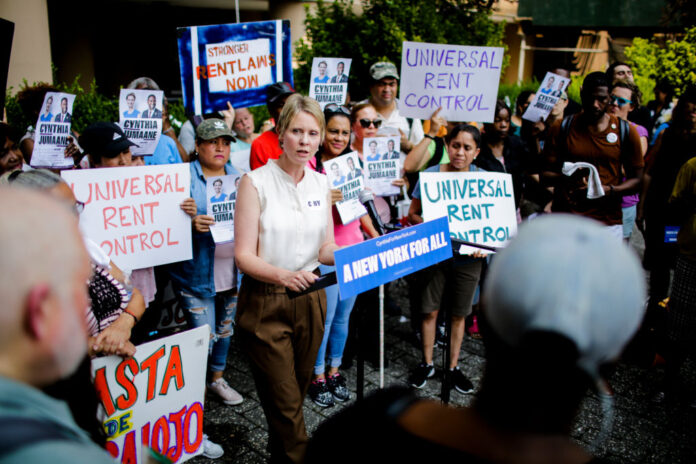
California puts a stop to excessive annual increases in rental housing

Income control supporters say it will protect tenants


by Aracely Martínez


In four years, Estela López has raised an additional $1,100 for renting her apartment in the city of South San Francisco. He currently pays $ 2,800 per month. Estela does not find fair the state measure AB 1482 that will limit the increase in housing income to 5 percent plus the inflation rate, usually between 2 and 3 percent.

“Five percent is too much. They should have left it at a maximum of 3 percent as in San Francisco, ”she says.

Estela, 63, works as a janitor 80 hours a week. “My husband became disabled and can no longer work. I have two jobs. I work 16 hours per day. I can hardly pay the rent, ”she says.

And she says that since the previous owner sold the apartments where she lives, the new owner began to raise and raise the rent excessively. “Two hundred and up to 300 dollars every year,” she says.

She finishes by saying she doesn’t know where the tenants in California are going to go. “At this rate, we will not eat, just work to pay rent,” she laments.

Measure AB 1482 of the San Francisco Democratic Assemblyman, David Chiu, which limits the rise to rents, was approved by the California Legislature and sent to Governor Gavin Newsom for signature.

The governor is expected to sign it without any problem as it is the product of an agreement reached between the landlords and the groups that represent the tenants in the state. He has also been a fierce defender of the measure as a necessary step to bring down gentrification, evictions and the epidemic of people on the streets.

Governor Newsom said about AB 1482, also known as the Tenant Protections Act 2019, that California is on the doorstep to enact strong state-level protections for tenants that are critical to fightthe housing crisis.

“These protections against an escalation of rent and eviction increases will help families keep a roof over their heads and provide important and new tools to combat the accessible housing crisis accessible to California,” said the governor.

Approval of the measure is in the midst of a state crisis of the homeless and the shortage of affordable housing. It will apparently protect 7 million tenants, a coverage that had not been seen in recent US history. Half of the tenants, more than 3 million spend more than 30 percent of their income on rent.

Lila Carrillo, Vice President of Operations and Policies of the Mission Neighborhood Centers, considered AB 1482 a victory. “We are very excited. We have supported this measure because it will prevent rental prices from skyrocketing, and at the same time it will give business owners a chance to make a profit, ”she says.

For a long time, she observes, that they have seen how the Mission neighborhood where their offices are located, have been the focus of the displacement of Latino families due to excessive rent increases.

In the last five, eight and 10 years, about 8,000 families have had to leave their homes in the Mission and move to cities like Pittsburg. “This has affected family stability because their jobs are in San Francisco and they have to drive long distances from work to their home,” she says.

La AB 1482 also prevents homeowners from evicting tenants without citing a reason approved by the government. In most of California, landlords could throw out a tenant without a clear reason. Sometimes just for complaining and demanding repairs.

For Roberto Hernández, organizer of the San Francisco Carnival and accessible housing activist of the Our Mission Not Eviction group, who for years has fought against the evictions of tenants, measure AB 1482 is late.

“They should have approved it 20 years ago. Now, rents are already very expensive. It will benefit those who have incomes of 1,000 dollars because they can no longer increase 1,000 dollars at one time. But what legislators had to do is pass a measure to reduce rents ”he said.

A study on rent control in San Francisco published by the American Economic Review this month found that while rent control prevents the displacement of current tenants in the short term, in the long term, there will be a loss of rental housing on the market, which will ultimately undermine the objectives of the law.

California Business Roundtable President Rob Lapsley said that while they appreciate the hard work done by the authors of the measure and the legislative leaders, AB 14 82 is not a long-term solution to reach the governor’s goal of new housing.

“We need to focus our attention on removing barriers to a new supply of houses since in the first place, that has caused the crisis.”

He added that the constant increase in costly requirements, charges for the construction of local real estate developments and the lack of a reform to the California Environmental Quality Act that regulates environmental standards, have decimated the housing supply in California.

The measure is based on a law that the state of Oregon passed last month to limit rents up to 7 percent plus the inflation rate hike.

Currently 15 cities in California have some form of rent control in their departments, between 1 percent to 4 percent.

AB 1482 does not prevent that when a tenant moves out, the rent of the apartment he left may be increased to the amount the landlord wishes.

spot_img

‘A good phone conversation’ between AMLO, Trump reaffirms Mexico-US friendship

Mexico not pleased with asylum ruling by US Supreme Court


by the El Reportero’s wiore services


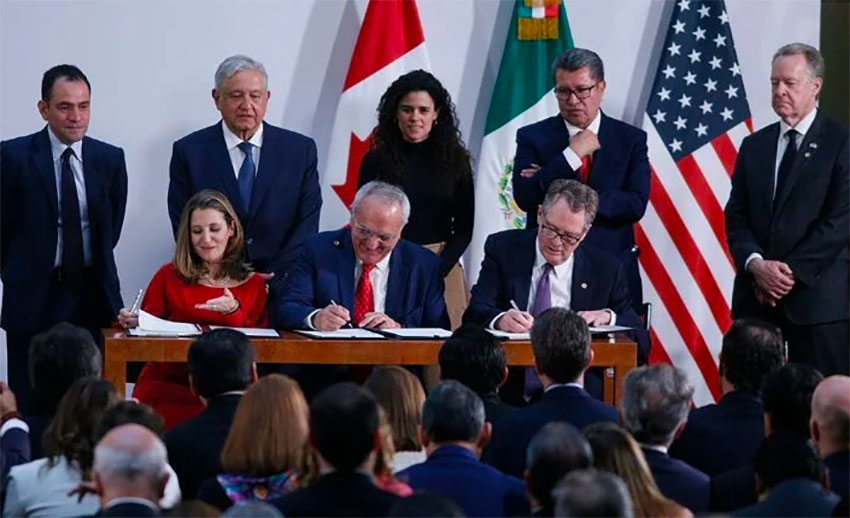
President López Obrador said that he and United States President Donald Trump “reaffirmed” their commitment to a friendly bilateral relationship during a telephone conversation on Wednesday.

“We held a good telephone conversation with President Donald Trump,” López Obrador wrote on Twitter in a post accompanied by a photo of himself, Foreign Affairs Secretary Marcelo Ebrard and another official.

“The will to maintain a relationship of friendship and cooperation between our people and governments was reaffirmed,” the tweet continued.

In his own Twitter post, Trump described the conversation with López Obrador as “excellent.”

He said they spoke about “southern border security and various other things of mutual interest for the people of our respective countries.”

In a subsequent post, the U.S. president said that “the southern border is becoming very strong despite the obstruction by Democrats not agreeing to do anything on loopholes or asylum.”

The United States Supreme Court ruled on Wednesday that the Trump administration could enforce its policy of barring most Central American migrants from seeking asylum in the U.S if they didn’t first apply for refuge in a country through which they traveled to reach the southern border.

Under the policy, citizens of El Salvador and Honduras must seek and be denied asylum in Guatemala or Mexico before they can apply in the United States. Guatemalans must seek and be denied asylum in Mexico. Exceptions will only be made for victims of “severe” human trafficking.

Although legal action against the U.S. policy is ongoing in other courts and the case could return to the Supreme Court, Trump described Wednesday’s ruling as a major victory.

“BIG United States Supreme Court WIN for the border on asylum!” he wrote on Twitter.

The conversation between López Obrador and Trump came a day after Ebrard met with United States Vice President Mike Pence and Secretary of State Mike Pompeo at the White House to discuss Mexico’s progress in stemming migration to the southern U.S. border.

“The meeting took place on friendly terms,” Ebrard told reporters in Washington.

“[It was] nothing like what we saw yesterday from the CBP,” he added in reference to a comment from acting Customs and Border Protection Commissioner Mark Morgan that Mexico needed to do more to stop migration.

The foreign secretary said he outlined to United States officials “the Mexican strategy” that has been successful in reducing migration flows “in accordance with the law.”

Ebrard said last week that migration through Mexico to the United States declined 56 percent between May and August as a result of the deployment of the National Guard to increase enforcement against undocumented migrants as well as the government’s efforts to stimulate economic development in Central America.

At Tuesday’s meeting, the foreign secretary said that he also brought up the issue of arms trafficking from the United States to Mexico. Ebrard said that a binational group has been set up to monitor the issue and provide a monthly report about the illicit flow of weapons.

The Secretariat of Foreign Affairs said in July that firearms from the United States are used in seven out of every 10 high-impact crimes committed in Mexico.

A White House statement about the meeting on Tuesday said that Vice President Pence acknowledged Mexico’s “meaningful and unprecedented steps to help curb the flow of illegal immigration to the U.S. border since the launch of the U.S.-Mexico Declaration in Washington on June 7, 2019.”

It also said that Pence “commended” Mexico’s deployment of the National Guard and that the vice president and Ebrard “agreed that while progress has been made, more work remains in order to further reduce the flow of illegal migrants to the United States.”

In addition, the statement said that the two officials agreed to implement the Migrant Protection Protocols – the United States policy commonly known as the “Remain in Mexico” plan – “to the fullest extent possible.”

As part of the June agreement that staved off a threat from Trump to impose tariffs on all Mexican exports, Mexico agreed to accept the return of all asylum seekers that passed through the country as they await the outcome of their claims in the United States.

spot_img

Former El Salvador president to confess new crime

by the El Reportero’s wire services


Former Salvadorean President Antonio Saca, imprisoned for embezzling US$301 million during his term, is confessing on Friday a bribe in exchange for a lesser sentence.

Saca, who was president for the right-wing Nationalist Republican Alliance party, agreed to a new abbreviated process with the Attorney General’s Office and is making his confession before the Ninth Court of Instruction, which already sentenced him to 10 years in jail.

The founder of the ruling Great Alliance for National Unity party will confess that he paid about US$10,000 to an employee of the First Civil Chamber in exchange for information on his trial for illicit enrichment.

Judicial sources state that Saca negotiated two years in prison for confessing this crime, which would be added to the 10 years he is already serving in La Esperanza prison, better known as Mariona.

Former First Lady Ana Ligia de Saca also sought to confess the money laundering crime in exchange for passing the process free, but the Attorney General’s Office requires him to return US$17 million and the defense denies he has them.


Brazil negotiates free trade agreement with Mexico

The Brazilian government announced on Tuesday that it had begun negotiations for a free trade agreement with Mexico, a pact that would be between the two biggest economies in Latin America.

The two countries began formal talks this week and it is hoped that the South American country will be able to increase trade with Mexico, mainly in agricultural products, Marcos Troyjo, special secretary for Foreign Trade and International Affairs at Brazil’s Ministry of Economy, told reporters.

He explained that the exchanges are part of his government’s efforts to open up its economy and be able to negotiate with all countries.

The announcement comes after a free trade agreement between the two countries for the import of automobiles and auto parts came into force in mid-March.

The decree was signed in 2002 and since March there have been no barriers to trade in this sector.

Brazil certified another automotive agreement with Argentina, which provides for free trade in vehicles from 2029.

At the end of August, Brazil, as a member of the Southern Common Market (Mercosur), endorsed a free trade pact with the European Free Trade Association, made up of Switzerland, Norway, Iceland and Liechtenstein.

This year Mercosur and the European Union reached a free trade agreement after 20 years of negotiations, although it has yet to be corroborated in the congresses of the committed nations.


Mexican Senate to Approve Law against False Invoices

The Mexican Senate will vote next Tuesday on a reform of the law that toughens sanctions against ghost companies and the sale and use of false invoices to evade the treasury, spokesmen for that chamber announced today.

By equating this illicit within organized crime and considering it as a national security offense for threatening the country’s financial stability, senators satisfy one of President Andrés Manuel López Obrador’s demands.

So far the opinion has been approved only by Morena senators and their allies of the Workers Party and Social Encounter, which are the majority, but the important thing is that it be endorsed by all members.

The proposal establishes that tax fraud in general is considered organized crime, so those who are accused of this crime will have informal pretrial detention.

spot_img

Leaders of the Nicaraguan peasant movement visit SF Bay Area

Compiled by the El Reportero’s staff


Nicaraguan Human Rights Advocates from The Movimiento Campesino de Nicaragua will be visiting the San Francisco Bay Area on their way to The Human Rights Conference at the Organization of the Americas (OAS) to inform and update the community about the human rights crisis in Nicaragua.

The leaders of the Movimiento Campesino de Nicaragua have been on the upfront of the resistance movement for more than seven years in opposition to law 840, which mandates the appropriation of farmworkers and indigenous lands for the construction of an interoceanic canal.

During the civil uprising of April 2018, the Movimiento Campesino supported the protests and many of its leaders were illegally arrested and sentenced to 256 years in prison but were recently released under an amnesty for crimes they never committed. At the moment the national leader of the movement is Medardo Mairena, who himself was sentenced to 256 years for his political involvement against the regime of Daniel Ortega.

After a press conference on Thursday, Sept. 12, a memorial mass (in memory of the victims of the regime’s violence) will take place at 6 p.m., followed by a 7 p.m.- cultural event and a forum and photo exhibition on the actuality of the Nicaraguan Human Rights crisis. Translation will be provided. The event will take place at St. Anthony Catholic Church, 3215 Cesar Chavez, SF.

Medardo Mairena, National Leader of the Movimiento Campesino de Nicaragua will be the keynote speaker at a protest/demonstration on Friday, Sept. 13 at 5:30 p.m., at the corner of 24th and Mission Streets.


The John Santos Sextet at the Mitchell Park Community Center

Afro-Cuban-Puerto Rican cultural music activist, John Santos, will be performing with Giovanni Hidalgo and the special presentation of saxophonist Melecio Magdaluyo.

John is known as a keeper of the Afro-Caribbean flame steeped in Cuban and Puerto Rican folkloric traditions as well as salsa and Latin jazz. Born and raised in San Francisco’s Mission District amidst an extended family of Puerto Rican musicians, he’s been at the center of the Bay Area’s Latin music scene for nearly four decades, and was one of SFJAZZ’s first four Resident Artistic Directors in 2013.

On Sept. 13, from 8 to 10:30 p.m., at Mitchell Park Community Center, 3700 Middlefield Road, Palo Alto, Calif. For more info call 650-305-0701.

This is an event organized by Earthwise.


Cine Latino brings the best in Latino films on 2019

In just a couple of weeks Cine+Mas SF presents the 11th San Francisco Latino Film Festival with over 90 films including shorts, features, and documentaries. There are 12 documentary features, 14 narrative features, and nine shorts programs to choose from. Most features are San Francisco premieres with a few US and West Coast premieres in the mix.

Most films only screen once. Screenings take place at the Alamo Drafthouse, the Opera Plaza Theaters and the Roxie Theater where we will be opening. Additional screenings at the ATA and Eastside Cultural Center.

A beautiful biopic about Carlos Acosta, a legendary ballet dancer from Cuba who became the first black principal dancer with the Royal Ballet of London. The film is directed by Catalan filmmaker Iciar Bollain (Event The Rain, The Olive Tree).

The 11th San Francisco Latino Film Festival presented by Cine+Mas SF runs from Sept. 20-29. Opening Night at Roxie Theater.

Environmental film section, guest filmmakers at most screenings- feature docs and shorts. Premieres with filmmakers in town: Tattoo of Revenge, Quinceañera, Bathroom Stalls & Parking Lots, Bring Me an Avocado; Carlos Almaraz Playing with Fire (Richard Montoya, director).

Provocative documentaries; Decade of Fire– when local government plays a role in gentrification; Councilwoman– in the year of the woman see a Dominican immigrant, hotel housekeeper run for political office; a profile on Carlos Almaraz – prolific Mexican-American artist made a mark on the art world and put a spotlight on Chicano art.

Fun documentaries like Amigo, Skate and Santa Lives in My Town. Skateboarding in Cuba and guys that make a living as Santa Claus in Argentina.

Sept. 20-27 Roxie Theater

Sept. 20-22 at ATA.

Sept. 20 Opening Night Party at Amado’s 998 (Valencia & 21st St.)

Sept. 21 at Alamo Drafthouse

Sept. 24 at Opera Plaza Cinemas

Sept. 28 Eastside Cultural Center (Oakland)

Sept. 29 Closing Night Party (TBD).

spot_img

Raquenel releases new single If You Don’t Like What I Am

The talented actress and singer surprises with ranchera music


by the El Reportero’s news services


The renowned and talented vocalist and actress Raquenel releases a new and simple video “If You Don’t Like What I Am” at the mariachi beat.

After a successful career in the world of music, theater and television, Raquenel, María Raquenel, whose real name is María Raquenel Portillo Jiménez, ventures into the genre with her single that premiered on Sept. 4 on all digital platforms.

Characterized by its unique vocal skills, Raquenel shows again the unique and intoned nuances of her powerful and seductive voice in a genre that has not yet been able to spread or promote female talent.

If You Don’t Like What I Am, it is authored by Enrique Coqui Navarro and produced by renowned producer and music programmer Eduardo León and the Morena Music record label. The theme, according to Raquenel, “is a song that is not only personal to me and the insecurities that I have overcome in my life, but also aims to promote acceptance and self-esteem, especially in the world we live in, which is increasingly superficial and more antagonistic against people who do not meet certain physical standards dictated by society, ”concluded Raquenel.

Currently, Raquenel continues to work on more themes of the same musical cut and on September 14 he will be performing at The Space in Las Vegas for the Divas Mexicanas show next to Carmen Jara.


Mexican impressionist artist Francisco Toledo dies at 79

The famous Mexican artist known for incorporating pre-Columbian techniques, images of shamanist animals and political iconoclasm into his work, and who was a prolific cultural philanthropist in his native Oaxaca, died on September 5. He was 79 years old.

The president of Mexico, Andrés Manuel López Obrador, announced the death on Thursday on Twitter, calling Mr. Toledo “a true defender of the nature, customs and traditions of our people.” No further details were given.

The paintings, drawings, prints, collages, tapestries and ceramics of Mr. Toledo were largely inspired by his indigenous Zapotec heritage prior to the Spanish conquest of the 16th century. Insects like grasshoppers and animals like alligators, monkeys and tapirs, which Mr. Toledo found in his childhood, appear in his works as symbols and metaphors of everything from sex and fertility to a dying natural landscape.

Toledo first emerged in the world of international art in the 1960s, but his celebrity flourished especially in Oaxaca, where he was “El Maestro”, considered a legend for his strong cultural patronage, his prolific production and his aversion to fame That only increased it. His paintings, prints, drawings, sculptures, tapestries, ceramics and vibrant and often funny photographs are based on his indigenous Zapotec heritage, as well as American expressionism. In reviewing his watercolors in the March 1987 edition of Artforum, Ronny Cohen wrote: “Only a sensibility in tune with the magical aspects of art […] can produce the fantasy of such an unforced and irrepressible character”.

He was recognized with the Princess of Asturias Award, the National Science and Art Award (1998) and the Right Livelihood Award (2005).

Toledo has works in the Museums of Modern Art in Mexico, Paris, New York and Philadelphia, in the New York Public Library, the Tate Gallery in London and the Kunstnaneshus in Oslo, to name a few.

spot_img