Wednesday, August 5, 2026
Home Blog Page 234

Statue of Isabel la Católica and Christopher Columbus removed from California Capitol

by the ACI Press Newsroom


A statue of the Spanish Queen Isabel la Católica and the navigator Christopher Columbus was removed on July 7 from the California Capitol in the city of Sacramento (United States), where it has remained since 1883.

The removal of the statue, which recalls Christopher Columbus’ request to the Spanish queen to finance his first trip, in which he would reach American lands, was announced on June 16 by the pro tempore president of the California Senate, Toni Atkins; Speaker of the California House of Representatives, Anthony Rendon; and the chair of the Assembly Rules Committee, Ken Cooley. All three politicians belong to the Democratic Party.

Members of the Democratic Party also pointed out in their June 16 statement that “Christopher Columbus is a deeply polarizing historical figure, given the deadly impact his arrival in this hemisphere had on indigenous populations. The continued presence of his statue on the California Capitol, where it has been since 1883, is completely out of place today. It will be removed.”

In a Twitter post sharing the statement, Anthony Rendon said, “The Columbus statue has no place in a modern California State Capitol. It is time for it to be removed.”

California Governor Gavin Newsom, also of the Democratic Party, said on July 7 that “we cannot correct the mistakes of our past, but we can recognize them and commit to building a more equitable future, fair to all. This retreat is symbolic, but an important recognition of that promise.”

The removal of the statue comes amid a wave of criticism of figures in United States history, accused of committing abuses against indigenous and African American populations. Among the most violent protests there have been repeated attacks and damage to images of San Junípero Serra, considered the Father and Apostle of California, canonized in 2015 by Pope Francis.

Isabel I of Castile, “la Católica”, reigned in Castile and Aragón in the 15th century, and sponsored the voyages of Christopher Columbus that marked the beginning of Iberian colonization in America. Her cause for canonization is open and is considered by the Church as “servant of God”.

The cause was opened in 1958 in the Archdiocese of Valladolid (Spain), where Elizabeth died, and the diocesan phase concluded in 1972, being sent to Rome for the consideration of the Congregation for the Causes of Saints.

In June 2018, the bishops of southern Spain decided to join the Spanish queen’s beatification cause as a plaintiff.

Serious historians have also debunked the black legend that Christopher Columbus abused and enslaved indigenous people upon arrival in America.

In 2017, Carol Delaney, author of “Columbus and the Search for Jerusalem” and professor emeritus at Stanford University, noted that the navigator’s critics “are blaming Columbus for things he did not do. Those who made them were the people who came after him, the colonizers. I think he has been terribly slandered.”

“The legacy and exploits of Christopher Columbus deserve to be celebrated. He was a man ahead of his time and an intrepid explorer and brilliant navigator whose daring discovery changed the course of history, “he said.

Delivering the statue donated by his brother, the millionaire Darius Ogden Mills, Edgar Mills, on Dec. 17, 1883, assured that “California, more than any other state in the American Union, fulfills the (Columbus) visions of lands wonderful beyond the rising sun.”

Ecuador: Protocol for the resumption of public Masses in Guayaquil approved

The Archdiocese of Guayaquil (Ecuador) announced the approval of the protocol for the resumption of public Masses in the city.

The Archdiocese announced today in a statement that the Cantonal Emergency Operations Committee (COE), the institution in charge of dealing with cases of emergencies and disasters in the city, approved on July 13 the update of the protocol for the resumption of public Masses.

After a long period of social isolation to avoid the expansion of COVID-19, the Government of Ecuador divided the cities according to the traffic light colors: red, yellow and green, to indicate the level of expansion of the virus and thus, be able to determine the measures to progressively resume economic and social activities in the country.

Since May 20, Guayaquil has been at a yellow traffic light and under a sectorization strategy in 17 areas and a communal control traffic light for homes, for which reason it was authorized to reopen the churches for personal worship and worship. Currently, the city is preparing to go to the green light, where it will be possible to celebrate public Masses and confessions.

The new protocol presents some measures that are added to those already approved by the local authorities, such as the celebration of “baptisms, marriages and funerals, with a time limit of 40 minutes.”

For example, churches that celebrate Holy Mass will have a capacity determined by the color of the traffic light; and the rooms where courses and group meetings are held will allow the entrance of a maximum of 25 people or the percentage of the capacity for that space according to the corresponding traffic light.

In the case of family catechesis, it was decided that it would continue to occur virtually. When the city is at a green light, it will be possible to carry out “catechesis for children and adolescents, as determined by the corresponding authority.”

In the statement, it was also highlighted that “the parishes have followed a strict control of the biosafety processes in order to be able to reopen, such as: the suppression of the use of holy water basins, the prohibition of approaching religious images, the omission of rite of Peace, communion in hand, disinfection of alms and the disposition not to distribute printed material ”.

In this sense, it was urged to continue caring for the community with “disinfection of hands and footwear, taking temperature at the entrance” of the temples, the use of masks and respect for social distancing “on a mandatory basis” and “remembering that the emergency is not over.”

As the Church in Guayaquil is “committed not only to the bodily well-being of citizens but also to their spiritual growth”, groups at risk of contagion of the virus who cannot attend churches will be able to continue participating in the live broadcasts of the Daily Holy Mass and the Blessing with the Blessed Sacrament, through Facebook and YouTube.


spot_img

Border travel restrictions may be extended to August 21

Leisure travel would continue to be prohibited


by Mexico News Daily


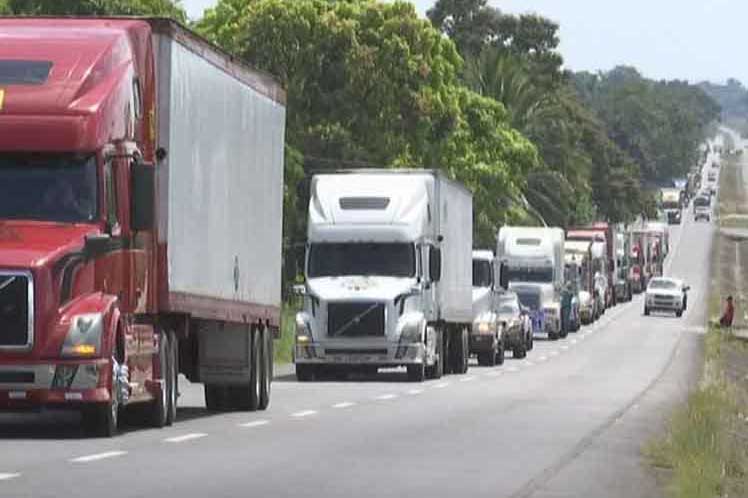
Mexico’s Ministry of Foreign Affairs announced that it has proposed extending restrictions on non-essential travel between Mexico and the United States until Aug. 21.

The restrictions, which apply to the land border only and do not affect air travel between the countries, have been in force for nearly four months.

On its official Twitter page, the Foreign Ministry proposed that “the restrictions will remain in the same terms in which they have been developed since their implementation on March 21. Both countries will continue to seek to coordinate health measures in the border region.”

The United States has yet to announce an extension of border restrictions; the decision lies in the hands of officials from the Centers for Disease Control and Prevention (CDC).

People who have temporary work visas, emergency personnel, students, government officials, flight crews and those involved in cross-border trade are still allowed entry under the terms of the current restrictions. Travel for leisure, tourism or recreation is prohibited.

According to the most recent data available, the border states of California, Arizona, New Mexico and Texas have a combined total of 764,996 confirmed cases of the coronavirus. On the south side of the border, the Mexican states of Baja California, Sonora, Chihuahua, Coahuila, Nuevo León and Tamaulipas have a total of 55,083 cases.

On July 2, United States Ambassador Christopher Landau asked U.S. citizens to respect the restrictions put in place.

“Attention U.S. citizens on both sides of the U.S.-Mexico border! We’re still in the midst of a pandemic, but hundreds of thousands of people PER DAY are crossing the land border — and fully 90 percent are U.S. citizens or green card holders,” he posted to Twitter. “Whichever side of the border you live on, this is NOT the time to cross to shop, eat, or visit family on the other side. Only ‘essential’ travel is permitted over the land border.”

Source: La Jornada (sp)

President Lopez Obrador puts ports under military protection

Mexican President Andres Manuel Lopez Obrador announced on Friday that he decided to put the country’s ports and customs under military protection, and he communicated it to the concerned secretariats.

The usual morning press briefing and the citizen security meeting were held on Friday at the Sixth Naval Region of Manzanillo, in Colima state. This was an opportunity to publicly settle discrepancies between that government and the federal executive.

About the port issue, Lopez Obrador assured that all kind of contraband such as goods and drugs are introduced through Manzanillo, especially chemicals that are the most destructive and harmful modern drugs because they can destroy young people.

For this reason, we have decided that the land and maritime customs are in charge of the Secretariat of Defense and the Secretariat of the Navy, and the same happens in ports for security and to avoid that those drugs enter the country, the head of State said.

The president considered that the serious problems in the country’s ports are fundamentally due to corruption and port mismanagement, and this explains why so many attacks and murders occur in Colima and the country’s other regions.

Governor Ignacio Peralta Sánchez, of the opposition Institutional Revolutionary Party (PRI), agreed that Manzanillo port is part of the federal strategy and promised to support the national executive in its fight to clean up ports and customs.

US, Canada and Mexico to maintain border closure until August

The United States, Canada and Mexico will maintain a partial closure of borders until late August due to the SARS-Cov-2 coronavirus pandemic, Acting Secretary of Homeland Security Chad Wolf informed.

The official, who made the announcement on his Twitter account on Thursday, said that the decision was a joint agreement among the three countries with the aim of curbing the spread of the pathogen, causing the Covid-19 disease.

According to Wolf, the partial closure occurs as of the ‘success of the current restrictions’ and the close collaboration with the Canadian and Mexican governments.

The United States, Canada and Mexico have agreed on March 20 to limit all non-essential travel across borders facing the danger of the pandemic. Since then the measure has been extended.

spot_img

State and local governments could learn from crises

by Veronique de Rugy

There’s no doubt that this pandemic-induced recession is hitting states hard. But that’s no reason to bail them out, especially when many failed to prepare for emergencies, which are inevitable.

States today are dealing with a huge mess because of a sudden and steep reduction in their revenues while their pandemic spending is going up. But lost in the lamenting about the states’ misfortunes is the fact that politicians in these states spent the last decade bloating their budgets rather that cutting spending to be better prepared for crises.

Stories abound about the sorry condition of state and local government finances. A recent report in the Wall Street Journal explains, “State and local governments from Georgia to California are cutting money for schools, universities and other services as the coronavirus-induced recession wreaks havoc on their finances,” and, “Governments have cut 1.5 million jobs since March, mostly in education, and more reductions are likely barring a quick economic recovery.”

Yes, recessions are difficult. Millions of employees in the private sector have recently lost their jobs. In fact, traditionally, private sector employees are hit harder by recessions than state and local government employees are. Business owners, too, understand that recessions are terrible for one’s bottom line. Millions of them have watched as their livelihoods were pulverized in the span of a few weeks. Yet these business owners, after being allowed to delay their tax payments for a few months, are still on the hook for paying the salaries of government workers.

What’s more, these stories about state and local governments being hit hard rarely explain that politicians in those states failed to responsibly budget for crises. Such rainy-day budgeting should not have been that difficult, given that the country was experiencing an unprecedented decade of economic growth when rivers of revenue poured into state and local coffers. More revenue makes it easier to beef up rainy-day funds, which then helps fill in budget gaps. While some states have learned their lessons from the last recession, most states did not.

The Cato Institute’s Chris Edwards reports: “After a decade of economic growth, (some states) have saved little or nothing. Illinois and Kansas have completely empty cupboards, while Pennsylvania and New Jersey have rainy day funds of just 1 percent of their budgets. The largest funds are in energy producing states, which build war chests to handle the strong cyclical ups and downs in their economies.” If states never learn from their mistakes, why should we now feel sorry for them?

Between recessions, states should reduce their financial exposure in anticipation of the next crisis and learn to operate with fewer employees. In particular, they should reform their public employees’ benefits — a great source a fiscal woes. But most of them have done no such thing, especially the ones that needed it the most. Illinois, for instance, shelters its public employees from reductions in benefits while the private sector endures higher taxes and cuts in services.

With few exceptions, states used their boom-time revenue — cash extracted from the private sector — to increase spending and employ more people. Edwards highlights that: “Spending grew during the 2000s, hit $2.4 trillion in 2009 and flat-lined for a few years, then began growing again to reach $3.1 trillion by 2019…. Real spending spiked in 2009 and then dipped a bit below the pre-recession level. Spending then began growing again and eclipsed the 2009 peak by 2016.”

This outcome is good only in a world where investments made by politicians spending other people’s money earn higher returns than those made by investors spending their own money. Not likely.

And let’s not forget that state and local governments have already received aid from the federal government to the tune of $150 billion for a Coronavirus Relief Fund, $30 billion for an Education Stabilization Fund, $45 billion for the Disaster Relief Fund, $25 billion for public transit systems, an increase in the federal government’s share of Medicaid spending and more.

The call for sympathy for state and local governments’ financial hardship is usually followed by a plea to bail them out. While a few states, such as Florida, were relatively fiscally responsible and better prepared to handle this pandemic, many others weren’t. Why should the responsible states bail out the irresponsible ones? If these big spenders want a bailout, they should go only to their taxpayers.

Veronique de Rugy is a senior research fellow at the Mercatus Center at George Mason University.

spot_img

The media is lying about the “second wave”

by Ron Paul


For months, the Washington Post and the rest of the mainstream media kept a morbid Covid-19 “death count” on their front pages and at the top of their news broadcasts. The coronavirus outbreak was all about the number of dead. The narrative was intended to boost governors like Cuomo in New York and Whitmer in Michigan, who turned their states authoritarian under the false notion that destroying people’s jobs, freedom, and lives would somehow keep a virus from doing what viruses always do: spread through a population until eventually losing strength and dying out.

The “death count” was always the headline.

But then all of a sudden early in June the mainstream media did a George Orwell and lectured us that it is all about “cases” and has always been all about “cases.” Death, and especially infection fatality rate, were irrelevant. Why? Because from the peak in April, deaths had decreased by 90 percent and were continuing to crash. That was not terrifying enough so the media pretended this good news did not exist.

With massive increases in testing, the “case” numbers climbed. This is not rocket science: the more people you test the more “cases” you discover.

Unfortunately our mainstream media is only interested in pushing the “party line.” So the good news that millions more have been exposed while the fatality rate continues to decline — meaning the virus is getting weaker — is buried under hysterical false reporting of “new cases.”

Unfortunately many governors, including our own here in Texas, are incapable of resisting the endless lies of the mainstream media. They are putting Americans again through the nightmare of forced business closures, mandated face masks, and restrictions of Constitutional liberties based on false propaganda.

In Texas the “second wave” propaganda has gotten so bad that the leaders of the four major hospitals in Houston took the extraordinary step late last week of holding a joint press conference to clarify that the scare stories of Houston hospitals being overwhelmed with Covid cases are simply untrue. Dr. Marc Boom of Houston Methodist said the reporting on hospital capacity is misleading. He said, “quite frankly, we’re concerned that there is a level of alarm in the community that is unwarranted right now.”

In fact, there has been much reporting that the “spike” in Texas cases is not due to a resurgence of the virus but to hospital practices of Covid-testing every patient coming in for any procedure at all. If it’s a positive, well that counts as a “Covid hospitalization.” Why would hospitals be so dishonest in their diagnoses? Billions of appropriated Federal dollars are being funneled to facilities based on the number of “Covid cases” they can produce. As I’ve always said, if you subsidize something you get more of it. And that’s why we are getting more Covid cases.

Let’s go back to the original measurements used to scare Americans into giving up their Constitutional liberties: the daily death numbers. Even though we know hospitals have falsely attributed countless deaths to “Covid-19” that were deaths WITH instead of FROM the virus, we are seeing actual deaths steadily declining over the past month and a half. Declining deaths are not a great way to push the “second wave” propaganda, so the media and politicians have moved the goal posts and decided that only “cases” are important. It’s another big lie.

Resist propaganda and defend your liberty. That is the only way we’ll get through this.

(Ron Paul is a former U.S. congressman from Texas. This article originally appeared at the Ron Paul Institute for Peace and Prosperity and is reprinted here with permission).

spot_img

UN declares world peace!

NOTE FROM THE EDITOR:


Dear readers:


With the title: “Stalled Security Council resolution adopted, backing UN’s global humanitarian ceasefire call,” the beloved leaders of the World Government pretend to ‘appease us,’ the ‘world citizens,’ in the middle of a pandemia (war) – believed to be part of the World War III. I’ll leave investigative reporter James Corbett to expand on this subject in the interesting article below. – Marvin


by James Corbett

corbettreport.com

July 04, 2020


Kumbaya and pass the bubbly! World peace has been achieved!

What, haven’t you heard? The UN Security Council just passed a resolution that calls for a global ceasefire as a type of “humanitarian pause” while the world deals with the coronavirus pandemic that (we are told) is wreaking such havoc on the human population.

Or, as the UN puts it:

The Security Council on Wednesday echoed the Secretary-General’s call for a worldwide ceasefire, to combat the coronavirus pandemic that has already claimed more than half a million lives. The UN chief welcomed the long-awaited move, calling for countries to “redouble their efforts for peace”.

This tells us three things:

  1. Our noble leaders love us and care for us and want to protect us during this time of crisis.
  2. The pandemic must be real and it must be supremely grave, because why else would the Security Council be acting like this?
  3. We can expect the next 90 days to be a heaven on earth where the nations of the world lay down their arms and live in peace and harmony.

Right?

Well, not exactly. You see, the resolution asks member nations to cease all of their military operations except “military operations against Islamic State in Iraq and the Levant (ISIL/Da’esh), Al-Qaida and Al-Nusra Front, and all other individuals, groups, undertakings and entities associated with Al-Qaida or ISIL, and other Council-designated terrorist groups.” But other than that wee little asterisk, that’s it. War is done-zo! . . . For three months, anyway.

So, wait, why did the Saudis just launch a fresh military campaign against the Yemenis? Didn’t they get the memo? What on earth is going on here?

Let’s start by examining the idea of a global 90-day ceasefire (except if you’re fighting the really bad guys). Is this supposed to signal to the rest of the world that bombing and violence and bloodshed is OK as long as it doesn’t distract people from panicking about the Official Bogeyman du Jour (i.e., coronavirus)? If, 90 days from now, the coronavirus is no longer being promoted as an existential threat to humanity, then will war and wholesale slaughter become “humanitarian” again?

Of course such a pronouncement doesn’t bear the slightest scrutiny. Sure, it’s a nice sentiment that everyone can get behind (“Yes, we should stop war for an arbitrarily defined period of time!”) but that’s precisely the point; it’s a PR move that is designed to swirl the Security Council and “humanitarian pause” and “world peace” around in our head so that we all end up with warm, fuzzy feelings about the UN and come to believe that there is some sort of global governmental body that can stop war at the snap of its fingers.

(Did I mention the Saudis just carried out an airstrike against a Yemeni village?)

As usual, there is a modicum of truth to the sentiment; without our misleaders constantly conspiring to whip up public anger against perceived enemies and purchasing billions of dollars of military equipment, it’s highly doubtful that there would be very much large-scale international warfare at all. Do you really think the average Saudi would be motivated to help fund and equip an Air Force, and then volunteer to jump in a fighter jet and conduct bombing raids on Yemeni villages, slaughtering men, women and children they’ve never met and who never caused them offense, all on their own? Without a government (or, in this case, a spoiled crown prince) deciding that it is in “the Kingdom’s” interests to carry out such strikes (and then spending ungodly amounts of that self-same Kingdom’s money to make it happen), would such warfare be taking place at all?

So, yes, if the global elistists truly wanted to bring about world peace, it wouldn’t just be possible, it would be fairly straightforward. They would just have to dismantle the war machine they created, renounce the warmaking powers they bestowed on themselves, and get behind the movement to criminalize war.

But of course that’s not what they’re doing. Instead we’re treated to a mere Security Council publicity stunt, passing a resolution calling for “humanitarian pauses” in our regularly scheduled warfare . . . that will naturally resume in 90 days (or less). One presumes this cessation of hostilities also applies to any Palestinians thinking of defending their homeland from impending Israeli annexation.

No, this latest resolution means nothing of importance for those seeking actual world peace. What it does do is confirm yet again that—exactly as I have had cause to point out time and again since this coronavirus crisis started—the REAL threat to world peace is the war that these same misleaders are waging against their own populations.

The signs of this warfare are everywhere apparent.

It can be seen in the European Commission’s “roadmap” for implementing a common vaccination card / passport for all EU citizens by 2022.

It can be seen in the UN’s own “Verified” initiative, which threatens to “counter the spread of COVID-19 misinformation by sharing fact-based advice with their communities.” (And I think we all know what that means.)

It can be seen in the deliberate targeting of the elderly in care homes to artificially inflate the death rates during this crisis.

It can be seen in the mandatory vaccinations, lockdowns, closures, and all of the other laws, rules and regulations that are seeking to restrict the basic rights and freedoms in this dawning Age of Biosecurity.

In each and every case, these actions—actions that are being taken by governments of the world against their own people, mind you—are themselves threats to peace and stability (not to mention the economic livelihood) to the majority of humanity. Far from delivering world peace, these misleaders are themselves waging war on the very people they claim to be ruling over.

But of course the UN Security Council is not interested in ending (or even “humanitarian pausing”) these threats to humanity. No, the very idea that the clowns and puppets at the Security Council can deliver world peace (or a “humanitarian pause” in armed conflict) via a simple resolution (with a 90-day expiry date) is absurd on its face; thinking that they actually desire world peace is even more absurd.

The world misleaders are not interested in actual world peace. They do not want the peace that comes when humanity is free from the clutches of the governments that seek to track, trace, control and sanction their every movement. That is the vision of world peace that is never presented in these cheap publicity stunts at the UN.

Now let’s all set the clock before this “world ceasefire” is broken . . . oh, wait. Too late.

spot_img

5 hidden dangers of hand sanitizers

Hand sanitizer has been used during the coronavirus outbreak to battle the spread. Like anything, use in moderation.

Here are 5 hidden dangers


by Kurumi Fukushima


Hand sanitizer. You squirt it, feel the cool tingling sensation, and spread it all over your hands. Then, you feel clean.

It sounds pretty simple as an alternative to washing your hands with soap and water. It’s quick, portable, and convenient, especially when you don’t have running water nearby. Hand sanitizer or hand antiseptic is a supplement that comes in gel, foam, or liquid solutions.

Hand sanitizer often has a form of alcohol, such as ethyl alcohol, as an active ingredient and works as an antiseptic. Other ingredients could include water, fragrance, and glycerin.

Other non-alcohol based hand sanitizers contain an antibiotic compound called triclosan or triclocarban. This ingredient can also be found in soaps and even toothpaste. These products are often labeled antibacterial, antimicrobial, or antiseptic soaps.

The U.S. Food and Drug Administration says triclosan could carry unnecessary risks, including some on this list, given that their benefits have yet to be proved.

Recent studies have raised questions about whether triclosan might be hazardous to human health, as studies on the compound are ongoing.

If you are a cleanliness-obsessed germophobe who has made a habit of frequently using hand sanitizer like lotion, you will want to know the dangers we’ve dug up.

Here are five hidden dangers of hand sanitizer that you may not know about, but should…

  1. Antibiotic Resistance

Antibiotics are effective against bacteria. But what happens if your body builds up resistance to antibiotics, and in turn promotes resistance to bacteria?

Triclosan contributes to making bacteria resistant to antibiotics. Using hand sanitizers may actually lower your resistance to diseases by killing good bacteria, which helps protect against bad bacteria.

In a 2011 study by the Epidemic Intelligence Service at the U.S. Centers for Disease Control and Prevention, researchers found that health care employees who were most likely to use hand sanitizers over soap and water for routine hand washing were nearly six times more at risk for outbreaks of norovirus, which causes most cases of acute gastroenteritis.

Overexposure to antibiotics or improper antibiotic use can lead to bacterial resistance, making it more difficult or even impossible to treat.

  1. Alcohol Poisoning

Just because it doesn’t have triclosan, doesn’t mean it’s completely safe.

The active ingredient in some hand sanitizers is usually a type of alcohol that acts as an antimicrobial that kills bacteria. The U.S. Food and Drug Administration and the Centers for Disease Control recommend ethyl alcohol, isopropyl alcohol, or a mix of both in a concentration of 60 percent to 95 percent.

In March of 2012, six California teenagers were hospitalized with alcohol poisoning from drinking hand sanitizer, making it the latest in a string of household products used to induce intoxication, ABC News reported. A few squirts of hand sanitizer could equal a couple of shots of hard liquor.

And it’s not just teenagers. Younger children have accidentally ingested it in the past, according to the LA Times.

  1. Hormone Disruption

Another effect of triclosan is hormone problems.

The FDA says research shows triclosan may lead to hormonal disruptions and cause bacteria to adapt to its antimicrobial properties, which creates more antibiotic-resistant strains. Animal studies have shown that the compound could change the way hormones work in the body, raising concerns and warranting further investigation to better understand how they might affect humans.

  1. Weaker Immune System

Studies have shown that triclosan can also harm the immune system, which protects your body against disease.

Researchers at the University of Michigan School of Public Health found that triclosan may negatively affect human immune function. Compromising the immune system can make people more susceptible to allergies, and more vulnerable to the toxic chemical Bisphenol A, which is found in plastics. In the study, children and teens with higher levels of triclosan were more likely to be diagnosed with hay fever and other allergies.

  1. Toxic Chemicals

If your hand sanitizer is scented, then it’s likely loaded with toxic chemicals. Companies aren’t required to disclose the ingredients that make up their secret scents, and therefore generally are made from dozens of chemicals.

Synthetic fragrances contain phthalates, which are endocrine disrupters that mimic hormones and could alter genital development.

You should also look out for parabens, which are in many skincare products. They are used to preserve other ingredients and extend a product’s shelf life.

spot_img

Insults to Black History

by Walter E. Williams


Many whites are ashamed, saddened and feel guilty about our history of slavery, Jim Crow and gross racial discrimination. Many black people remain angry over the injustices of the past and what they see as injustices of the present. Both blacks and whites can benefit from a better appreciation of black history.

Often overlooked or ignored is the fact that, as a group, black Americans have made the greatest gains, over some of the highest hurdles, and in a shorter span of time than any other racial group in history.

For example, if one totaled up the earnings and spending of black Americans and considered us as a separate nation with our own gross domestic product, we would rank well within the top 20 richest nations. A black American, Gen. Colin Powell, once headed the world’s mightiest military.

Black Americans are among the world’s most famous personalities, and a few black Americans are among the world’s richest people such as investor Robert F. Smith, IT service provider David Steward, Oprah Winfrey, and basketball star Michael Jordan. Plus, there was a black U.S. president.

The significance of these achievements cannot be overstated. When the Civil War ended, neither a slave nor a slave owner would have believed such progress would be possible in less than a century and a half — if ever. As such, it speaks to the intestinal fortitude of a people. Just as important, it speaks to the greatness of a nation in which such gains were possible. Nowhere else on earth could such progress have been achieved except in the United States of America.

The issue that confronts us is how these gains can be extended to about one-quarter of the black population for whom they have proven elusive. The first step is to acknowledge that the civil rights struggle is over and won. At one time, black Americans did not enjoy the constitutional guarantees as everyone else. Now we do. While no one can deny the existence of residual racial discrimination, racial discrimination is not the major problem confronting a large segment of the black community.

A major problem is that some public and private policies reward dependency and irresponsibility. Chief among these policies is the welfare state that has fostered a 75 percent rate of out of wedlock births and decimated the black family that had survived Jim Crow and racism. Keep in mind that in 1940 the black illegitimacy rate was 11 percent and most black children were raised in two-parent families. Most poverty, about 25 percent, is found in female-headed households. The poverty rate among husband-and-wife black families has been in the single digits for more than two decades.

Black people can be thankful that double standards and public and private policies rewarding inferiority and irresponsibility were not a part of the 1920s, ’30s, ’40s and ’50s. If there were, then there would not have been the kind of intellectual excellence and spiritual courage that created the world’s most successful civil rights movement.

From the late 1800s to 1950, some black schools were models of academic achievement. Black students at Washington’s Dunbar High School often outscored white students as early as 1899. Schools such as Frederick Douglass (Baltimore), Booker T. Washington (Atlanta), P.S. 91 (Brooklyn), McDonogh 35 (New Orleans) and others operated at a similar level of excellence.

Self-destructive behavior that has become acceptable, particularly that in predominantly black schools, is nothing less than a gross betrayal of a struggle, paid with blood, sweat and tears by previous generations, to make possible today’s educational opportunities that are being routinely squandered. I guarantee that blacks who lived through that struggle and are no longer with us would not have believed such a betrayal possible.

Government should do its job of protecting constitutional rights.

After that, black people should be simply left alone as opposed to being smothered by the paternalism inspired by white guilt. On that note, I just cannot resist the temptation to refer readers to my “Proclamation of Amnesty and Pardon,” which grants Americans of European ancestry amnesty and pardon for their own grievances and those of their forebears against my people so that they stop feeling guilty and stop acting like fools in their relationship with Americans of African ancestry.

Walter E. Williams is a professor of economics at George Mason University. To find out more about Walter E. Williams and read features by other Creators Syndicate writers and cartoonists, visit the Creators Syndicate webpage at www.creators.com.

spot_img

Millions in the world have lost a source of life from remittances

Remittances, farmers markets, migration flows collapse – developing world reels from pandemic fallout


by Sunita Sohrabji

EMS Contributing editor


SAN FRANCISCO — More than 265 million around the world currently face food insecurity in the wake of the global COVID-19 pandemic, and several million have lost their life-line of remittances, according to experts speaking at an ethnic media conference May 8 on the pandemic’s impact on the developing world.

“COVID-19 is expected to double the number of people facing food insecurity. The world has never seen a pandemic like this,” said Dulce Gamboa, associate for Latino relations at Bread for the World.

Remittances — money sent from people working abroad to their families back home — have taken a huge hit, said Demetrios Papademetriou, who co-founded the Migration Policy Institute and is currently a Distinguished Transatlantic Fellow at the Washington DC-based think tank. The World Bank has estimated that $142 billion has been lost in remittances, as foreign workers lose their jobs to the coronavirus crisis.

“Remittances are an essential lifeline for people who receive that money. They will be thinner and more precarious,” said Papademetriou.

He equated the COVID-19 crisis to the decade-long Great Depression in the U.S. in the 1930s, and characterized it as an “economic abyss.”

Daniel Nepstad, President and Founder of Earth Innovation Institute, discussed the impact of the pandemic on the Amazon rainforest, the largest tropical rainforest in the world. The summer months are typically burning season in the forest, as villagers burn patches to use for agricultural purposes.

In a normal year, thousands of people would get respiratory illnesses as forests burn. This year, however, Nepstad predicted an increased number of deaths as the COVID-19 virus attacks people whose immune systems are already compromised.

In Manaus, Brazil, deep in the Amazon rainforest, Nepstad reported that mass graves have been erected for those succumbing to the virus. In Loreto, Peru, a lack of oxygen bottles has contributed to a high mortality rate from COVID.

The biggest threat to the rain forest comes from people fleeing there as a last resort, Nepstad said. Farmers can no longer bring their products to markets, which have shuttered in the wake of the pandemic. More than 200,000 migrants have left Lima, Peru by foot, walking through deserts and up into the highlands and from there to the rainforest for some measure of food security.

Nepstad urged the global community to support farmers in the Amazon — providing them with seed capital to grow tree crops which have a longer life-span — and also advocated for the formalizing of supply chains and for fair price support.

“Now is the time for solidarity, listening to local leaders and understanding what they need,” said Nepstad. “We tend to demonize the people that are clearing forests, but I think it’s important to have more nuance there.”

“Lots of people are extracting food by clearing the rain forests. We eat that food around the world.”

Even if there is no surge in food prices, the global hunger pandemic will continue, said Gamboa, noting that the situation will deteriorate most rapidly in countries where a large percentage of the labor force works in the informal economy.

Yemen currently faces the worst food insecurity crisis, said Gamboa, with 53 percent of its population — almost 16 million people — facing starvation.

Sudan and Nigeria are likely to be hit by famines, she said. Zimbabwe, South Africa, the Congo, and the Horn of Africa are also facing massive food insecurity issues due to high inflation, poor harvests and drought.

“Malnourished people have less effective immune systems,” said Gamboa, adding that a child who is malnourished during his first 1,000 days of life will face a lifetime of stunted growth, both physically and intellectually.

“People are saying ‘we’re going to die of hunger before we die of coronavirus.’”

“The U.S. needs to have strong leadership to help millions of people around the world, including women and children,” stated Gamboa.

Global migration has ground to a halt as countries close their borders and restrict incoming travel, said Papademetriou. However, there has been a significant amount of labor migration as people in developing countries return home, he said.

“There has been an elite consensus that has allowed migration to continue to be large and to thrive because of the demography of many of the rich countries,” said Papademetriou. “We will have to see if that elite consensus continues to hold as this pandemic continues,” he said, adding that countries will have to reassess afresh the number of immigrant workers they need, especially in the agricultural sector.

Papademetriou said it was too early to assess whether the U.S. would grant legal status to undocumented immigrants, many of whom are now considered essential workers.

“I have spent 14 years of attempting to come up with compromises that legislators on both sides were able to support. We have failed every single time.”

“The last time we failed big was in 2013 under President Obama. So it’s difficult for me to be optimistic,” said Papademetriou.­

spot_img

Remittances, farmers markets, migration flows collapse – developing world reels from pandemic fallout

by Sunita Sohrabji

EMS Contributing editor

SAN FRANCISCO — More than 265 million around the world currently face food insecurity in the wake of the global COVID-19 pandemic, and several million have lost their life-line of remittances, according to experts speaking at an ethnic media conference May 8 on the pandemic’s impact on the developing world.

“COVID-19 is expected to double the number of people facing food insecurity. The world has never seen a pandemic like this,” said Dulce Gamboa, associate for Latino relations at Bread for the World.

Remittances — money sent from people working abroad to their families back home — have taken a huge hit, said Demetrios Papademetriou, who co-founded the Migration Policy Institute and is currently a Distinguished Transatlantic Fellow at the Washington DC-based think tank. The World Bank has estimated that $142 billion has been lost in remittances, as foreign workers lose their jobs to the coronavirus crisis.

“Remittances are an essential lifeline for people who receive that money. They will be thinner and more precarious,” said Papademetriou.

He equated the COVID-19 crisis to the decade-long Great Depression in the U.S. in the 1930s, and characterized it as an “economic abyss.”

Daniel Nepstad, President and Founder of Earth Innovation Institute, discussed the impact of the pandemic on the Amazon rainforest, the largest tropical rainforest in the world. The summer months are typically burning season in the forest, as villagers burn patches to use for agricultural purposes.

In a normal year, thousands of people would get respiratory illnesses as forests burn. This year, however, Nepstad predicted an increased number of deaths as the COVID-19 virus attacks people whose immune systems are already compromised.

In Manaus, Brazil, deep in the Amazon rainforest, Nepstad reported that mass graves have been erected for those succumbing to the virus. In Loreto, Peru, a lack of oxygen bottles has contributed to a high mortality rate from COVID.

The biggest threat to the rain forest comes from people fleeing there as a last resort, Nepstad said. Farmers can no longer bring their products to markets, which have shuttered in the wake of the pandemic. More than 200,000 migrants have left Lima, Peru by foot, walking through deserts and up into the highlands and from there to the rainforest for some measure of food security.

Nepstad urged the global community to support farmers in the Amazon — providing them with seed capital to grow tree crops which have a longer life-span — and also advocated for the formalizing of supply chains and for fair price support.

“Now is the time for solidarity, listening to local leaders and understanding what they need,” said Nepstad. “We tend to demonize the people that are clearing forests, but I think it’s important to have more nuance there.”

“Lots of people are extracting food by clearing the rain forests. We eat that food around the world.”

Even if there is no surge in food prices, the global hunger pandemic will continue, said Gamboa, noting that the situation will deteriorate most rapidly in countries where a large percentage of the labor force works in the informal economy.

Yemen currently faces the worst food insecurity crisis, said Gamboa, with 53 percent of its population — almost 16 million people — facing starvation.

Sudan and Nigeria are likely to be hit by famines, she said. Zimbabwe, South Africa, the Congo, and the Horn of Africa are also facing massive food insecurity issues due to high inflation, poor harvests and drought.

“Malnourished people have less effective immune systems,” said Gamboa, adding that a child who is malnourished during his first 1,000 days of life will face a lifetime of stunted growth, both physically and intellectually.

“People are saying ‘we’re going to die of hunger before we die of coronavirus.’”

“The U.S. needs to have strong leadership to help millions of people around the world, including women and children,” stated Gamboa.

Global migration has ground to a halt as countries close their borders and restrict incoming travel, said Papademetriou. However, there has been a significant amount of labor migration as people in developing countries return home, he said.

“There has been an elite consensus that has allowed migration to continue to be large and to thrive because of the demography of many of the rich countries,” said Papademetriou. “We will have to see if that elite consensus continues to hold as this pandemic continues,” he said, adding that countries will have to reassess afresh the number of immigrant workers they need, especially in the agricultural sector.

Papademetriou said it was too early to assess whether the U.S. would grant legal status to undocumented immigrants, many of whom are now considered essential workers.

“I have spent 14 years of attempting to come up with compromises that legislators on both sides were able to support. We have failed every single time.”

“The last time we failed big was in 2013 under President Obama. So it’s difficult for me to be optimistic,” said Papademetriou.­

spot_img

Better Lives, Bitter Lies Podcast premieres

Must Forging Better Lives Always Be Entwined With Facing Bitter Lies?

Join Park Guides as they discuss destiny-shaping ideas that defined the SF Bay Area

compiled by the El Reportero‘s staff

San Francisco, CA – San Francisco Maritime National Historical Park is proud to announce the new podcast Better Lives, Bitter Lies. This fun and educational audio series, is created and hosted by park guides Anne Monk and Sabrina Oliveros.

In the late 19th and early 20th centuries, all manner of ships sailed into San Francisco Bay, bringing people drawn by the promise of a better life. For many of these newcomers, seeking new lives meant living with ideas – created about their destination, their destinies, and themselves – that shaped both their personal histories and the history of San Francisco’s waterfront. Better Lives, Bitter Lies examines several of these ideas, using San Francisco Bay Area points of interest as springboards for lively, enlightening discussions.

Beginning with the first episode, “Chrysopylae” – which reviews popular beliefs about the naming of the Golden Gate Bridge – Monk and Oliveros use historical documents, firsthand accounts, literature, music, and conversations with experts to examine how these ideas took the form of myth, mistruth, propaganda, or outright falsehood.

A new episode will appear every two weeks on the Park’s podcast page: https://www.nps.gov/safr/learn/photosmultimedia/podcasts.htm

Future episodes will include “Gold Mountain,” “Paper Children,” “Daughters of Joy,” “A Deadly Trade,” “Little Brown Brothers,” and a feature on the multifaceted stories carried by the park’s iconic square-rigged cargo ship, Balclutha. Check the park’s website and social media channels for future releases!

Will premiere on the Park’s website (https://www.nps.gov/safr/learn/photosmultimedia/podcasts.htm) on Tuesday, July 14, 2020.

SF Boys Chorus brings classes online

For Potential Remote Learners Bay Area Counties: Auditions for the San Francisco Boys Chorus online classes are ongoing. Classes will be conducted online starting after Labor Day.

Boys under 7 are not required to audition and will be automatically accepted into the exploratory music program. Older boys must set up an audition before classes begin. To sign up and learn more visit www.sfbc.org/auditions.

The City Council is holding a virtual Special City Council meeting on Monday evening, July 13, 2020 at 7 p.m. The entire agenda can be viewed here. A highlight of some of the major policy items is below.

Public Hearings to Consider:

  • An Urgency Ordinance approving text amendments to Accessory Dwelling Unit (ADU) requirements in the Zoning Ordinance and other miscellaneous updates, including permitted ADU types allowed, side and rear setbacks, height for detached ADUs, and to comply with State law. Read the full staff report here.

Interested in Running for City Council?

The nomination period for the November 2020 Election opens Monday

Four members of the City Council representing Districts 1, 3, 4 and 7 will be elected November 3, 2020. Have you considered running for City Council and you live in one of the districts with an open seat? Nomination papers will be available beginning Monday, July 13 by contacting the City Clerk. Due to the shelter-in-place order, nomination papers will be issued in person or electronically upon written request. Not sure which district you live in? Check out an interactive map here.

For more information and to schedule an appointment, please call the Office of the City Clerk at (650) 780-7220 or email paguilar@redwoodcity.org.

  • A Resolution approving the Five-Year Permanent Local Housing Allocation (PLHA) Plan for the 2019-2023 Funding Period and application for funding to support affordable housing initiatives, including the City’s Safe Parking Program. Read the full staff report here.
  • A Resolution amending, eliminating and adopting certain fees for charges for the City’s Fire, Library, and Parks, Recreation and Community Services Departments. Read the full staff report here.
  • A Resolution amending, eliminating and adopting certain fees for charges for the City’s Fire, Library, and Parks, Recreation and Community Services Departments. Read the full staff report here.
spot_img