Saturday, August 1, 2026
Home Blog Page 168

Dr. Robert Malone: Wartime gardens key to beating food crisis

by Belle Carter


05/27/2022 – American physician and biochemist Dr. Robert Malone recommends starting a backyard garden to reclaim self-sufficiency as food crisis looms due to the ongoing war in Ukraine, the lingering Wuhan coronavirus (COVID-19) pandemic and other geopolitical, economic and natural causes.

“People don’t have to be dependent on international agribusinesses, nutritionally valueless food, grain from Russia or Ukraine, food imports from China and other countries, or even be dependent on high priced organics to feed ourselves and our families. Each of us has the power to create our food from scratch,” Dr. Robert Malone, the mRNA inventor, said on his blog.

He cited the war gardens, which was later dubbed as victory gardens and fed millions of people during World War I (WWI), as a proven and tested way to get people through the food crisis.

Charles Lathrop Pack, a philanthropist and conservationist, proposed planting small vegetable gardens to supply local communities with food. The effort would not need the land and manpower used in large-scale agriculture and transportation facilities that were already used during the war. The victory gardens was his brainchild.

In 1917, the National War Garden Commission was organized by Pack, and within that same year the War Garden Campaign was launched. This campaign promoted the use of surplus private and public lands for small vegetable gardens, resulting in over five million gardens, with the value of the produce from these gardens exceeding $1.2 billion by the end of the war.

In the same year, Bureau of Education and the Department of the Interior established the United States Garden Army. By the end of WWI, more food was being produced by these home gardens than farmers had produced in years prior to the war and it continued and expanded during World War II.

“Nearly 20 million gardens were planted in backyards, empty lots and even city rooftops. New York City had the parks and public lawns devoted to victory gardens, as were portions of San Francisco’s Golden Gate Park. In Hyde Park, London, sections of lawn were publicly plowed for plots to publicize the movement. Neighbors and communities, all with the goal of winning the war, formed cooperatives to meet the local needs of fresh produce,” Malone said.

This gave birth to urban gardening. With urbanization and since people would like to do their farming where they are, urban gardening has been the most successful alternative – a shift from the traditional thinking that the cultivation of crops can only be done in the rural areas. (Related: The basics of home gardening and food preservation.)

Many people have given over their windowsills, balconies, patios and rooftops to house both edible and even decorative plants. And no matter what size is available in your area, all you need to know is how to start your urban garden.

Things to consider in starting your garden

Space

There is no such thing as too small of a space. Your area will determine what kind of plants you can grow and the layout that it would require. You would also need to consider the sun and rain exposure of your garden space.

Bed or pots?

You can have a garden bed if space is available, but you’ll need pots if space is an issue. Make sure that you’ll not overcrowd your plants and decide if you’ll have tall and short plants. The more pots you have in an area, the higher the humidity, which will improve plant growth. You may also have hanging pots, trellises and windowsill pots to maximize your space and create visual interest.

Edible or decorative plants?

Your urban garden can be anything you want it to be, so this is the exciting part. The world is really your oyster when it comes to what you choose. However, you may want to consider whether to plant what you have space for or plant food that you actually want to eat.

Drainage

Whatever container you choose for your garden, remember drainage holes are essential. Without proper drainage, soil can become waterlogged and plants may die. The holes need to be large enough to allow excess water to drain out.

Soil quality

A common mistake urban gardeners make is not making sure their soil is good quality. While those made with pesticides promise great results, they are loaded with chemicals. Go for organic soil and grow well from the beginning.

Manual or automatic watering?

There are some pretty advanced watering systems on the market that keep your plants hydrated so you only have to worry about watering a couple times a week (or less). They can be a little pricey, so if you’re looking to cut costs, manual watering is the way to go.

Your urban garden should be an oasis. It’s your chance to develop new skills and just because you live in the city, this doesn’t mean you can’t experience the joy of eating what you grow. Foods.news.

spot_img

A modern twist on one-ring circus…overflowing with heart and soul

Circus Bella’s 13th Annual Summer Season 2022


Compiled by the El Reportero‘s staff


Circus Bella is excited to announce its triumphant return to the Bay Area Parks this August with an all new, open air, outdoor show: Humorous. This series of FREE performances, featuring some of the brightest Circus Talent from the Bay Area and Beyond, will delight and amaze audiences of all ages in an unforgettable family event.

Humorous is a celebration of the fantabulous world we discover together through the simple gifts of wonder and laughter. Directed by Abigail Munn, the sixty-minute performance features the amazing Circus Bella Company — a diverse and talented troupe of acrobats, aerialists, jugglers, and clowns — performing to the live music of Rob Reich and the Circus Bella All-Star Band.

All shows free for children of all ages. June 16 – July 23, 2022 – Various Locations in Bay Area Parks. Opening weekend Aug. 28 at the Yerba Buena Gardens Festival. With Live Music by Rob Reich & The Circus Bella All-Star Band.

Limited Engagement – 20 performances only!


Carla Morrison from Tecate, Mexico

Acclaimed singer-songwriter Carla Morrison has come back to music brand new. These past few years, she’s intentionally centered herself—learning who she’s been and who she wants to be, and culling empowerment from both. This choice was critical; patiently refocusing may have saved her life.

Raw retellings of emotional, personal heartbreaks are the bedrock of Morrison’s material, and this honest approach earned her multiple Grammy noms and Latin Grammy wins over the course of five albums. Snowballing from her 2010 debut Mientras Tú Dormías, onto 2012’s Déjenme Llorar and the 2016 release of Amor Supremo, her success grew rapidly.

Taking the outdoor stage at Coachella, sharing a bill with rock giants Enjambre at Mexico City’s Palacio de los Deportes and filling to capacity as headliner the city’s famed Auditorio Nacional, opening for tours in Spain, Latin America, and a sold-out stretch of U.S. shows followed.

“It’s just kind of the Latino way,” the Tecate, Baja California-born musician says. “You always feel so grateful, and you always feel so guilty. You don’t feel like you’re entitled to rest.”

Today, she’s still making music on her own terms—only now, those terms have changed.

June 24. Quarry Amphitheater @ UC Santa Cruz.


California Hispanic Chambers of Commerce announce Small Business Forum

This forum will bring together business development experts to exchange new ideas on trends, data, and resources to educate businesses to grow and thrive in today’s economy.

Join us on Tuesday, June 28, 2022, 8:30 a.m. – 11:15 a.m. At the Center at Cathedral Plaza, 555 West Temple Ave., Los Angeles, Calif. Presented by Bank of America.

spot_img

Artist Alma Silva’s focus is on getting participants in her workshops to ‘connect with their creativity’

by Elisabeth Ashe


Ask any restaurateur and they will tell you that pairing wine with food is imperative to enjoying a fine dining experience. But artist Alma Silva of Zihuatanejo has taken this concept one step further and decided to pair wine with her art classes and workshops.

While many cities north of the border offer wine and art nights, Silva’s classes for all levels are different and, in my opinion, a cut above the norm. Rather than the typical strategy of having participants all paint the same thing, Silva has taken her classes in an entirely new direction.

“I want to make [classes] more about the experience and a way to make the people connect with their creativity,” says Silva, “to bring out the inner artist in you and work with your emotions to create a connection with the art you want to create … I want to change how you perceive things and reach beyond.”

They’re classes for people who want to “reconnect and reignite their practice,” is how she puts it.

Born in Mexico City, Silva’s art beginnings were in the 1980s, when she took beginners’ classes at a community cultural center in Morelia, but her artistic journey has taken her in many different directions. During the mid-ʼ90s, she studied architecture, and in 1995 presented her first solo exhibition, Architecture in Screen Printing at the Universidad Michoacana San Nicolás de Hidalgo; she eventually obtained her specialty in landscape architecture at the Polytechnic University of Valencia, Spain. She’s also taken many classes and workshops in the plastic arts and watercolor techniques.

I decided to take a class myself and see if Silva would successfully bring out the latent artist in me.

Upon arrival at the beautiful, impressive Mezgaleria in Zihuatanejo’s Playa Madera area, I found out that the class was entirely in Spanish and that I was the only foreigner there. Thankfully, a friend of mine had also signed up, and Silva’s assistant Carla Lopez translated as required.

Once our hosts poured the wine, we began.

We first explored our own faces by drawing our eyes, nose, mouth and ears. Silva provided mirrors, which we had to share, and so some of this was done by memory as we passed them around the room. We then drew our self-portraits by tracing each of our facial features with our fingers before putting them on paper.

It was amazing how much the self-portraits resembled each of the eight participants who’d made them, especially since part of the exercise required them to close their eyes.

Silva then deliberately cracked the mirrors and passed them back to us. The result was a comical Picasso-type reflection, with more than one eye, nose or a crooked mouth. We then drew what we saw, and, once again, I was amazed by the accuracy of the finished work.

Unfortunately, not completely understanding the instructions, I also drew the shards of glass across the page to resemble the work of Jack the Ripper. Still, the very gracious (and generous) Silva complimented my work.

By the time the class was over, I had found myself beaming from my accomplishment (or maybe it was the wine).

Silva has more workshops coming up in Zihuatanejo, including one at Casa Tucanes Villas and Bungalows rentals on La Ropa beach and one at the Quatro Cafe in Zihuatanejo center. She said she’s also eyeing locations like ecological parks in Ixtapa, Playa Blanca and Barra de Potosí.

You can sign up for a package of two classes a week for four weeks, which costs 2,000 pesos; each class is different. Or, if you prefer to sign up for an individual workshop, those cost 600 pesos each. Both options include all materials and, of course, the wine.

To find out more, you can find Alma Silva on Facebook and Instagram, as well as on Airbnb, or call her at 755-108-6810 (WhatsApp).

The writer divides her time between Canada and Zihuatanejo.

spot_img

Report: Hispanic-serving institutions produce highest economic mobility

by Suzanne Potter

California News Service


Higher-education experts are promoting a new way to rank colleges and universities, proposing an Economic Mobility Index (EMI) to measure whether the school creates a path to the middle class, instead of the traditional rankings.

The nonprofit think tank Third Way released its EMI rankings this spring, and California State University-Los Angeles, and California State University-Dominguez Hills took the top two spots in the U.S., with California State Universities in Bakersfield, Stanislaus, Fresno, and San Bernardino in the top 10.

Nicole Siegel, deputy director of education for Third Way, said it is because they provide the best return on investment for the highest number of students.

“The reality is selectivity and historical prestige have long been prioritized over student outcomes,” Siegel contended. “But if the primary purpose of postsecondary education is supposed to be to catalyze an increase in economic mobility for students, we need to elevate the schools that are actually succeeding in this goal.”

The top 10 schools on the EMI are all Hispanic Serving Institutions (HSIs), where Hispanics make up at least 25 percent of the student body. Some highly selective schools such as Harvard also provide a big jump in earnings potential, but they serve very few low-income students.

Research from the group Excelencia in Education showed in the U.S., 559 schools qualify as HSIs, and 66 percent of Hispanic students are clustered in 18 percent of schools.

Alam Hasson, interim vice provost at Fresno State University, said one secret to their success is a personal approach to student retention.

“When we admit a student, we’re making a commitment to do everything that we can to ensure that they can be as successful as they can be,” Hasson stated. “And every student is different.”

The school with the highest percentage of Hispanic students in the state, at 92 percent, is Imperial Valley College. Schools enrolling the largest numbers of Hispanic students include East Los Angeles College, California State University-Fullerton, California State University-Northridge, and the University of California Riverside.


In other news by California News Service


Lawmakers propose new national monument honoring Chávez

Congress is considering a new bill to establish a national historical park honoring union organizer César Chávez and the farmworker movement he led.  The new park would include the existing national monument in Keene, plus the site of the first headquarters in Delano and the Santa Rita Center in Phoenix, Arizona. U.S. Rep. Raúl Ruíz – D-CA – co-sponsored the House version of the bill. “Growing up the son of farm workers in Coachella, I remember seeing Cesar Chavez organize our parents,” said Ruíz.

“And he was an inspiration to all of us then and he continues to be an inspiration to me to this day and to many of us.” McDonnell Hall in San Jose is likely to be added to the park in the future. The bill also would establish a national historic trail along the 300-mile march route taken by farmworkers between Delano and Sacramento in 1966.

Ruiz said part of the National Park Service’s mandate is to tell the nation’s story – and all groups should see their achievements honored.

“It’s so important to elevate the voices of individuals and the movements like the farmworkers who are such an essential part of our nation’s history, our culture, our economy,” said Ruiz. “And that’s why it’s so important to tell their stories as well.”

Right now only a small percentage of the nation’s national historic sites honor Americans of color.

spot_img

Pandemico, Movie of the Mind

by Jon Rappoport


This movie has been produced in many ways, in many minds.

In all cases, the theme is the same: DO NOT LIVE YOUR LIFE OUT IN THE OPEN.

Instead obey all restrictions. SHUT IT DOWN.

Believe in the dangers you’re told to believe in.

In the final analysis, this movie was a box office hit because most people gave in. Their fears may have hooked into different parts of the COVID narrative, but the deciding factor WAS fear.

A nation, a world paralyzed by fear.

And yes, lurking in the background (or in some countries, in the foreground) was the fact that the State had cops and guns and detainment facilities.

I’ve spent many hours detailing that, at one time, the citizenry would have risen up, en masse, and rebelled against the State. They would have shrugged off pandemic declarations. They would have risked everything to keep LIVING THEIR LIVES OUT IN THE OPEN.

Because at one time, freedom meant more.

The individual meant more.

People making up their own minds meant more.

Predatory groups organized to cut themselves in on a piece of the government pie meant less.

All these groups, from BLM to Climate Change, demand less freedom. That is their unspoken bottom line. And their justifications for this demand are bogus and fabricated.

They’re basically FRIENDS OF THE STATE.

Readers who have been with me for a long time know that, in 1988, I started warning people that the medical cartel was the most dangerous cartel in the world. It was seeking medical dictatorship.

I knew that in 1988, because I was meeting radical natural health advocates—tough, smart, resilient people. THEY had been warning about medical dictatorship for the previous 20, 30 years.

When I saw what my research on a phantom virus called HIV was proving, I knew civilization was in for some very rough times. All sorts of medical fantasies would be used to destroy freedom.

As Ben Franklin made clear, people WERE willing to trade that freedom for a false sense of security.

The past two years have proved it in spades.

But they’ve also proved something else. There is a limit to what people will take.

So I write this piece to say the restrictions could be coming again.

And if they do, we don’t need another two years to realize what the game really is.

We have to say NO from the get-go. We have to put fear aside and risk everything for freedom.

It wouldn’t be the first time people did, you know.

Face it, we’re all suffering from a false sense of security. Fortunately, we don’t have to succumb. We can be the individuals we dream of being, against whatever the State launches against us.

There are beasts among us. It turns out that many of them have no faces. They are the reincarnation of men and women who sat at desks and signed warrants for the death camps.

Gambling that life without freedom can still be a good life is a disastrous bet.

In the founding documents of America—the Declaration of Independence, the Articles of Confederation, the Constitution—the idea of freedom was there. Individual freedom with responsibility.

Before the ink was dry, the attacks on freedom commenced. Freedom has been dented, battered, smashed, and yes, betrayed, from all quarters. But it still stands and shines.

Evil creatures want to bury it for good. Now.

Their only fear is we won’t let them.

Jon Rappoport is the author of three explosive collections, The Matrix Revealed, Exit From The Matrix, and Power Outside The Matrix, Jon was a candidate for a US Congressional seat in the 29th District of California. He maintains a consulting practice for private clients, the purpose of which is the expansion of personal creative power. Nominated for a Pulitzer Prize, he has worked as an investigative reporter for 30 years, writing articles on politics, medicine, and health for CBS Healthwatch, LA Weekly, Spin Magazine, Stern, and other newspapers and magazines in the US and Europe.

spot_img

Fight rheumatoid arthritis with superfoods like blueberries, ginger and olive oil

by Rose Lidell


05/21/2022 – Arthritis is a progressive, debilitating autoimmune disease with no cure. But according to a study, eating the right superfoods, such as blueberries and ginger, can help prevent arthritis.

Fighting arthritis with superfoods

According to the study, superfoods like blueberries, ginger, olive oil and green tea offer protective benefits against rheumatoid arthritis.

The researchers compiled a list of foods that are scientifically proven to fight the symptoms of the debilitating condition. They advised people with arthritis to incorporate these foods into a nutritious diet to slow down the progressive, debilitating autoimmune disease.

The authors listed the foods by grouping them under eight categories:

  1. Fruits
  2. Cereals
  3. Legumes
  4. Whole grains
  5. Spices
  6. Herbs
  7. Oils
  8. “Miscellaneous”

Detailed below are some of the anti-inflammatory foods included in the list:

Berries

Berries are full of antioxidants, vitamins and minerals, which may partially account for their ability to minimize inflammation.

In a study of 38,176 women, researchers found that those who ate at least two servings of strawberries per week were 14 percent less likely to have elevated levels of inflammatory markers in the blood.

Berries also contain quercetin and rutin, two plant compounds that offer many health benefits. To enjoy these amazing benefits, consume berries like blackberries, blueberries and strawberries.

Dried plums

Intense colors mean that the fruit contains lots of fiber and antioxidants. Look for dark blue and purple fruits like blackberries, grapes or plums and bright red, orange and yellow fruits like apples, papaya or pineapple.

Fatty fish/Fish oil

Fatty fish like mackerel, salmon, sardines and trout are full of omega-3 fatty acids. Research suggests that fatty fish have powerful anti-inflammatory effects.

In a small study, 33 participants were fed either fatty fish, lean fish or lean meat four times each week. After eight weeks, the group that consumed fatty fish had decreased levels of specific compounds linked to inflammation.

According to an analysis of 17 studies, taking omega-3 fatty acid supplements helped decrease “joint pain intensity, morning stiffness, the number of painful joints and use of pain relievers” in people diagnosed with rheumatoid arthritis.

Fish is also rich in vitamin D, which can help prevent deficiency. According to several studies, rheumatoid arthritis may be linked to low levels of vitamin D, which could contribute to symptoms.

The American Heart Association recommends including at least two servings of fatty fish in your daily diet to benefit from their anti-inflammatory properties.

Garlic

Garlic offers many health benefits.

According to some studies, garlic and its components have cancer-fighting properties. They also contain compounds that may help lower dementia and heart disease risk.

Studies also suggest that garlic may enhance the function of certain immune cells, thus strengthening the immune system.

In one study, researchers examined the diets of 1,082 twins and found that those who ate more garlic had a reduced risk of hip osteoarthritis. The experts believe this is thanks to garlic’s potent anti-inflammatory properties.

Ginger

Ginger is a flavorful superfood. In a 2001 study, researchers examined the effects of ginger extract on 261 patients with osteoarthritis of the knee. After six weeks, 63 percent of the volunteers experienced improvements in knee pain.

Consuming fresh, powdered or dried ginger could help minimize inflammation and reduce symptoms of arthritis.

Grapes

Grapes are nutrient-dense superfruits that are also rich in antioxidants.

In a study, 24 male volunteers were given either a concentrated grape powder equivalent to about 1.5 cups (252 grams) of fresh grapes or a placebo daily for three weeks. Results showed that the grape powder effectively decreased levels of inflammatory markers in their blood.

Grapes also contain many compounds that could help with arthritis. One such compound is resveratrol, an antioxidant present in the skin of grapes.

Olive oil

Olive oil is known for its anti-inflammatory properties.

In one study, 49 participants with rheumatoid arthritis consumed either fish oil or an olive oil capsule each day for 24 weeks. At the end of the study, the levels of a specific inflammatory marker had decreased in both groups: by 38.5 percent in the olive oil group and between 40 to 55 percent in the fish oil group.

In another study, researchers examined the diets of 333 volunteers with and without rheumatoid arthritis. Results revealed that olive oil consumption was associated with a lower risk of the disease.

Replace other kinds of cooking oil with olive oil to reduce arthritis symptoms.

Improving diet and lifestyle is key to preventing arthritis

The researchers also recommend switching from a meat diet to a plant-based diet. Fruits and vegetables can help reduce joint stiffness and pain by lowering the levels of cytokines — inflammatory chemicals released by the immune system.

Aside from following a plant-based diet, the researchers also recommend taking probiotics and quitting bad habits like drinking alcohol and smoking.

According to study author Dr. Bhawna Gupta, consuming dietary fiber, fruits, vegetables and spices regularly and eliminating foods that cause inflammation can help you prevent or manage rheumatoid arthritis. Foods.news.

spot_img

Guadalajara church leader sentenced to 16 years for child sex abuse

by Mexico News Daily


The leader of a Guadalajara-based evangelical church was sentenced in a California court Wednesday to 16 years and eight months in prison for sexually abusing three girls between 2015 and 2018 in Los Angeles county.

Naasón Joaquín García, leader or “Apostle” of the La Luz del Mundo (Light of the World) church, pleaded guilty last Friday to two acts of forcible oral sex with minors and performing a lewd act on a child. García, 53, was arrested at Los Angeles International Airport in 2019. In addition to his prison sentence, he will be registered as a sex offender for the rest of his life.

The church leader submitted a plea just days before he was scheduled to face trial on 23 charges of sex crimes against children, including multiple counts of rape and conspiracy to engage in human trafficking and child pornography. In exchange for admitting guilt, prosecutors dropped most of the charges he faced, including the most serious ones.

Two of three women accused of colluding with García to abuse minors have also reached plea deals with prosecutors.

Five accusers who appeared in court Wednesday said that García’s sentence was too lenient and complained about not being consulted on the plea deal he reached with the office of the California attorney general.

La Luz del Mundo said in a statement that “since his arrest in 2019, the Apostle has been subjected to a prosecution in which evidence was suppressed, withheld, doctored and altered.”

“After the defense finally obtained this evidence, the court ruled that the defense would not be permitted to use the materials at trial, preventing the defense from effectively cross-examining the complaining witnesses and challenging their allegations,” the church said. “Without a right to use the evidence, there is no right of defense. Without a right to use the evidence, there can be no fair trial.”

Consequently, “the Apostle of Jesus Christ has had no choice but to accept with much pain that the agreement presented is the best way forward to protect the church and his family,” La Luz del Mundo said. “… We publicly manifest our support for the Apostle of Jesus Christ; our confidence in him remains intact in the full knowledge of his integrity, his conduct and his work.”

García’s five accusers, who are now young women, presented victim-impact statements at Wednesday’s sentencing hearing, which was held at the Los Angeles County Superior Court. All five, each of whom was given the pseudonym Jane Doe, said they felt robbed of their chance to more fully confront García, according to a Reuters report.

“We looked up to you, you were our god, and you betrayed us. You are no more than a predator and an abuser,” said a visually emotional Jane Doe No. 3.

Dressed in orange prison attire, García sat with his back to his tearful accusers and didn’t make any statement to the court.

“Naasón and this church have ruined my life,” said Jane Doe No. 4, who introduced herself as García’s niece.

Another accuser asserted that García was avoiding accountability by claiming innocence through the church statement. “Your honor, this abuser thinks your courtroom is a joke. Even after he accepted the plea deal, he’s sending messages to the church that he’s innocent,” she said.

Judge Ronald Cohen, who imposed the almost 17-year sentence recommended by prosecutors, assured the victims – who also described García as “evil,” a “monster,” “disgusting human waste” and the “antichrist” – that “the world has heard you.”

Co-defendant Susana Medina Oaxaca pleaded guilty to a charge of assault likely to cause great bodily harm and was sentenced to probation for a period of one year and ordered to complete six months of psychiatric counseling. Alondra Ocampo, another co-defendant, pleaded guilty in 2020 to three counts of touching a minor in a sexual way and one count of forcible penetration. Ocampo, who had previously faced human trafficking and other criminal charges, has not yet been sentenced.

Azalea Rangel Melendez, another woman accused of colluding with García to abuse girls, has evaded arrest.

Founded in Guadalajara by García’s grandfather in 1926, La Luz del Mundo is Mexico’s largest evangelical church. It has a presence in 50 countries and some 5 million members. García has been credited with growing the church’s membership since succeeding his father as leader in 2014. He used social media to attract new members, and also to lure his victims, according to California prosecutors.

The church – which doesn’t celebrate Christmas or Easter, segregates sexes during services, prohibits alcohol and doesn’t allow women to hold leadership positions – has been the subject of controversy for decades and described by critics as a cult that preys on the poor.

Andrew Chesnut, a professor of religious studies at Virginia Commonwealth University, said after García’s 2019 arrest that the church was “too large to be considered a cult” but has been run as a “cult of personality.”

“García took on godlike roles, saying he couldn’t be judged, that he was like a king,” he said.

With reports from Reuters, El Universal and Milenio

spot_img

Instead of picking strawberries in US, former migrants cultivate them in Oaxaca  

Gustavo Ortiz earns less in Mexico, but he’s working for himself and can be with his family


by the El Reportero‘s wire services


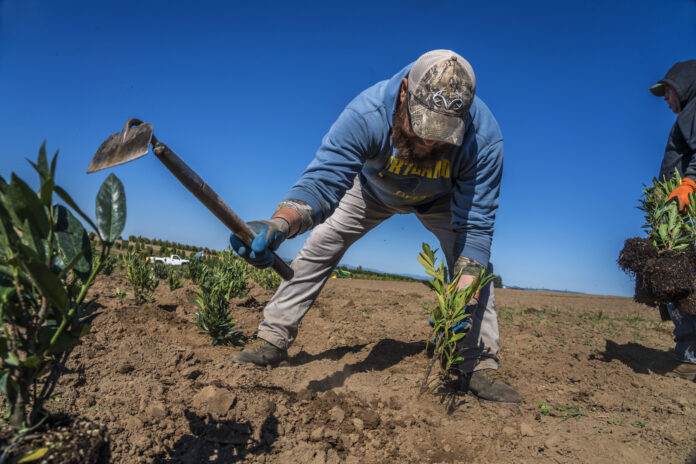
Picking strawberries in the United States gave one former Mexican migrant the wherewithal to start his own strawberry-producing business in the Mixtec region of Oaxaca, and he’s happy to be home with his wife and kids.

Gustavo Ortiz Salvador is one of several farmers in San Martín Peras who picked strawberries and other produce in California and other parts of the U.S. for years, work that allowed them to send money home to their families and also learn about the strawberry-growing process.

But many have used that knowledge so they can stay home and cultivate strawberries and raspberries on their own land.

Twelve years ago, Ortiz decided to return to Oaxaca and put his agricultural knowledge to good use by using remittances his family had saved to establish his own strawberry fields in Peras, a municipality that borders Guerrero.

Now, Ortiz not only earns enough to support his family but also employs locals. He told the El Universal newspaper that he makes less than he did in the United States, but on the plus side, he’s working for himself and is not separated from his wife and three children. Ortiz’s family is one of the few in Peras that doesn’t depend on remittances to survive, El Universal said.

The strawberry grower said he brought his plants to Oaxaca from Zamora, Michoacán, a strawberry-growing hub. He and other local strawberry growers sell their produce to buyers from Mixtec-region cities such as Tlaxiaco and Huajuapan and to vendors at Oaxaca’s Santiago Juxtlahuaca market.

“They come here for the strawberries,” Ortiz said, referring to his main buyers. “They take the opportunity to buy other fruit such as blackberries from neighbors.”

In addition to strawberries, Ortiz can now offer chiles and flowers to buyers after he planted those crops for the first time this year. He stressed that he doesn’t receive any government support, explaining that some farmers benefit from programs such as the federal tree-planting scheme Sowing Life, “but we don’t receive anything.”

While Ortiz has been back in his native Peras for over a decade, many other people from the Mixtec municipality remain in the United States. According to a 2021 BBVA bank report on migration and remittances, there were more migrants from Peras in the United States between 2015 and 2020 than from any other municipality in Oaxaca.

With reports from El Universal 

spot_img

With inflation, California worries about progress on poverty

California lawmakers and activists are pressing Gov. Gavin Newsom to spend more to help the state’s poorest residents


by Alejandro Lazo

CalMatters


As the state’s Democratic leaders weigh how to spend a record $97.5 billion budget surplus, they also are grappling with how best to keep many vulnerable Californians out of poverty with federal stimulus dollars waning and high inflation devouring household budgets.

Some advocates say the revised budget Gov. Gavin Newsom unveiled Friday won’t do enough. To address inflation, Newsom is proposing to devote $18.1 billion in state funds.

His lead proposal, estimated to cost about $11.5 billion, would refund $400 each to most of the state’s car owners, with the aim of easing the burden of high gas prices. Newsom also included $750 million to fund public transit for free for three months.

Activists said the car owner refund would not be targeted enough toward those needing the most help.

“At the end of the day, the state budget should be about ensuring every Californian can afford housing, food, child care, health care, and education opportunities,” said Chris Hoene, executive director of the California Budget & Policy Center.

Experts say low-income Californians are struggling the most with a volatile economic recovery marred by high housing costs and pricier basic necessities. And critics said the budget proposal doesn’t go far enough to help lower-income households weather high inflation.

Mayra Paniagua, a part-time tax preparer in Ventura County whose family of five lives frugally on a combined income of $44,000, said she would welcome any relief as she has seen expenses climb this year.

“It’s been hard,” Paniagua said. “We stretch our money, and try to save as much as possible, especially for what we need.”

But the California Democrats who control state government are at odds over how they should spend on the state’s poorest.

Some are advocating the state extend expiring federal stimulus programs. Others say the eligibility of programs should be expanded to include more people.

They have about a month to come to an agreement, as the legislature is constitutionally required to pass a budget by June 15. Then, Newsom has 15 days to act, before the new budget takes effect July 1.

Republican lawmakers, who are so small a minority they have virtually no say over spending, blame inflation on the policies of the majority party. “Democrat-rule has made this state unaffordable,” James Gallagher, the Assembly Republican leader from Yuba City, said last week.

Gallagher and other Republicans have blamed the state’s gas tax, which Democrats raised in 2017 under Brown to repair roads and bridges and expand mass transit, as a contributor to higher prices at the pump. Gallagher also has blamed the state’s climate change agenda for driving up the cost of utilities.

The federal stimulus is credited with boosting the fortune of the state’s least well off.

The state’s poverty rate fell from 16.2 percent in 2019 to 12.3 percent in 2020, according to the Public Policy Institute of California.

But experts caution that inflation and the expiration of federal programs could threaten that progress. Without the child tax credit, for instance, 1.7 million children are at risk of falling deeper into poverty, the Budget & Policy Center has said.

More than half of California’s residents with incomes below $50,000 were struggling to pay for food, housing, and medical costs in March and April. Black, Latino and other families of color were among those most likely to be struggling, the center reported.

“We’ve got a strong labor market,” said Sarah Kimberlin, a senior policy analyst with the center. “But even if you can find a job, that doesn’t mean that you can afford to pay the rent and get food on the table.”

The governor unveiled a variety of other measures he said were aimed at easing the inflation burden. Those proposals included $2.7 billion in rental assistance and $1.4 billion in past-due utility bill assistance. He also proposed a waiver of child care fees for low-income families estimated to cost $157 million.

ewsom also proposed $933 million be used to provide cash payments of $1,500 for hospital and nursing home workers, while reserving $304 million for health insurance premium assistance for families.

To offset freighting costs, the governor proposed a $439 million pause on the state’s diesel tax.

The governor also announced that the state’s minimum wage is set to increase to $15.50 an hour next year due to the inflation hike.

Some Democratic legislators and their allies are pushing Newsom to take a different approach.

Assemblyman Miguel Santiago, a Los Angeles Democrat, plans to promote a bill he authored that would enable the state to extend the expired federal child tax credit. Santiago’s bill, backed by United Ways of California, would provide a $2,000 payment per child to families that earn $30,000 a year or less.

“It is a chance for the Legislature to send a clear message of prioritization,” said Anna Hasselblad, director of public policy for United Ways of California.

Any form of relief would be welcome to Paniagua, a 38-year-old mother of three living with her husband in a two-bedroom apartment in the coastal Ventura County city of Port Hueneme.

In a phone interview, Paniagua said her family survived the pandemic only because her husband kept his job at a local nursery. He is undocumented, she said, and so would not have qualified for 2020 federal relief.

In 2021, her family benefited from state stimulus checks for the undocumented, she said, and from goods from a local food pantry and some CalFresh benefits available to her because her son was enrolled in school.

This year, she said, the high cost of living has stretched her family thin. With her rent increasing $200 in July to $2,100 a month, she has taken to using the Flipp phone app to search for deals on necessities such as milk, yogurt and baby formula for her 7-month-old baby girl.

Gone are any trips to the movies, or the occasional splurge on In-N-Out burgers, a favorite of her children, she said.

This article is part of the California Divide project, a collaboration among newsrooms examining income inequality and economic survival in California.

spot_img

Letter to my Dad who is in Heaven on his day

Dear Dad, José Santos Ramírez Calero, highly ethical journalist that you were, that from you I learned the best values ​​of journalism that is not for sale, and that it is a vocation and a labor of love.

I write you these last minute words when I have less than an hour to send this edition to the printer, since every week that I have to finish the newspaper I end up without being able to write an editorial, each time having to put a note that says: ” This article was published last week.” And it is a day after June 16, the day you left for the abode of the Lord.

It’s kind of embarrassing to hear people say to me on the street: “Marvin, your paper is excellent, but you never change the editorial…”

“I know,” I usually tell them, “but I just don’t have any help, and I’m always late to write it, especially when there’s a deadline to get it to the printer for printing.

But today, dad, I promised that I would do it at all costs, and I decided to write you this article-letter where I express what comes from my heart, as a tribute to you, my father, on this day that is celebrated here in earthly life, Father’s Day.

– José Santos Ramírez Calero –

Let the people who will read this letter know that you and God are always with me talking about my daily life, when I need a guide from the Supreme Power and from you, to be able to cope with this burden that life puts on us to be alive.

My life has been dedicated to this journalistic work for a little more than 32 years publishing, plus the years I spent studying to obtain my degree in the field.

Your joy reflected in your face I never forget, when I came down from the graduation stage with that cardboard that told me that I was already a journalist, and you told me: “you graduated.”

When you came to help me correct the cardboard where the pages that came out of the printer were pasted in the office in the first years of the birth of El Reportero, it was a great pride for me that my corrector was a tall journalist with a long career, as was you.

To the general public, know that when you pick up an edition of El Reportero, you are reading a work of work that has been done with all the love and dedication, so that you enjoy and add to your knowledge the information that is published – and that is generally different from that of the other media.

My sisters Juana A. Ramírez, Jazmina del Carmen Ramírez Torres, your grandchildren: Rudy Marvin, Darling, Karen, Juanita, Felix Alemán and your new great-grandson, Brandon, send you greetings to you where you are.

HAPPY FATHER’S DAY TO EVERYONE!

spot_img