Monday, June 29, 2026
Home Blog Page 105

US issues assurances on Assange

by Joe Lauria

In London

Special to Consortium News

The United States Embassy on Tuesday filed two assurances with the British Foreign Office saying it would not seek the death penalty against imprisoned WikiLeaks‘ publisher Julian Assange and would allow Assange “the ability to raise and seek to reply upon at trial … the rights and protections given under the First Amendment,” according to the U.S. diplomatic note.

Assange’s wife Stella Assange said the note “makes no undertaking to withdraw the prosecution’s previous assertion that Julian has no First Amendment rights because he is not a U.S citizen. Instead,” she said, “the US has limited itself to blatant weasel words claiming that Julian can ‘seek to raise’ the First Amendment if extradited.”

The note contains a hollow statement, namely, that Assange can try to raise the First Amendment at trial (and at sentencing), but the U.S. Department of Justice can’t guarantee he would get those rights, which is precisely what it must do under British extradition law based on the European Convention on Human Rights.

The U.S. Department of Justice is legally restricted to assure a free speech guarantee to Assange equivalent to Article 10 of the European Convention, which the British court is bound to follow. But without that assurance, Assange should be freed according to a British Crown Prosecution Service comment on extraditions.

In USAID v. Alliance for Open Society, the U.S. Supreme Court ruled in 2020 that non-U.S. citizens outside the U.S. don’t possess constitutional rights. Both former C.I.A. Director Mike Pompeo and Gordon Kromberg, Assange’s U.S. prosecutor, have said Assange does not have First Amendment protection.

Because of the separation of powers in the United States, the executive branch’s Justice Department can’t guarantee to the British courts what the U.S. judicial branch decides about the rights of a non-U.S. citizen in court, said Marjorie Cohn, law professor and former president of the National Lawyers’ Guild.

“Let’s assume that … the Biden administration, does give assurances that he would be able to raise the First Amendment and that the [High] Court found that those were significant assurances,” Cohn told Consortium News webcast CN Live! last month.

“That really doesn’t mean anything, because one of the things that the British courts don’t understand is the U.S. doctrine of separation of powers,” she said.

“The prosecutors can give all the assurances they want, but the judiciary, another [one] .. of these three branches of government in the U.S., doesn’t have to abide by the executive branch claim or assurance,” Cohn said.

In other words, whether Assange can rely on the First Amendment in his defense in a U.S. court is up to that court not Kromberg or the Department of Justice, which issued the assurance on Tuesday.

“The United States has issued a non-assurance in relation to the First Amendment,” said Stella Assange.

Assange Can Challenge Assurances

Assange’s legal team now has the right to challenge the credibility and validity of the U.S. assurances filed on Tuesday. The U.S. would then have a right to reply to Assange’s legal submissions to the court, which will hold a hearing on May 20 to determine whether or not to accept the U.S. assurances.

If the court does, Assange can be put on a plane to the U.S. theoretically that day. If not Assange would be granted a full appeal against the Home Office’s 2022 order to extradite him.  Assange is wanted in the U.S. on 17 charges under the 1917 Espionage Act and one on conspiracy to commit computer intrusion. He faces up to 175 years in a U.S. dungeon.

“The diplomatic note does nothing to relieve our family’s extreme distress about his future — his grim expectation of spending the rest of his life in isolation in US prison for publishing award-winning journalism,” Stella Assange said.

In its 66-page ruling on March 26, the two High Court judges wrote Kromberg wouldn’t have said Assange would be without First Amendment rights at trial “unless that was a tenable argument that the prosecution was entitled to deploy with a real prospect of success.”

“If such an argument were to succeed it would (at least arguably) cause the applicant [Assange] prejudice on the grounds of his non-US citizenship (and hence, on the grounds of his nationality),” the judges said. They added:

“The applicant wishes to argue, at any trial in the United States, that his actions were protected by the First Amendment. He contends that if he is given First Amendment rights, the prosecution will be stopped. The First Amendment is therefore of central importance to his defence to the extradition charge.”

This is the statement Stella Assange put out on X Tuesday at 11:36 am EDT:

“The United States has issued a non-assurance in relation to the First Amendment, and a standard assurance in relation to the death penalty. It makes no undertaking to withdraw the prosecution’s previous assertion that Julian has no First Amendment rights because he is not a U.S citizen. Instead, the US has limited itself to blatant weasel words claiming that Julian can ‘seek to raise’ the First Amendment if extradited. The diplomatic note does nothing to relieve our family’s extreme distress about his future — his grim expectation of spending the rest of his life in isolation in US prison for publishing award-winning journalism. The Biden Administration must drop this dangerous prosecution before it is too late.”

Joe Lauria is editor-in-chief of Consortium News and a former U.N. correspondent for The Wall Street Journal, Boston Globe, and other newspapers, including The Montreal Gazette, the London Daily Mail and The Star of Johannesburg.

spot_img

Are you planning a project that involves excavation? Call 811 to find out what’s underneath before you start

Damaging an underground utility line during excavation can result into thousands of dollars in repair costs

Corporate News

April 9, 2024 – San Francisco California. — With the warmer weather months approaching, homeowners may want to turn their attention to projects around the house that involve digging. Whether it’s repairing a fence or removing a fallen tree due to winter storm damage, or any other project that involves excavation, calling 811 before starting the project will help customers avoid damaging underground utility lines. and will avoid costly repair costs. April is recognized as National Safe Digging Month to raise awareness about the importance of calling 811 before any digging project, large or small.

Underground utility lines may be shallow, often just inches below the surface due to erosion, previous excavation or landscaping projects, shifting or settling of ground, and uneven surfaces. Customers should call 811 a minimum of two business days before beginning any excavation project, large or small, as damaging an underground utility line while digging is dangerous and can subject customers to liability for repair costs. which average $3,500.

“Making a free call to 811 two business days before starting your excavation project will help keep you, your family, and your neighbors safe and avoid inconvenient outages. Hitting an underground utility line during excavation can be dangerous and require expensive repairs; so remember to call 811, a toll-free call for all excavation projects, both large and small,” says Joe Forline, senior vice president of gas operations for PG&E.

In the warmer summer months there will be an increase in the number of excavation projects and, unfortunately, many of these projects are carried out without making a free call to 811 to flag utilities at the project sites. In fact, according to a recent national survey conducted by the Common Ground Alliance (CGA), 56% of homeowners plan to dig without first calling 811. However, not calling 811 before digging led to more than 1,300 incidents during 2023 in which underground utility lines were damaged due to excavation in the PG&E service area alone.

2023 in figures:

  • There were 1,335 incidents in Northern and Central California in which homeowners or contractors damaged underground gas or electric lines while digging.
  • In 63 percent of incidents in which an underground utility line was damaged due to excavation, there was no 811 call.
  • Specifically for homeowners, this percentage increases to 90 percent.
  • The average cost to repair a damaged utility line is $3,500.
  • The main causes of damage to underground utility lines when excavating are: building or repairing a fence, gardening and landscaping, planting a tree or removing a stump, drainage and irrigation work, and construction of a patio or terrace.

Calling 811 is fast and free:

  • Customers should call 811 at least two business days before beginning any project involving excavation, regardless of its magnitude. Customers can also visit 811express.com to have utility lines marked for their project site.
  • Professional workers from all utilities (gas, electric, water, sewer, and telecommunications) will be dispatched to mark the location of all underground utility lines at the project site, either by flagging, spray painting, or both.
  • The 811 USA North call center, serving central and northern California, is staffed 24 hours a day, seven days a week, and offers translation services into Spanish and other languages.

PG&E Tips for Safe Digging

 Mark the project area with white: Identify the excavation area by drawing a box around the area with white paint, white flags, white chalk, or even white flour.

 Call 811 or submit a request online at least two business days before digging: Have the general project address and location, project start date, and type of excavation activity available. PG&E and other utilities will identify underground facilities in the area for free. Applications can be submitted no later than 14 days before the project begins.

 Digging Safety: Use hand tools when digging within 24 inches of the outside edge of underground lines. Leave any flags, stakes or utility paint marks in place until the project is complete. Fill and compact the soil.

 Watch for signs of a natural gas leak: Watch for a “rotten egg” smell, listen for hissing, hissing or roaring sounds, and look for dirt thrown into the air, bubbles in a pond or stream, or dead vegetation. or dying in a humid area.

About CGA

The CGA is a member-driven association of nearly 4,200 damage prevention professionals spanning all facets of the underground utility industry. Established in 2000, CGA is committed to saving lives and preventing damage to North America’s underground infrastructure by promoting effective damage prevention practices. The CGA has established itself as the leading source of damage prevention data and information in an effort to reduce damage to underground facilities in North America through shared responsibility among all stakeholders. For more information, visit CGA on the Web at http://www.commongroundalliance.com.

spot_img

‘Getting significantly worse’: California community colleges are losing millions to financial aid fraud

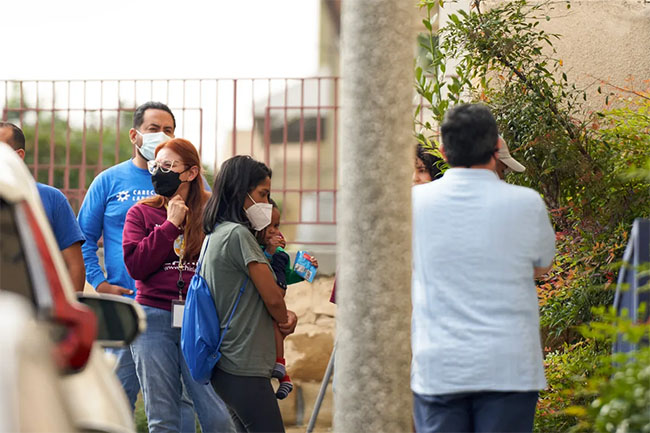
Martín Romero, estudiante de periodismo en East Los Angeles College en Monterey Park, dijo que lo sacaron de una clase por error cuando la detección de fraude en ayuda financiera salió mal. Martin Romero, a journalism major at East Los Angeles College in Monterey Park, said he was wrongly dropped from a class when financial aid fraud detection went awry. Photo by Jules Hotz for CalMatters.

California’s community colleges are reporting a rise in financial aid fraud. In January, suspected bots represented 1 in 4 college applicants. Schools have given away millions to these scams, and college officials say fraudsters are getting smarter with the help of AI

by Adam Echelman

They’re called “Pell runners” — after enrolling at a community college they apply for a federal Pell grant, collect as much as $7,400, then vanish.

Since fall 2021, California’s community colleges have given more than $5 million to Pell runners, according to monthly reports they sent to the California Community Colleges Chancellor’s Office. Colleges also report they’ve given nearly $1.5 million in state and local aid to these scammers.

The chancellor’s office began requiring the state’s 116 community colleges to submit these reports three years ago, after fraud cases surged.

At the time, the office said it suspected 20 percent of college applicants were fraudulent. Because of the COVID-19 pandemic, the federal government loosened some restrictions around financial aid, making it easier for students to prove they were eligible, and provided special one-time grants to help keep them enrolled. Once these pandemic-era exceptions ended in 2023 and some classes returned to in-person instruction, college officials said they expected fraud to subside.

It hasn’t. In January, the chancellor’s office suspected 25 percent of college applicants were fraudulent, said Paul Feist, a spokesperson for the office.

“This is getting significantly worse,” said Todd Coston, an associate vice chancellor with the Kern Community College District. He said that last year, “something changed and all of a sudden everything spiked like crazy.”

Online classes that historically don’t fill up were suddenly overwhelmed with students — a sign that many of them might be fake — Coston said. Administrators at other large districts, including the Los Rios Community College District in Sacramento, the Mt. San Antonio Community College District in Walnut, California and the Los Angeles Community College District, told CalMatters that fraudsters are evading each new cybersecurity strategy.

The reason for the reported increase in fraud is because the chancellor’s office and college administrators are getting better at detecting it, he said. Since 2022, the state has allocated more than $125 million for fraud detection, cybersecurity and other changes in the online application process at community colleges.

The reports the colleges submitted don’t include how much fraud they prevented.

The rise in suspected fraud coincides with years of efforts, both at the state and local level, to increase access to community college. Schools are reducing fees — or making college free — while legislators have worked to simplify and expand financial aid. Those efforts accelerated during the pandemic, when community colleges saw record declines in enrollment.

It’s not surprising, then, that “bad actors” would take advantage of the system’s good intentions, Feist said.

Financial aid fraud is not new

College officials suspect most of the fake students are bots and often, they display tell-tale signs. In Sacramento, community colleges started seeing an influx of applications from Russia, China, and India during the start of the pandemic. Around the same time, administrators at Mt. San Antonio College saw students using Social Security numbers of retirees. Others had home addresses that were abandoned lots. Uncommon email domains, such as AOL.com, were another red flag.

These scams aren’t new. The federal government has long required colleges to report instances of financial aid fraud. Every year, the federal government closes around 40 to 80 cases, including a recent conviction of three California women who stole nearly a million dollars by collecting fraudulent student loans. California community colleges also say they’ve spotted fraudulent applications from people trying to get an .edu email address in order to receive student discounts.

When the chancellor’s office began requiring community colleges to file monthly reports, it asked for the number of fake applications and the amount of money they gave to fraudsters.

CalMatters submitted a public records request for the data, broken down by campus. After the request was initially rejected, CalMatters appealed and received an anonymized copy of all of the monthly reports, lacking individual campus details.

The reports show that between September 2021 and January 2024, the colleges received roughly 900,000 fraudulent college applications and gave fraudsters more than $5 million in federal aid, as well as nearly $1.5 million in state and local aid.

The numbers show that fraud represents less than 1 percent of the total amount of financial aid awarded to community college students in the same time period. It’s hard to tell how accurate the data is because compliance is spotty, with some months missing reports from as many as half the colleges.

More fraud, in more places

To understand how fraud is evolving, the chancellor’s office uses several sources of information and data, Feist said. One indicator is an atypical bump in applications.

“If I saw, for example, that a college that only gets 1,000 applications in some time frame gets 5,000, you kind of know something is probably up,” said Valerie Lundy-Wagner, a vice chancellor for the community college system.

The chancellor’s office provided CalMatters with anonymous application data for each month from September 2021 to January 2024. CalMatters analyzed the data using two different techniques to identify statistical outliers in the application data and asked the office to verify the methodology. The office repeatedly declined.

According to the analysis, more than 50 of the state’s 116 community colleges saw at least one unusual spike in the number of applications they received during that time frame. In the last year, colleges have seen more unusual spikes than at any point since 2021. Along with fraud, however, outliers could also reflect normal fluctuations in applications or the overall increase in college enrollment last year.

“What we’re hearing is that (fraud) is happening more widespread than people are letting on, but people just have their heads in the sand because it looks good to have your enrollment going up,” said Coston with the Kern Community College District. Many college administrators say improvements in artificial intelligence have made it easier for people to attempt fraud on a larger scale.

Yet clamping down too hard on fraud can have unintended consequences. More than 20 percent of community college students in California don’t receive Pell grants they’re eligible for. Administrative hurdles — including the verification process — are one reason why, according to a 2018 study by researchers at UC Davis. To help, the federal government is trying to simplify its financial aid application, but in some cases, it’s created more barriers for students during the rollout this year.

“We’ve overcorrected at times, even in policy, and in how stringently we’re verifying students relative to the amount of fraud in the system,” said Jake Brymer, a deputy director with the California Student Aid Commission. As a result, he said, real low-income students get pushed out.

Kicking real students out of class

Sometimes, the fraud detection backfires on actual students, ousting people like Martin Romero.

In order to graduate from East Los Angeles College, Romero, 20, must take American history, so last fall he enrolled in an online class where students can watch pre-recorded lectures on their own time.

He said it’s all he had time for. Romero takes four classes at East Los Angeles College each semester and serves as its student body president. He also helps out at his family’s auto body shop, sometimes as much as 15 hours a week.

On the first day of class last fall, he said the online portal, Canvas, wasn’t working on his computer.

That day, the American history professor did a test through Canvas, asking students to respond to a prompt in order to prove they were not a bot. Romero didn’t answer, so the professor dropped him from the class.

“I was freaking out,” he said, and wrote to the professor as soon as he found out, begging to be reinstated. The professor told him the class was already full again, so letting him in would mean kicking someone else out.

For the college’s Academic Senate, the faculty group that governs academic matters, fake students is one of the top three issues, said its president, Leticia Barajas.

“We’re frustrated with the fact that some of these courses are getting filled really quickly,” she said. “We see it as an access issue for our students.”

She said there’s been an uptick in recent months, especially in certain kinds of online classes, that has forced professors to focus on hunting bots instead of teaching. Professors now are expected to test their students in the first weeks, asking them to submit answers to prompts, sign copies of the syllabus, or send other evidence to prove they are real.

Increasingly, she said, the bots are evading detection, especially with the help of AI. “They’re submitting assignments. It’s gibberish,” she said.

The endless, multi-million dollar game of combating fraud

Campus and state officials described fraud detection as a game of whack-a-mole. “When we get better at addressing one thing, something else pops up,” said Lundy-Wagner. “That’s sort of the nature of fraud.”

To fight fraud, she said, the chancellor’s office, the 73 independently governed districts and their colleges all must work together, including those who oversee information technology, enrollment and financial aid. Part of the challenge is that the system is so “decentralized,” she said.

The largest reform underway is a new version of CCCApply, the state’s community college application portal, which will offer more cybersecurity, Feist said. He also said there are other “promising” short-term projects.

One of them, a software tool known as ID.Me, launched in February. The contract with the software company, costing more than $3.5 million, gives it permission to check college applicants for identification, including video interviews in certain cases. Privacy experts have warned that the company’s video technology could be racially biased and error-prone.

To mitigate these privacy concerns and avoid creating enrollment barriers, applicants need to opt in to the new verification software.

In the first few days after its implementation, 29 percent of applicants opted in to ID.Me’s new vetting process. Some applicants started the verification process but never finished, said Feist, while others are ineligible because they’re under the age of 18. The rest chose not to verify their identity for other reasons, including many who are suspected bots.

‘We’re just trying to survive’

In Los Angeles, community colleges have already seen a drop in suspicious applications, said Nicole Albo-Lopez, a vice chancellor with the district. But she’s skeptical the problem is solved. “The lull we see, I don’t believe we’ll be able to sustain,” she said. “They’ll find another way to come in.”

Her district is now concerned that bots are trying to steal data or intellectual property, not just financial aid. “Say I have 400 sections of English 101 online. There are 400 variations of readings, assignments, peer-to-peer questions that somebody can go in and scrape,” Albo-Lopez said.

Barajas said faculty at East Los Angeles College are so overwhelmed by bots they haven’t discussed the potential risk to their intellectual property: “We’re at such a level where we’re just trying to survive.”

Meanwhile, students like Romero who are wrongly mistaken for bots must develop their own survival skills. When the professor denied the request to re-enroll, he signed up for the same course in the one format that was still available — in-person. The class met every Monday and Wednesday at 7:10 a.m., and the professor deducted points for anyone who was late.

“It was torture,” he said, noting that he missed two classes and was late to around four. He finished the class with a B but said he would have had an A if he had gotten into the class he wanted.

As student body president, he said he’s been outspoken about the issue. While he was able to fulfill his history requirement, he worries that other students may not be so lucky.

Data reporter Erica Yee contributed to this reporting. 

Adam Echelman covers California’s community colleges in partnership with Open Campus, a nonprofit newsroom focused on higher education.


spot_img

‘Getting significantly worse’: California community colleges are losing millions to financial aid fraud

Martín Romero, estudiante de periodismo en East Los Angeles College en Monterey Park, dijo que lo sacaron de una clase por error cuando la detección de fraude en ayuda financiera salió mal. Martin Romero, a journalism major at East Los Angeles College in Monterey Park, said he was wrongly dropped from a class when financial aid fraud detection went awry. Photo by Jules Hotz for CalMatters.

California’s community colleges are reporting a rise in financial aid fraud. In January, suspected bots represented 1 in 4 college applicants. Schools have given away millions to these scams, and college officials say fraudsters are getting smarter with the help of AI

by Adam Echelman

They’re called “Pell runners” — after enrolling at a community college they apply for a federal Pell grant, collect as much as $7,400, then vanish.

Since fall 2021, California’s community colleges have given more than $5 million to Pell runners, according to monthly reports they sent to the California Community Colleges Chancellor’s Office. Colleges also report they’ve given nearly $1.5 million in state and local aid to these scammers.

The chancellor’s office began requiring the state’s 116 community colleges to submit these reports three years ago, after fraud cases surged.

At the time, the office said it suspected 20 percent of college applicants were fraudulent. Because of the COVID-19 pandemic, the federal government loosened some restrictions around financial aid, making it easier for students to prove they were eligible, and provided special one-time grants to help keep them enrolled. Once these pandemic-era exceptions ended in 2023 and some classes returned to in-person instruction, college officials said they expected fraud to subside.

It hasn’t. In January, the chancellor’s office suspected 25 percent of college applicants were fraudulent, said Paul Feist, a spokesperson for the office.

“This is getting significantly worse,” said Todd Coston, an associate vice chancellor with the Kern Community College District. He said that last year, “something changed and all of a sudden everything spiked like crazy.”

Online classes that historically don’t fill up were suddenly overwhelmed with students — a sign that many of them might be fake — Coston said. Administrators at other large districts, including the Los Rios Community College District in Sacramento, the Mt. San Antonio Community College District in Walnut, California and the Los Angeles Community College District, told CalMatters that fraudsters are evading each new cybersecurity strategy.

The reason for the reported increase in fraud is because the chancellor’s office and college administrators are getting better at detecting it, he said. Since 2022, the state has allocated more than $125 million for fraud detection, cybersecurity and other changes in the online application process at community colleges.

The reports the colleges submitted don’t include how much fraud they prevented.

The rise in suspected fraud coincides with years of efforts, both at the state and local level, to increase access to community college. Schools are reducing fees — or making college free — while legislators have worked to simplify and expand financial aid. Those efforts accelerated during the pandemic, when community colleges saw record declines in enrollment.

It’s not surprising, then, that “bad actors” would take advantage of the system’s good intentions, Feist said.

Financial aid fraud is not new

College officials suspect most of the fake students are bots and often, they display tell-tale signs. In Sacramento, community colleges started seeing an influx of applications from Russia, China, and India during the start of the pandemic. Around the same time, administrators at Mt. San Antonio College saw students using Social Security numbers of retirees. Others had home addresses that were abandoned lots. Uncommon email domains, such as AOL.com, were another red flag.

These scams aren’t new. The federal government has long required colleges to report instances of financial aid fraud. Every year, the federal government closes around 40 to 80 cases, including a recent conviction of three California women who stole nearly a million dollars by collecting fraudulent student loans. California community colleges also say they’ve spotted fraudulent applications from people trying to get an .edu email address in order to receive student discounts.

When the chancellor’s office began requiring community colleges to file monthly reports, it asked for the number of fake applications and the amount of money they gave to fraudsters.

CalMatters submitted a public records request for the data, broken down by campus. After the request was initially rejected, CalMatters appealed and received an anonymized copy of all of the monthly reports, lacking individual campus details.

The reports show that between September 2021 and January 2024, the colleges received roughly 900,000 fraudulent college applications and gave fraudsters more than $5 million in federal aid, as well as nearly $1.5 million in state and local aid.

The numbers show that fraud represents less than 1 percent of the total amount of financial aid awarded to community college students in the same time period. It’s hard to tell how accurate the data is because compliance is spotty, with some months missing reports from as many as half the colleges.

More fraud, in more places

To understand how fraud is evolving, the chancellor’s office uses several sources of information and data, Feist said. One indicator is an atypical bump in applications.

“If I saw, for example, that a college that only gets 1,000 applications in some time frame gets 5,000, you kind of know something is probably up,” said Valerie Lundy-Wagner, a vice chancellor for the community college system.

The chancellor’s office provided CalMatters with anonymous application data for each month from September 2021 to January 2024. CalMatters analyzed the data using two different techniques to identify statistical outliers in the application data and asked the office to verify the methodology. The office repeatedly declined.

According to the analysis, more than 50 of the state’s 116 community colleges saw at least one unusual spike in the number of applications they received during that time frame. In the last year, colleges have seen more unusual spikes than at any point since 2021. Along with fraud, however, outliers could also reflect normal fluctuations in applications or the overall increase in college enrollment last year.

“What we’re hearing is that (fraud) is happening more widespread than people are letting on, but people just have their heads in the sand because it looks good to have your enrollment going up,” said Coston with the Kern Community College District. Many college administrators say improvements in artificial intelligence have made it easier for people to attempt fraud on a larger scale.

Yet clamping down too hard on fraud can have unintended consequences. More than 20 percent of community college students in California don’t receive Pell grants they’re eligible for. Administrative hurdles — including the verification process — are one reason why, according to a 2018 study by researchers at UC Davis. To help, the federal government is trying to simplify its financial aid application, but in some cases, it’s created more barriers for students during the rollout this year.

“We’ve overcorrected at times, even in policy, and in how stringently we’re verifying students relative to the amount of fraud in the system,” said Jake Brymer, a deputy director with the California Student Aid Commission. As a result, he said, real low-income students get pushed out.

Kicking real students out of class

Sometimes, the fraud detection backfires on actual students, ousting people like Martin Romero.

In order to graduate from East Los Angeles College, Romero, 20, must take American history, so last fall he enrolled in an online class where students can watch pre-recorded lectures on their own time.

He said it’s all he had time for. Romero takes four classes at East Los Angeles College each semester and serves as its student body president. He also helps out at his family’s auto body shop, sometimes as much as 15 hours a week.

On the first day of class last fall, he said the online portal, Canvas, wasn’t working on his computer.

That day, the American history professor did a test through Canvas, asking students to respond to a prompt in order to prove they were not a bot. Romero didn’t answer, so the professor dropped him from the class.

“I was freaking out,” he said, and wrote to the professor as soon as he found out, begging to be reinstated. The professor told him the class was already full again, so letting him in would mean kicking someone else out.

For the college’s Academic Senate, the faculty group that governs academic matters, fake students is one of the top three issues, said its president, Leticia Barajas.

“We’re frustrated with the fact that some of these courses are getting filled really quickly,” she said. “We see it as an access issue for our students.”

She said there’s been an uptick in recent months, especially in certain kinds of online classes, that has forced professors to focus on hunting bots instead of teaching. Professors now are expected to test their students in the first weeks, asking them to submit answers to prompts, sign copies of the syllabus, or send other evidence to prove they are real.

Increasingly, she said, the bots are evading detection, especially with the help of AI. “They’re submitting assignments. It’s gibberish,” she said.

The endless, multi-million dollar game of combating fraud

Campus and state officials described fraud detection as a game of whack-a-mole. “When we get better at addressing one thing, something else pops up,” said Lundy-Wagner. “That’s sort of the nature of fraud.”

To fight fraud, she said, the chancellor’s office, the 73 independently governed districts and their colleges all must work together, including those who oversee information technology, enrollment and financial aid. Part of the challenge is that the system is so “decentralized,” she said.

The largest reform underway is a new version of CCCApply, the state’s community college application portal, which will offer more cybersecurity, Feist said. He also said there are other “promising” short-term projects.

One of them, a software tool known as ID.Me, launched in February. The contract with the software company, costing more than $3.5 million, gives it permission to check college applicants for identification, including video interviews in certain cases. Privacy experts have warned that the company’s video technology could be racially biased and error-prone.

To mitigate these privacy concerns and avoid creating enrollment barriers, applicants need to opt in to the new verification software.

In the first few days after its implementation, 29 percent of applicants opted in to ID.Me’s new vetting process. Some applicants started the verification process but never finished, said Feist, while others are ineligible because they’re under the age of 18. The rest chose not to verify their identity for other reasons, including many who are suspected bots.

‘We’re just trying to survive’

In Los Angeles, community colleges have already seen a drop in suspicious applications, said Nicole Albo-Lopez, a vice chancellor with the district. But she’s skeptical the problem is solved. “The lull we see, I don’t believe we’ll be able to sustain,” she said. “They’ll find another way to come in.”

Her district is now concerned that bots are trying to steal data or intellectual property, not just financial aid. “Say I have 400 sections of English 101 online. There are 400 variations of readings, assignments, peer-to-peer questions that somebody can go in and scrape,” Albo-Lopez said.

Barajas said faculty at East Los Angeles College are so overwhelmed by bots they haven’t discussed the potential risk to their intellectual property: “We’re at such a level where we’re just trying to survive.”

Meanwhile, students like Romero who are wrongly mistaken for bots must develop their own survival skills. When the professor denied the request to re-enroll, he signed up for the same course in the one format that was still available — in-person. The class met every Monday and Wednesday at 7:10 a.m., and the professor deducted points for anyone who was late.

“It was torture,” he said, noting that he missed two classes and was late to around four. He finished the class with a B but said he would have had an A if he had gotten into the class he wanted.

As student body president, he said he’s been outspoken about the issue. While he was able to fulfill his history requirement, he worries that other students may not be so lucky.

Data reporter Erica Yee contributed to this reporting. 

Adam Echelman covers California’s community colleges in partnership with Open Campus, a nonprofit newsroom focused on higher education.

spot_img

‘Getting significantly worse’: California community colleges are losing millions to financial aid fraud

Martín Romero, estudiante de periodismo en East Los Angeles College en Monterey Park, dijo que lo sacaron de una clase por error cuando la detección de fraude en ayuda financiera salió mal. Martin Romero, a journalism major at East Los Angeles College in Monterey Park, said he was wrongly dropped from a class when financial aid fraud detection went awry. Photo by Jules Hotz for CalMatters.

California’s community colleges are reporting a rise in financial aid fraud. In January, suspected bots represented 1 in 4 college applicants. Schools have given away millions to these scams, and college officials say fraudsters are getting smarter with the help of AI

by Adam Echelman

They’re called “Pell runners” — after enrolling at a community college they apply for a federal Pell grant, collect as much as $7,400, then vanish.

Since fall 2021, California’s community colleges have given more than $5 million to Pell runners, according to monthly reports they sent to the California Community Colleges Chancellor’s Office. Colleges also report they’ve given nearly $1.5 million in state and local aid to these scammers.

The chancellor’s office began requiring the state’s 116 community colleges to submit these reports three years ago, after fraud cases surged.

At the time, the office said it suspected 20 percent of college applicants were fraudulent. Because of the COVID-19 pandemic, the federal government loosened some restrictions around financial aid, making it easier for students to prove they were eligible, and provided special one-time grants to help keep them enrolled. Once these pandemic-era exceptions ended in 2023 and some classes returned to in-person instruction, college officials said they expected fraud to subside.

It hasn’t. In January, the chancellor’s office suspected 25 percent of college applicants were fraudulent, said Paul Feist, a spokesperson for the office.

“This is getting significantly worse,” said Todd Coston, an associate vice chancellor with the Kern Community College District. He said that last year, “something changed and all of a sudden everything spiked like crazy.”

Online classes that historically don’t fill up were suddenly overwhelmed with students — a sign that many of them might be fake — Coston said. Administrators at other large districts, including the Los Rios Community College District in Sacramento, the Mt. San Antonio Community College District in Walnut, California and the Los Angeles Community College District, told CalMatters that fraudsters are evading each new cybersecurity strategy.

The reason for the reported increase in fraud is because the chancellor’s office and college administrators are getting better at detecting it, he said. Since 2022, the state has allocated more than $125 million for fraud detection, cybersecurity and other changes in the online application process at community colleges.

The reports the colleges submitted don’t include how much fraud they prevented.

The rise in suspected fraud coincides with years of efforts, both at the state and local level, to increase access to community college. Schools are reducing fees — or making college free — while legislators have worked to simplify and expand financial aid. Those efforts accelerated during the pandemic, when community colleges saw record declines in enrollment.

It’s not surprising, then, that “bad actors” would take advantage of the system’s good intentions, Feist said.

Financial aid fraud is not new

College officials suspect most of the fake students are bots and often, they display tell-tale signs. In Sacramento, community colleges started seeing an influx of applications from Russia, China, and India during the start of the pandemic. Around the same time, administrators at Mt. San Antonio College saw students using Social Security numbers of retirees. Others had home addresses that were abandoned lots. Uncommon email domains, such as AOL.com, were another red flag.

These scams aren’t new. The federal government has long required colleges to report instances of financial aid fraud. Every year, the federal government closes around 40 to 80 cases, including a recent conviction of three California women who stole nearly a million dollars by collecting fraudulent student loans. California community colleges also say they’ve spotted fraudulent applications from people trying to get an .edu email address in order to receive student discounts.

When the chancellor’s office began requiring community colleges to file monthly reports, it asked for the number of fake applications and the amount of money they gave to fraudsters.

CalMatters submitted a public records request for the data, broken down by campus. After the request was initially rejected, CalMatters appealed and received an anonymized copy of all of the monthly reports, lacking individual campus details.

The reports show that between September 2021 and January 2024, the colleges received roughly 900,000 fraudulent college applications and gave fraudsters more than $5 million in federal aid, as well as nearly $1.5 million in state and local aid.

The numbers show that fraud represents less than 1 percent of the total amount of financial aid awarded to community college students in the same time period. It’s hard to tell how accurate the data is because compliance is spotty, with some months missing reports from as many as half the colleges.

More fraud, in more places

To understand how fraud is evolving, the chancellor’s office uses several sources of information and data, Feist said. One indicator is an atypical bump in applications.

“If I saw, for example, that a college that only gets 1,000 applications in some time frame gets 5,000, you kind of know something is probably up,” said Valerie Lundy-Wagner, a vice chancellor for the community college system.

The chancellor’s office provided CalMatters with anonymous application data for each month from September 2021 to January 2024. CalMatters analyzed the data using two different techniques to identify statistical outliers in the application data and asked the office to verify the methodology. The office repeatedly declined.

According to the analysis, more than 50 of the state’s 116 community colleges saw at least one unusual spike in the number of applications they received during that time frame. In the last year, colleges have seen more unusual spikes than at any point since 2021. Along with fraud, however, outliers could also reflect normal fluctuations in applications or the overall increase in college enrollment last year.

“What we’re hearing is that (fraud) is happening more widespread than people are letting on, but people just have their heads in the sand because it looks good to have your enrollment going up,” said Coston with the Kern Community College District. Many college administrators say improvements in artificial intelligence have made it easier for people to attempt fraud on a larger scale.

Yet clamping down too hard on fraud can have unintended consequences. More than 20 percent of community college students in California don’t receive Pell grants they’re eligible for. Administrative hurdles — including the verification process — are one reason why, according to a 2018 study by researchers at UC Davis. To help, the federal government is trying to simplify its financial aid application, but in some cases, it’s created more barriers for students during the rollout this year.

“We’ve overcorrected at times, even in policy, and in how stringently we’re verifying students relative to the amount of fraud in the system,” said Jake Brymer, a deputy director with the California Student Aid Commission. As a result, he said, real low-income students get pushed out.

Kicking real students out of class

Sometimes, the fraud detection backfires on actual students, ousting people like Martin Romero.

In order to graduate from East Los Angeles College, Romero, 20, must take American history, so last fall he enrolled in an online class where students can watch pre-recorded lectures on their own time.

He said it’s all he had time for. Romero takes four classes at East Los Angeles College each semester and serves as its student body president. He also helps out at his family’s auto body shop, sometimes as much as 15 hours a week.

On the first day of class last fall, he said the online portal, Canvas, wasn’t working on his computer.

That day, the American history professor did a test through Canvas, asking students to respond to a prompt in order to prove they were not a bot. Romero didn’t answer, so the professor dropped him from the class.

“I was freaking out,” he said, and wrote to the professor as soon as he found out, begging to be reinstated. The professor told him the class was already full again, so letting him in would mean kicking someone else out.

For the college’s Academic Senate, the faculty group that governs academic matters, fake students is one of the top three issues, said its president, Leticia Barajas.

“We’re frustrated with the fact that some of these courses are getting filled really quickly,” she said. “We see it as an access issue for our students.”

She said there’s been an uptick in recent months, especially in certain kinds of online classes, that has forced professors to focus on hunting bots instead of teaching. Professors now are expected to test their students in the first weeks, asking them to submit answers to prompts, sign copies of the syllabus, or send other evidence to prove they are real.

Increasingly, she said, the bots are evading detection, especially with the help of AI. “They’re submitting assignments. It’s gibberish,” she said.

The endless, multi-million dollar game of combating fraud

Campus and state officials described fraud detection as a game of whack-a-mole. “When we get better at addressing one thing, something else pops up,” said Lundy-Wagner. “That’s sort of the nature of fraud.”

To fight fraud, she said, the chancellor’s office, the 73 independently governed districts and their colleges all must work together, including those who oversee information technology, enrollment and financial aid. Part of the challenge is that the system is so “decentralized,” she said.

The largest reform underway is a new version of CCCApply, the state’s community college application portal, which will offer more cybersecurity, Feist said. He also said there are other “promising” short-term projects.

One of them, a software tool known as ID.Me, launched in February. The contract with the software company, costing more than $3.5 million, gives it permission to check college applicants for identification, including video interviews in certain cases. Privacy experts have warned that the company’s video technology could be racially biased and error-prone.

To mitigate these privacy concerns and avoid creating enrollment barriers, applicants need to opt in to the new verification software.

In the first few days after its implementation, 29 percent of applicants opted in to ID.Me’s new vetting process. Some applicants started the verification process but never finished, said Feist, while others are ineligible because they’re under the age of 18. The rest chose not to verify their identity for other reasons, including many who are suspected bots.

‘We’re just trying to survive’

In Los Angeles, community colleges have already seen a drop in suspicious applications, said Nicole Albo-Lopez, a vice chancellor with the district. But she’s skeptical the problem is solved. “The lull we see, I don’t believe we’ll be able to sustain,” she said. “They’ll find another way to come in.”

Her district is now concerned that bots are trying to steal data or intellectual property, not just financial aid. “Say I have 400 sections of English 101 online. There are 400 variations of readings, assignments, peer-to-peer questions that somebody can go in and scrape,” Albo-Lopez said.

Barajas said faculty at East Los Angeles College are so overwhelmed by bots they haven’t discussed the potential risk to their intellectual property: “We’re at such a level where we’re just trying to survive.”

Meanwhile, students like Romero who are wrongly mistaken for bots must develop their own survival skills. When the professor denied the request to re-enroll, he signed up for the same course in the one format that was still available — in-person. The class met every Monday and Wednesday at 7:10 a.m., and the professor deducted points for anyone who was late.

“It was torture,” he said, noting that he missed two classes and was late to around four. He finished the class with a B but said he would have had an A if he had gotten into the class he wanted.

As student body president, he said he’s been outspoken about the issue. While he was able to fulfill his history requirement, he worries that other students may not be so lucky.

Data reporter Erica Yee contributed to this reporting. 

Adam Echelman covers California’s community colleges in partnership with Open Campus, a nonprofit newsroom focused on higher education.

spot_img

Electoral process in Mexico marked by violence – with ‘gunshots and no hugs’

In 2024, Mexico will experience the largest electoral process in its history and it will be next Sunday, June 2, when more than 100 million voters will elect 629 political positions, including the most important: that of its first female president

by Xochitl TC

Special for El Reportero

Wednesday, April 17, 2024 – One of the most important nations for the Hispanic community in the United States, is experiencing the most important federal electoral process in its history. We are referring to Mexico, a country full of history, culture and diversity, where this June 2 around 100 million voters – mostly young people between 18 and 29 years old – will elect the first female president of the tricolor country, 500 deputies and 128 federal senators. Likewise, the 32 states are experiencing a local electoral process and with this, there are a total of 20,708 positions throughout the country.

But what has marked this contest?

According to different Mexican media, this electoral contest has been marked by an unprecedented wave of violence, since unfortunately factors such as organized crime and attacks against different candidates throughout the country have claimed 51 collateral victims, as indicated by the second Political Violence report from the Electoral Laboratory. This results in a 212 percent increase in cases of electoral violence, compared to 2023.

In that same document, it stands out that the entities with the highest number of attacks or attacks recorded are Michoacán with 34 cases, Chiapas with 13, Morelos with 12, Jalisco with 7 and Oaxaca with 6, with the official party being the most affected by this situation. This is indicated by the public affairs consultancy Integralia, stating that MORENA concentrates 31.8 percent of the attacks against its applicants or candidates, in this process.

Michoacán, the state with the most attacks

This Monday, April 15, the local process officially began in Michoacán, a state located in western Mexico, which occupies third place nationally in terms of migratory flow, which has prevailed for many decades. It is estimated that 94 out of every 100 residents of this entity have migrated to the United States, as reported by UN Migration in its study “Migration Governance Indicators.”

However, what has Michoacán in the news focus today is the high number of attacks suffered by those seeking political office in this race. A fact that has unleashed an environment of distrust, fear and uncertainty among the population, since from one moment to the next the first candidates from all parties declined in their search for a candidacy.

For many of the already candidates, the path has not been easy, because despite the complaints of the state leaders of the parties (MORENA, PRI, PAN, PRD, MC, PES, etc.), 21 candidates have requested protection from the government federal to safeguard its integrity, since so far the entity known as El Alma de México has 10 murdered candidates from MORENA and 5 from the National Action Party (PAN).

Hugs or protective measures for candidates?

Due to the lack of security guarantees in this electoral process, 21 candidates who feel their integrity and life have been violated, have requested protection from the government of Mexico, the State government and the federal electoral institutions (INE, National Electoral Institute) and local (IEM, Electoral Institute of Michoacán), since after having received direct threats they fear being kidnapped or suffering any type of attack against them or their family members.

Given the latent wave of violence against candidates, state party leaders have indicated that of the 113 municipalities of Michoacán, in some they have decided not to launch candidacies or to carry out a discreet electoral process to avoid putting the lives of their militants at risk. This was indicated at a press conference by the state leader of PRD, Octavio Ocampo Córdova, asking that “all candidates can participate freely, and that there be an atmosphere of peace and tranquility without them being candidates, but as citizens in general, so he declared it.

What AMLO asks for are hugs

Faced with the facts, complaints and requests for protection by candidates – throughout Mexico – President Andrés Manuel López Obrados (AMLO) minimized the situation of violence experienced by the majority of candidates for public office, indicating that it is “ a matter of advertisers who seek to generate fear,” he added that there are participants who seek to magnify insecurity problems and “make a fool of the situation.”

This statement by the Mexican president was made during his daily morning conference from the National Palace on March 5, where he also emphasized “what I can comment is that people are very calm and would say happy, as demonstrated by the Inegi survey. The people of Mexico are happy and there is no environment that they want to position for electoral political purposes, the truth is that the strategists are very confused because this does not help them at all”, a statement that clashes with the perception of insecurity at the national level.

Political violence is on the roads of Michoacán and Guanajuato

The panorama of violence in Mexico is not only seen in Michoacán, it is a generalized situation at the national level and this has made international media and electoral observers from other countries turn their eyes to the 2024 electoral process.

It was on Monday, April 1, when Gisela Gaytán, MORENA candidate for the municipal presidency of Celaya, Guanajuato, was shot dead in the middle of a rally with hundreds of people. And regarding this fact, journalist Héctor De Mauleón highlights in his Third Person column of the newspaper El Universal that “The governor (of Guanajuato) revealed that one of the lines of investigation are the internal conflicts of Morena in Guanajuato and revealed that On the same night of the murder, the militants of that party were discussing candidacy options: there was really no mourning, let alone real pain for this death: I saw them taking advantage, taking a political swipe… I think that this face that Morena has shown is the lowest of politics.”

He remembers that as a Mexican residing abroad, you can participate in the electoral process and change the course of Mexico. For more information about voting abroad, visit https://votoextranjero.mx/web/vmre/inicio.

spot_img

Breaking Cultural Stigmas Around Alzheimer’s

Stigma around Alzheimer’s disease — the second-leading cause of death in California — prevents many communities from getting help

by Selen Ozturk

Stigma around Alzheimer’s disease — the second-leading cause of death in California — prevents many communities from getting help.

In response, the California Department of Public Health (CDPH) is launching Take on Alzheimer’s, a new campaign to reduce the stigma by teaching Californians how to spot the disease and what to do after a diagnosis.

At an Ethnic Media Services briefing, CDPH, Alzheimer’s experts and community workers statewide shared what they’ve learned about addressing taboos around Alzheimer’s and related forms of dementia in communities including Latino, Black, AAPI and LGBT+.

Taking on Alzheimer’s

The disease is the leading cause of death for adults 85 and older in California, the state with the largest concentration of older adults — “and as our population continues to age, we expect these numbers to grow,” said CDPH clinician Dr. Lucía Abascal. Even within such a widespread disease, “big disparities exist. Communities of color are more likely to develop it.”

A recent CDPH report found that by 2040, the number of California adults living with the disease will have increased by 127 percent, or nearly 1.6 million.

Take on Alzheimer’s, the first-ever statewide Alzheimer’s campaign, aims “not only to raise awareness that this disease is a big problem and getting bigger, but also to shift misperceptions around it by working with community organizations statewide,” she continued.

“The earlier this progressive disease is diagnosed, the more doors it opens to combat its impacts, but many fear the stigma a diagnosis comes with,” Abascal added. “Alzheimer’s is not a person’s fault and it’s not a normal part of getting old — it’s a disease and must be treated as such by linking people to care. We don’t want communities to wait 10 years to get the help they can get right now.”

Asian American stigma

“There’s often much stress involved with care in Chinese and Vietnamese communities, because caregivers — typically daughters aged 40 to 60 — are sandwiched between caring for the parent as well as their own children,” said Dr. Dolores Gallagher Thompson, professor emerita at the Stanford University School of Medicine.

“A common feeling reported by Asian caregivers is depression, partly associated with filial piety,” said Thompson, who has worked with Asian caregivers for over 30 years. “Younger and middle-aged caregivers may not fully endorse this traditional concept, because it involves conflict in juggling multiple roles … to treat individuals with dementia, you need to treat the family as a unit, because the disease affects everyone.”

“Educating the family that dementia is a neurological condition, not a psychiatric condition, is key,” she continued. “In traditional Chinese writing, the character for ‘dementia’ is the same as that for ‘crazy,’ and this attribution often escalates the stigma. To fight it, we teach caregivers how to respond to problem behavior in ways less stressful for everyone involved, and how to include them in the family by focusing on what they can still do — if they can’t make rice alone, they can make it supervised or wash the dishes.”

“Often unique to the experiences of Vietnamese communities is war-associated PTSD,” Thompson added. “This can make seeking and giving care even harder than it already is, and our programs for the Vietnamese community encourage them to share their experiences, how they’ve coped with them, and how it might impact their caregiving.”

Latino stigma

In the Latino community, “stigma is alive and well,” said Dr. María Aranda, USC professor of social work and gerontology, and executive director of the USC Suzanne Dworak-Peck School of Social Work. “Memory loss is typically a topic that does not make dinnertime conversation.”

“There’s societal stigma, where there’s a high price put on people’s intellect and ability to compete, alongside a personal fear that the person with the diagnosis will be treated differently,” she continued.

“This stigma prompts a ‘cocoon experience’ where Latino families protect the individual against more stigma so much that they miss out on an early diagnosis of dementia, and getting the care they need,” said Aranda.

“Due to less access to timely, accurate information to prevent and manage memory declines, especially among monolingual Spanish speakers, there’s a polarized spectrum where Alzheimer’s is seen as part of a severe psychiatric disorder like psychosis on the one hand, and as apart of normal aging on the other,” she added. “While age is the biggest risk factor, it doesn’t mean everyone who reaches a certain age will have it.”

LGBT+ stigma

Out of an estimated 2.7 million LGBT people in the U.S. over the age of 50, 7.4 percent pf lesbian, gay, and bisexual older adults have dementia “and that number is increasing,” said Lunae Chrysanta, training manager at Openhouse SF, which provides caregiver training and community support for LGBT individuals.

“The same elders who were pathologized for most of their life — from the Lavender Scare of the 50s, through the civil rights movements of the 60s and 70s, to the collective trauma of the HIV and AIDS pandemic in the 80s and 90s — may feel, as they age, like they’re losing the independence that they fought so hard for,” he continued.

Alongside stigma around Alzheimer’s itself, “fear of discrimination stops many LGBT older adults from seeking the care that they need,” Chrysanta explained.

An estimated 40 percent of LGB and 46 percent of transgender older adults don’t disclose their sexual orientation or gender identity to doctors because they fear it will affect quality of care.

In a New York study of over 3,500 LGBT older adults, 8.3 percent reported neglect or abuse from their caregivers because of their sexual orientation or gender identity.

Because LGBTQ elders often find chosen families after facing rejection from biological families, “family structures in the LGBT community often look different than cisgender and heterosexual family units,” Chrysanta continued.

“Many of our elders are aging at the same time as their loved ones and find themselves being caregivers while also needing that support themselves,” he said. “For us, developing intergenerational mental health programs and 110 units of affordable housing has been key to reducing barriers to support. Our elders with dementia shouldn’t feel like they need to hide their true selves again by going back into the closet.”

Black stigma

Older Black Americans are twice as likely to have Alzheimer’s or another form of dementia compared to older whites.

Both stigma and the belief that memory loss is a natural part of aging prevents them from seeking the care they need, said Petra Niles, senior manager of education & outreach for African Americans at Alzheimer’s Los Angeles.

Although 65 percent of Black Americans say that they know somebody with Alzheimer’s or dementia, half report experiencing discrimination while seeking care for someone who has it; only 53 percent believe that a cure would be distributed fairly, without regard to race or ethnicity; and 55 percent think that significant loss of cognitive abilities is a natural part of aging rather than a disease.

“It’s important for this community to have a good relationship with a physician they trust, who will respond to their concerns and not just say that dementia is a normal part of aging,” explained Niles. “There are warning signs like memory loss, getting lost, issues with finances, repeating stories. You shouldn’t have to wait for these symptoms to worsen before getting help.”

“Alzheimer’s stigma not only prevents our community from getting help, but from sharing that diagnosis with friends who can help — and less help adds on stress for the caregiver,” she added. “We’re hearing about many who have died in the throes of caregiving. As long as we don’t stop the stigma, even trying to get help can endanger your health.”

spot_img

Chris Hedges: A Mockery of British Justice

British courts for five years have denied due process to Julian Assange as his physical and mental health deteriorates. That is the point of his show trial

Prosecutors representing the United States, whether by design or incompetence, refused — in the two-day hearing I attended in London in February — to provide guarantees that Julian Assange would be afforded First Amendment rights and would be spared the death penalty if extradited to the U.S.

The inability to give these assurances all but guaranteed that the High Court — as it did on Tuesday — would allow Julian’s lawyers to appeal. Was this done to stall for time so that Julian would not be extradited until after the U.S. presidential election? Was it a delaying tactic to work out a plea deal?

Julian’s lawyers and U.S. prosecutors are discussing this possibility. Was it careless legal work? Or was it to keep Julian locked in a high security prison until he collapses mentally and physically?

If Julian is extradited, he will stand trial for allegedly violating 17 counts of the 1917 Espionage Act, with a potential sentence of 170 years, along with another charge for “conspiracy to commit computer intrusion” carrying an additional five years.

The court will permit Julian to appeal minor technical points — his basic free speech rights must be honored, he cannot be discriminated against on the basis of his nationality and he cannot be under threat of the death penalty.

No new hearing will allow his lawyers to focus on the war crimes and corruption that WikiLeaks exposed. No new hearing will permit Julian to mount a public-interest defense. No new hearing will discuss the political persecution of a publisher who has not committed a crime.

The court, by asking the U.S. for assurances that Julian would be granted First Amendment rights in the U.S. courts and not be subject to the death penalty, offered the U.S. an easy out — give the guarantees and the appeal is rejected.

It is hard to see how the U.S. can refuse the two-judge panel, composed of Dame Victoria Sharp and Justice Jeremy Johnson, which issued on Tuesday a 66-page judgment accompanied by a three-page court order and a four-page media briefing.

The hearing in February was Julian’s last chance to request an appeal of the extradition decision made in 2022 by the then British home secretary, Priti Patel, and many of the rulings of District Judge Vanessa Baraitser in 2021.

If Julian is denied an appeal, he can request an emergency stay of execution from the European Court of Human Rights (ECtHR) under Rule 39, which is given in “exceptional circumstances” and “only where there is an imminent risk of irreparable harm.”

But it is possible the British court could order Julian’s immediate extradition prior to a Rule 39 instruction, or decide to ignore a request from the ECtHR to allow Julian to have his case heard there.

Julian has been engaged in a legal battle for 15 years. It began in 2010 when WikiLeaks published classified military files from the wars in Iraq andAfghanistan — including footage showing a U.S. helicopter gunning down civilians, including two Reuters journalists, in Baghdad.

Julian took refuge in the embassy of Ecuador in London for seven years, fearing extradition to the U.S. He was arrested in April 2019 by the Metropolitan Police, who were permitted by the embassy to enter and seize him. He has been held for nearly five years in HM Prison Belmarsh, a high-security prison in southeast London.

The case against Julian has made a mockery of the British justice system and international law. While in the embassy, the Spanish security firm UC Global provided video recordings of meetings between Julian and his lawyers to the C.I.A., eviscerating attorney-client privilege.

The Ecuadorian government — led by Lenin Moreno — violated international law by rescinding Julian’s asylum status and permitting police into their embassy to carry Julian into a waiting van.

The courts have denied Julian’s status as a legitimate journalist and publisher. The U.S. and Britain have ignored Article 4 of their Extradition Treaty that prohibits extradition for political offenses.

The key witness for the U.S., Sigurdur Thordarson — a convicted fraudster and pedophile — admitted to fabricating the accusations he made against Julian in exchange for immunity for past crimes.

Julian, an Australian citizen, is being charged under the U.S. Espionage Act although he did not engage in espionage and was not based in the U.S when he was sent the leaked documents.

The British courts are considering extradition, despite the C.I.A.’s plan to kidnap and assassinate Julian, plans that included a potential shoot-out on the streets of London, with involvement by London’s Metropolitan Police.

Julian has been held in isolation in a high-security prison without trial, although his only technical violation of the law is breaching bail conditions after he obtained asylum in the embassy of Ecuador. This should only entail a fine.

Finally, Julian did not, unlike Daniel Ellsberg, leak the documents. He published documents leaked by U.S. Army whistleblower Chelsea Manning.

Three of the nine legal grounds were accepted by the judges as potential points for appeal. The other six were denied. The two-judge panel also rejected the request by Julian’s lawyers to present new evidence.

Julian’s legal team asked the court to introduce into the case the Yahoo! News report that revealed, after the release of the documents known as Vault 7, that the then-director of the C.I.A., Mike Pompeo, considered assassinating Julian.

Julian’s lawyers also hoped to introduce a statement from Joshua Dratel, a U.S. attorney, who said that Pompeo’s use of the terms “non-state hostile intelligence service” and “enemy combatant” were phrases designed to give legal cover for an assassination.

The third piece of evidence Julian’s lawyers hoped to introduce was a statement from a Spanish witness in the criminal proceedings underway in Spain against UC Global.

The C.I.A. is the engine behind Julian’s extradition. Vault 7 exposed hacking tools that permit the C.I.A. to access our phones, computers and televisions, turning them — even when switched off — into monitoring and recording devices.

The extradition request does not include charges based on the release of the Vault 7 files, but the U.S. indictment followed the release of the Vault 7 files.

Justice Sharp and Justice Johnson dismissed the report in Yahoo! News as “another recitation of opinion by journalists on matters that were considered by the judge.” They rejected the argument made by the defense that Julian’s extradition would be in violation of Section 81 of the U.K. Extradition Act of 2003, which prohibits extraditions in cases where individuals are prosecuted for their political opinions.

The judges also dismissed the arguments made by Julian’s attorneys that extradition would violate his protections under the European Convention of Human Rights — the right to life, the prohibition of inhuman and degrading treatment, the right to a fair trial and protections against punishment without law respectively.

The U.S. largely built its arguments from the affidavits of the U.S. prosecutor Gordon D. Kromberg. Kromberg, an assistant U.S. attorney in the Eastern District of Virginia has stated that Julian, as a foreign national, is “not entitled to protections under the First Amendment, at least as it concerns national defense information.”

Ben Watson, king’s counsel, who represented the U.K. government during the two-day hearing in February, conceded that if Julian is found guilty under the Espionage Act, he could receive a death penalty sentence.

The U.S. and the U.K secretary of state were urged by the judges to offer the British court assurances on these three points by April 16.

If the assurances are not provided, the appeal will proceed.

If the assurances are provided, lawyers for both sides have until April 30th to make new written submissions to the court. At that point, the court will convene again on May 20 to decide if the appeal can go forward.

The goals in this Dickensian nightmare remain unchanged. Erase Julian from the public consciousness. Demonize him. Criminalize those who expose government crimes. Use Julian’s slow motion crucifixion to warn journalists that no matter their nationality, no matter where they live, they can be kidnapped and extradited to the U.S.

Drag out the judicial lynching for years until Julian, already in a precarious physical and mental condition, disintegrates.

This ruling, like all of the rulings in this case, is not about justice. It is about vengeance.

(Chris Hedges is a Pulitzer Prize–winning journalist who was a foreign correspondent for 15 years for The New York Times, where he served as the Middle East bureau chief and Balkan bureau chief for the paper. He previously worked overseas for The Dallas Morning News, The Christian Science Monitor and NPR.  He is the host of show “The Chris Hedges Report.”)

spot_img

A serving of apple cider vinegar a day can support healthy weight loss goals, new study reveals

by Zoey Sky

According to an experimental study, apple cider vinegar may help with weight loss, reduce blood glucose levels and reduce blood lipids (cholesterol and triglycerides).

However, the research team advised that you still need to do more than just consume apple cider vinegar every day. Details of the study were published in the journal BMJ Nutrition, Prevention & Health.

Apple cider vinegar is made from fermented apples and is naturally high in acetic acid.

This superfood is also popular among health enthusiasts because it offers several health benefits, from antibacterial properties to antioxidant effects and the potential to help control blood sugar.

Apple cider vinegar’s origins as a health tonic can be traced to Hippocrates, who used it to treat wounds, fever and skin sores. (Related: Natural healing: A warming apple cider vinegar recipe that helps boost your immune health.)

For the experimental study, a research team in Lebanon conducted a double-blind, randomized clinical trial involving overweight and obese young volunteers aged 12 to 25 years old.

The scientists randomly placed 30 participants in one of four groups. The participants were instructed to consume either five, 10 or 15 milliliters (mL) of apple cider vinegar diluted in 250 mL of water every morning before they ate anything for 12 weeks.

The control group consumed an inactive drink – a placebo – made from lactic acid added to water to look and taste the same.

This sort of study usually provides high-quality evidence because it can demonstrate cause and effect that the intervention, which is apple cider vinegar, results in a specific outcome.

The study was also double-blinded, which means neither the volunteers nor the research team involved with collecting the data knew who was in which group.

After three months, data revealed that the regular consumption of apple cider vinegar was linked with a significant decrease in body weight and body mass index (BMI).

On average, the volunteers who drank apple cider vinegar during that period lost six to eight kilograms (13 to 18 pounds) in weight and reduced their BMI by 2.7 to three points, depending on the dose. The volunteers also showed significant decreases in the waist and hip circumference.

Additionally, the scientists observed significant decreases in levels of blood glucose, triglycerides and cholesterol in the apple cider groups, which echoes previous studies.

The placebo group, who consumed water with lactic acid, had smaller decreases in both their weight and BMI. There were also no significant decreases in their blood glucose and blood lipids.

Considerations before taking apple cider vinegar

Before you take apple cider vinegar, keep in mind that it is acidic and there are concerns that it may erode tooth enamel.

This can be an issue with other acidic beverages, including fizzy drinks and sodas, lemon water and orange juice.

To reduce the risk of acid erosion, some dentists recommend the following after drinking acidic drinks:

– Using a straw to reduce direct contact with the teeth.

– Rinsing out your mouth with tap water afterward.

– Chewing sugar-free gum after drinking acidic beverages to stimulate saliva production.

– Not brushing your teeth immediately after drinking because it might damage the teeth’s softened top layer.

This study offers some evidence of a potential connection between apple cider vinegar and weight loss. But before health professionals can recommend this as a healthy and natural weight loss strategy, experts recommend conducting bigger and better conducted studies across a wider age range.

Such research must be conducted with a controlled background diet and exercise across all volunteers to provide more robust evidence that apple cider vinegar could be a useful aid for healthy weight loss.

But if you don’t mind the acidic taste of apple cider vinegar then you could try consuming a bit to help with weight loss, alongside a balanced diet. This study does not suggest that you can eat whatever you want and drink apple cider vinegar as a way to control your weight.

spot_img

Easy, Safe, and for Everyone: The Essentials of Opening a Bank Account  

A mature female bank loan officer shows a female veteran a loan application. The veteran attentively listens to the banker

Sponsored by JPMorgan Chase

There are many reasons for opening a bank account. From depositing a check to making a transfer, working with a bank makes it seamless to manage your money in a safe way.

Opening up a bank account also makes it easier to pay bills on time, open a debit card, deposit and withdraw money from an ATM, and make transfers from an app, among many other things.

Whether you’re opening a bank account online or at a bank branch, it’s important to prepare and anticipate what information you will be asked for.

Personal Checking Account

If you’re opening up a personal checking account, you will need to fill out an application form and provide the following documents:

  1. Identification: You don’t need to be a U.S. citizen to open an account, but you need documents to verify your identity. These may vary slightly from bank to bank, but valid documents typically include:
    • A government-issued photo ID. It could be a driver’s license, for example, or a state ID.
    • Passport with photograph and birth certificate for minors.
    • Social Security card or ITIN (Individual Taxpayer Identification Number). The Internal Revenue Service (IRS) issues this identification number for those who do not have a Social Security Number. Having a Social Security Number to open a bank account is not mandatory. Some banks and credit unions may accept documents, such as a consular identification card with a photograph to verify identity.
  1. Proof of address: An up-to-date and valid document showing the customer’s name and address. This information could be found in a utility or cable bill, for example—any payment document that provides both pieces of information—or even the rental agreement for the apartment where you reside.
  2. Money: When opening the account, you need to make an initial deposit, which can be the minimum required by the institution or more. You can deposit with cash, a check, or a transfer.

Business Bank Account

If you’re opening a bank account for your business, make sure you prepare and bring the following documents with you:

  1. Documents regarding the structure of your business detailing who is in charge of finances and how it operates. For corporations or LLCs, this may include articles of incorporation or articles of organization—anything about the company’s name, purpose, structure, and basic administration.
  2. Ownership agreement outlining the rights and responsibilities of each business owner.
  3. A certificate with the legal name of your business.
  4. A business license if it is necessary to operate legally.
  5. Personal identification of the business owner, similar to those required for individual accounts.
  6. Employer Identification Number issued by the IRS.
  7. Money for an initial deposit.

What questions should you ask the bank when opening an account?

Before walking into a bank branch, have a list of questions prepared to help you determine which account will work best for you and your financial needs. Some of those questions may be:

  1. What are your monthly maintenance fees, and how can I avoid those fees?
  2. Are there any fees associated with different services, including ATM fees within and outside the network, or overdraft fees, and how can they be reduced or eliminated?
  3. What is your process for accessing funds from abroad?
  4. Do you have any current offers or discounts with opening accounts or credit cards?
  5. What is your current interest rate for depositing into a savings account?
  6. For a business banking account, what are the monthly transaction limits? And what additional banking services would I have access to, including loans, credit cards and line of credit?

What if you want to save for a few years from now?

Whether it’s to prepare for retirement, or maximize the return on cash for a down payment on a house, many banks have financial experts who can recommend different strategies and investment products to grow your money over the years.

Choose to work with a financial advisor who you can create a strong relationship with and are comfortable expressing concerns and expectations. Keep in mind in some cases, financial advisors may receive a commission deducted from a percentage of the assets they manage for their client and/or charge transaction fees.

All banks offer online access, but not all banks have branches. While digital banking, whether online or with an app, makes managing your finances convenient, having access to a physical branch where you can sit down with someone to discuss your personal or business financing needs may make all the difference.

spot_img