His younger son seeks court intervention and a possible investigation amid restrictions on contact, financial control, and questions of legal authority
by Marvin Ramírez
The situation surrounding renowned musician and businessman César Ascarrunz, 90, has generated growing concern among family members, friends, and the cultural community of the San Francisco Bay Area. What began as a lack of communication with his younger son has evolved into a complex legal case now before the San Francisco courts, with urgent requests for protection and calls for a possible investigation into the alleged isolation of an elder adult.

Ascarrunz, a historic figure in Latin music in San Francisco and a cultural promoter for decades, is currently in a senior care facility in the city of Modesto, California. However, according to court filings and statements submitted to the San Francisco Superior Court, access to him has been severely restricted, including limits on in-person visits and tight control over telephone communications.
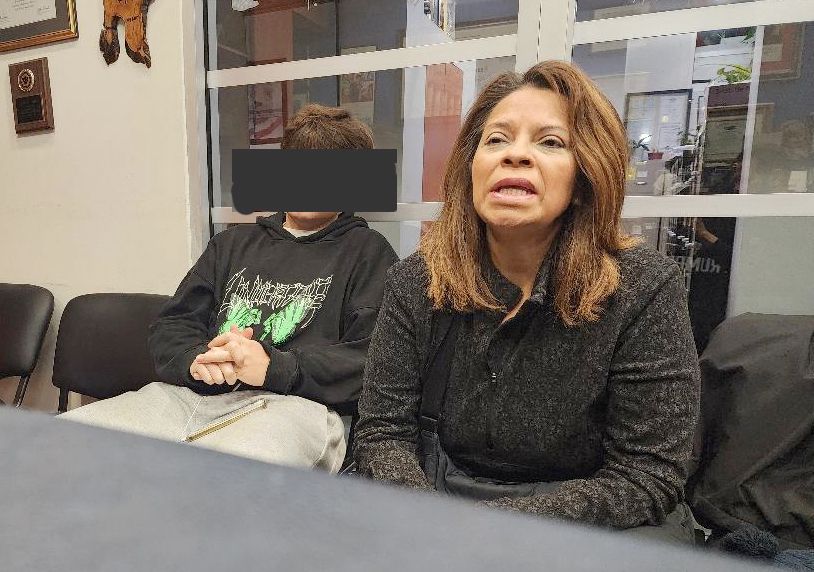
His younger son, Leonardo Ascarrunz, who turned 18 approximately three months ago and has never lived independently, recently filed an emergency restraining order request and other pleadings in the case In the Matter of Cesar Ascarrunz (PTR-25-309082). In those filings, the young man argues that decisions regarding his father’s location, access, and financial affairs were made without court authorization and without any legal determination of incapacity.
According to materials presented to the court, there is currently no medical or judicial finding declaring César Ascarrunz mentally incapacitated. A physician who evaluated him in October 2025 reportedly stated that his cognition was clear for his age. Ascarrunz was declared legally blind in April 2025 after suffering from a chronic eye disease that reduced his field of vision to fewer than 20 degrees in both eyes, but blindness alone does not constitute mental incapacity.
At the center of the conflict is not only where Ascarrunz is now residing, but how the decision to move him was made and the restrictions imposed afterward. According to the younger son, information about his father’s whereabouts was not provided voluntarily and was only confirmed after outside efforts, including contact with the ombudsman’s office responsible for the region where the care facility is located.
Court filings also state that one of the older sons allegedly suspended several of César Ascarrunz’s bank accounts and credit cards, as well as the residential phone line he had maintained for decades and his cell phone. The same documents indicate that Ascarrunz’s automobile was placed under the control of a woman who lived in the family home and who was said to have helped care for him, a situation that changed once the musician was transferred to the senior center in Modesto.
As the case has unfolded, Michael Ascarrunz, who now publicly identifies himself as C. Micah Ascarrunz, has been identified in court documents and testimony as one of the central figures in the decisions that led to the current restrictions on contact between the father and his younger son. Leonardo Ascarrunz was born out of wedlock, a fact that forms part of the family background to the dispute, although there is no court ruling limiting or nullifying his status as a son or his right to seek protection for his father.
In this context, El Reportero spoke directly with Michael Ascarrunz regarding Leonardo’s paternity. Michael told this newspaper that Leonardo was not César Ascarrunz’s son and questioned the validity of the genetic tests. According to Michael, the third DNA test was conducted with César Ascarrunz’s consent and copies of the results were delivered to each sibling by César himself. During the conversation, Michael told this reporter, “Do you think a DNA test done in one hour can be valid?”
Leonardo Ascarrunz disputed that claim and told El Reportero that the DNA sample was collected the same day, but that the results were not delivered immediately and instead took more than a week, and in some cases up to two weeks, to be sent, as is customary with laboratory testing. Leonardo stated that he has official documentation of the results, which has been included in the court record.
Another key issue in the case involves finances and legal authority. According to the care facility where César Ascarrunz is residing, C. Micah Ascarrunz presented a Power of Attorney as the basis for making decisions related to his father’s person and property. The facility was reportedly told that this authority was granted by the successor trustee on record, Antonio José Camacho, with María Escobar Sánchez named as the alternate trustee in the event Camacho is unavailable.
However, under California law and based on documents filed with the court, a successor trustee cannot suspend obligations previously undertaken by the original trustee, nor delegate that authority to third parties, including siblings or other relatives, while the original trustee—César Ascarrunz—has not been declared incapacitated. That question is now one of the central legal issues before the court.
There is also no medical diagnosis indicating cognitive impairment. In addition to the medical evaluation submitted to the court, this reporter spoke directly with Ascarrunz in recent months, during which the musician discussed current events and political developments in his native Bolivia with clarity, supporting the assertion that his mental capacity remained intact.
The situation also extends to tenants living in properties owned by César Ascarrunz. One tenant told El Reportero she received an email from attorney Ilene M. Hochstein, based in Millbrae, California, stating that she was assisting C. Micah Ascarrunz with aspects of managing his father’s rental properties. The email referenced the need to access the tenant’s unit at a specified date and time, the presence of an appraiser to inspect all units in two buildings, and the possibility that an agent for the owner would enter the unit in the tenant’s absence. The attorney also requested information about the tenant’s move-in date and rent history. Leonardo Ascarrunz maintains that there is no legal authorization for his brother to interfere with tenants or initiate appraisals or a sale, since his father remains the sole trustee of the revocable trust.
The court has also been informed that the younger son’s access to the family residence was restricted, including the changing of locks, and that communication between father and son has been limited. Taken together, these factors could fall under California statutes addressing the isolation of an elder adult if proven.
Legal experts in elder protection note that California courts have the authority to order investigations when credible indicators of isolation, family interference, or unauthorized handling of an elder’s assets are presented. Such investigations are intended to protect the safety, autonomy, and rights of older adults, regardless of family disputes.
César Ascarrunz, former owner and founder of the famous Cesar’s Latin Palace at Green Street near Broadway, and later on Mission Street, now Roccapulco, is widely remembered for his contributions to San Francisco’s cultural life. He came to the United States in the 1960s fleeing political violence in Bolivia and, after completing graduate studies, founded a music production company that brought concerts and cultural spaces to life for generations. He ran for mayor of San Francisco several times and finished in second place.
Today, his artistic legacy stands in stark contrast to the uncertainty surrounding his personal situation. As the legal process continues, attention remains focused on ensuring that Ascarrunz can communicate freely, receive visits from immediate family, and that any decisions about his person or property are made under appropriate legal supervision.
The hearing related to the emergency restraining order request is scheduled for December 23, 2025, at 10:00 a.m., in Department 202 of the San Francisco Superior Court.
– El Reportero will continue to follow this case of public interest.