by the El Reportero staff
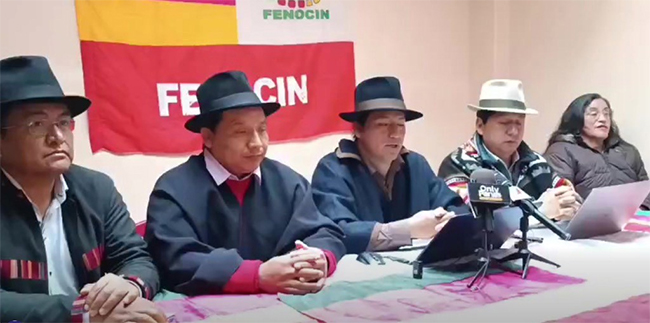
A coalition of indigenous organizations, farming groups, and social movements in Ecuador has announced the launch of a constitutional process to recall President Daniel Noboa before the scheduled end of his term, deepening political tensions in a country already marked by high levels of social mobilization.
Under Ecuador’s 2008 Constitution, citizens can pursue a recall (revocatoria de mandato) of an elected president by submitting a formal petition to the National Electoral Council (CNE), gathering a legally required number of signatures, and, if thresholds are met, triggering a national referendum. Organizers of the current effort say their goal is to activate a democratic mechanism they believe is justified by public dissatisfaction with the government’s performance.
Leaders from the Confederation of Indigenous Peoples of Kichwa Nationality in Ecuador (Ecuarunari) are among the main promoters of the initiative, working to bring together indigenous federations, farmer associations, and labor groups. They argue that the Noboa administration has failed to fulfill campaign commitments and has adopted policies that have aggravated social and economic pressures on working-class and rural communities.
The recall push comes amid lingering fallout from controversial economic measures, including the removal of longstanding fuel subsidies. Those decisions triggered nationwide protests and strikes in 2025, with demonstrators denouncing rising living costs and deteriorating conditions for vulnerable populations. Human rights organizations criticized the government’s response to those protests, adding to broader concerns about governance and social stability.
The initiative also follows a political setback for Noboa in late 2025, when voters rejected a package of referendum proposals linked to his reform agenda, including plans to convene a constitutional assembly. Analysts interpreted the outcome as a sign of public resistance to major institutional changes and growing skepticism toward the administration’s broader direction.
Supporters of the recall maintain that the effort is not an attempt to undermine democracy, but rather to reinforce it by holding leaders accountable between elections. They say the process offers citizens a constitutional channel to express discontent when government actions diverge from public expectations.
Critics, however, warn that frequent resort to recall mechanisms can weaken political stability and hinder long-term policymaking. They argue that Ecuador faces entrenched challenges — including public security concerns, economic uncertainty, and competing social demands — that require sustained institutional continuity and dialogue rather than recurring political confrontations.
As organizers move forward with the legal steps required to advance the recall process, the initiative will test the strength of grassroots mobilization and the resilience of Ecuador’s democratic institutions. Whether the effort gains enough momentum to reach a national vote remains uncertain, but it has already reshaped the political conversation around accountability and citizen power.
– With reports from Expats Ecuador, El Ciudadano, Human Rights Watch, Center for Economic and Policy Research.