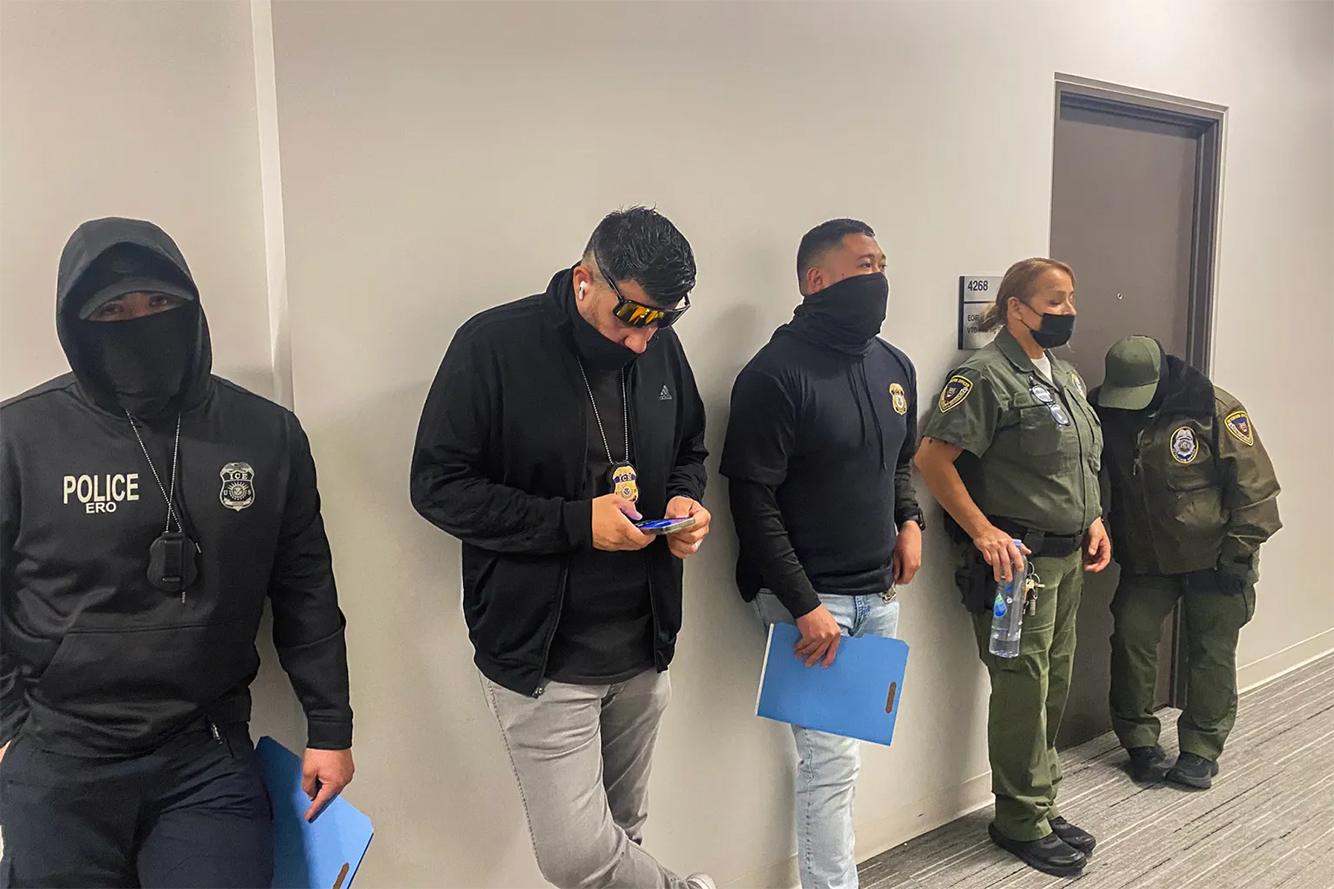
With immigration arrests increasing, San Diego is bracing for an even bigger crackdown
by Wendy Fry and Natasha Uzcátegui-Liggett
Immigration arrests in San Diego and Imperial counties surged nearly 1,500 percent between May and October compared with the same period a year earlier, according to federal data analyzed by CalMatters, raising fears among advocates that the region could face a larger enforcement crackdown in the months ahead.
More than 4,500 people were arrested for civil immigration violations during that six-month period in 2025, compared with fewer than 300 arrests during the same months in 2024. The region, which federal authorities classify as the San Diego area of responsibility, includes both coastal and inland communities. By September, arrests there had surpassed those in the much larger Los Angeles area, which drew national attention last summer for high-profile enforcement actions.
“I feel the temperature rising,” said Patrick Corrigan, a volunteer who monitors U.S. Immigration and Customs Enforcement activity at the federal courthouse in downtown San Diego.
While cities such as Los Angeles, Chicago and Minneapolis have experienced visible enforcement operations, the escalation in San Diego has unfolded more quietly. Advocates say the steady rise in arrests has created a climate of fear in immigrant communities, even as the city has not yet seen a large, coordinated sweep resembling those in other regions.
In December, White House “border czar” Tom Homan visited the San Diego border alongside U.S. Customs and Border Protection Commissioner Rodney Scott and warned that more agents would be deployed nationwide. Homan criticized so-called sanctuary cities, including San Diego and Chula Vista, arguing that limits on cooperation with federal authorities would lead to more arrests in local communities.
“If you want to be a sanctuary city, you’re going to get exactly what you don’t want,” Homan said during the visit. “More agents in the community and more non-criminals arrested.”
Advocacy groups say that prediction is already playing out. Federal agents have made arrests at courthouses, immigration check-ins and in public spaces, including near schools and in parking lots of big-box stores. In recent months, community members have reported seeing agents detain day laborers and people attending routine appointments, deepening anxiety among families already wary of any contact with authorities.
Critics say courthouse arrests undermine due process by detaining people who are attempting to comply with immigration requirements. Legal advocates argue that fear of arrest discourages immigrants from attending hearings, accessing legal counsel or cooperating as witnesses in criminal cases, which can weaken public safety overall. They say the practice also strains already overburdened immigration courts, where backlogs stretch for months or years, leaving families in prolonged uncertainty about their legal status and ability to work, travel or reunite with relatives.
“They’re just putting numbers on the board,” said Andrea Guerrero, executive director of Alliance San Diego. “They’re doing so in a way that is not just irresponsible, but inhumane.”
Data obtained by the Deportation Data Project show that only about 25 percent of those arrested between May and mid-October had prior criminal convictions, down from more than 60 percent during the same period in the final year of the Biden administration. The figures reflect administrative arrests for civil immigration violations, not criminal charges, according to researchers who reviewed the data provided by ICE in response to public records requests.
At the federal courthouse, faith-based volunteers accompany immigrants to hearings and check-ins to provide reassurance. Milagros, a Venezuelan asylum-seeker who arrived legally through the CBP One appointment system in 2024, said she feared entering the building after her husband was detained.
“When they keep changing the policies, we don’t feel like we can walk around freely,” she said.
Outside official buildings, community patrols have emerged in neighborhoods such as Linda Vista and Barrio Logan, where volunteers warn residents of ICE activity. Groups use walkie-talkies and messaging apps to alert neighbors when they suspect agents are nearby, hoping to reduce the risk of surprise encounters and give families time to avoid the area.
“One of the constant questions we get is: ‘How long is this going to go on?’” said Adriana Jasso of Union del Barrio. “It breaks your heart, because nobody knows.”
Editor’s note: This article was edited and shortened to fit space.